
Volmaxxxer & Entropy Enthusiast | DM's open
Joined November 2019
- Tweets 3,442
- Following 505
- Followers 45,895
- Likes 6,256
978 Photos and videos


Pinned Tweet

10 Jun 2024
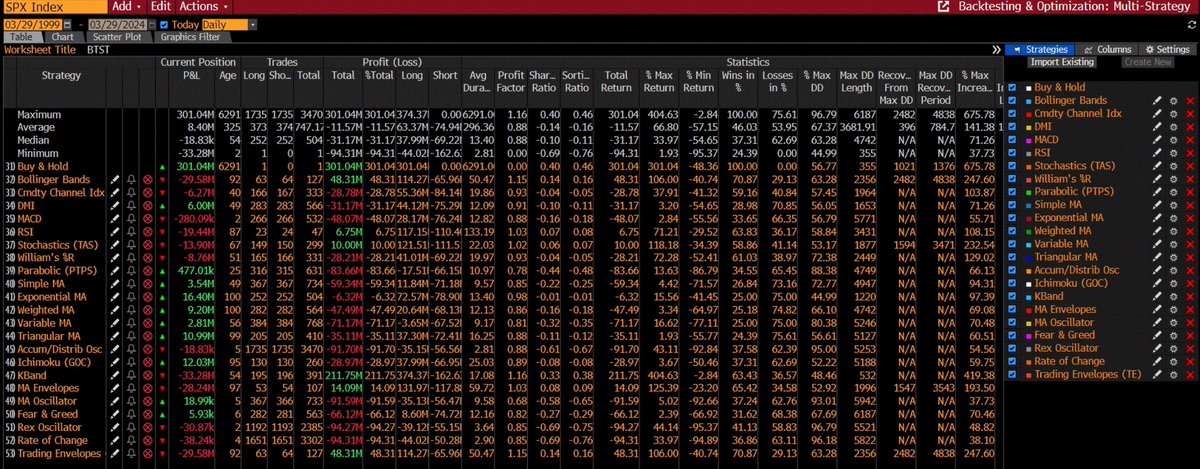
I just finished back-testing all of the most popular trading indicators over the past 25 years
The results were shocking:
‘Buy and Hold’ outperformed every major indicator by a landslide
Until I found this strategy(Thread) 👇
71
262
2,001
884,223
Jun 14
The silent killer in finance is chronic hyper-productivity
This is very prevalent in US work culture
Most guys that enter this space are often burning fuel from inefficient sources too, which eventually catches up to you
Real G’s in this industry play golf all summer, take long walks, then hammer out work when their body/mind is ready again - @edgefills has some great commentary on this
My assumption is this naturally occurs as a felt/intuitive signal from the body when it is time to rest and wait for the next opportunity
True BIG opportunities require patience, much like quality trade setups
If you are aligned with yourself, by not unnecessarily pushing thru tasks and frying your brain, it will become very obvious when the next step emerges
If you do the opposite, it will eventually manifest as burnout, which comes in various forms, as outlined below
Athletics is way ahead in this regard - corporate America has not caught up, since it is so mind dominant system is run on survival mode
Jun 13

Direct correlation between constant wired hyper-productivity and autoimmune issues, MCAS, and chronic "stealth" illnesses.
Seen it so many times now. Hardest working guy you know who is always "on" ends up getting one shotted one day and his health starts spiraling. Tries a bunch of intense treatment protocols when in reality its his nervous system thats keeping him sick.
You can only redline your nervous system for so long. Eventually your body will give up and when it does you will have no other choice.
8
14
254
48,731
Jun 8
I was in Asia the last 2 weeks & continue to find it remarkable how every culture around the world has various core beliefs, ways of life, etc… ingrained as ‘truths,’ that are completely different anywhere else
Nobody actually knows anything, we’re all just taking our best guess
Just make sure it’s your guess and not one that has been imposed on you by others
You can never fully detach yourself from your culture, but you can at least increase deviation by exploring the world and adding/removing parts that fit your essence
I have embodied something like an American work ethic, Spanish taste, Japanese precision, Greek philosophical appetite, East Asian long-term orientation, etc after traveling to 20 countries in the past year
The irony is, all of those ‘features’ were already within me, the different places just naturally bring it out in you
The difficult yet most rewarding part is bringing it back home and continuously embodying those characteristics when your culture does not permit it
It’s like traveling to these places gives you a key to unlock a door in your house that you vaguely knew existed
Just make sure you don’t shut the door after you leave the room
3
2
39
4,141
Jun 8
“The reasonable man adapts himself to the world. The unreasonable one persists in trying to adapt the world to himself. Therefore all progress depends on the unreasonable man.” - George Bernard Shaw
1
12
2,100
May 14
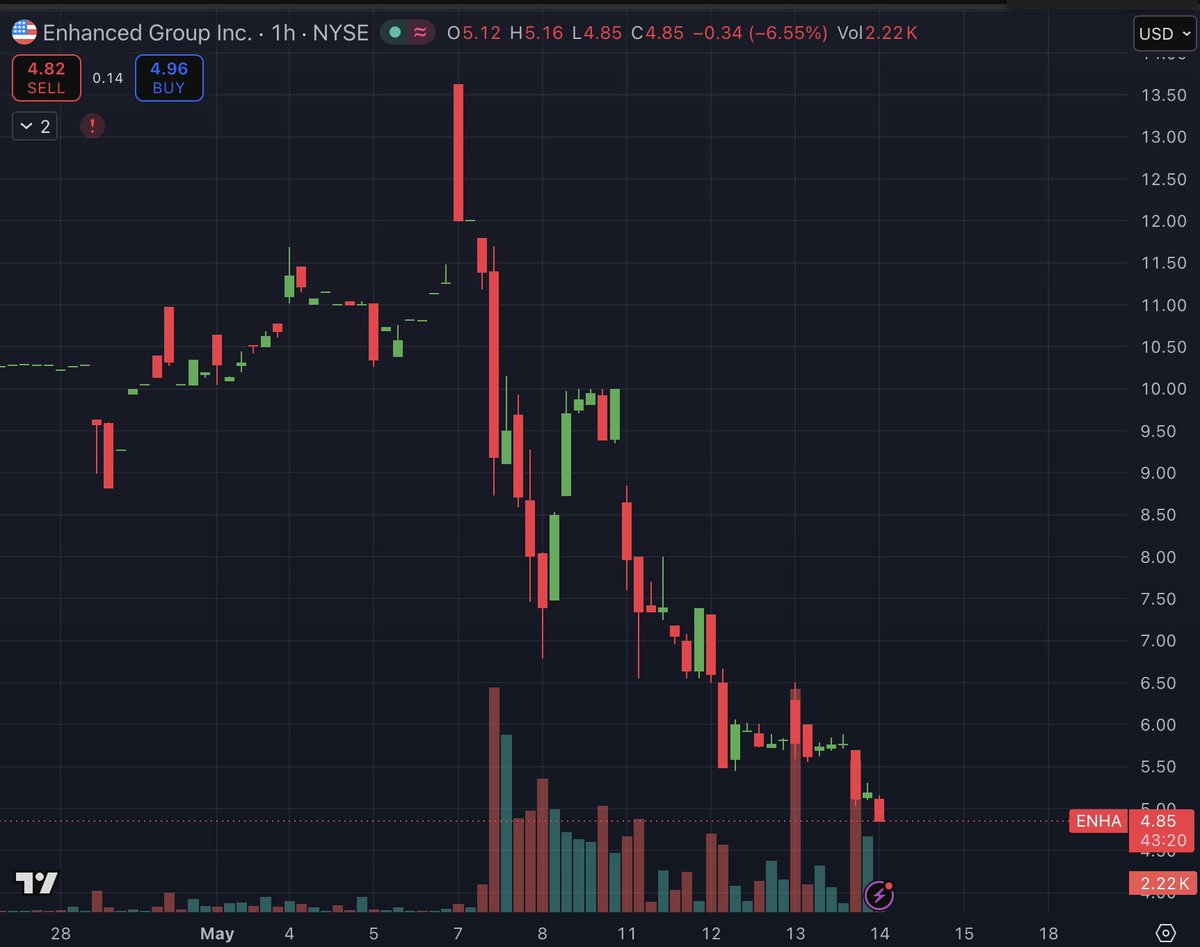
A monkey could have made money shorting this
Funny how this company did paid promos with top accounts on X to sell into more retail too
Reminds me of the good ol' 2021 SPAC days
26 Nov 2025

Who underwrote this SPAC at a $1.2B valuation??
A company with basically no revenue built around niche sports that have never been profitable
Add in that many pro athletes are at least micro-doping and the whole concept collapses on itself
This is a PIPE dream (pun intended)
Looks like an exit strategy over a failed business model, just like most of the SPACs back in 2021
Would be VERY interested to hear why I am wrong, because I know I’m not :)
5
1
11
9,651
May 13
There's a publicly traded company that owns the largest pilates chain in the world (1,414 studios, 7x bigger than next competitor)
That business alone did $102M EBITDA last year
Yet the entire company only trades at $250M market cap, during the greatest pilates boom in history
8
33
11,397
May 13
So funny to me to see all the $$$ flowing into ai trade when even sectors like software are trading at these discounts
So many insane cases where $$$ dried up in sectors that would have otherwise mooned yet inflows matter more at the end of the day so these remain dormant
13
3,065
May 5
If you haven’t noticed, the entire ‘regulated’ prediction market narrative has started to change recently and will continue to trend in this direction for the rest of the year
This is very bullish for a name like $DKNG here at $23, which will likely scoop up a lot of Kalshi/Poly sports flow
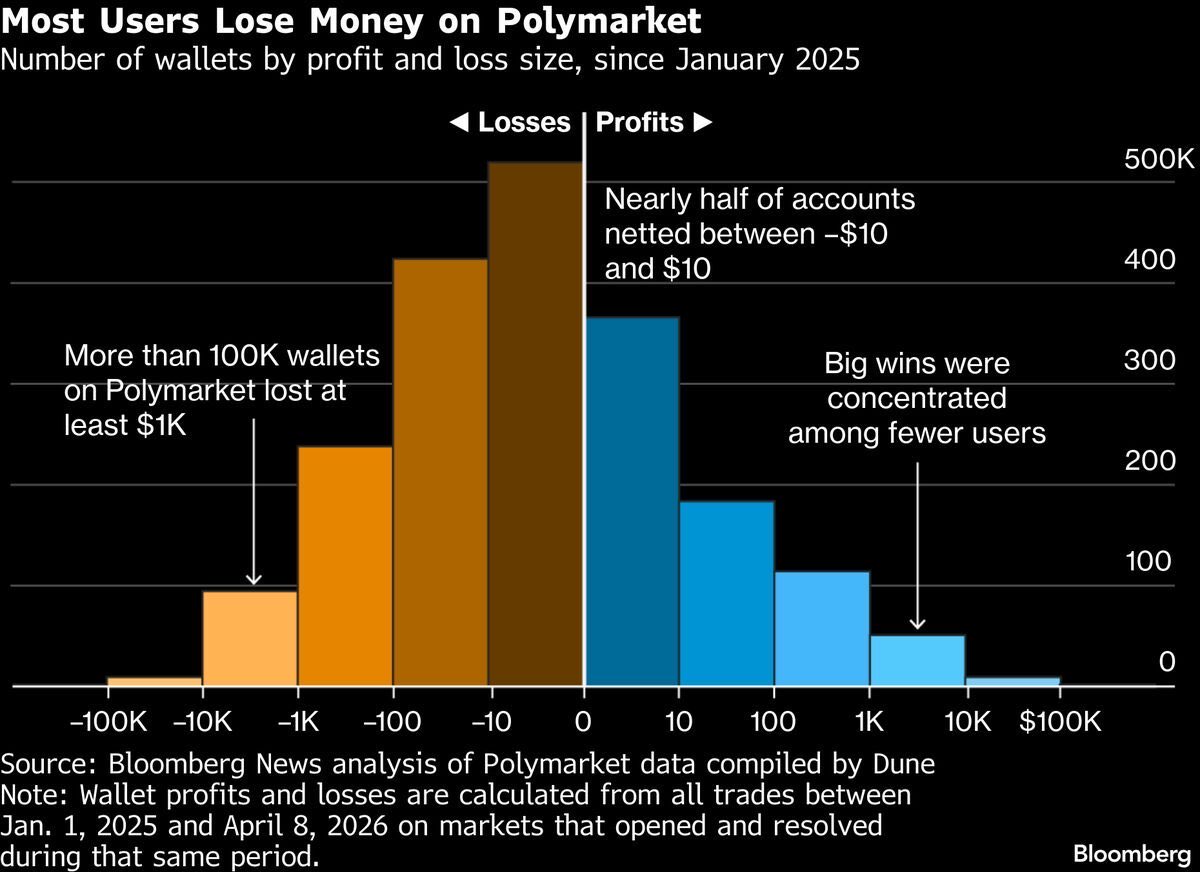
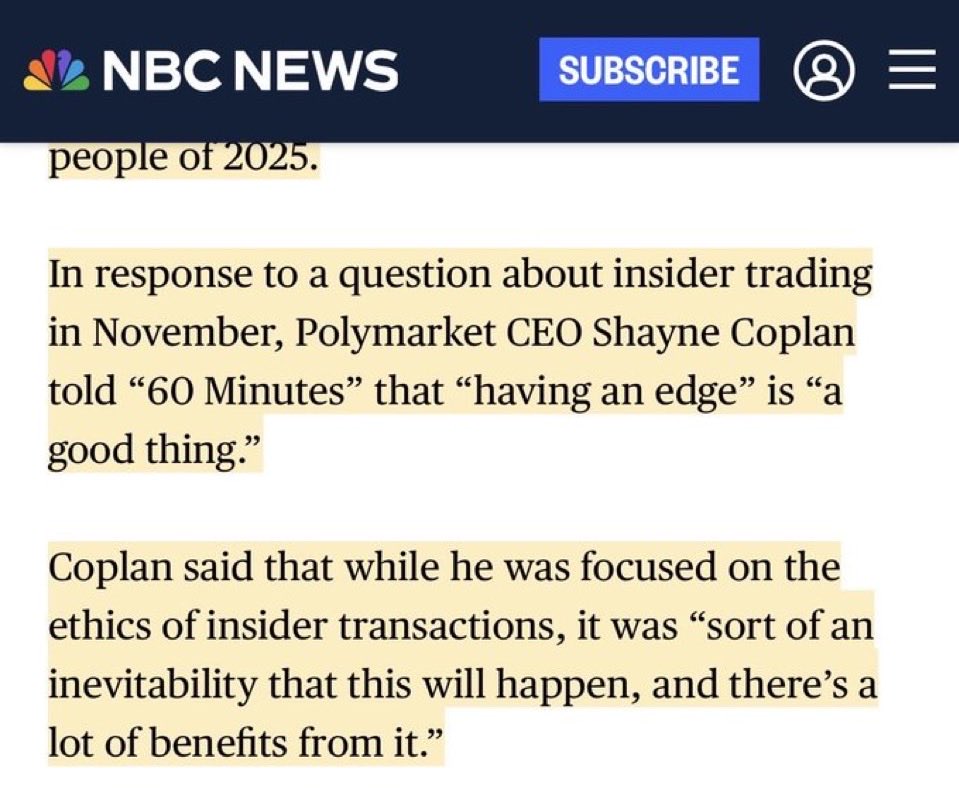
Just look at the past month of events and you can start to see how prediction markets are about to get regulated into the ground:
→ Soldier arrested for betting classified info on Polymarket ($400k profit)
→ Trump publicly unhappy with prediction markets (first statement)
→ Senate unanimously banned members staff from trading them
→ WSJ 67% of all profits captured by 0.1% of accounts posted today
The TL has some variant of a negative narrative every week - the whole table is going to get flipped on their heads soon
May 4

The U.S. Senate announced it will hold a hearing to evaluate sports betting and gaming integrity in the country in light of several recent sports betting scandals.
sportsbettingdime.com/news/b…
4
24
11,516
Apr 30
“Google search is dead”
Apr 29

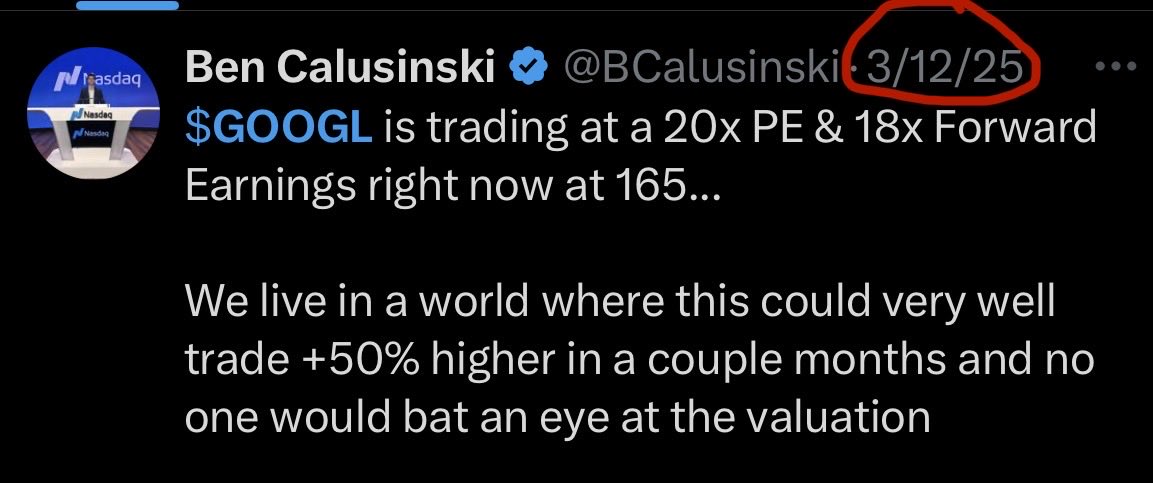
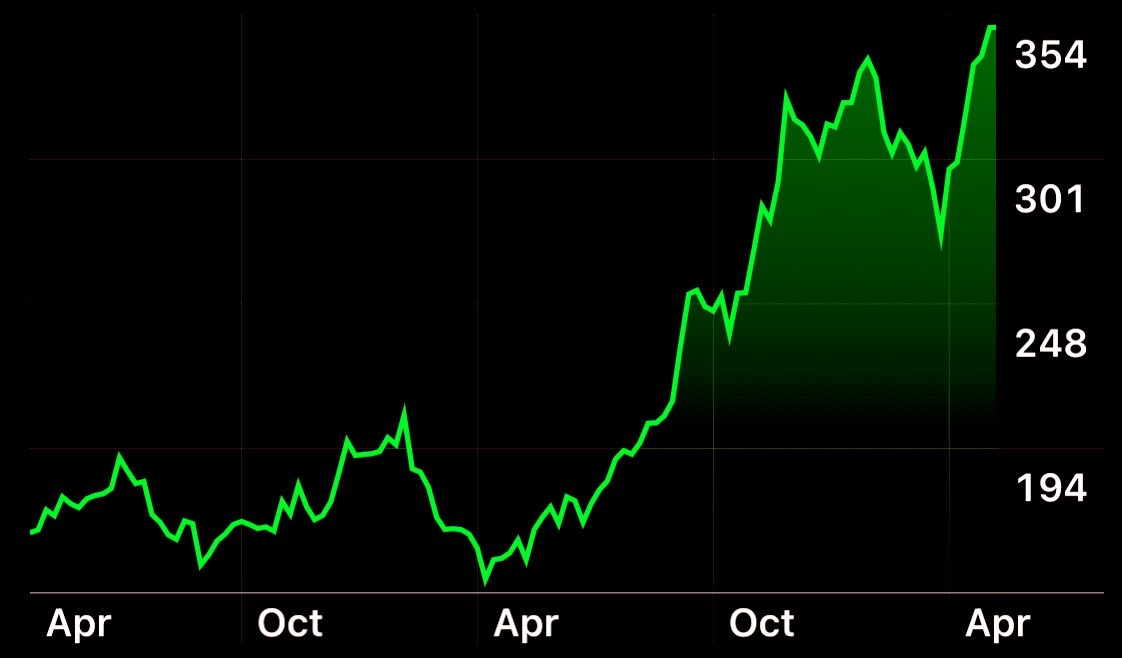
If you just put your entire portfolio into $GOOGL last April and then sat on the beach, you'd be up 155% in one year…
You stupid idiot.
5
1
32
9,171
Apr 27
As a former D1 athlete, this type of stuff is the kryptonite for any high level athlete, especially post-college
The reward circuitry is nearly identical to the reinforcement you get during high stakes competition, paired with a foundation built on high confidence in their abilities
It essentially acts as identity reinforcement for a lot of these guys that’s available 24/7 and keeps them ‘in the game’ beyond their athletic career
Thankfully, I built up enough sense via financial markets early-on to stay away from this ‘drug’ but I know of many who were not so fortunate
The biggest issue people need to realize with these high achieving athletes, is that it does not matter if they are told it’s illogical to sports gamble, because all of these guys were constantly told the same thing growing up about achieving what they did in sport
Apr 27

Sources: Texas Tech transfer quarterback Brendan Sorsby is checking into a residential treatment program for a gambling addiction. He’s under NCAA investigation in the wake of the discovery of Sorsby making thousands of bets via a gambling app. espn.com/college-football/st…
2
26
12,579
Apr 22
90% of retail will never be consistently profitable
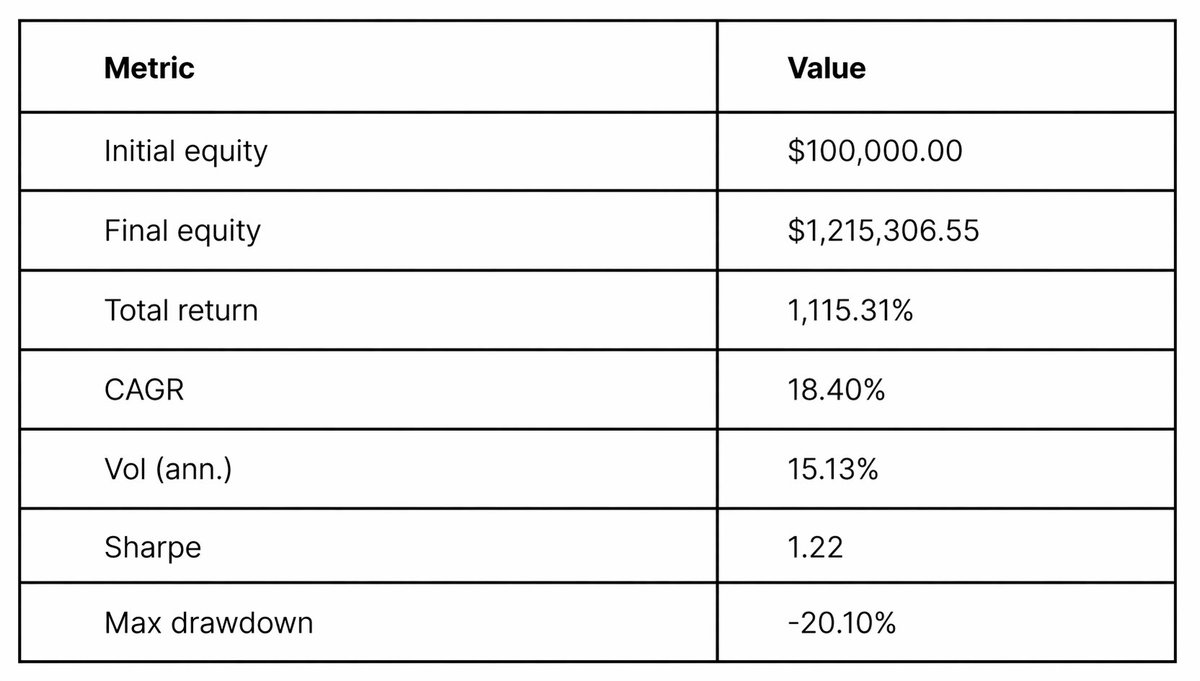
For the past 6 months I've been building a systematic model with 3 quants
The result: an 18.4% CAGR
On May 4th I'm releasing the full research paper, including exactly how it was backtested to account for:
>Slippage & commissions
>Overfitting & look-ahead bias
>Different market regimes
>MOC execution (the backtest fill price is the exact price in live trading. Zero gap)
>Parameters sourced from published academic research before testing (not reverse-engineered from the results)
Most people posting "strategies" on X skip this entirely
I will post the research paper to my free email list: alphamarketpro.io/
Apr 22

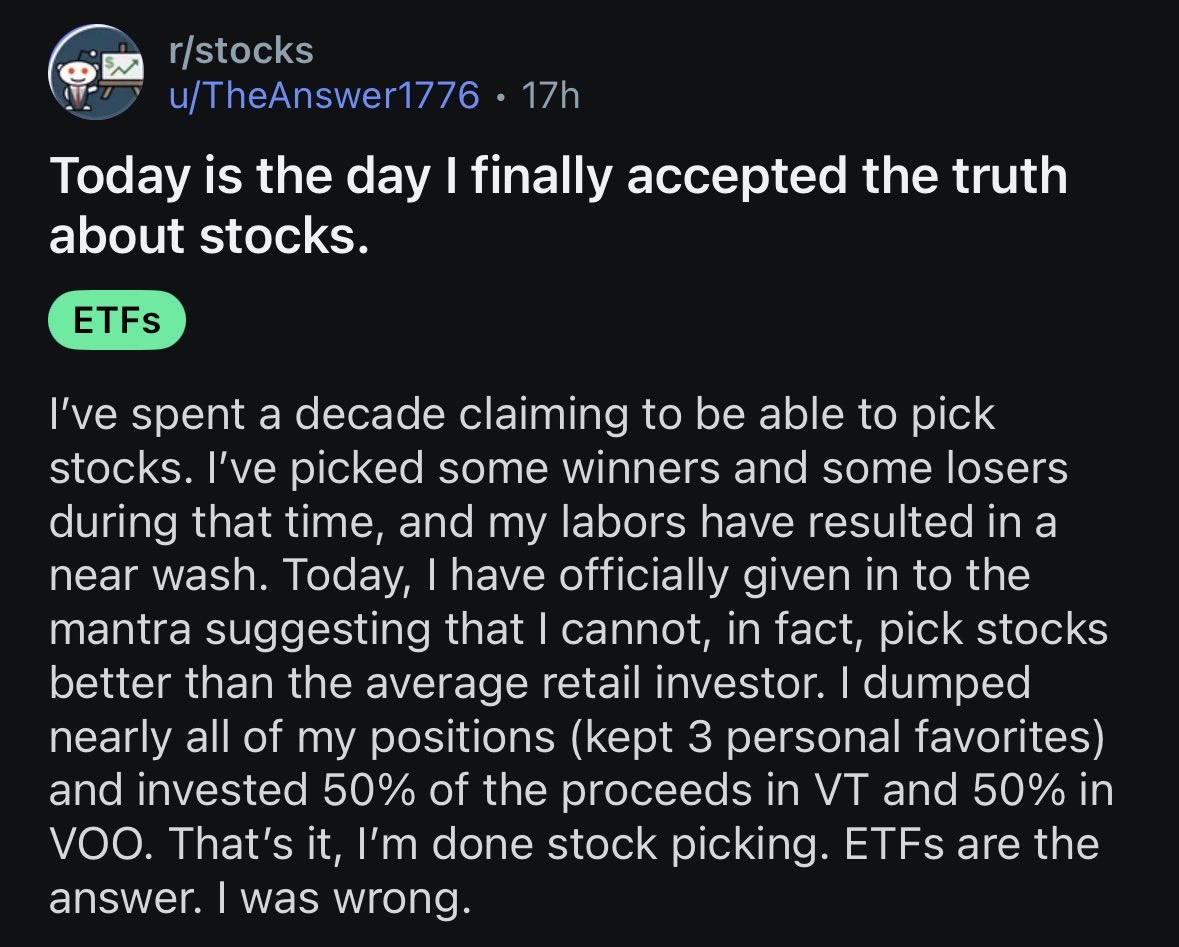
A lot of people would be a lot happier and wealthier if they had realized this when they were younger
5
2
66
21,825
Apr 22
You can't make this up
News of $25B buyback a couple hours after I posted this
These calls are now up 50%
Apr 21
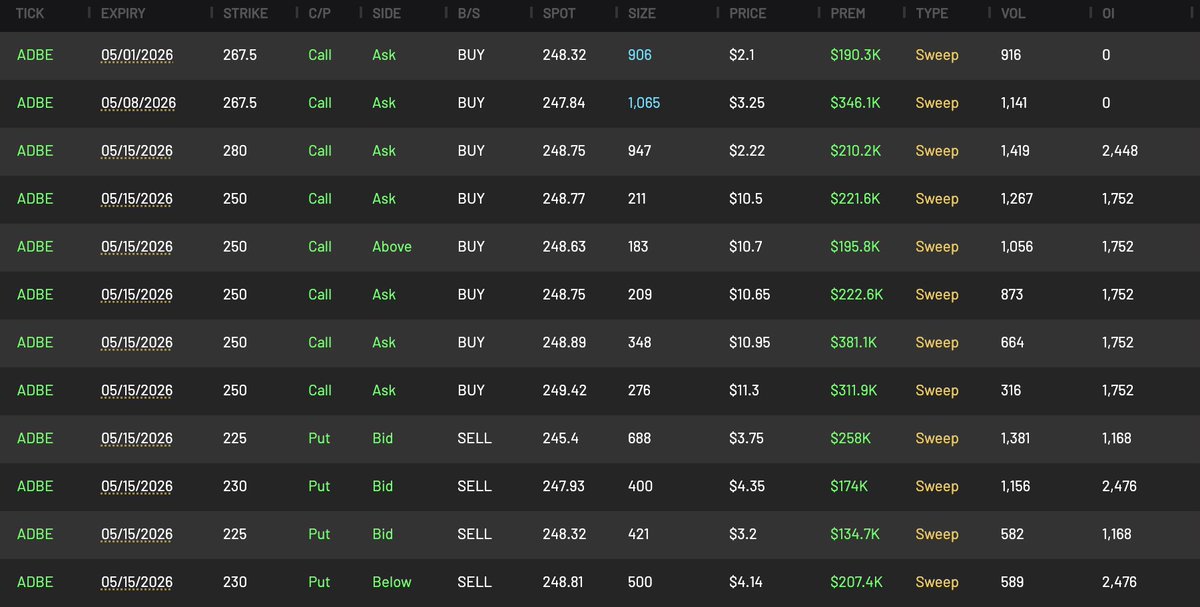
$ADBE has a big event later today and someone loaded millions worth of OTM calls before the closing bell yesterday
Seen this one before...
4
51
76,788
Apr 21
$ADBE has a big event later today and someone loaded millions worth of OTM calls before the closing bell yesterday
Seen this one before...
Feb 11
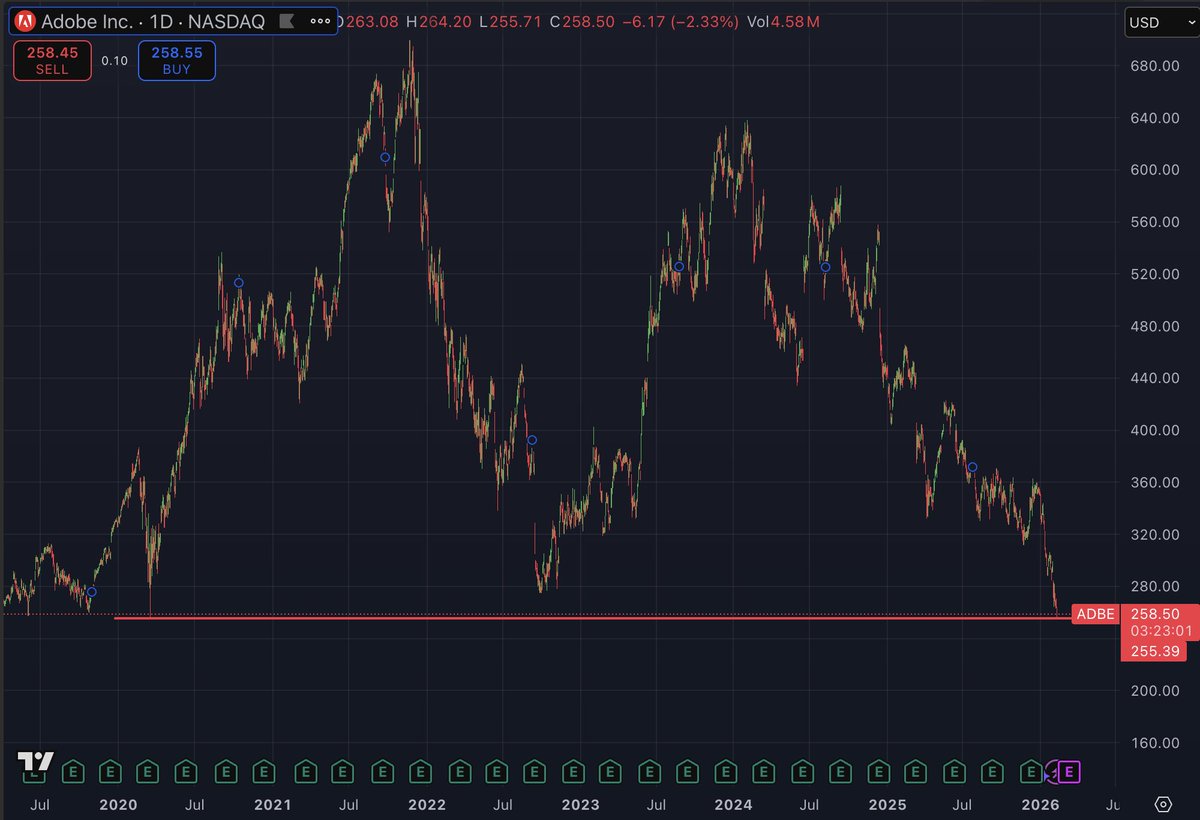
This is a steal
Adobe is down -60% (2Y) and only trading 11.3x while posting record numbers
The market is pricing them here at 258 like they're getting commoditized, similar to other software companies
The financials show $ADBE is accelerating and I'd argue that their brand will make them even MORE valuable in a post-AI world
There is a huge opportunity to buy up quality software at these current discounts (top 10-20%)
The "Software is Dead" thesis doesn't apply to Adobe
Everyone's panicking about AI commoditization because solo founders can now vibe code basic apps, which i totally agree with (made a recent tweet on it), but that's CRUD apps, project management tools, internal dashboards, etc...
You can't vibe code professional video editing, you can't vibe code pixel-level compositing in photoshop
The complexity floor is too high
Adobe's products require professional-grade precision that AI assists with but doesn't replace (yet)
They are literally targeting double-digit ARR growth
($25.9-26.1B revenue)
They're growing faster than last year and margins are expanding WITH AI
They not only have a substantial brand moat, but also have Firefly Foundry (their custom enterprise models trained on client IP)
Ironically, they are actually INCREASING their prices right now
You don't raise prices when you're getting commoditized
AI is far from being able to replicate professional creative tools (Photoshop, Premiere, After Effects)
AI commoditization is very real for the bottom 80% of software, but the top one's with a strong brand product moat will become even more valuable now
Some long-term insane deals in this sector if you know where to look
10
8
134
106,613
Apr 19
I realized the baseline population is already pre-conditioned for UBI no jobs before it has even arrived
The infra for managed purposelessness is already built and PROFITABLE too… it’s short form content/entertainment that’s adjacent
UBI just removes the last friction point, which is the normal person’s job, it’s actually incredible to think about
Capital automates most labor, captures the productivity gains, then redirects a portion as UBI, so the population stays ‘pacified’ and engaged with platforms that generate more capital
It is essentially a closed loop and the only people capable of getting out are true cognitive outliers that can see what is happening
TikTok / Meta literally cracked the code here, ahead of ‘schedule’ too
Just look at everyone’s daily screen time and it all starts to make sense
4 Feb 2025

I do not believe the vast majority of people are prepared for the disruption - or perhaps revolution - that AI will bring. In many ways, it will increase efficiency and provide the solutions we desire.
I believe this is especially true in corporate roles, as many operate on an admin-heavy model - because having direct reports is part of the corporate glamour package. Furthermore, much of the low-level white-collar work - such as in accounting, construction design, and legal - are just glorified gatekept administrative tasks - routine "bread and butter" transactional work. I am not merely referring to AI drafting your emails and filing your attachments as they come in. We are looking at AI that can read receipts and draft entire financial statements, awaiting a final CPA review within minutes. Similarly, construction estimates and sketches can be produced swiftly for evaluation by quantity surveyors and engineers. Legal discovery and case law analysis can be completed in mere minutes, quickly assessing the likelihood of success, with prepopulated submissions generated instantaneously for final review. Contractual templates will be crafted, incorporating relevant nuanced considerations adjusted based on recorded client interview input, then managed through blockchain technology. In the future, the most pressing legal challenges will likely stem from jurisdictional complexities, particularly as AI continues to evolve. While international law is not yet as agile as we would prefer, it seems inevitable that this will change.
I believe that within three years, at most five, we will witness the mass disestablishment of white-collar jobs. Mid-tier managers are already being trimmed rapidly due to low-level automation in many countries. As a result, the commercial real estate collapse will likely see these spaces repurposed for residential purposes. Physical retail is already in decline, so this movement is not surprising to many. Traditional 9-to-5 roles will break down into a more gig economy model. With the erosion of job security, transient behaviours will also emerge in interpersonal romantic relationships. Thus, the market there is ripe for the picking.
In a redeeming twist of sorts, those who were once looked down upon in blue-collar jobs will find that they hold more security than their white-collar counterparts, as physical automation will take a little longer. Occupations like mechanics, hairdressers, plumbers, and carpet layers will remain relevant for a while longer.
The focus will also revert to physiological needs in Maslow's hierarchy. The less glamorous roles tied to these will survive. Financial generation around basic survival needs - such as food, water, and shelter - will remain vital. People still need to eat and sleep. Land will retain value because you cannot create more of it. This will disrupt the class system as we know it, while also increasing wealth polarity. I would argue that land ownership will become paramount, as it will enable the ability not only to provide shelter but also to grow food.
Another focus that will be hard to replicate is the role of spirituality and healing during moments of massive societal upheaval and disarray. While many are already using AI for therapy, the desire for self-actualisation and spirituality in particular, will continue to grow. Truth-seekers will always exist. Speed will be a result of this upcoming disruption, and in such a world, we will find value in slowing down.
The flipside of this is that those seeking to numb their souls will be presented with vast and tantalising selections of newfound entertainment and distractions. If we believe the war on spirituality is troubling now, we have no concept of what is yet to come. Imagine the spirit not being broken, but gently lulled into a peaceful slumber, unaware that resistance is possible - or, if aware, uncertain of its necessity. Interesting, huh?
I would not be surprised if, as things progress, some form of universal basic income is explored in certain countries.
Get ready for the ride of your life.
8
2
28
10,133
Apr 1
You cannot see outside of the cage unless you actively suffer to break your existing cage (identities)
EVERYONE has this to varying degrees, myself included. The beauty of being human is we can consciously override it with internal work, unlike an animal
Most die as animals tho
Feb 24

Abused zoo bear still circles in imaginary cage seven years after being freed... 😢🐻
4
32
233
14,904
Mar 31
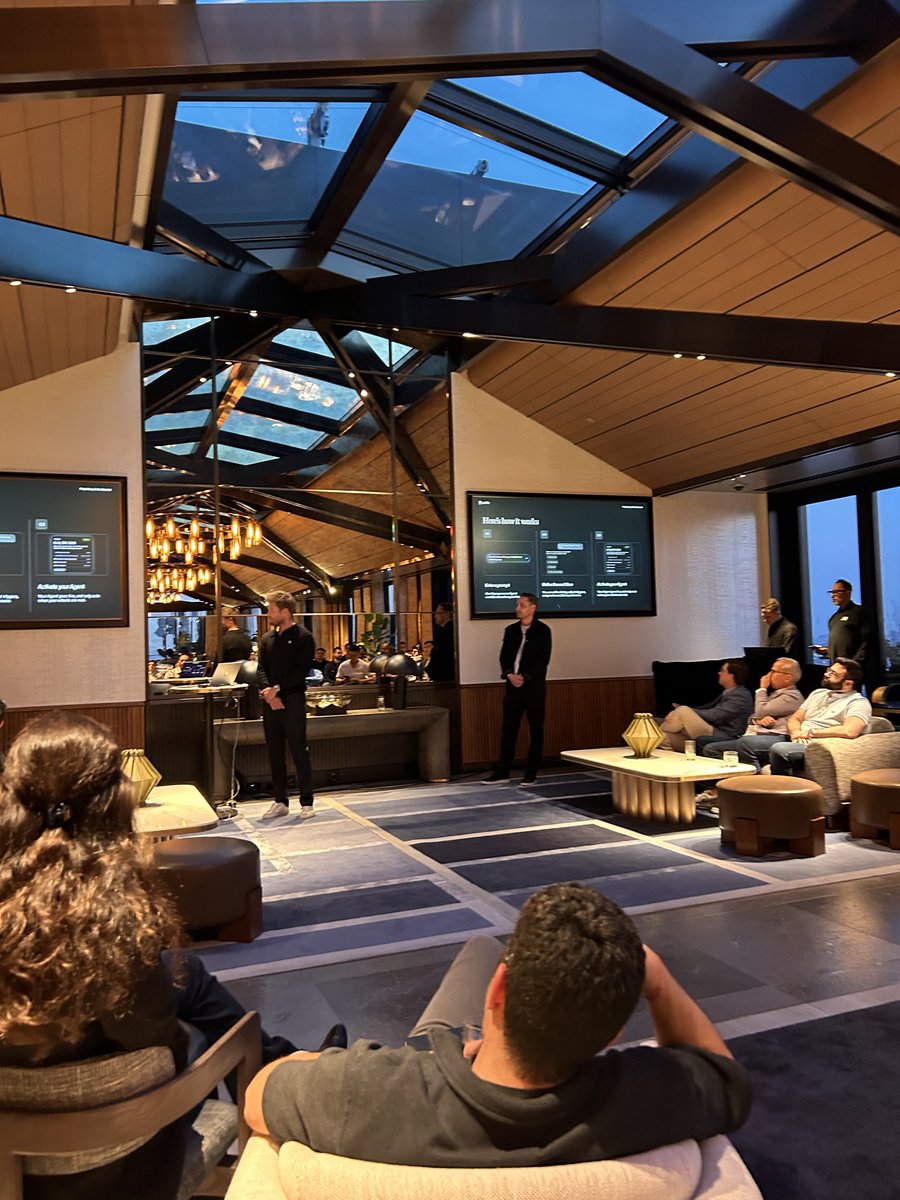
HUGE news for the entire retail trading community today - You can now have ai agents run your portfolio FOR YOU
The day where you don’t have to actively manage your trade portfolio is finally here. You can quite literally input all requirements and have an agent execute for you… Crazy
I was invited to Public’s conference in NYC last week and asked if it’s possible to have trades automatically trigger with pre-existing stop requirements using this feature: the answer is yes
Example: Buy 100 June 16th $AAPL calls when a golden cross triggers on the daily. Stop out if the daily closes back under the MA. Take Profits at 15% 30% and 45%
Insane
I continue to remain very bullish on @public and have NEVER received any $ to promote them - anything I have said is purely out of our friendship and the alignment in their company values with my own (anti-gambling ftw), so that should speak for itself

NEW: You can now build AI Agents that monitor the market, manage your cash, and execute your trades. The Agentic Brokerage has arrived.
4
1
79
17,908
Mar 30
Agency is the only thing that actually separates high achievers from everyone else
And almost no one has it
Great Story: There’s a sauna at my gym. Been broken for months. Only gets up to 150-160°F - basically a warm room for a bunch of dudes in towels to sit and stare at eachother. Everyone knew and everyone complained a little
Management didn’t care. And eventually, everyone just… accepted it. Sat in there longer. Made peace with it. Moved on.
Then one guy showed up
He didn’t accept it. He got on the floor and looked under the unit in his towel, while sweating. Found a switch. Went back out, got a cotton swab to flip it. Sauna turns on, but only for a couple minutes before shutting off automatically. Most people would’ve stopped there. “Well, at least it works a little now.”
Not him
He climbs up to the ceiling of the sauna. Finds a temperature sensor near the ceiling (above the heating unit) which is why it keeps triggering the shutoff
The sensor reads the air at the top, hits the threshold, kills the heat
So what does he do? Walks to the cold tub. Soaks a towel. Brings it back in and covers the sensor completely
Sauna climbs to 185°F. Never been there before. Red hot.
The towel eventually warms up and the sensor trips again. So now he has a system: re-wet the towel every 7-10 minutes, or he also figured out he can put a small amount of cold water directly on the sensor to reset the cycle and buy another 5-7 minutes of full heat
The whole thing took maybe one sauna session to figure out. Trial and error, in real time, while sitting in there
Now I know how to do it. I show everyone I’m in there with. They’re genuinely shocked and I just tell them some random dude figured it out one day
That’s the gap
It’s not even raw intelligence, not resources either, It’s the prior belief that reality is negotiable and constraints are seen as INFORMATION
The guy who figured it out took a risk - not a big one ofc, but a real one. He looked stupid crawling around on the sauna floor. He climbed the benches. He walked to the cold tub mid-session. He tried things that didn’t work first
The downstream effect of one person deciding to actually engage with the problem: now a whole group of people can walk in and have a 185°F sauna any time they want
That compounds: I show the next person, they show someone else, the agency transfers etc
But it starts with one person who refused to treat the default as permanent
Most people are waiting for someone to fix the sauna
A few people are on the floor looking for the switch
29
78
1,295
80,453
Mar 29
Been around some high flyers recently
These are genuinely impressive people by every conventional metric who are set for life & don’t even use X
Yet I kept noticing this thing underneath it
That chip on the shoulder energy (the thing that looks like hunger from the outside) it’s oftentimes just insecurity that has manifest itself into a socially acceptable way
The external results are ofc there. Grudge energy is real. But it’s borrowed fuel. What many people dont realize is that borrowed fuel is inefficient long term
Trace it back far enough and there’s always like two or three people. Usually from childhood. Someone who dismissed them, didn’t believe, made them feel like they had something to prove. And it got stored in their body as a threat
Every achievement is somewhat a reply to someone who probably forgot what they said
The further they go on that path the further they get from themselves. They’ll swear they love what they’re doing. Maybe they do on some level. But they love more what it says to the ghost of whoever installed that thing in them
And eventually everyone around them becomes a resource. Consumers, employees, partners are all just inputs with an ROI attached. This is because its the logical endpoint of using external metrics as your sole scoreboard
The scoreboard is incomplete though
There’s the money yeah. But there’s also what you actually felt while building it. Who you were to people. Whether you’d still do it if the chip disappeared tomorrow and nobody was watching (these things I’d imagine most ppl actually care about on their death bed)
The real tragedy is they’ve built their entire identity on a partial truth. And by the time the fuller picture becomes available they don’t want it. Seeing it clearly means dismantling everything they are
Highly intelligent outliers are actually the most susceptible to this. The same brain that built the business is extraordinarily good at rationalizing why the wound is actually a superpower
Last thing
Go back through your memories from middle school and high school. Find the moments of real shame, real embarrassment, real dismissal. Don’t move past them actually sit with them fully. You’ll be surprised how much of what’s driving you was installed in those rooms
It’ll be uncomfortable
Worth it
3
7
84
31,373
Mar 22
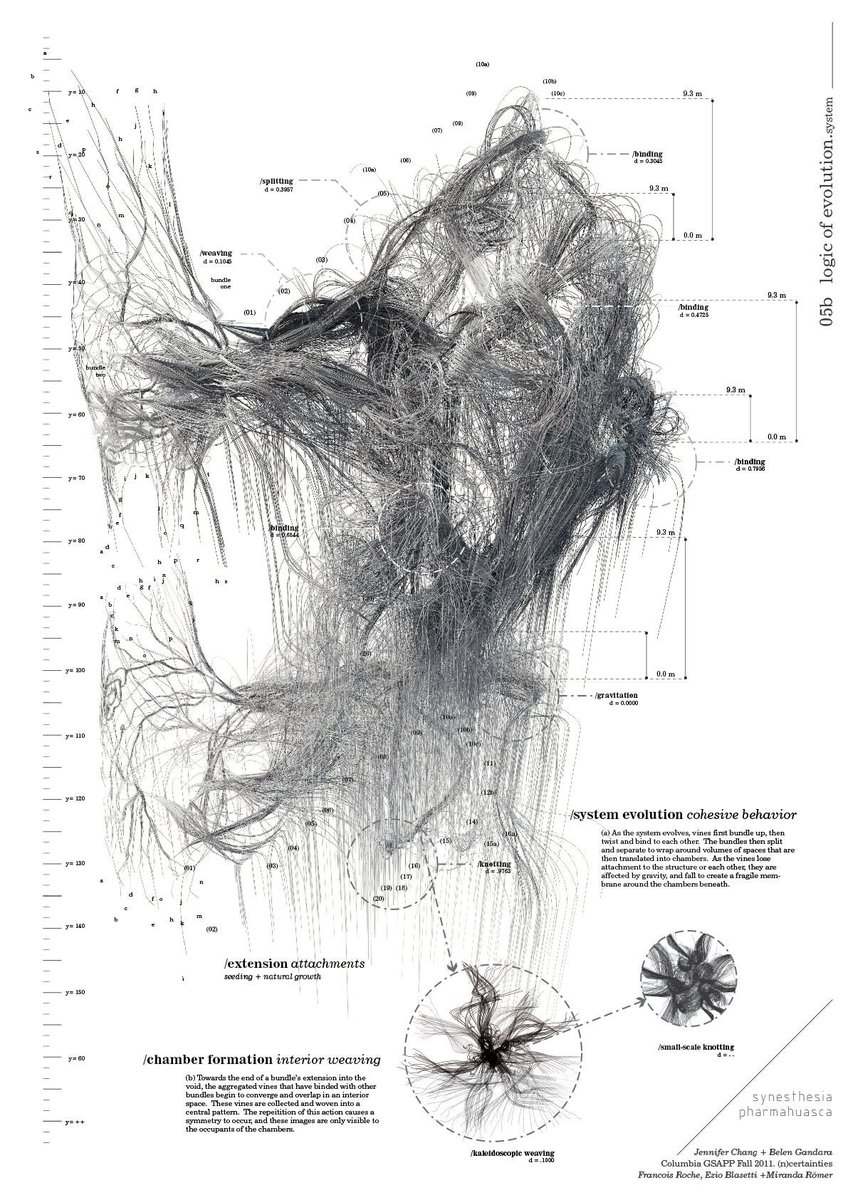
So funny to me how 99% of people who see this picture have absolutely no idea how profound it is
It is literally the bridge between the concept of internal alignment and its biological/architectural form
The entire human system cannot plan its map to ‘treasure’ (truth) ahead of time, it can only earn it through the accumulated logic of everything that grew before
Basically, true wisdom has an internal logic and this is it made visible
The only way to fully unlock it is the willingness to completely discard existing identities in the pursuit of personal ‘truth’
You already know what this truth is yet you’ve stacked so much armor on top of it via life experiences that the signal is buried too deep underneath to fully express
Mar 22

28
108
1,516
138,382
Mar 22
This is what my personal philosophy of 'volmaxxing' allows
Basically is deliberately seeking high-variance environments, experiences, and inputs that maximize the range of possible outcome WHILE also being aware enough to learn and iterate
x.com/BCalusinski/status/202…
Feb 23
I am fully convinced the best investment you can make right now is human capital (You)
Better than any stock or crypto coin
And the biggest unlock I've found for building it is something I call Volmaxxxing
Anybody can throw themselves into chaos via travel, new people, high stakes decisions, etc... but that is just stimulation
I realized that stimulation alone does basically nothing for you long term
The real benefits come from conscious observation while you're in it subconscious processing
The way you do this is enter the high variance environments and watch yourself in real time
Basically, how do you behave under pressure, what do you avoid, what do you chase, why are you doing what you're doing
Essentially detaching your identity from your behavior so you can actually see it clearly instead of just living inside it
Then the part that actually rewires you is when you update your mental model based on what you learned
EVEN IF WHAT YOU LEARNED PROVED YOUR EXISTING IDENTITY WRONG
Most people collect experiences and extract zero useful data
They travel and come back the same person with better photos or worse they come back with a new identity that is attached to some new abstract concept
The real goal is to volmaxxx repeatedly across wildly different environments and build something that genuinely can't be faked (ironically it is not built, it's already within you, haha)
This uniqueness is your 'essence,' which is basically your authentic state and a positioning in the world that makes you almost incomparable to the people around you
The willingness to learn is everything to achieve this btw
It's wild to me how people reach a certain status in whatever niche they're in and then completely stop out of FEAR
They build an ego around what they already know because they're terrified of losing what they have. So they can't sit across from someone who knows more than them in a specific area and genuinely say "I don't know, teach me"
Their status in one domain doesn't transfer to every other domain. They still have massive blind spots, but the ego won't let them see it
That willingness to admit you are WRONG is the entire difference between someone who compounds and someone who stagnates (Human Capital)
Then there's another step after this
All the variance in the world means nothing without the capacity to sit completely alone with your own thoughts (No phone, no music, etc)
Because the data you collect out there has to be processed in the mind
i realized that the polarity between Volmaxxxing and complete internal stillness is where the actual unlock happens
When you can move fluidly between deliberately entering high variance environments AND sitting in total silence without any internal discomfort, then that's when your subconscious starts piecing it all together
This allows you to fully process everything you experienced consciously and subconsciously
Then it compounds and provides you with invaluable signal
And then when you move through the world again you're operating from intuition that's been built on real processed experience instead of just reacting to whatever's grabbing your attention
Your signal stops being scattered and you stop building just to build or chasing just to avoid sitting with yourself
You start feeling genuine alignment in the silence and then moving toward what that alignment points at instead of forcing it
This is coherence and that's where the real human capital compounds
Most people will never have both. They're either constantly stimulated and never process anything or they isolate and never gather new input
The ones who figure out how to hold both simultaneously become almost impossible to compete with
I started to realize this last year after @CEOLandshark posted some absolute banger tweets on some of these concepts, then I went all in on trying to figure it out
Still early but it is incredible once you actually start embodying this stuff and realize a lot of what you were doing before was mechanical and built on a lie that was purely in your head/body
1
2
31
13,231