
Professor @Pennmedicine We create #CellTherapy #Genetherapy - @TmunityTx & @CapstanTx CoFounder, Past President @ISCTGlobal, @PNASNexus AE
Joined November 2010
- Tweets 14,183
- Following 474
- Followers 9,660
- Likes 6,009
2,152 Photos and videos

Pinned Tweet

11 Aug 2025
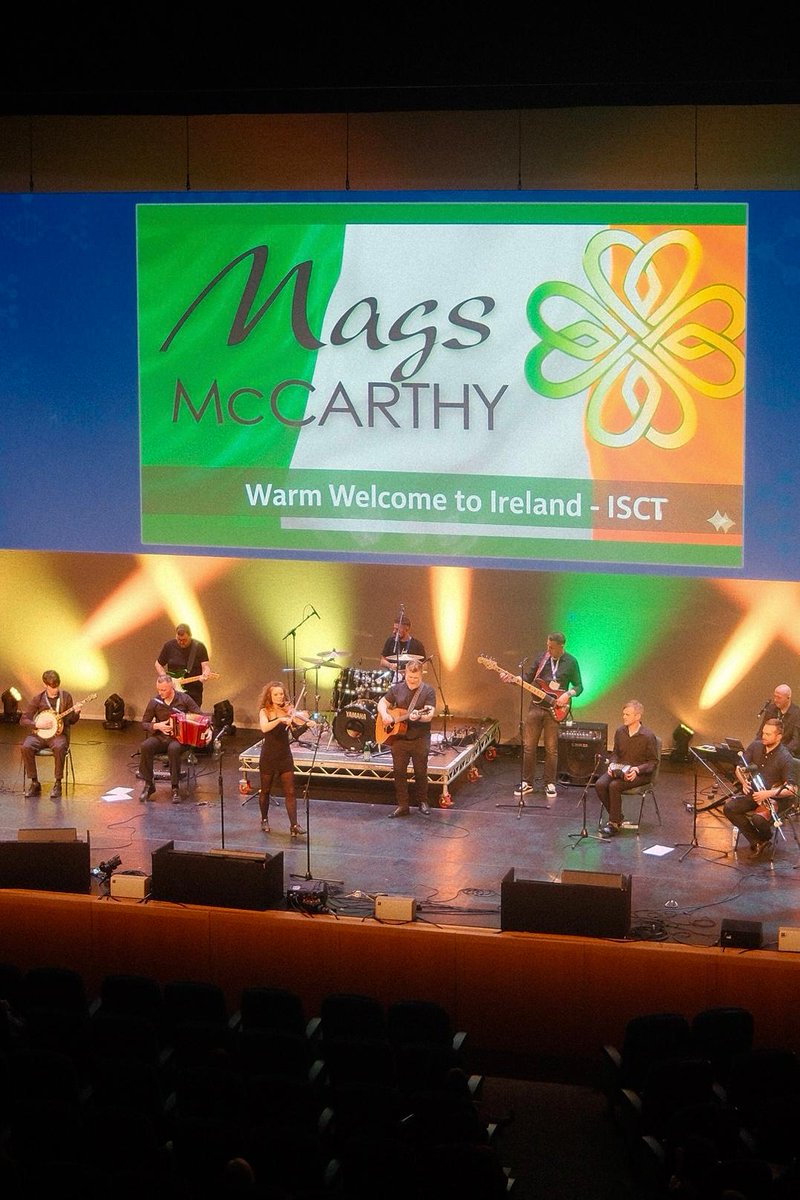
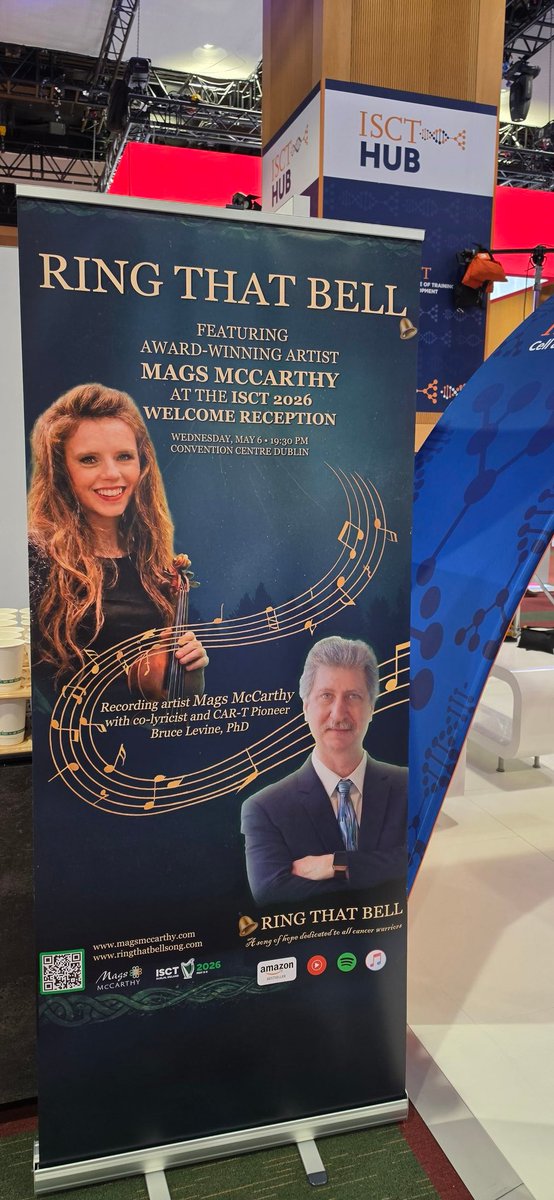
🎙️Excited to announce the website for Ring That Bell 🔔 which I co-wrote w internationally acclaimed Irish country music artist @mags__mccarthy. It tells the emotional story of a cancer patient facing relapse and the fierce advocacy, support, and groundbreaking science that offer new hope.
#cancer #cancerresearch #immunotherapy #hope
ringthatbellsong.com/
34
4
28
4,380
Safety and CMC rigor matter. But for ultra-rare fatal diseases, FDA flexibility has to be real, timely, and transparent, not aspirational. Patients do not have years to wait. #FDA #raredisease

Grace Science (co-founded by Carolyn Bertozzi) is running out of cash and says the FDA didn't let them use the "plausible mechanism" pathway bc, although they're developing an ultra-rare gene therapy, it's not an n-of-1 therapy. The FDA is also requesting a 2nd manufacturing run prior to BLA submission - a move the co. says could end it endpoints.news/grace-science…
3
888
The Theory of Relativity for your age
Jun 10

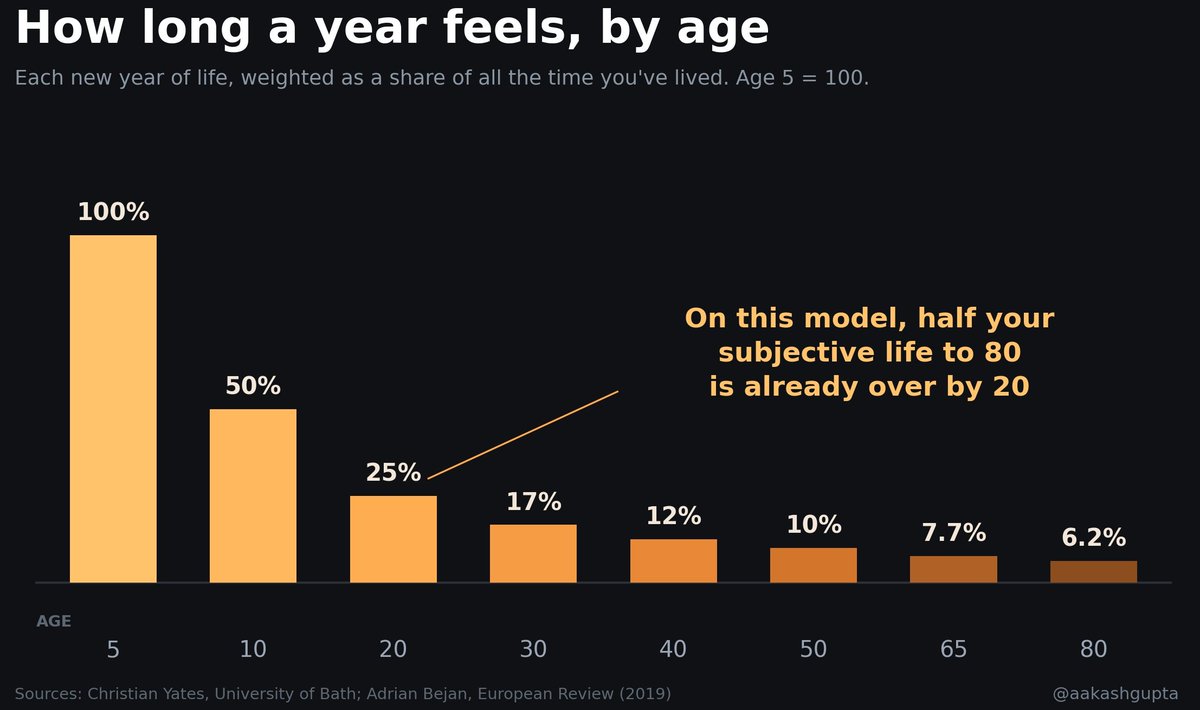
Half your subjective life may be over by age 20. The math behind this chart is simple and slightly horrifying.
To a 5 year old, one year is 20% of everything they have ever known. To a 50 year old, it's 2%. Mathematical biologist Christian Yates points out that on this proportional scale, the decade from 10 to 20 feels as long as the four decades from 40 to 80.
That's one mechanism. Duke's Adrian Bejan published a second in 2019, and his is physical. Your brain senses time through changes in mental images, and the rate you capture those images drops with age. Saccade frequency slows. Neural pathways lengthen and degrade as the network grows more complex. A child's brain shoots in rapid fire. An adult's brain captures fewer frames per second of experience. Fewer frames, faster flipbook.
There's a third layer, and you can actually pull this one. In the 1960s, psychologist Robert Ornstein showed people images for identical durations. The interesting ones felt like they lasted longer. Novel information stretches perceived time. Routine compresses it. That's why a week somewhere new feels like a month while a month of commutes collapses into one gray memory.
Which explains the cruel asymmetry of adulthood. Childhood is wall-to-wall novelty, so it feels endless. Then adult life optimizes for routine, the exact thing that deletes time from the record.
The clock is fixed. The frame rate is yours to change.
Your brain doesn't count years. It counts new frames.
456
Bruce Levine, Ph.D. 🇺🇦🥼🔬🧬🧪💉 retweeted

The right-to-try movement has a dark side that few of its supporters discuss:
Patients with incurable, fatal diseases and their families convinced to seek out unapproved, ineffective medicines by manipulative fraudsters touting misleading medical claims and falsified data.
You see these tragic stories play out on X and it's heartbreaking to watch. And AI slop has only worsened the problem.
23
14
132
28,148
Base editing in human embryos fixes some mutations and creates others (and creates other problems) article in reply
Why is Human Heritable Genome Editing controversial?
1) The science is not ready
Embryo editing still has major technical problems, including mosaicism, unintended edits, and uncertainty about long-term effects.
2) The risk is borne by a future person who cannot consent.
The edited child has no say in the intervention, and the change may be passed to future generations.
3) There are often safer alternatives.
For many inherited diseases, IVF plus preimplantation genetic testing can avoid disease without editing embryos.
4) It creates a pathway from disease prevention to enhancement.
The same tools used to prevent disease could be redirected toward traits such as height, cognition, appearance, or perceived “optimization.” h/t @UrnovFyodor for calling the ultrawealthy advocates of HHGE "baby Improvers"
5) It risks privatized eugenics.
If genetic “improvement” becomes a service for the wealthy, it could deepen inequality and normalize the idea that some genomes are preferable to others.
6) Governance is weak and jurisdiction-shopping is likely.
Even where embryo editing is restricted or banned, private actors may seek permissive jurisdictions, weak oversight, or opaque pathways to proceed.
#geneediting #ethics #bioethics
6
7
17
5,156
Base editing in human embryos fixes some mutations and creates others (and creates other problems) cen.acs.org/biological-chemi…
1
3
357
1
2
530
Bruce Levine, Ph.D. 🇺🇦🥼🔬🧬🧪💉 retweeted

Jun 5
Video: Police Tussle With Diabetes Experts at ADA Meeting medpagetoday.com/special-rep…
3
6
18
9,271
Bruce Levine, Ph.D. 🇺🇦🥼🔬🧬🧪💉 retweeted

Jun 5
(2)
Causing needless harm and suffering to the helpless. Because their baby improver parents have no idea what they are doing.
1
3
9
2,520
Bruce Levine, Ph.D. 🇺🇦🥼🔬🧬🧪💉 retweeted

What are we afraid of? Some possibilities
(1) genetic determinism
(2) mutant babies
(3) business casual eugenics (i.e. genetic enhancements marketed by people in puffer vests.)
(4) unrealistic parental expectations
Jun 5

.@carlzimmer clearly sums up data and impact of another foray of gene editing into human embryos. I thank Carl for the opportunity to say: the data are ho-hum.
The impact? "Baby improvers" worldwide will read and cheer and put to use.
Be afraid. I am.
nytimes.com/2026/06/04/scien…
4
2
19
7,908
Bruce Levine, Ph.D. 🇺🇦🥼🔬🧬🧪💉 retweeted

Turns out we may already have an anti-aging vaccine.
Created originally to prevent shingles, it appears to influence aging and cognitive decline - far beyond anything it was designed to do.
The beauty of science.
realclearscience.com/blog/20…
92
643
2,617
130,772
America's research leadership depends on keeping science driven by evidence, not ideology.
Jun 4

The @WHOMB has proposed a major update to the Uniform Guidance, the rules that govern federal grants. ASGCT breaks down several provisions critical to the biomedical research community, including changes related to peer review, award oversight, and scientific communication. Read more: bit.ly/4vusiou
#ASGCTAdvocacy
2
9
1,806
Hospitals See Diseases Resurge as Vaccinations Decline nytimes.com/2026/06/02/well/…
4
358
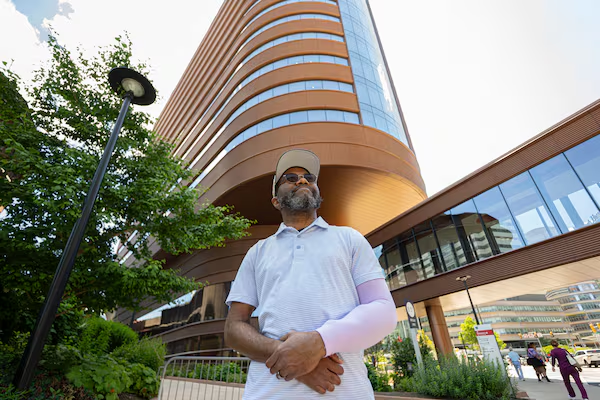
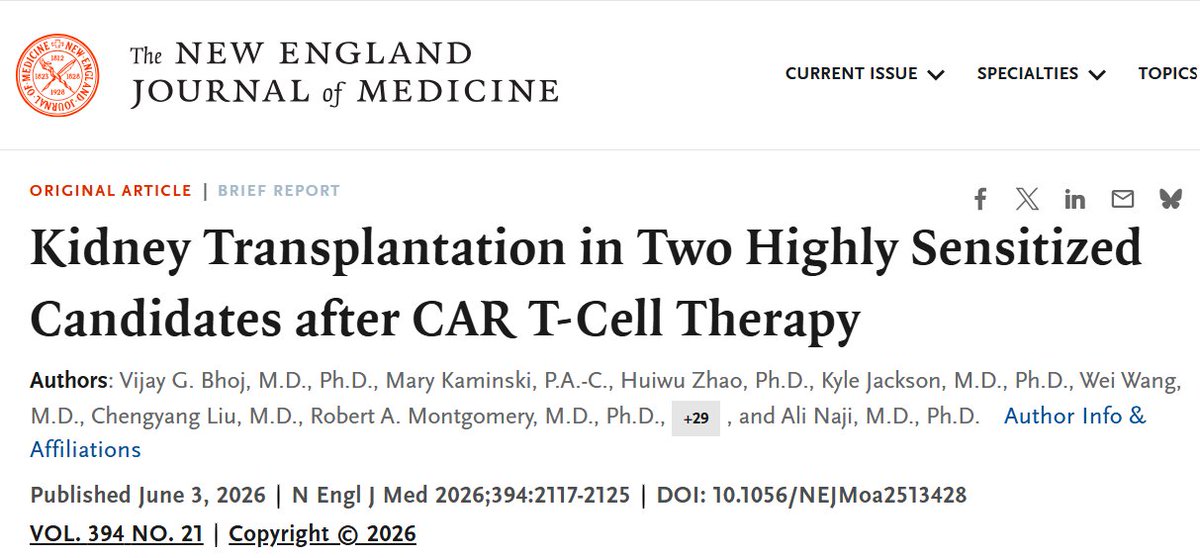
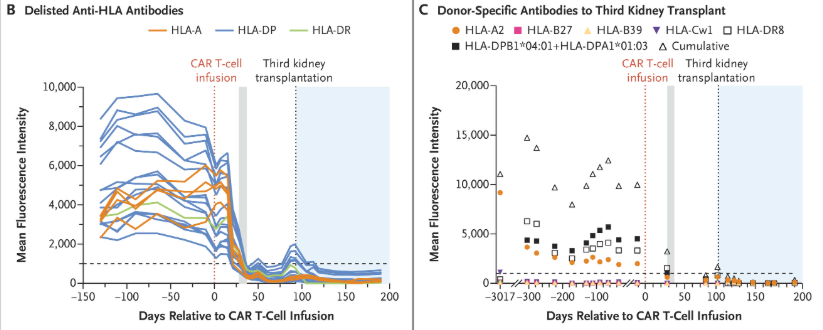
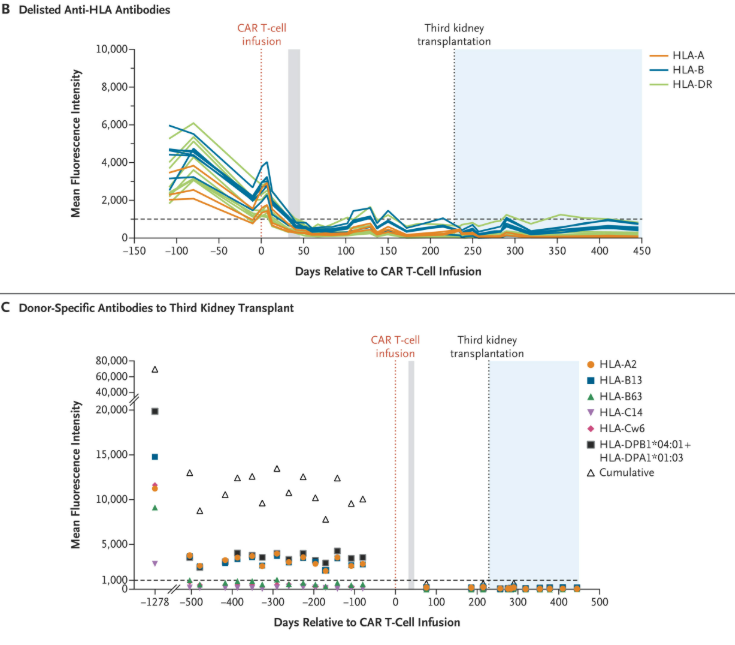
🚨NEW @NEJM CAR T cells expanding applications! Here CAR T facilitate kidney transplantation in highly sensitized people. dual CD19 BCMA CAR T enabled kidney transplantation in two highly sensitized patients after reducing anti-donor antibody barriers, with no severe CRS/neurotoxicity. Another CAR T 1st @PennMedicine
3
17
53
8,909
Recognition is due to Vijay Bhoj @PennPathLabMed who spent years building the scientific foundation from studying alloantibodies in myeloma patients treated with CD19 and BCMA CAR T cells, to mouse & NHP studies, to clinical translation. This was not overnight science.
2
1
9
443
Ali Naji led the clinical trial NCT06056102, a collaboration between researchers @PennMedicine @nyulangone @MassGenBrigham
3
180

🚨NEW @NEJM CAR T cells expanding applications! Here CAR T facilitate kidney transplantation in highly sensitized people. dual CD19 BCMA CAR T enabled kidney transplantation in two highly sensitized patients after reducing anti-donor antibody barriers, with no severe CRS/neurotoxicity. Another CAR T 1st @PennMedicine
2
18
3,617
Historic. Daraxonrasib did not come from nowhere. It stands on decades of #NIH & #NCI supported work on RAS biology to tackle one of cancer’s most stubborn “undruggable” targets.
Credit Revolution Medicines for execution and clinical development. We should also credit the public federally funded research ecosystem that made the target, tools, and translational path possible.

Cheers, chills, and a standing ovation when RASolute 302 showed unprecedented survival on daraxonrasib for patients with progressive pancreatic cancer
Seldom do you sense you’re witnessing a historic moment in cancer care but this feels like ras targeting has arrived
#ASCO26
1
8
63
7,571
Bruce Levine, Ph.D. 🇺🇦🥼🔬🧬🧪💉 retweeted
May 31
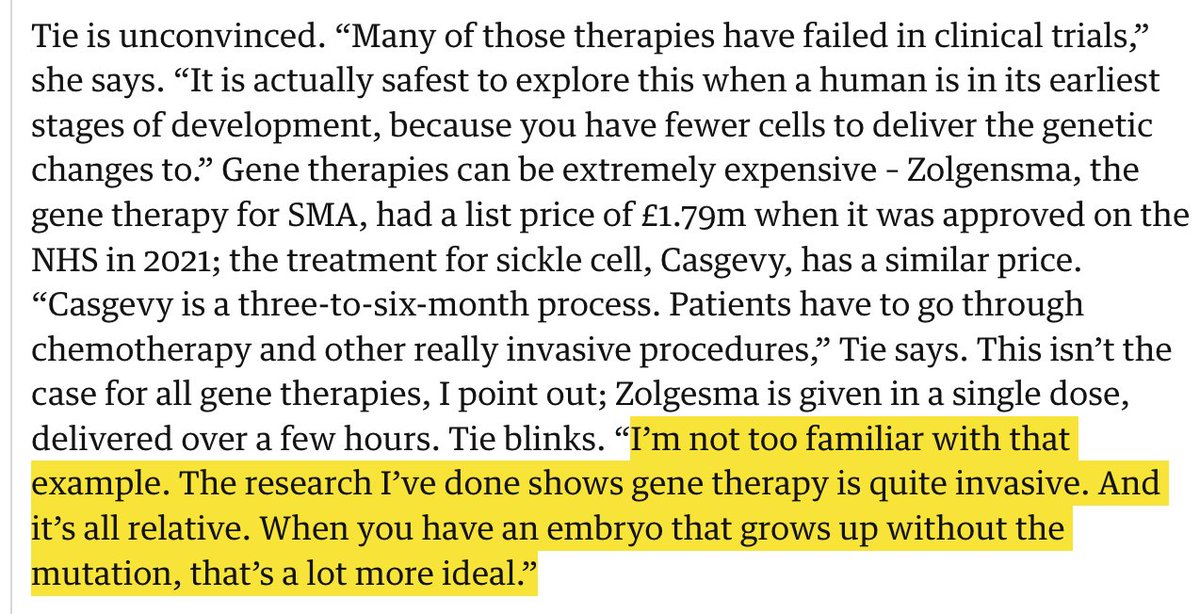
Every journalist who interviews this vile charlatan is doing one thing: giving her a platform to continue spewing ignorant self-serving garbage.
SHE DOES NOT KNOW ABOUT ZOLGENSMA.
Just think about what that means.
Why, @jennykleeman? WHY did you choose to write this piece?
1
1
8
3,248