
The New England Journal of Medicine is the world’s leading medical journal and website.
- Tweets 37,507
- Following 434
- Followers 992,296
- Likes 2,157
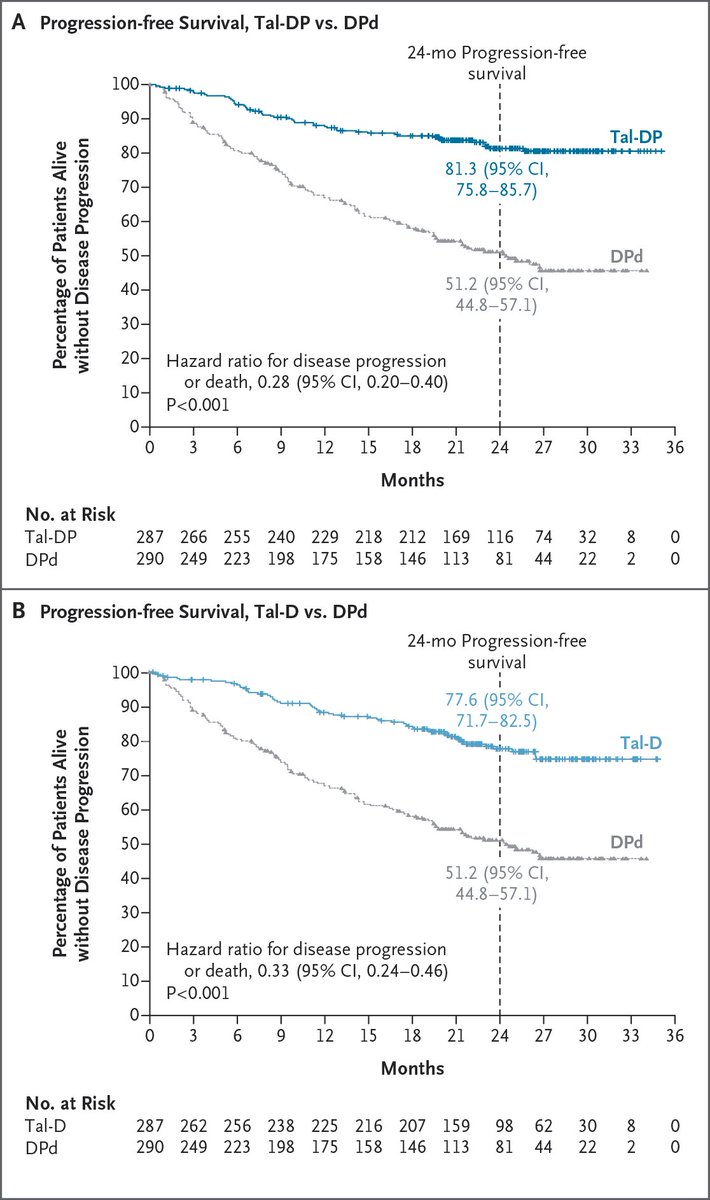



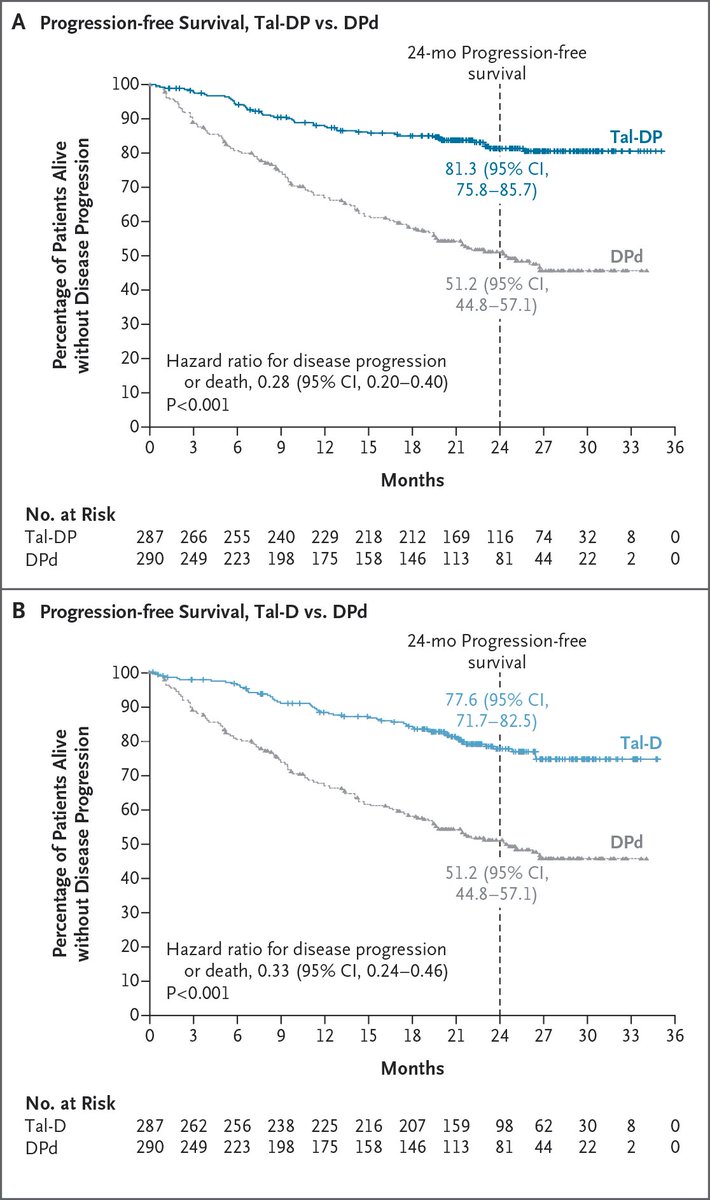


ALT This image contains two Kaplan-Meier graphs comparing progression-free survival between different treatments over 36 months. Graph A shows "Tal-DP" and "DPd" treatment groups. Graph B shows "Tal-D" and "DPd" treatment groups. Both graphs display confidence intervals. The number of patients at risk is listed below each graph at different time points.
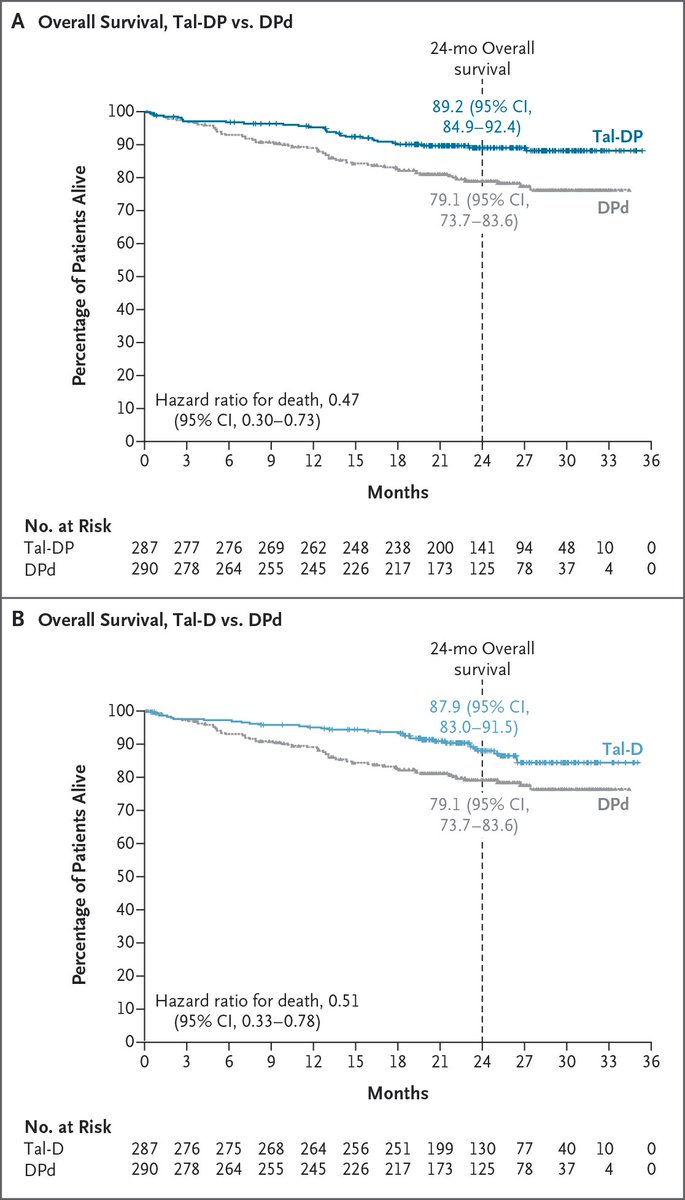
ALT Graph comparing overall survival rates for Tal-DP versus DPd and Tal-D versus DPd. Part A shows Tal-DP and DPd. Part B shows Tal-D and DPd. Plots indicate hazard ratios and confidence intervals. Months are on the x-axis, and percentage of survival on the y-axis.
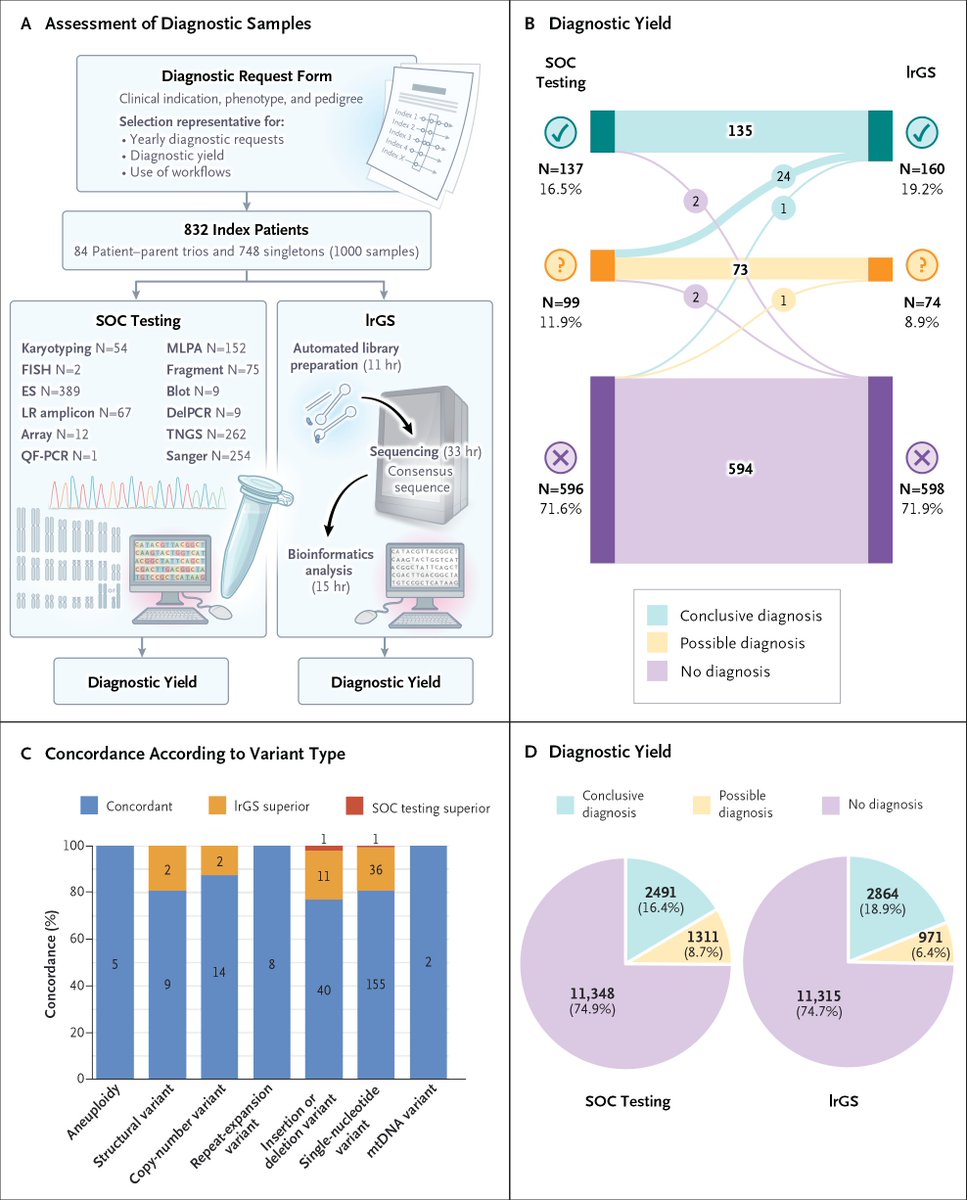
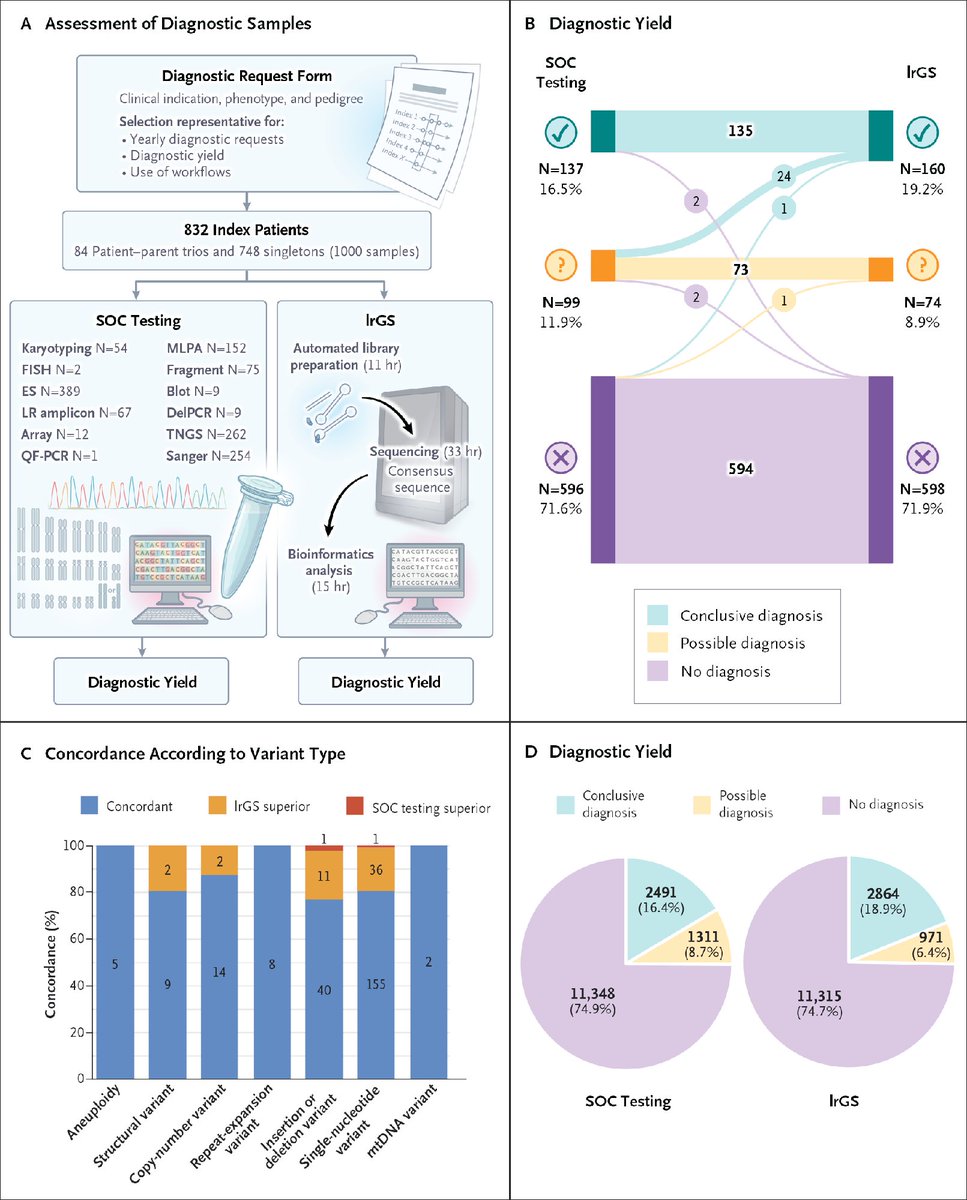
ALT This image is a detailed infographic on standard-of-care testing and long-read genome sequencing as first-tier approaches to genetic testing. It includes an assessment of diagnostic samples, diagnostic yield, concordance according to variant type, and diagnostic yield.
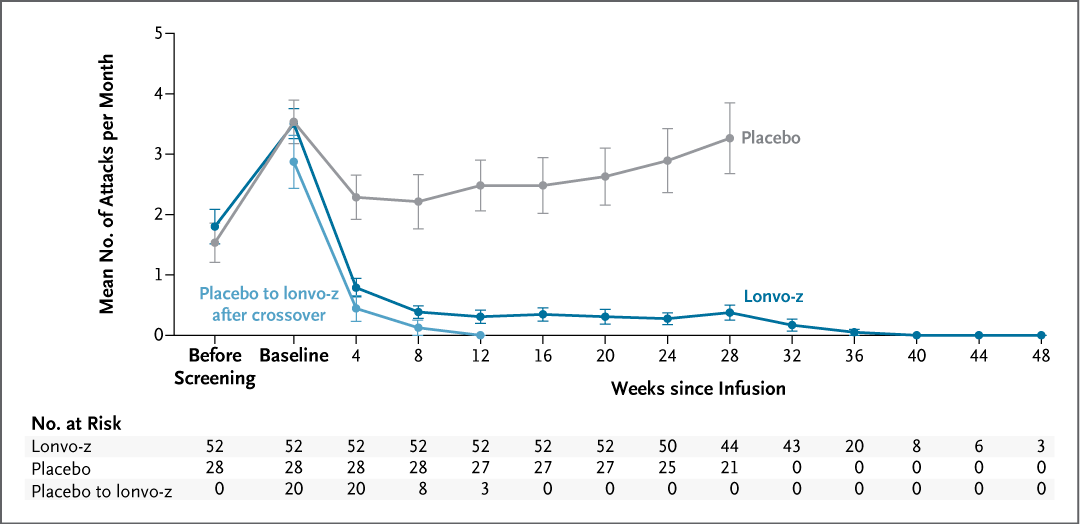
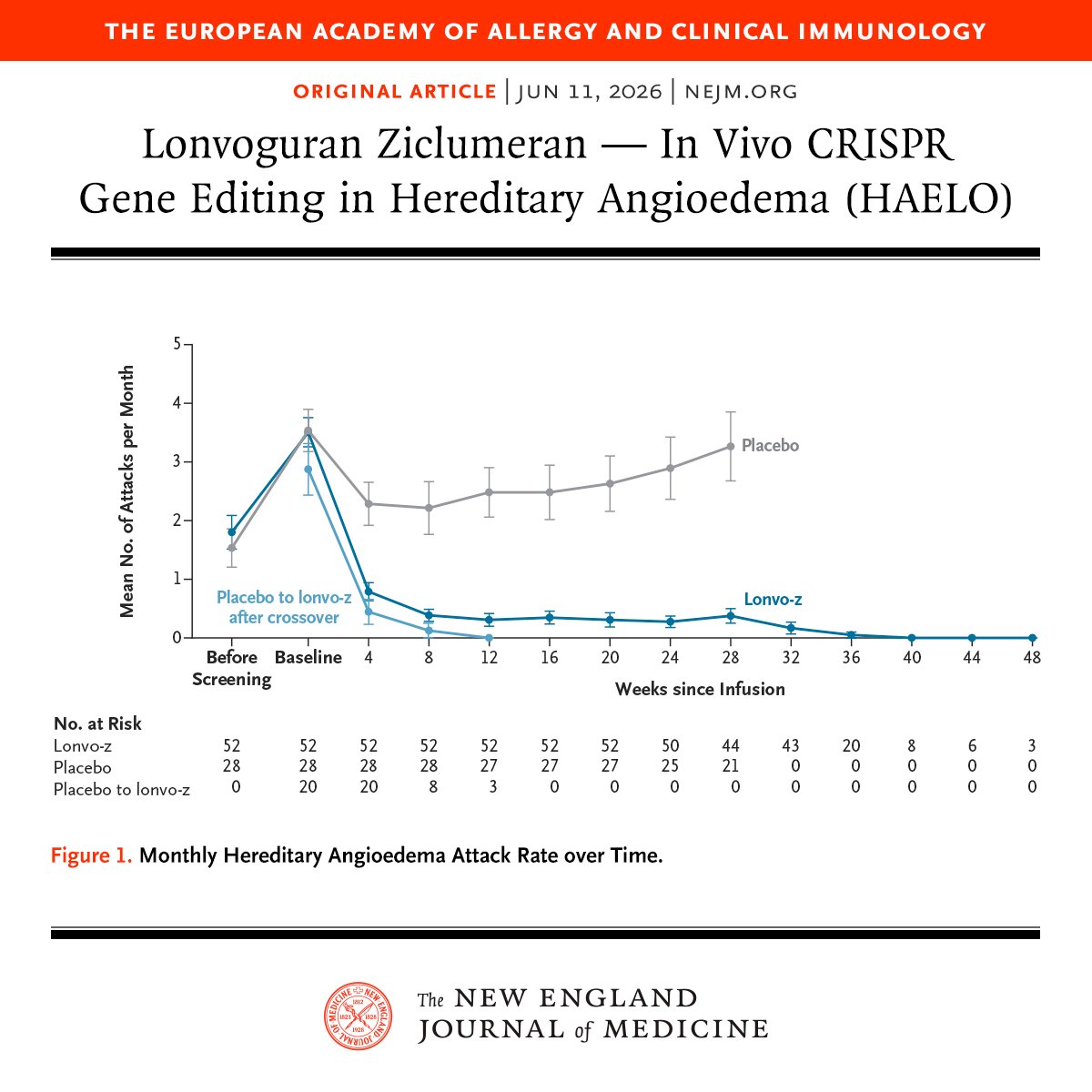
ALT A graph showing monthly hereditary angioedema attack rate over time. "Weeks since Infusion" is on the x-axis, while "Mean No. of Attacks per Month" is on the y-axis. The table below shows the number of participants at risk in each group at different time points.
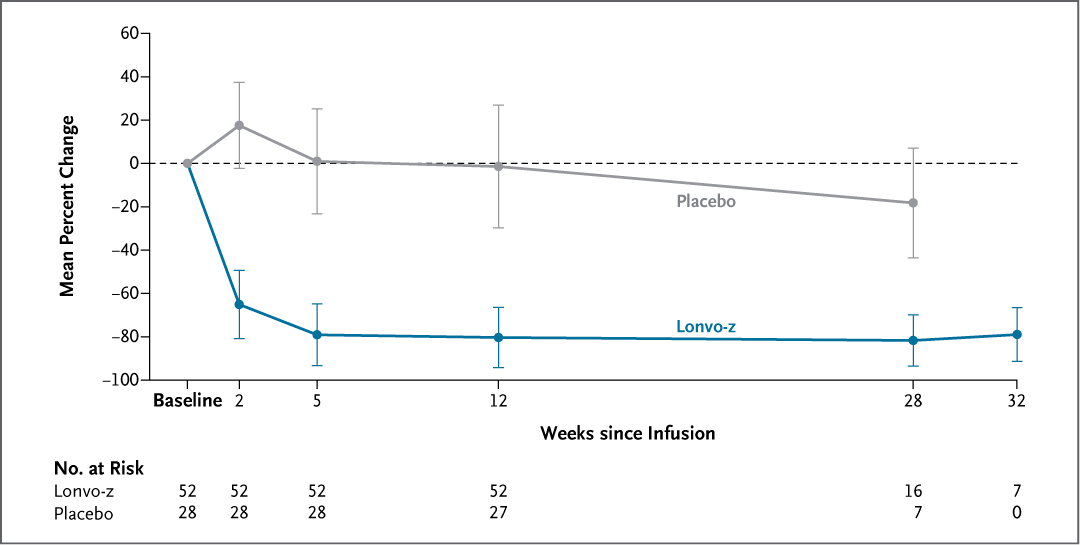
ALT A graph showing the change from baseline in total plasma kallikrein protein levels. "Weeks since Infusion" is on the x-axis, while "Mean Percent Change" is on the y-axis. The table below shows the number of participants at risk in each group at different time points.
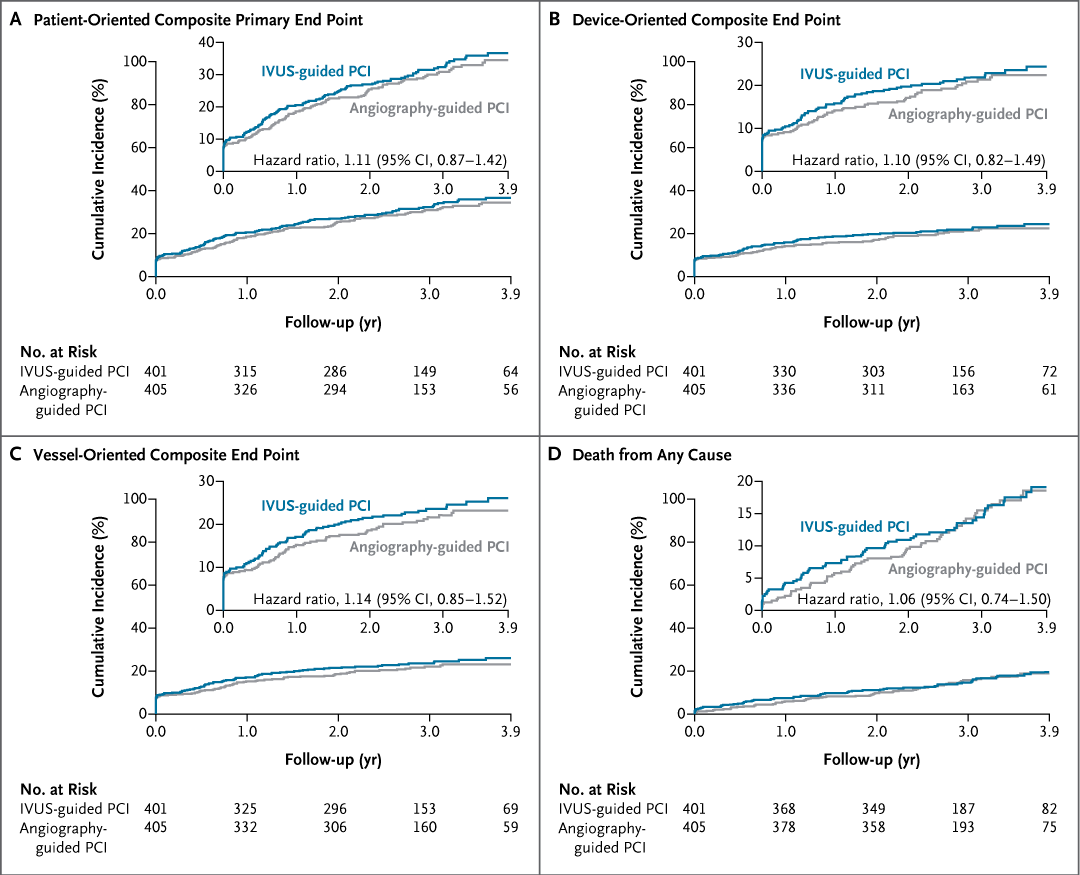
ALT A set of four line graphs showing the time-to-event curves for the primary and secondary end points. Each graph features annotations of hazard ratios with confidence intervals. The graphs denote different endpoints: A) Patient-Oriented Composite Primary End Point, B) Device-Oriented Composite End Point, C) Procedure-Oriented Composite End Point, D) Death from Any Cause. The number of participants at risk is listed below each graph for both intervention types.
ALT A quote from a Perspective published in the New England Journal of Medicine discusses patients, racial categories, and allelic variants. The excerpt is titled “Prescription without Precision — Dangers of Dosing on the Basis of Race as Biology” by Harsimar K. Ahuja, M.S., David S. Jones, M.D., Ph.D., and Winfred W. Williams, M.D. The background is a solid purple.
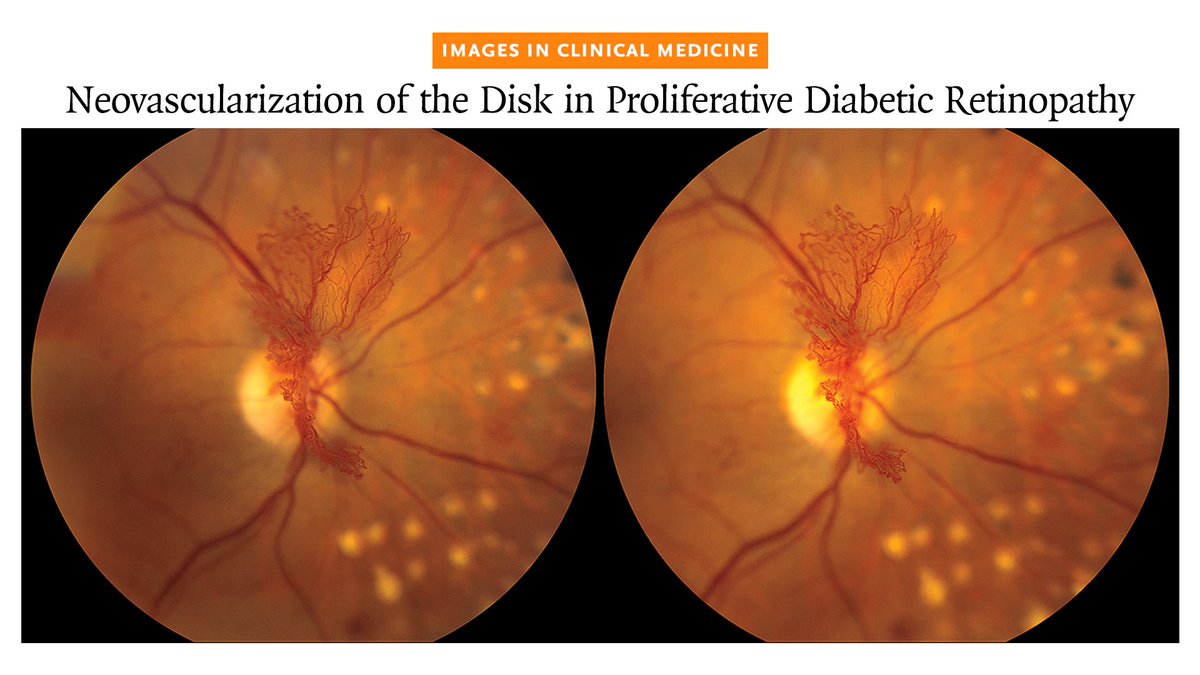
ALT A patient’s stereo fundus photographs showing neovascularization of the disk extending out from the plane of the retina into the vitreous cavity. The article title, "Images in Clinical Medicine: Neovascularization of the Disk in Proliferative Diabetic Retinopathy," appears above them.
ALT This image features a promotional banner for a new audio interview with Edward T. Ryan, M.D., on controlling cholera. There is a headshot of the interviewee on the left, and an audio waveform graphic at the bottom.
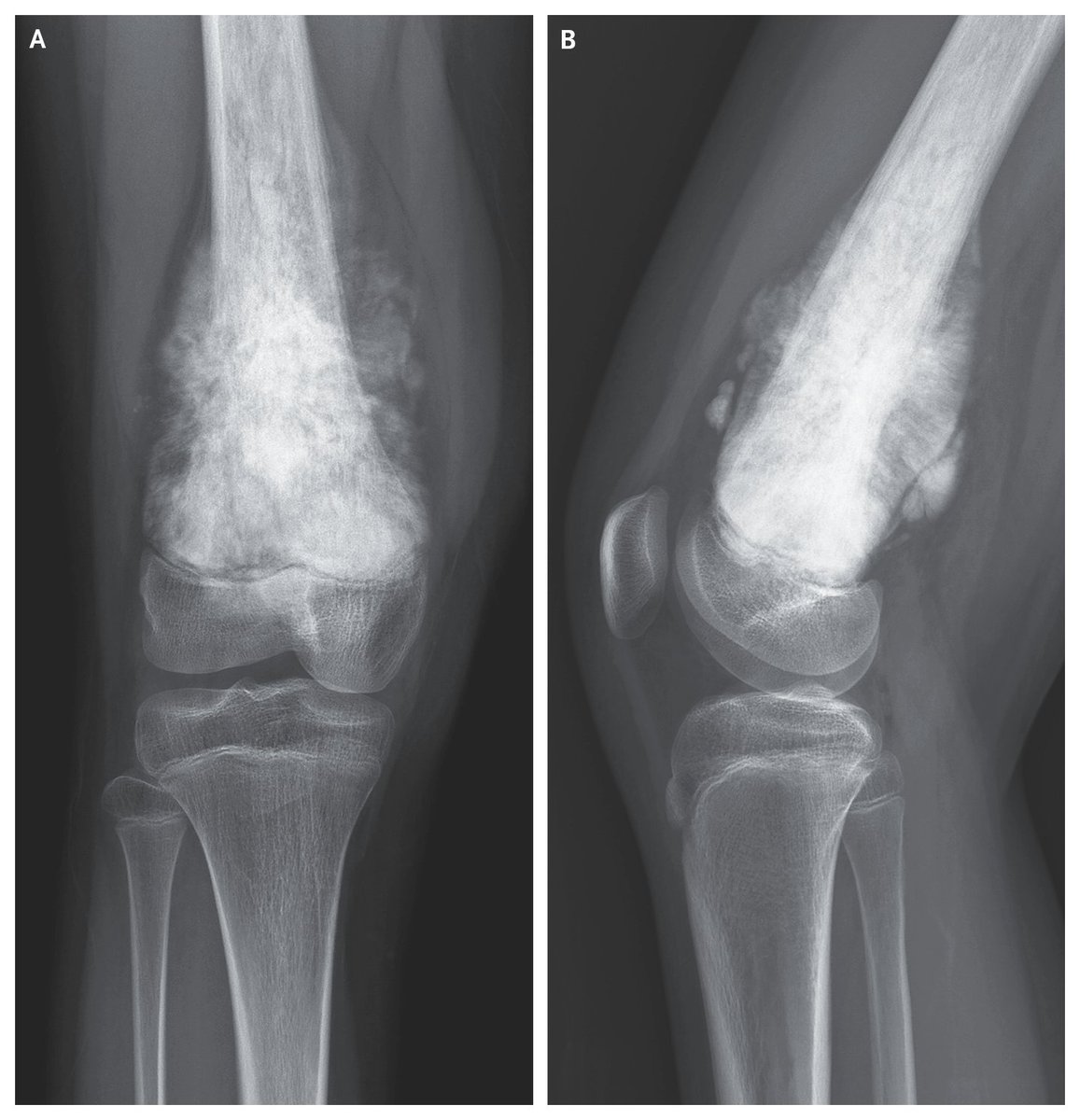
ALT Radiographs of the knee showing a metaphyseal osteoblastic lesion with ill-defined margins and cortical destruction in the distal femur. At the top, "Images in Clinical Medicine" appears in white text inside an orange box, followed by the article title, which is "Osteosarcoma."
ALT This image contains two Kaplan-Meier graphs comparing progression-free survival between different treatments over 36 months. Graph A shows "Tal-DP" and "DPd" treatment groups. Graph B shows "Tal-D" and "DPd" treatment groups. Both graphs display confidence intervals. The number of patients at risk is listed below each graph at different time points.
ALT This image is a detailed infographic on standard-of-care testing and long-read genome sequencing as first-tier approaches to genetic testing. It includes an assessment of diagnostic samples, diagnostic yield, concordance according to variant type, and diagnostic yield.
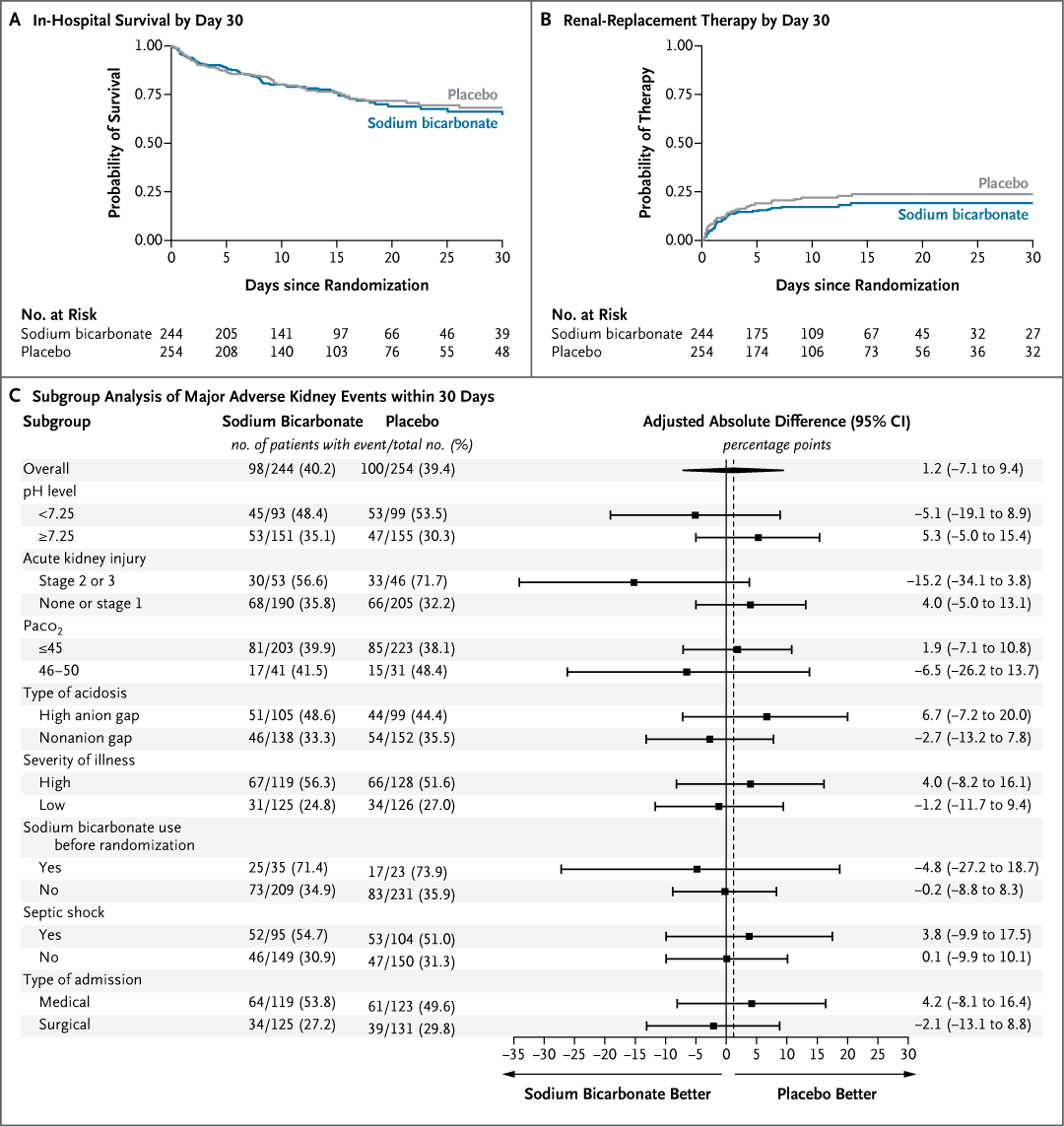
ALT This image contains three panels of a clinical study graph and tables. Panel A displays a Kaplan-Meier survival curve comparing in-hospital survival by day 30 between sodium bicarbonate and placebo. Panel B shows a similar curve for renal-replacement therapy by day 30. Panel C contains a forest plot analyzing major adverse kidney events within 30 days across various subgroups, highlighting differences between sodium bicarbonate and placebo.
ALT A graph from the article "Lonvogran Zicluemeran — In Vivo CRISPR Gene Editing in Hereditary Angioedema" published in the New England Journal of Medicine, dated June 11, 2026. The trial name, HAELO, is in parentheses next to the article title. A graph the mean number of angioedema attacks per month between "Placebo" and "Lonvoz-2" groups over time.
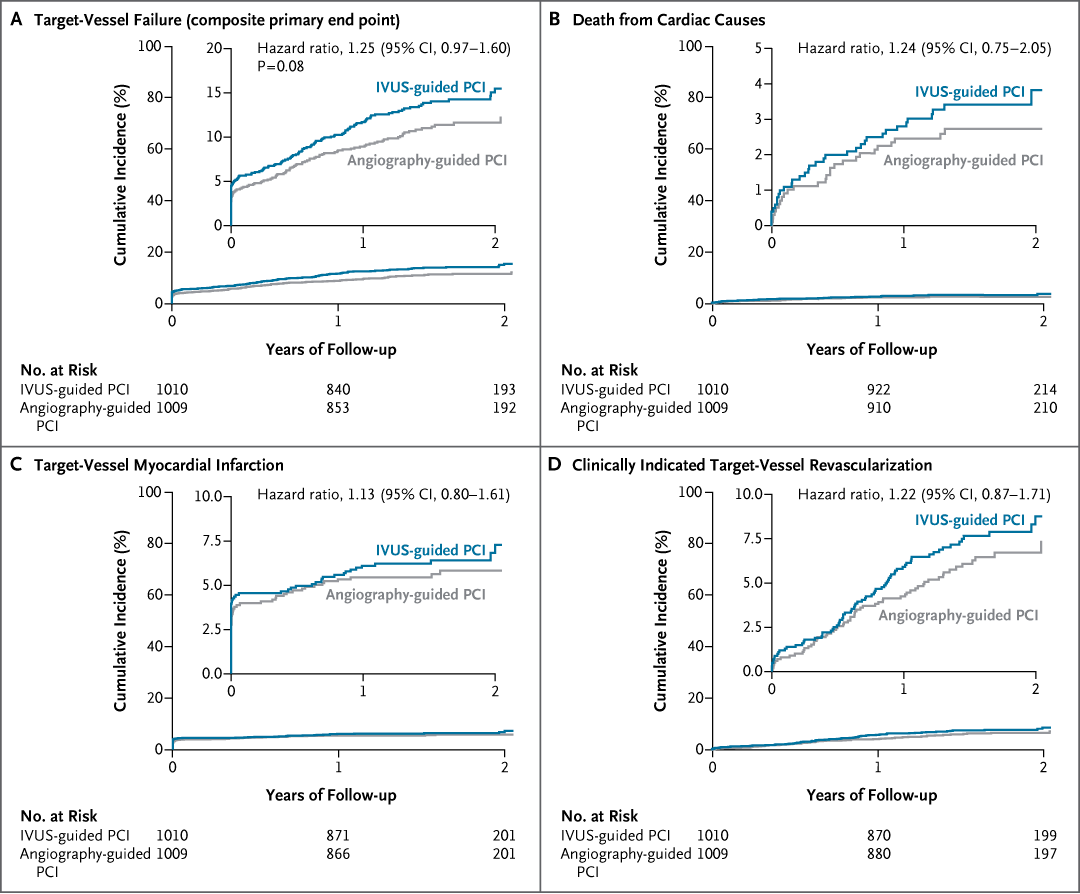
ALT An illustration of a heart with visible arteries on the left. On the right are intravascular ultrasonography–guided PCI (top) and angiography-guided PCI (bottom) with the word "vs." between them.

ALT The image features a quote from a Perspective article in the New England Journal of Medicine. The quote discusses the mismatch in attention gambling receives in health care compared to its potential harm. The article, titled "Detecting Gambling-Related Problems: An Opportunity to Reduce Suicidality?" is by Debi A. LaPlante, Ph.D., and Heather M. Gray, Ph.D.
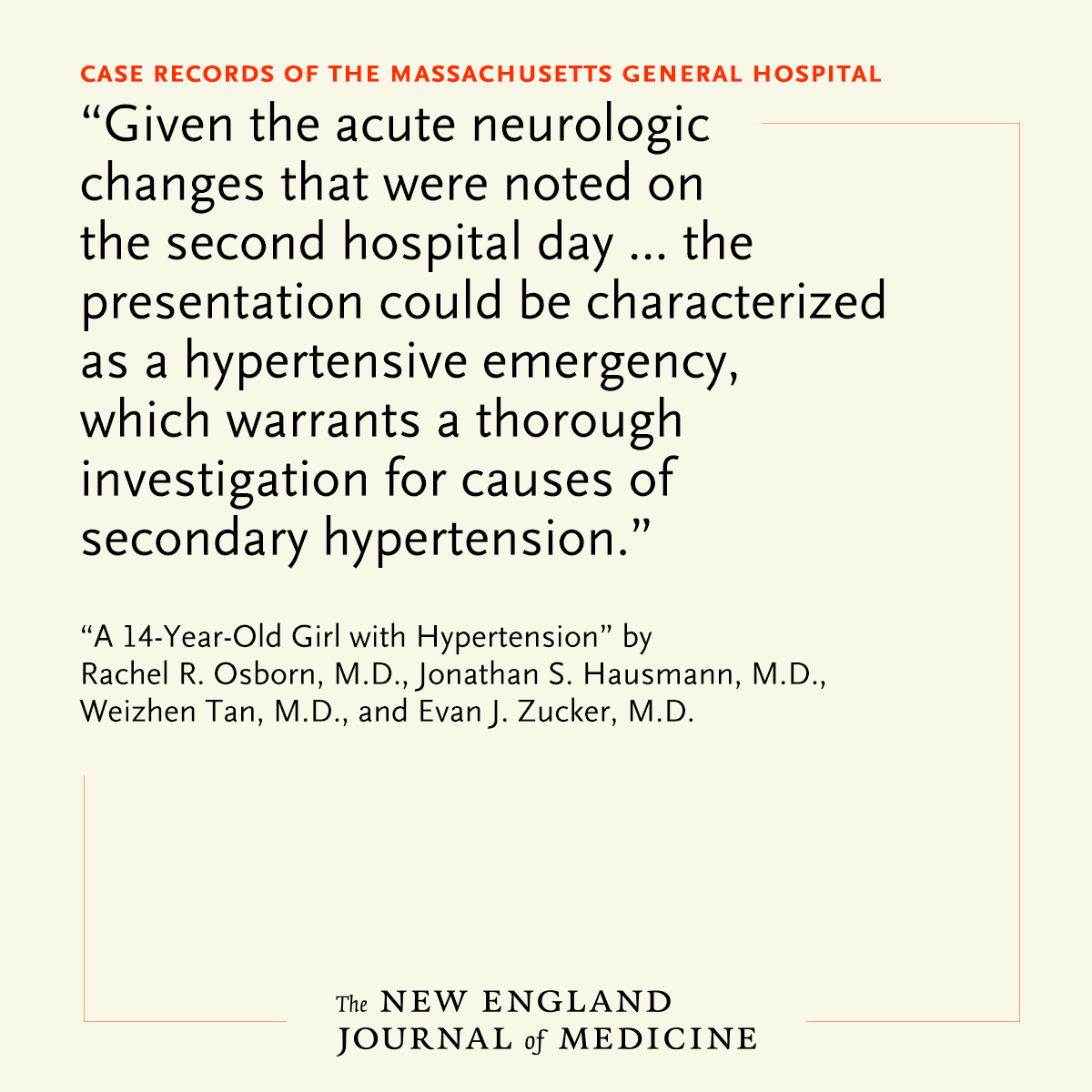
ALT A quote from a Case Record of the Massachusetts General Hospital about a 14-year-old girl with hypertension. Text reference: from Rachel R. Osborn, M.D., Jonathan S. Hausmann, M.D., Weizhen Tan, M.D., and Evan J. Zucker, M.D. Published in the New England Journal of Medicine.