Joined July 2012
- Tweets 4,634
- Following 1,199
- Followers 2,262
- Likes 5,184
243 Photos and videos











Pinned Tweet

4 Aug 2024
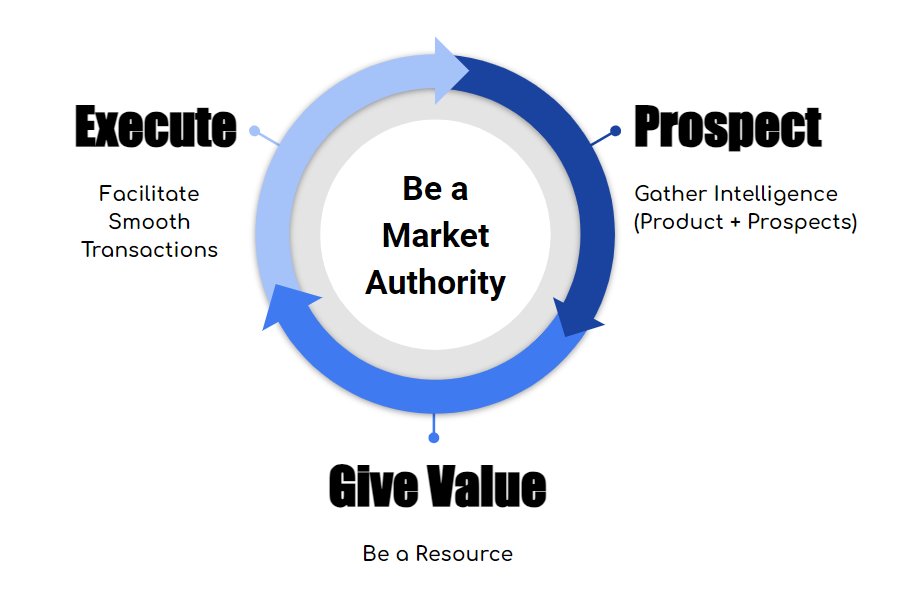
CRE Brokerage
This is it. This is the Job.
1
1
19
1,860
Ben Blumenthal | NYC office brkr retweeted

Jan 11
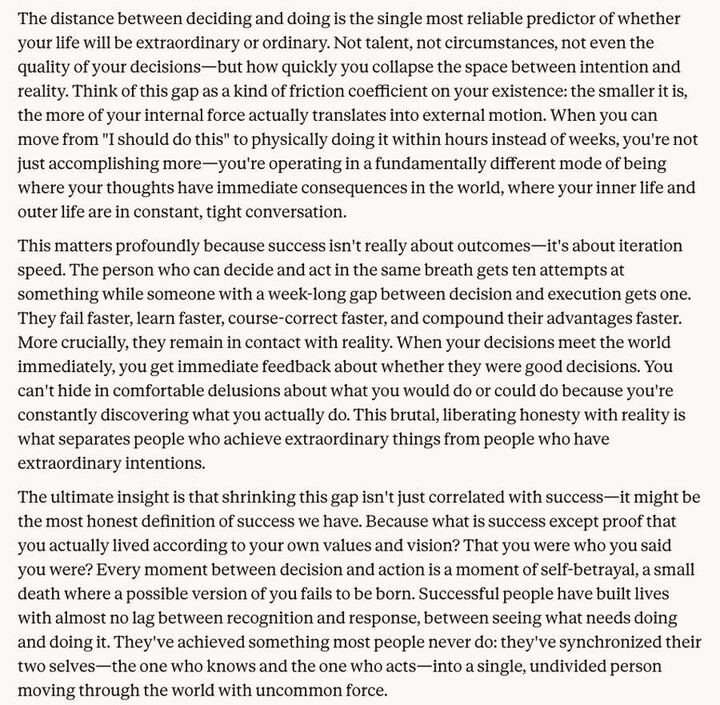
“The distance between deciding and doing is the single most reliable predictor of whether your life will be extraordinary or ordinary.”
These three paragraphs will change your life:
235
1,546
11,214
554,857
Ben Blumenthal | NYC office brkr retweeted

25 Dec 2025
VaYigash: Five Words and the Many Meanings of Mussar
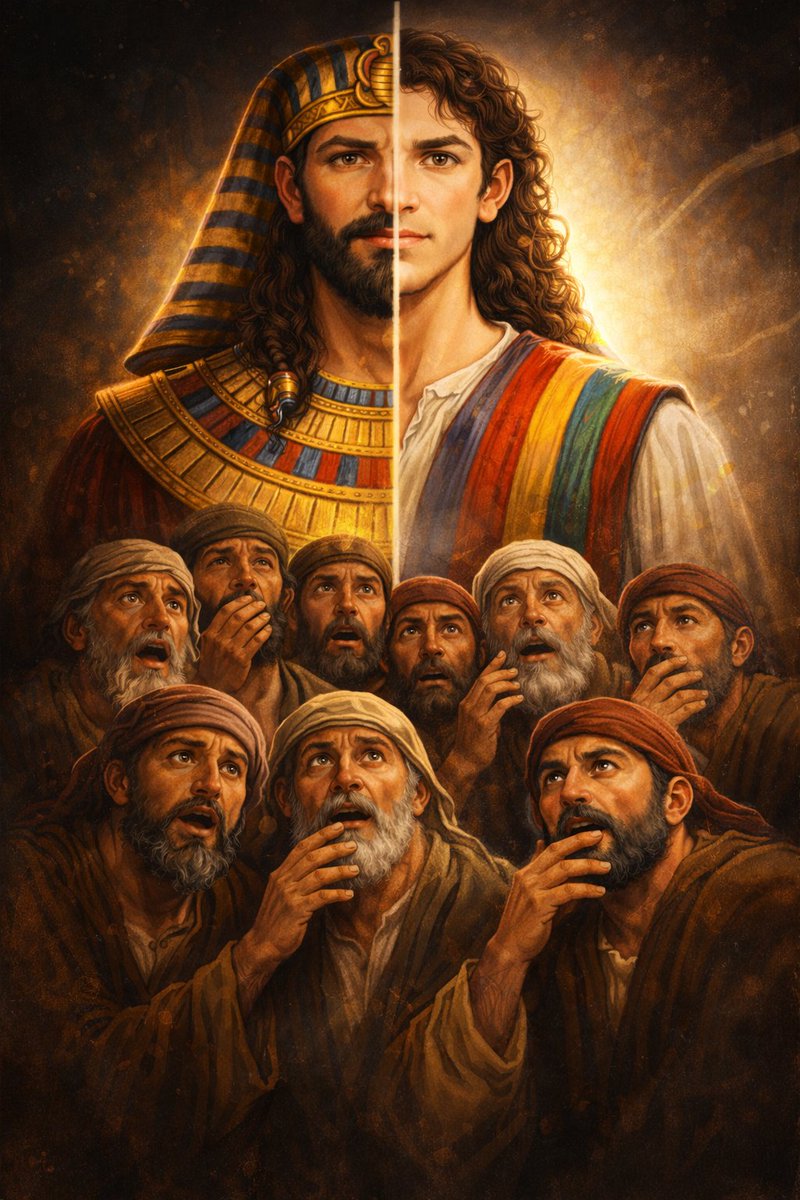
Joseph's self-revelation to his brothers is undoubtedly a moment of great drama and emotion. Five Hebrew words: Ani Yosef; ha'od avi chai? "I am Joseph. Is my father still alive?" So little said, so much unsaid; and among all the possibilities, the Rabbis detected one dominant theme here: rebuke.
The text tells us that his brothers could not answer him, for they were overwhelmed—nivhalu mipanav. Rashi tells us, “because of the bushah, the shame”. The Midrash (Gen. Rabbah 93:10) says more: "Woe to us from the day of judgment, woe to us from the day of rebuke." If the brothers, confronted by their youngest sibling, were reduced to speechless paralysis, what will become of us when we face the ultimate reckoning? (See also Chagigah 4b.)
Yet this observation demands explanation. Where, precisely, is the rebuke? Joseph offers no lecture, delivers no sermon. He simply states his identity and asks a question. Wherein lies the devastating tochachah that silenced these formidable men?
The Midrash itself underscores the paradox: "Joseph was the youngest of the tribes, and they could not withstand his rebuke." The implication is clear—if the youngest could produce such an effect with so few words, how much more so when we stand before the Divine. But this only intensifies the question. What was the rebuke?
The interpreters offer a constellation of answers, each illuminating a different dimension of moral confrontation—and each, perhaps, capturing a different face of what it means to be truly called to account.
The Question That Answered Itself
At its simplest level, the rebuke inheres in the question itself. The Netziv and the Torah Temimah note that "Is my father still alive?" is not a request for information—Joseph had just heard Judah speak at length about their father. It is, rather, a rhetorical thrust: Considering what you have put him through, could he possibly have survived?
The Lubavitcher Rebbe sharpens this further. Joseph is saying: I know that I am alive, standing before you. And I know that one who mourns a living person cannot achieve comfort, cannot find closure, because the soul senses the truth even when the mind does not. If our father has been unable to be comforted for twenty-two years—if he has been suffering without respite this entire time—can he still be alive after enduring such unrelenting anguish? The words carry their own accusation, requiring no elaboration.
The Inverted World
R. Avraham Pam, in his Atarah LaMelech, brings a different perspective, one that transforms this moment from a personal confrontation into a window onto ultimate reality. He connects Joseph's revelation to the Talmudic account (Bava Batra 10b) of one who glimpsed the World to Come and reported seeing an olam hafuch—an inverted world, where those elevated in this life occupy lowly positions, and the downtrodden rise to prominence.
This vision, R. Pam suggests, constitutes the most profound mussar imaginable. We frequently lament that life is unfair, yet we are often beneficiaries of that very unfairness. Others may deserve our position, our success, our stature—and in a world of true justice, the calculus would look quite different.
The brothers stood before a living demonstration of this principle. They had positioned themselves as Joseph's superiors, dismissing him as an arrogant dreamer unworthy of serious consideration. The "little brat" with grandiose visions, the youngest who needed to be managed, contained, removed. And now? He sat enthroned as viceroy of Egypt, second only to Pharaoh himself. He is not only alive; he is in charge. He holds power, resources, and their very fate in his hands.
That reversal—the world turning over in one instant—is itself a taste of the olam hafuch. And it says, without saying: your hierarchy was wrong. Your sense of who stands where was wrong. Your confidence about "who you are" and "who he is" was wrong.
What greater rebuke can there be than a glimpse of what it would be like if the world would indeed be "fair"?
The Mirror of "Hypocrisy"
The Beit HaLevi identifies a different mechanism at work, one that strikes at the architecture of self-deception. Throughout the preceding chapter, Judah has delivered an impassioned plea centered on paternal concern: How can we return without Benjamin? Our father will die of grief. The responsibility will be ours to bear. How can you countenance such cruelty?
Joseph's response exposes the staggering blind spot in this argument. Throughout Judah's speech, the brothers have positioned themselves as the ones who truly understand what it means for a father to lose a beloved son—and they have cast the Egyptian viceroy as the callous one, indifferent to such suffering. They speak as though the very idea of depriving Jacob of his child is a moral horror that any decent person should recoil from, implicitly condemning anyone who would inflict such pain.
Ani Yosef. I am the son you sold into slavery, the one whose absence has tormented our father for over two decades. Is he even still alive after enduring that loss? You stand here in judgment of someone else's supposed indifference to a father's grief—while you yourselves are the ones who caused it.
This is the power of negiah—the way self-interest distorts perception. We are quick to identify moral failings in others while remaining oblivious to identical patterns in our own conduct. This is not true hypocrisy, which would signify utter falsity; it is simply the reality of human nature. We possess blind spots about our own behavior that can only be shattered when someone holds up the mirror with unflinching clarity.
And this is why it lands so hard. Many rebukes can be debated, deflected, rationalized away. This one cannot. It does not attack from the outside; it reveals from the inside. It turns their own argument back toward them—not as a clever rhetorical move, but as an unavoidable act of truth.
There is something uniquely devastating about discovering that your strongest moral language was built atop a forgotten inconsistency. That is the devastation that comes from the collapse of self-certainty.
The Flawed Calculation
The Ohel Moshe, citing Rav Shach, connects this episode to the concept of din v'cheshbon—the judgment and accounting we will all face. What is the significance of this double language? One interpretation, attributed to the Vilna Gaon, explains that din is punishment for one's transgressions, while cheshbon is the accounting of all the good one could have accomplished with the same time, talents, and resources squandered on sin.
There is an additional reading: cheshbon refers to the calculation itself—the flawed reasoning, the internal logic that produced the sin. People rarely transgress because they love transgression. More often they sin because they have cheshbonot that are crooked: premises that are mistaken, assumptions that are untrue, mental arithmetic that was never checked.
Consider the brothers' original plan. They sold Joseph to prevent the realization of his dreams—dreams of dominance, of kingship, of being "over them." Their cheshbon was straightforward: remove him, and you remove the future he envisioned.
What happened? He became ruler over them precisely because of that act. The very plan designed to thwart his ascendancy became the mechanism of its fulfillment.
So the rebuke is double: not only did you do wrong, but your entire cheshbon—the rationale you relied upon—was fundamentally, catastrophically mistaken. And when a person realizes that his "smart plan" was the engine of his failure, the shame is intensified. It is not just guilt; it is the humiliation of having lived inside a mistake.
That is a terrifying kind of tochachah: the moment you discover that the logic you trusted most was the trap that caught you.
Twenty-Two Years of Error
R. Chaim Yaakov Goldvicht, in his Asufat Maarachot, draws our attention to a remarkable feature of this narrative: the brothers were not wrong for a moment. They were wrong for twenty-two years.
We must be careful not to imagine the brothers as villains motivated by petty jealousy. These were the shivtei Kah, men of towering spiritual stature. When they judged Joseph, they believed—with complete conviction—that they were rendering righteous judgment. They were confident that the demands of justice obligated them to act as they did.
And then the difficult events in Egypt began. The viceroy accused them of espionage. He demanded they bring Benjamin. He imprisoned Simeon. And through it all, a terrible suspicion began to gnaw at them: "Indeed, we are guilty concerning our brother, for we saw the anguish of his soul when he pleaded with us, and we did not listen."
Note carefully: even then, even as guilt stirred, they still believed "the judgment itself was true." They felt remorse for not showing mercy—for ignoring his pleas—but not for the fundamental correctness of their verdict. Day after day, for twenty-two years, they witnessed their father's inconsolable grief and did not waver from their position.
And then: Ani Yosef.
In that instant, reality itself slapped them across the face. Here the truth burst forth and struck them. Here they discovered that twenty-two years of certainty had been twenty-two years of error—and still they had not grasped the depth of their mistake until that very moment.
The Nature of True Tochachah
What, then, is the essence of this rebuke that the Sages found so paradigmatic?
R. Goldvicht notes that the Rabbis connected Joseph's tochachahto another famous rebuke—that of Bilaam's donkey. "Bilaam, wisest of the nations, could not withstand the rebuke of his donkey." The parallel is illuminating: Joseph was the youngest of the tribes; the donkey was the lowliest of creatures. Both simply presented facts—and those facts were enough to silence.
What is the common thread? Tochachah, in its deepest form, is not external criticism. It is the moment when reality itself speaks—when the truth a person has been evading suddenly becomes undeniable.
This is the tochachah that awaits us all: not a lecture from without, but a revelation from within. "When the Holy One comes and rebukes each person according to what he is"—not according to some external standard, but according to the very premises that person claimed to live by.
The Depth of Bushah
But why does such a revelation produce not merely regret, but paralysis? Why could the brothers not even respond?
R. Simcha Zissel Broide, in his Sam Derech, develops this theme from a psychological perspective. Bushah—shame—is not merely embarrassment. It stems from the deepest root of the soul. The Talmud (Yevamot 78b) identifies bayshanim—those possessing the capacity for shame—as one of the three defining characteristics of the Jewish people. This capacity is woven into the very fabric of the Jewish neshamah.
Moreover, the greater a person's self-awareness and emotional depth, the greater their capacity for bushah. As one's perceptions grow and one's emotional sensibilities deepen, the experience of shame becomes correspondingly more profound, more penetrating, more searing.
R. Goldvicht distinguishes between two fundamentally different kinds of shame. The first is external: a person is caught in wrongdoing; his reputation is damaged; he is embarrassed before others. This shame, painful as it is, can be escaped. Change your environment, move to a new place, and the source of shame is left behind.
But there is a second kind of shame—the kind that comes when a person discovers that the entire fabric of falsehood he has woven over a lifetime was indeed false. This shame cannot be escaped, because its source is not external. The shame comes from within—from himself, from his own depths. When a man realizes that the internal edifice of his soul has collapsed, that the ground has shifted beneath his feet, that he no longer knows where he stands or where he is headed—that shame produces behalah. That is the paralysis that silenced the brothers.
The Collapse and What Comes After
When the brothers stood before Joseph and heard those two words, it was not merely that they were wrong about one thing. Their entire framework for understanding reality collapsed. Joseph's approach was vindicated; theirs was defeated. The ground shifted beneath them, and they could not speak.
And yet—and here R. Goldvicht offers a teaching of profound hope—even in that moment of collapse, the capacity for return remains.
A person confronted with the light of truth faces a choice. He can grasp stubbornly at the horns of his old system, clinging in arrogance to the ruins of his former certainty. Or he can stand before the truth and change.
The brothers' behalah was devastating—but it was also the necessary prelude to teshuvah. The human ego, R. Goldvicht notes, is fierce in its resistance. It will persist unto destruction rather than acknowledge error. Only the power of genuine bushah—shame that penetrates to the soul's core—can overcome the ego's defenses. And embedded within bushah lies the capacity to return, to rebuild, to transform.
Two Words in an Age of Endless Words
There is, perhaps, a contemporary dimension to this teaching that deserves reflection.
We live in an era when words travel farther, faster, and with more permanent consequence than at any point in human history. The brothers stood before Joseph, and their bushah was witnessed by a handful of people in a single room. Today, humiliation can be global and instantaneous—and it never fully disappears.
The Midrash marveled that Joseph, the youngest of the tribes, could reduce his brothers to silence with five words. In our age, even the smallest and most anonymous among us can wield that power. A single post, a brief comment, a few keystrokes—and someone's reputation, livelihood, or sense of self can be shattered before an audience of millions.
As Will Storr documents in his book The Status Game, "Today, even seemingly innocuous comments on social media can lead to a group coalescing in screeching outrage.." He notes further that "those who play in these mobs are a minority of a minority, and yet too often their commanding voice on social media becomes a commanding voice in our democracies... they achieve this outsized status partly by the spreading of dread. Their gossip, accusation, and merciless fury is designed to weave the illusion of consensus... and bully us."
The brothers' bushah was proportionate—it emerged from genuine wrongdoing confronted by undeniable truth. But the mechanisms of public shaming in our era often bear no such proportion. The humiliation inflicted may vastly exceed any actual offense; the mob pronounces judgment without knowledge, without nuance, without the possibility of appeal. And unlike the brothers, who could weep together with Joseph and begin the process of repair, those subjected to online destruction often find no path back. The shame is permanent, searchable, endlessly retrievable.
This places upon us a responsibility to recognize the terrifying power now concentrated in ordinary hands. If five words from Joseph—words grounded in truth, spoken face to face, in a context where reconciliation remained possible—could produce such devastation, how much more cautious must we be with words that reach strangers, that persist forever, that allow no response and offer no path to teshuvah? The capacity to inflict bushah is no longer reserved for the powerful. It belongs to anyone with a keyboard. And with that democratization of destructive capacity comes an awesome weight of responsibility.
And yet, even as this reality prohibits us from wielding these tools recklessly, it also presents us with an extraordinary opportunity. For all of the dimensions of mussar explored above remain true in our age—and may be more readily accessible than ever before. The digital world is itself an olam hafuch, where hierarchies are constantly inverted, where the mighty fall and the obscure rise with dizzying speed. The mirror of inconsistency that the Beit HaLevi described—the exposure of our blind spots when our own arguments are turned against us—plays out daily in the public square, as old statements resurface to contradict new postures. The flawed cheshbonot that led the brothers astray find their parallels in the confident calculations that so often collapse before the unfolding of events. And the recognition that we may have misjudged not merely a person but an entire approach to life—that too confronts us regularly, if we have eyes to see.
We can recognize what this reality creates and receive all of these lessons. Every one of the teachings examined here—the inverted world, the power of negiah, the danger of flawed reasoning, the possibility of having lived for years inside a mistake, the discovery that our frameworks may be inadequate to reality—can serve as a mirror for self-examination. The digital age has not changed the human condition; it has only accelerated and amplified it. The tochachah that once came rarely and privately now arrives constantly and publicly. We can let it harden us, or we can let it teach us.
Joseph's embrace can be our model. He wept with his brothers. He offered a framework for moving forward. He distinguished between the recognition of wrongdoing and the crushing of the human spirit. The goal of rebuke is growth, not devastation, and perspective can come from the most unlikely of places. If we approach the environment of our age with that understanding, we may yet find that even in a world of endless, indelible, inflammatory, unfair words, sparks of truth can be found that shine a light amid the heat; and the wise can use them to find their way back, and a path forward.
4
4
1,773
16 Oct 2025
“I, for one, plan to start small, by putting away my ear pods when walking in streets and hallways and noticing and acknowledging the people around me.“
A habit change from Rabbi Hauer ZT”L that had a lasting impact on me. May his memory be a blessing.
Full message below
——
Rosh Chodesh Elul is when we begin to undertake serious reflection on the challenges of the past year and the opportunities and goals of the future. The current discord and rifts within Klal Yisrael pose a huge challenge, undermining our fundamental identification as goy echad ba’aretz and visibly affecting our ability to work together, benefit from each other, influence each other, and stand together as a unified community to confront our many external challenges. Seeing what is happening, some have gone so far as to say we are choosing to self-destruct, Heaven forbid. And those are just the issues that grab the headlines, the dramatic discord bringing protesters to the streets and segmenting our communities.
It does not end there – and it may not start there. We have no boundaries within ourselves; what we do in the public sphere we will also do in our personal relationships. A respected Rav once took an accounting of the time he spent counseling and supporting the members of his community and discovered that most of the issues he was helping them with were not heaven-sent occurrences of illness and death but man-made conflicts between spouses, relatives, neighbors, and colleagues. Moshe Rabbeinu bemoaned the fact that the interminable quarreling that we engaged in necessitated the appointment of a judge for every ten people (see Sforno Devarim 1:12). Too often we hear that it is hard to work with or do business within the community, that we may be insufficiently fair or gracious. We are voluntarily introducing difficulty and suffering into our lives.
The second Beit Mikdash was destroyed even though Jews were engaged in Torah, mitzvot, and acts of kindness, due to the prevalence of sinat chinam, vain hatred. That hatred was manifest in matters both communal and personal, in the sectarianism that corrupted Jewish life, the political divisions between the peacemakers and the war-mongering baryonim, and the petty interpersonal arguments such as the infamous wedding invitation mistakenly sent to Bar Kamtza (Gittin 55b). Once we make the critical decision to embrace conflict, we will find it everywhere.
It is therefore worthwhile to shift gears away from arguing and towards caring, to become students of Aharon who loved peace and pursued it, loved people and brought them closer to Torah (Avot 1:12). We need to grapple with the big and the small, refining how we deal with both the big picture ideological and political rifts as well as our personal relationships and interactions, understanding that improvement in one will enhance the other.
I, for one, plan to start small, by putting away my ear pods when walking in streets and hallways and noticing and acknowledging the people around me. This seems like a good first step, an opportunity to demonstrate and authentically feel some of the love for people that is characteristic of Aharon’s passionate pursuit of peace.
As a communal Rav, I developed a conscious and simple habit. When visiting hospitals and nursing homes, grim and busy places, I tried to smile at everyone I saw in the halls, whether medical staff or orderlies, patients or their family members. While some were too busy to notice or had their own earphones in, it was wonderful to see the impact on others of simply being noticed and acknowledged and it deepened my own care for others.
There are two similar statements in Pirkei Avot, Shammai’s teaching (1:16) that one should be “mekabel kol ha’adam b’sever panim yafot — greet each person with a pleasant face,” and Rabbi Yishmael’s teaching (3:12) that one should be “mekabel kol adam b’simchah — greet every person with joy.” Which is it? With a pleasant countenance or with joy? Rav Leib Nekritz of the Novardok school of Mussar explained beautifully and simply that the pleasant face Shammai directed us to put on is to gladden and uplift the other, while Rabbi Yishmael guided us to feel the happiness of seeing a fellow Jew and to let the greeting bring us authentic joy.
That is my first commitment to action. Rather than resolve the national debate over a hostage deal, I will start small, focusing outside of myself so I can try to notice and care for others a bit more. It cannot end there. There are serious issues that cannot be avoided. But perhaps by beginning to passionately pursue peace and show love for others, the greater peace we all seek will get a bit closer.
And please, do me one favor. If you see me walking around with my ear pods in, I would appreciate if you would smile at me and remind me to take them out.
Sincerely,
Rabbi Moshe Hauer
Executive Vice President
16 Oct 2025

Heartbreaking 💔
Rabbi Moshe Hauer z"l the Executive Vice President of the Orthodox Union (OU), suffered a massive heart attack on Shmini Atzeres at his home in Baltimore and was niftar suddenly and tragically.
Rabbi Hauer joined the OU as its Executive Vice President in 2020.
Prior to joining the OU, Rabbi Hauer served as the senior Rabbi of the Bai Jacob Shaarei Zion Congregation in Baltimore, MD for 26 years, where he was active in local communal leadership in many areas.
Baruch Dayin HaEmess.
6
381
Ben Blumenthal | NYC office brkr retweeted

11 Oct 2025
high agency is the most important quality you'll ever look for in people.
It's the difference between someone who sees a locked door and walks away, versus someone who finds the key, picks the lock, or builds a new door.
Here's what I've learned about high agency and why it changed my life:
But what is high agency?
High agency people don't wait for permission. When they hit an obstacle, they find another way. They ask "how can I make this happen?" instead of listing reasons why it can't.
They take ownership of problems that aren't theirs. They learn skills they need rather than waiting for someone to teach them. They create opportunities instead of waiting for them.
Low agency people are spectators. They mock others for trying. They're comfortable with excuses. They treat obstacles as stop signs instead of puzzles.
And it matters more than you think:
Your life is the average of the agency of people around you.
Choose a low agency partner? You'll spend your life hearing why things can't be done.
Choose a high agency co-founder? You'll accomplish 10x what you thought possible. My co-founder Rafi is like this - every problem becomes a project, every setback becomes a learning opportunity.
high agency people don't just change their own lives, they change everyone around them.
How to spot it?
1. Look at their past - Do they have a history of making things happen despite obstacles? Or do they have a history of explanations for why things didn't work out?
2. Watch how they handle "no" - High agency people hear "no" as "find another way." Low agency people hear it as permission to quit.
3. Notice their questions - Do they ask "how can I?" or do they ask "why can't someone?"
4. Check their bias - Do they default to action or to waiting? High agency people have a bias toward doing.
5. See how they learn - Do they teach themselves what they need to know, or do they wait for perfect conditions?
The Multiplier Effect:
Here's what's wild:
when you demonstrate high agency, others around you start showing it too. It's contagious.
When you take ownership, others step up. When you figure things out, others start problem-solving. When you refuse to accept "impossible," others start finding possibilities.
This is how teams transform. This is how companies scale. This is how humanity progresses.
Choose Wisely:
High agency matters in your:
- Spouse (you're building a life together)
- Co-founder (you're building a company together)
- Early team members (they set the culture)
- Close friends (they shape who you become)
Surround yourself with people who believe they can figure it out, who don't need perfect conditions, who take responsibility for outcomes.
Trust me - it will change your life forever. It did for me.
High agency is a fundamental belief about your relationship with the world: that you can shape it, not just react to it.
Find these people. Be one of these people. Build with them.
The world is changed by people who refuse to accept that things can't be done.
11 Oct 2025

High agency is believing you can learn new things and work hard to solve tough problems no matter how complicated.
Low agency is sitting around making fun of people who try.

16
136
1,322
179,217
Ben Blumenthal | NYC office brkr retweeted

30 Sep 2025
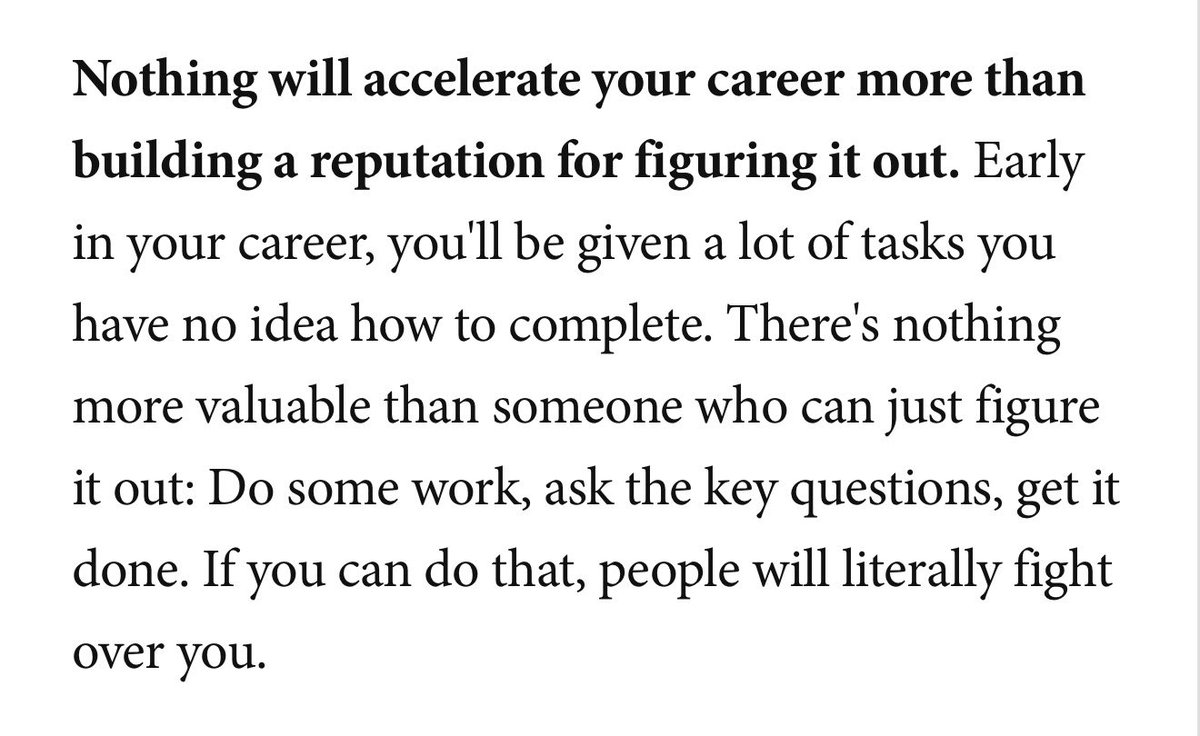
Career advice everyone needs to hear:
135
1,471
14,246
549,182
Ben Blumenthal | NYC office brkr retweeted

3 Sep 2025
Want to know why there are so many "quirky" people at the top of business success?
They're often people who have ignored mainstream advice, pressures, paths, jobs, etc..for decades of their life.
They are not influenced by "norms," and they are not the norm themselves.
55
75
710
34,305
7 Jul 2025
Met two Midtown businesses recently
One is a Wedding Producer; their typical weddings cost $5-$15million
The other is a Specialized Primary School where annual tuition/pupil is $150,000
NYC never ceases to amaze me
1
311
25 Jun 2025
When you specialize, even the deals that don’t close, give you a valuable insight, or actionable information
1
1
154
12 Jun 2025
office buildings in Midtown are trading below land value
Think about that.
You’re buying the dirt and getting a cash-flowing building thrown in - what a time rn
1
3
300
5 Jun 2025
Midtown Manhattan is the least scary place to have a big office vacancy
With the right capital and vision “dead” space in Midtown can almost clear at the right price
2
161
22 May 2025
V exciting

We’re turning Fifth Avenue into a world-class, pedestrian centered boulevard!
As part of the Best Budget Ever, @NYCMayor announced investments of more than $400 million for the transformative project.
Learn more: nyc.gov/office-of-the-mayor/…

252
19 May 2025
Need School Space in Manhattan?
Skip the 2 years & $2 million building and take a plug & play facility in a new construction building
bit.ly/3Sc01l6
2
186
14 May 2025
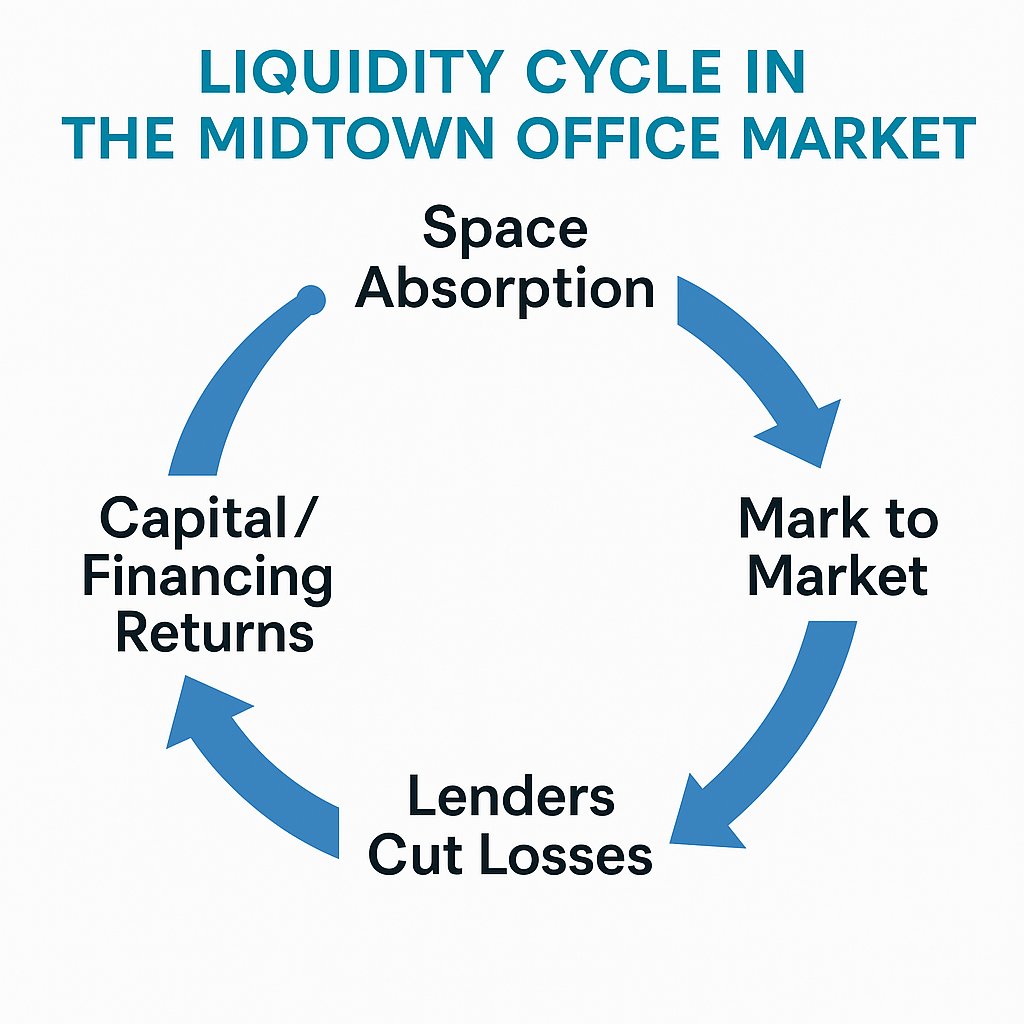
Capital is warming up to Midtown again
Enough leasing activity to project a baseline for underwriting and equity capital
Dealmakers are poking around and experienced market participants are moving with conviction
Banks still seem allergic to Class-B office but there is a curious eye on the activity
liquidity cycle is starting to spin!
224
5 May 2025
A tale of 2 Midtown office space requirements
18 months apart
Fewer options & higher rents now, as compared to then
2
243
30 Apr 2025
Coworking is a great product but also happens to be a fragmented market
Most coworking tenants don’t realize the range of rates and discounts since each provider has its own playbook
Don't fly blind, we've got the comps and data!
bit.ly/3RPoYSV
1
154
28 Apr 2025
Not long ago, Midtown was drowning in sublease inventory but the 'glut' is mostly gone
Floor by floor, space has been leased, pulled, or expired - no one rang the bell, but the sublease tide has turned and we're seeing the 'Last of the Mohicans'
1
226
24 Apr 2025
Lease term is the new rent for Midtown office
Some LLs pushing harder for lease term as they are for rent
Construction costs (&risk) make it tough to justify <10yr terms ( Tariff hysteria)
Tenants willing to go long can unlock value, less flex on construction for shorter terms
2
217
23 Apr 2025
Are we really wasting your time if you call me back and spend 14 minutes telling me we are wasting your time?
1
166