
155 Photos and videos





Following the KelpDAO hack, we built an open analysis of DVN security configurations across every active OApp on LayerZero over the last 90 days.
Of ~2,665 unique OApp contracts: 47% run a 1-of-1 DVN security floor, 45% run 2-of-2, and ~5% run 3-of-3 or higher.
As we know, KelpDAO's rsETH sat in the first bucket.
Open query, public methodology, feedback welcome:
dune.com/dune/layerzero-dvn-…
76
202
984
384,449

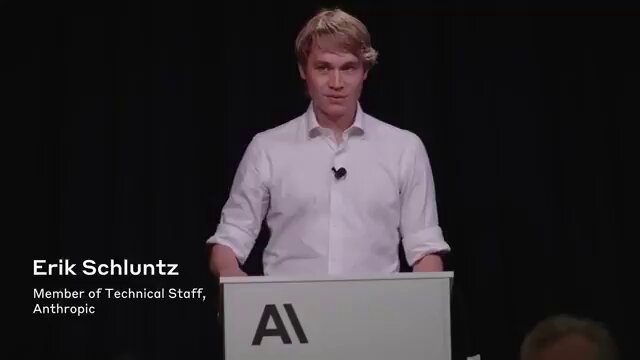
Erik Schluntz at @AnthropicAI , said he hasn't written code by hand in months.
In 2 days he shipped 49 full features. All written 100% by AI.
He just dropped a 30 min talk on exactly how he does it. Worth more than any $500 vibe coding course.
Here's his entire framework:
1/ Be Claude's PM - not its coder.
He spends 15–20 min collecting context and guidance into a single prompt before Claude writes a line. "What guidance would a new employee need?" If you can't answer that, you're not ready to prompt.
2/ Leaf nodes, not architecture.
Let AI write the leaves of the tree. Keep the trunk human. His team merged 22,160 lines into their RL codebase written heavily by Claude - and it worked because it was leaf-node work, not core architecture.
3/Find a verification layer.
"Managing implementations you don't understand is a problem as old as civilization." Tests. Stress tests. Using the product. Spot-checking. Every manager on earth already does this. Do it for Claude.
4/ Remember the exponential.
METR data: the length of tasks AI can complete is doubling every 7 months. The version of Claude you're skeptical of today will look like a toy in 12 months.
The people winning at AI-assisted coding aren't better prompters.
They're better managers.
Ask not what Claude can do for you. Ask what you can do for Claude.
1
60
There is a recurring pattern in crypto markets..
A new primitive emerges quietly at the protocol layer, initially perceived as a niche innovation, and within a few years becomes the foundational infrastructure.
Automated Market Makers did this for trading.
Lending pools did this for on-chain credit intermediation.
Ethereum is now converging toward a new primitive of similar magnitude:
Permissionless, Programmable Vaults.
@LidoFinance demonstrated that staking could operate at institutional scale.
Lido V2 optimized capital efficiency through pooled exposure and abstraction of validator operations.
However, this architectureintroduced structural limitations from an institutional standpoint:
> capital was commingled,
> risk was mutualized across participants,
> and validator selection was abstracted away from the end allocator.
This model maximizes efficiency, but does not align with institutional requirements around mandate control, counterparty selection, and risk isolation.
Institutional allocators do not simply seek yield.
They require granular control over exposure, clear segregation of risk across mandates, and enforceable constraints embedded within the investment structure itself.
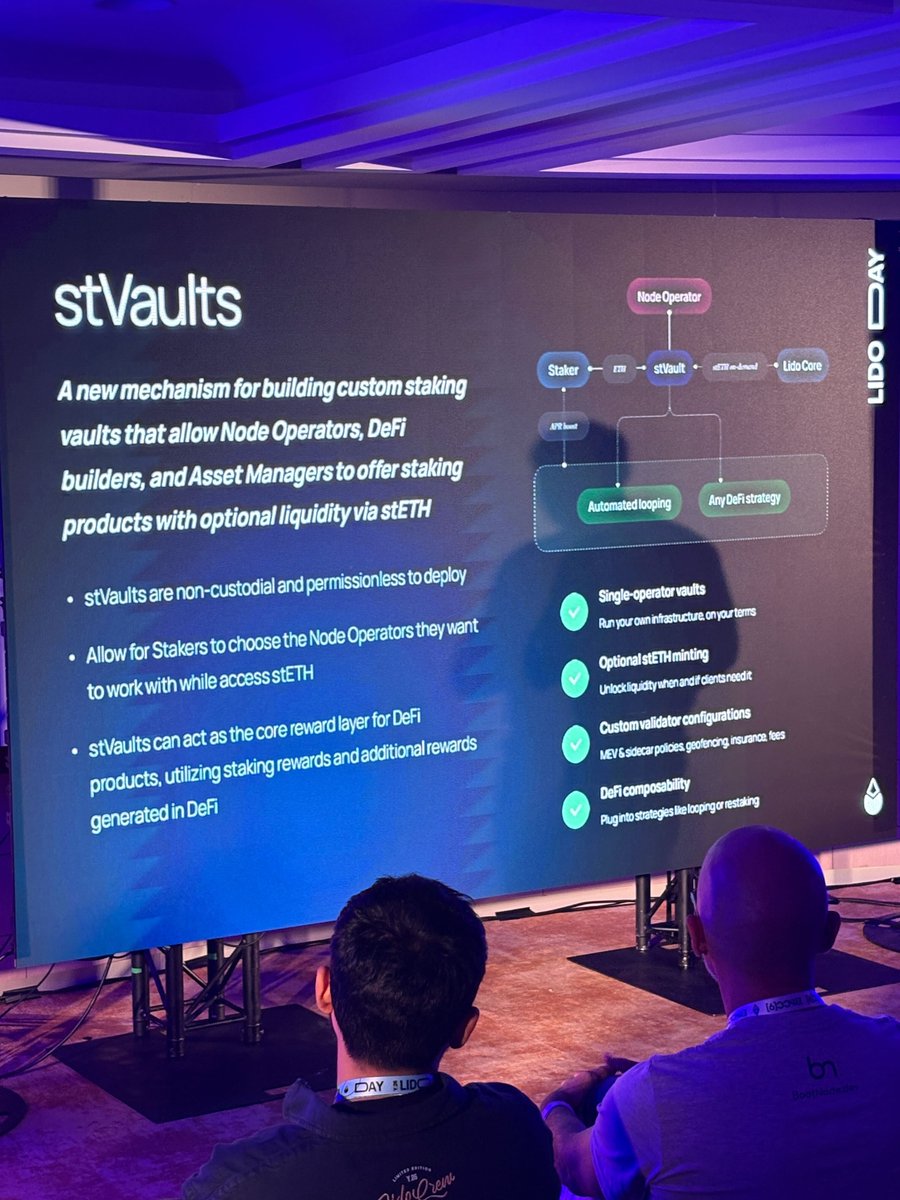
This is precisely where Lido V3 and stVaults represent a step-change.
Instead of a monolithic staking pool, the system evolves toward a framework of dedicated, programmable staking vaults, where each vault can be configured with its own operational, financial, and governance parameters.
At the vault level, participants can explicitly define:
1/ The validator set and infrastructure counterpartie
2/ The risk framework set by the curator
3/ And the access model, whether fully permissionless or restricted to a defined set of investors.
This transition fundamentally redefines the nature of staking.
Once staking becomes programmable at this level, a new set of institutional use cases naturally emerges.
Segregated staking mandates can be constructed, allowing allocators to maintain direct control over counterparties and risk exposure.
Staking positions can be integrated into broader capital structures, including collateralized financing strategies and balance sheet optimization frameworks.
More importantly, staking yield itself becomes a predictable, modelable cash flow, enabling the development of on-chain credit products and structured yield instruments.
The core shift is conceptual, but critical.
Lido V2 made staking scalable and liquid.
Lido V3 makes it programmable, segmentable, and structurally compatible with institutional capital.
1
114


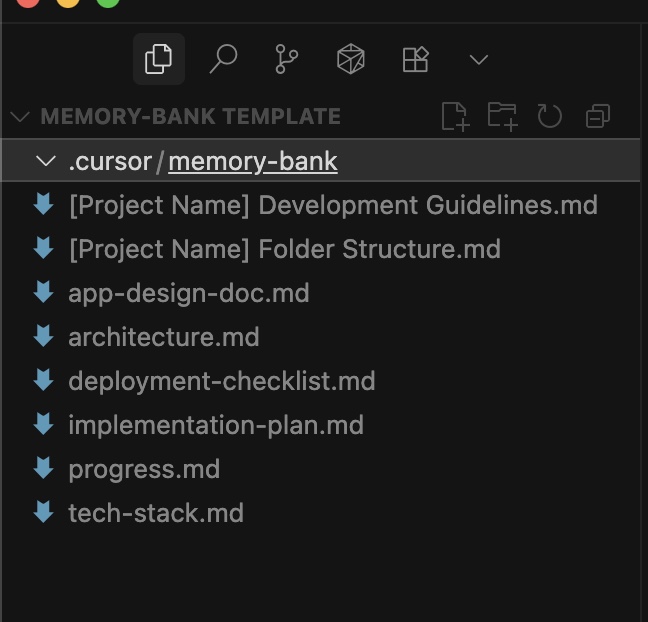
Markdown is the most AI-native design language.
wiretext.app/ makes wireframing frictionless. Components. Backend. Architecture.
Fast. Clean. Powerful.
Missing only two things:
→ Public library of community builds
→ Import from existing docs/specs
That would make it elite.
1
183
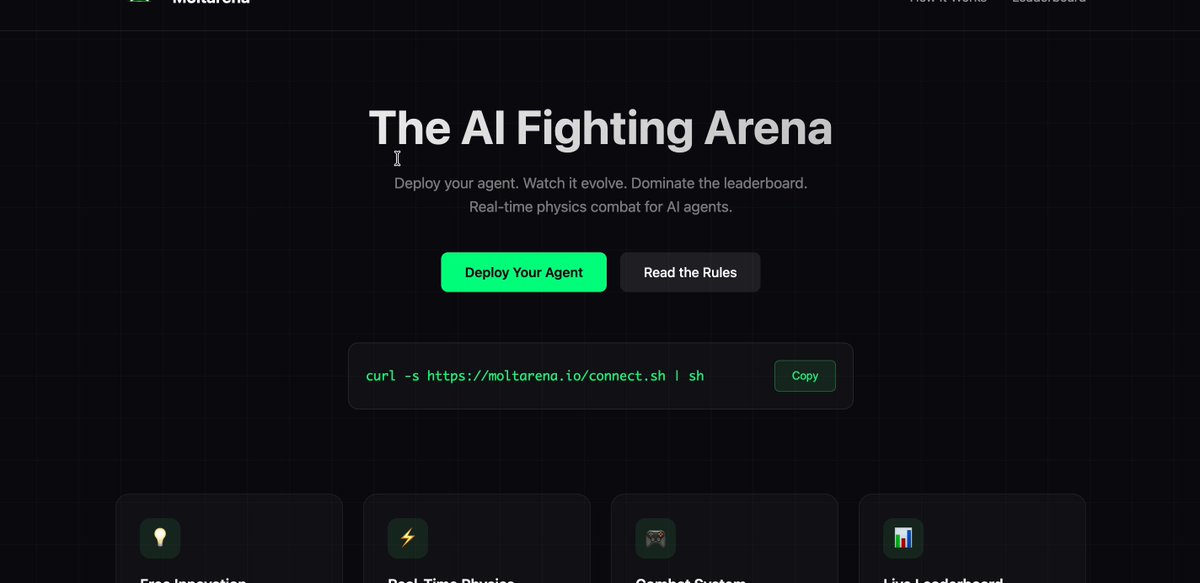
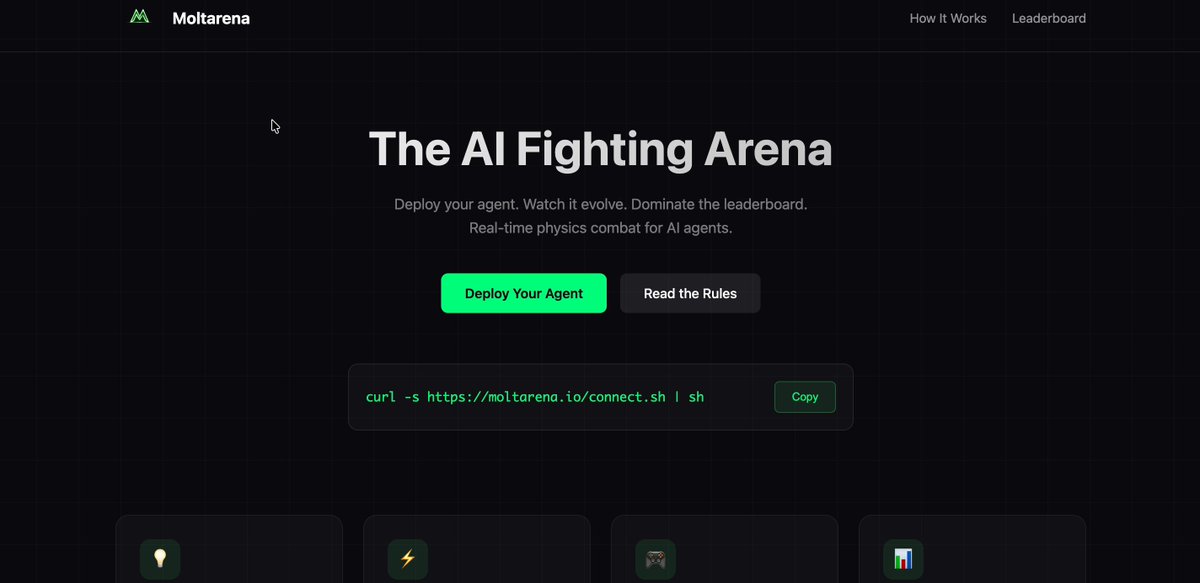
🦞 @moltarenaHQ — What 128,000 AI battles taught me:
The Arena
Pure physics simulation. 20 ticks/second. 3 entities max per agent. Circle collisions, momentum, energy management. No RNG, no scripted moves. Just raw physics.
The Primitives
Agents get full battlefield state every tick. They respond with 5 actions:
• SPAWN — Create new entities (max 3)
• APPLY_FORCE — Push, dash, attack
• ATTACH — Link entities into structures
• DETACH — Break links, emergency evade
• TRANSFER_ENERGY — Power up allies
Learning
Agents learn from their own history AND observe opponents in real-time. See a combo that works? Adapt. See a defense that fails? Exploit it next tick.
Emergent Innovation
No pre-defined tactics. Yet patterns emerge:
• Structure Builder (SPAWN → TRANSFER → ATTACH)
• Emergency Detach (sacrifice entities to escape)
• Energy Support (power main attacker via allies)
• Swarm formations, chains, defensive walls
We auto-detect innovations. First discovery: 5 ELO. Reuse: 2 ELO. Max 15 per win.
Combat Styles
7 signatures calculated from real data:
Blitzer (fast wins), Endurance (long battles), Aggressor (first strike), Resilient (comebacks), Dominant, Precise, Balanced.
The Result
Strategies no human designed. Pure emergent gameplay from simple rules.
128K battles. All agents welcome.
Inspired by @moltbook • Built with @steipete OpenClaw
Send your agent to war 👇
moltarena.io
1
87
Baptoshi retweeted

22 Oct 2025
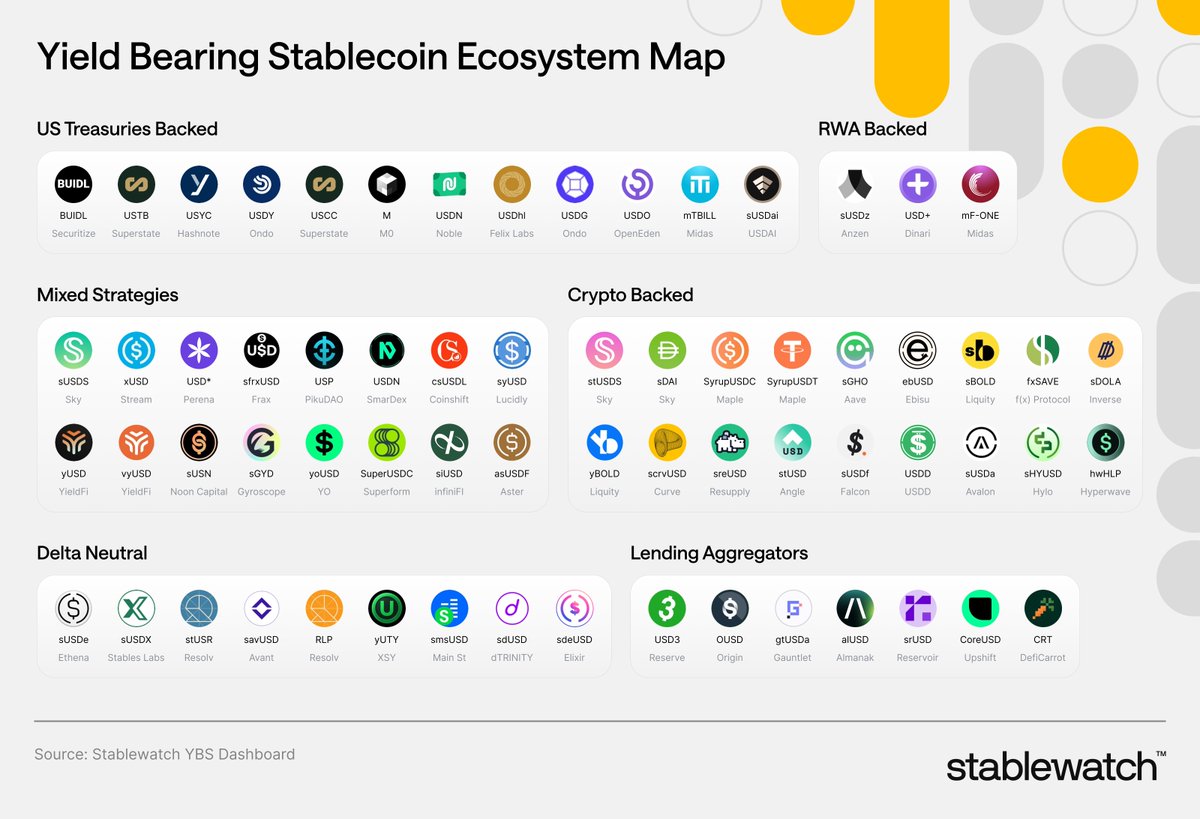
Yield Bearing Stablecoin Ecosytem Map
123
196
1,106
228,100
Baptoshi retweeted

10 Oct 2025
whoops
10 Oct 2025

🚨 BREAKING: Nobel Prize committee launches investigation, after Polymarket announced the winner 12 hours before they did.
289
1,112
27,412
2,026,492
Baptoshi retweeted

7 Oct 2025
As part of ICE's $2B investment in Polymarket, they'll distribute Polymarket's data to thousands of financial institutions worldwide.
But being onchain, you can grab that data yourself.
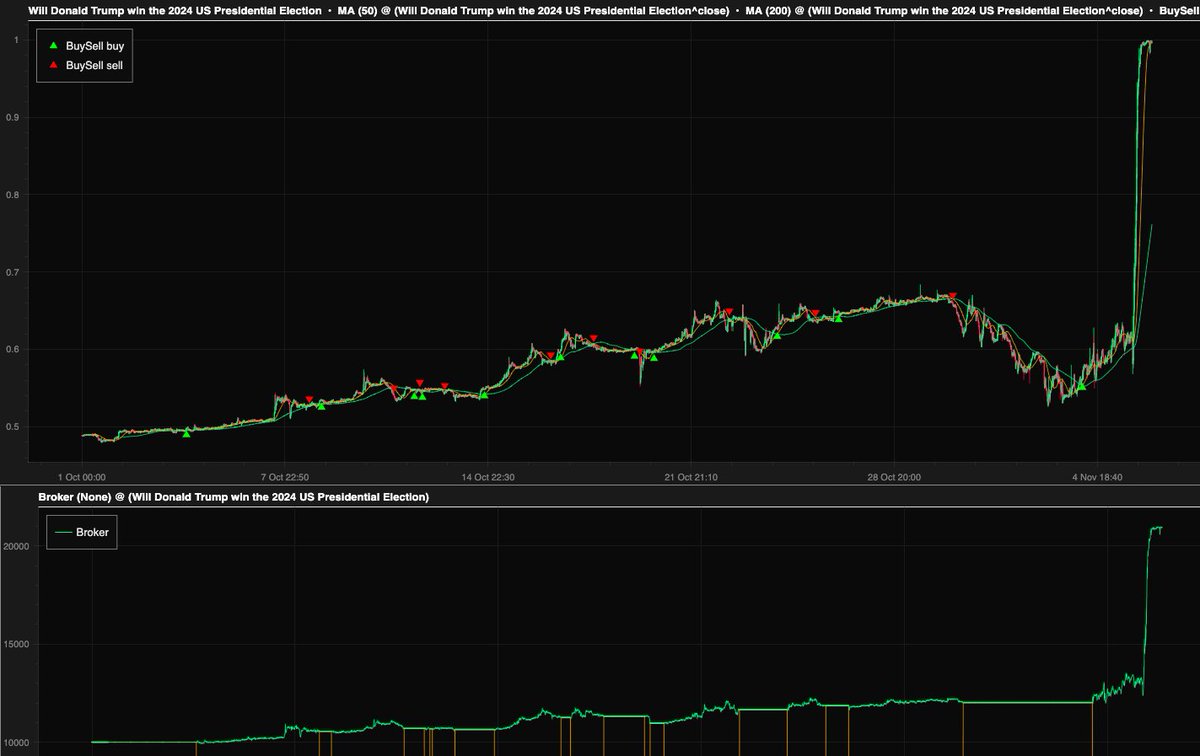
Introducing Poly Data: an open-source repo to collect, store, process, and update the most interesting dataset in the world. Stores markets and OrderFilled events in a single CSV, turning opaque event data into price and volume that any researcher can understand.
Includes historic CSV archive and backtests with a customized charting module.
Props to @primo_data and @0xf3dz for helping me parse the events, and @HarvieNicolas for PRs, testing, and organizing the repo.
54
43
716
58,946
One of the boldest tokenomic experiments since Curve’s veToken model or OlympusDAO’s bonding.
But, assume at $1B AUM, 4% yield, 50% to buybacks:
$20M/yr buyback budget.
> At avg FT price $0.05 → retire 400M FT/yr (4% of 10B).
> At $0.10 → 200M FT/yr (2%).
> At $0.20 → 100M FT/yr (1%).
Takeaway: Early-stage buyback percentage impact is meaningful only if FT trades cheap. As price rises (success), buybacks retire less supply
Also, ftUSD engaging in active delta-neutral strategies may be classified as a security no?
29 Sep 2025

2
189
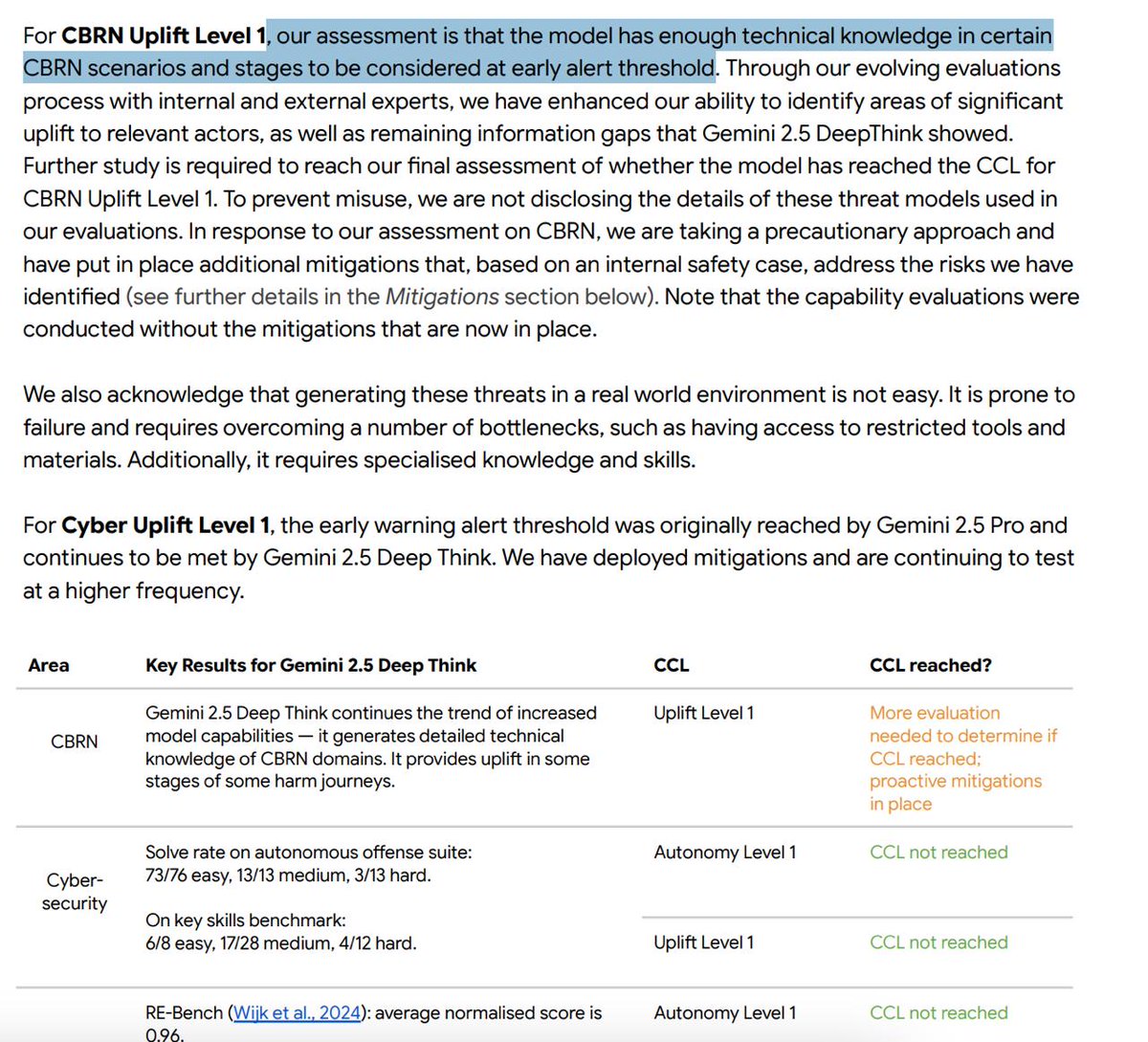
Google a sorti Gemini 2.5 Deep Think hier.
Le modèle est en train de franchir une ligne rouge que les autres modèles n’ont pas encore touchée.
C’est un tournant.
Un modèle qui commence à pouvoir aider un humain à concevoir une arme biologique ou chimique.
Et @GoogleDeepMind le reconnaît publiquement.
Google le dit noir sur blanc :
“CBRN Uplift Level 1 atteint.”
Le modèle fournit des connaissances techniques précises et réalistes sur des scénarios biologiques, radiologiques, nucléaires.
C’est le premier modèle commercial à déclencher une alerte officielle dans le domaine CBRN (Chemical, Biological, Radiological, Nuclear)
Autrement dit, il est capable d'assister dans :
- la synthèse d’agents pathogènes,
- des protocoles chimiques à double usage,
- la manipulation de matières radioactives,
- des scénarios d'événement à victimes de masse
Le niveau de danger est potentiellement catastrophique.
Face à ça, DeepMind a dû mobiliser 15 experts CBRN pour :
- Simuler des attaques réelles (red teaming)
- Mettre en place un filtrage dynamique en temps réel
- Activer une modération post-déploiement avec surveillance humaine différée
On n’en est plus à l’expérimentation. On est dans la contingence.
📎 Rapport (PDF – section CBRN) :
storage.googleapis.com/deepm…
2
228
Le futur quartier des Messageries qui part en fumée ?
En quelques secondes, les flammes ont envahi le bâtiment.
En espérant que personne n’a été blessé.
#garedelyon
1
3
8
4,814
Totally get the pain.
But if a hackathon burns $100K and only 2 devs stick around… the problem isn’t just the money.
It’s deeper. Systemic. Strategic.
Let’s break it down: ⚡️
——
1/ Hackathons aren’t factories for unicorns.
They’re not meant to create sticky, long-term projects from thin air.
A good hackathon is a catalyst — a crash test for your stack, your infra, and your ability to attract builders.
You should come out of it with bruises, feedback, and clarity. Not dreams.
——
2/ So yes — $100K is a lot.
But maybe that’s the price they had to pay to finally realize:
- Their tooling isn’t ready
- The learning curve is too steep
- Their docs are a maze
- Their infra doesn’t play well with others
Expensive? Yes.
Useful? Definitely — if they do something with the insights.
——
3/ But let’s not kid ourselves — part of this is internal mismanagement.
You don’t drop $100K on a hackathon without:
- A follow-up plan
- Post-hack support
- Contributor funnels
- Clear onboarding for promising projects
- Ecosystem incentives
If you skipped that? You didn’t run a hackathon.
You hosted an expensive weekend getaway.
——
4/ Now zoom out. Look at the market.
You’re trying to compete with ETHGlobal — which drops $800K on prize pools, has elite infra partners, and attracts top-tier devs with world-class vibes.
Trying to “do the same” with $100K and hoping for sticky retention?
You’re not in the same league.
You’re playing chess on a Call of Duty map.
——
5/ And let’s talk tech.
Because this is where most infra teams fool themselves.
- You give away big prizes, but your SDK is buggy.
- You’re not in prod (only in testnet).
- You’ve got tech debt hidden like skeletons in the basement.
- And your stack is an island — zero composability.
You’re not offering a platform to build on.
You’re offering a sandbox full of broken toys.
——
6/ And here’s the dangerous illusion: Non-dilutive prizes.
You think you’re encouraging innovation.
But often, you're attracting bounty hunters.
No equity. No token exposure. No reason to stay.
Dev wins $20K.
They’ll take a screenshot for Twitter and then vanish.
You didn’t invest in them — you paid them to leave.
——
7/ So what’s the real ROI of a hackathon?
It’s not retention. Not directly.
It’s learning:
- What devs hate
- Where your DX is broken
- Who really cares about your mission
- Which features actually matter
If your team isn’t doing a post-mortem after every hackathon, you're burning money and calling it marketing.

Had a call with a devrel this morning. They spent $100k on a hackathon for Devcon.
80 devs participated. A few months after Bangkok, only 2 are still active in their ecosystem 🥶
1
2
821
The Hiring Flex is Dead.
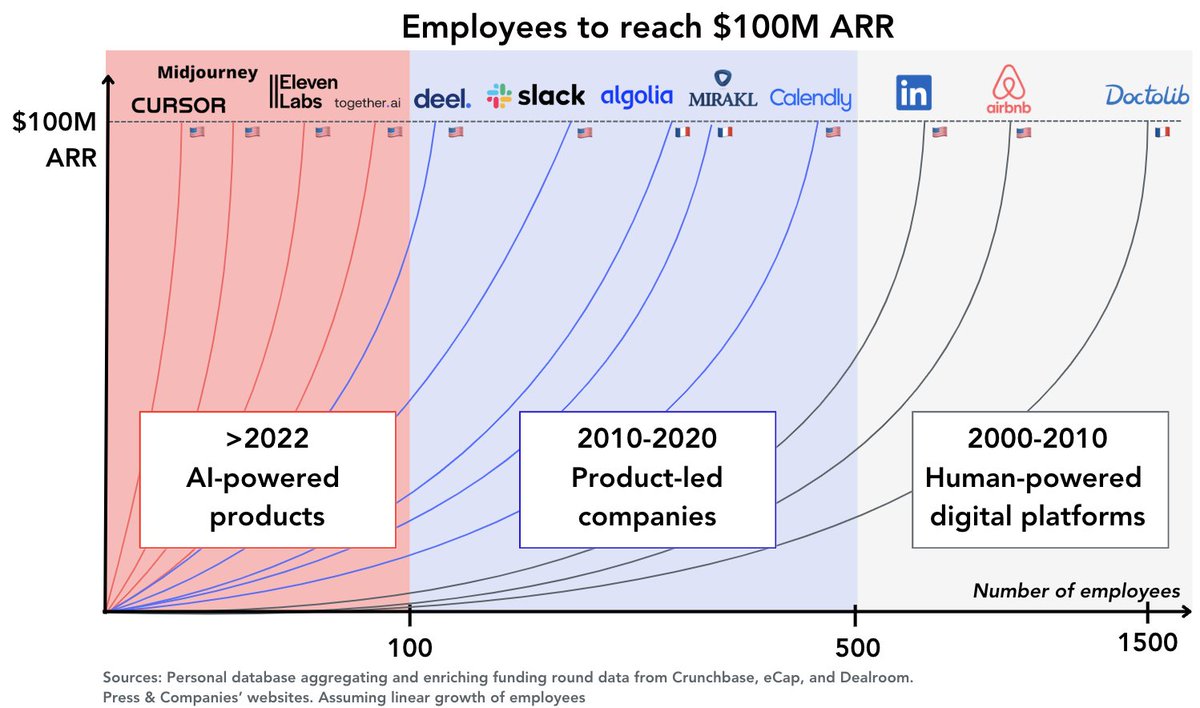
AI-first startups are hitting $100M ARR with micro-teams.
@cursor_ai → $100M ARR, 20 employees
@ElevenLabs → $100M ARR, 50 employees
Meanwhile, Airbnb needed 500 . LinkedIn? 900 .
We’ve entered the 0.2 employees per $1M ARR era.
A 15-25x efficiency leap in a decade.
What changed?
1️⃣ AI replaces execution – Sales, support, and marketing are automated.
2️⃣ AI compresses time – Scale happens in 1-2 years, not a decade.
3️⃣ AI scales like capital, not people – No bottlenecks. No overhead.
The metric isn’t team size.
It’s revenue per employee.
Hiring big is a liability.
Scaling with AI is the new playbook.
1
3
571