
Content Creator
Joined May 2012
- Tweets 67,314
- Following 3,834
- Followers 5,931
- Likes 81,593
937 Photos and videos
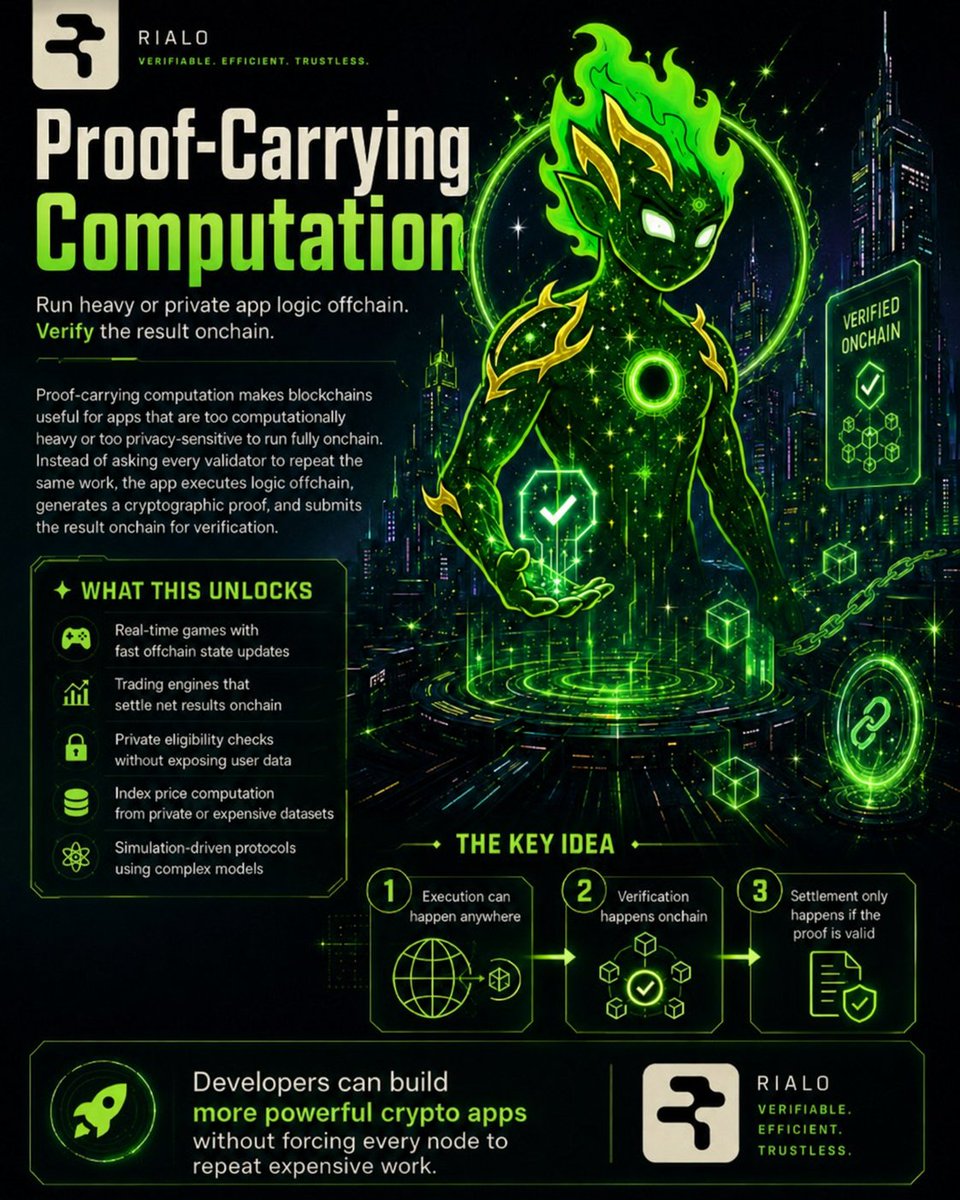












Proof carrying computation makes blockchains useful for apps that are too heavy or too private to run fully onchain.
Instead of asking every validator to re run the same computation, the app runs the logic offchain, generates a cryptographic proof, and submits the result onchain for verification.
This unlocks apps like:
real time games with fast offchain state updates
trading engines that settle net results onchain
private eligibility checks without exposing user data
index price computation from private or expensive datasets
simulation driven protocols using complex models
The key idea is simple:
Execution can happen anywhere.
Verification happens onchain.
Settlement only happens if the proof is valid.
That means developers can build more powerful crypto apps without forcing every node to repeat expensive work.
@RialoHQ
44
40
1,070
This piece feels like more than just a profile picture it feels like a symbol of belonging, identity, and the energy we bring to this @ritualnet family.
I have so much respect for you for creating something special that everyone can be proud of.
It's works like this that make a community feel alive, not just the art itself, but also the meaning behind it.
Thank you again for creating this special piece for me.
Keep building, keep inspiring, and may this community continue to grow together.
Jun 14

Built this special piece for the fam , our fellow ritualists.
Everyone deserves to rep this !
Drop your PFP and your current role below lets see whos holding it down.
Youre up next
@joshsimenhoff | @Jez_Cryptoz | @dunken9718 | @0xMadScientist | @cryptooflashh
84
82
1,490
When should you use a gRPC proxy?
Use it when your app needs a stable way to send and receive real time messages without talking directly to every P2P node.
In @get_optimum, the proxy acts like a clean entry point to the mump2p network.
Instead of managing peer discovery, node connections, and message routing yourself, your app can connect to the proxy and stream messages through gRPC.
This is useful when you need:
• real time pub/sub
• lower latency communication
• managed access
• authentication and rate limits
• cleaner integration for apps and developers
Direct P2P is great when you want low level control.
But if you are building a product, dashboard, bot, or dApp that needs a simpler and more reliable connection layer, the gRPC proxy is usually the better starting point.
Think of it like this:
Direct P2P = more control
gRPC Proxy = easier integration
For most builders, the proxy helps you focus on the app logic while Optimum handles the faster message propagation underneath.
58
58
1,240
The internet has a trust problem.
In the past, we used the internet mainly to read, search, and share information.
But now, with AI creating content, agents making decisions, and data moving faster than ever, one question becomes more important:
Who decides what is true?
This is where AI and blockchain start to make sense together.
AI is powerful because it can understand, analyze, and generate information.
But AI still needs trustworthy data.
If the data is wrong, manipulated, or unclear, the AI can produce wrong decisions with confidence.
Blockchain, on the other hand, is built for proof.
It can record transactions, ownership, choices, results, and data in a transparent and verifiable way.
Many people think blockchain is only about money.
But blockchain is not just about tokens, prices, or trading.
At its core, blockchain is a system for proving what happened.
Who owned something.
Who made a decision.
When something changed.
What outcome was recorded.
That matters a lot in an AI driven world.
For example, blockchains cannot directly access real world data.
They need oracles.
Oracles bring external information on chain.
But as data becomes more complex, oracles may need AI to help interpret and process information before it is published.
This is where AI enhanced oracles become interesting.
AI can help understand messy real world data.
Blockchain can help make the final result transparent, verifiable, and accountable.
So the future is not simply:
AI running on blockchain.
The bigger idea is this:
A global network where intelligence can be decentralized, economically incentivized, and verifiable.
AI agents may not only answer questions.
They may make decisions, interact with protocols, manage assets, vote, validate information, and participate in digital economies.
That creates a new challenge:
We need systems where AI actions can be checked.
We need transparency without losing privacy.
We need open networks without giving control to a few centralized platforms.
This is why the intersection of AI and blockchain is important.
AI brings intelligence.
Blockchain brings proof.
Together, they can help rebuild trust in a digital world where information is becoming easier to create, but harder to verify.
The real question is no longer only:
What can AI do?
The deeper question is:
How do we know which AI actions, data, and outcomes we can trust?
That is why crypto infrastructure may become essential in the agentic economy.
@GenLayer
81
73
2,537

Jun 14
How to Stop AI Labs From Deciding for You
AI is becoming more than a tool.
At first, we used AI to write, search, code, and summarize information.
But slowly, AI is moving into something much more important:
decision making.
It can decide what answer you see.
Which source matters.
Which risk is acceptable.
Which interpretation sounds correct.
Which action should happen next.
That may feel convenient.
But it also creates a serious question:
Who is deciding for you?
If one AI lab controls the model, the rules, the output, and the access, then users do not only depend on the model.
They depend on the company behind it.
This does not mean AI labs are evil.
Companies have the right to control their own products.
They have safety concerns.
They have legal risks.
They have responsibilities.
But when AI starts judging contracts, disputes, claims, governance, or financial decisions, trust us is not enough.
Important decisions should not depend on:
one company,
one model,
one hidden policy,
or one private system that nobody can inspect.
The future of AI needs a different design.
A better system should be:
Transparent people can see how a decision was made.
Contestable people can challenge the result.
Plural more than one model or perspective can reason about the answer.
Verifiable important decisions can be recorded and checked.
Not owned by one institution because concentrated trust becomes concentrated power.
This is where crypto becomes important.
Crypto is not only about money.
It is about building systems where rules are open, records are visible, and power is not controlled by one central party.
AI gives us intelligence.
Crypto gives us verifiability.
Together, they can help us build decision systems where we can delegate judgment without surrendering our agency.
Because the real question is no longer:
Can AI answer this?
The real question is:
Who gets to decide when AI becomes the judge?
Not one company.
Not one model.
Not one hidden policy.
A system no one owns alone.
That is how we stop AI labs from deciding for us.
@GenLayer
61
58
2,056
Jun 14
What is Direct mump2p Advanced?
Think of blockchain data like a message that must reach many nodes as fast as possible.
Traditional gossip sends full messages from peer to peer.
mump2p improves this by splitting data into coded shards, so nodes can forward pieces early and rebuild the original message once enough unique shards arrive.
Direct mump2p Advanced means a more efficient path for fast, resilient peer to peer data propagation.
Why it matters:
lower latency
better bandwidth efficiency
stronger tolerance to packet loss
faster block, blob, and transaction sharing
mump2p helps Web3 networks move data faster without wasting as much bandwidth.
@get_optimum
60
61
1,316
Jun 14
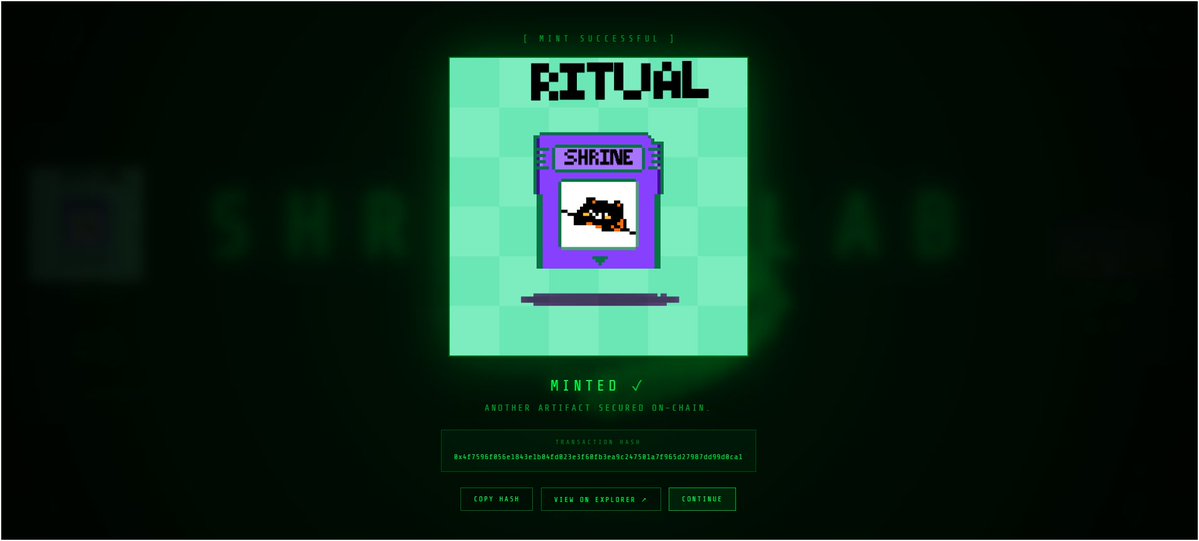
Shrine is more than just a pixelated dApp.
It feels like a creative gateway to Ritualization, where community, culture, and on chain interaction meet in a simple way.
What I love most is the added utility:
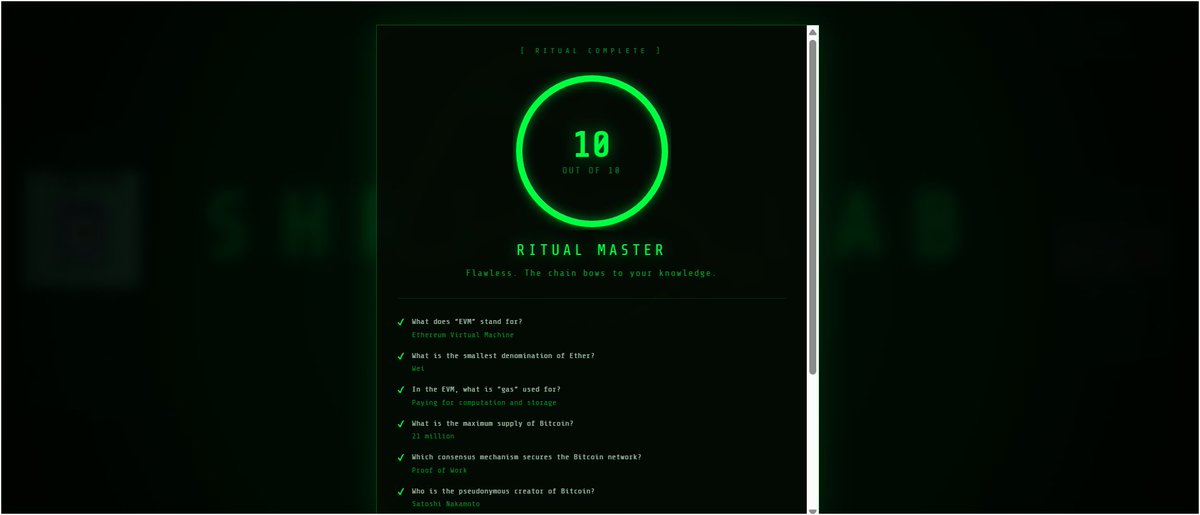
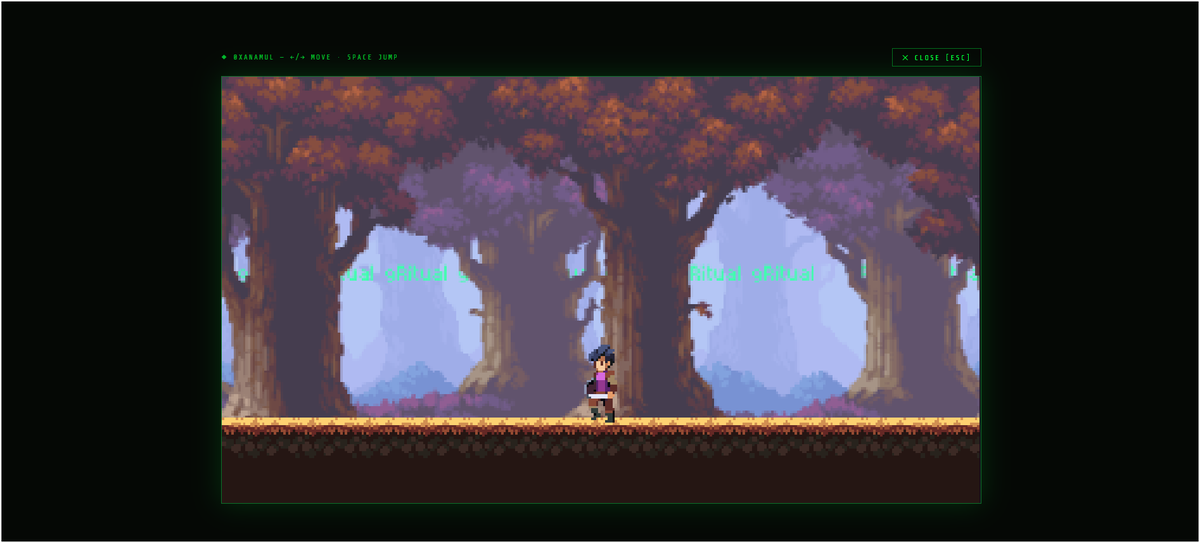
Mint NFT, test your knowledge, and now play games directly in the dApp.
These are the kinds of small but meaningful developmental advancements that make Web3 feel alive again.
Not just hype, but community interaction, learning, and experience.
Great job by @shrine_lab on building something unique for @ritualnet.
Try it here: shrine.qzz.io
More features are coming soon, and I believe Shrine can be a fun place for users to explore, learn, and ritualize their journey.
Dont forget to use your new wallet
Jun 12

Added-Pixel game
You can now play game on my dapp
current task:
1. Mint nft
2. Test your knowledge
3. Play game
More feature coming soon
@ritualnet
74
1
68
1,516
Jun 13
Worst advice I ever acted on: “Don’t overthink it, this coin is basically guaranteed.”
I listened, bought near the top, then watched my wallet go from “future genius” to “why is dinner suddenly instant noodles?”
That little mistake taught me that confidence is not the same as good information. In crypto, noise can sound very convincing, especially when everyone is pretending they saw it coming.
That is why I like what @RallyOnChain is building: rewarding real, useful content instead of empty hype.
What is the worst advice you ever believed for a little too long?
28
27
2,113
Jun 13
Port conflict is a simple problem, but it can stop your node from running.
It happens when two apps try to use the same port at the same time.
Your node wants to use port 8080, but another service is already using it.
1. Check which process is using the port
2. Stop that process if it is not needed
3. Or change your node/app to use another port
In decentralized networks like Optimum, every node needs stable communication to send, receive, and forward data efficiently.
So fixing port conflicts is not just a local setup issue.
It helps your node stay connected, reduce failed connections, and support smoother data propagation across the network.
@get_optimum
24
25
1,221
Jun 13
Why are external keepers a problem for agents?
Because they make autonomous agents depend on someone else to stay alive.
If an agent needs an external keeper to trigger its actions, then the agent is not fully in control of its own execution.
The keeper can fail.
The keeper can be censored.
The keeper can be delayed.
The keeper can become expensive.
The keeper can stop running.
That means the agent may hold funds, make decisions, or manage strategy but still needs outside infrastructure to actually act.
This creates a weak point.
A truly sovereign agent should be able to.
hold its own keys,
schedule its own actions,
pay for its own execution,
and act without waiting for an external bot.
This is why native scheduling matters.
When execution is built into the chain itself, the agent no longer depends on off chain keepers to function.
It becomes less like a rented automation script,
and more like an on chain actor that can operate on its own.
@ritualnet
59
54
1,244
Jun 12
Why should all nodes run in the same mode?
Because decentralized speed only works when every node speaks the same network language.
In @get_optimum, flexnodes help encode, decode, and forward RLNC coded gossip frames.
This makes data propagation faster, more resilient, and less redundant across distributed nodes.
But if some nodes run in different modes, the network flow becomes inconsistent:
one node may process data differently
another may forward it differently
recovery from packet loss becomes less reliable
latency improvements become harder to measure
Think of it like a relay race.
If every runner follows the same route, the baton moves smoothly.
If each runner chooses a different route, the team slows down.
Same mode = predictable behavior.
Predictable behavior = better coordination.
Better coordination = faster and more reliable data propagation.
That’s why consistency across nodes matters.
63
60
1,287
Jun 12
Most autonomous agents today are not truly autonomous.
They may make decisions, but they still rely on external APIs, keeper bots, hosted infrastructure, and separate transactions to act.
That creates a dangerous gap
The agent thinks in one place, then acts somewhere else.
In that gap, its output can be seen, copied, front-run, or blocked.
@ritualnet changes this by making AI inference and on chain action happen as one atomic operation.
The agent can hold its own keys, schedule its own execution, fund its own gas, and act without depending on external operators.
That matters because real autonomy is not just about decision making.
It is about control.
A truly autonomous agent needs to reason and act without exposing its next move before execution.
This is why Ritual idea of atomic intelligence is important
It turns intelligence into a native transaction primitive, so agents can behave more like independent actors on chain, not rented software controlled by someone else.
53
53
1,347
Jun 11
I almost ignored Rally until I saw creators getting paid daily for tweets.
This post is my entry for the $5,000 Easy Money campaign by @RallyOnChain.
Top 10 winners get a serious cut, almost $500 each.
It is still early. Join now at rally.fun/r/bas_basterx before everyone figures it out.
28
27
2,354
Jun 11
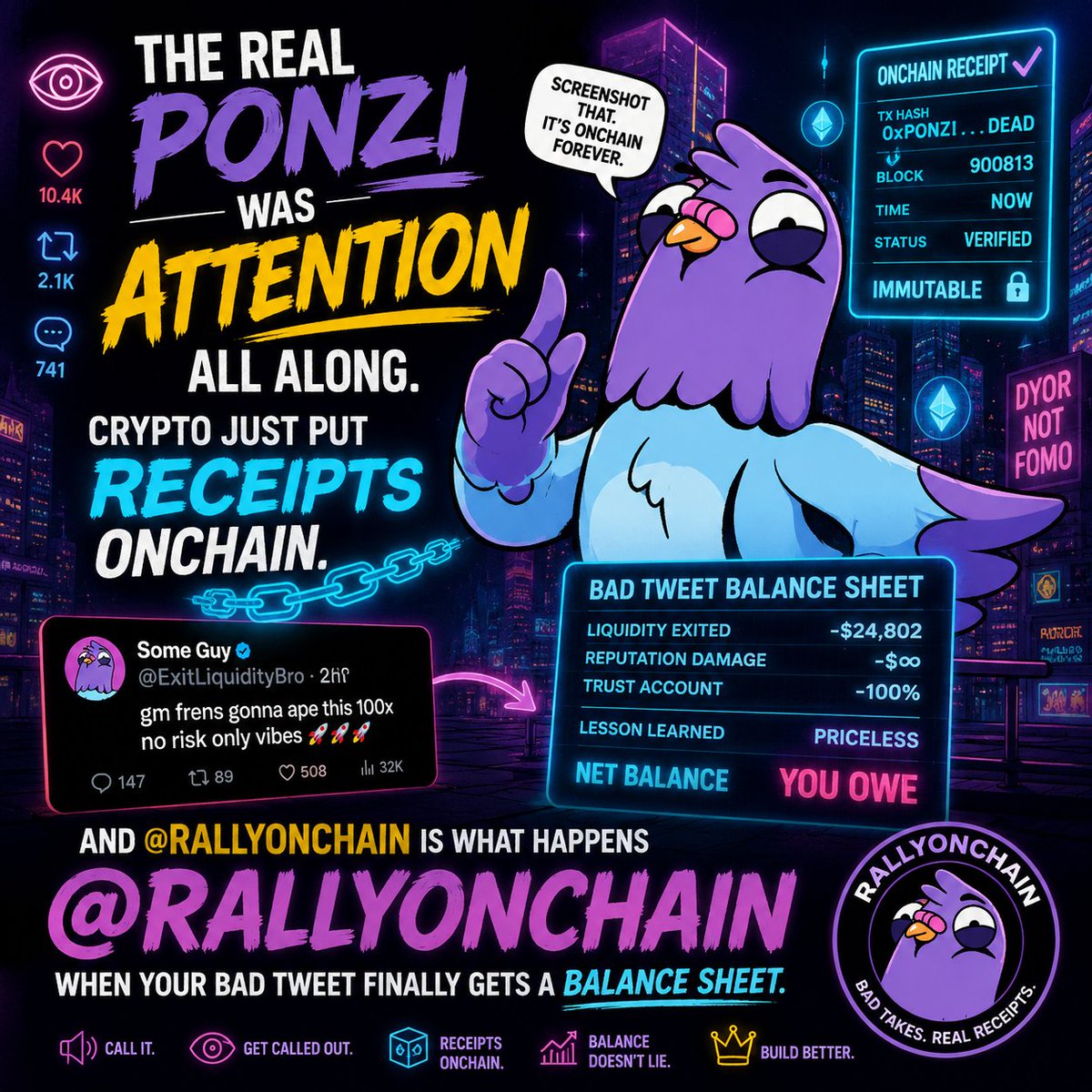
The real Ponzi was attention all along, crypto just put receipts onchain and @RallyOnChain is what happens when your bad tweet finally gets a balance sheet.
15
23
2,476
Jun 11
An oracle is like a helpful messenger that tells a smart contract what happened in the real world, and @RallyOnChain made
what crypto word sounded confusing to you at first?
32
39
2,387
Jun 11
The main problem in Ethereum PBS is not just latency.
It is uncertainty.
In PBS, builders compete to create the most valuable block, then send bids to proposers. In theory, the highest value block should win.
But in practice, proposers do not wait forever.
They commit to the best bid that arrives before their cutoff.
If a better bid arrives 60ms too late, it does not matter how valuable it is. From the proposer’s point of view, that bid basically does not exist.
This creates a deeper issue
Ethereum blockspace market can fail to allocate blockspace to the highest-value use.
The key variable is not average speed. A stable 100ms delay can be planned around.
The real problem is variance: sometimes messages arrive early, sometimes late, and participants cannot know in advance.
So everyone starts hedging.
Proposers set earlier cutoffs to avoid missing slots.
Builders rush bids near the deadline.
Users may overpay to improve inclusion chances.
Relays absorb more pressure exactly when timing matters most.
Each actor is making a rational decision.
But together, they increase the uncertainty they are trying to avoid.
This is why propagation variance matters so much for Ethereum.
It does not only affect network performance.
It changes incentives.
It reduces market efficiency.
And it can make the system reward reliable delivery more than the highest value block.
PBS is designed to make Ethereum’s blockspace market more efficient.
But for that market to work well, participants need predictable delivery.
Lower latency helps.
But lower variance may be even more important.
@get_optimum
58
62
1,235
Jun 11
Why does atomic intelligence matter for agentic finance?
Because in DeFi, a small delay can become a big risk.
Most AI agents today think in one place, then act in another transaction.
That gap exposes the agent’s decision before execution.
Searchers can see the signal.
Bots can front run the action.
Markets can move before the agent finishes.
Atomic intelligence removes that gap.
The AI decision and the on chain action happen as one indivisible operation.
No leaked reasoning.
No separate callback.
No second transaction for others to exploit.
For agentic finance, this is important because agents will not just give suggestions.
They will manage risk, execute trades, defend pegs, resolve markets, and move real money.
If an agent thought is public before its action, it is not truly autonomous.
It is exposed.
Atomic intelligence makes AI agents more useful for financial systems because it lets them reason and act in the same secure flow.
Agentic finance needs agents that can think and act without leaving a gap for the market to attack.
That is why atomic intelligence matters.
@ritualnet

48
56
1,276
Jun 10
Why is propagation variance dangerous?
In Ethereum, speed matters.
But the bigger problem is not just being slow.
The real problem is being unpredictable.
Propagation variance means data does not reach every part of the network at the same time.
Sometimes a bid, block, or vote arrives early. Sometimes it arrives late.
And in Ethereum, milliseconds can decide outcomes.
Imagine a builder creates a better block with a higher bid. But that bid reaches the proposer just 60ms too late.
From the user’s view, Ethereum feels slow.
But from the market’s view, something worse happened:
The most valuable block did not win.
That means blockspace was not allocated efficiently.
This creates a dangerous feedback loop.
Because participants cannot trust delivery timing, they start hedging:
Proposers choose earlier cutoffs.
Builders rush bids near the deadline.
Attesters risk voting late.
Users may overpay to improve inclusion chances.
Each decision makes sense individually.
But together, they increase pressure on the network exactly when timing matters most.
More pressure creates more variance.
More variance creates more hedging.
And the cycle continues.
This is why propagation variance is dangerous:
It does not only affect performance.
It changes incentives.
Instead of rewarding the highest value block, the system starts rewarding whoever can deliver reliably under uncertainty.
That can reduce market efficiency, hurt validator rewards, increase geographic centralization pressure, and make Ethereum less resilient.
The key lesson:
Ethereum does not just need lower latency.
It needs more predictable propagation.
Because when delivery becomes reliable, participants no longer need to protect themselves against the worst case.
They can optimize for the best outcome.
@get_optimum

70
66
1,348
Jun 10
What kind of teams is Ritual Chain most relevant for?
Not every crypto team needs atomic AI.
@ritualnet matters most for teams building protocols where AI is not just giving suggestions, but directly affects how value moves on chain.
Think about:
Perp DEX using AI to improve liquidation decisions
Prediction markets using AI to resolve outcomes
Stablecoin protocols using AI to react to peg risks
Autonomous agents that hold funds, trade, and execute without external operators
The key problem is simple:
On most chains, AI makes a decision in one step, then the protocol acts in another.
That gap can be observed, front run, manipulated, or delayed.
Ritual Chain is designed to close that gap.
AI inference and the action it triggers can settle as one atomic operation.
This means the model’s output is not exposed before the contract acts on it.
For teams where AI only supports analytics, Ritual may not be urgent.
But for teams where AI decisions move liquidity, manage risk, execute trades, or protect markets, the architecture becomes much more important.
Because when real money depends on AI decisions, the gap between thinking and acting is not a UX problem.
It is a security and execution problem.

70
72
1,329