
Joined January 2012
- Tweets 2,270
- Following 1,518
- Followers 7,473
- Likes 109,773
507 Photos and videos
Pinned Tweet

28 Mar 2025
Introducing the Stripe Economics of AI Fellowship:
The economics of AI remains surprisingly understudied. The fellowship aims to help fill that gap, by supporting grad students and early-career researchers with $, data, a conference, and community –

27
182
1,081
424,060
Jun 10
👁️
Jun 10

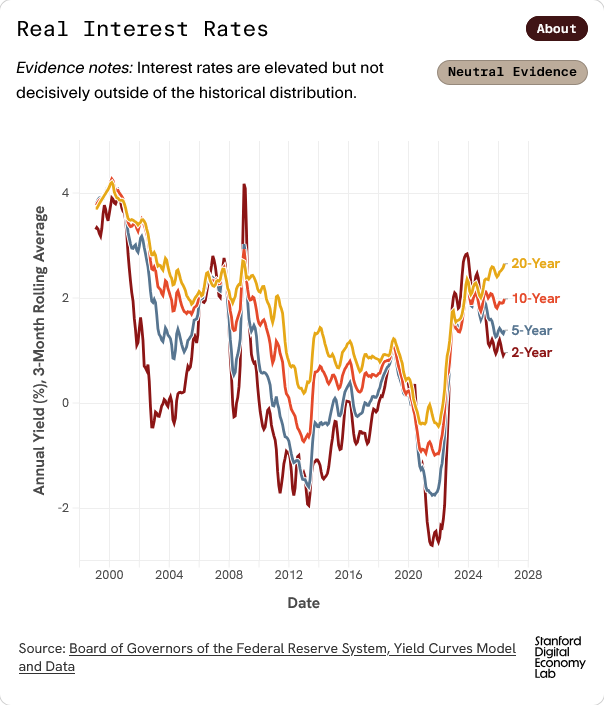
AI Economic Indicators is live! This new platform from @DigEconLab tracks the economic impact of AI. I joined @erikbryn and the wonderful team at DEL earlier this year to work on this project, and I'm thrilled to have it out in the wild.
3
8
34
4,250
Jun 8
Translating this for economists (language barriers!): model of --
1. Full automation: multisector, networked AK economy
2. Full reinvestment: 100% savings rate
3. Leontief technology
=> calibrate to input-output network depreciation data
=> 100% GDP growth per year
May 5

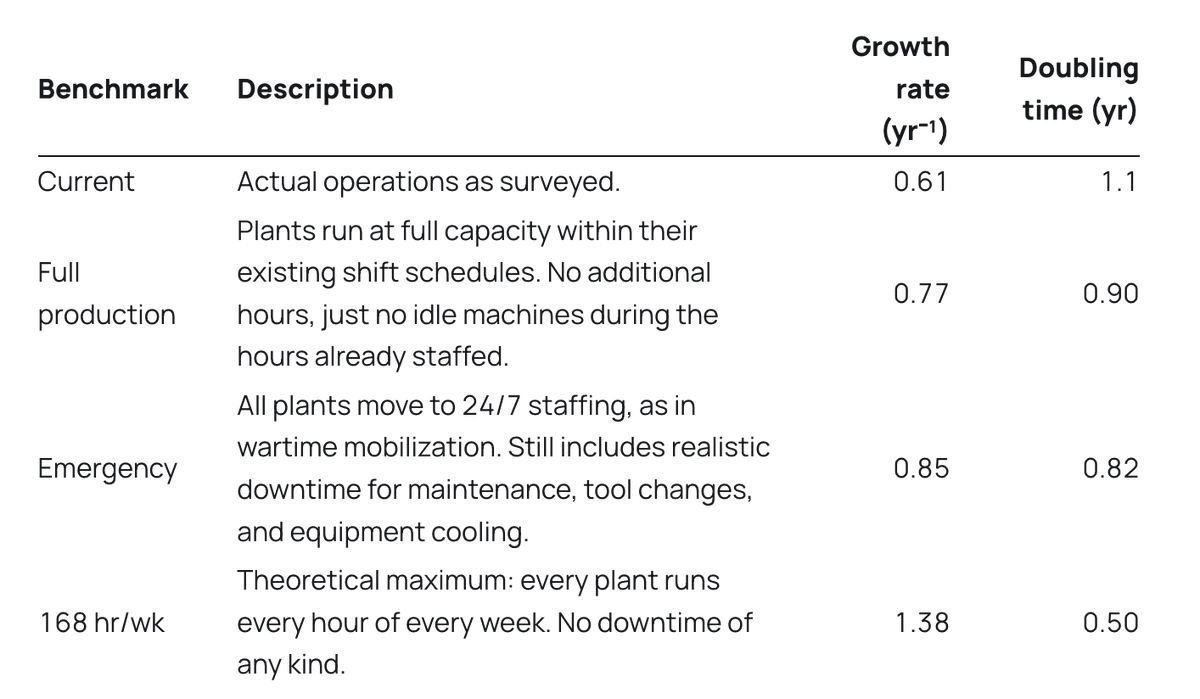
How fast could an industrial explosion (robots making robots...) be with current levels of physical technology?
New post from Damon Binder from looks at detailed data on factory throughput and adjusts for the most obvious physical bottlenecks: rising energy costs and lags in making new factories
Conclusion: ~1 year doubling times look plausible.
(link in reply)
5
31
3,603
May 27
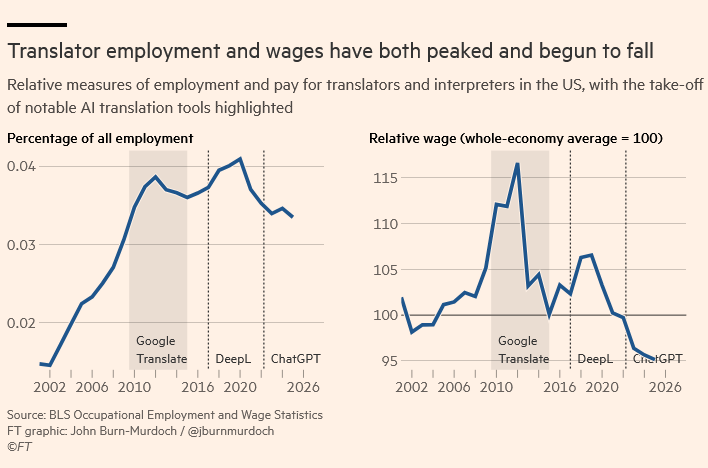
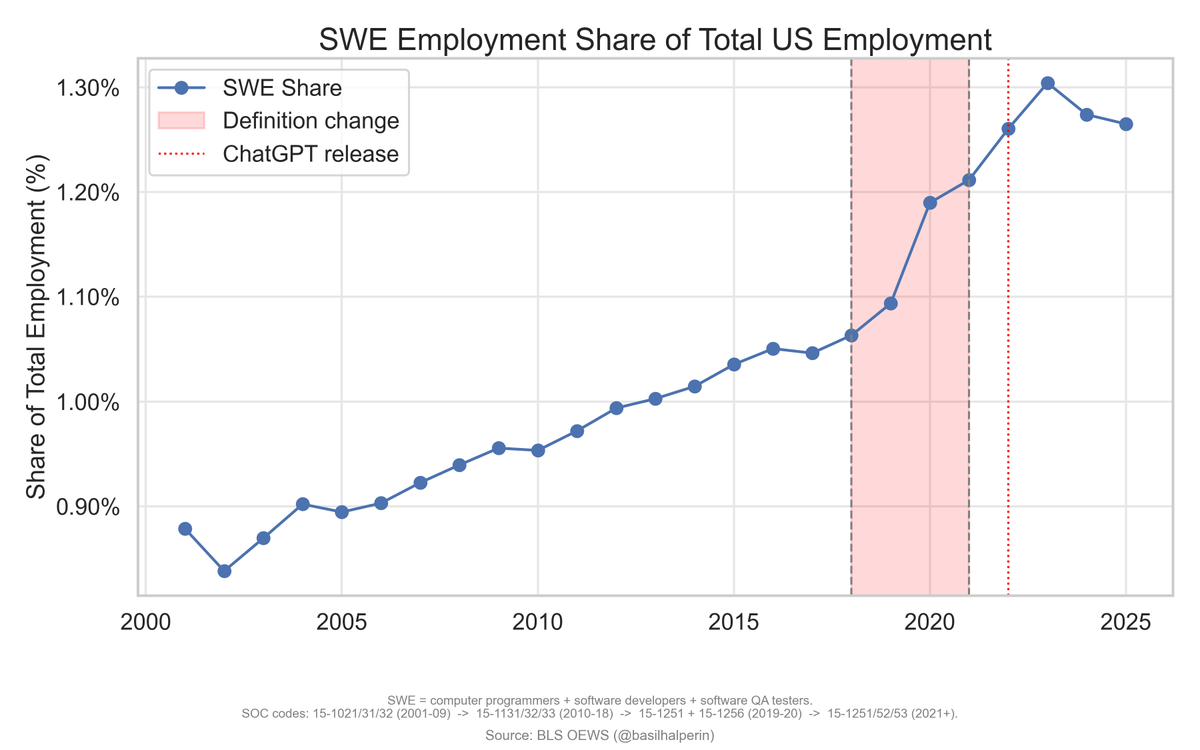
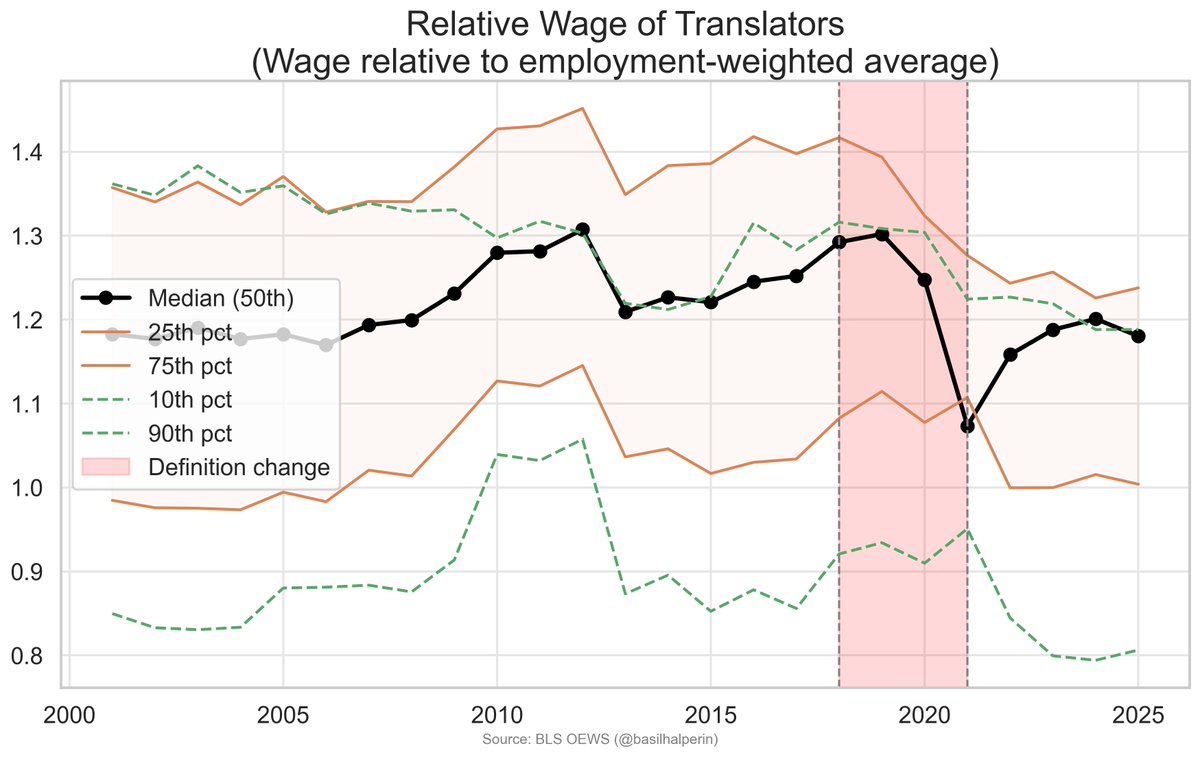
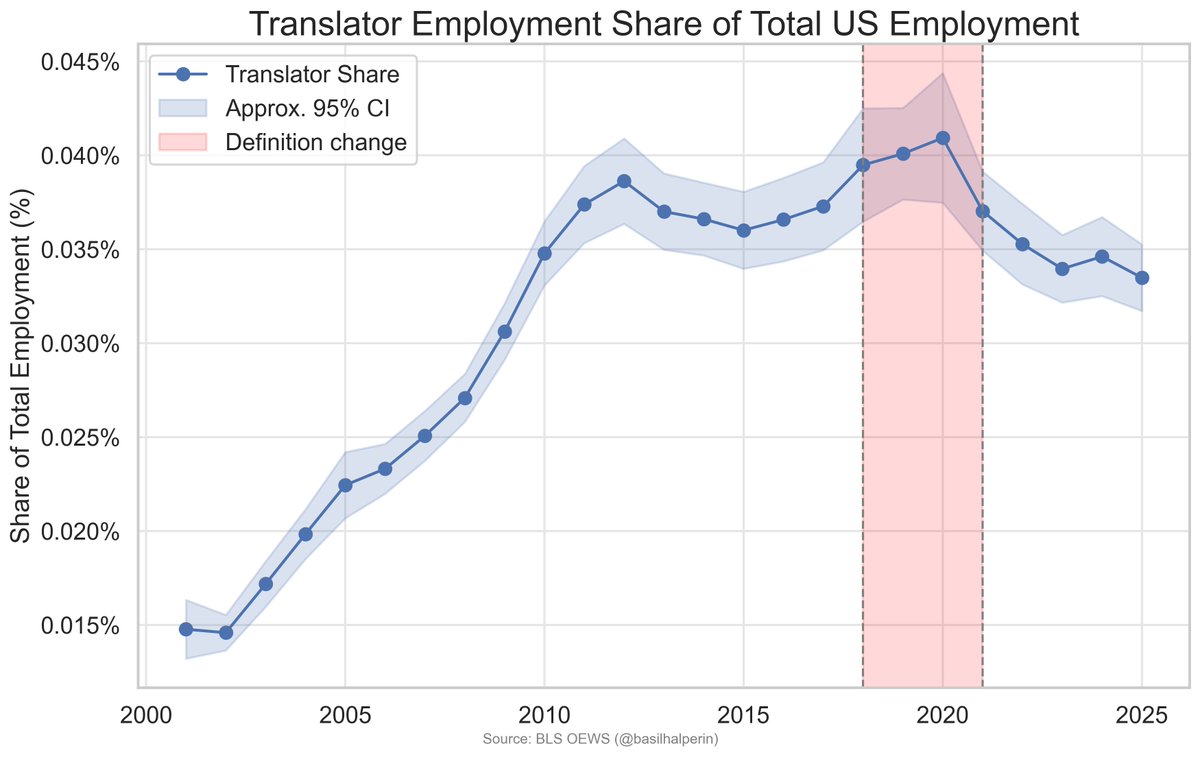
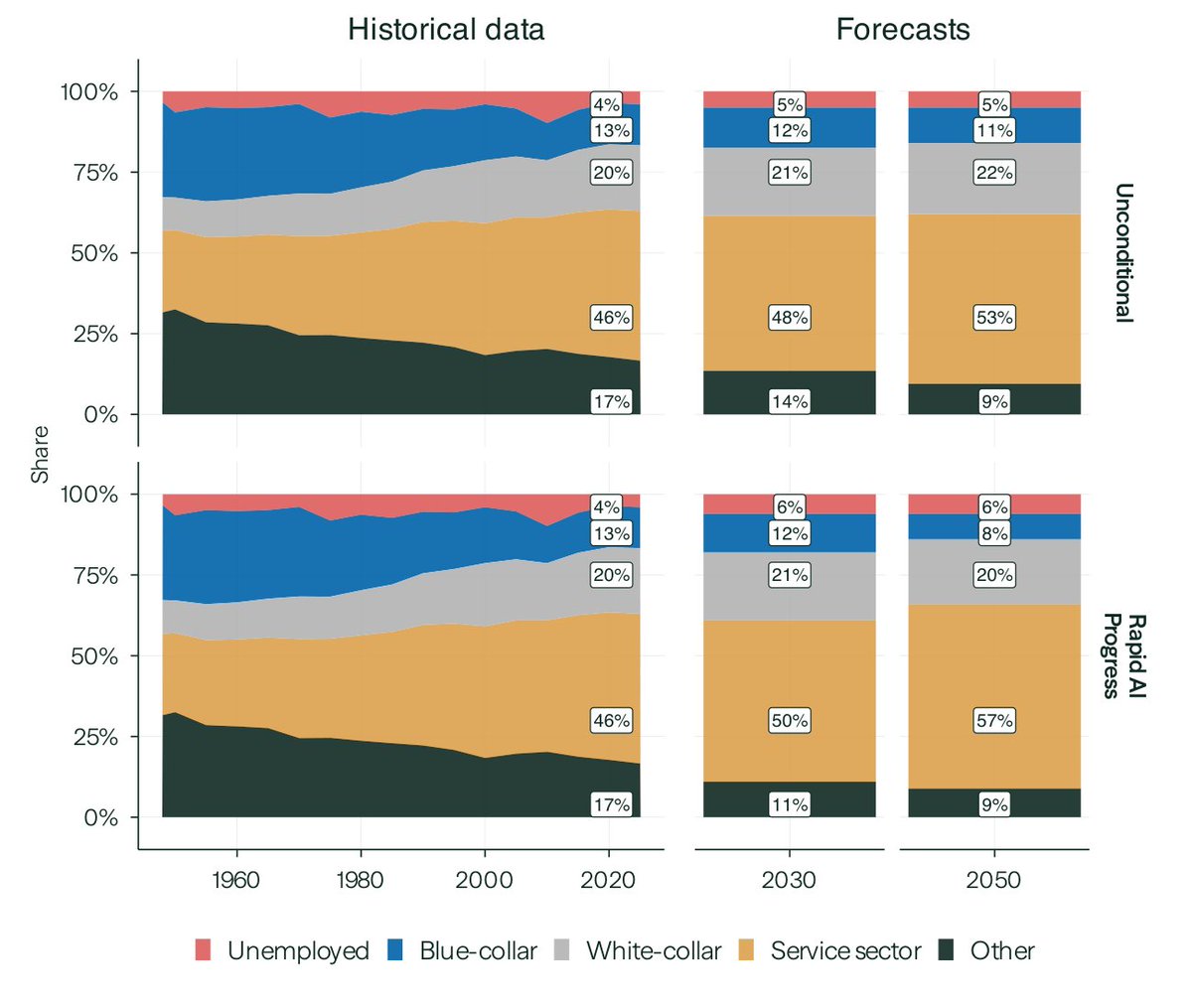
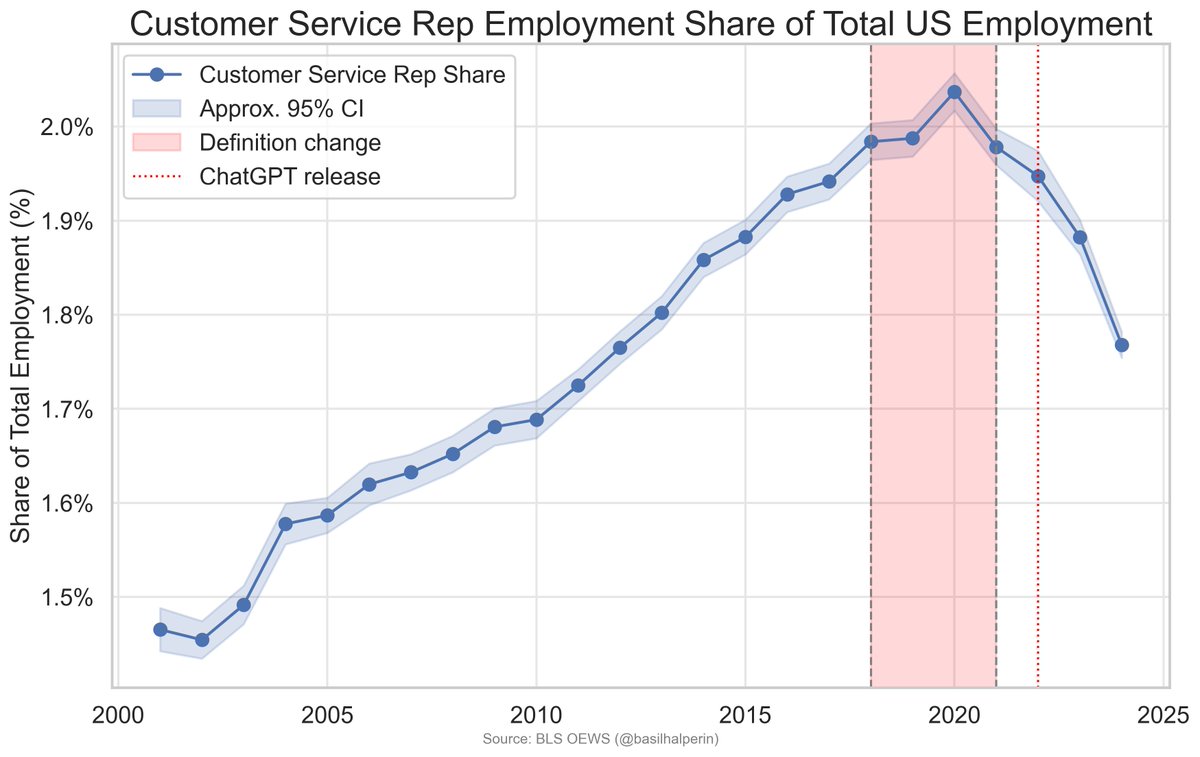
2026 update (=2025 data)
21 Apr 2025

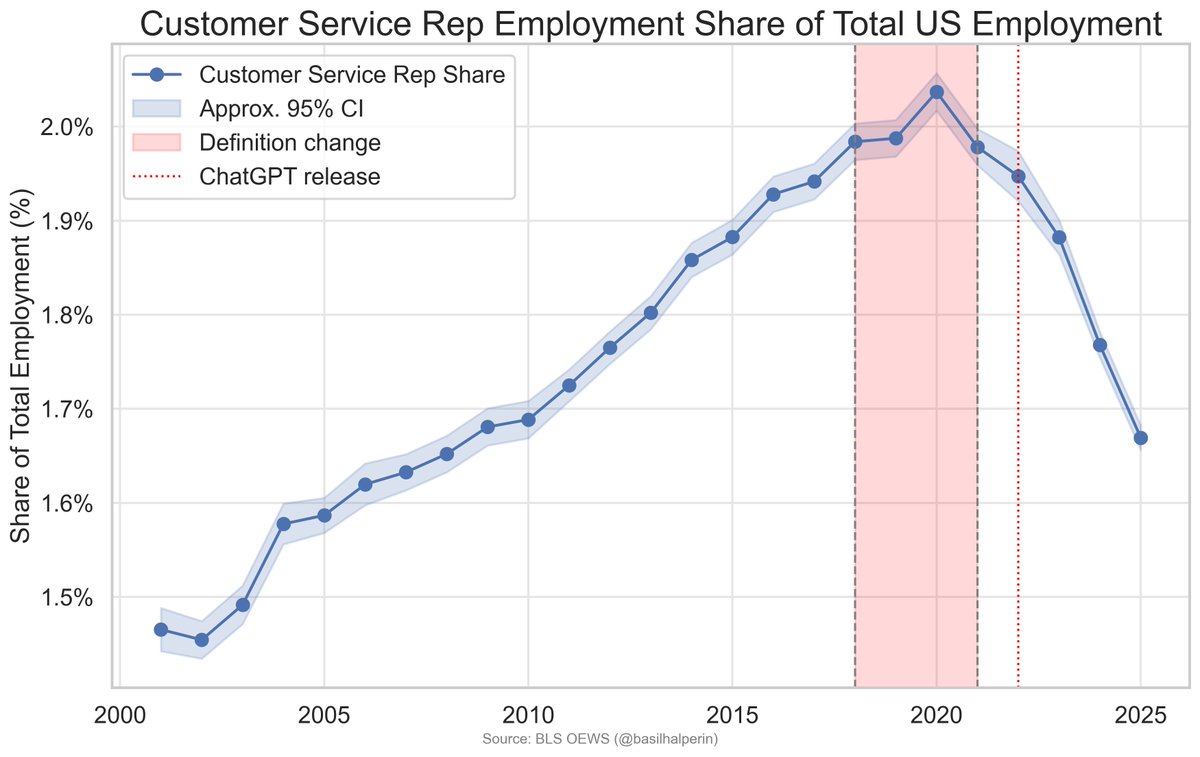
And here's customer service reps -- interestingly, the US employment share is down a fair amount since 2022 ( = ChatGPT)
5
17
110
16,679
May 27
caveats as before about using OEWS to measure changes over time
x.com/MicheleZanini/status/1…
16 Apr 2025

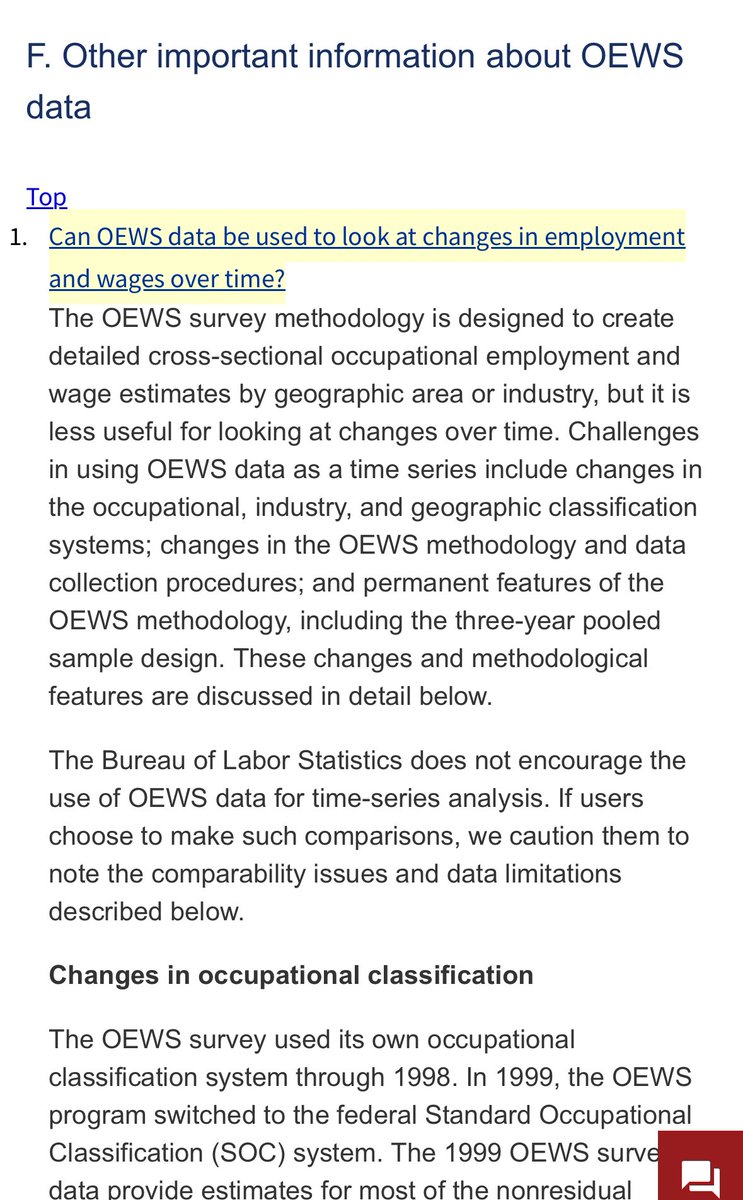
This page has a good explainer of the limitations (see section F) - hope it helps
bls.gov/oes/oes_ques.htm
1
3
1,008
Jun 7
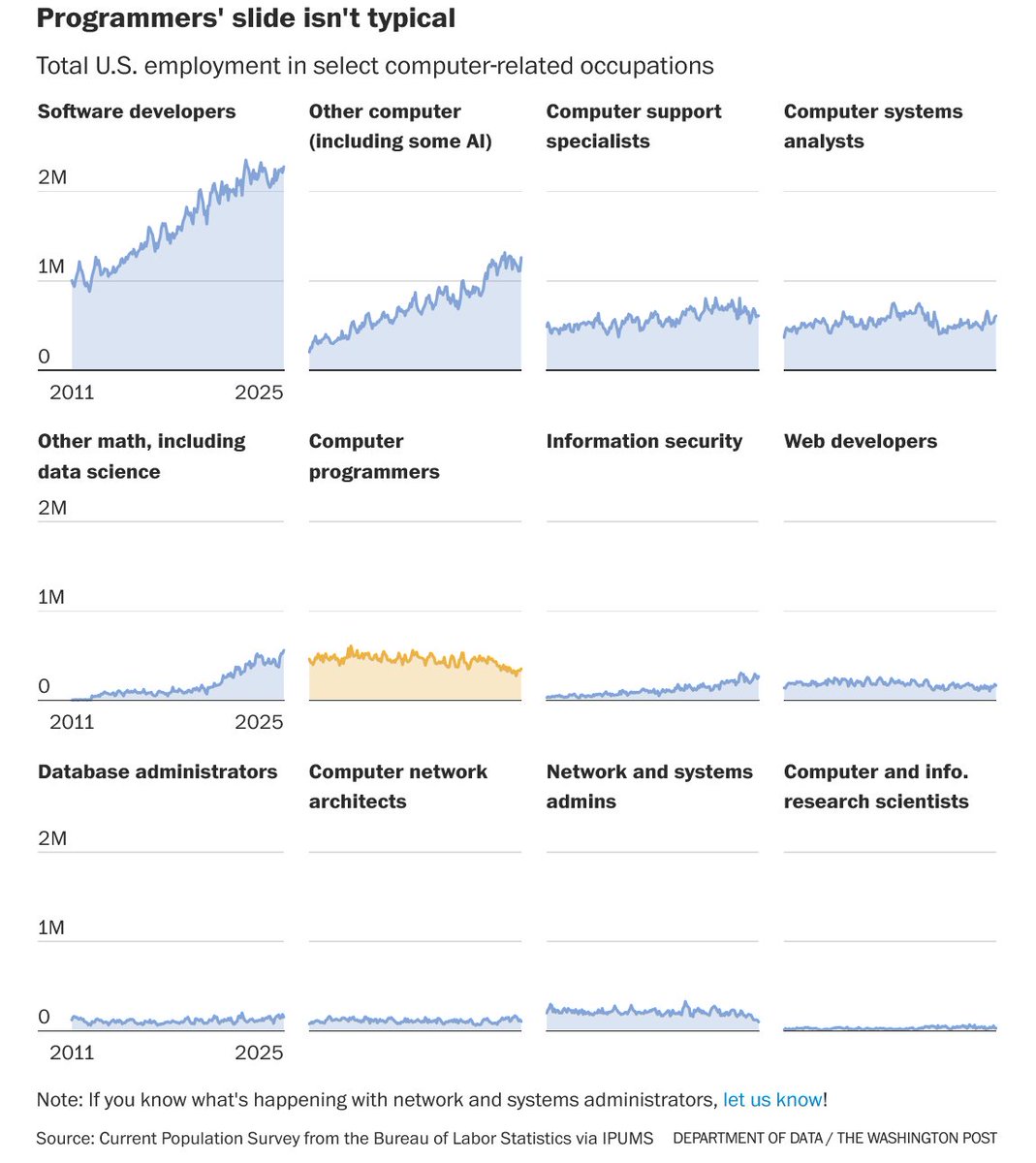
a salmon version (from John Burn-Murdoch) with good discussion
ft.com/content/75bc43ed-6a57…
3
234
Jun 1
slopchart, though i did some sanity checking
6
8
41
24,434
Jun 1
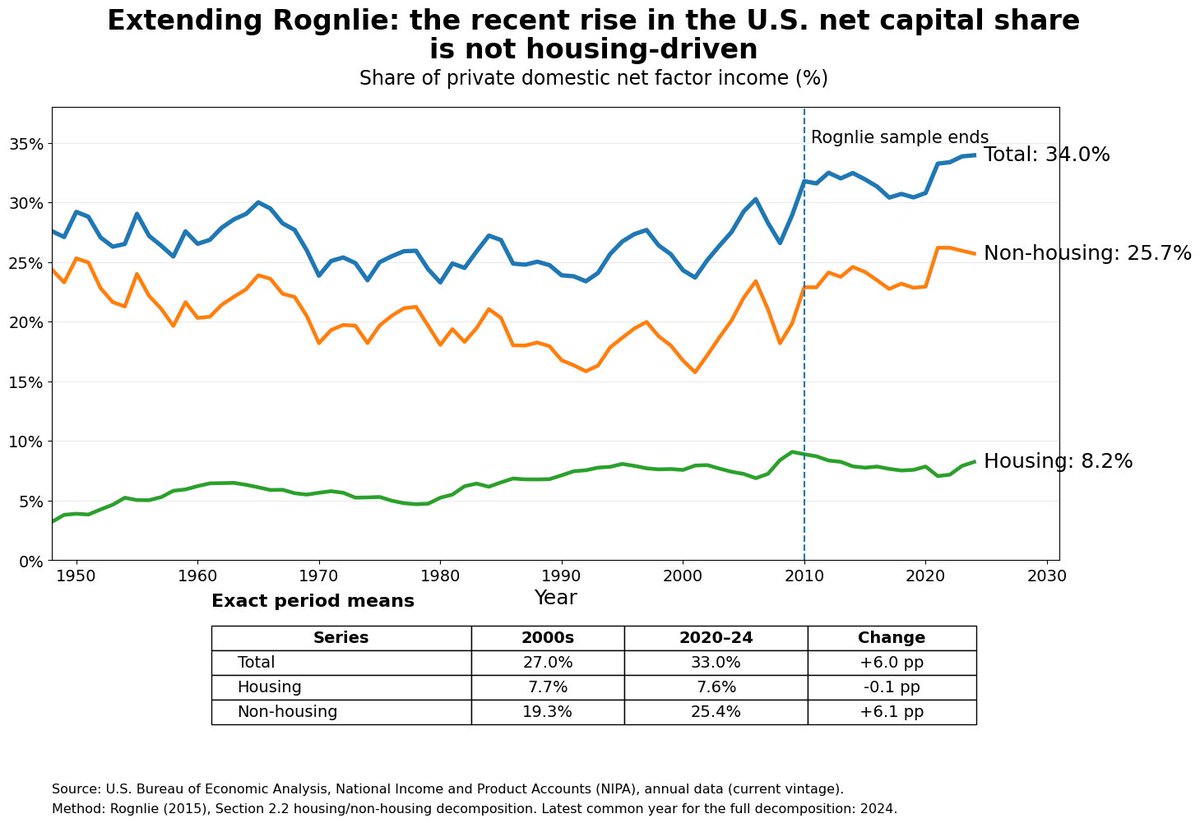
real labor-share expert @ZMazlish informs me Gutiérrez and Piton (2020) already argues exactly this, see discussion here jzmazlish.substack.com/p/why…
image QT below for archiving purposes
6
737
May 31
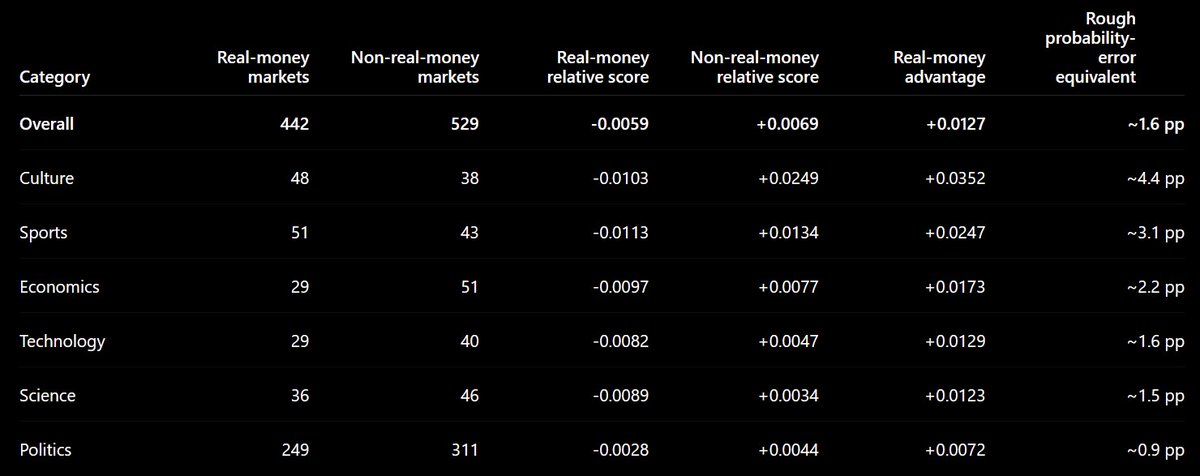
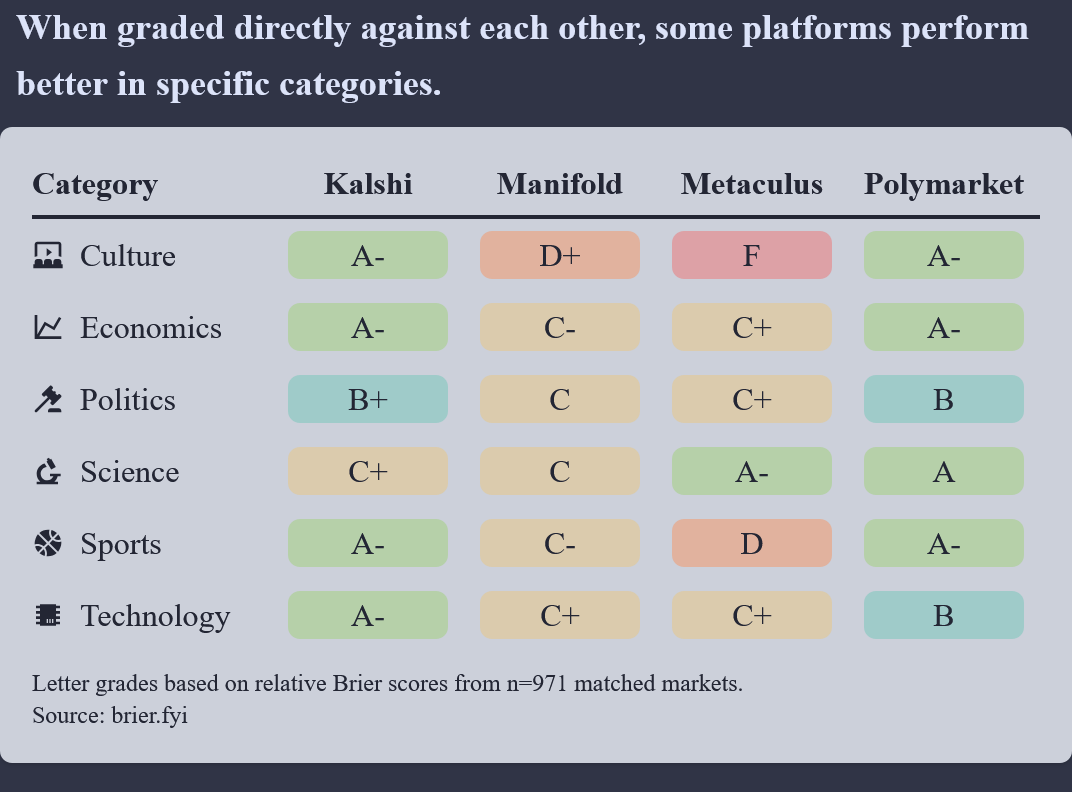
brier.fyi collected ~1k matched questions from real-money prediction markets vs. non-market platforms: skin in the game seems to still matter, at least some?
May 29

Show me a real $ money market estimate like this.
1
6
31
3,044
May 31
these are relative not absolute brier scores though; and I am somewhat posting this tweet with the hope people will dig through all these charts more carefully and i won't have to 😌
2
9
736
May 31
every time someone refers to Metaculus or Manifold as prediction "markets", god kills an arbitrageur
3
16
2,111
May 18
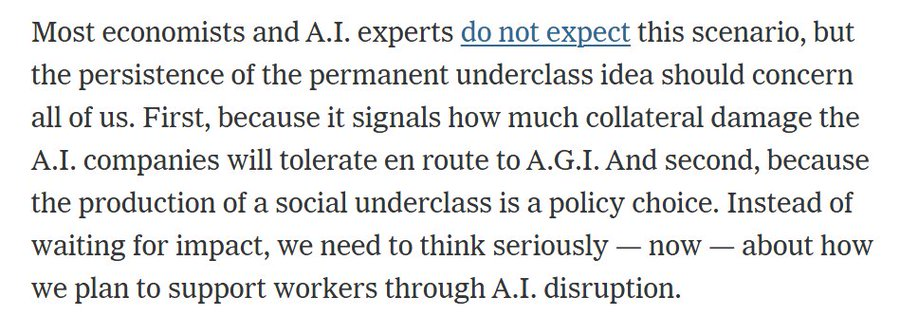
"Trying to escape the permanent underclass" is like an Incan trying to save enough money to escape Pizarro, sorry --
Either the political system works (and there is nothing to escape) or you're just screwed ¯\_(ツ)_/¯
May 16

The "permanent underclass" meme is primarily bad futurism, where people admit AGI massively changes one domain, but somehow everything else stays roughly 2025. Not impossible, but small slice of futures
27
46
767
76,323
May 18
or as Jasmine put it
x.com/jasminewsun/status/205…
May 2

I also dislike the fatalism of the permanent underclass discourse, but am equally tired of people using euphemisms like “transition costs” instead of figuring out how to help the people we know will be impacted
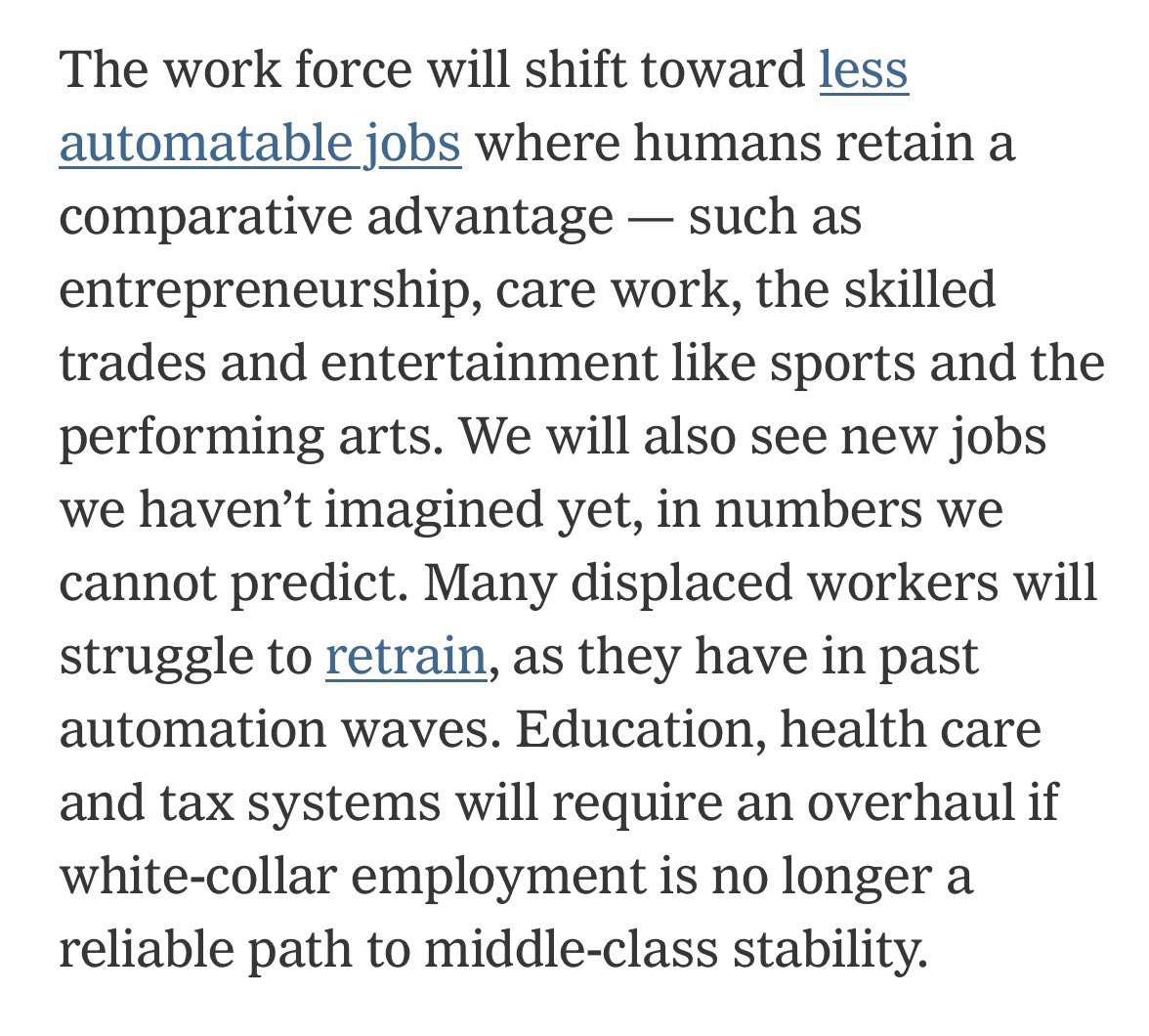
What’s our plan for unemployed college grads and older clerical workers? Retraining programs have an awful track record, and anyway what do we retrain people to? What happens to colleges, healthcare, and the tax base in a world where white collar firm work is no longer the easy path to middle class stability? Plenty of urgent, unsolved, and politically salient questions that do not require a referendum on full automation
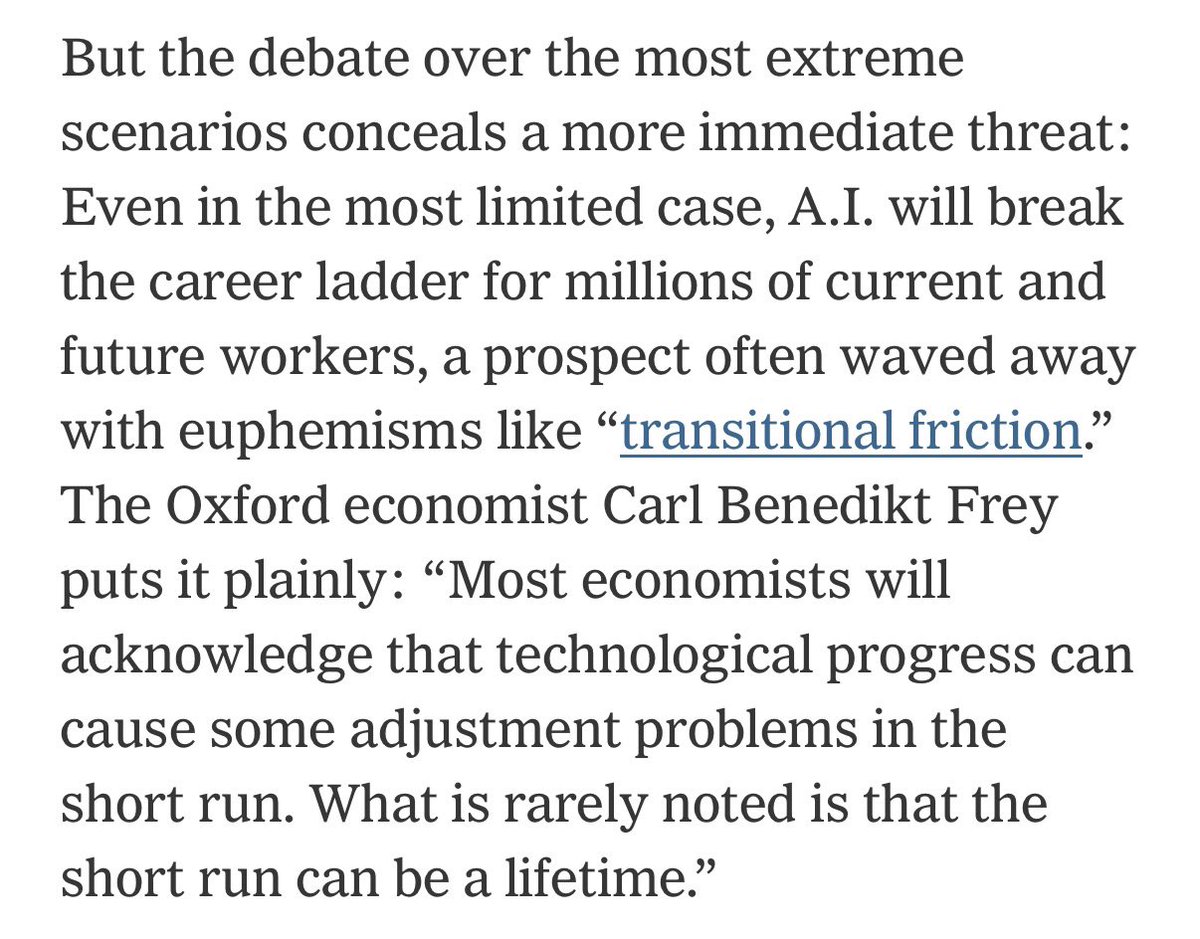
@carlbfrey: “Most economists will acknowledge that technological progress can cause some adjustment problems in the short run. What is rarely noted is that the short run can be a lifetime.”
5
47
5,794
May 13
Scott is very generous; but also what he's too modest to say is -- I'm just trying to be in the tradition of Scott Sumner :)
He's also right that David really brought out a lot of great discussion in our podcast -- check it out!! ⬇️
May 11

Scott Sumner on @BasilHalperin: "I see Halperin as a pragmatist in the tradition of Bennett McCallum, which is one reason why he’s my favorite young macroeconomist... Like McCallum, Basil Halperin seems to have absorbed both the best of New Keynesian economics and the best of Milton Friedman thought. He also favors NGDP targeting. He also seems to have excellent intuition about which sort of macro models are plausible and which are not—a skill that’s hard to teach. Even their personalities seem a bit similar, as both come across as being very polite." (1/2) scottsumner.substack.com/p/b…
1
42
5,257
May 13
Apr 29
Basically I leak all my alpha in the second half of this:
1. The role of monetary policy in the singularity…
2. NGDP targeting as “eclectically-optimal”…
3. Post-AGI, what happens to money price stickiness…
and more 🤠
1
1
797
May 13
(also RT for the excellence of UVA econ 😃)
x.com/DavidBeckworth/status/…
May 11
Here is one more similarity between @BasilHalperin and Bennett McCallum: they both hold/held academic positions at the University of Virginia! Here is a Bennett McCallum memorable conference we held back in 2023: mercatus.org/economic-insigh… (2/2)
615
Basil Halperin retweeted
May 8
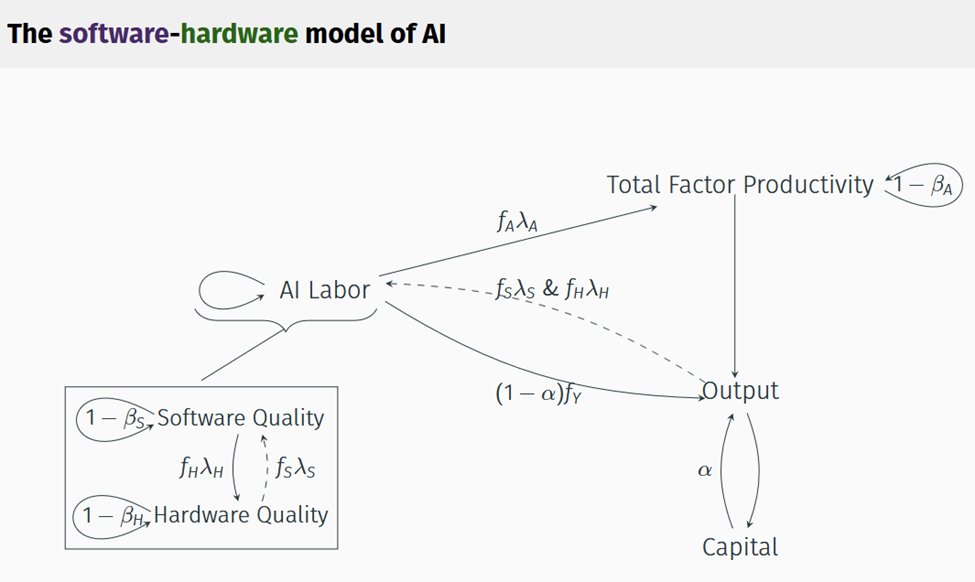
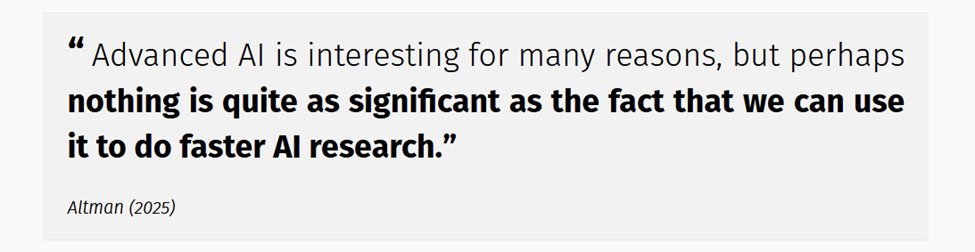
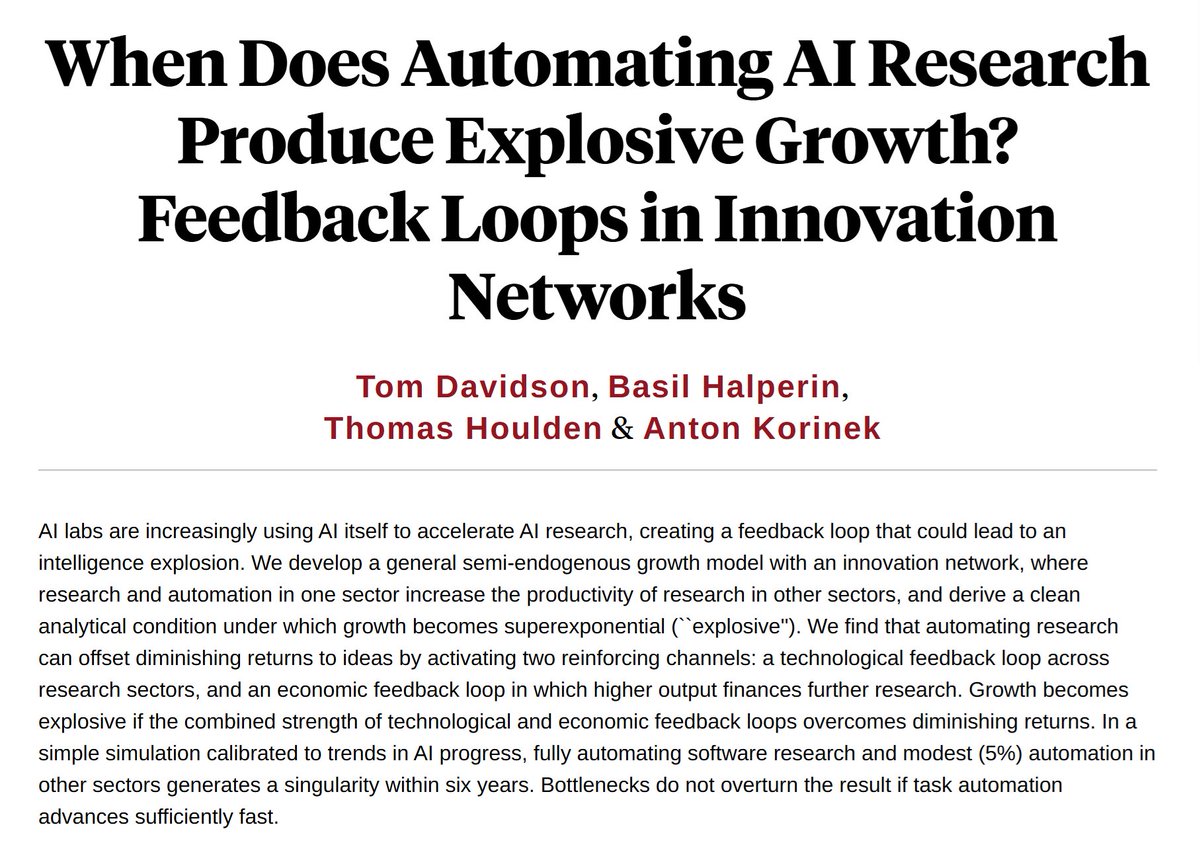
New paper: AI is good at lots, but labs think automating one thing might be especially important – AI research itself
What happens if you embed this into a standard economic growth model? When do you get an ‘economic singularity’?
May 4

1/🆕 New NBER paper: 𝗪𝗵𝗲𝗻 𝗗𝗼𝗲𝘀 𝗔𝘂𝘁𝗼𝗺𝗮𝘁𝗶𝗻𝗴 𝗔𝗜 𝗥𝗲𝘀𝗲𝗮𝗿𝗰𝗵 𝗣𝗿𝗼𝗱𝘂𝗰𝗲 𝗘𝘅𝗽𝗹𝗼𝘀𝗶𝘃𝗲 𝗚𝗿𝗼𝘄𝘁𝗵?
Under empirically grounded calibrations, a singularity could arrive within just a few years of automating AI research. 🧵
📄 nber.org/papers/w35155
5
24
90
16,783
May 8
New paper: AI is good at lots, but labs think automating one thing might be especially important – AI research itself
What happens if you embed this into a standard economic growth model? When do you get an ‘economic singularity’?
May 4
1/🆕 New NBER paper: 𝗪𝗵𝗲𝗻 𝗗𝗼𝗲𝘀 𝗔𝘂𝘁𝗼𝗺𝗮𝘁𝗶𝗻𝗴 𝗔𝗜 𝗥𝗲𝘀𝗲𝗮𝗿𝗰𝗵 𝗣𝗿𝗼𝗱𝘂𝗰𝗲 𝗘𝘅𝗽𝗹𝗼𝘀𝗶𝘃𝗲 𝗚𝗿𝗼𝘄𝘁𝗵?
Under empirically grounded calibrations, a singularity could arrive within just a few years of automating AI research. 🧵
📄 nber.org/papers/w35155
5
24
90
16,783
May 8
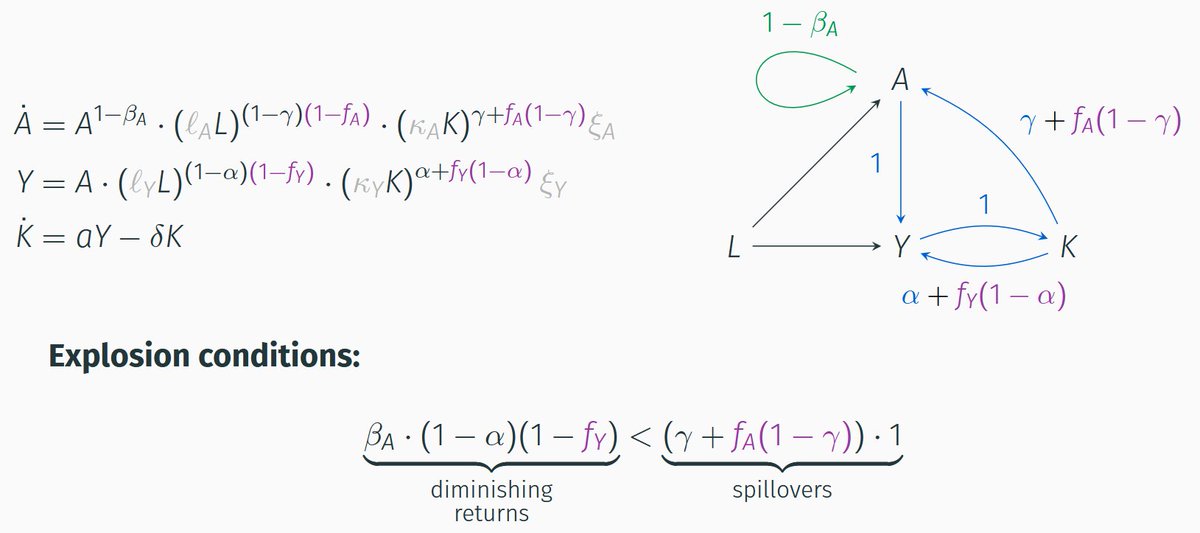
While ideas are getting harder to find for the economy as a whole (the level of diminishing returns is β=3.1)...
...in software they are less so (β≈1)...
...and in hardware much less so (β=0.2)!
1
2
471
May 8
Automating 1% of all semiconductor research ≈ automating 10% of all general research (in this sense)
For me, staring at this has raised my perception of how important it is to monitor automation in the chip industry. Even a little bit of automation there goes a long way...
1
2
13
3,486