
Joined May 2020
- Tweets 2,891
- Following 305
- Followers 11,181
- Likes 3,602
175 Photos and videos
Pinned Tweet

The AI Economic Indicators is live! Our new, free platform tracks how AI is reshaping jobs, productivity, and the economy.
Three unique dashboards at launch for you to explore, with more on the way: indicators.stanford.edu
1
7
25
3,346
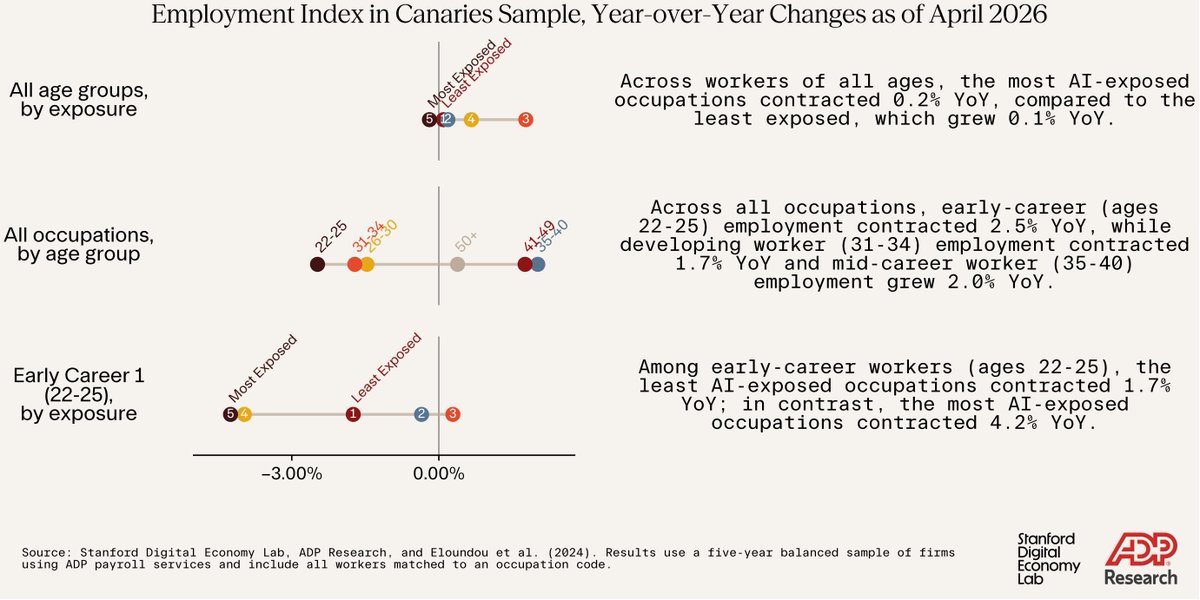
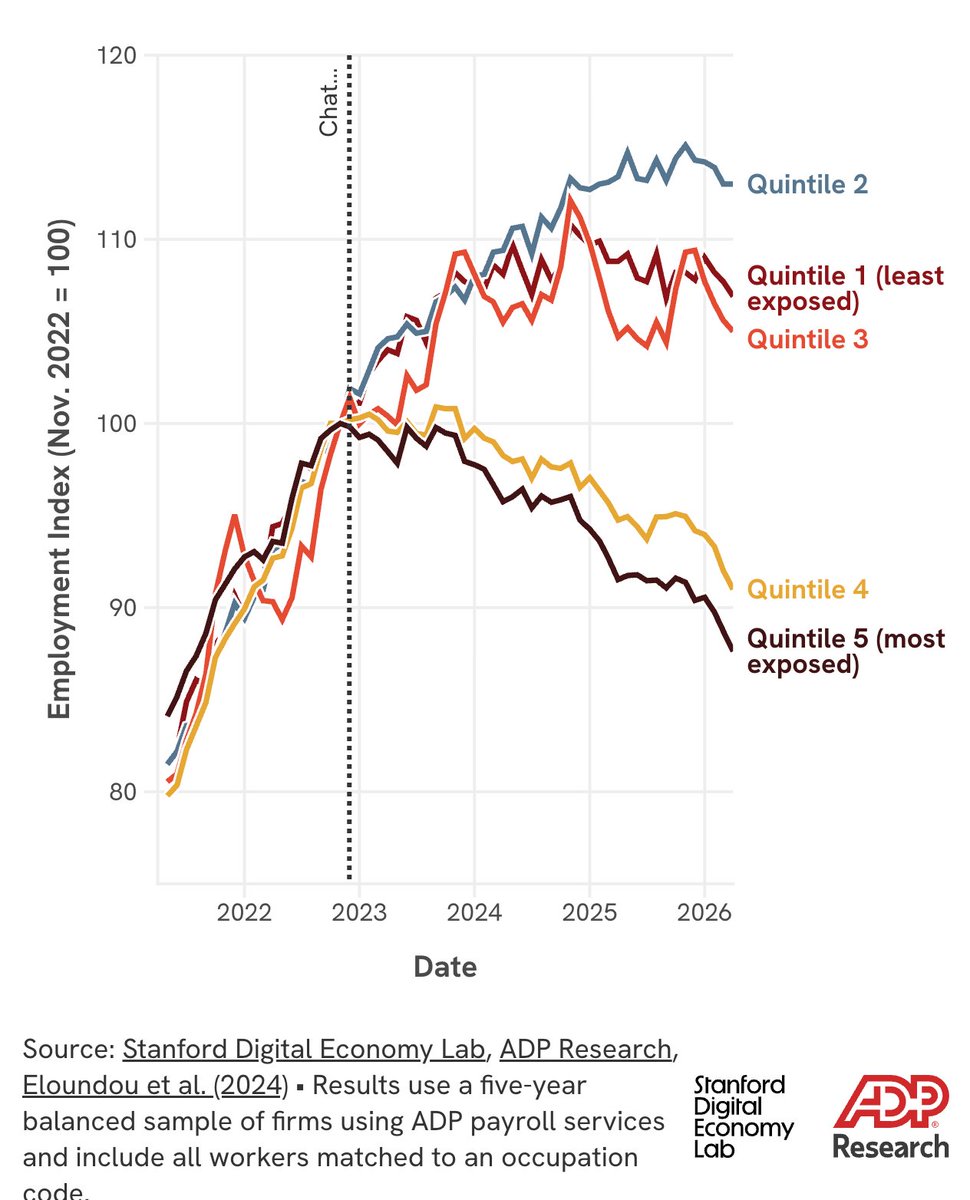
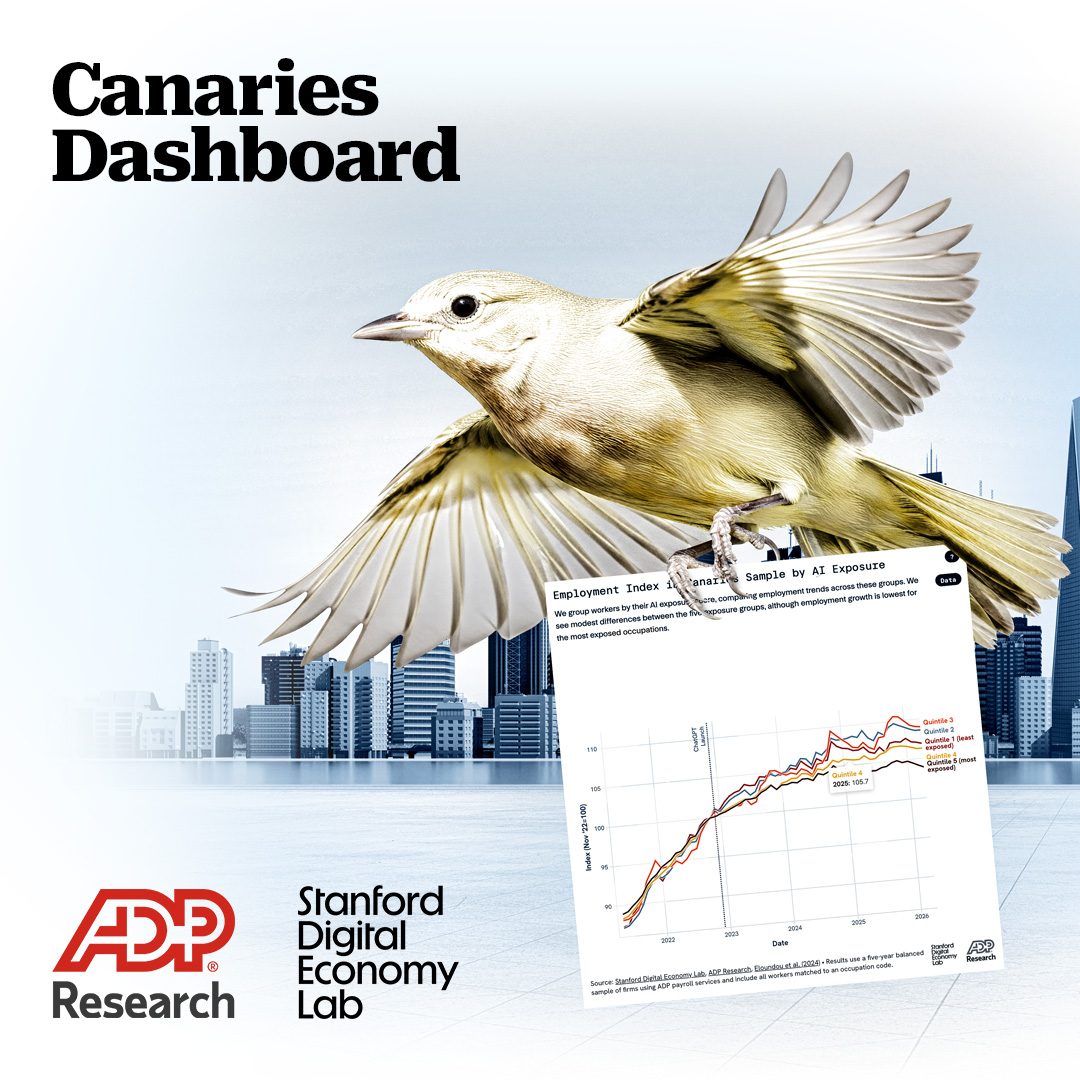
Is AI impacting early-career employment more than mid-career? And do we see a large contrast between the most- and least-AI exposed occupations? The Canaries Dashboard, a collaboration between ADP Research and the Lab, is available now. canaries.stanford.edu
1
4
11
3,187
The Canaries Dashboard is part of the AI Economic Indicators, the Lab's new platform for comprehensive tracking of AI's impact on the economy.
indicators.stanford.edu
1
4
300
Stanford Digital Economy Lab retweeted

How AI will change the job market, and how to prepare: insights from 16 top economists, including SIEPR's Nick Bloom (@I_Am_NickBloom) and Stanford @DigEconLab economist Bharat Chandar. Gift link ⤵️
#FutureofWork #AI #Innovation
wsj.com/tech/ai/economists-w…
14
25
1,815
Stanford Digital Economy Lab retweeted

Jun 11
Terrific project by @erikbryn and the @DigEconLab at Stanford tracking quantitative indicators of AI impact on the economy
Jun 10

Today, the Stanford @DigEconLab launches the AI Economic Indicators, a new platform for tracking how AI is reshaping work, productivity, adoption, and the economy.
1/6
1
4
1,466
Stanford Digital Economy Lab retweeted

Jun 11
Want to know how AI is reshaping work, productivity, and the economy? The Stanford @DigEconLab, in collaboration with ADP Research, has the data — in near real time. Check out Stanford’s new AI Indicators dashboard at digitaleconomy.stanford.edu/… . #AI #labormarket #economy
1
230
"We are flying blind into one of the most consequential periods in world history. We cannot afford to rely on anecdotes or lagging indicators of AI's effects." -@erikbryn
Explore the AI Economic Indicators, our platform tracking AI's economic effects.
indicators.stanford.edu
3
11
928
Stanford Digital Economy Lab retweeted

Jun 10
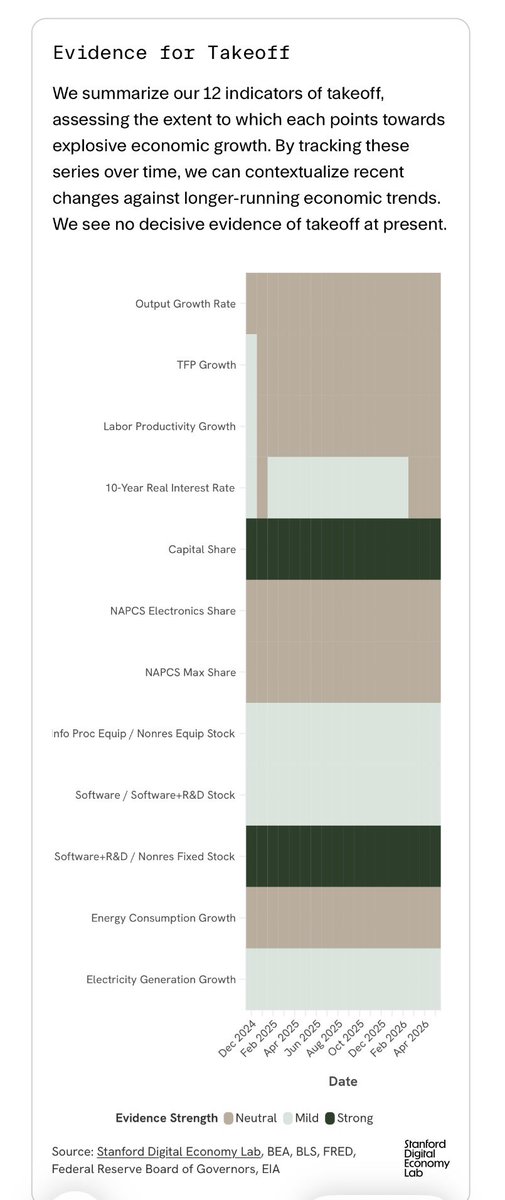
Fantastic launch from Erik and the @DigEconLab at Stanford on providing continuous dashboards and metrics on AI’s progress, work impacts, and takeoff.
I was a little surprised to see more AI takeoff indicators than I expected; non-zero and higher than I expected. Ideally we have a few versions of this index from different labs like Erik’s, since I think this is a civilizationally important indicator that all the frontier AI labs are tracking and we need more public scrutiny and deliberation about it.
Jun 10
Today, the Stanford @DigEconLab launches the AI Economic Indicators, a new platform for tracking how AI is reshaping work, productivity, adoption, and the economy.
1/6
3
6
1,184
Stanford Digital Economy Lab retweeted

Jun 11
This is amazing work from @connacher_ and team
We'll be posting monthly updates building off my Canaries in the Coal Mine project with @erikbryn and @RuyuChen (see thread below)
Also tracking indicators of AI takeoff and firm AI adoption
Thanks to everyone from @DigEconLab!
Jun 10

AI Economic Indicators is live! This new platform from @DigEconLab tracks the economic impact of AI. I joined @erikbryn and the wonderful team at DEL earlier this year to work on this project, and I'm thrilled to have it out in the wild.
3
2
13
1,598
"This is about moving the conversation about AI's impact from what we think, to what we know and what we can measure with the data."
@NelaRichardson of @AdpResearch discussed our collaboration on the Canaries Dashboard on @technology
youtu.be/QDfIsDTX0UA?si=YUCA…
1
6
1,169
The Canaries Dashboard is a part of the AI Economic Indicators, a platform for tracking AI's impact on labor and the economy.
indicators.stanford.edu
4
414
Stanford Digital Economy Lab retweeted

Jun 10
We still have limited understanding of how AI will affect jobs in the real world. This sort of economic observatory with ongoing indicators is something we've needed to turn the conversation from speculation to analysis. Hats off @DigEconLab , @erikbryn
Jun 10
Today, the Stanford @DigEconLab launches the AI Economic Indicators, a new platform for tracking how AI is reshaping work, productivity, adoption, and the economy.
1/6
1
7
24
4,715
Stanford Digital Economy Lab retweeted

Jun 10
We need more real time data on how AI may be impacting the economy - this is a really useful addition.
Jun 10
Today, the Stanford @DigEconLab launches the AI Economic Indicators, a new platform for tracking how AI is reshaping work, productivity, adoption, and the economy.
1/6
17
34
395
68,866
The AI Economic Indicators is live! Our new, free platform tracks how AI is reshaping jobs, productivity, and the economy.
Three unique dashboards at launch for you to explore, with more on the way: indicators.stanford.edu
1
7
25
3,346
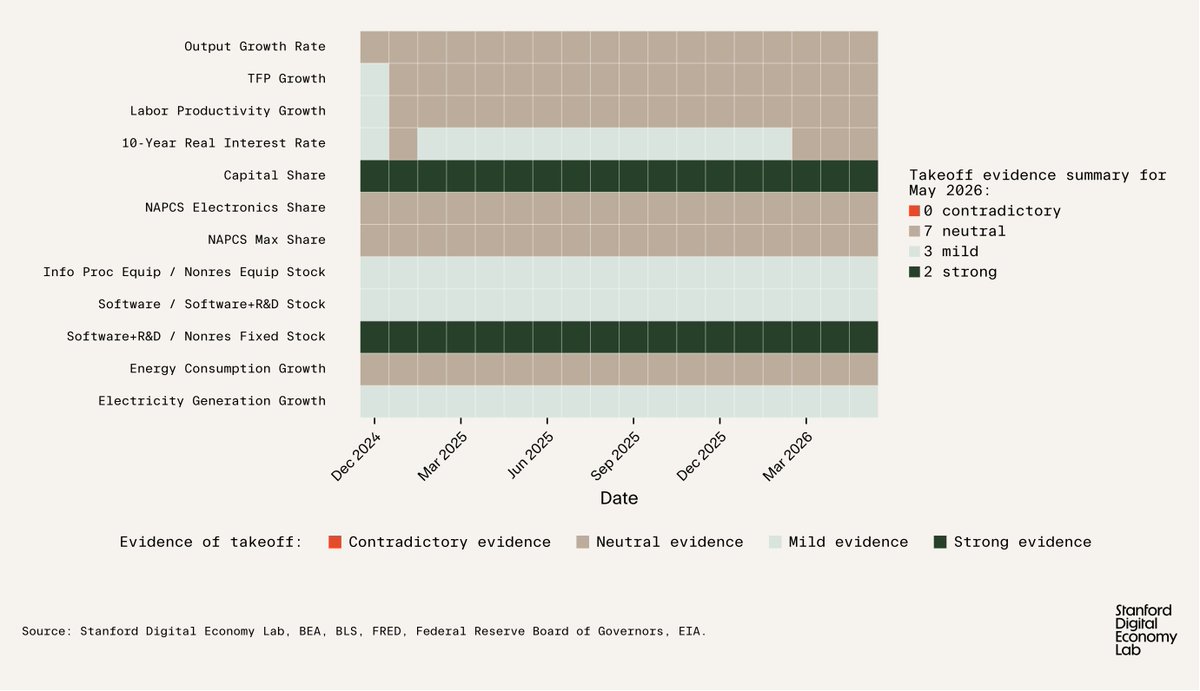
The Takeoff Tracker looks for signs of explosive growth and AI-based economic takeoff, evaluating indicators by strength of evidence.
takeofftracker.stanford.edu
1
5
1,182
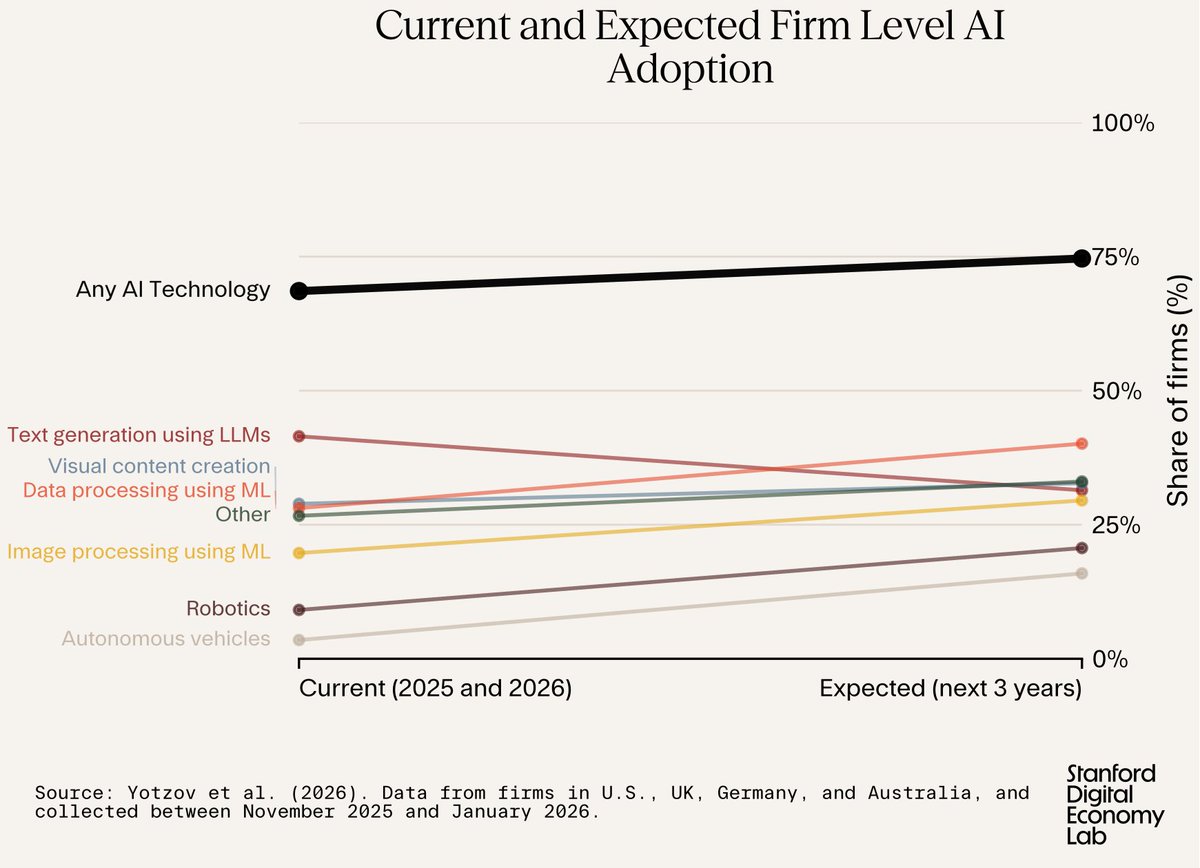
The Adoption Monitor looks at how fast individuals and firms are adopting AI, as we attempt to follow the growing or shrinking importance of the technology in everyday and economic life.
aiadoptionmonitor.stanford.e…
1
221
Stanford Digital Economy Lab retweeted

Jun 10
Today, the Stanford @DigEconLab launches the AI Economic Indicators, a new platform for tracking how AI is reshaping work, productivity, adoption, and the economy.
1/6
35
305
1,004
241,053
Stanford Digital Economy Lab retweeted

Jun 10
Today, @DigEconLab and @AdpResearch released The AI Economic Indicators! Now you can see YoY employment changes for AI exposed entry level workers, updated through April 2026. Later this month, May will be available too.
indicators.stanford.edu
2
5
20
1,496
Stanford Digital Economy Lab retweeted
Jun 5
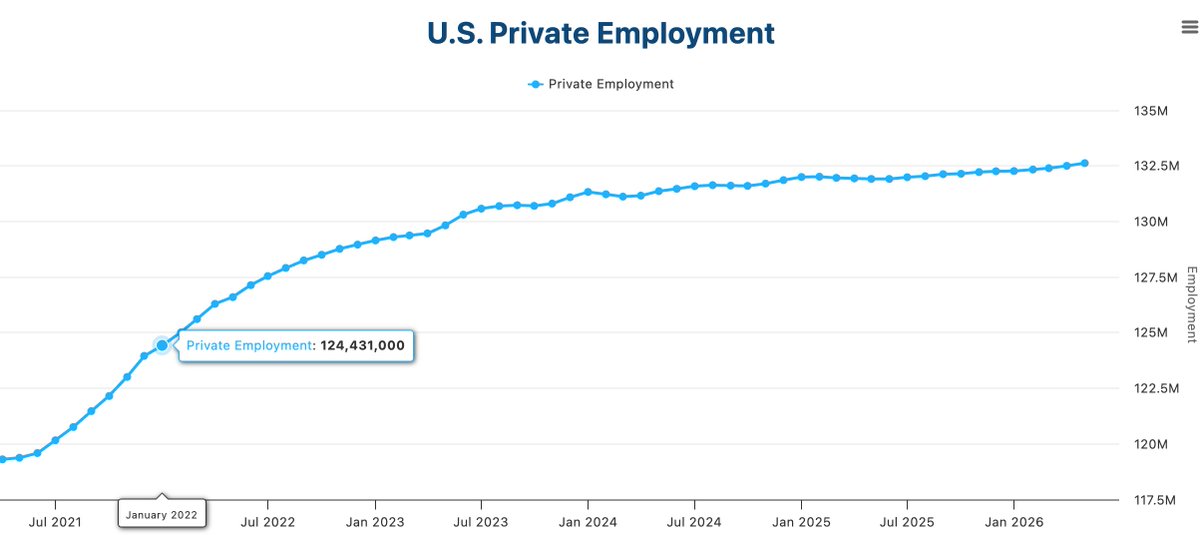
Private employers added 122,000 jobs in May, according to the National Employment Report from @ADP and @DigEconLab adpemploymentreport.com
2
3
4
3,115
What happens to wealth and value (human or otherwise) in a world with more and more advanced AI?
Postdoctoral Fellow Phil Trammell joined @alexolegimas (@GoogleDeepMind) to unpack the question on the @dwarkeshpodcast.
Watch: youtube.com/watch?v=Jj-kBHzU…
1
6
649
And if you're driving (hopefully not while checking this post):
Apple: podcasts.apple.com/us/podcas…
Spotify: open.spotify.com/episode/52w…
318