
Joined May 2010
- Tweets 2,160
- Following 2,507
- Followers 4,096
- Likes 26,407
96 Photos and videos

Pinned Tweet

20 May 2024
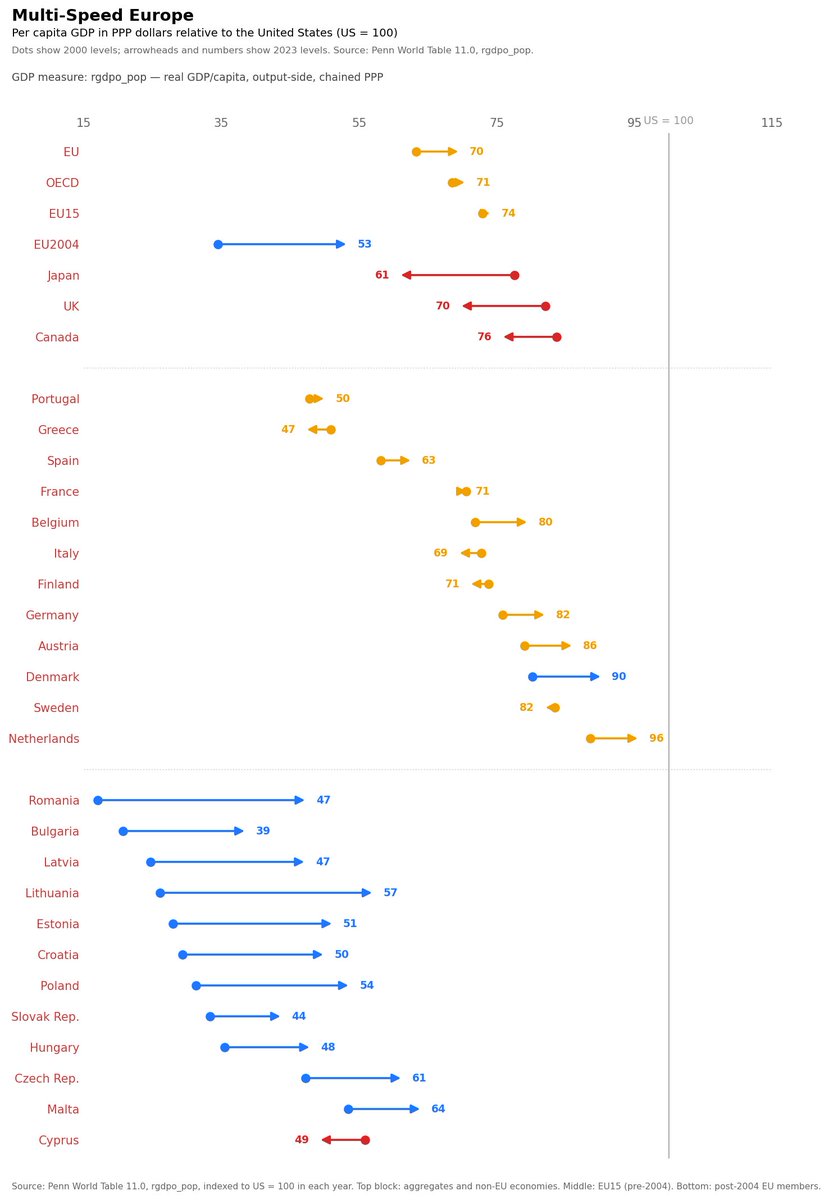
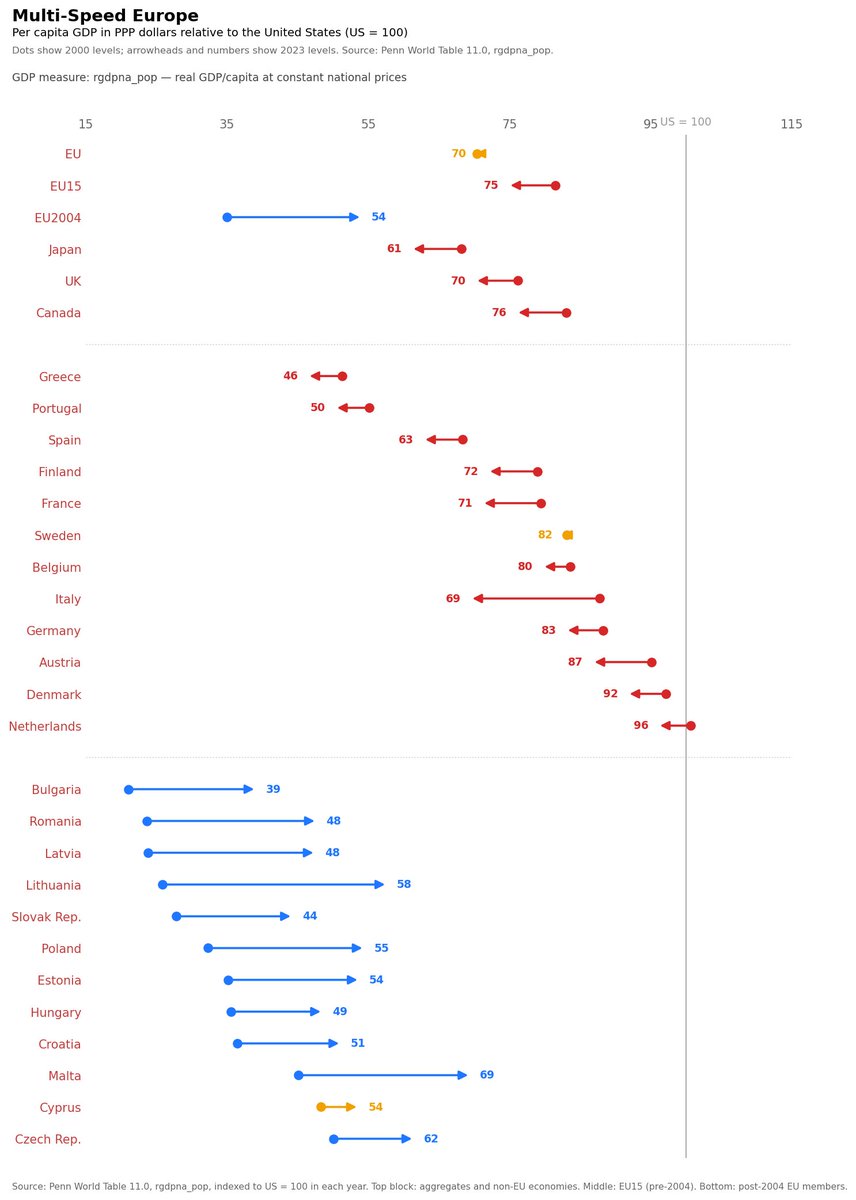
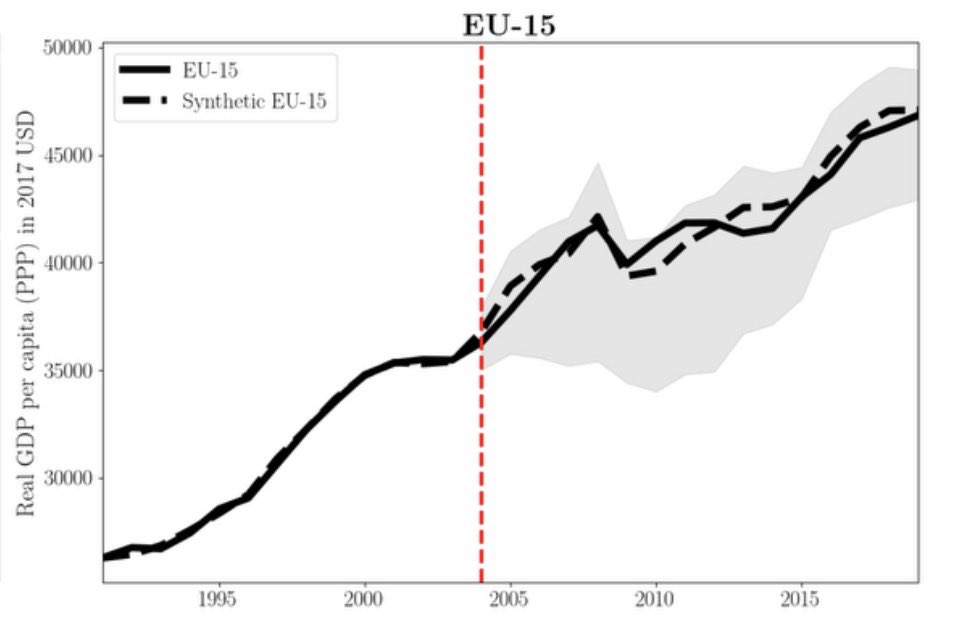
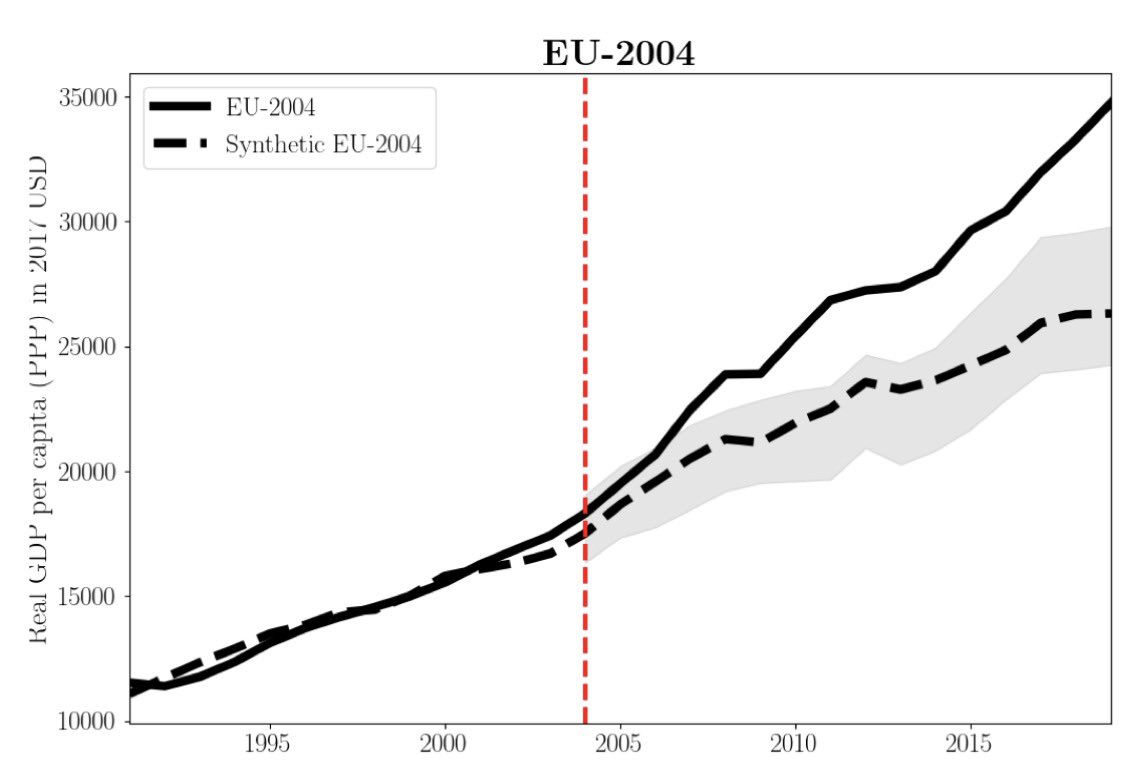
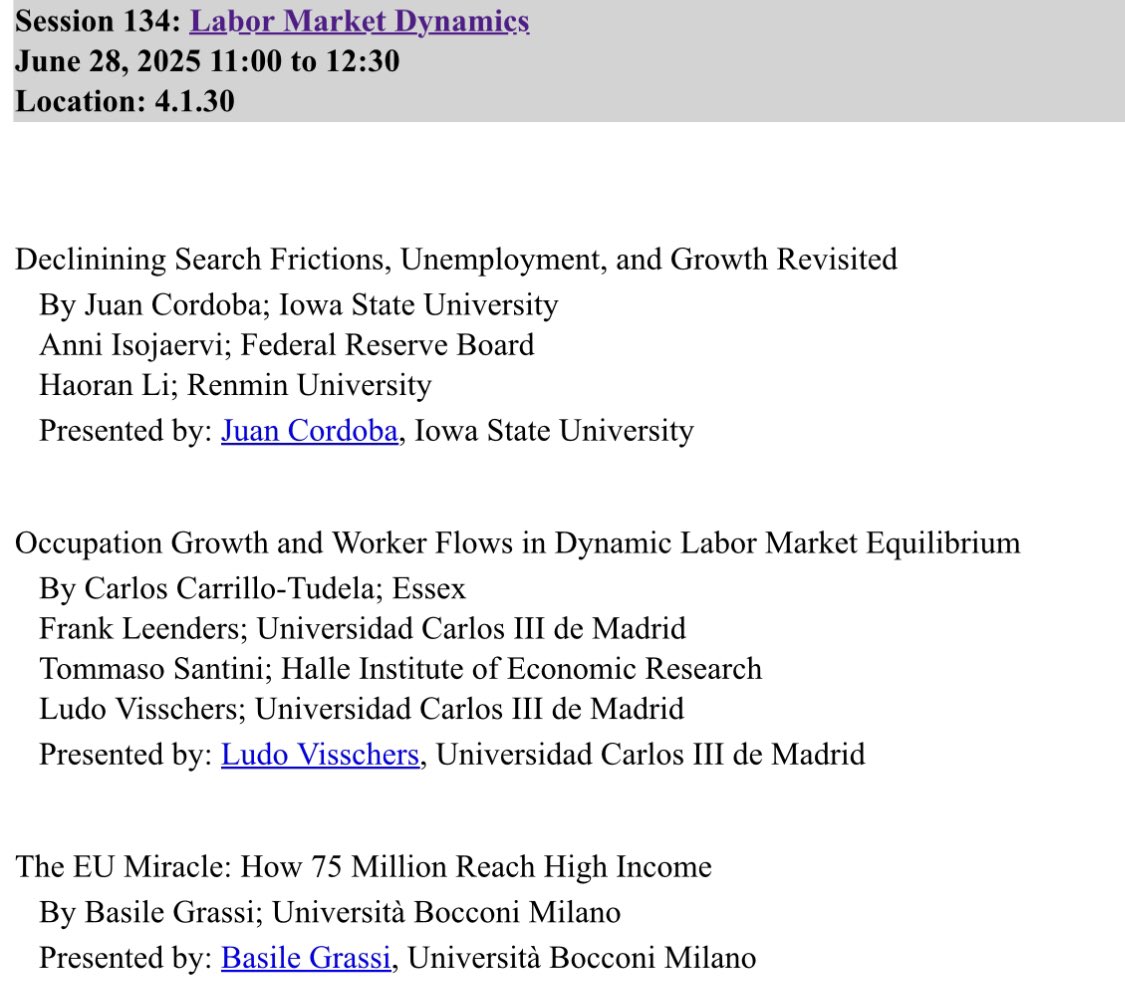
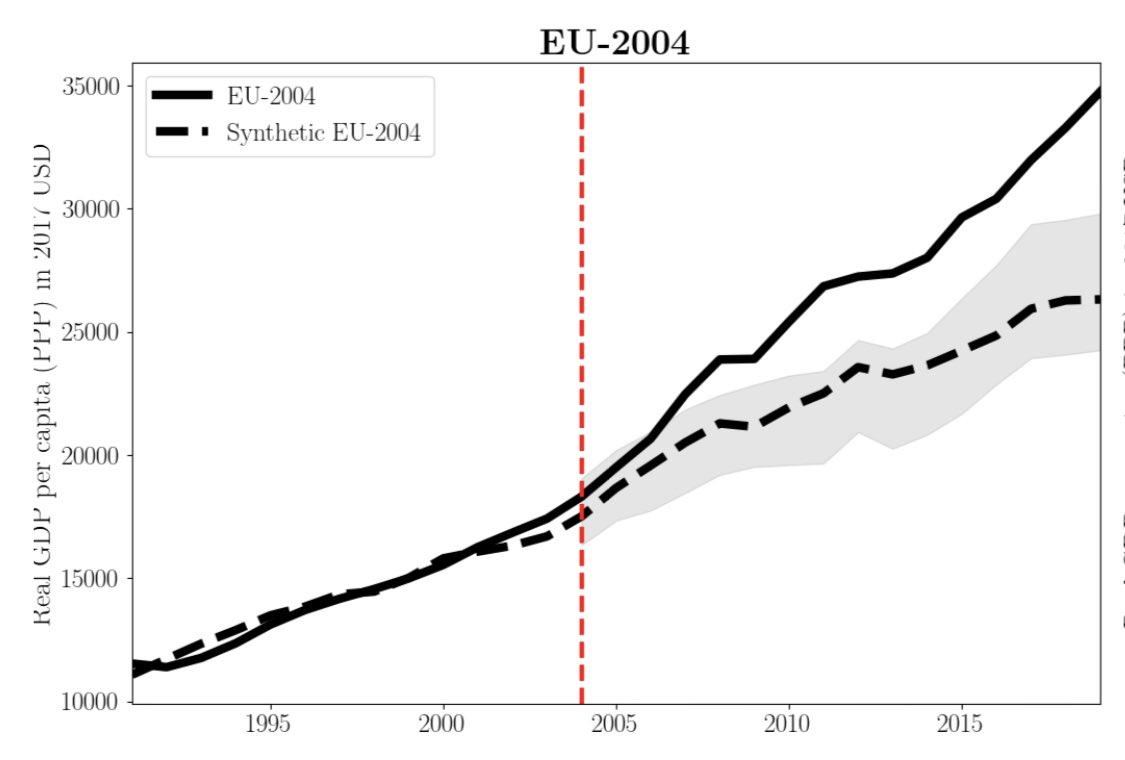
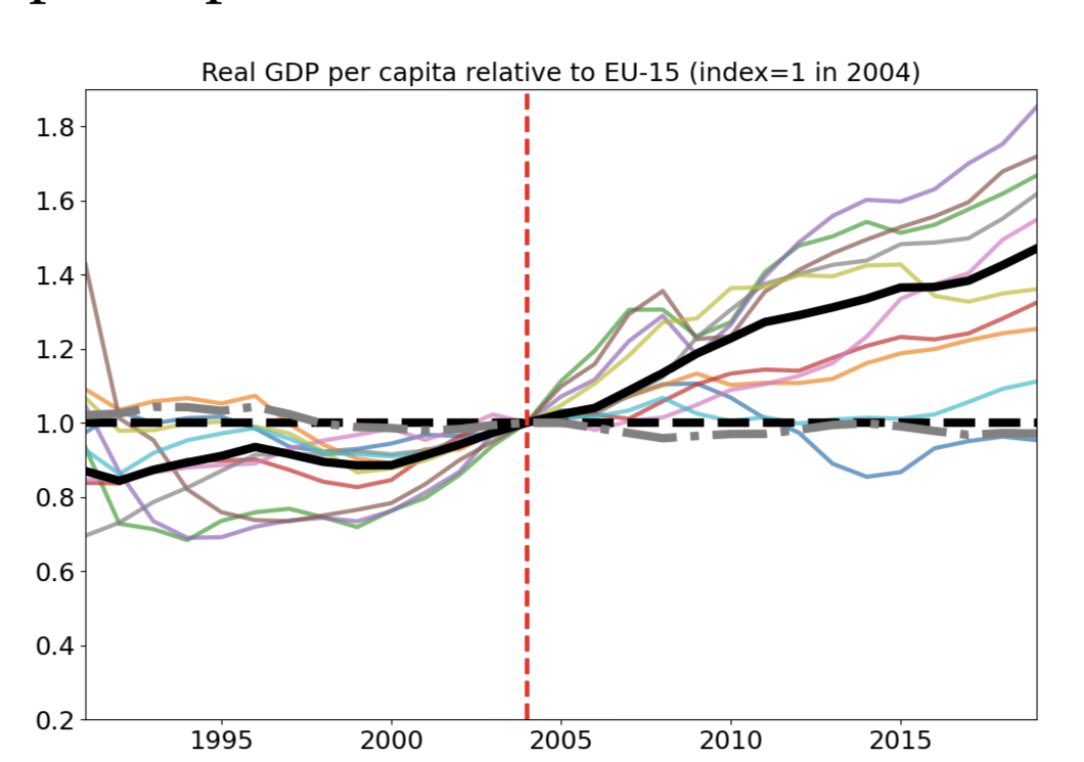
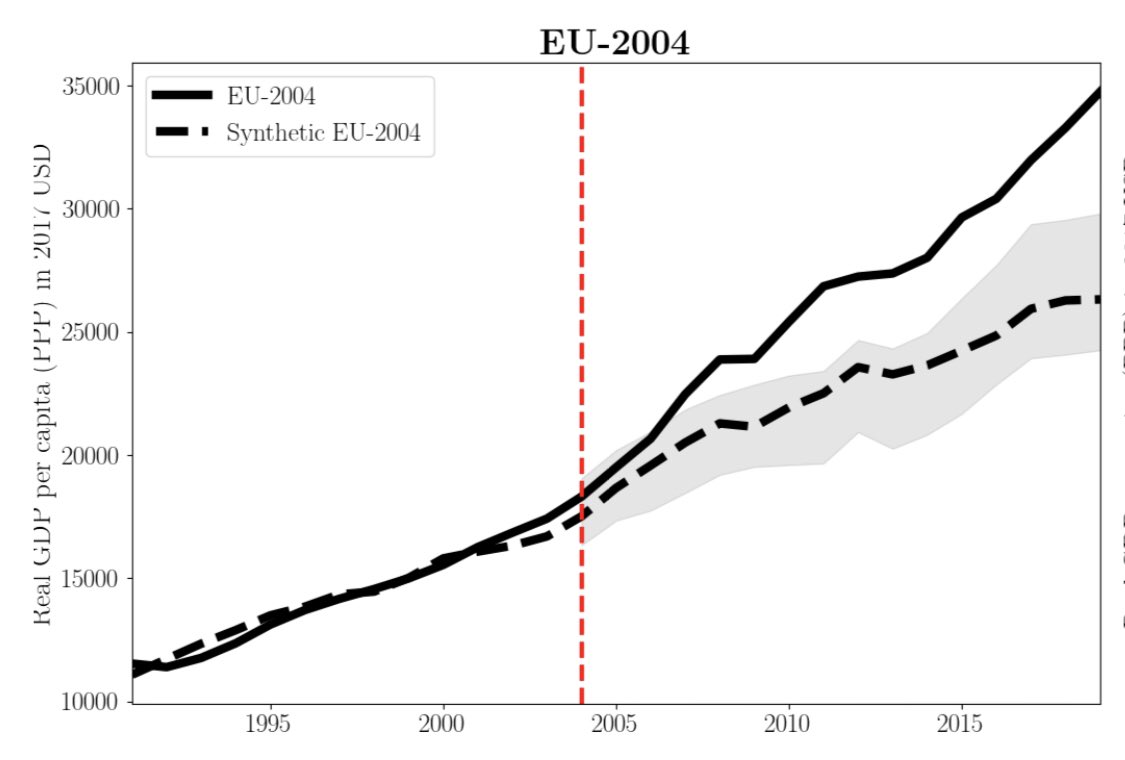
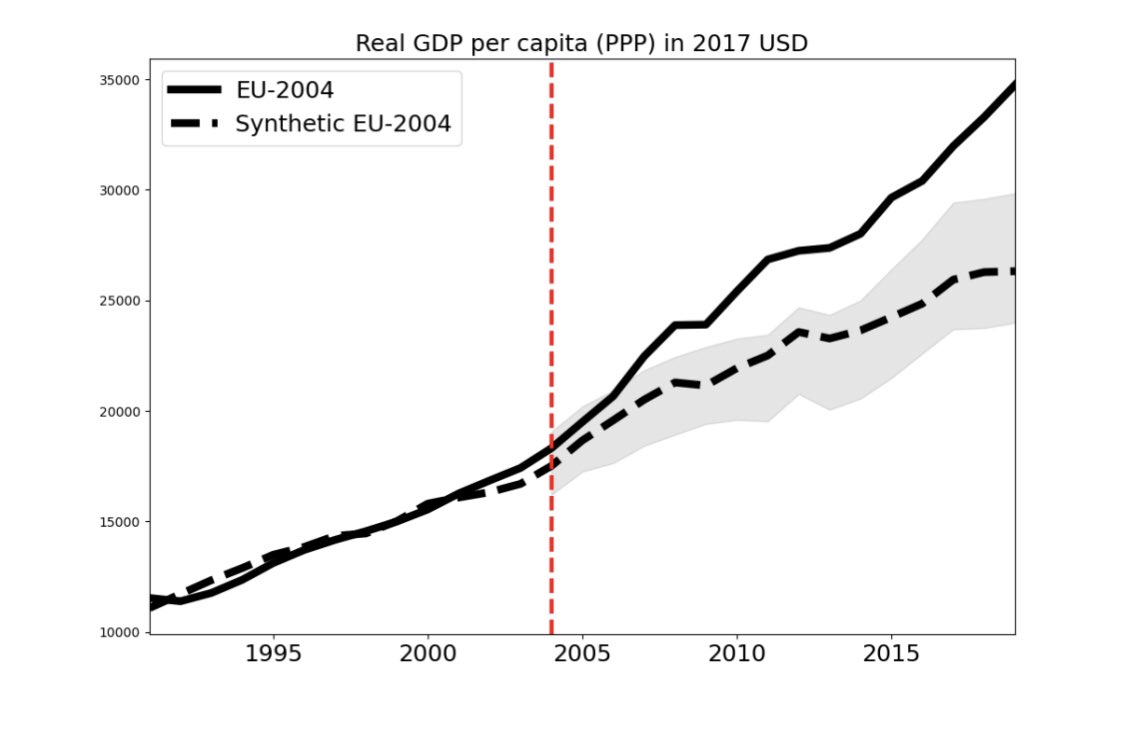
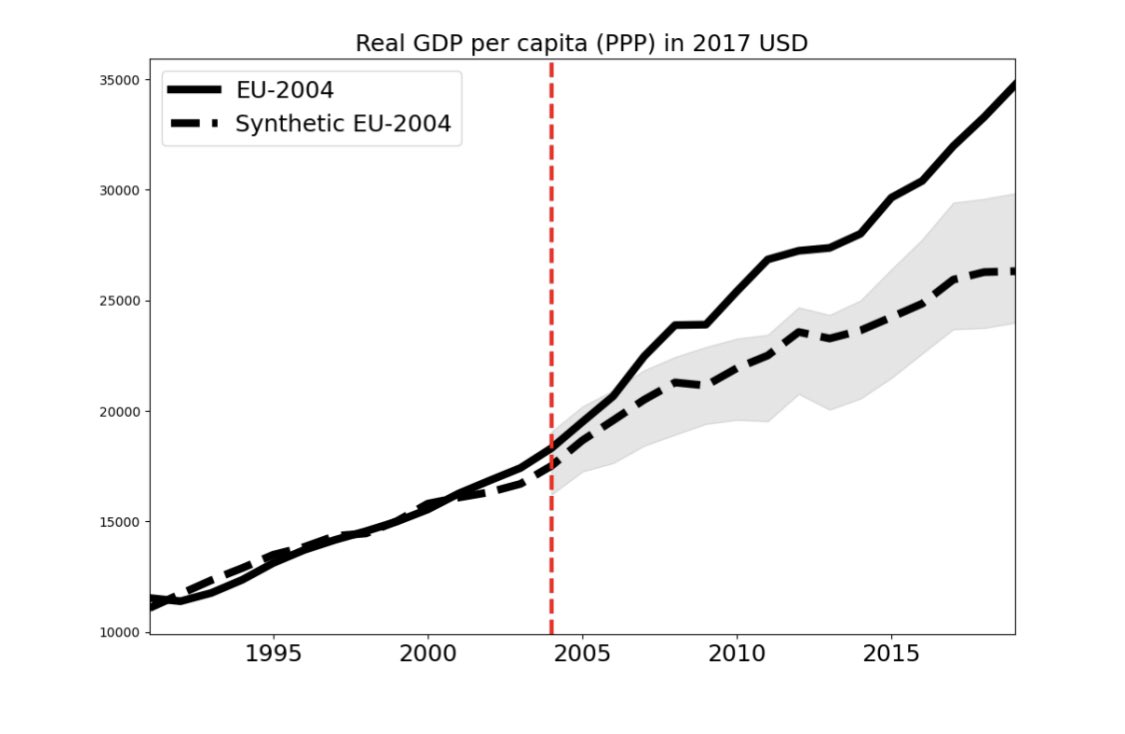
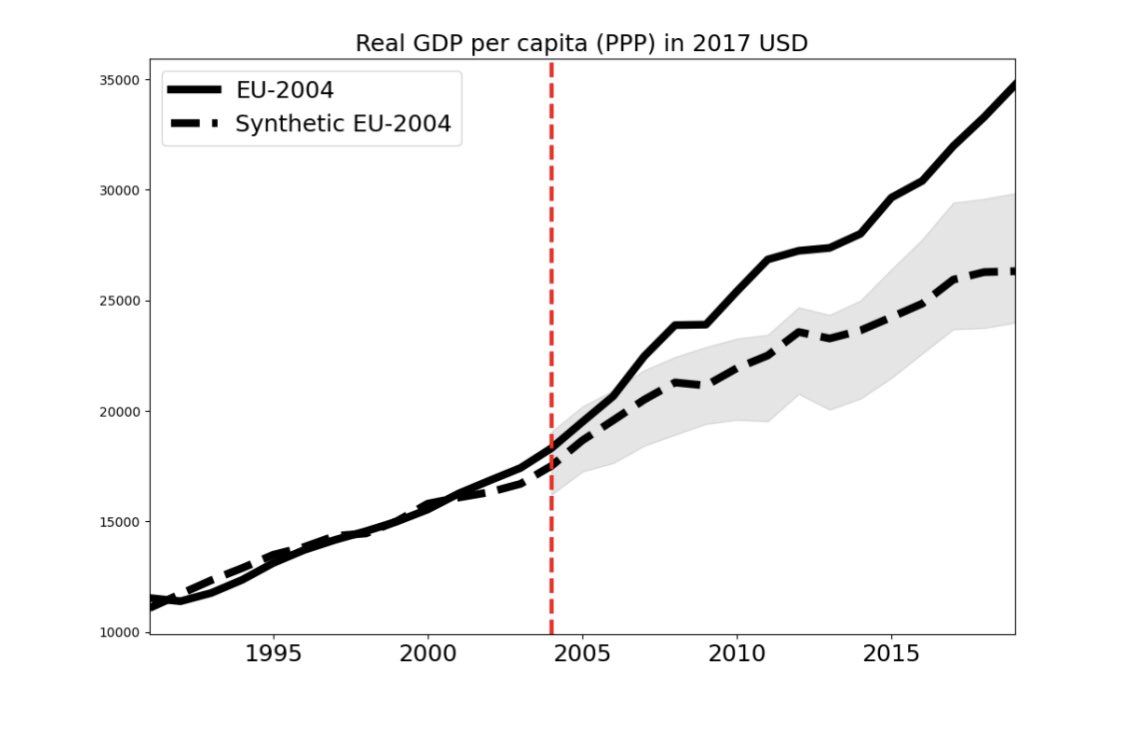
The 🇪🇺 miracle: When 75 Millions Reach High Income
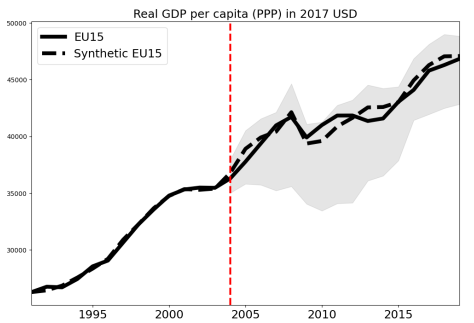
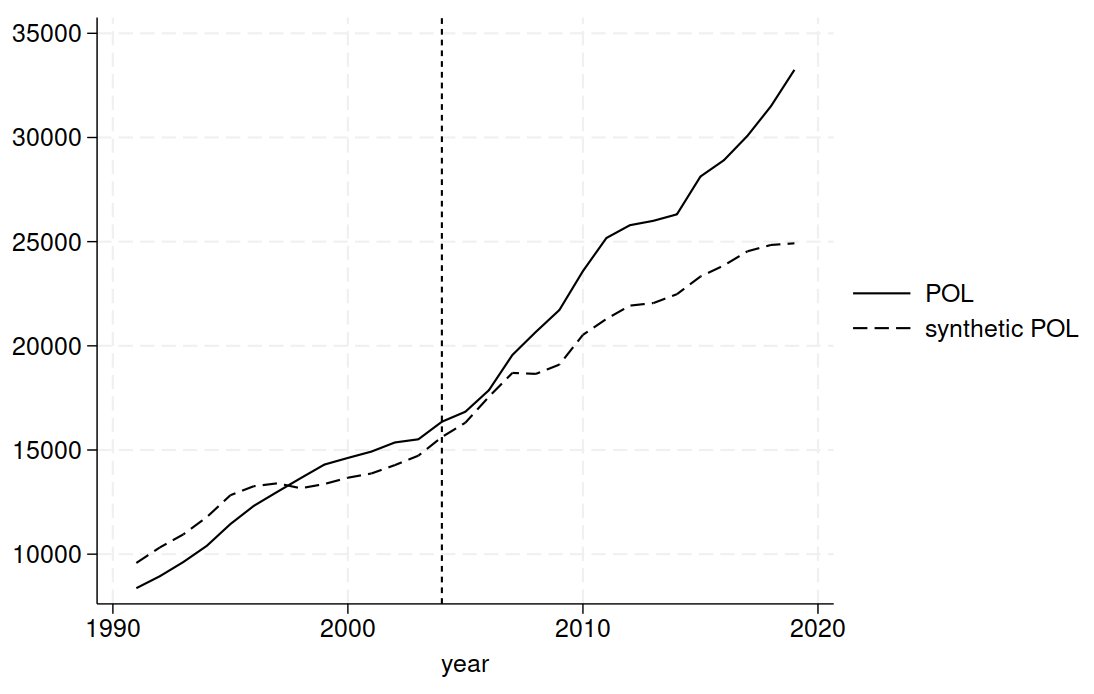
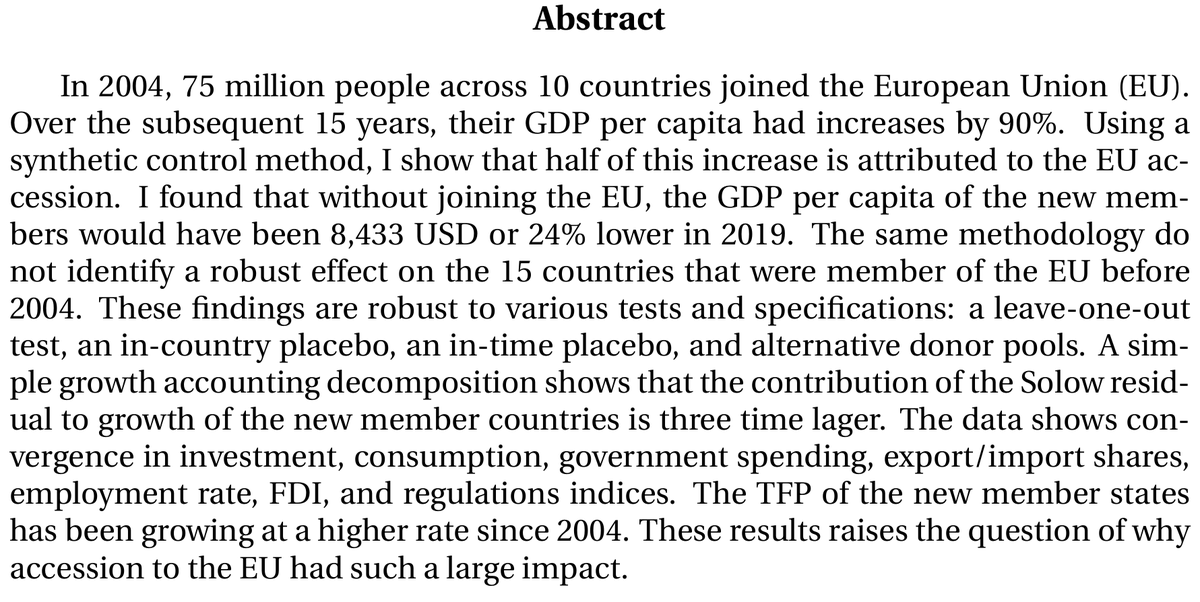
Since 2004, the 10 new EU members have double their GDP per capita.
How much is due to the 🇪🇺? What about the EU15?
In a new WP (shorturl.at/94pLq) I found that half is due to the 🇪🇺 and that the EU-15 did not suffer
7
28
165
45,429
Basile Grassi retweeted
Dans le même ordre d'idée, les travaux de @DeRidderMaarten et @LukaszRachel montre que la productivité est plus ( ) dynamique depuis 2006 lorsque l'on tient compte des externalités de la production en termes de dommages environnementaux futurs via les émissions de CO2
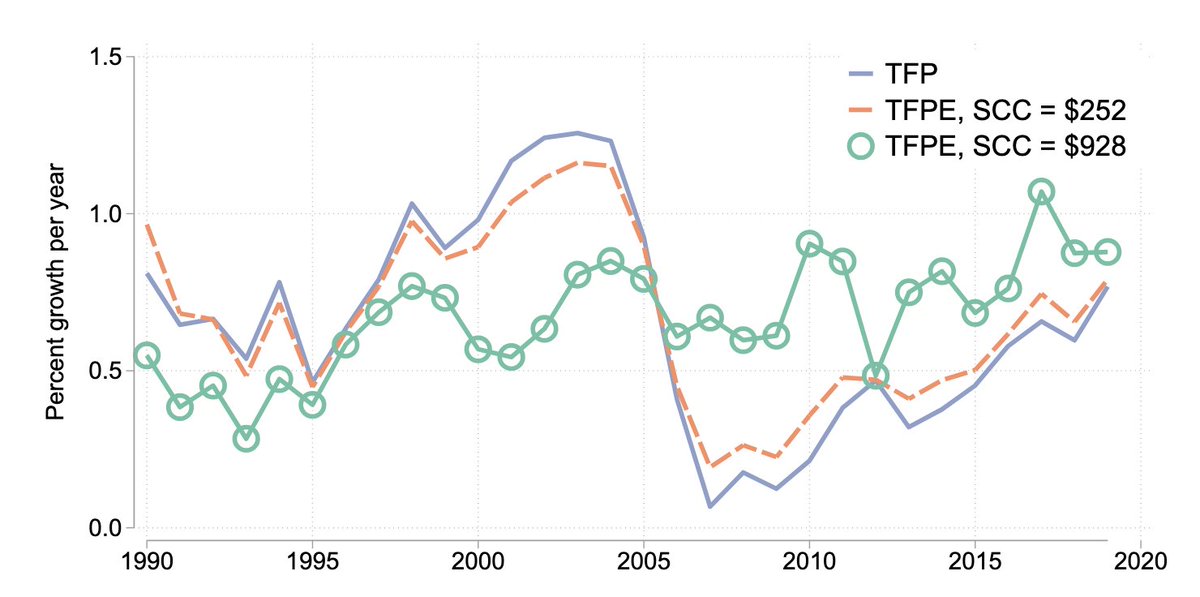

Je ne connaissais pas cette figure mais elle est spectaculaire. La quantité de ressource physique utilisée par habitant n'a pas augmenté depuis 1975
1
5
25
4,964

New CEPR Discussion Paper - DP21574
What Happens in Paris, Does Not Stay in Paris: Trade Fairs and Search and Matching Frictions
@GaborBekes & Matyas Molnar @ceu, @ClaudiaSteinwen @ECONMunich
ow.ly/NlM250Z6ZZA
#CEPR_EH #CEPR_ITRE #EconTwitter

4
21
2,560
Jun 5
Apply!

The 3rd International Workshop on Economic Complexity and Macroeconomic Dynamics is coming to Castellón, Spain!
🗓️ Oct 7–8, 2026
Keynotes: @BasileGrassi (@Unibocconi) &
@matteo_tiziana (@KingsCollegeLon)
Info & Submissions: complexitymacro-workshop.com…
#EconTwitter

1
6
704
Basile Grassi retweeted

1/4 Registration for this year's Tools for Macroeconomists summer school remains open:
sites.google.com/view/toolsf…
As always, Petr (@SedlacekPe) and I will spend two weeks discussing numerical methods and computational economics, assisted by our excellent team of TAs.
1
14
68
5,139
Basile Grassi retweeted

Jun 3
Now that I have your attention : )
Gernot Müller and I are looking for a Ph.D. student to work on
"Heterogeneous Expectations in HANK Models: Empirical Evidence, New Solution Methods, and Macroeconomic Implications.” For details check the Link.
Deadline is July 31, 2026.
ralphluetticke.com/files/PhD…
24
85
10,172
Basile Grassi retweeted

Jun 3
The program for the 2026 Society for Economic Dynamics Annual Meeting in Athens is out!
It has been a dream to work with Jen-Jen La'O and our amazing committee to put together this year's program.
editorialexpress.com/confere…
*Small logistical changes might still come.

4
30
152
32,062
Basile Grassi retweeted

May 21
🚨 Call for Papers 🚨
3rd Annual Conference on Macro-Finance Research @sffed
Please send us your latest macro-finance papers 👇
We'll also give out the Janet Yellen Award for Monetary Research again! Please submit your best nominations 👇
frbsf.org/news-and-media/eve…
11
43
3,806
Basile Grassi retweeted

Very moving lines from one of the colleagues I most admire.
May 20

Wednesday? One Extra Year story!
This week, Evi Pappa will share her story through “Fragments from the Diary.” It is a story of resilience and success.
open.substack.com/pub/oneext…
1
9
3,877
Basile Grassi retweeted

May 20
Wednesday? One Extra Year story!
This week, Evi Pappa will share her story through “Fragments from the Diary.” It is a story of resilience and success.
open.substack.com/pub/oneext…
1
13
40
12,068
Basile Grassi retweeted

May 16
(6/6) Interested in joining our workshop or presenting your research? Don't hesitate to get in touch with labor.public@gmail.com. We welcome job market candidates and researchers working on micro and macro perspectives of labor markets!
3
20
5,338
Basile Grassi retweeted
May 16
(1/6) 🧵 Join our "The Micro and Macro Perspectives of Labor Market" Virtual Reading/Workshop Group co-organized with Jesse Wedewer at @DukeEcon!
It allows PhD students to connect with peers outside their home department. Here's how it runs:
#EconTwitter
1
19
94
11,092
Basile Grassi retweeted

May 14
“Putin fears a democratic Ukraine more than NATO tanks, because a free and successful Ukraine destroys the ideological foundation of his regime.”
- Garry Kasparov

578
3,891
13,875
180,543
Basile Grassi retweeted

May 15
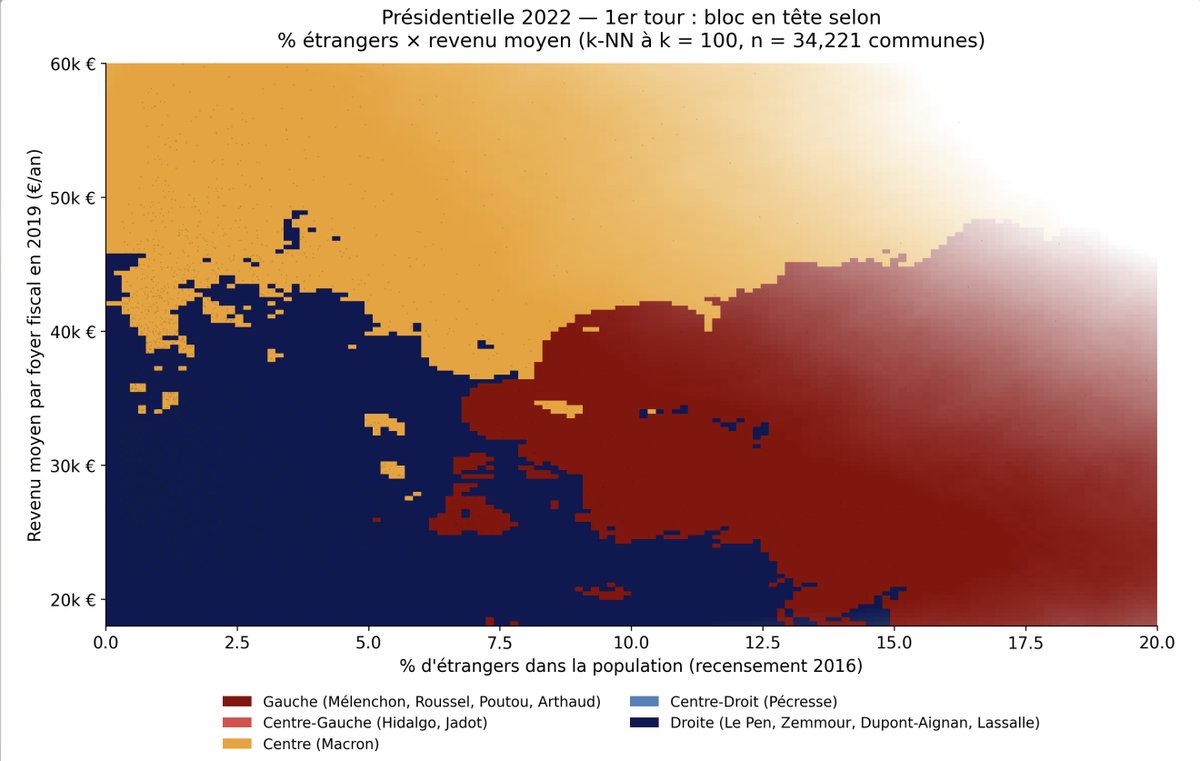
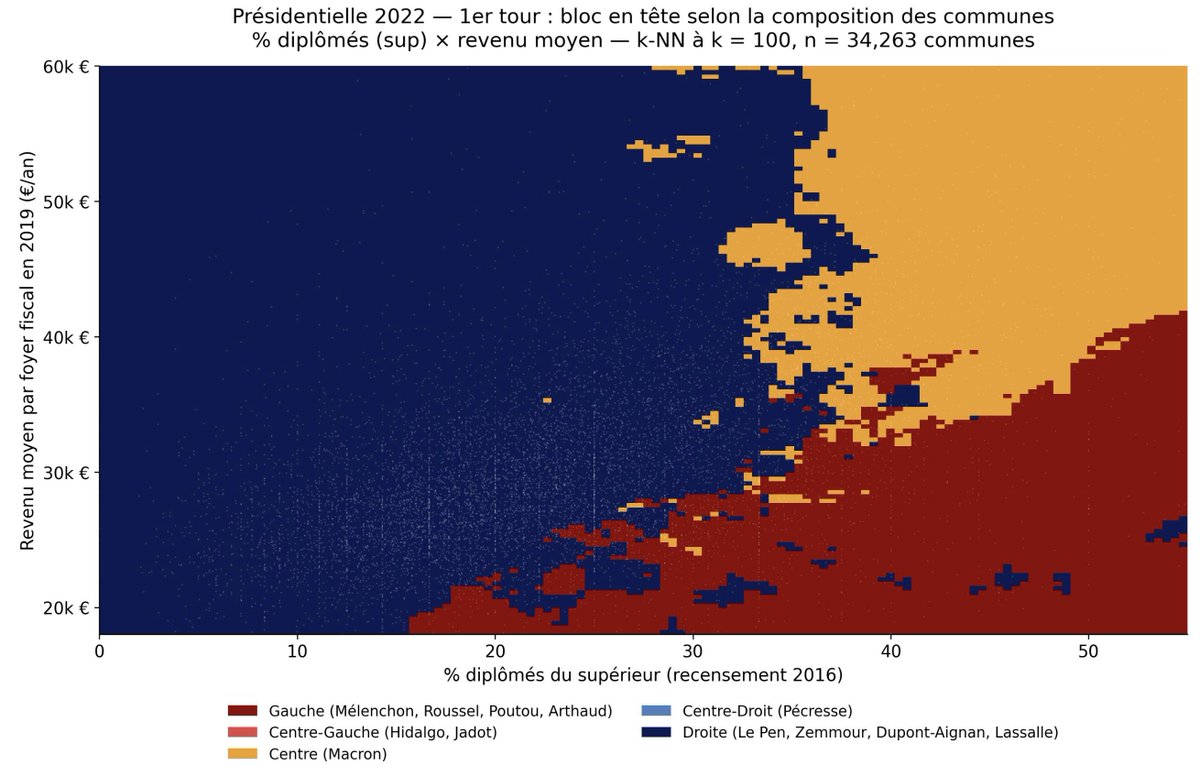
Avec une autre variable x (attention certaines communes sont petites mais le vote majoritaire est pondéré par le nombre d'électeurs exprimés)
May 15
J'ai reproduit la superbe dataviz de @TheEconomist à partir des données de Julia Cagé et Thomas Piketty sur les élections de 2022
7
23
131
15,602
Basile Grassi retweeted

May 14
🚨 Hiring alert 🚨
We‘re looking two positions
a predoc/junior researcher
a research manager
in our team at UZH & ETH designing innovative social and health policies in collaboration policy makers and evaluating their economic impact using large-scale RCTs

Unser Team am Department of Economics der UZH sucht gemeinsam mit @AndiBeerli (ETH Zürich) Verstärkung zur Evaluation innovativer Politikmassnahmen:
Research Manager:in (60%-80%): jobs.uzh.ch/offene-stellen/r…
Predoctoral Research Fellow: jobs.uzh.ch/offene-stellen/p…
3
17
81
34,076
Basile Grassi retweeted

The St. Louis Fed is looking to recruit research economists with experience in monetary and fiscal policy modeling. Please apply if you work on these topics, or share with your network if you know of someone who does. Must be authorized to work in the US.
rb.wd5.myworkdayjobs.com/FRS…
1
26
75
16,033
Basile Grassi retweeted

May 14
Congratulations to Prof. Dr Mario Draghi, former President of the European Central Bank and former Prime Minister of the Italian Republic, for being awarded the International Charlemagne Prize of Aachen 2026.
#Karlspreis2026
📸 Karlspreis / Christian van't Hoen

25
77
310
37,161
Basile Grassi retweeted
May 13
It’s story day! This week, we hear from the wonderful Ella Patelli and her approach to the impossible “but when is the best time in your career” question.
oneextrayear.substack.com/p/…
1
3
18
5,805
Basile Grassi retweeted

May 13
One more point about constant vs current GPD in PPP for comparing living standards over time.
Suppose European societies were to charge 3x more next year for health care procedures.
They wouldn't deliver any more or better service, prices would just rise massively.
May 12

We stopped everything to write an answer (link below) to Paul Krugman's two posts of today (one informal, one with a simple model) arguing that Europe is broadly not falling behind the United States.
The change measured by the Draghi report, he argues, is mostly due to growth in the technology industry, which has distorted GDP numbers without actually leading to higher standards of living. We should believe our eyes when we walk around France and walk around Mississippi.
Krugman is wrong. The measures he uses understate European stagnation. This matters enormously. Divergence with the United States is the strongest evidence for reform in Europe.
1. The growth numbers
Krugman compares the United States, France, and Germany at purchasing power parity in current prices. On that measure, France's and Germany's position relative to America has been roughly constant since 2000.
But current price comparisons miss productivity gains in sectors where prices fall. If America produces twice as much software while the price of each unit halves, the value of American software output looks unchanged even though the volume has doubled.
Most economists therefore use constant prices, which fix the base-year PPP level and apply each country's real output growth on top of it. American output growth has concentrated in tech, where prices have fallen tremendously as productivity rises. In terms of the volume of things produced, America has pulled away from Europe.
2. Is it all the tech industry?
Krugman concedes this tech divergence but says it is not welfare-relevant. The American growth lead is an accounting artefact of measuring more iPhones at base-year prices, not a sign that Americans are actually richer, because Europeans buy the same iPhones at the same world prices.
This is not the right way to think about the world today, as an earlier Paul Krugman would have argued.
His model assumes tradable goods, interchangeable workers, marginal-cost pricing, and no profits. Each assumption fails.
Most of what households buy is non-tradable: housing, healthcare, childcare, education. When American tech firms bid workers from haircutting to coding, American haircut wages rise. Germany has no growing tech sector to do the bidding, so German wages stay flat.
Technology is not priced at marginal cost. Apple's margins are around 40 percent. Anthropic's inference margins are at 70 percent. The major platforms enjoy network effects, switching costs, and lock-in that hold prices well above what a competitive market would deliver. A large share of the productivity gains in technology stays as profit.
A lot of the value of American technology dominance shows up in equity, not in wages. Apple, Microsoft, Nvidia, Alphabet, Meta, and Amazon together are worth $21 trillion, more than the entire combined stock market value of all European stock markets. Around 60 percent of US equity is held by American households. The median French or Spanish household holds almost no equity.
The median employee at Meta, a company with almost 80,000 employees, earned $388,000 in 2025.
This advantage is not going to go away. Krugman's own 1991 paper, cited in his Nobel prize, showed that comparative advantage in modern industries is produced by increasing returns to scale, specialized labor markets, supplier networks and the agglomeration of suppliers, workers, and ideas in particular places. Once an industry concentrates somewhere, the concentration is self-reinforcing. Europe is being pushed away from the next round of technology industries (AI!).
3. What about inequality?
Another retort is that GDP per capita hides substantial inequality, and so even if America is rich on average, this is mostly due to the super wealthy.
But despite the US's high pre-tax income inequality, it also achieves higher median incomes than Europe, in part because of such a high base, and in part because it actually redistributes more than many European countries.
The cleanest comparison is median equivalised disposable household income: income after cash taxes and transfers, adjusted for household size and purchasing power. According to the OECD's 2021 numbers, the median American earns 30 percent more than the median Dutchman, about 31 percent more than the median German, and about 52 percent more than the median Frenchman.
4. What about hours worked?
Krugman points out that while American GDP per person is higher, most of this is because Americans work more. For this divergence to be an hours worked story, Americans must work more relative to Europeans now than they did in 2000.
The opposite has happened. Birinci, Karabarbounis, and See in a 2026 NBER paper show that about half of the American-European hours gap that existed in the 1990s has reversed by the end of the 2010s. Americans work fewer hours per person than they did in 2000, while most Europeans work more.
5. Is America not a bad place to live?
Walk around Alabama and France: surely the former cannot be substantially richer than the latter?
American cities often have poorer centres and richer suburbs or exurbs. European cities preserve richer and more attractive historic cores. A visit to a city as a tourist in America compared with a city in France will leave one having seen different spots on the income distribution. Americans in Europe go to the nicest and richest European cities.
Rather than a walking around test, do a driving around test. Go to the periphery of any modern American city and see a level of new-built material wealth that is extremely uncommon in Europe, with thousands of enormous four- or five-bedroom homes. In the South, in places like Nashville and Austin, drive around the downtowns to see hundreds of luxury apartment buildings springing from the ground. This construction boom is replicated virtually nowhere in Europe today.
The other question is generational. Housing often costs more in Europe than in the United States, despite the quality of the housing stock generally being much better. Europe has nice city cores but these are inaccessible to young Europeans.
Consider the salaries available to entry-level workers. The starting pay for a London police officer is $57,000. In Washington, DC, $75,000. The entry-level Deloitte consultant job in Madrid pays around €28,000, roughly $33,000 per year. In Charlotte, the entry-level Deloitte job pays $63,000.
There are many things to dislike about life in America. But relative to 25 years ago, the gap in material wealth has shifted dramatically in America's favor.
siliconcontinent.com/p/europ…
2
7
40
4,974
Basile Grassi retweeted

May 12
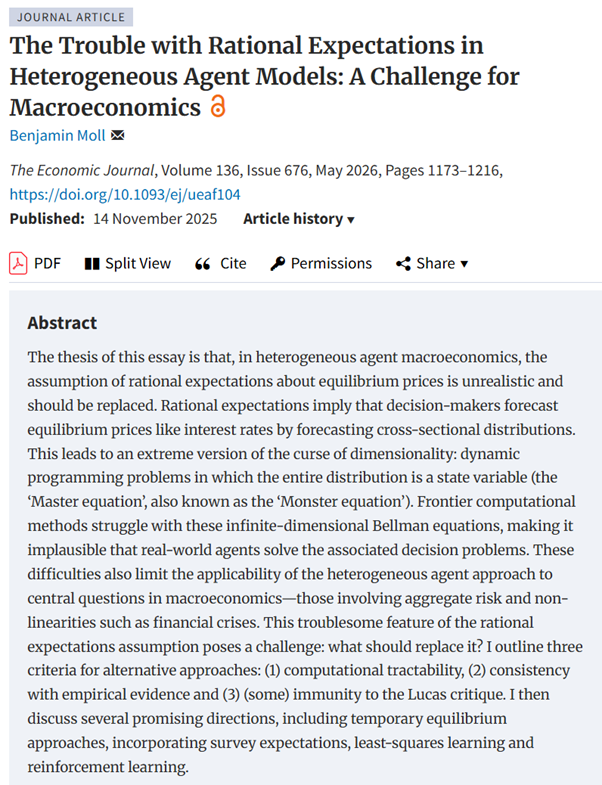
In the May 2026 issue: ‘The Trouble with Rational Expectations in Heterogeneous Agent Models: A Challenge for Macroeconomics,’ by Benjamin Moll doi.org/10.1093/ej/ueaf104 @ben_moll @RoyalEconSoc #EconTwitter
2
70
256
48,733
May 11
Here is some context for my international followers.🧵
This is Aya Nakamura, one of the most-streamed French singers.
She is known for her hard-to-understand slang lyrics.
Everyone loves her songs.
1/4
May 11

The fascinating thing about French culture is that people keep enriching it.
1
15
7,937
May 11
She sang a mix of her own songs and those of Aznavour, a monument of French culture from the Armenian minority.
She is featured with the Guarde Republican who is protecting the Republican institutions.
3/4
1
1
702
May 11
France turns diversity into pride.
French people made her "The Queen" while extreme right complained: 1-0
Watch it!
youtu.be/uuHtD8MOaFk?si=buAL…
It still gives me goosebumps.
My favorite moment: the smile of the conductor.
4/4
1
5
909