
The school of strength, led by Pavel Tsatsouline. Barbell, Kettlebell, Bodyweight. StrongFirst.
Joined September 2012
- Tweets 2,578
- Following 108
- Followers 24,336
- Likes 2,070
1,092 Photos and videos



Jun 11
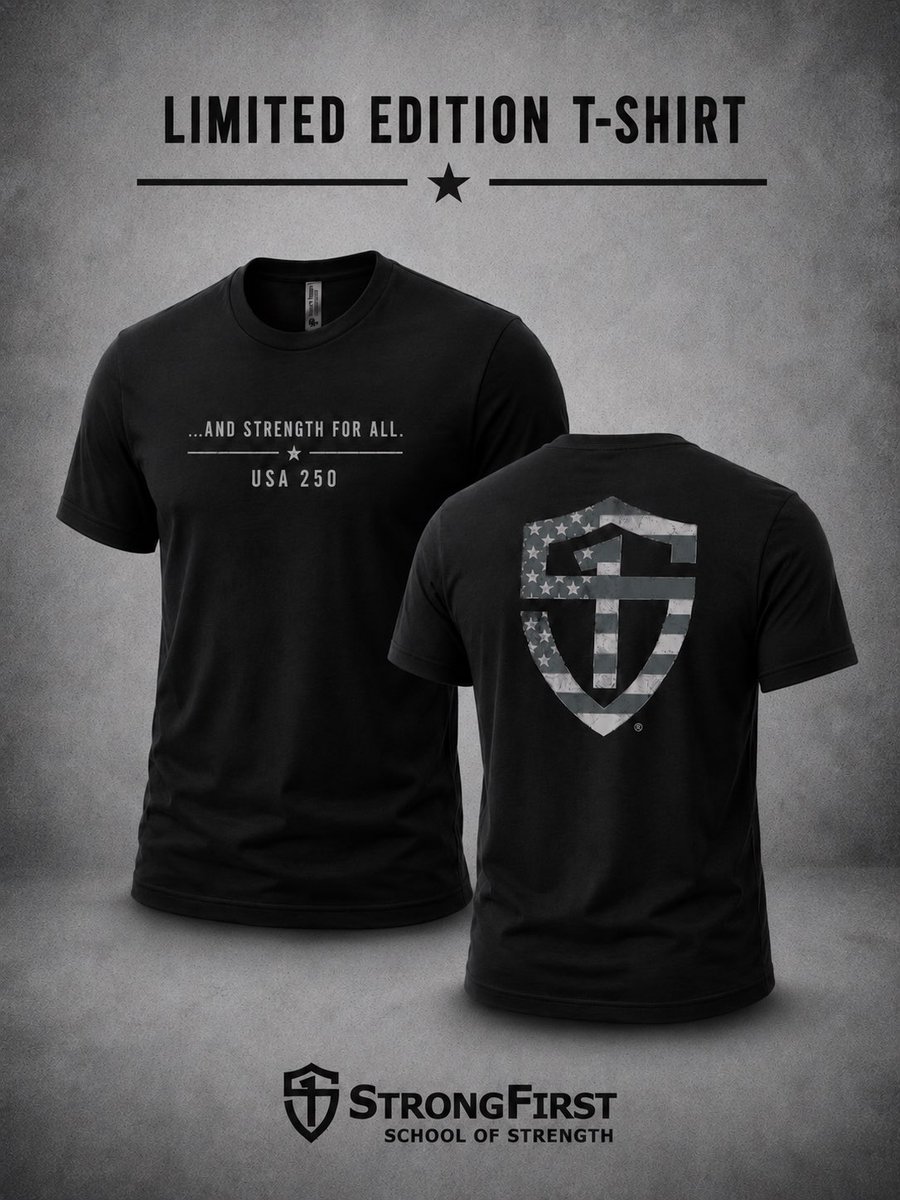
“…And Strength for All.”
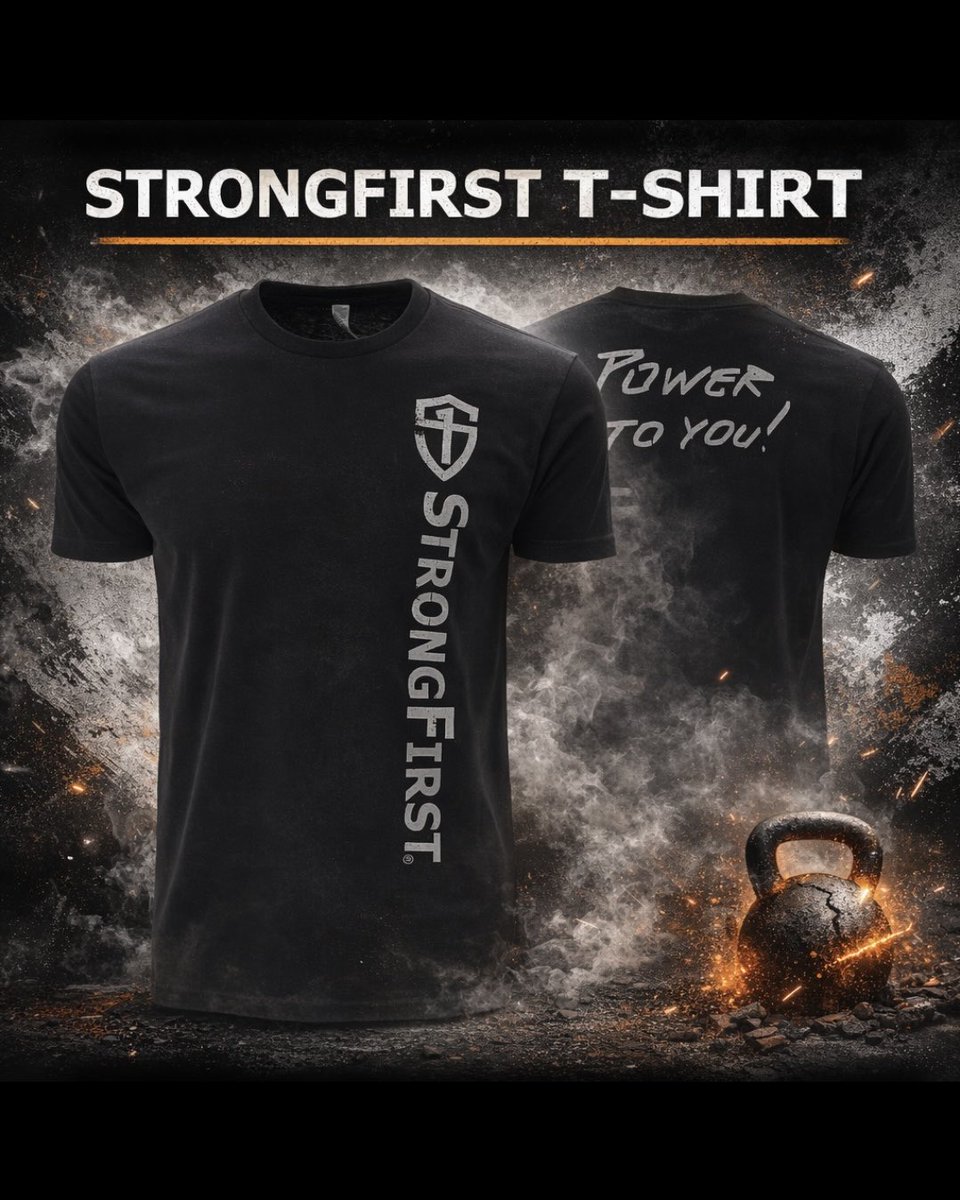
Introducing the USA 250 Limited Edition T-Shirt - a StrongFirst tribute to 250 years of American strength, resilience, and independence.
Built for training, coaching, and everyday wear:
• Lightweight, breathable, and durable
• Soft cotton blend with an athletic fit
• 60/40 cotton/poly
• Unisex design
Whether you're on the platform, in the gym, or representing the School of Strength beyond it, this limited edition shirt reflects the values we stand for: strength, freedom, and self-reliance.
Limited quantities available.
Order yours before they're gone.

Click the link to order: apparel.strongfirst.com/stro…
1
6
592
May 28
[ARTICLE] In March 2023, I wrote “Three Pillars for Healthy Aging,” a science-based approach to resilient aging. In January 2026, on my 72nd birthday, I successfully tested to maintain my StrongFirst Level II Kettlebell Instructor Certification (SFG II). This experience, both the preparation and testing, has offered me an opportunity to reflect on the Three Pillars and their application for my successful recertification. In this article, I am going to share these reflections from a science-based paradigm and discuss my preparation. As you will see, the Three Pillars rest upon a foundation of strength, power, and neuromuscular efficiency.
Read the full article by Dr. Pope Moseley, StrongFirst Certified SFG II Instructor, MD, MS:
strongfirst.com/the-three-pi…
#strongfirst #bestrongfirst
1
2
11
1,468
May 28
It requires effort. You must learn it, and then you must practice it. We are here to help you with the learning part, but the practice and effort is up to you. StrongFirst.com
#strongfirst #bestrongfirst
6
10
885
May 21
“What does not kill me makes me stronger.” — Not necessarily.
Russian coach, Andrey Kozhurkin, made a 50,000-foot observation on the two diametrically opposed philosophies of stimulating adaptation.
The traditional one is pushing to the limit: “What does not kill me, makes me stronger."
The alternative is to train to “avoid (or at least delay) the unfavorable internal conditions…that lead to failure,” or reduced performance.
Let us use strength training as an example. The majority of bodybuilders and recreational athletes use the first approach. They train to failure.
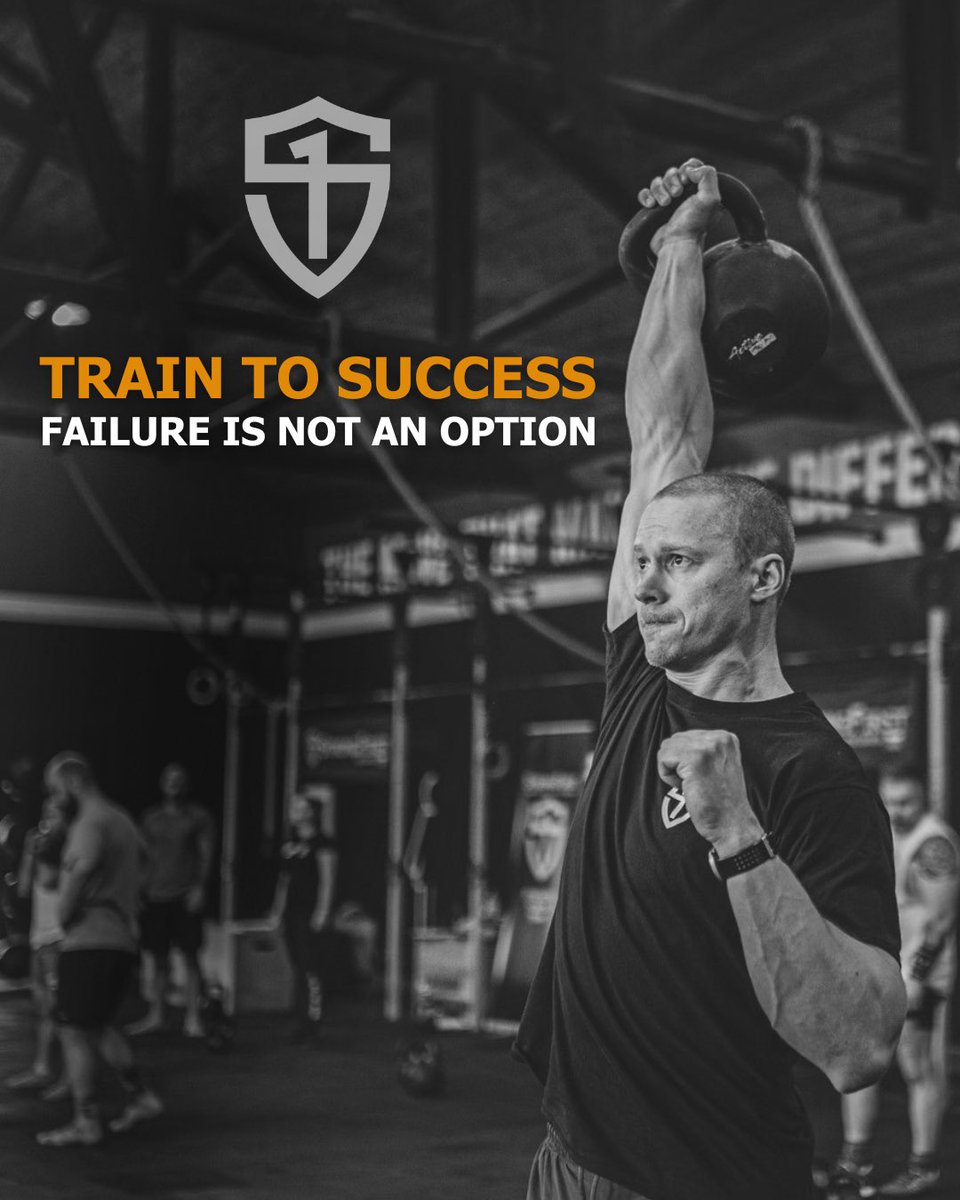
In contrast, strength athletes such as Olympic weightlifters and powerlifters follow the second approach. 1,000-pound squatter, Dr. Fred Hatfield, famously proclaimed that one ought to “train to success,” as opposed to failure.
The differences between the American and Russian powerlifting methodologies notwithstanding, both countries’ strength elites share the same conviction that failure is not an option.
In endurance training, the first philosophy represents the consensus. Coaches expose athletes to acid baths to improve buffering. This is what Arthur Jones from Nautilus called “metabolic conditioning” back in 1975.
We shall go the other way: anti-glycolytic training (AGT).
— Article: The Quick and the Dead vs Strong Endurance™—What is the Difference? by Pavel Tsatsouline
Our goal is to optimize high intensity dynamic exercise loading parameters for stimulating MT biogenesis in FT fibers—and do it at a lowest biological cost (minimal deamination, minimal H* driven ROS production).
— Strong Endurance™ manual 2nd edition
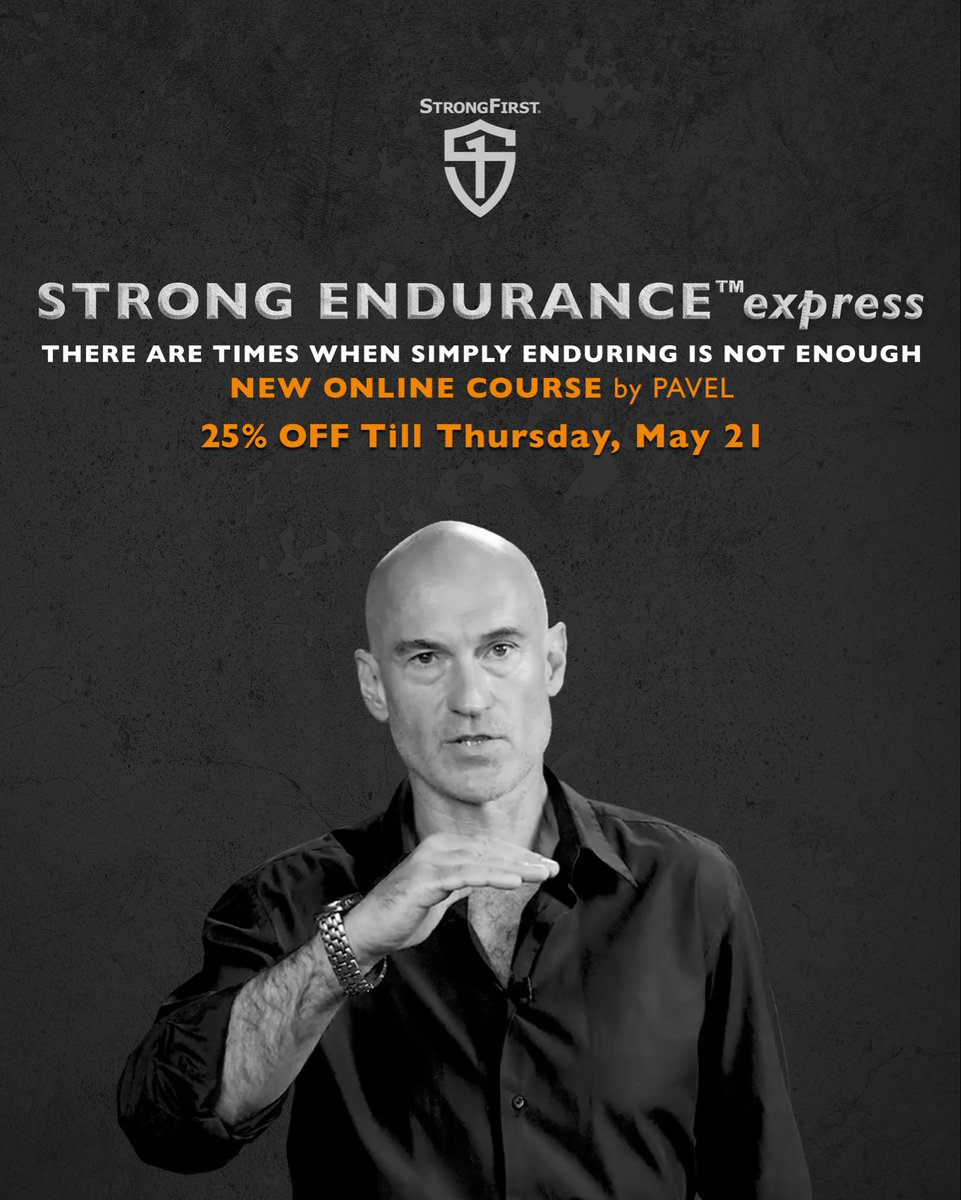
➤ Learn more. Join the Strong Endurance™ express online course before the promotion ends >> 25% OFF until Thursday, May 21. Click here: strongfirst.skilltrain.com/P…
#strongfirst #strongendurance #bestrongfirst
3
10
1,298
May 18
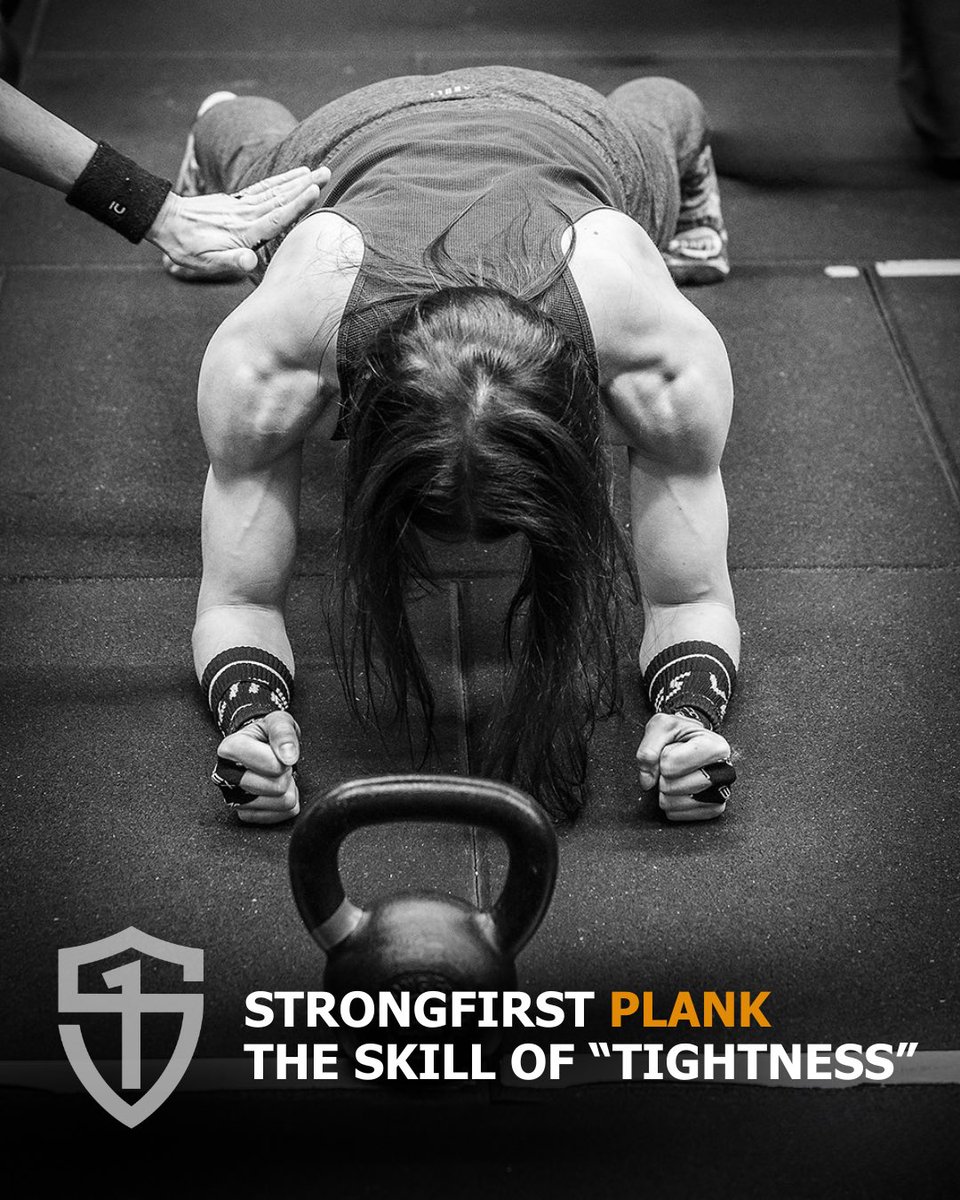
The StrongFirst plank develops the essential for strength skill of “tightness.”
Here is a stronger way to plank. Compared to the traditional plank, in the SF plank the internal obliques fire twice as strong, the abs three times as strong, and the external obliques four times as strong. (Contreras)
Assume the plank position with your forearms a shoulders width apart and parallel to each other. Form fists and semi-supinate the wrists (the hammer position). Your spine and legs should form a straight line; nothing may protrude or sag. Tense your whole body, except for the face, neck, and traps, look straight down between your fists and breathe shallow with your diaphragm. Lengthen your neck and tuck your chin in slightly.
Note the differences when planking to improve one’s iron game as opposed to bodyweight strength. For the former, maintain a neutral lumbar spine, a neutral pelvis, and do not protract your shoulder blades. This “cylindrical” posture is demanded by deadlifts, swings, and many other barbell and kettlebell exercises.
When planking for bodyweight strength, the goal is to assume the hollow position: a slight posterior pelvic tilt, a straight lumbar spine (no curve), and protracted scapulae.
—
StrongFirst Certified Kettlebell Instructor Manual, 36th Edition
If you want to learn how to build strength and endurance with kettlebells - whether for yourself to improve your athletic performance, or as a coach to help your students achieve their goals faster - join the StrongFirst instructor team.
Check the dates and locations of upcoming SFG I Instructor Certifications Click here ➡️ strongfirst.com/certificatio…
Fot. @strongfirst_france
#strongfirst #bestrongfirst #hardstylekettlebell #plank
1
4
32
2,164
May 15
“Cardio” is overrated. Pavel explains why.
What if most conditioning methods are doing more harm than good?
Endurance training should build you - not break you.
This week, you can watch a full module from Pavel’s Strong Endurance™ express online course - completely free.
🟠 Module II: “Cardio” is Overrated
35 minutes of myth-busting that may completely change how you think about conditioning and endurance training.
Inside this free module:
✔ The low correlation between VO2max and endurance
✔ The dangers of constantly redlining your heart rate
✔ Classic interval training vs. “HIIT"
✔ How to increase VO2max with weights—and how NOT to do it
✔ Training the blood vessels—a secret used by elite athletes
No gimmicks.
No exhaustion contests.
No random suffering.
Just intelligent endurance training based on proven principles.
If this module changes your perspective, unlock the full course:
✔ 6 hours of concentrated knowledge
✔ Practical training plans
✔ Course manual with notes
✔ 25% OFF until May 21
Build endurance without sacrificing strength.
➡️ Watch the free module today..Click this like:
strongfirst.skilltrain.com/P…
Then join the full Strong Endurance™ course before the promotion ends on May 21.
#strongfirst #strongendurance #conditioning #strengthtraining
8
29
2,333
May 4
1
2
18
975
Apr 19
Ready for summer?
Today is your last call to drop a few pounds and boost your strength and conditioning.
The obvious program choice: Kettlebell Simple & Sinister. Book or video—for best results, use both.
➤ If you are new to kettlebells, start here.
➤ If you have been away, it’s time to come back.
➤ If you have hit a plateau with another program, reset here.
➤One kettlebell. Two high-yield lifts.
➤ Easy to start. Hard to finish.
No decision fatigue. No heroic efforts required.
Just discipline.
Sample our S&S online video course today.
Two modules are free to watch:
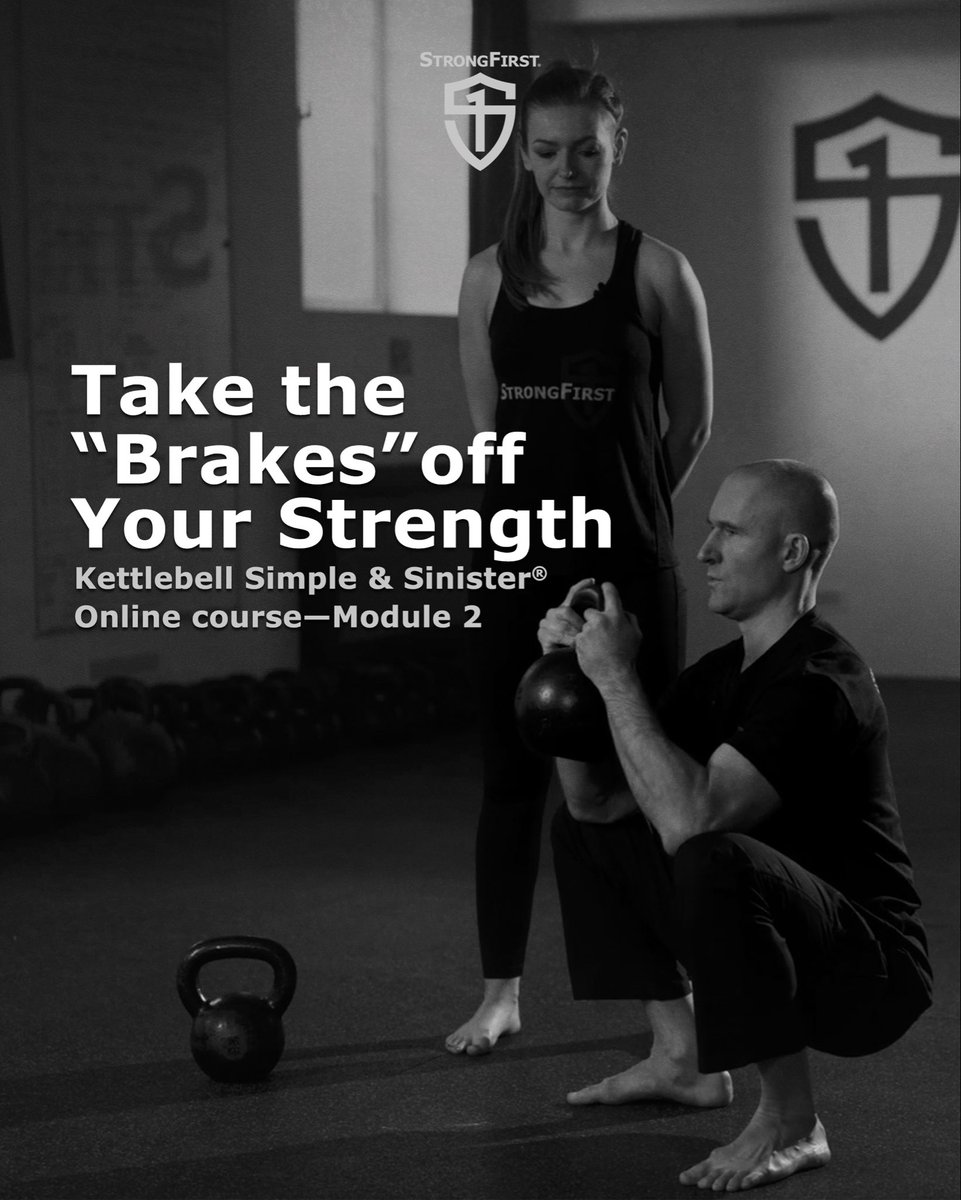
☑️ Module 2: Take the “Brakes” Off Your Strength (unlocked for a week)
strongfirst.skilltrain.com/P…
☑️ Module 3: The Deadlift—the Most Fundamental Strength Skill
strongfirst.skilltrain.com/P…
#strongfirst #simpleandsinister #hardstylekettlebell #bestrongfirst #strengthandconditioning
3
14
1,281
Apr 11
[ARTICLE] With a busy life, it’s hard to find training time—but remarkably easy to lose it. Training time is always at a premium. Like many of you, between work and personal commitments, I have a busy life and constantly have to create programs that are efficient with time while remaining effective with results.
I cycle through the most important lifts for my goals: barbell deadlift, kettlebell press, and barbell front squat for strength, plus some variation of Strong EnduranceTM for conditioning: Iron Cardio or the kettlebell snatch plan 044 from The Quick & the Dead. I train strength three days a week (sometimes four if it’s a high-volume week) and do my conditioning on the days in between. I take weekends off.
Full article by John Spezzano
StrongFirst Certified Senior Instructor ➡️ strongfirst.com/plan-strong-…
1
6
1,480
Apr 7
“After each repetition, erase any flaw detected so the next repetition will be even smoother in performance…it is better to quit because you begin to fail in refining your technique.”
- Tommy Kono, World and Olympic Champion weightlifter (USA)
Attention to detail and technique that increase training efficiency is not everything. To achieve better and better strength results, it is also necessary to understand how to correct mistakes in order to continue refining your skills as both an athlete and a coach. This level of awareness should be a defining trait of every good instructor.
If you value proven knowledge and skills that will help you develop your strength, you can gain them here. Click this link: strongfirst.com/certificatio…
#strongfirst #bestrongfirst #hardstylekettlebell #strengthtraining
1
2
15
1,472
Mar 26
[ARTICLE] In my early years, myths about training were still common, including the belief that lifting weights could stunt growth. In Israel, children were not permitted in gyms until 2005. We are past that era, but one training error is still everywhere: coaches mistake exhaustion for readiness.
A fighter’s body is not a decoration. It is the primary tool for winning a real fight, whether you call it a bout, a mission, or a bad day that escalated.
Specific skill practice is the core of fight preparation, and it is time-intensive. Strength training must support that, not compete with it. If your strength program slows you down, irritates joints, or causes soreness that changes movement quality, it is not serving you as a fighter. It is serving the coach’s ego, the gym’s culture, or a false idea of toughness.
Full article ➡️ strongfirst.com/build-a-weap…
#strongfirst #bestrongfirst
4
10
1,597
Mar 5
[ARTICLE] Injuries stink. Nobody likes them. Yet they are an inevitable part of life. Regardless of whether someone is mostly sedentary or highly active, injuries are bound to happen at some point. For people who are active, the biggest frustration is often not the injury itself, but the inability to do their chosen activity (or activities) at the level they would like to do them.
Injuries can sometimes be acute—where one “thing” happened and resulted in an immediate injury. I suspect everyone reading this has had that happen at one time or another, with a couple of examples being a slip-and-fall or a car accident.
Read full article: strongfirst.com/rebuilding-t…
#strongfirst #bestrongfirst
2
14
1,562
Feb 27
Power to You. Every set. Every rep. Every day.
Strength is not random. It is built with intent, tension, and practice.
The StrongFirst POWER TO YOU! T-Shirt represents a philosophy — strength comes first. Always.
Clean design. No noise. Just the message that matters.
Front: the StrongFirst shield and a vertical mark of discipline.
Back: Power to You!
Made for those who live by the principle that strength is a skill. Wear what you stand for.
Get yours here⬇️
apparel.strongfirst.com/stro…
Power to You!
#strongfirst #powertoyou #besrongfirst
1
1
10
1,364
Feb 19
[ARTICLE] …the Beast was tamed. It was a culmination of seven years of perseverance, failures, adaptations, and triumphs.
My journey to taming the Beast began in April 2017, just after my first StrongFirst kettlebell course in Mexico City. StrongFirst Certified Senior Instructor Yoana Teran led the course, and I knew from the moment I walked in that my life was about to change. After diving into StrongFirst’s forum, I stumbled upon something that instantly captivated me: The Beast Tamer Challenge. A 48kg kettlebell for a strict press, pistol squat, and strict weighted pullup? I had never even seen a 48kg kettlebell before, let alone thought of lifting it! But I decided right then and there that I was going to make taming the Beast my goal.
>> Read the full article by Charlie Guendulain, StrongFirst Certified Team Leader — click here:
strongfirst.com/conquering-t…
1
22
1,775
Feb 18
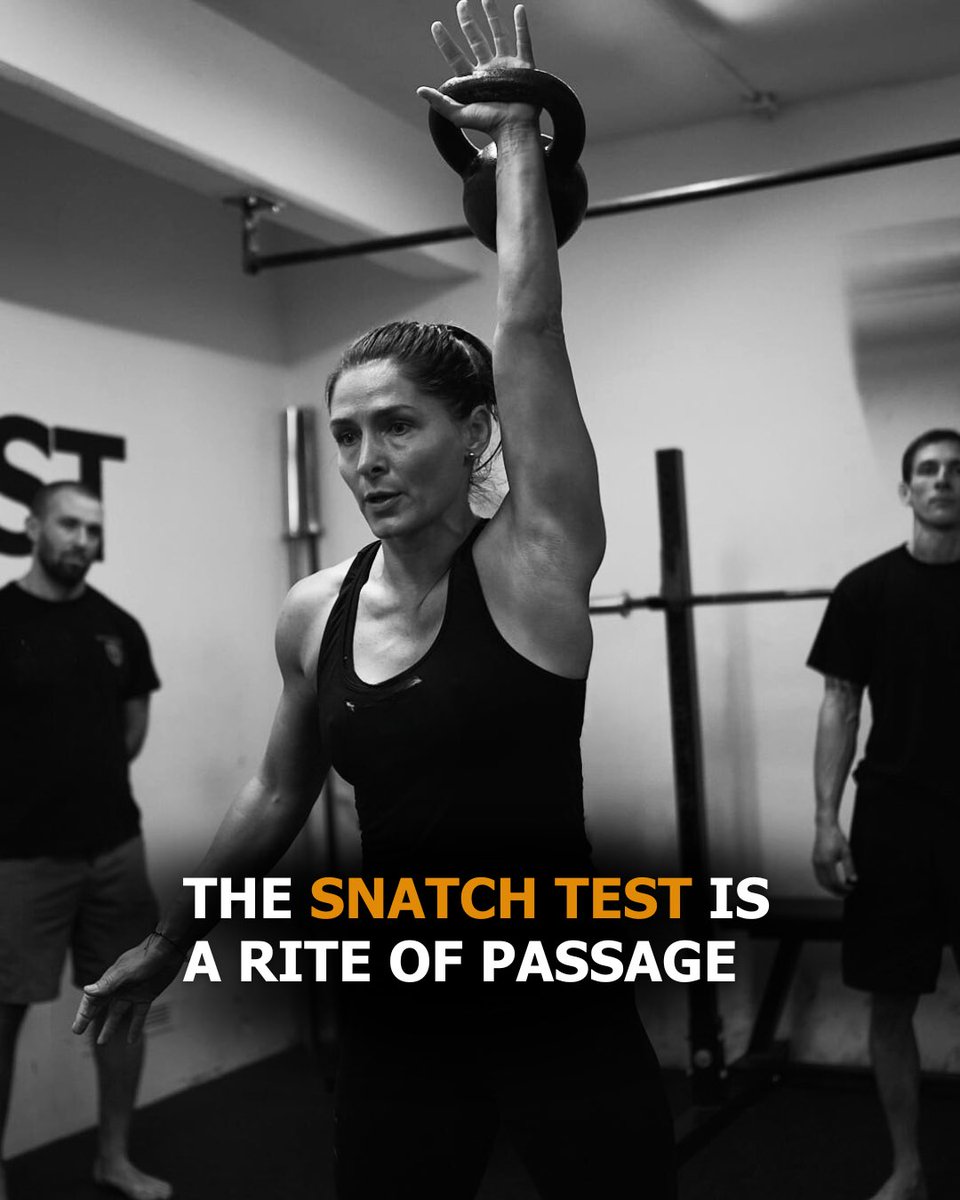
The Snatch Test is one of the most demanding and defining elements of the StrongFirst SFG I Kettlebell Instructor Certification. It’s a rite of passage for many people.
The task is to finish 100 snatches in 5 minutes with a Snatch Test–size kettlebell. Simply showing up is rarely enough.
Preparation requires structure, awareness, and an honest assessment of your strengths and weaknesses.
There are countless pacing strategies to accumulate 100 reps within the time limit. But which one is right for you. That depends on:
• Technical proficiency – Can you perform 100 snatches to SFG standards without “no counts”?
• Conditioning – Are you prepared to sustain power for the full five minutes?
• Grip endurance – How many quality reps can you perform per hand before switching?
• Switching strategy – Can you execute an efficient swing switch, or do you need to park the bell?
Answer these questions honestly, and your plan begins to take shape. Training methods may differ. The destination does not. All smart preparation leads to 100 solid reps.
To overcome obstacles faster — whether it’s the SFG Snatch Test or the Secret Service Snatch Test (SSST) — leverage the lessons inside the Speed Metal online course.
⚠️ February 19 is the last day to get the Rite of Passage Kit [30% OFF] — two definitive courses:
VICTORIOUS – A Complete Guide to Pressing a Heavy Kettlebell
SPEED METAL – Master the Snatch, the Tsar of Kettlebell Lifts
Train with intent. Pass with confidence.
➡️ For more information, click the link:
strongfirst.skilltrain.com/P…
#strongfirst #bestrongfirst #snatch #sfg #strengthtraining
2
2
31
2,130
Feb 7
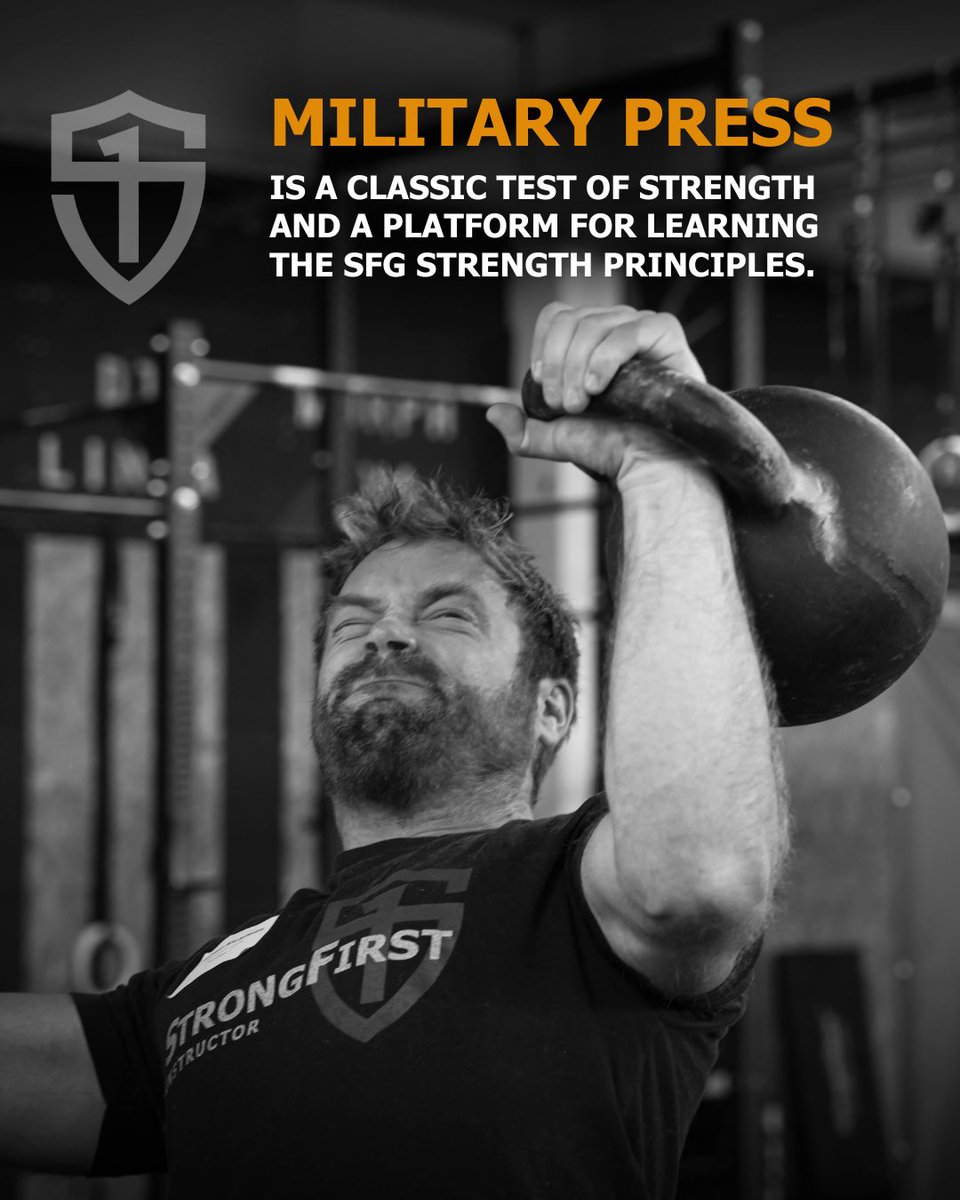
Proper tension for the press is crucial.
"You cannot shoot a cannon from a canoe." Maybe a very small one, but the lesson to be learned from this saying is that without a solid base/foundation, your press and strength will be limited. In the hard style techniques the use of tension is emphasized to enhance strength and performance. But this is not tension for tension's sake. It is enough tension to enhance the lift but not so much tension that it becomes the goal of the lift. The goal is to press the kettlebell, NOT to shake and grunt under maximum "tension".
The Military Press involves many technical details that we teach during SFG I StrongFirst Kettlebell Instructor Certification.
You can find more information on how to become a StrongFirst Certified instructor on our website:
strongfirst.com/certificatio… << Set your goal and get stronger.
#strongfirst #bestrongfirst #kettlebell #press #hardstylekettlebell
3
19
1,702
Feb 5
[ARTICLE] The snatch test is one of the most demanding and defining elements of the SFG I Kettlebell Instructor Certification.
Every candidate must face the same challenge: 100 kettlebell snatches in five minutes; 50 in three minutes for seniors. The kettlebell weight is assigned according to the candidate’s body weight, age, and gender. This ensures fairness across individuals, but it does not reduce the difficulty of the task.
Read full article: strongfirst.com/all-roads-le…
#strongfirst #bestrongfirst #hardstylekettlebell #snatch
1
2
17
2,136
Feb 3
Strength and health are the two core values of StrongFirst. We are committed to quality training, education, and safety.
These values are passed on to our students through instructor certifications held around the world:
➤ Kettlebell — StrongFirst Girya (SFG I, SFG II)
➤ Barbell — StrongFirst Lifter (SFL)
➤ Bodyweight — StrongFirst Bodyweight (SFB)
If you are looking for high-level education and proven methods of building strength, become a StrongFirst Certified Instructor.
Visit >> strongfirst.com << to review the exam requirements and begin your preparation.
#strongfirst #bestrongfirst #hardstylekettlebell #strengthtraining
2
16
1,244
Jan 27
[ARTICLE PROGRAM] This reflection captures the lessons, challenges, and victories I’ve experienced during my first term as a StrongFirst Certified Team Leader. I share them in the service of the teachers and students who are carrying our school forward.
➤ Read full article: strongfirst.com/my-first-cam…
#strongfirst #bestrongfirst
1
10
1,409
Jan 16
[ARTICLE] I’ve been aware of the Sinister Challenge since the release of Kettlebell Simple & Sinister in 2013. So why did it take me so long to start training for it?
It’s true that over the years, I grew stronger thanks to StrongFirst. I completed all the certifications and met every requirement. But even with all that progress, I could still hear that old voice of doubt in my head saying, “You’re not strong enough. This challenge isn’t for you. This is way beyond your possibilities.”
Full article: strongfirst.com/strong-by-ch…
#strongfirst #bestrongfirst
2
26
2,691