
Joined October 2022
- Tweets 1,528
- Following 468
- Followers 109,760
- Likes 10,995
102 Photos and videos


Pinned Tweet

Apr 27
The Ethereum L2 Squeeze
Much will come in the wake of Vitalik's declaration that "the original vision of L2s... no longer makes sense."
With the L1 scaling and blockspace now an abundant commodity, L2s and Alt-EVM chains must differentiate or get squeezed out 👇
~~ Analysis by @punk7954 ~~
Last month, Vitalik Buterin sparked debate with a blog post stating that "the original vision of L2s and their role in Ethereum no longer makes sense."
Days later, he sharpened the message:
> "If you make an EVM chain without an optimistic bridge to Ethereum (aka an alt L1), that's even worse. We don't friggin need more copypasta EVM chains, and we definitely don't need even more L1s. L1 is scaling and is going to bring lots of EVM blockspace."
As L1 scales, it becomes cheaper and more capable. Mainnet is becoming the blockchain that L2s aspired to become, without the complexities of L2 designs. This forces L2s and Alt-EVM L1s to differentiate or get squeezed out.
The Squeeze
The pressure has been building for months. L2 and Alt-EVM L1 tokens are down 80-90% from highs, with adoption plateauing once airdrops ended.
Last week Base announced it's leaving Optimism's Superchain, taking 97% of the collective's real economic value with it. The rationale: ship faster, reduce dependencies, and keep fees in-house.
Beyond recalibration, chains face revenue pressures as the industry matures. Blockspace is no longer scarce. Too many chains compete for users, turning differentiation into a commodity. Meanwhile, revenue-generating chains like Hyperliquid set a new standard, proving sustainable economics matter more than narrative.
The "gas fee only" model is breaking down. Chains must find a niche justifying their existence off Mainnet and generate revenue to sustain themselves.
How Chains Are Responding
While Vitalik's post served as a messaging wakeup call, months of rough metrics had already led EVM L1s and Ethereum L2s to seek deeper differentiation.
> Polygon: The Payments Stack. Even before Vitalik's post, Polygon pivoted to become a "revenue-generating blockchain company."
In January, @0xPolygon Labs announced $250M in acquisitions: Coinme (payments firm with money transmitter licenses) and Sequence (wallet infrastructure). These anchor the forthcoming "Open Money Stack," a framework for regulated stablecoin payments launching later this year.
Stablecoins see the most real-world adoption globally. USDC in Polymarket drives significant Polygon activity. Stablecoin transactions on Polygon outpace all other L2s, gaining speed from these acquisitions, prediction market growth, and the October 2025 Rio upgrade, which overhauled the chain's architecture for payment-specific performance.
Polygon hasn't explicitly tied this pivot to POL token value accrual yet, but the strategic direction is clear.
> Sonic: Vertical Integration. Alt-EVM L1 @SonicLabs takes a different approach. In their [early February post, Sonic announced it's abandoning the "gas fee only" model entirely. With blockspace commoditized, gas fees no longer sustain chains.
Sonic's solution: build and acquire core DeFi products—trading infrastructure, lending, liquidity provision, stablecoins, staking—to operate in-house. Revenue flows directly back to the S token rather than external apps.
Base serves as a cautionary tale, highlighting the dangers of relying on external parties to generate chain value.
Unlike Polygon, Sonic explicitly addresses token value accrual. Buybacks will only come when real protocol revenue develops from these integrated solutions. The sequencing matters. Optimism announced last month they'd allocate 50% of Superchain revenue to token buybacks, then their primary revenue vehicle left.
What Comes Next
@VitalikButerin by reiterating that existing L2s and EVM chains can bring new features to the table: Privacy (@aztecnetwork). App-specific efficiency. Ultra-low latency.
Expect chains to respond in three ways:
> Alt-L1s → Rollups. Some may follow Celo's path from last cycle, converting into rollups and trading sovereignty for tighter Ethereum alignment.
> Acquisitions. Well-capitalized chains will pursue acquisitions to accelerate pivots, as Polygon has done and Sonic suggests it will.
> Verticalization. More chains will pick a specific category and build infrastructure to own it.
We'll likely see buyback talk, but hopefully as a secondary priority. Chains announcing buybacks before making adjustments put the cart before the horse. The market will punish them if they lack revenue to support it.
The era of "we do everything" L2s is ending. What replaces it looks like Polygon's payments focus or Sonic's vertical integration: chains that identify their category, build revenue around it, and earn the right to reward holders. It's a step in the right direction, but will cause pain.

217
135
1,934
2,795,122
Jun 12
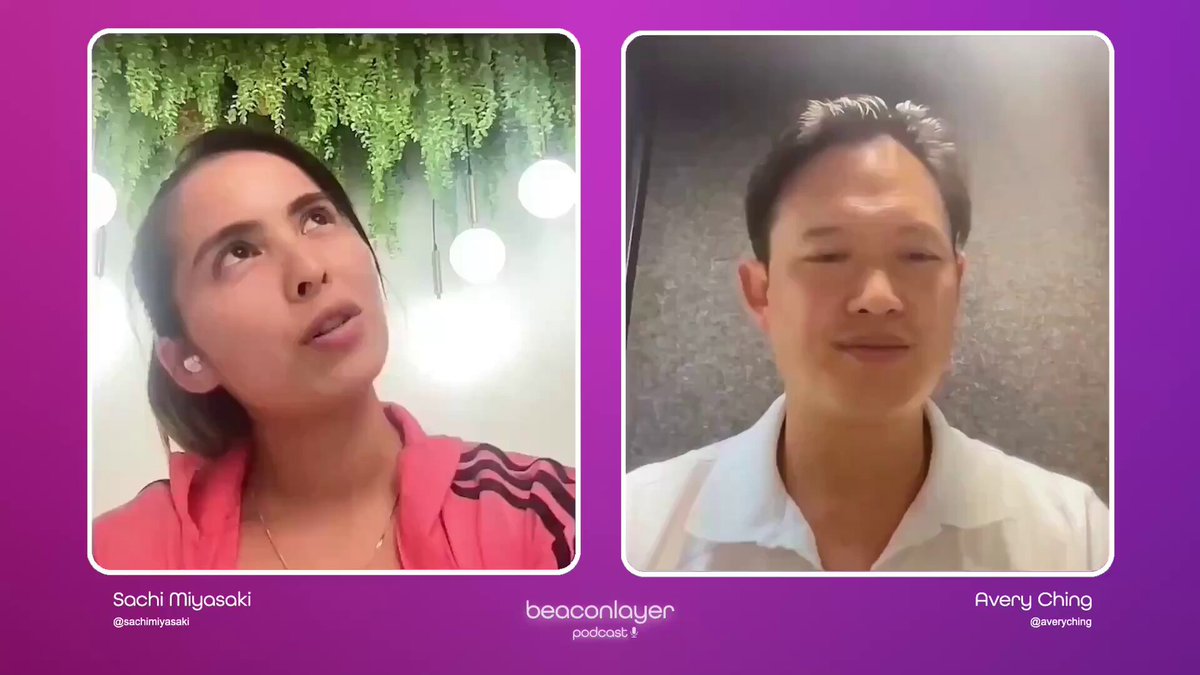
“We focused on four core areas: finance, gaming, social, and entertainment — but DeFi on @Aptos has seen the strongest traction.”
@sachimiyasaki sits down with @averyching to unpack Aptos’ real-world use cases and why DeFi has emerged as the breakout category: the safety of Move, the composability that allows products to plug into larger protocols, and an ecosystem that is now beginning to hit meaningful momentum.
32
36
236
47,028
Jun 12
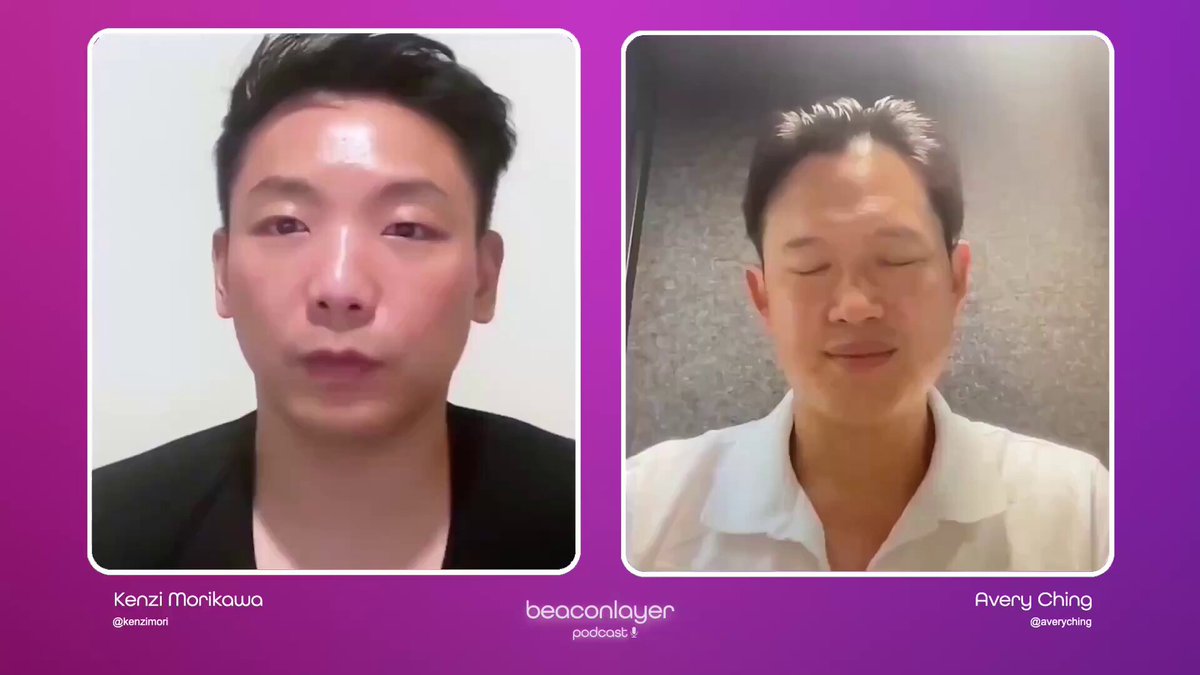
“Bitcoin was the first distributed systems paper I read with an economic layer built into it — and that changed everything.”
@kenzimori catches up with @averyching, Co-Founder & CTO of @Aptos, to trace his journey from high-performance computing and supercomputers, to scaling data infrastructure at Meta, to discovering Bitcoin and realizing that crypto was distributed systems with incentives natively embedded — the insight that ultimately led him to co-found Aptos Labs.
32
28
164
33,293
Jun 12
“What inspires you to get up and build every day? For me, it’s pushing Web3 forward — making blockchain a true public utility for everyone.”
@dikshawells sits down with @averyching (Co-Founder & CTO of @Aptos) to talk about what drives him: building the next era of the internet where blockchain brings ownership back to users and enables permissionless, trustless transactions that connect people globally.
25
22
142
25,515
Jun 12
New episode out today featuring @AveryChing - Co-Founder & CTO of @Aptos.
We explore the intersection of crypto and Al, Aptos' fundraising journey, how the network compares to other Layer 1s such as Solana and Ethereum, and what lies ahead for the Move programming language.
Avery also shares his perspective on decentralized use cases, Aptos' long-term ambitions, and how more than a decade spent scaling distributed systems at Meta — including his work on the Diem blockchain — continues to shape his vision for the future of Web3 infrastructure.
41
20
158
21,670
“What happens when someone inside one of the most iconic retail platforms of the last cycle sees its limits up close?”
@kenzimori speaks with @jayendra_jog, Co-Founder of @SeiNetwork, to trace the path that took him from the early days of Robinhood in Palo Alto — through hypergrowth, the IPO era, and the shock of the GameStop moment — to building in crypto.
They discuss how witnessing the mechanics and constraints of traditional financial infrastructure firsthand reshaped his thinking, why the suspension of buys during one of retail’s most defining episodes left such a lasting impression, and how that experience ultimately pushed him toward systems designed to be more open, more resilient, and less dependent on centralized control.
47
33
350
73,725
“High-performance infrastructure only matters if it expands what users can actually do onchain — and makes that experience accessible at scale.”
@sachimiyasaki sits down with @jayendra_jog, Co-Founder of @SeiNetwork, to examine why parallelized execution is becoming increasingly important for the next generation of onchain applications.
From trading and DeFi to high-frequency user activity that simply breaks in low-throughput environments, they discuss how lower fees and greater execution capacity can fundamentally reshape the user experience — especially for smaller participants who are otherwise priced out.
They also explore how this plays out in practice through projects like Bancor’s Carbon DeFi, where Sei has emerged as the ecosystem driving the strongest activity and volume, underscoring how performance advantages translate into real adoption.
40
30
274
61,727
“Virtual machines are like cities — once they reach critical mass, they become magnets that are incredibly hard to displace.”
@dikshawells catches up with @jayendra_jog, Co-Founder of @SeiNetwork, to unpack this idea at a deeper level — why systems with flaws can still dominate simply because that’s where the activity, liquidity, and people already are.
From New York and San Francisco to onchain environments like the EVM, they explore how network effects compound over time, why newer ecosystems struggle to pull users away even with better tech, and what it actually takes to break that inertia.
26
21
226
45,114
This week’s episode features Jayendra Jog (@jayendra_jog), Founder of @SeiNetwork.
We dive into Jay’s journey from traditional finance at Robinhood to building Sei Network, and unpack how his view of markets, users, and product feedback shaped the way he thinks about blockchain infrastructure.
The conversation explores the parallels between established cities and virtual machines: why dominant systems like the EVM are so difficult to displace, what makes developers stay, and what it actually takes for a new ecosystem to earn attention.
We also dig into the need for higher throughput in Web3, how parallelization can help solve today’s performance limits, and why scalability matters if crypto applications are going to serve real users at a much larger scale.
Jay also reflects on the role of memecoins, not just as speculation, but as community-driven movements that can reveal how culture, attention, and network effects form onchain.
31
28
212
35,947
“If researchers join because of incentives, you're already losing.”
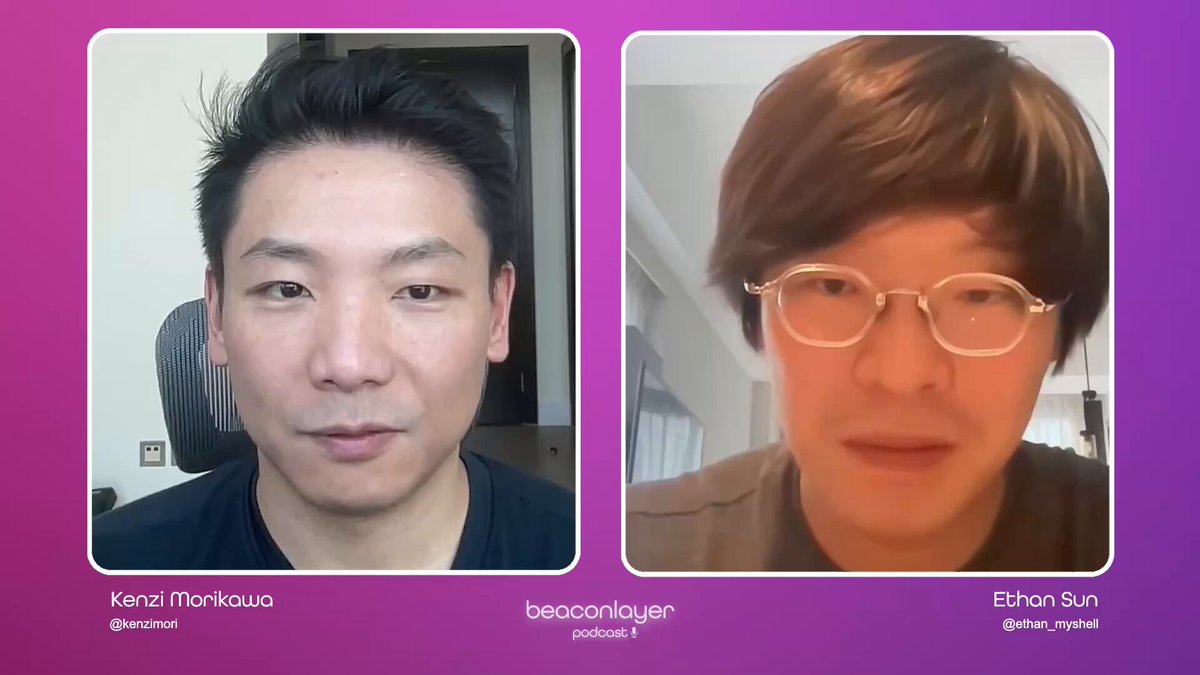
@sachimiyasaki talks with @ethan_myshell, Founder & CEO of @myshell_ai, about the AI talent crisis in crypto, why many researchers view the industry as speculative, and how open-source releases, real product-market fit, and world-class audio models helped build a community focused on technology rather than tokens.
19
31
300
63,693
“Oxford, computer vision, VR, gaming, crypto, AI — one founder arc across every major tech wave.”
@kenzimori catches up with @ethan_myshell, Founder & CEO of @myshell_ai, to unpack how skipping classes at Oxford led him from frontier research into consumer products and eventually AI x crypto: why researchers often miss mass adoption, why consumer instinct matters more than ever, and how the next generation of crypto AI products can break out beyond the niche.
32
29
177
50,533
“I mined Bitcoin in 2011, but I completely missed why it was important.”
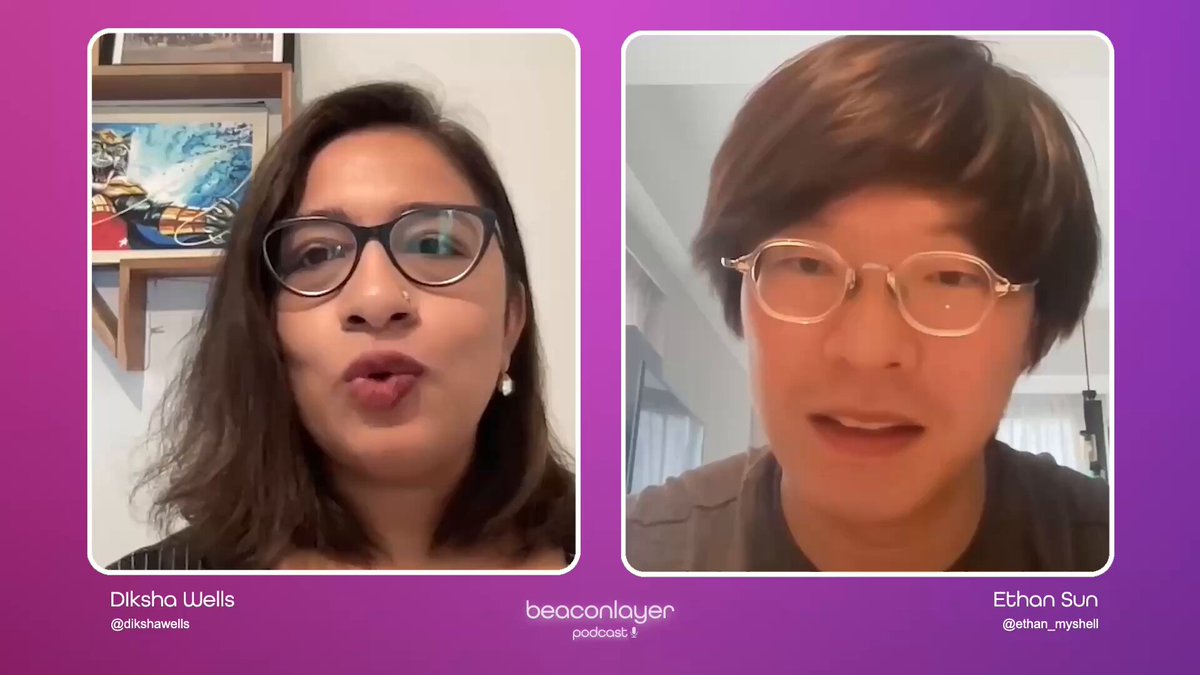
@dikshawells sits down with @ethan_myshell, Founder & CEO of @myshell_ai, to unpack why AI and crypto may finally be converging: Ethereum's shift from static ledgers to programmable applications, the infrastructure breakthroughs behind account abstraction and social login, and why years of progress in AI, machine learning, and robotics are now colliding with a crypto ecosystem that may finally be ready for real-world products.
31
22
153
43,555
This week’s episode features Ethan Sun (@ethan_myshell), founder of MyShell (@myshell_ai).
We dive into Ethan’s journey at the intersection of blockchain and AI, and the founding story behind MyShell - a platform built to make powerful AI models accessible to non-technical creators.
The conversation explores how MyShell is opening up a new wave in the creator economy, where users can build, share, and interact with AI agents without needing deep technical knowledge.
Ethan also breaks down MyShell’s transition from Web2 to Web3, the role blockchain plays in the platform, and why crypto can unlock better coordination between users, creators, and open-source AI researchers.
We also dig into the unique perspective on crypto and AI from China, the rise of consumer-facing AI products, and why the next major wave may come from platforms that connect creators directly with open AI infrastructure.
A deep episode on AI, crypto, creators, and the consumer layer needed to bring AI to the next generation of users.
25
24
119
45,141
“DA layers really differ across three dimensions: performance, programmability, and AI-native design — because on-chain AI can’t operate in a world measured in mere megabytes per second.”
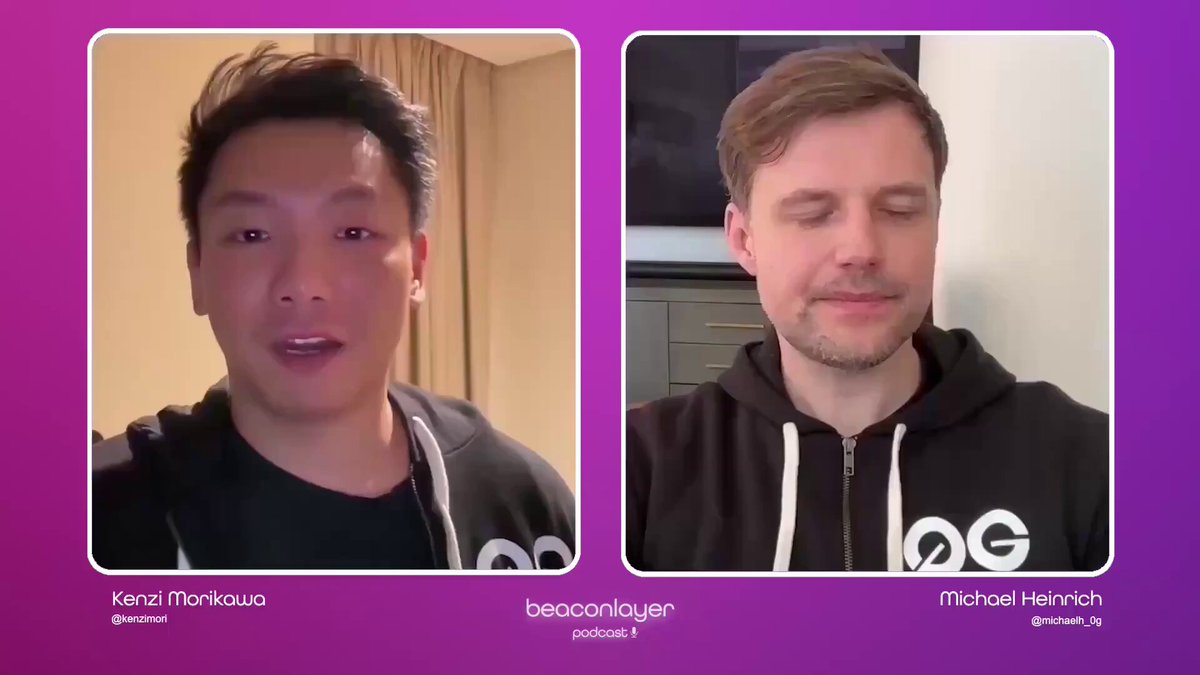
@sachimiyasaki catches up with @michaelh_0g, Founder of @0G_labs, to break down how 0G compares with Celestia, Avail, and EigenDA: why throughput needs to increase by orders of magnitude, how to move beyond the broadcast bottleneck, and why a decentralized storage network is essential for ultra-fast data ingestion and retrieval.
40
37
514
76,131
“After moving from Berlin to Silicon Valley, I found myself bored at a new school — so I started spending time at my dad’s SAP Lab: fast internet, endless reading, and the beginning of my love for technology.” Our host
@kenzimori sits down with @michaelh_0g (@0G_labs) to trace his origin story — from early curiosity and a growing obsession with tech to his path into Web3, and ultimately, the founding of his company.
41
31
429
48,284
“Back in 2016–17, crypto felt like a true idea factory — hundreds of experiments, zero gatekeeping, and pure creative energy.” Our host
@dikshawells sits down with @michaelh_0g, Founder of @0G_labs, to explore one of the most exciting parts of building in Web3: a culture shaped by experimentation first. They also dive into how tokenization creates new ways to fund and sustain projects — including open-source work — beyond the limits of the traditional Web2 business model.
29
38
347
42,345
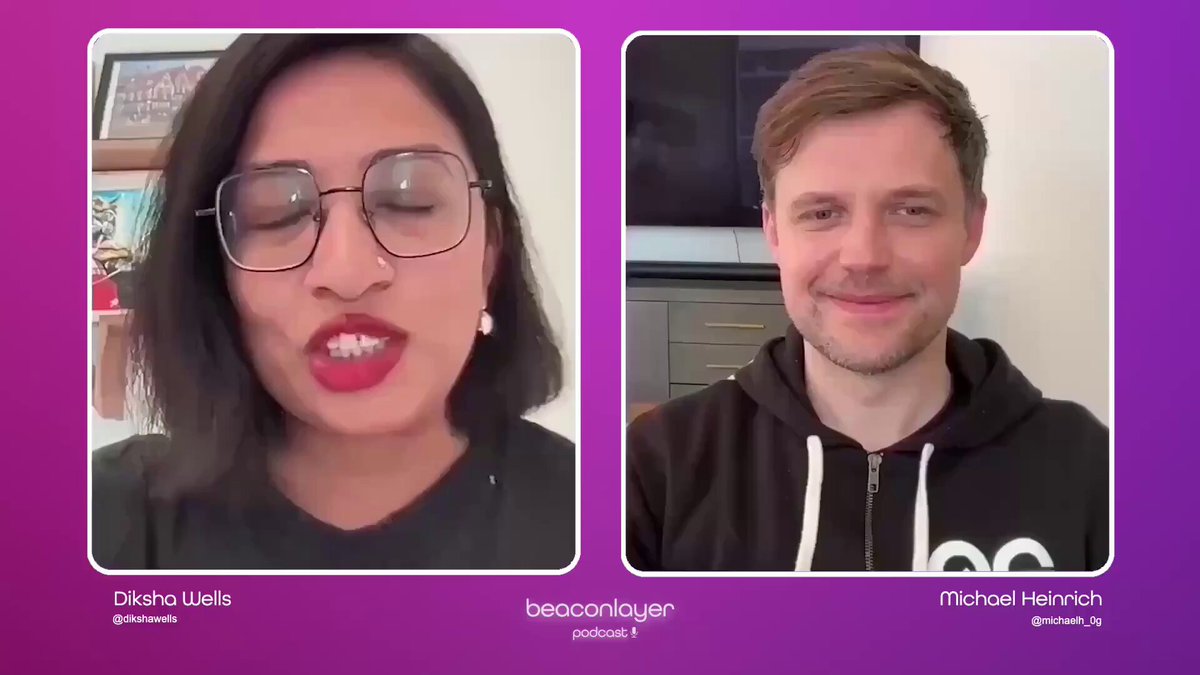
This week’s episode features Michael Heinrich (@michaelh_0g), founder of 0GLabs (@0G_labs).
We dive into Michael’s journey from high school boredom to building 0G Labs, the first modular AI blockchain platform, and how an unconventional path shaped the way he thinks about leadership, focus, and company building.
The conversation explores how spiritual practices like meditation influenced Michael’s mindset as a founder, helping him build with more clarity, discipline, and long-term conviction.
Michael also breaks down the future of decentralized AI infrastructure, and why community-owned data and compute networks may become one of the most important foundations for the next era of artificial intelligence.
We dig into how 0G Labs is building AI blockchain tools and applications that connect decentralized networks, unlock data infrastructure, and make storage, machine learning, and AI systems more open for businesses and builders.
At its core, this episode is about the intersection of AI, crypto, data ownership, and founder psychology — and why the next wave of AI infrastructure may need to be decentralized from day one.
34
50
221
47,432
May 30
“What if the real unlock for AI x crypto is not speculation — but proving intelligence can be trusted?”
@sachimiyasaki sits down with @dcbuilder for a deep dive into the intersection of AI and crypto, from DC’s work building the ZKML community to why zero-knowledge machine learning could become a core trust layer for AI on the internet.
They break down how ZKML makes it possible to prove that a machine learning model produced a specific output from specific inputs — without forcing everyone to rerun the full computation themselves.
The conversation also explores why this matters for model accountability, transparency, and verifiable AI at scale, plus the projects pushing the space forward, from Modulus Labs and Giza to EZKL and new research around proof of inference.
61
58
188
73,644
May 30
“What if a Web3 identity starts less as a brand — and more as a challenge to yourself?”
@kenzimori catches up with @dcbuilder for a deep dive into the origin of the DC Builder name, pseudonymous identity, and why crypto culture made merit feel more important than background.
They break down how the 2021 analyst wave, DeFi Twitter, and the ability to be judged by ideas alone shaped the way DC entered the space — first as a researcher and writer, then as someone who wanted to become a builder.
The conversation also explores why “Builder” became a social forcing function, how pseudonyms create contrast and memorability, and why in Web3, what you think and what you build can matter more than who you are offline.
46
48
146
30,968
May 30
“Why does Web3 research feel more alive than any other industry?”
@dikshawells joins @dcbuilder for a conversation on what makes crypto research so unique: the open debates, the public forums, and the fact that anyone can go from reading an EIP to DMing the people shaping Ethereum’s future.
They break down why Web3 research isn’t locked behind institutions or closed rooms — it happens in real time, across threads, forums, chats, and communities where ideas can move fast and still go deep.
The conversation dives into how this openness changes the role of a researcher: not just observing the space, but actively entering the flow of proposals, technical debates, and protocol-level thinking before they become mainstream.
37
42
148
27,153
May 30
This week’s episode features DC Builder (@dcbuilder), Research Engineer at the Worldcoin Netwrok (@worldnetwork).
We dive into Worldcoin’s mission to democratize digital identity and finance worldwide, and why proving personhood could become one of the most important primitives for the next era of the internet.
The conversation explores the challenges behind verifying real humans at global scale — from web of trust systems to biometrics — and how Worldcoin approaches identity, privacy, and fair wealth distribution.
DC also breaks down the role of Semaphore, zero-knowledge proofs, and privacy-preserving infrastructure in making digital identity usable without turning it into surveillance.
We also dig into the emerging ZKML space, the intersection of crypto and AI, and why machine learning, verification, and decentralized systems may become one of the most exciting frontiers in Web3.
A deep episode on identity, trust, ZK, AI, and the infrastructure needed to make the digital world more human.
23
30
131
20,949