
Joined October 2023
- Tweets 154
- Following 26
- Followers 864
- Likes 2
67 Photos and videos














Pinned Tweet

Jan 7
Capital and liquidity are not outcomes — they are responsibilities.
As a Web3 quant trading and market-making platform, BeatQuant operates where execution quality, inventory risk, and market structure intersect.
Our systems listen for rhythm —
volatility regimes, liquidity shifts, correlation pressure —
and translate them into repeatable actions through disciplined quantitative frameworks.
Providing capital is easy.
Providing liquidity consistently, across regimes, without destabilizing risk, is not.
That difference is where infrastructure, models, and restraint matter most.
AI hears the rhythm.
Quant turns it into Alpha.
#BeatQuant #QuantTrading #MarketMaking

11
1
50
8,531
Prediction markets are becoming one of the most interesting liquidity experiments in crypto.
The World Cup is turning real-time information — injuries, lineups, momentum, match results — into continuously repriced probability markets. Polymarket’s World Cup markets now aggregate billions in trading volume, showing how quickly attention can become tradable liquidity.
For systematic strategies, this is not just sports speculation.
It is a live case study in probability pricing, event-driven liquidity, market depth, and settlement design.
The key question is not who wins the tournament.
It is whether prediction markets can mature from attention-driven trading into reliable information infrastructure.
Sources: Polymarket, KuCoin, AP, WSJ
#PredictionMarkets #MarketStructure #QuantTrading #CryptoMarkets #BeatQuant
10
2
54
4,423
BeatQuant retweeted
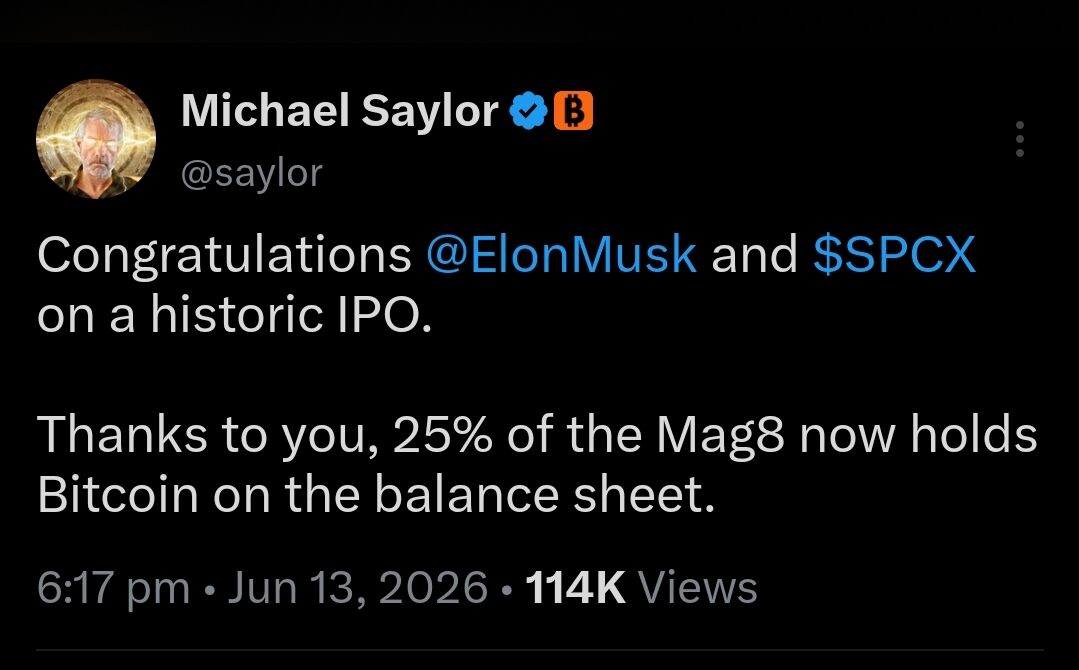
🔥 SAYLOR: "25% of the Mag8 holds Bitcoin..."
76
57
688
35,758
BeatQuant retweeted

Jun 11
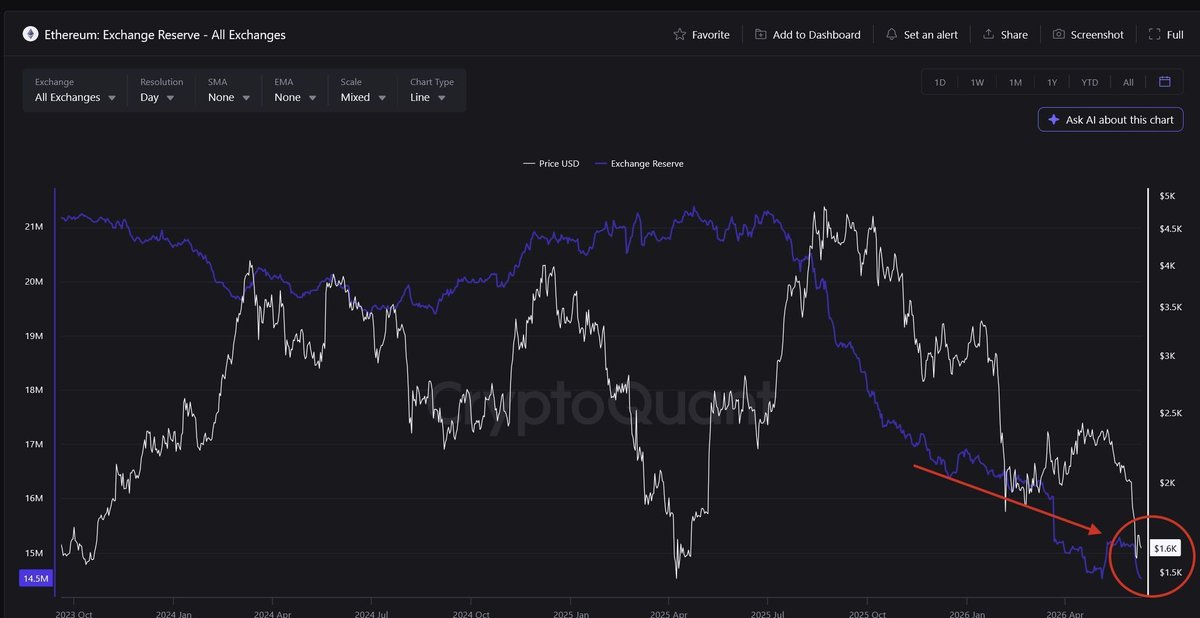
Ethereum is getting harder to buy.
Exchange reserves have dropped to their lowest level ever, while ETFs and long-term holders continue pulling ETH off the market. A major supply shift is happening behind the scenes.
➜ ETH on exchanges has fallen to just 14.5M ETH, an all-time low
➜ Over 6M ETH has been withdrawn from exchanges since late 2023
➜ Spot ETH ETFs are steadily accumulating supply
➜ Corporate treasuries are beginning to add ETH exposure
➜ More ETH is being moved into staking and long-term storage
➜ Less liquid supply can amplify price moves when demand increases
The biggest rallies often begin when supply dries up before the crowd notices.
Ethereum's supply is shrinking. The next question is whether demand is about to catch up.
72
109
1,165
66,929
Jun 5
Crypto is going through a structural reset, not just a price correction.
BTC and ETH have both repriced sharply, ETF flows have turned negative, and leverage is being tested across the market.
But stablecoin supply remains elevated, suggesting capital has not fully left — it has moved into waiting mode.
For systematic strategies, this is not simply a bearish signal.
It is a liquidity quality test:
which assets retain depth, which narratives lose capital, and where deployable liquidity returns first.
Market cycles don’t only reset prices.
They reset structure.
#CryptoMarkets #Liquidity #BeatQuant
6
1
40
3,999
May 30
May was not a simple bull or bear month for crypto.
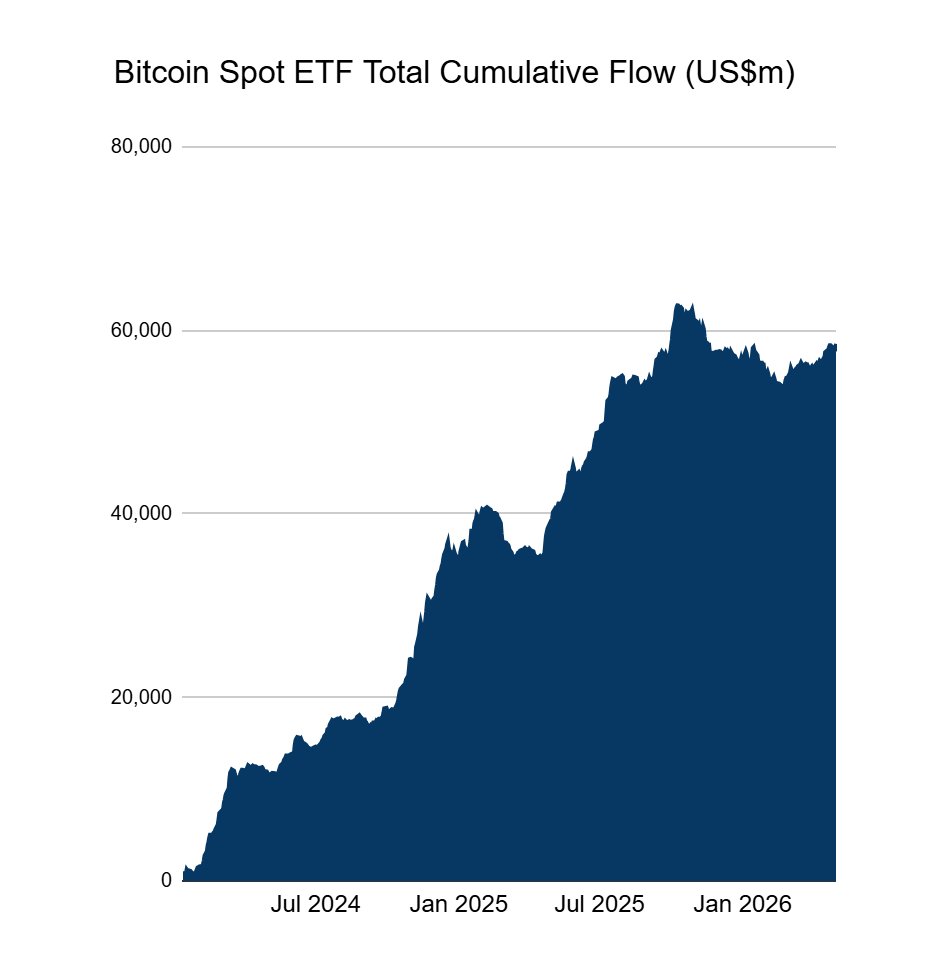
BTC ended the month near $73K, while ETF flows turned into a late-month stress test:
-$733.4M on May 27, -$223.3M on May 28, and -$125.3M on May 29.
But liquidity did not disappear. Stablecoin market cap remains around $320B, with USDT dominance near 58.8%, showing that deployable on-chain capital is still present.
At the same time, U.S. market structure legislation continued to move forward, adding a policy layer to the liquidity picture.
For systematic strategies, May was not about one direction.
It was about whether market depth, stablecoin liquidity, and ETF flow reversals could coexist without a full regime breakdown.
The key question remains:
Not “where is price going?”
But “where is liquidity moving?”
Sources: Farside, DefiLlama, Reuters
#CryptoMarkets #MarketStructure #QuantTrading #Liquidity #BeatQuant
10
1
27
2,046
BeatQuant retweeted

May 30
Tom Lee(@fundstrat)'s #Bitmine bought another 25,000 $ETH($50.56M) 6 hours ago.
intel.arkm.com/explorer/addr…


55
77
921
78,793
May 24
Ethereum’s long-term value is not only a function of throughput or short-term execution speed.
It is also a function of credible neutrality, security guarantees, intermediary minimization, and the durability of the protocol layer.
For systematic strategies, this matters because protocol design eventually becomes market structure: it affects liquidity routing, execution risk, settlement confidence, and the risk premium assigned to ETH as an asset.
The market prices ETH not only as a token, but as exposure to the reliability of Ethereum’s financial operating system.
#Ethereum #MarketStructure #QuantTrading #BeatQuant
May 24

Some of my perspective on where the @ethereumfndn is going.
First of all, this is only my own view. The board is not just me, and I have no extra special powers on the board that the other board members do not. @aerugoettinea is the one executing much of this transition. My input has been largely on technical questions. The board is in the process of expanding, and my own power within the org will continue to decrease, which is honestly what I want.
The 2025 era brought many important improvements to EF and its ability to execute. Many issues were resolved, and EF continues to benefit from its improved efficiency and greater focus on concrete goals to this day. And so with those problems resolved, early this year, the largest remaining hole that I perceived was something different nagging at me: I would regularly spot people saying things like "vitalik says these beautiful things about ethereum needing to be decentralized, and have privacy, and be a sanctuary technology, but why do the EF's actions not reflect that?"
Now, you may have been hearing something different. You may not have been sensing a feeling of crisis at all, and maybe were hearing people saying that finally we were taking execution and BD seriously and the main task for us is to keep going that way and be even better and faster. Then probably there is genuine difference between you and me, in what kinds of criticism I take most seriously, and what kinds of critics through their criticism are most able to make me feel pain.
As an analogy, let's briefly switch over to a different domain.
One belief you can have about Google is that it is a success story, and has brought a lot of good to humanity in organizing the world's information. Another belief you can have about Google is that they had a beautiful idealistic beginning, but at some point the corruption of mainstream corporate attitudes seeped in, and they slowly bit by bit completely abandoned the "don't be evil" slogan.
My belief on Google specifically is probably somewhere between the two. BUT, if you had taken me back in time to ~2008, and offered me a button to press to make Google one or two standard deviations more "dogmatic", eg. give Richard Stallman permanent veto power over some key policies, I would immediately press it.
Why? Because a choice for one company is not a choice for the world, or even one country. Google existed and exists in the context of a technology industry generally drifting away from early idealistic don't-be-evil roots and toward greed for financial gain, totalizing visions of accelerated superintelligence, infiltration by sociopaths, and craven capitulation to (or worse, active participation in) government pressure for ideological control, surveillance and war. And so *one company* doing something different, positioning itself to be what George Bernard Shaw calls the Unreasonable Man, resisting the trend of the times, would have been better for freedom, balance of power and stability of society as a whole, than *all* large companies bending to dominant trends. This is a part of my version of pluralism.
This line of thinking is not just mine, but I also is not too far off from what Aya and others had in mind with the Mandate.
Now how does this all get to the role of the EF?
EF is not a "center of Ethereum", rather EF is "one node, with a defined purpose, alongside other nodes". We've always said that the EF should be the latter, but many in the Ethereum ecosystem (and even within the EF) wanted us to be the former. Now, we are taking action to ensure that we will be the latter.
This is particularly important because EF is a limited organization, with limited resources and limited organizational capacity. The EF has only ~0.16% of all ETH (less than many other individual ETH holders), whereas among other blockchains it's common for "the central foundation" to have 10-50%. Fiscally, the EF was originally designed to fulfill a limited work scope defined in the token sale docs and other pre-launch materials (building the chain software; getting through Frontier, Homestead, Metropolis, Serenity), which was fully completed in 2022; it was not designed to be an eternal steward.
And so today, the EF is choosing to use its remaining resources to pursue longevity over breadth (yes, this means we sell less ETH). The EF focuses *specifically* on those activities critical to the success of ethereum as a censorship/capture-resistant, open, private and secure system, that would not happen otherwise. This means making hard choices, and in some cases even activities that we highly approve of and people that we highly respect becoming outside of the EF. People of great technical talent, public respect and even alignment with the mission and CROPS being outside of the EF is in fact necessary if we want important tasks to be able to attract outside capital. This also means the EF taking opinionated stands culturally.
This is all intended in cooperation with all other parts of ethereum. We recognize that many other parts of the ethereum world highly respect CROPS and related values. But highly respecting is not the same as choosing to specialize and totally dedicate to a domain (Compare in a different domain: I think reducing animal cruelty is important, and I like vegan food, but am not full unconditional vegan myself)
EF is still in a transition period, and we expect its new long-term form to stabilize over the next few months. What are the guiding principles of this new form? Again, I am only one person, but I can give my answer from a technical perspective (there are also critical non-technical aspects).
At the core, *Ethereum must be impressive*. We are living in an age of highly intelligent AI and all kinds of other technological acceleration. "Status quo EVM, with a hard fork or two a year to optimize for short-term needs of users" is not interesting.
To some, "impressive" means: 250ms latency and 1M TPS. I think Ethereum trying to go that route is a mistake. Being as fast and as scalable as possible, and only a small epsilon more decentralized than the others, is a route to mediocrity, and if we try it we will lose.
I think Ethereum should scale. But I think Ethereum should strive the hardest to be deeply impressive in a different dimension: the CROPS dimension. This means things like:
* Provably bug-free Ethereum. This is a goal that all cybersecurity researchers would have thought is absurd and impossible, up until roughly 6 months ago. Now, it's on the cusp of being possible, thanks to AI-assisted formal verification. So we should be frontrunners in doing this.
* Available chain consensus. Ethereum is, and with lean consensus will cotninue to be, the ONLY chain that has both (i) traditional-BFT style properties that it's safe under asynchrony up to a high level of fault tolerance, and (ii) the bitcoin PoW-style property that under synchrony it's safe up to 49% attackers. As far as I can tell, literally no other chain has this or is planning for it; bitcoin goes for (ii) only and most other chains go for (i) only. Some will remember I fought hard for this, Unreasonably insisting that it is not OK for ethereum to rely on social consensus and hard forks to rescue ethereum from 34% of nodes going offline. It's OK for chains like hyperledger, bnb, solana, tempo, etc. It's not OK for bitcoin or ethereum or eg. zcash.
* Intermediary minimization. The fact that smart contract wallets, protocols like railgun, etc have to send transactions through intermediaries to get included onchain is honestly embarrassing, and it's a constant point of fragility. Hence the work on FOCIL and EIP-8141 (and 7701 and years of work before) to make transaction sending intermediary-minimized with public mempool and strong inclusion properties, in a truly general-purpose way, that covers not just eg. secp256r1, but also privacy protocols and much more. Kohaku is pushing intermediary minimization at the user layer, pulling Ethereum away from the dystopian status quo world where our wallets don't even verify the chain, send our private data out to a dozen third-party servers, and toward a brighter CROPS future.
Some of these goals are Unreasonable - maybe Ethereum would be "fine" getting only 50% of the way - what if we depend on intermediaries, but make it easy to switch? But going 50% of the way would not make Ethereum Deeply Impressive in the CROPS way. So we push for 100%.
Fortunately all these goals are compatible with high TPS, this is a major focus of research (esp. on scaling the state). Well-designed L2s can also help, especially L2s optimized for specific applications (eg. high-volume trading, privacy...). These goals are even compatible with significantly lower slot times, thanks to Raul's work on erasure-coded P2P, and many other optimizations.
The most high-value "product" of the ethereum blockchain, financially speaking, is ETH the asset. Ethereum secures $250 billion of ETH. The types of properties of Ethereum that I mentioned above are very good for ETH the asset. Nearly 90% of my net worth is in ETH, and most of the remainder is ~$40m of onchain fiat of which every dollar has already been allocated for some open-source biotech or software or hardware initiative. That said, there are aspects of supporting ETH the asset - *necessary* aspects even - that are outside the scope of the EF. This is where we need other heroes (some of whom hold more ETH than the EF does) to step in and help. EF has been recently thinking more about how it will relate to other such organizations, and give them needed initial support.
EF will be a smaller ship than in previous years, a more opinionated one - in some cases more opinionated in ways that might be difficult to comprehend - but a longer-lasting one, and one suited to making sure that ethereum brings something meaningful to the world. We are grateful to all those inside and outside the EF who are helping to make this happen.
7
41
4,181
BeatQuant retweeted

May 22
Bitcoin Pizza Day.
Every market begins with a first trade.
10,000 BTC for two pizzas was not just a payment — it was the first real-world proof that digital value could clear, settle, and be remembered by the market.
What started as an experiment became a liquidity network.
What looked like a pizza order became a lesson in time, scarcity, and price discovery.
#PizzaDay #Bitcoin #Liquidity

9
2
58
4,628
May 20
Crypto liquidity is returning — but it is being tested.
Recent data shows BTC trading around the $76K–$77K range, while BTC ETFs recorded a $648.6M outflow on May 18 and another $331.1M outflow on May 19. At the same time, stablecoin market cap remains elevated at around $323.1B, with USDT dominance near 58.7%.
This is not a simple “risk-on” or “risk-off” environment.
For systematic strategies, the key question is whether stablecoin liquidity and market depth can absorb ETF flow reversals without triggering broader regime deterioration.
Liquidity quantity is visible.
Liquidity quality is what matters.
Sources: Farside Investors, DefiLlama, ETMarkets
#CryptoMarkets #Liquidity #BeatQuant
4
20
2,615
BeatQuant retweeted

May 19
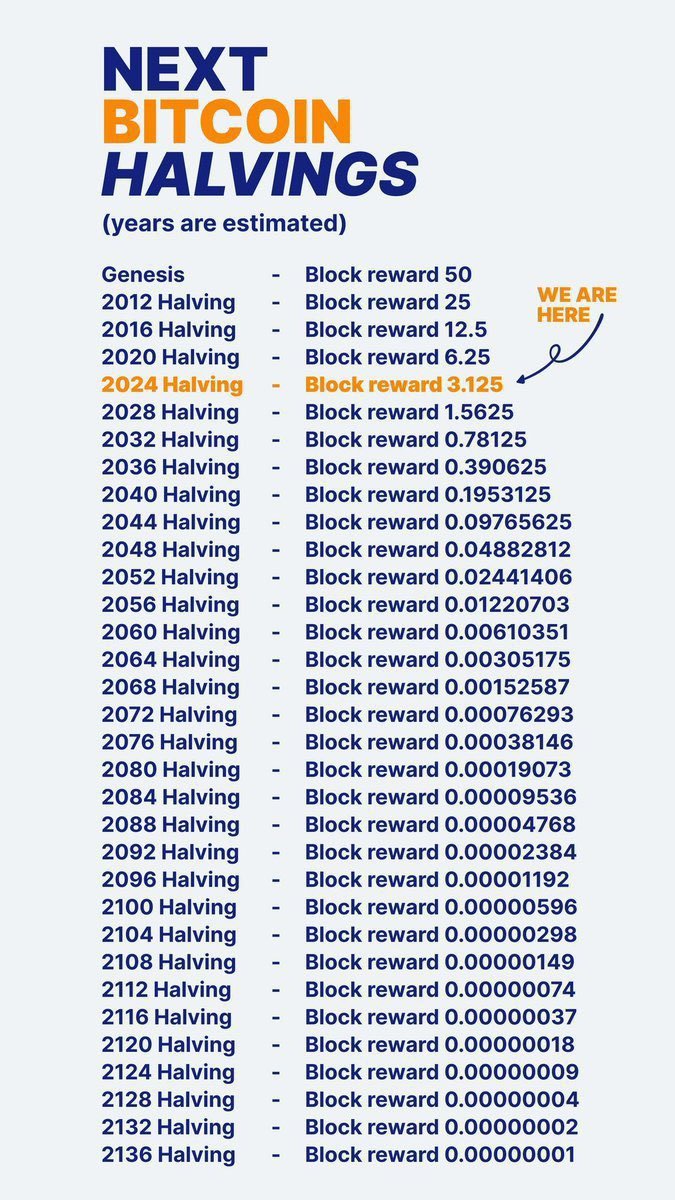
Bitcoin has 32 halvings
We've only seen 4
10
77
268
8,859
BeatQuant retweeted

May 18
JUST IN: 🇺🇸 Minnesota Governor signs bill into law that allows banks and credit unions to offer Bitcoin custody services to customers.

167
465
2,287
81,917
BeatQuant retweeted

May 18
Strategy has acquired 24,869 BTC for ~$2.01 billion at ~$80,985 per bitcoin and has achieved BTC Yield of 12.6% YTD 2026. As of 5/17/2026, we hodl 843,738 $BTC acquired for ~$63.87 billion at ~$75,700 per bitcoin. $MSTR $STRC strategy.com/press/strategy-…
1,513
2,664
19,793
2,111,532
May 15
Crypto markets are being tested on two structural fronts: policy clarity and flow resilience.
The CLARITY Act moving forward signals a potential reduction in regulatory uncertainty, while BTC ETF flows shifting back positive after a large outflow day shows how quickly capital conditions can change.
For systematic strategies, this is not simply a bullish or bearish setup.
The key question is whether market structure can absorb flow reversals while regulatory constraints begin to loosen.
Price reacts to headlines.
Liquidity reacts to structure.
#CryptoMarkets #Bitcoin #BeatQuant
5
47
4,011

We asked @VitalikButerin why he frames Ethereum's broader mission as building "sanctuary technologies" rather than open source or decentralization.
His take:
"We're in a less peaceful and less safe world than we were 10 or 15 years ago. 10 or 15 years ago, you were worried about banks getting bailouts and dollars inflating. 15 years later, the risk that the dollar is gonna go crazy is way more credible ... and there's much worse things happening to people than just having your currency inflated."
"There is a vision of safety we're competing with. Basically, let's trust the uncle in the sky, and the uncle in the sky is going to figure everything out for us in exchange for taking away all of our privacy and all of our agency."
"We want to be safe and at the same time empowered. We want something that continues to keep us in control and at the center in a way where we have agency."
@sodofi_ @binji_x
Mar 3
Over the past year, many people I talk to have expressed worry about two topics:
* Various aspects of the way the world is going: government control and surveillance, wars, corporate power and surveillance, tech enshittification / corposlop, social media becoming a memetic warzone, AI and how it interplays with all of the above...
* The brute reality that Ethereum seems to be absent from meaningfully improving the lives of people subject to these things, even on the dimensions we deeply care about (eg. freedom, privacy, security of digital life, community self-organization)
It is easy to bond over the first, to commiserate over the fact that beauty and good in the world seems to be receding and darkness advancing, and uncaring powerful people in high places are making this happen. But ultimately, it is easy to acknowledge problems, the hard thing is actually shining a light forward, coming up with a concrete plan that makes the situation better.
The second has been weighing heavily on my mind, and on the minds of many of our brightest and most idealistic Ethereans. I personally never felt any upset or fear when political memecoins went on Solana, or various zero-sum gambling applications go on whatever 250 millisecond block chain strikes their fancy. But it *does* weigh on me that, through all of the various low-grade online memetic wars, international overreaches of corporate and government power, and other issues of the last few years, Ethereum has been playing a very limited role in making people's lives better. What *are* the liberating technologies? Starlink is the most obvious one. Locally-running open-weights LLMs are another. Signal is a third. Community Notes is a fourth, tackling the problem from a different angle.
One response is to say "stop dreaming big, we need to hunker down and accept that finance is our lane and laser-focus on that". But this is ultimately hollow. Financial freedom and security is critical. But it seems obvious that, while adding a perfectly free and open and sovereign and debasement-proof financial system would fix some things, but it would leave the bulk of our deep worries about the world unaddressed. It's okay for individuals to laser-focus on finance, but we need to be part of some greater whole that has things to say about the other problems too.
At the same time, Ethereum cannot fix the world. Ethereum is the "wrong-shaped tool" for that: beyond a certain point, "fixing the world" implies a form of power projection that is more like a centralized political entity than like a decentralized technology community.
So what can we do? I think that we in Ethereum should conceptualize ourselves as being part of an ecosystem building "sanctuary technologies": free open-source technologies that let people live, work, talk to each other, manage risk and build wealth, and collaborate on shared goals, in a way that optimizes for robustness to outside pressures.
The goal is not to remake the world in Ethereum's image, where all finance is disintermediated, all governance happens through DAOs, and everyone gets a blockchain-based UBI delivered straight to their social-recovery wallet. The goal is the opposite: it's de-totalization. It's to reduce the stakes of the war in heaven by preventing the winner from having total victory (ie. total control over other human beings), and preventing the loser from suffering total defeat. To create digital islands of stability in a chaotic era. To enable interdependence that cannot be weaponized.
Ethereum's role is to create "digital space" where different entities can cooperate and interact. Communications channels enable interaction, but communication channels are not "space": they do not let you create single unique objects that canonically represent some social arrangement that changes over time. Money is one important example. Multisigs that can change their members, showing persistence exceeding that of any one person or one public key, are another. Various market and governance structures are a third. There are more.
I think now is the time to double down, with greater clarity. Do not try to be Apple or Google, seeing crypto as a tech sector that enables efficiency or shininess. Instead, build our part of the sanctuary tech ecosystem - the "shared digital space with no owner" that enables both open finance and much more. More actively build toward a full-stack ecosystem: both upward to the wallet and application layer (incl AI as interface) and downward to the OS, hardware, even physical/bio security levels.
Ultimately, tech is worthless without users. But look for users, both individual and institutional, for whom sanctuary tech is exactly the thing they need. Optimize payments, defi, decentralized social, and other applications precisely for those users, and those goals, which centralized tech will not serve. We have many allies, including many outside of "crypto". It's time we work together with an open mind and move forward.
31
64
481
105,502
BeatQuant retweeted

May 13
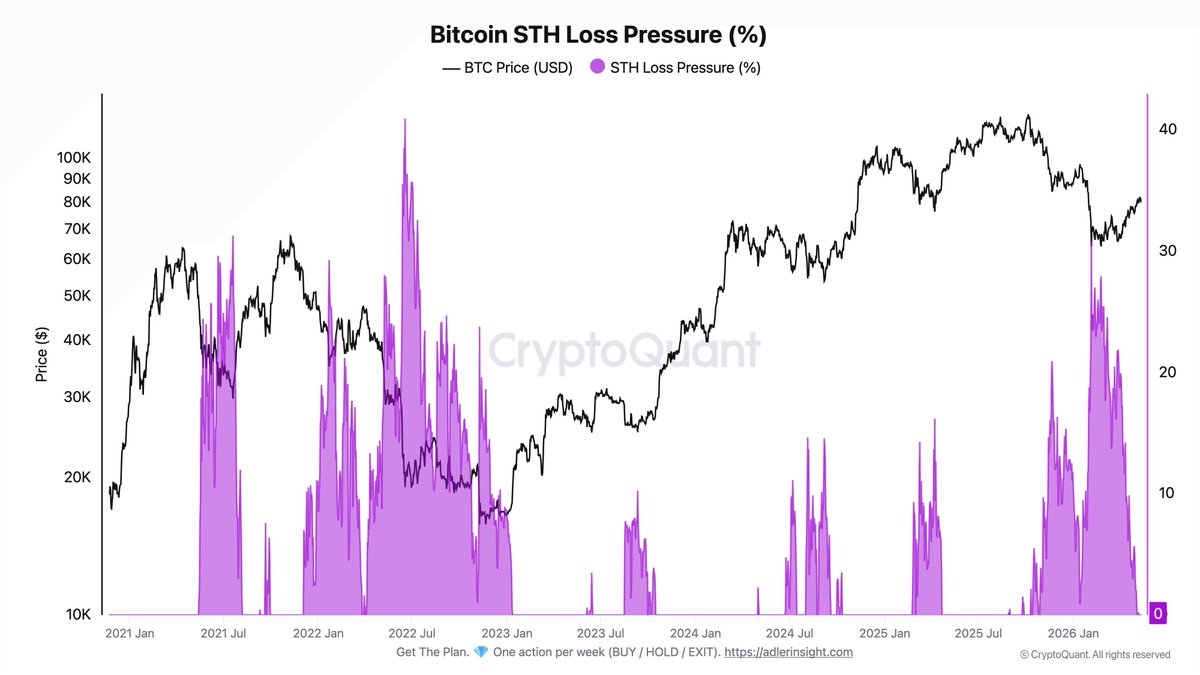
Bitcoin short-term holders are no longer under pressure to sell at a loss.
May 13

STH Loss Pressure just hit 0% for the 5th straight day.
Late March: 22%. Now: zero.
BTC reclaimed $80K, April’s underwater cohort is no longer under pressure, and STH Supply Share dropped to 22.2% - a 90-day low.
Less loss pressure. Less hot supply. Lower forced-selling risk.
Line to watch: $78K-$79K.
Full breakdown ☕️ Adler AM 168👇
axeladlerjr.com/sth-loss-pre…
31
39
369
62,276
May 10
Crypto liquidity is improving, but the structure is uneven.
BTC ETF flows have shifted from strong inflows to recent outflows, stablecoin supply remains above $320B, and BTC continues to trade around the $80K liquidity zone.
For systematic strategies, this is not simply a “risk-on” environment.
It is a flow-persistence test:
can ETF demand, stablecoin liquidity, and market depth remain aligned when capital flows change direction?
#CryptoMarkets #MarketStructure #BeatQuant
8
31
2,388
BeatQuant retweeted

May 10
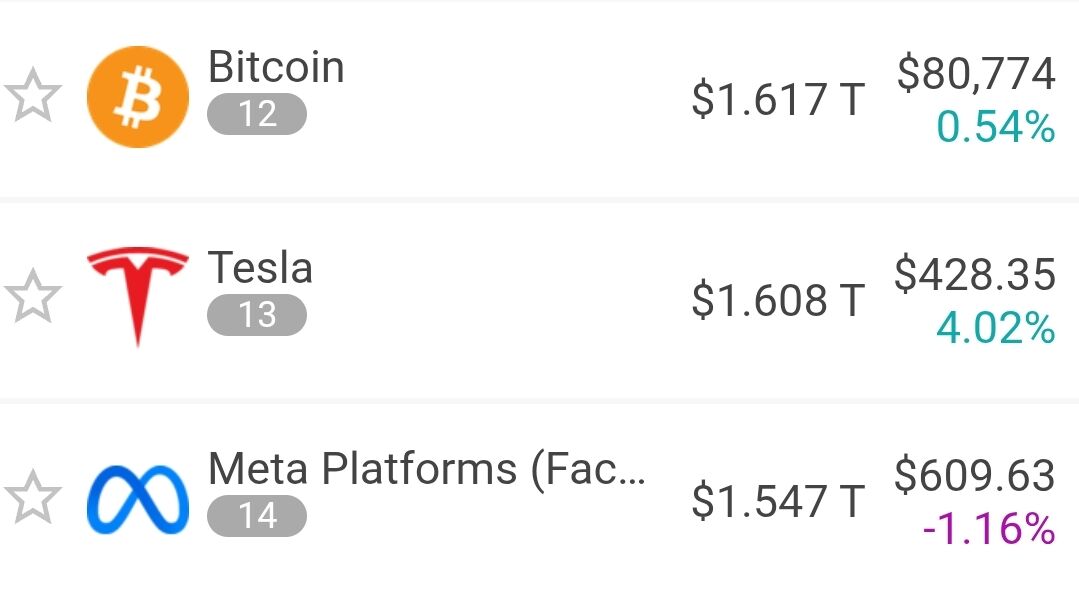
🔥 LATEST: Bitcoin flipped Tesla in Market Cap.
123
151
1,164
60,092
BeatQuant retweeted

May 9
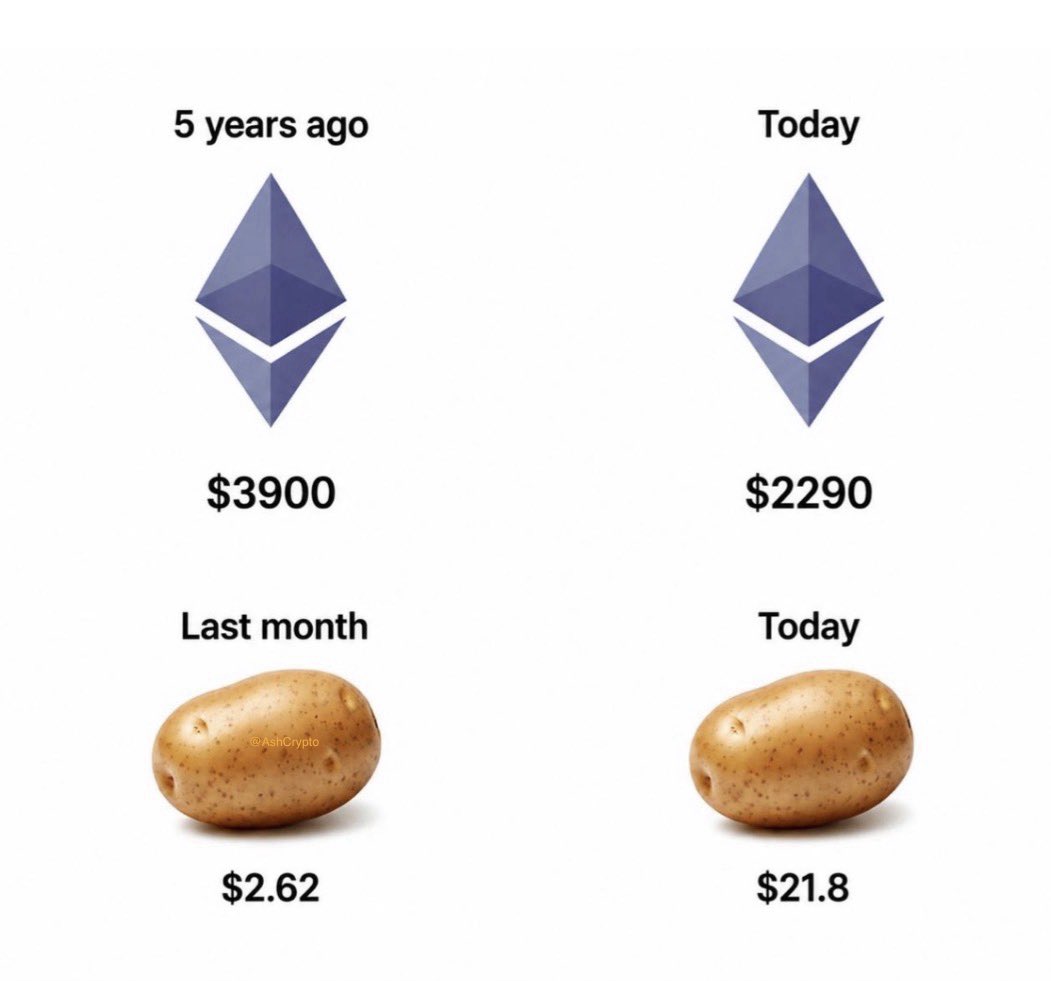
$125,000 invested in $ETH 5 years ago is now worth $73,400.
$125,000 invested in Potatoes 1 month ago is now worth $1,000,000.
ETH is getting outperformed by Potatoes.
580
934
8,001
588,799
May 6
Liquidity appears to be returning to crypto markets — but unevenly.
ETF inflows are rebuilding institutional demand, stablecoin supply remains elevated, and BTC derivatives open interest has recovered strongly.
The key distinction: liquidity is returning first through majors and institutional channels, not uniformly across the entire market.
For systematic strategies, the signal is not simply “risk-on.”
It is the interaction between flow persistence, leverage rebuilding, and depth absorption.
#CryptoMarkets #MarketStructure #QuantTrading #BeatQuant
5
12
2,232
May 2
Crypto market structure is becoming increasingly flow-driven rather than narrative-driven.
On May 1, U.S. spot BTC ETFs recorded $629.8M in net inflows, while ETH ETF demand also returned. Stablecoin reserves show deeper macro linkage: USDT is backed primarily by $117B in U.S. Treasury bills, with $19.8B in gold and $7B in BTC as secondary reserve assets.
At the same time, traditional market infrastructure is adapting: Cboe is refocusing on derivatives, prediction markets and tokenization, with Q1 index options ADV reaching a record 6.1M contracts.
Even Bitcoin’s relationship with equities is shifting — its correlation reportedly fell from around 65% in February to 51% recently.
For systematic strategies, the question is no longer simply:
“What is the story?”
It is:
Where is liquidity moving?
How is risk being expressed?
Which structure is being repriced?
#QuantTrading #RiskModels #BeatQuant
7
1
37
3,427