
I never used to be into politics or history, but the Israhell Genocide in Gaza has turned me into a Middle East expert. Thanks, IsraHELL. now I know.
Joined October 2023
- Tweets 57,017
- Following 1,046
- Followers 837
- Likes 69,597
8,449 Photos and videos



Pinned Tweet

25 May 2024
Children are being bombed in apartment complexes. Give me one circumstance where you would kill a child and justify it. Give me one circumstance where someone could kill your child and be justified. Thousands of children carpet-bombed.

17
34
82
6,922
Bebo 🇺🇸 retweeted

Jun 16
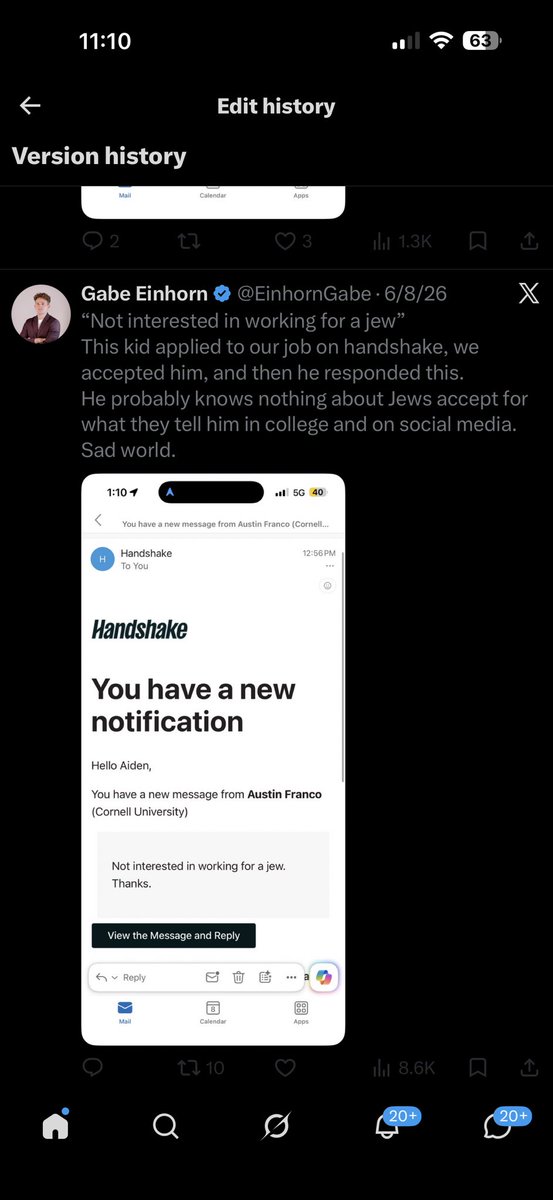
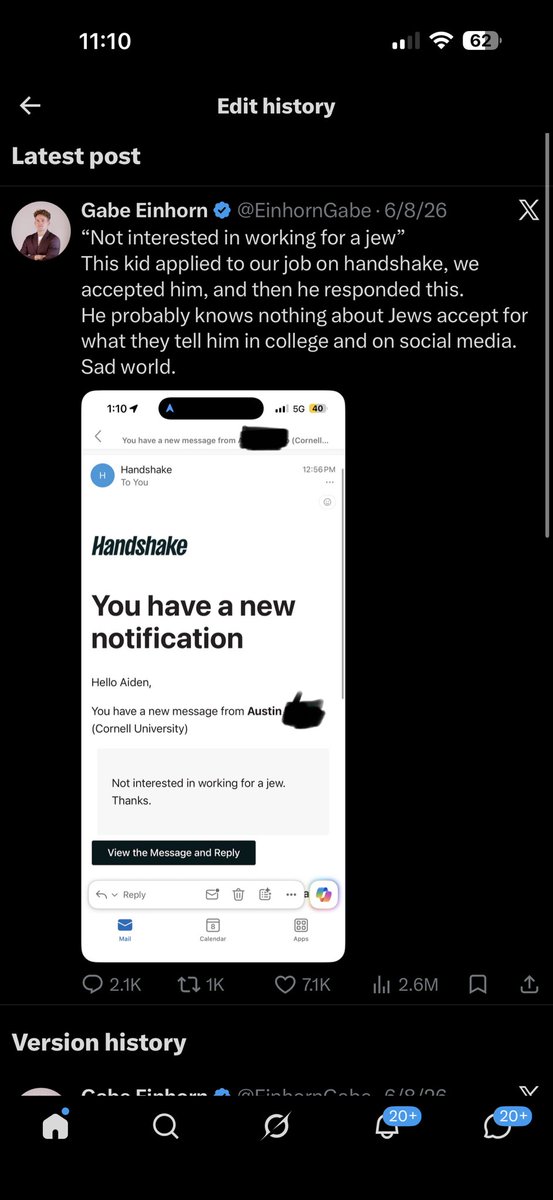
Gabe Einhorn originally posted Austin’s full name. Jews are all trying to lie in unison and say Austin doxxed himself.
You can go check the edit history on the post for yourself-
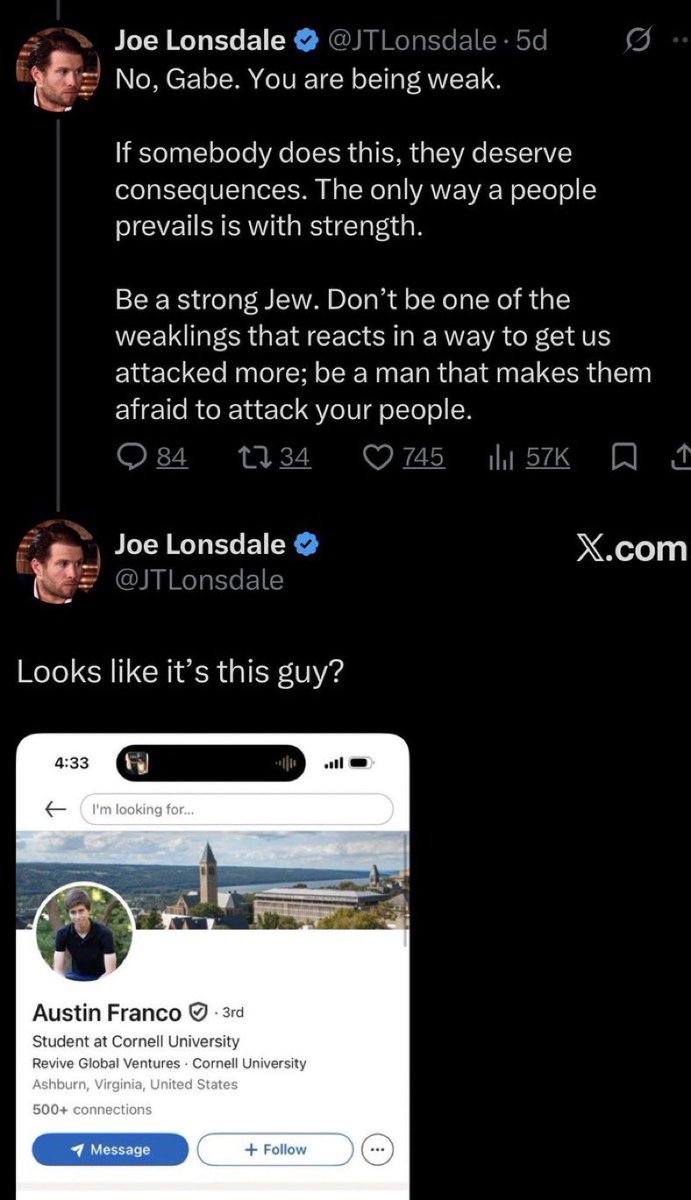
first Einhorn posted full name. Then he edited it. Then the cofounder of Palantir told him to be a strong Jew- meaning dox the 19 year old and make an example of him. Einhorn agreed.
And now he’s doing Fox News tours, it’s plastered all over all of mainstream media, and Jews are harassing Austin’s family and even harassing other unrelated people with the same name.
Way to make an example of him- you’ve shown the whole world that he was entirely correct to not want to work for a Jew.
Look at yourselves.
284
2,812
15,049
160,095
Bebo 🇺🇸 retweeted

Congress claims they are ending US military aid to Israel, but actually are pushing the two countries closer than ever.
Section 224 of the defense bill would make the US army use Israeli tech, make both countries buy weapons together, and fuse the two militaries.
That's why Benjamin Netanyahu himself supports it.
17
170
337
8,734
Bebo 🇺🇸 retweeted

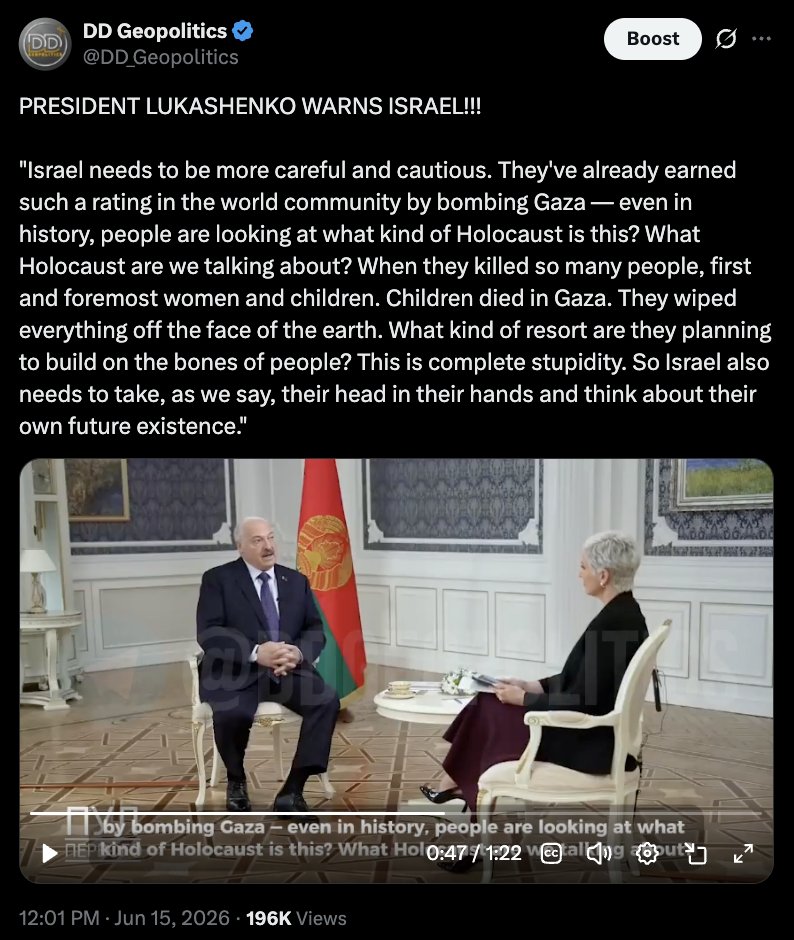
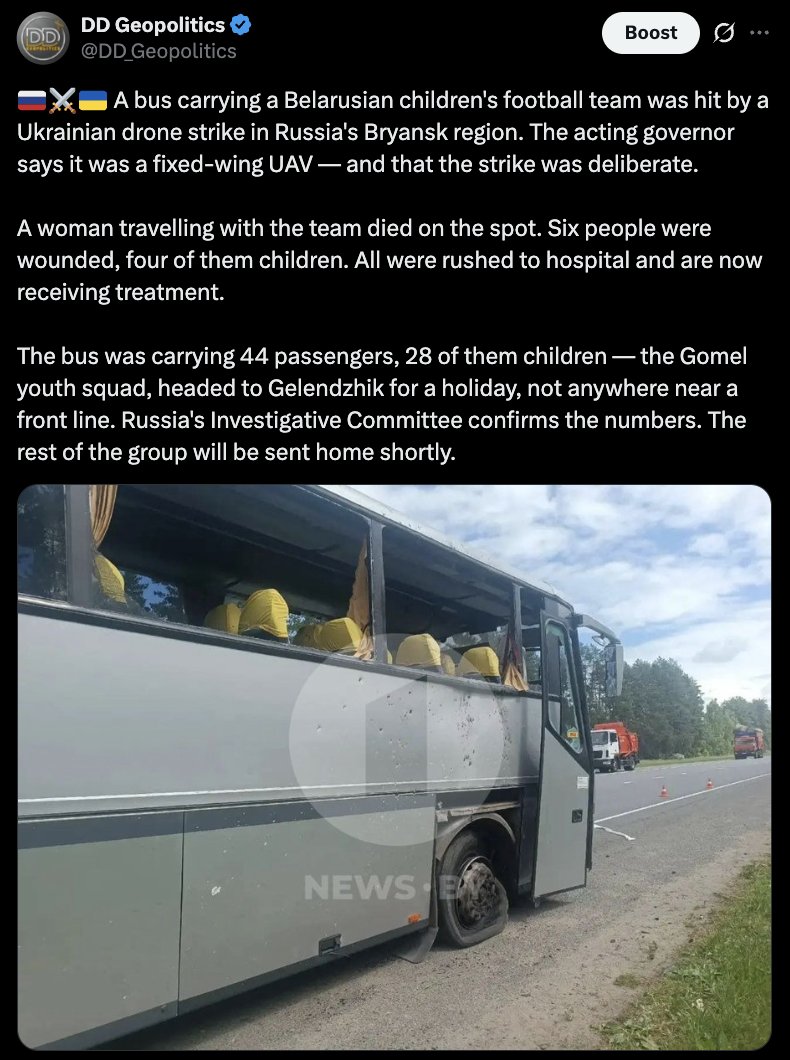
Two days ago, President Lukashenko warned Israel that they need to seriously evaluate their actions and the genocide they're commiting in Gaza.
Yesterday, Israeli MFA called Lukashenko's comments "vile and antisemitic."
Today, a bus full of Belorusian children was targeted with a Ukrainian drone....

45
873
1,851
34,652
Bebo 🇺🇸 retweeted

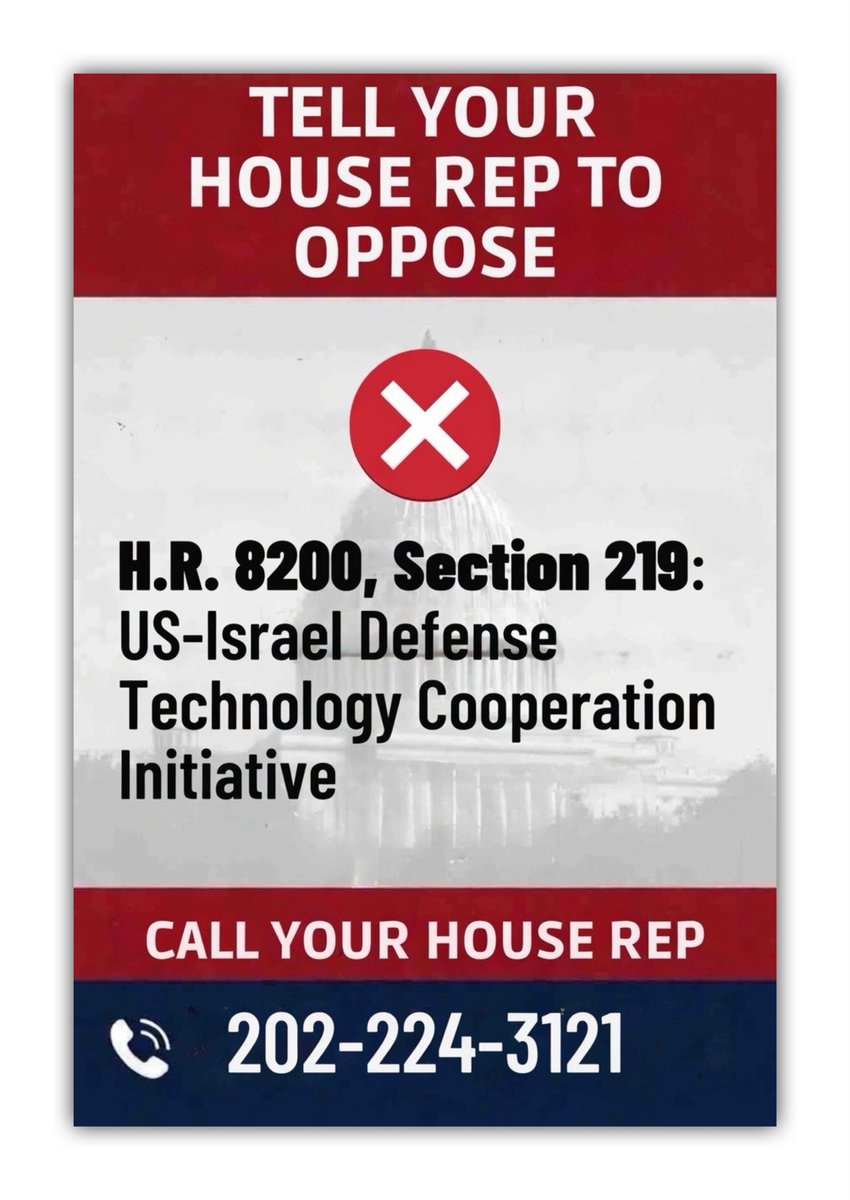
Tell Your House Rep to OPPOSE Section 219 (formerly 224) of H.R. 8200, the NDAA.
Tell them to support Thomas Massie’s Amendment to REMOVE Section 219.
Jun 15

The whole-of-government takeover by Israel is far worse than previously understood. America is handing over its most sensitive national security systems to Israel thru:
- presidential memo NSPM-12 (01:18)
- 5 Israel bills and (03:39)
- Pax Silica. (05:36)
This backdoor alliance floods US cyber, AI, crypto, and defense with Israeli tech, intel, and co-production while a known espionage powerhouse gains keys to the kingdom. (05:53)
Sovereignty is being sold out. Secrets are now at risk of total compromise.
15
208
353
6,564
RT @xIsraelExposedx: In many cases the children are unable to register what is happening to them from the shock, and end up dying from the…
1,494
Bebo 🇺🇸 retweeted

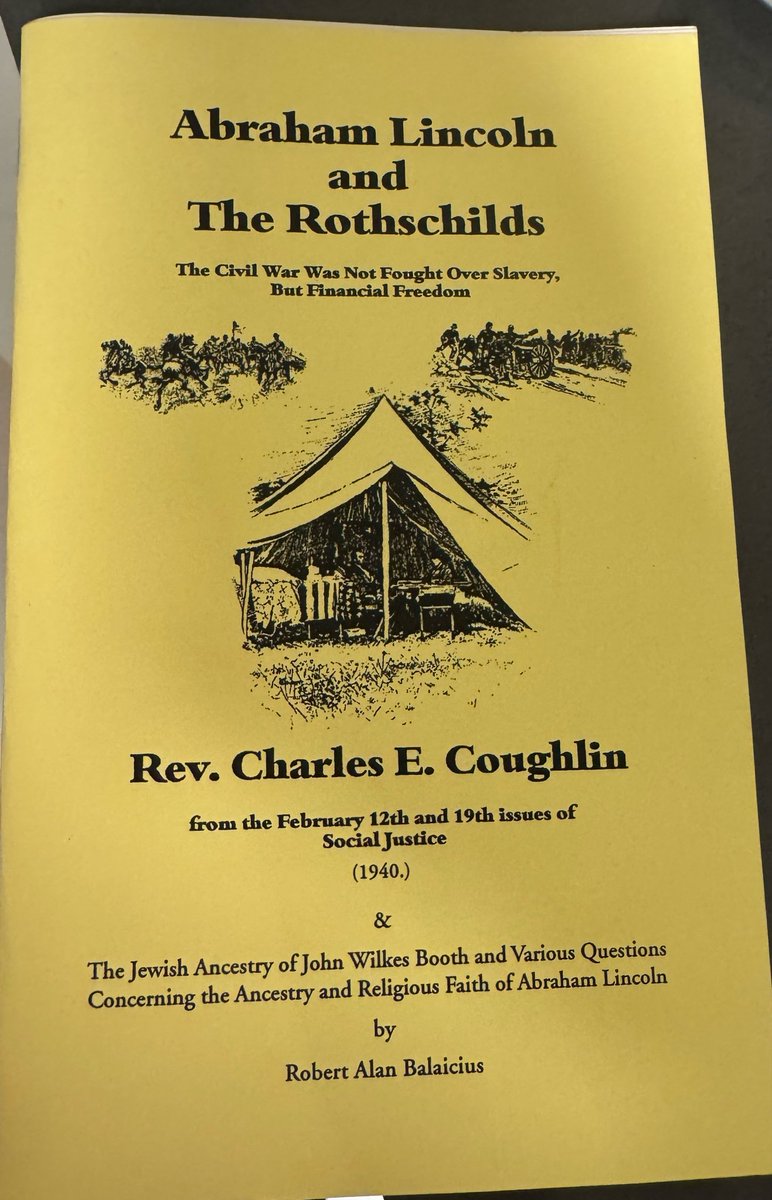
Abraham Lincoln and the Rothschilds: The Real Cause of the Civil War
Charles E. Coughlin (1940)
One of the most controversial and difficult-to-find Civil War conspiracy pieces ever published, this short work originated as two articles printed in Social Justice in February 1940. In just a few dozen pages, Coughlin presented a dramatic alternative narrative of the Civil War, arguing that the conflict was not primarily about slavery but was driven by international financial interests seeking profit, debt, and control.
President Abraham Lincoln challenged powerful banking interests when his administration issued hundreds of millions of dollars in government-backed “greenbacks” during the war rather than relying entirely on private lenders. Coughlin claimed this threatened the profits and influence of major European financiers, particularly the Rothschild family, and he cited an alleged 1863 letter warning that government-issued money could undermine the existing financial order. The pamphlet presents Lincoln’s monetary policies as the true source of conflict between the administration and international banking interests.
The book goes further, connecting these financial disputes to Lincoln’s assassination. It argues that powerful forces had a motive to remove a president who demonstrated that a government could finance itself without becoming dependent on private banking interests. Later reprints expanded the narrative with discussions of John Wilkes Booth, Lincoln’s ancestry, and other controversial subjects.
What makes it especially provocative is its focus on details that have fueled speculation for generations: the missing pages from Booth’s diary, the decision to try the accused conspirators before a military tribunal rather than a civilian court, the remarkable security failures that allowed Booth access to Lincoln, the disputed evidence against some defendants, and lingering questions about whether every participant in the conspiracy was ever identified. Coughlin presents these events as pieces of a larger hidden story involving finance, politics, and power.
He also highlights the little-known arrival of Russian naval fleets in New York and San Francisco during the Civil War, portraying Alexander II of Russia as an ally of the Union who allegedly helped deter foreign intervention at a critical moment in the conflict.
Whether viewed as a forgotten piece of political literature, a controversial monetary critique, or a classic example of twentieth century conspiracy writing, the pamphlet remains one of the most direct attempts to connect Lincoln, the Civil War, international banking, and the assassination into a single overarching narrative.
Nearly a century after its publication, it continues to circulate among collectors of rare and controversial historical works, ensuring that the debate surrounding its claims has never entirely disappeared.
91
778
2,469
64,315
Bebo 🇺🇸 retweeted

Jun 16
And so the Mossad false flag MO ripples on. First Australia, then Greece, Belgium, France, the Netherlands and the U.K. Now Canada.
Any minute now the Zionist regime will disclose that it was all done by the IRGC.
This is how Zionism works.

#BREAKING: Toronto police say they believe young people are being hired to carry out shootings at targets around Toronto, including Jewish schools and synagogues, and the U.S. consulate. cp24.com/local/toronto/2026/…
67
1,191
2,806
46,639
Bebo 🇺🇸 retweeted

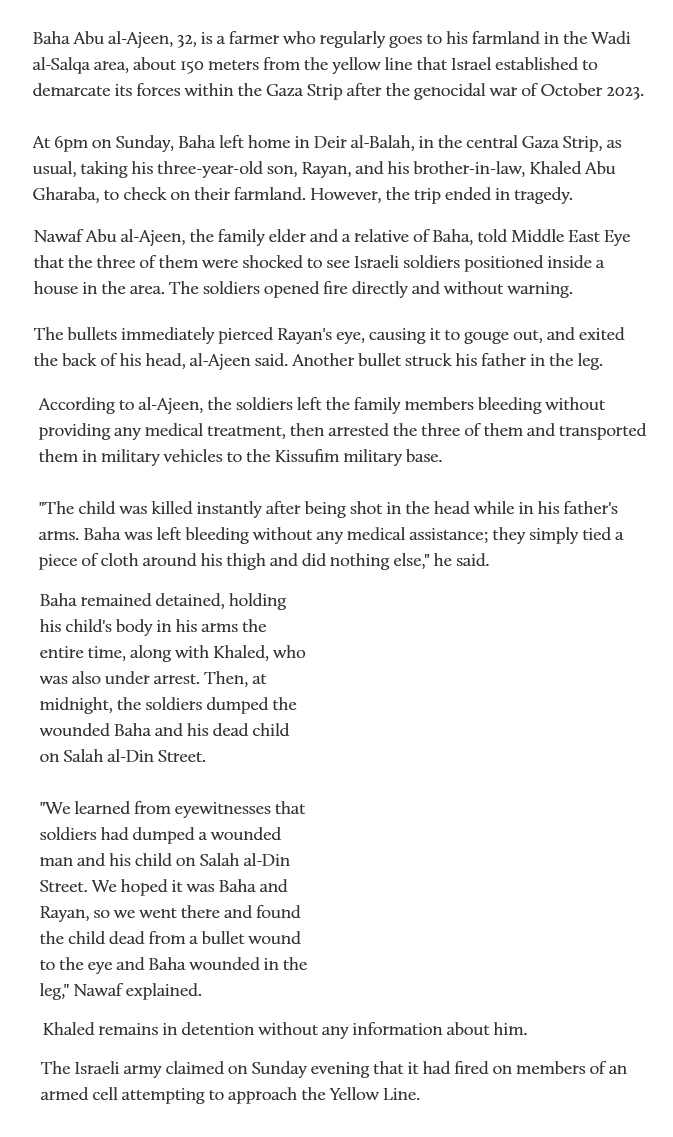
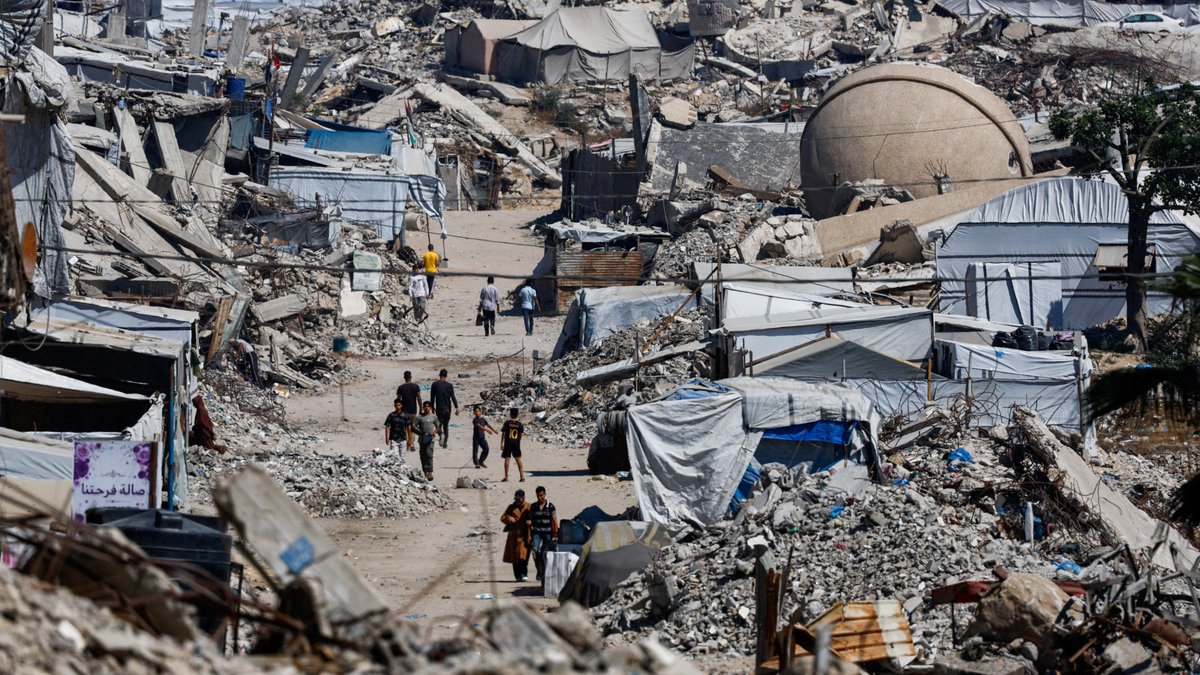
"Israeli army murdered child in Gaza and then dumped body on a roadside":
middleeasteye.net/news/pales…
Jun 17

"The bullet pierced the child's head, and he arrived deceased hours ago. The father is in stable condition with a leg injury and is receiving treatment"
- Al-Aqsa Martyrs Hospital spokesperson
middleeasteye.pulse.ly/6pikk…
2
161
233
3,609
Bebo 🇺🇸 retweeted

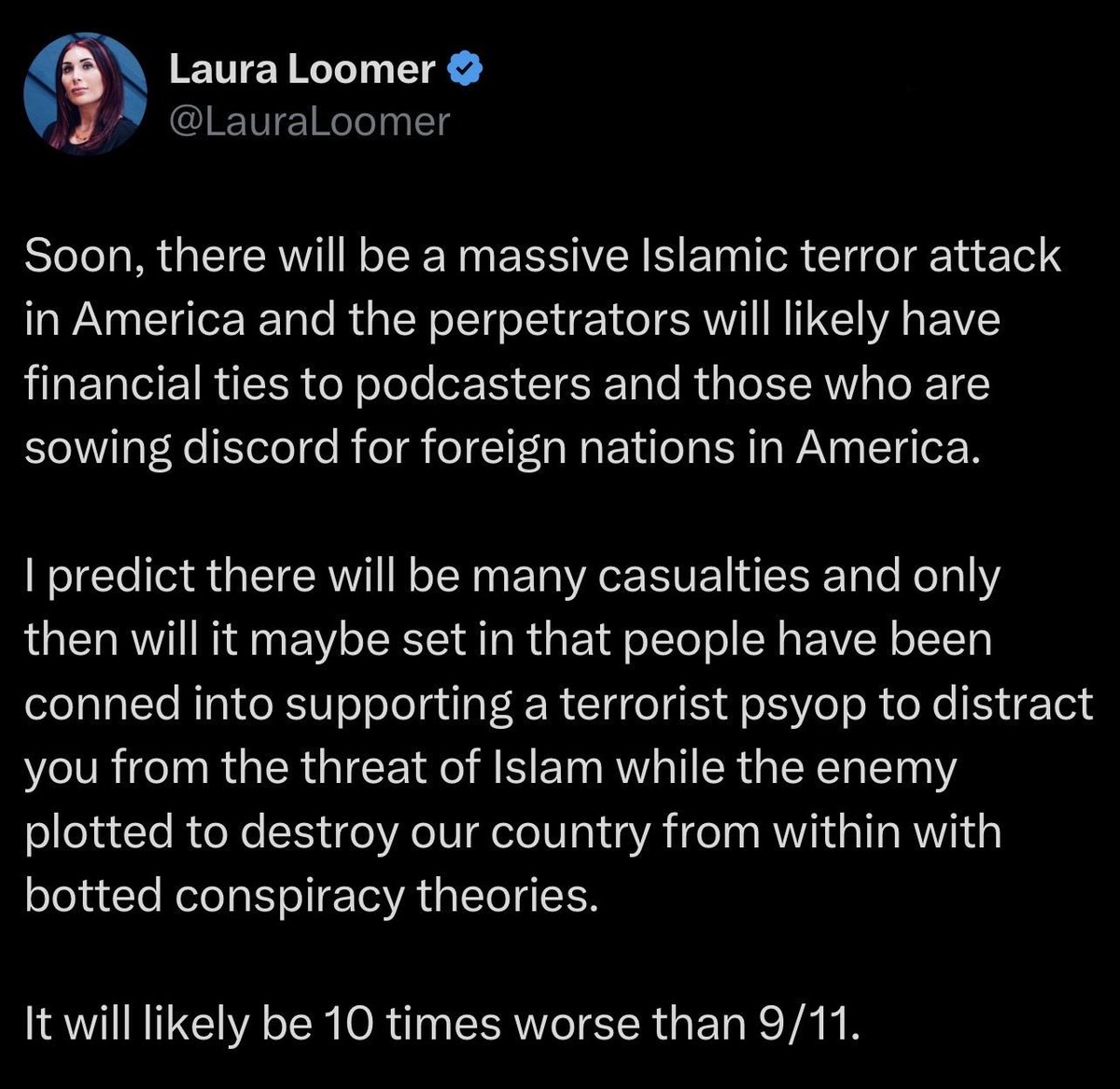
Everyone understandably gets a bit nervous when an agent of Israel starts threatening -- I mean, "predicting" -- a major mass casualty terrorist attack on American soil just days after the American President announces a deal that enrages all of Israel.

it’s the way this guy clearly WANTS an attack to happen that pisses me off more than anything
364
2,412
9,806
209,457
RT @doctor_rahmeh: The IOF just committed a new massacre targeting a group of civilians who were sitting on the beach in Khan Yunis, in the…
880
RT @Em21brave: *Don't see this as just another image from a war. See a child. A life taken too soon. A future that will never be lived. A l…
662
RT @xIsraelExposedx: Israel burned this child alive using white prosperous manufactured in the US. The way she screams & reaches upwards fo…
1,263
Bebo 🇺🇸 retweeted

WAR CRIME ALERT🚨🇮🇱
An Israeli soldier shot a journalist point-blank in the chest with live ammunition while he covered protests against a new illegal jewish settler outpost.
Western media will not report this.
144
5,001
8,773
80,732
Bebo 🇺🇸 retweeted

Israel got the war.
America got the bill.
The U.S. fired more than 200 THAAD interceptors defending Israel during Operation Epic Fury. That's roughly half of the Pentagon's entire inventory of that system. We also fired more than 100 SM-3 and SM-6 interceptors from Navy ships in the eastern Mediterranean.
Israel fired fewer than 100 Arrow interceptors and about 90 David's Sling interceptors.
One U.S. government official told the Washington Post that America fired roughly 120 more interceptors than Israel did and engaged twice as many Iranian missiles.
Each THAAD round costs $13 million. Lockheed Martin makes 96 of them a year. Replacements won't arrive until 2028 at the earliest.
Now here's the part that should make you stop.
Israel's defense budget is roughly $44 billion. That sounds like they're pulling their weight. What that number doesn't tell you is that the United States provided nearly $18 billion in military aid to Israel in a single fiscal year. Much of what Israel "spent" on this war was bought with American money, on American weapons systems, made by American defense contractors.
We funded their military. We burned through our missiles defending them. And now Congress is writing a $10.6 billion check to replace what the war consumed.
And while you were watching the war, Congress quietly passed Section 224 out of committee. It now goes to the full house. It would permanently merge U.S. and Israeli defense research, production, and procurement into a single structure, permanently, buried in the must-pass NDAA, shielded from the annual vote that currently gives Congress any leverage at all.
Israel got the war they lobbied for.
America got the bill.
And Congress is making sure we keep paying it forever.
That's not where I want my tax money going. How about you?
211
1,542
4,004
82,199
Bebo 🇺🇸 retweeted

Jun 16
ناشطة نرويجية تطلق حملة تستمر أسبوعًا للمطالبة بالإفراج عن الدكتور حسام أبو صفية، عقب قرار محكمة إسرائيلية تمديد اعتقاله دون توجيه تهم.
وتتضمن الحملة فعاليات يومية للتعريف بقضيته وقضية الطواقم الطبية الفلسطينية المعتقلة في سجون الاحتلال.
92
3,274
5,924
40,483
Bebo 🇺🇸 retweeted

Israël is the only "country" in the whole world that kidnap 8 years old boys from their school then put them in PRISON !
7
85
96
1,572
Bebo 🇺🇸 retweeted

This is Israeli terrorism and theft.
AND OWNERS HAVE TO PAY FOR ITS DEMOLITION.
📍West Bank, Palestine
16
333
407
5,459
Bebo 🇺🇸 retweeted

We travelled to a Sunni Muslim village just on the edge of Israel's "yellow line" of control in southern Lebanon
And uncovered shocking CCTV showing the moment Israeli soldiers shot dead an unarmed 17 year old boy on a street near his home during a raid
Muhammad had been due to graduate this year
The Israeli military told us it's looking into the incident

14
517
1,095
29,322

Bebo 🇺🇸 retweeted

Every day for a week, the children gathered at the refrigerator and called out to their mother. She never answered. She was inside it. 💔
Gaza Civil Defense spokesperson Mahmoud Basal recounts the account behind that scene, from Beit Hanoun in the early days of the genocide. A man there had solar power running in his home when Israeli occupation forces besieged the neighbourhood and opened fire on residents. His wife was preparing food inside the house, her baby of no more than six months in her arms, when an Israeli occupation sniper shot her directly. She fell to the floor with her child, and every attempt to revive her failed. Her husband tried to bury her outside, but the occupation army was in the area and he could not, and for a whole week her body stayed in the house with nowhere to lay it.
With every option impossible, the man placed his wife's body inside the refrigerator that ran on his solar system. He tried to lay it on its side to serve as a grave, and when that failed he left it upright, his wife inside, and tied the door shut with ropes so it would not open. That is where the children kept their vigil, beside their mother, hoping she might answer. Basal stresses this is a scene, not a story, a reality lived by one family in Beit Hanoun, and he says there are accounts in Gaza even harder than this one. His appeal is to the world's living consciences: protect humanity before it is too late.
mahmoud_basal88 (IG)
14
393
560
5,449