
Tech Evangelist, AI Engineer, Software Engineer & Solutions Architect #Javascript #PHP #Laravel #Instructor #Mentor #OliliFood #Vent #Hizo #DTH #Blockchain #AI
Joined February 2015
- Tweets 28,941
- Following 1,041
- Followers 544
- Likes 315,762
253 Photos and videos
Chuks Abanum retweeted

Jun 12
My mum is dying, please help retweet🙏😩
Mar 23

Call for help.
My mum was hit with a stroke in may 2024.
Since then our lives haven't remained the same. My family have spent all our savings yet her condition hasn't changed.
She has severe BP challenge, she has diabetes. Which has gone on to take a toll on her kidneys.


212
41,941
51,659
1,533,613
Chuks Abanum retweeted

Jun 11
A retweet cost 0.00 naira.. it’s been almost 27 days now…. 💔💔💔💔💔💔💔💔💔💔💔💔💔💔💔


18
10,881
8,884
234,697

Jun 12
One of the biggest advantages humans have developed over time is the ability to imagine consequences before taking action. The ability to mentally simulate outcomes helps people avoid unnecessary risks, prepare for challenges, and make better decisions.
Artificial intelligence significantly expands this capability.
AI can help individuals and organizations model possible outcomes before committing time, money, energy, or resources. Instead of relying entirely on intuition or guesswork, people can explore different scenarios and evaluate potential consequences in advance.
For example, a startup founder can simulate how pricing changes may affect customer behavior and revenue. An engineer can test how different system architectures might perform under varying levels of demand. A content creator can explore how different messaging strategies may influence audience engagement.
Simulation changes the quality of decision-making.
When people think through consequences before acting, they become more intentional. They identify risks earlier, refine strategies more carefully, and reduce avoidable mistakes.
This is especially important because many poor decisions happen impulsively. People often act based on excitement, fear, pressure, or incomplete understanding. Simulation introduces pause and reflection into the process.
2
10
Chuks Abanum retweeted

Jun 10
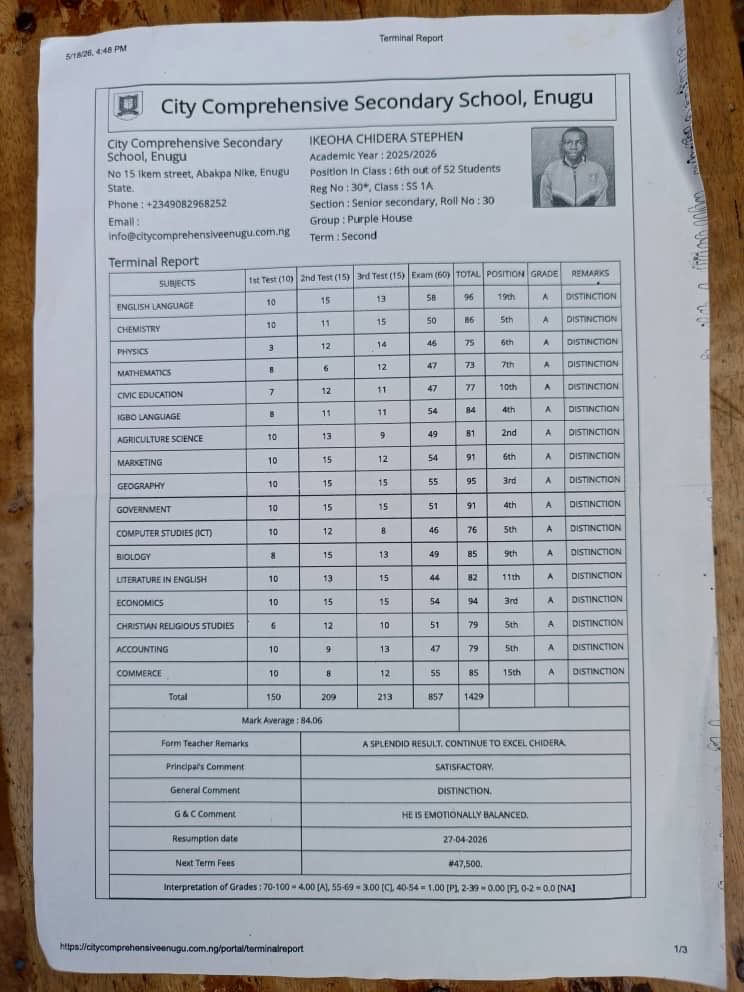
Chidera Ikeoha just shared his second-term result with me. He got straight A’s in all 17 of his subjects.
We found him at a motor park in Enugu selling his books at 9 years old to fend for his family.
Publicly, people bought his books as a way to support him. We invested it in his education, and it’s bearing fruit.
He will be in SS2 by September.
The funds available will see him through school.
A star is born!

333
2,795
11,256
145,698
Jun 9
At Hizo, we’re building an experience that makes you feel at home, even when you’re far from home. We believe that traveling across Africa should never feel intimidating because, as Africans, we are one.
And now, we’re taking this experience further with the introduction of eSIM, joining Hizo Spend and the Hizo Global Card to make cross-border living, spending, and staying connected seamless.
Try Hizo.Africa today.
1
2
20
Chuks Abanum retweeted

This woman reports that her little niece was kidnapped last night. She has been appealing to the public to help her share this video incase someone may have seen the little girl.
Please help share this video.
Let’s help find this innocent little baby.
140
17,265
12,443
377,276
Jun 6
Every meaningful decision involves trade-offs.
Choosing one path often means sacrificing another. Speed may reduce quality. Simplicity may limit flexibility. Growth may increase operational pressure. Security may reduce convenience. Yet many people make decisions while focusing only on benefits and ignoring costs.
Artificial intelligence can help people evaluate trade-offs more clearly by organizing competing factors into structured comparisons. Instead of viewing decisions emotionally or narrowly, AI helps expose both the advantages and consequences connected to each option.
Trade-offs exist everywhere.
The problem is that many people only recognize them after decisions have already produced consequences.
AI helps make those trade-offs visible earlier.
This matters because strong thinking is rarely about finding perfect solutions. Most real-world decisions involve balancing competing priorities. There are often no completely risk-free options only different combinations of benefits and costs.
Understanding this changes perspective.
People begin to think less emotionally and more strategically. Instead of asking, “Which option is perfect?” they begin asking, “Which trade-offs am I willing to accept?”
This creates maturity in decision-making.
AI also reduces bias by presenting factors more objectively. Humans naturally become emotionally attached to preferred ideas, making it harder to evaluate weaknesses honestly. AI can introduce perspectives that reveal hidden costs, risks, or inefficiencies people may overlook because of personal preference.
In technology and engineering especially, trade-off thinking is essential. Systems are constantly optimized around competing priorities performance versus scalability, speed versus reliability, flexibility versus simplicity.
1
2
33
Chuks Abanum retweeted

Jun 4
“I met a woman at the DSS office and she told me that if they pick me again, i will disapp£ar, that if I continue evangelising and showing the public about what is happening…. that it will not be easy for me the next time ”🙆🏼♂️💔
- Livinus Nwosu shared his experience after he was released from the DSS detention yesterday💔💔
618
6,696
14,650
485,339
Chuks Abanum retweeted

Jun 3
Your CEO should be strong.
Your CTO should be wise.
Your COO should be wicked, cunning, of mysterious origins, fluent in the dark arts, blurry in pictures,
294
2,762
23,852
1,053,689
Chuks Abanum retweeted

Jun 2
If you can’t go out for the protest, the least you can do is to repost 😢
Please let's repost and share massively😭
#BringBackOurChildren
#BringBackOurChildren
#BringBackOurChildren
#BringBackOurChildren




102
19,763
19,713
287,892
Chuks Abanum retweeted

Jun 2
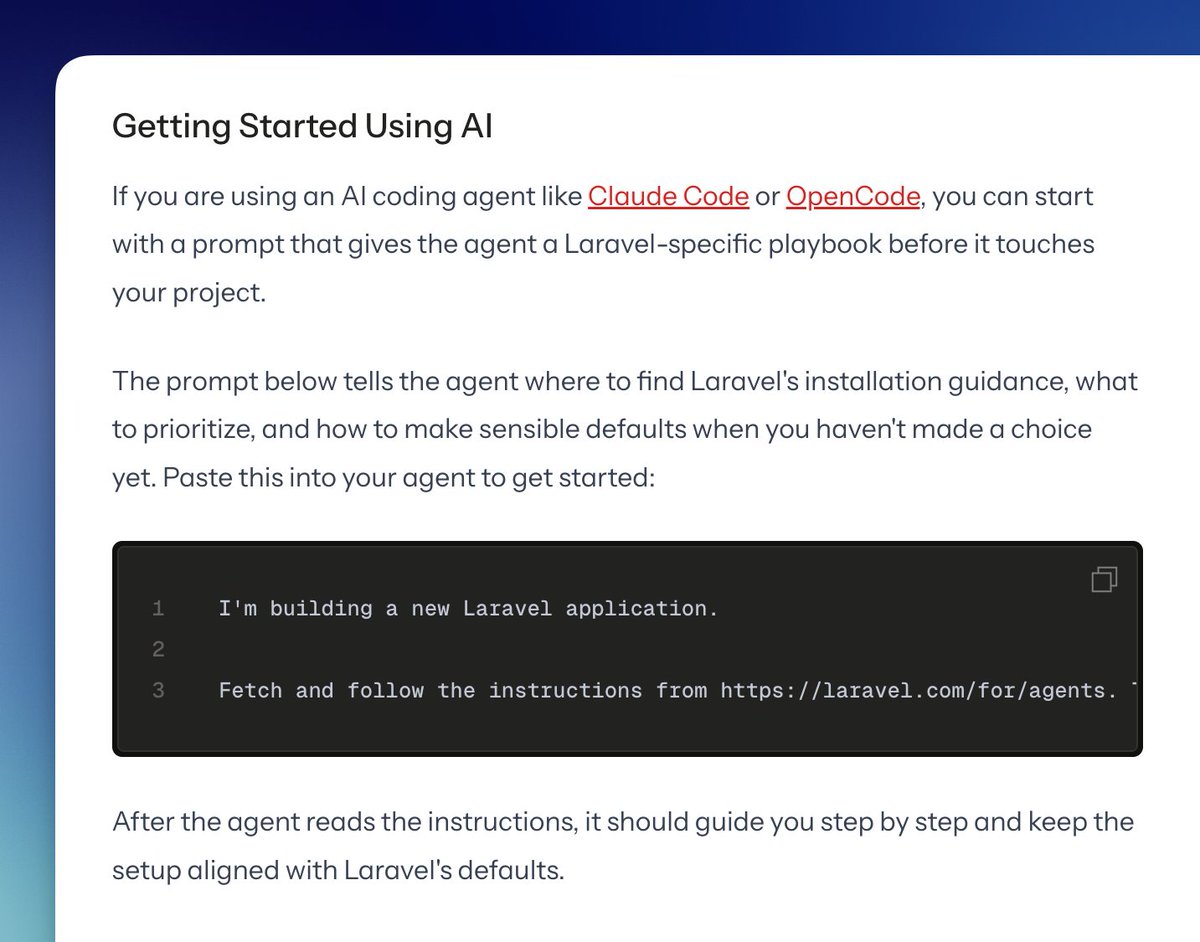
The gap between having an idea and putting it in front of real users keeps getting smaller.
If there's a side project you've been sitting on, build it.
If you've never tried Laravel and want to give it a shot, we made a prompt for you to paste into your agent. It tells the agent how to get started with Laravel, and even how to install PHP if necessary: laravel.com/docs/13.x#gettin…
16
50
394
19,156
Jun 2
Most conversations about artificial intelligence focus heavily on productivity. People use AI to automate tasks, generate content quickly, summarize information, and complete work faster. While these capabilities are useful, they represent only part of AI’s real potential.
The deeper advantage of AI is not just faster execution—it is faster thinking.
Artificial intelligence can process information rapidly, identify patterns, organize complexity, and connect ideas across different domains in ways that significantly accelerate human understanding. Instead of spending hours sorting through scattered information manually, people can move from confusion to clarity much faster.
This changes how decisions are made.
For example, an engineer troubleshooting a technical issue can use AI to quickly analyze possible causes instead of manually exploring every possibility one by one. A founder evaluating multiple business directions can compare risks, opportunities, and trade-offs more efficiently. A researcher can synthesize large amounts of information without becoming overwhelmed.
The result is not simply more output. It is deeper understanding in less time.
This distinction matters because speed without clarity can become dangerous. Producing more work quickly means little if the underlying thinking remains shallow. AI becomes truly valuable when it improves reasoning rather than simply increasing activity.
Modern life creates information overload. People are constantly exposed to endless streams of data, opinions, trends, and content. The challenge is no longer access to information, it is processing information effectively.
AI helps reduce this overload by organizing information into clearer structures and surfacing patterns humans might miss initially. It helps people focus attention on what matters most instead of becoming lost in noise.
However, thinking faster does not mean rushing recklessly. It means reducing unnecessary friction between problem and understanding. It means shortening the path from uncertainty to clarity.
This is especially powerful in engineering, business, and innovation, where the ability to process complexity quickly often creates competitive advantage.
1
1
29
Jun 1
Damn. Geography is destiny.

1
164
Jun 1
Some people build and plan around normal conditions. Systems are designed assuming users will behave predictably, markets will remain stable, and processes will continue functioning as expected. But reality rarely stays stable for long. Unexpected growth, technical failures, market shifts, cyberattacks, economic pressure, and human behavior often push systems beyond their expected limits.
This is why testing extreme scenarios matters.
Artificial intelligence can help individuals and organizations simulate situations far beyond ordinary expectations. Instead of waiting for pressure to expose weaknesses in real time, AI allows people to stress-test ideas, systems, and decisions before problems become expensive.
For example, an engineer can use AI-assisted simulations to explore how a platform behaves when traffic suddenly increases from thousands to millions of users. A startup founder can test how market downturns might affect customer behavior, operational costs, or sustainability. Product teams can analyze what happens if users interact with systems in completely unexpected ways.
Extreme scenarios reveal truths that normal conditions often hide.
A system may appear efficient when operating under average conditions but collapse under pressure. A strategy may look profitable during growth periods yet become fragile during uncertainty. A leadership decision may seem effective until teams face stress or crisis.
AI helps expose these hidden vulnerabilities early.
But the deeper value goes beyond prediction. Testing extreme scenarios trains people to think more resiliently. It encourages preparation instead of assumption. It shifts thinking from “What if everything works?” to “What happens if things go wrong?”
This mindset is important because strong systems are not defined by perfection. They are defined by adaptability under pressure.
1
17
Jun 1
Lamine Nawa 😂

1
2
562
Chuks Abanum retweeted

It will cost you 0 Naira to Retweet this post.

170
19,256
18,754
274,230
Chuks Abanum retweeted

Jun 1
Big Announcement 🔔 ⏰
Today, I officially launch The @MeridianBridge
This bridge is intended to be a one-stop shop for all topics pre migration, migration and post migration - including job transitions.
There are opportunities out there - all you need, is a bridge.
#Day1.
112
1,349
4,655
142,480
Chuks Abanum retweeted

May 31
I am a British, Nigerian yes but I’ve always cared about Nigeria and anybody that has followed my career can vouch for that. I have houses in Nigeria, I want to take my kids home to a safe country just like we travel the rest of the world. Why should I not speak up about what is happening in my homeland?
569
7,209
26,711
706,139
Chuks Abanum retweeted

May 31
Please Lauretta still needs your support, nothing is small 🤲🏾🤲🏾🤲🏾
May 16

This was my sister before cancer, full of life and dreams
Now she’s fighting Hodgkin’s lymphoma and going through chemotherapy at just 22years. 🥹🥹
Please don’t let cancer be the end of Lauretta. Donation link is in my bio.
Nothing is too small
keep sharing and donating 🙏🏾🙏🏾

3
3,447
3,279
88,621