BioChip Labs is a CLIA-certified lab that offers proprietary microfluidic assays for applications from pre-clinical drug screening to disease monitoring.
- Tweets 7
- Following 120
- Followers 49
- Likes 13

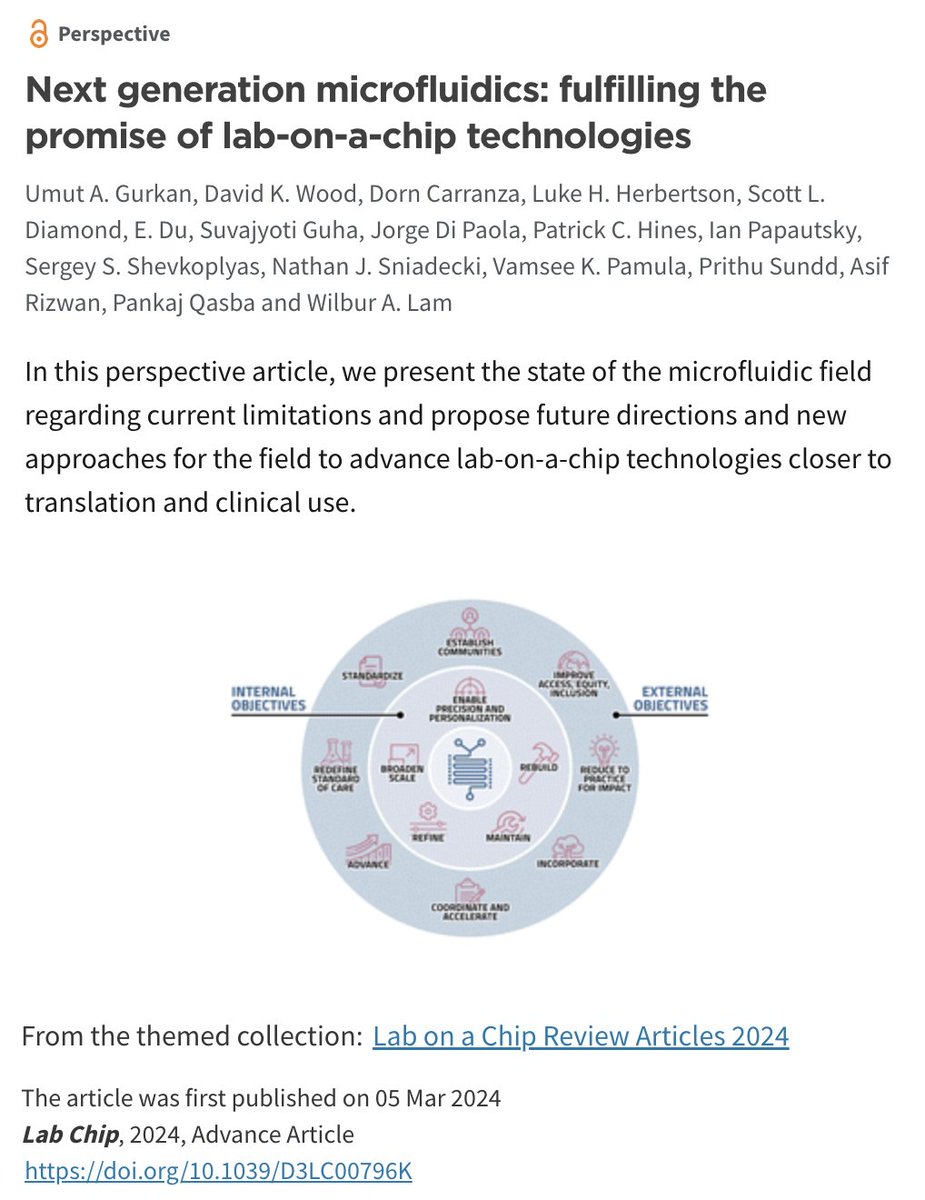
ALT Microfluidic lab-on-a-chip technologies enable the analysis and manipulation of small fluid volumes and particles at small scales and the control of fluid flow and transport processes at the microscale, leading to the development of new methods to address a broad range of scientific and medical challenges. Microfluidic and lab-on-a-chip technologies have made a noteworthy impact in basic, preclinical, and clinical research, especially in hematology and vascular biology due to the inherent ability of microfluidics to mimic physiologic flow conditions in blood vessels and capillaries. With the potential to significantly impact translational research and clinical diagnostics, technical issues and incentive mismatches have stymied microfluidics from fulfilling this promise. We describe how accessibility, usability, and manufacturability of microfluidic technologies should be improved and how a shift in mindset and incentives within the field is also needed to address these issues.