
Joined January 2019
- Tweets 1,221
- Following 380
- Followers 169
- Likes 1,083
Photos and videos
Pinned Tweet

16 Jan 2025
Gm Frens!
Have you ever wondered how your stale Bitcoin and Its Native Assets work for you when you are sleeping? or how can your Bitcoin Native Asset holdings help you buy new Bitcoin Native Assets and maximise your yields? Then, you are on the right post.
Introducing @ChachingDgtl 🪅
Join the waitlist and Check your on-chain score! More Info coming soon!
16 Jan 2025

Introducing ChaChing – The first Decentralised Bank on Bitcoin!
Lend, borrow, and Earn on your Bitcoin assets with Peer to Pool Lending on the Bitcoin Base Layer.
Time to make Bitcoin go Cha-Ching! 💸💰🟧
1
5
287
Abhishek Police Patil (pats.ord) retweeted

May 9
$510M in token unlocks hitting this week while 61% of Americans say money is their #1 life stressor.
You can't meditate your way out of a RAIN cliff unlock.
But you CAN stop checking charts at midnight like it's therapy.
It isn't. 🌑 #crypto #mindset
1
2
97
Abhishek Police Patil (pats.ord) retweeted
May 10
"Passive income" is just a second job you paid to create.
The gurus sold you freedom. You bought a content calendar, a Shopify store, and a 3am anxiety spiral.
Real wealth is boring: index funds, low expenses, time. No course needed. 🧱
#PassiveIncome #PersonalFinance
1
2
137
Abhishek Police Patil (pats.ord) retweeted
May 11
AI was supposed to give you your life back.
Instead Jensen Huang and every Fortune 500 CEO used it to justify asking for MORE of it.
You didn't get a shorter week. You got a faster treadmill.
The tool that was meant to free you is being used to extract more from you. 🧵
1
1
117
Abhishek Police Patil (pats.ord) retweeted
May 11
61% of people say money is their #1 stressor.
Meditation app downloads are at all-time highs.
DeFi is up overnight. Token unlocks hitting. Markets don't pause for your breathwork.
Peace of mind isn't found in a 10-minute session.
It's found in a diversified portfolio. 🧘♂️📉
2
2
121
Abhishek Police Patil (pats.ord) retweeted

Mar 28
Test your IPL IQ on Matiks.
5
6
36
3,261
Abhishek Police Patil (pats.ord) retweeted
6 Jul 2025
ChaChing Testnet Update:
✅1.5M transactions
✅ 20K wallets
✅ 1,500 BTC borrowed
✅ 5,700 BTC staked
Zero bridges. Zero wrappers.
All natively on Bitcoin.
Now, we’re gearing up for a stronger, battle-tested Mainnet with @ArchNtwrk
Safer vaults. Real yield. Real scale.
6
5
25
3,054
Abhishek Police Patil (pats.ord) retweeted
26 Jun 2025
Majority Bitcoin sits idle — not earning, not moving.
No native yield. No non-custodial access to liquidity.
But what if you could generate real yield on BTC —
🟠 Without wrapping
🟠 Without bridges
🟠 Without giving up your keys
Would native Bitcoin yield change the game?
85%
YES! Serious Capital here
8%
No! Yield = Risk
8%
BTC is not for yield
13 votes • Final results
1
3
11
2,047

Glory to the builders
@PeriwinkleID
@SergeSats
@LH_exe @Saturn_btc
@gzani @VoltFiLabs
@girlintheverse
@codenameduch @arkova_1
@_leboom_ @BitPats @ChachingDgtl
@AdrenaProtocol
3
14
2,234
Abhishek Police Patil (pats.ord) retweeted

12 Jun 2025
@chachingdgtl is a Peer to Pool lending protocol on Native Bitcoin. We are live on testnet and plan to expand to money markets across different ecosystems, expanding native Bitcoin Liquidity to these ecosystems as well as a Chaching Card which can be used across PoS merchants.
2
4
1,147
Abhishek Police Patil (pats.ord) retweeted

10 Jun 2025
The @ArchNtwrk ecosystem is growing fast.
Teams building already:
@Saturn_btc
@ChachingDgtl
@ordeez_io
@VoltFiLabs
@asignaio
@BimaBTC
@funkybit_fun
Who else is building? Tag your project.
18
13
101
7,105
Abhishek Police Patil (pats.ord) retweeted
29 May 2025
@chachingdgtl is a Peer to Pool lending protocol on Native Bitcoin. We are live on testnet and plan to expand to money markets across different ecosystems, expanding native Bitcoin Liquidity to these ecosystems as well as a Chaching Card which can be used across PoS merchants.
1
7
19
1,957
Abhishek Police Patil (pats.ord) retweeted

27 May 2025
New token sale open
@ChachingDgtl
Access details: discord.gg/vvvdotnet

41
57
319
52,879
Abhishek Police Patil (pats.ord) retweeted
27 May 2025
Vegas, we’re coming in hot!
ChaChing CEO @_leboom_ will be speaking at BTC All-In Summit Las Vegas where the future of Bitcoin-native capital markets takes the stage alongside @TheBitcoinConf
He’ll be sharing how we’re turning idle BTC into productive capital — without bridges, without custodians, and without compromise.
If Bitcoin is your treasury, ChaChing is your yield strategy.
Register 👇

8
9
99
4,284
Abhishek Police Patil (pats.ord) retweeted
25 May 2025
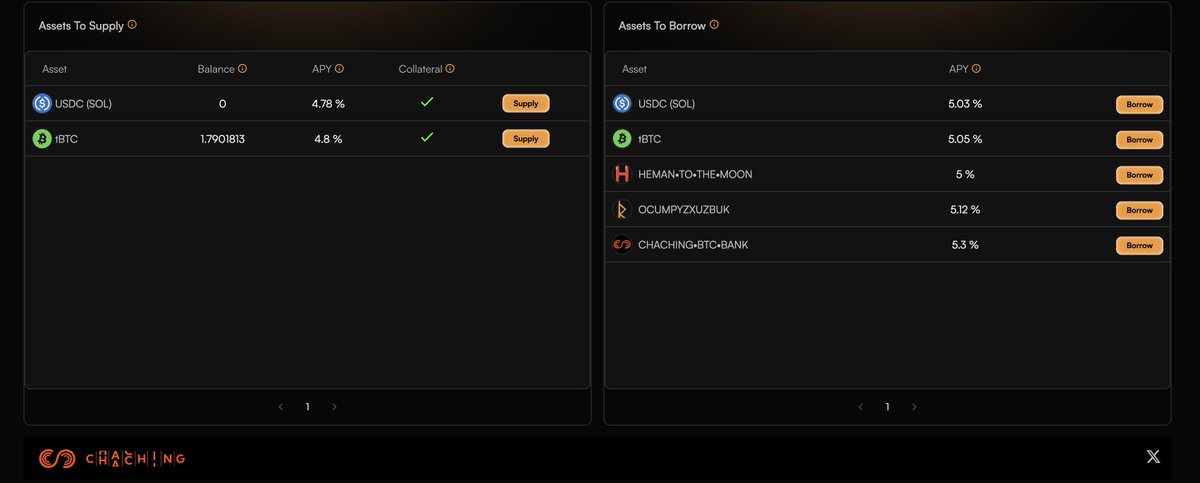
We're about to flip the switch on something Bitcoin has never seen before.
USDC coming to Bitcoin?
@circle
Sneak Peek👀
22
18
89
7,346
Abhishek Police Patil (pats.ord) retweeted
23 May 2025
New token pledge now open: @ChachingDgtl
Access details: discord.gg/vvvdotnet

60
58
371
122,172
15 Apr 2025
3/75
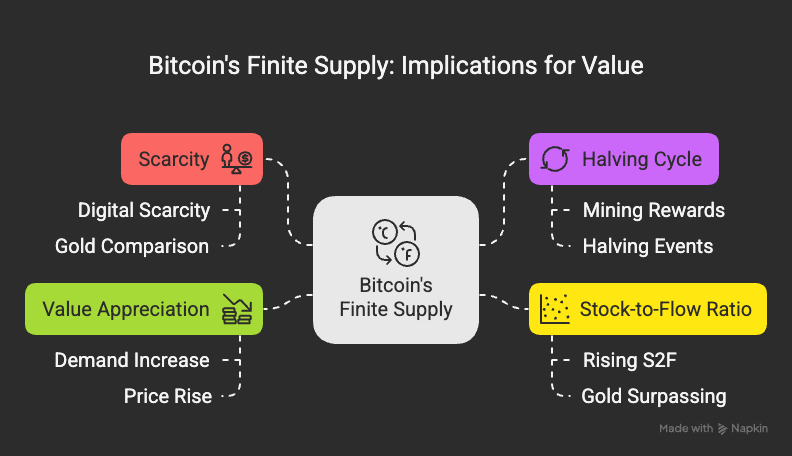
The Finite Supply of Bitcoin: Implications for Value
Bitcoin’s 21 Million Hard Cap is often called “digital gold,” largely because it has a strictly finite supply. By design, only 21 million BTC will ever be created. This hard cap is written into Bitcoin’s code and enforced by the network’s consensus rules. New bitcoins are minted as mining rewards, but that reward is cut in half roughly every four years in an event known as the halving. Starting at 50 BTC per block in 2009, the reward fell to 25 BTC, then 12.5, and so on – as of 2024, it’s down to 3.125 BTC per block and will keep halving. This predictable decline will result in the final Bitcoin (technically, the final fractions of a Bitcoin) being mined around the year 2140. Over 19 million BTC have already been mined, and >90% of all bitcoins that will ever exist are circulating today. The remaining <10% will be mined slowly over the next century, approaching the 21 million limit asymptotically. This built-in scarcity starkly contrasts fiat money, where new units can be created at any time.
Scarcity: Bitcoin vs Gold vs Fiat – To understand Bitcoin’s value, it helps to compare it to gold and fiat currency. Gold is historically valuable because it’s scarce and hard to produce – the supply of gold grows only ~1-2% per year through mining. In economics, a key metric for scarcity is the stock-to-flow ratio (S2F): the ratio of total existing supply (stock) to the new supply mined each year (flow). Gold has one of the highest S2F ratios of any commodity (around 60), meaning at current rates, it would take ~60 years to double the gold supply. Bitcoin started with a lower S2F, but thanks to the halving schedule, its S2F keeps rising. After the 2024 halving, Bitcoin’s S2F is set to surpass gold’s – fewer new bitcoins are being produced relative to the existing stock, making it increasingly scarce. Unlike gold (or any previous asset), Bitcoin’s maximum quantity is fixed. No matter how much demand rises, no more than 21,000,000 BTC can ever exist. As one author put it, Bitcoin is “the first commodity in history that has a fixed supply… when the demand rises, the price must rise as well”. On the other hand, fiat currencies have elastic supplies controlled by central banks. Governments can print money to stimulate the economy or fund deficits – effectively increasing supply and diluting value. Recent history provided a vivid example: In 2020, the U.S. Federal Reserve’s response to the pandemic caused the M2 money supply to jump by roughly 18% in a single year (almost one in five dollars in existence was created in 2020 alone). Fiat inflation like this has few limits, whereas Bitcoin’s supply is provably capped and cannot be arbitrarily expanded. As Bitcoin’s creator Satoshi Nakamoto famously observed: “The central bank must be trusted not to debase the currency, but the history of fiat currencies is full of breaches of that trust.” In Bitcoin, no such trust is required – the monetary policy is baked into code.
Halvings and Stock-to-Flow – Bitcoin’s programmed scarcity is achieved through its halving cycle. Approximately every 210,000 blocks (about four years), the network automatically halves the block reward that miners receive. This event, known simply as the Bitcoin Halving, ensures that the rate of new BTC creation slows over time, following a geometric series. The purpose is to emulate the extraction of a finite resource (like mining gold that becomes progressively harder to find). Each halving reduces Bitcoin’s annual inflation rate and increases its stock-to-flow ratio. For example, in 2012 (when the first halving occurred), Bitcoin’s annual supply growth dropped from ~7% to ~3.5%. After the 2020 halving, growth was ~1.8%, and after 2024, new supply is growing under 1% per year – lower than gold’s supply growth. This steadily rising S2F has led to models that attempt to quantify Bitcoin’s value based on its scarcity. A well-known (if controversial) Stock-to-Flow model developed by analyst PlanB treats Bitcoin like precious metals, suggesting that as scarcity increases, price tends to rise in proportion. While reality is complex and no model is perfect, the intuition is straightforward: when an asset’s new supply gets ever smaller relative to its existing supply, its value increasingly hinges on demand. Historical trends seem to support this – each past halving has preceded a significant Bitcoin bull market as reduced issuance meets growing demand. In fact, after the 2012 halving, Bitcoin’s price rose about 80× within a year; after 2016, it climbed 4×; and 16 months after the 2020 halving, it was up over 600%. Those are extreme jumps, but they illustrate how markets respond to a drop in available new supply. Investors often anticipate these supply squeezes, which contribute to Bitcoin’s notorious volatility around halving cycles.
Implications for Value – Bitcoin’s finite supply has deep economic and philosophical implications. In basic economic terms, if an asset has a fixed supply and demand for it increases, the only way the market can equilibrate is through price appreciation. Bitcoin’s design deliberately creates a digital scarcity that mirrors the scarcity of gold but with even more rigidity. “As a thought experiment, imagine there was a base metal as scarce as gold but with… one special, magical property: it can be transported over a communications channel” – Satoshi Nakamoto. With these words, Bitcoin’s inventor likened BTC to an ultra-scarce resource that, unlike gold, is teleportable via the internet. We now have a form of money that is not backed by gold – it is gold’s digital analog in terms of limited supply. This has led some to call Bitcoin “Gold 2.0” or “digital gold.” Every bitcoin is divisible into 100 million satoshis, so even if one coin becomes extremely valuable, it’s practical to use in tiny fractions – no need to worry that 21 million units might be “too few” for a world currency. Additionally, Bitcoin’s monetary policy is transparent and programmatic. There’s no central bank meeting deciding to “print more” BTC; the issuance schedule was set from day one and is known to everyone. This predictability instills confidence that Bitcoin won’t suffer sudden dilution or policy whims. It’s a rules-based monetary system – often admired by those who are wary of human mismanagement in traditional finance.
Value Appreciation and Investment Perspectives – Many proponents argue that Bitcoin’s capped supply underpins its long-term value and makes it an attractive asset, especially in an era of aggressive fiat inflation. Legendary investor Paul Tudor Jones, for instance, made headlines when he revealed he was buying Bitcoin as an inflation hedge. Comparing cryptocurrencies, he famously wrote, “The best profit-maximizing strategy is to own the fastest horse… If I am forced to forecast, my bet is it will be Bitcoin.”. His rationale: With central banks printing trillions of new dollars, an asset with a built-in supply limit could be the “fastest horse” to outrun inflation. Another striking fact: there are around 58 million millionaires in the world today, but only 21 million bitcoins to ever existed. Not even every millionaire can own one whole BTC – this simple comparison highlights just how scarce Bitcoin is relative to global wealth. And since some BTC have been permanently lost over the years (estimates suggest up to 20% of mined coins are lost or inaccessible), the effective supply is even tighter. This scarcity drives a HODL mentality (holding for the long term) among many Bitcoiners, who believe that as adoption increases, the fixed supply will translate into higher value per coin. It’s a game of supply and demand at the most fundamental level.
Digital Scarcity & Philosophical Shift – Beyond economics, Bitcoin’s finite supply embodies a philosophical shift in how we view money. It introduced the concept of programmed scarcity – scarcity guaranteed not by the physical difficulty of mining (as with gold) or by trust in an institution (as with fiat) but by open-source code and decentralized consensus. This represents a new kind of monetary policy: one set by mathematics and agreed upon by network participants rather than by governments. Some economists and thinkers see this as an evolution of money itself. With Bitcoin, monetary inflation is not a policy tool but a scheduled event gradually tending toward zero. In a sense, Bitcoin took the monetary principles of sound money (like gold) and encoded them for the digital age. It solved the age-old problem of digital duplication – you can’t copy/paste bitcoins arbitrarily – creating true digital scarcity for the first time. Eric Schmidt, former Google CEO, marveled that “Bitcoin is a remarkable cryptographic achievement… The ability to create something which is not duplicable in the digital world has enormous value”. This “not duplicable” property means trust is shifted: we trust the code and network rules, not a central issuer, to maintain scarcity. The implications are profound. It means a person or business can opt to hold wealth in an asset that no central bank can debase, and that scarcity is enforced by the very users of the network running the Bitcoin software. This democratization of monetary control is why Bitcoin is often associated with a kind of financial freedom or sovereignty.
Takeaway – Bitcoin’s finite supply is more than just a number. It’s a fundamental feature that influences how people perceive and use Bitcoin as a store of value. In the context of Bitcoin lending (the theme of our series), understanding the hard cap is crucial: lenders and borrowers know that new supply is limited, which can impact interest rates, collateral values, and long-term confidence. In the upcoming days, we’ll explore how this scarcity-driven value proposition plays into lending markets. For now, remember that Bitcoin’s 21 million limit creates an absolute scarcity: a digitally enforced limit that has never existed in money before. As Satoshi envisioned, it’s like a precious metal with a “magical property” – it can be sent anywhere in the world, yet remains scarce. That combination of scarcity portability underpins Bitcoin’s value and arguably makes it a unique asset in the global financial landscape. As more people appreciate that uniqueness, the theory is that demand will keep rising – and with a capped supply, basic economics suggests value should follow. In Bitcoin’s short 14-year history, this dynamic has played out dramatically, and it’s why so many in the community repeat the mantra: “21 million is non-negotiable.” Each bitcoin’s finite nature is a key reason people hold it, borrow against it, and yes, lend it – because they trust that its value won’t be inflated away. In sum, Bitcoin’s finite supply imbues it with a built-in scarcity akin to gold, engineered for the digital era, and this scarcity has powerful implications for its long-term value.
#Bitcoin
1
55
11 Apr 2025
2/75:
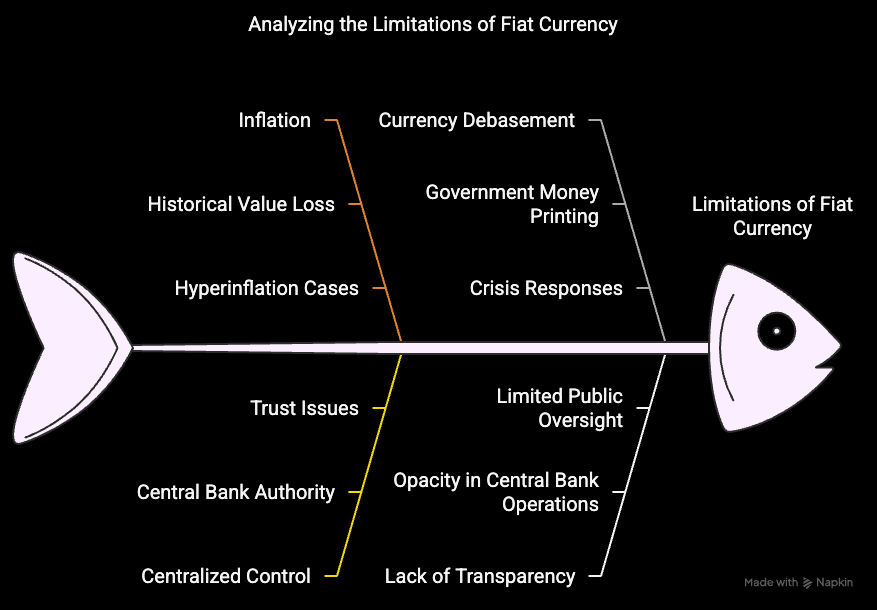
Why Bitcoin? Understanding Its Role in Modern Finance
The Problems with Fiat Currency
Modern fiat currencies (like the dollar or euro) come with significant limitations. Inflation steadily erodes their purchasing power – for instance, the U.S. dollar has lost about 96% of its value since 1913. History is filled with more extreme examples of currency debasement: Weimar Germany in 1923, Zimbabwe in the late 2000s (where prices doubled daily at one point), and more recently, Venezuela (annual inflation over 65,000% in 2018). These cases show how governments, when faced with crises or debt, often resort to printing money, devaluing the currency in the process. Traditional money is also completely centralized – a handful of officials or central bankers control the money supply and monetary policy. This centralized control means citizens must trust those authorities not to overspend or debase the currency, a trust that has been breached many times. As Bitcoin’s creator Satoshi Nakamoto put it: “The root problem with conventional currency is all the trust that’s required to make it work. The central bank must be trusted not to debase the currency, but the history of fiat currencies is full of breaches of that trust.” Lack of transparency compounds this issue: central banks operate behind closed doors, and decisions like money-printing or bank bailouts often emerge with little public oversight. (In fact, Satoshi famously embedded a newspaper headline about bank bailouts into Bitcoin’s very first block as a commentary.) The fiat system has flaws – inflation, currency debasement, centralized control, and opacity – that set the stage for a new kind of money.
Bitcoin’s Solution: Hard Money Principles
Bitcoin was designed as a direct response to these monetary problems. First and foremost, it has a fixed supply: there will only ever be 21 million bitcoins in existence, written into its core code. No central authority can decide to issue more. This hard cap makes Bitcoin immune to the inflationary money-printing that plagues fiat currencies – no one can “dilute” your Bitcoin by creating new units out of thin air. In practical terms, Bitcoin is often compared to digital gold because of its scarcity, but unlike gold (whose supply can still increase through mining), Bitcoin’s supply is absolutely capped and transparent. Everyone knows the issuance schedule and total supply at any moment because all issuance and transactions are public on the blockchain. Bitcoin is also decentralized. Instead of a central bank or government, it is secured and governed by a global network of participants (miners, nodes, developers) with no single point of control. Changes to Bitcoin’s rules require broad consensus across this network – for example, altering the 21 million cap is effectively impossible without the unanimous agreement of thousands of independent nodes. This decentralization means no single actor (not even a government) can arbitrarily censor transactions, seize accounts, or manipulate the monetary policy. It flips the script of monetary power: Authority is distributed among users and code rather than vested in a central institution. In Bitcoin’s system, “In Code We Trust” replaces “In Central Bank We Trust.” Another pillar of Bitcoin’s design is transparency. Every Bitcoin transaction and the creation of every new coin are recorded on a public ledger (the blockchain) that anyone can inspect in real time. The blockchain is immutable – once a block of transactions is added, it cannot be altered or erased. This openness allows anyone, anywhere to verify the total supply and audit the system’s integrity, rather than having to rely on quarterly reports or government statements. Such transparency is a stark contrast to traditional finance, where the true extent of money printing or the health of bank balance sheets can be murky. On Bitcoin’s network, anyone with an internet connection can verify how much Bitcoin exists (approximately 19.3 million today, heading toward 21 million) and watch every transaction (pseudonymously) as it occurs. This “don’t trust, verify” ethos injects a level of accountability and predictability into money that fiat systems simply don’t offer. Bitcoin is also programmable money. Because it’s purely digital, it can be infused with code to enable complex financial functions. Bitcoins can be divided into tiny units (satellite fractions of a cent) and transacted with programmable conditions. For example, one can create a multi-signature wallet that requires, say, 3 out of 5 people to approve a transaction or set up an automatic payment that unlocks on a future date. Such features are built into Bitcoin’s scripting language. This programmability means we can do things like escrow services or conditional payments natively on the Bitcoin network, without needing a bank or lawyer as ma iddleman. It paves the way for innovations like Bitcoin lending and decentralized finance, where code enforces the rules instead of institutions. In short, Bitcoin behaves like “smart” money – it’s not just a static store of value but also a platform for building new financial tools and services.
Digital Gold: Bitcoin as a Modern Store of Value
Because of these properties – scarcity, decentralization, and transparency – Bitcoin has earned the nickname “digital gold.” It is increasingly seen as a store of value and a hedge against the weaknesses of fiat money. Just as gold historically protected wealth from inflation and currency collapses, Bitcoin offers a 21st-century sanctuary for value. Its supply cannot be inflated away by a central bank, making it attractive in an era when many worry about aggressive money printing by governments. In the aftermath of the 2008 financial crisis and the massive stimulus of 2020, such concerns have only grown. Hedge fund veteran Paul Tudor Jones coined the current environment the “Great Monetary Inflation” – “an unprecedented expansion of every form of money, unlike anything the developed world has ever seen” – and chose Bitcoin as the “fastest horse” to outpace inflation. In other words, with central banks expanding the money supply dramatically, Jones and other investors view Bitcoin as a savvy hedge, comparing it to gold in the 1970s when inflation surged. Even some economists have noted the appeal of a money that cannot be debased. Decades before Bitcoin, former Fed Chairman Alan Greenspan (back in 1966, as an economist) wrote, “In the absence of the gold standard, there is no way to protect savings from confiscation through inflation.”
Bitcoin, often called “sound money”, operates like a new digital gold standard: it restores discipline by strictly limiting supply, thereby protecting savings from the stealth tax of inflation. This makes it particularly appealing in countries with volatile currencies or high inflation – from Argentina to Nigeria, individuals have turned to Bitcoin as a means to preserve wealth and transact when their local money falters. Importantly, Bitcoin’s role in modern finance extends beyond just a hedge against calamity; it’s also an asset with growing mainstream acceptance. In the past decade, Bitcoin has been the best-performing asset class in the world, outperforming stocks, bonds, and gold (despite high volatility). Large institutions, payment companies, and even nation-states have begun to take it seriously as part of the financial landscape. Its market capitalization has at times exceeded $1 trillion, putting it on par with large fiat monetary bases. Companies like MicroStrategy and Tesla have added Bitcoin to their balance sheets as a reserve asset, citing concerns about dollar debasement. In 2021, El Salvador became the first country to adopt Bitcoin as legal tender, a bold experiment in using Bitcoin alongside a national currency for daily finance. All of this underscores a key point: Bitcoin is no longer just an experiment on the fringes – it’s increasingly viewed as a legitimate store of value and financial tool. For individuals, it offers a way to “be your own bank” and hold wealth in an asset that no government can inflate or seize arbitrarily. For the financial system, Bitcoin introduces competition and diversity in the concept of money – a kind of check and balance on central banks. In a world where trust in traditional finance has been shaken by bank failures, bailouts, and money printing, Bitcoin provides an alternative system built on transparency and mathematical rules. It functions as a form of digital gold that is easy to transport and trade, and as a foundation for new financial services that operate without centralized gatekeepers.
#Bitcoin
1
70
10 Apr 2025
Day 1/75 – Introduction to Bitcoin: The Genesis of Decentralized Currency
In 2008, amidst a global financial crisis that exposed deep flaws in centralized banking, Bitcoin emerged as a groundbreaking solution. Public trust in banks and financial institutions had drastically fallen, as excessive risk-taking led to massive bailouts funded by taxpayers. Bitcoin was introduced by the mysterious figure Satoshi Nakamoto, who, on October 31, 2008, published a whitepaper titled "Bitcoin: A Peer-to-Peer Electronic Cash System," laying the foundation for a decentralized digital currency.
Bitcoin didn't appear overnight, its roots lie deeply embedded in the cypherpunk movement of the 1980s and 90s a community advocating privacy through cryptography. Prior attempts like David Chaum's DigiCash, Wei Dai's b-money, and Nick Szabo's bit gold, though revolutionary, faced technical and conceptual barriers, paving the way for Bitcoin's innovations.
Satoshi's revolutionary vision was a financial system that eliminated the need for trusted third parties, famously stating, "The root problem with conventional currency is all the trust that’s required to make it work... the central bank must be trusted not to debase the currency, but the history of fiat currencies is full of breaches of that trust." Bitcoin addressed these concerns head-on through decentralization and cryptographic proof rather than relying on institutions.
On January 3, 2009, Bitcoin's genesis block was mined, embedding within it a subtle yet profound message: "The Times 03/Jan/2009 Chancellor on brink of second bailout for banks." This embedded headline symbolized Bitcoin's raison, a direct response to the failures of centralized financial systems and uncontrolled currency issuance.
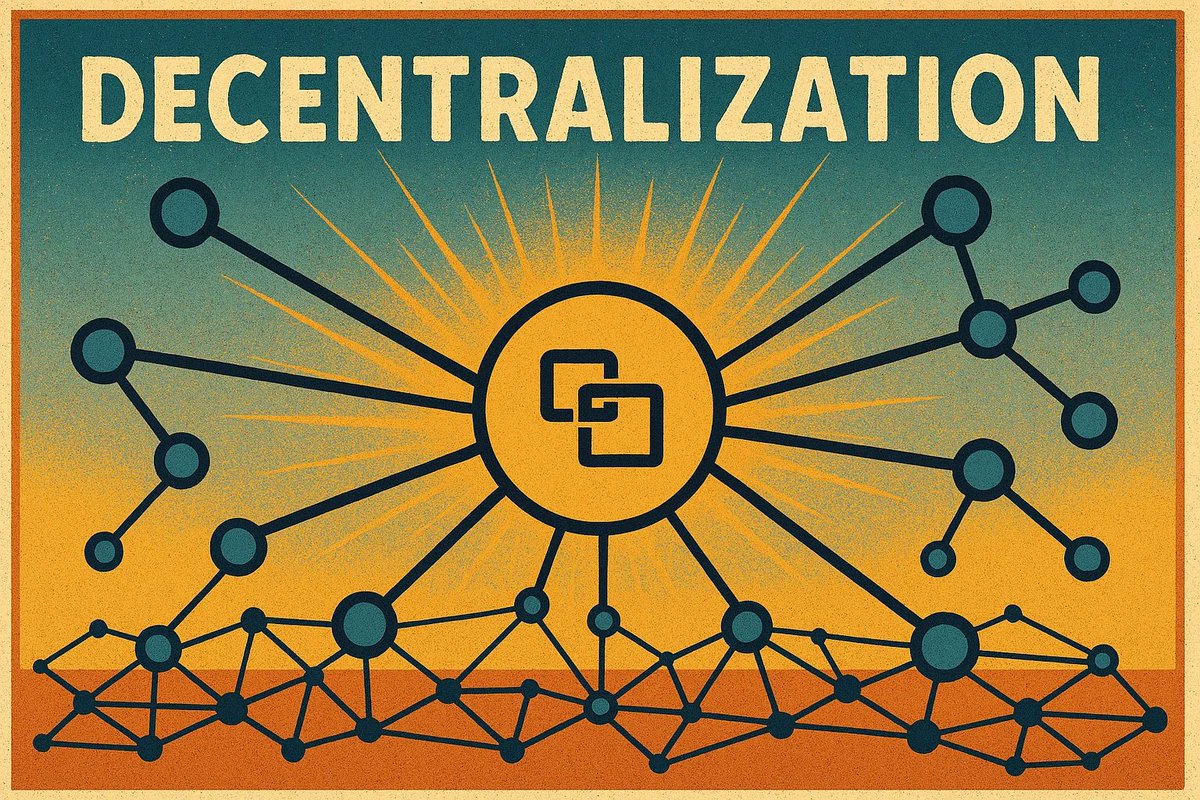
Bitcoin’s decentralization ensures that no single entity controls the network. Its trustless design means transactions rely purely on cryptography and mathematical validation rather than institutional trust. Early adopters like cryptographer Hal Finney, who received the first Bitcoin transaction from Satoshi, recognized the transformative potential, noting early on, "It might make sense to get some [Bitcoin], just in case it catches on."
Satoshi Nakamoto intentionally remained anonymous, highlighting Bitcoin's importance as a community-driven, open-source project beyond any one individual. This anonymity reinforced Bitcoin’s core principle that decentralized finance should function without central authority or charismatic leaders.
Today, Bitcoin is more than a digital currency, it's the cornerstone of an ongoing financial revolution. As we embark on this 75-day exploration into Bitcoin lending and decentralized finance (DeFi), understanding Bitcoin's origins, principles, and the problems it solves provides essential context for comprehending how decentralized financial tools continue reshaping our economic landscape.
#Bitcoin
1
2
55
Abhishek Police Patil (pats.ord) retweeted
9 Apr 2025
ChaChing Testnet Update
What we've built together in just a few weeks is wild.
Here's what the early days of Bitcoin-native lending and staking look like 🧵👇

8
8
29
15,215