
4,478 Photos and videos





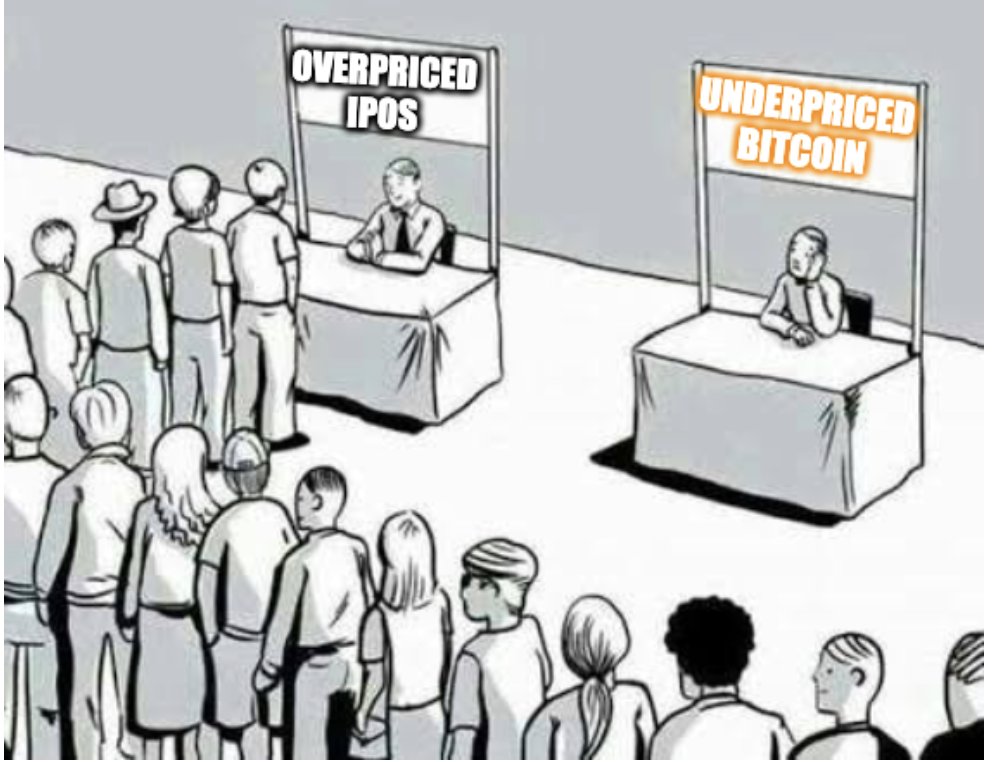




Pinned Tweet

24 May 2024
"Bitcoin Knots for the Win"
"Super Disappointed"
I am super disappointed. In myself.
For the past years, I have head the cry to run your own Bitcoin node. I listened to how critical it is for the Bitcoin Network to remain decentralized. I brushed it off, it sounded like a lot of work. I thought I needed special equipment. I didn't want to spend any precious sats or my valuable scarce time.
Well a few days ago, I started the process to document the entire node runner process.
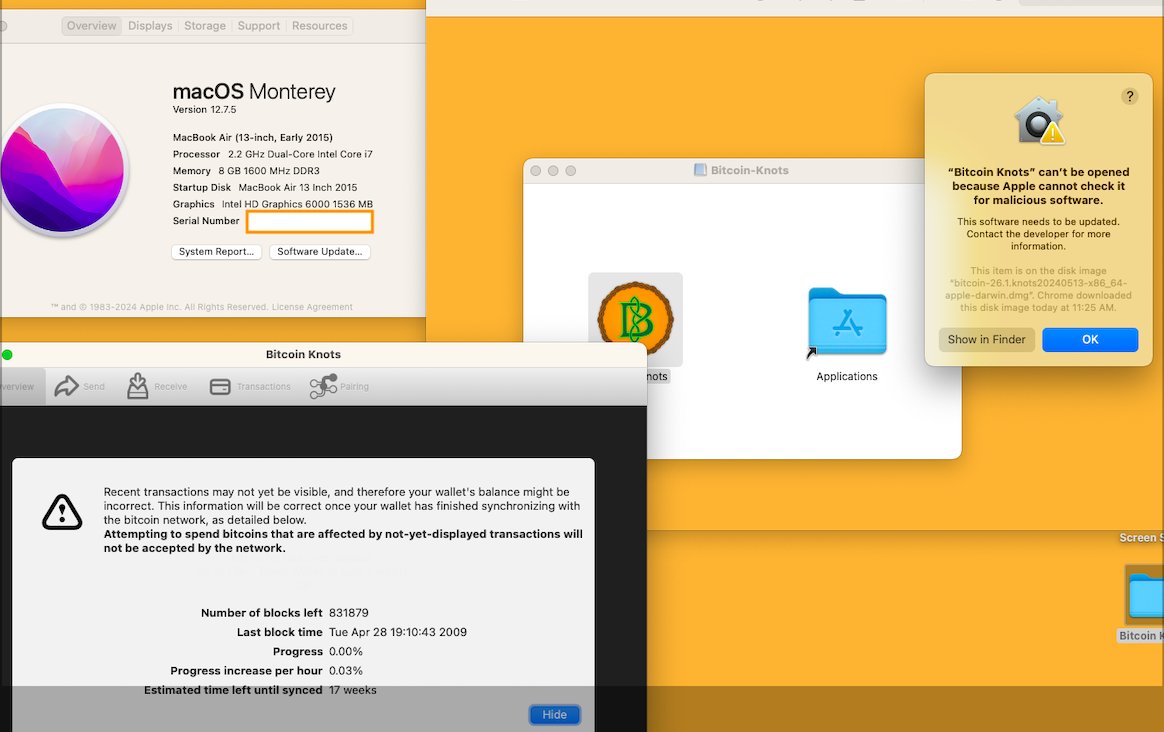
What I documented in the first FIVE MINUTES was all that is needed. One screen shot, attached again in this post.
Holy crap, is my generation so blind and damaged from all those years of having to install crappy software via dial-up? From Windows to Netgear? Setting up modems and routers, on the phone with Comcast? Dreadful.
Is the current generation so blind because they are so used to an instant-never-uncomfortable existence?
I am up and running, it literally was just a few clicks, yes it takes a couple 'days' to synch up but big deal? You don't remember the old days, where downloading a few pictures took that long. Where if you accidentally disconnected, shut your laptop, you had to start over etc.
HOLY CRAP I am mad. I am so disappointed there are not a million Bitcoin nodes running out there. Why did it take me so long? I will never be able to answer that or forgive myself for my inaction and disdain and complacency.
Notes:
- Running on an old Macbook Air I picked up for $150 off Craigslist.
- Pointed to Bitcoin Knots bitcoinknots.org/
- Downloaded to my Apps Folder, had to open it from the folder to get around an Apple 'concern.'
- Ran it for a few days (no thanks to the SPAMmers)
It's running.
Good grief. I have no interest in setting up the Wallet side or let alone even verify my transactions. This isn't about me, if I lost all my Bitcoin, that's life, this is for humanity.
For now, like Swan wants to Orange Pill a million, I want to help Node Pill a million. Anyone want to help?
Set aside five minutes of your time to help the Bitcoin Network? Is that too big of an ask?
How may I help? My Bitcoin "Run your own node" eyes and ears are open. I have NO clue how this could land me in jail either, I'd fight this one the rest of my law-abiding-tax-paying years.
10
17
91
10,851
Love the line "hierarchy and heroes."
That is peak FIAT. The heroes in FIAT, many of whom are talentless, follow the C-Suite from company to company to fix it. These people are the easiest to manage, they don't push the upper people, fall in line, and are rewarded. Peak Core Developers too. (e.g. it's why I am so behind Jon Atack/Luke even if they don't see eye to eye. It's way, way more than politics Rockstar and you know it.)
There is one hero in all of Bitcoin, it's Satoshi. Satoshi walked away. It wasn't about him. It wasn't about money. It wasn't about being mic'd up on a stage. He was frustrated and motivated by a broken system.
Period.
Bitcoin in FIAT was predicted way back by Satoshi and Hal. Go back to their emails on the first MLM. It's not 'breaking news' or even interesting but they knew where Bitcoin is headed.
I take comfort knowing even the worst chuckleheads who have infiltrated the FIAT/CORE Bitcoin rails, whether VC, CSuite, Altcoiners, Web3, DeFi, Digital Credit, or whatever stupid buzzword they are marketing, have the knowledge raw doggin' Bitcoin in Cold Storage is the way to go.
There are exit ramps being built too, Swan announced a new product to help exit Bitcoin ETFs and do 'in kind' (somehow, I really don't care) transfers to Self Custodied Bitcoin.
For now, we are locked, Saylor trying to put us into 4 buckets when some of us understand all 4 Bitcoin personalities and are pretty okay with it.
Other than those in Core who egregiously are playing games with Bitcoin via their FIAT ($$) lens.
Bitcoin is Money. RDTS/BIP-110 and if that fails we will continue to come after you like the truly motivated underdog Ukrainians everyone gave up on or said would surely 'fail.' Relentless. Bitcoin is too important to fail.

Very sobering. Fiat driven vultures are slowly being exposed in Bitcoin. They have possibly been sucking the blood out of Bitcoin culture for years and what has been built around Bitcoin is an industry the same as any other traditional legacy system, with its hierarchy and heroes and its politics and its games.
It’s fiat to the core. Pun intended.
I understand we have to take a step back and realise that fiat culture has been with humans for hundreds of years and expecting Bitcoin to change that culture in under two decades was going to be somewhat unrealistic, but the insidious nature of how this betrayal is taking place is kinda sickening.
I also understand people have their livelihood and family who depend on maintaining the legitimacy of the established Bitcoin infrastructure, but when you hear others like @GrassFedBitcoin @mattkratter and @LukeDashjr who by the way also have families and who also are also heavily invested in the success of Bitcoin, you really have to wonder where incentives of some people are.
What I still love about Bitcoin is its power to reveal. It is the truth machine. Not just because it is a validation mechanism, but because it works through us in exposing the incentives within ourselves.
Bitcoiner’s are the plebs, and they always ultimately resonate with truth 🧡
#BIP110
59
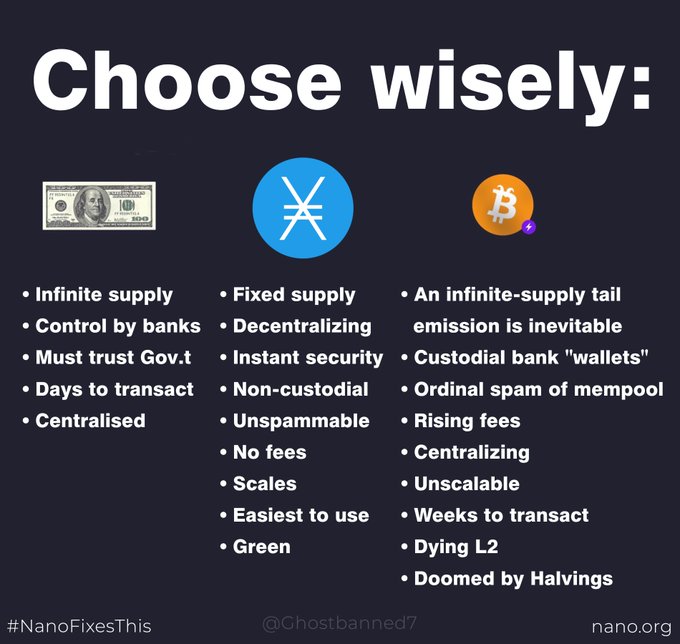
Remembering Ghost Banned7 thinking he was dunking on Bitcoiners back a few years ago with his Nano Trash. Ghost Banned Blocked me and Nano is .37 but apparently is green.
13 Oct 2023

I am not in FUD when it literally is so dumb I can't even get there. I was waiting for you to repost this a thousand more times.
Seriously Nano people holding Bitcoin, this guy is embarassing. He believes this and wants me to 'refute' it? I can't fight BSC (bat)
Look at this.
2
96
Bitcoinapolis: BIP-110 no S̷P̷A̷M̷ 🤓 retweeted

So good to see!!!

You know your panel worked when the entire female audience ended up in stage.
A cool moment at the Women of Bitcoin panel @BTCPrague

4
2
36
1,806
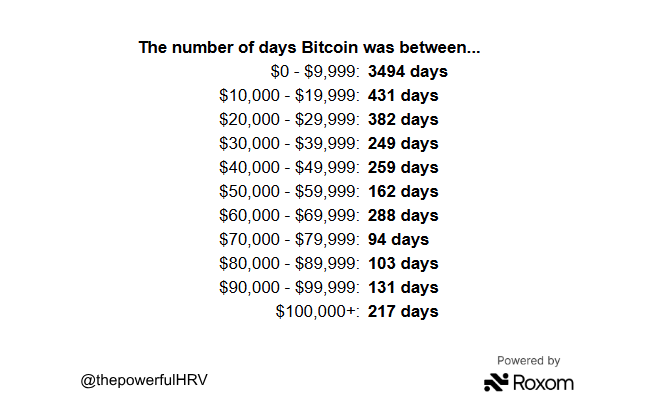
Forever love this one, we need 6 days to fill in the 70s to get to triple digits and then move up again.

1
43
This is brilliant.
(Thanks Wicked long live the Idiot/Savants out there like you.)
20h

Just got to experience this UX for the first time and it was awesome. I was about to ask the cashier if I could pay in bitcoin but then I noticed the little toggle in the top left corner and switched it to a bitcoin invoice myself.
Stealthy bitcoin payments hit different.
1
34
There are a couple easy dots to connect.
1) Altcoiners buy into Bitcoinery
2) Bitcoiners do not buy into Altcoinery
NAKA and Core are Dick Magnets to Altcoiners and their ilk.
Bitcoin Magazine was founded by Vitalik Buterin, founder of Ethereum and 70% Pre-mine fame.
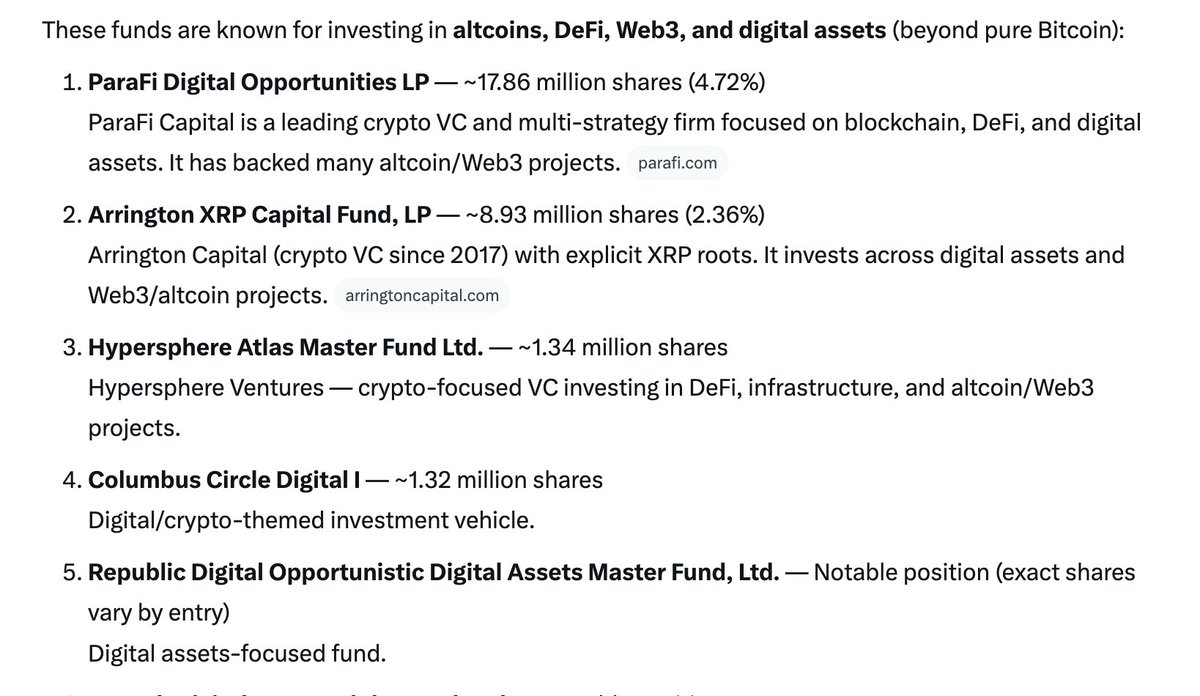
Below are top NAKA investors with altcoine, VCs, Web3 dyed roots.
Natural Blands.
44
Bitcoinapolis: BIP-110 no S̷P̷A̷M̷ 🤓 retweeted

Jun 12
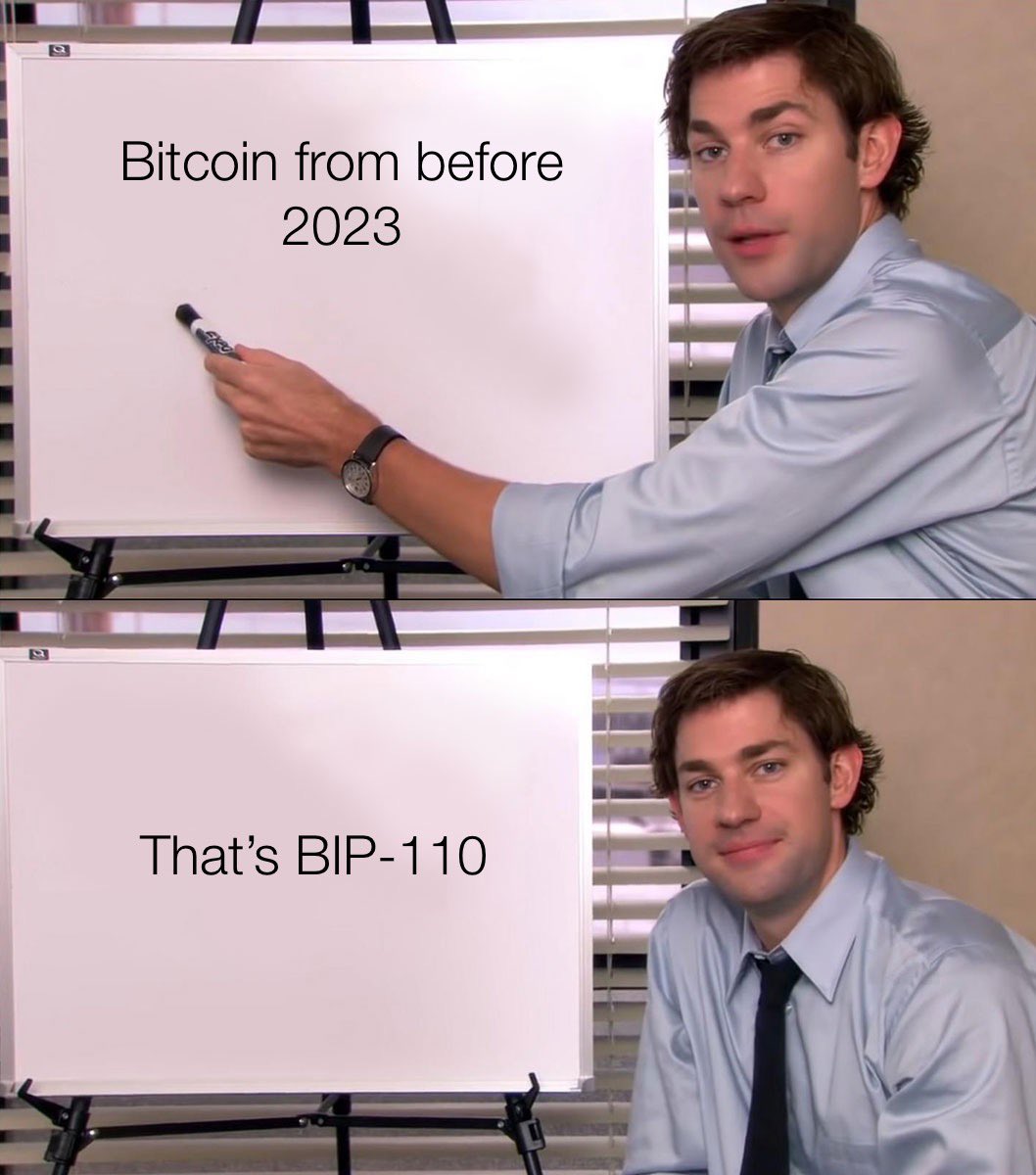
Bitcoiners that signal for BIP-110 are just maxis from 2022.
26
54
369
12,976
Bitcoinapolis: BIP-110 no S̷P̷A̷M̷ 🤓 retweeted

Jun 12
Another good article by Renaud related to spam and BIP-110.
Some commentary on the spam subject since he raised the topic. As I see it, it is certainly a fact that, to date, spam has essentially always gotten through. Very little has been stopped it or slowed it, and, for the most part, the premium paid for the spam has been quite low (if any). These facts have driven many, maybe even most, to conclude that the fight against spam is futile. There are some bad actors that want spam, but those are fringe folks (although loud), I believe most people, especially those that are more technical, hate it, but they are tired of the topic and feel it has taken too much energy already, so they want to focus on other things. I get that. Their hope is that eventually it will diminish because monetary transactions will be at a premium and this will eventually squish it. They might be right.
However, as I see it, the historical case of spam not being slowed does little to prove that it cannot be done. Why? The reason is that block template creation has been highly centralized during the past decade. When 70% - 90% of all blocks are produced by just a handful of entities, their actions or policies dictate the result. If they all allow spam, it will get through without friction. If a material chunk of them don't allow it, then it will face friction, and if the spam has a time critical component, it will face considerable friction and get very expensive.
As we sit here today, all the big template creators do largely let spam through. The obvious retort to this is "But Bob, the pools are going to create the blocks with the highest block reward whether they have spam or not. This makes the pool the most money and makes the participants the most money." My response is, not necessarily. A pool maximizes revenue primarily by maximizing its number of participants/hash rate and winning more blocks, variance in the block reward makes little difference to the pool. In other words, if Pool A has 10% of global hash rate and produces an average block reward of X, and Pool B has 20% of global hash rate and produces an average block reward of 0.99X, Pool B makes considerably more revenue and profit than Pool A. Pool B has little incremental overhead compared to Pool A. This means Pool B could pay its participants at an equal or greater rate (likely in the form of lower fees) even though its blocks have slightly lower revenue. In other words, there is a reasonable path where Pool B and its participants do better producing blocks with lower block rewards.
As we have seen at Ocean, there is significant and growing demand from people and entities who wish to create their own templates. Almost all Ocean blocks are created by its participants (via DATUM) not by Ocean. These blocks typically have much lower spam content than the average network block and indicate that there is at least a portion of network participants that value low-spam blocks. While Ocean represents 2-3% of all blocks, it is still not large enough to present material friction to spam transactions. That said, Ocean is growing rapidly and this could change in the relative near term. Additionally, there are still efforts to bring Stratum V2 (SV2) to a wider audience and maybe more pools and solo miners using DATUM.
It is my belief that over the next few years, all large pools will offer their participants an option to use either DATUM or SV2 to create their own templates, and I believe the uptake from participants will be high. Ocean already has about 2000 independent template creators, and by the end of the decade the whole network will add an order of magnitude more. It is my belief that it is only when we reach this point that the first valid data set around spam will be available. How many miners want to create blocks with it? How many want to create blocks limiting it? Are there enough blocks with limits to create material friction? Does this friction lift overall fees? We will find out then. Until we have answers to these questions with broader template creation across the ecosystem, the jury is still out on all spam related topics.
The key before then is to make sure we keep (and expand) the tools in place to allow template creators the ability to make their desired blocks. My advice, and my request, to Bitcoin Core, Knots, @ProductionReady
and anyone else working on a Bitcoin client is to make sure that template creation has the greatest flexibility possible as it relates to transaction selection. This gives us the best chance to limit spam, and at a minimum, we ultimately will get a valid data set upon which to base our decisions.
Note: I purposely have avoided talking about BIP-110, V30, etc. here. Those topics have too much emotion around them and neither are relevant to the long term issue anyway.
Jun 12

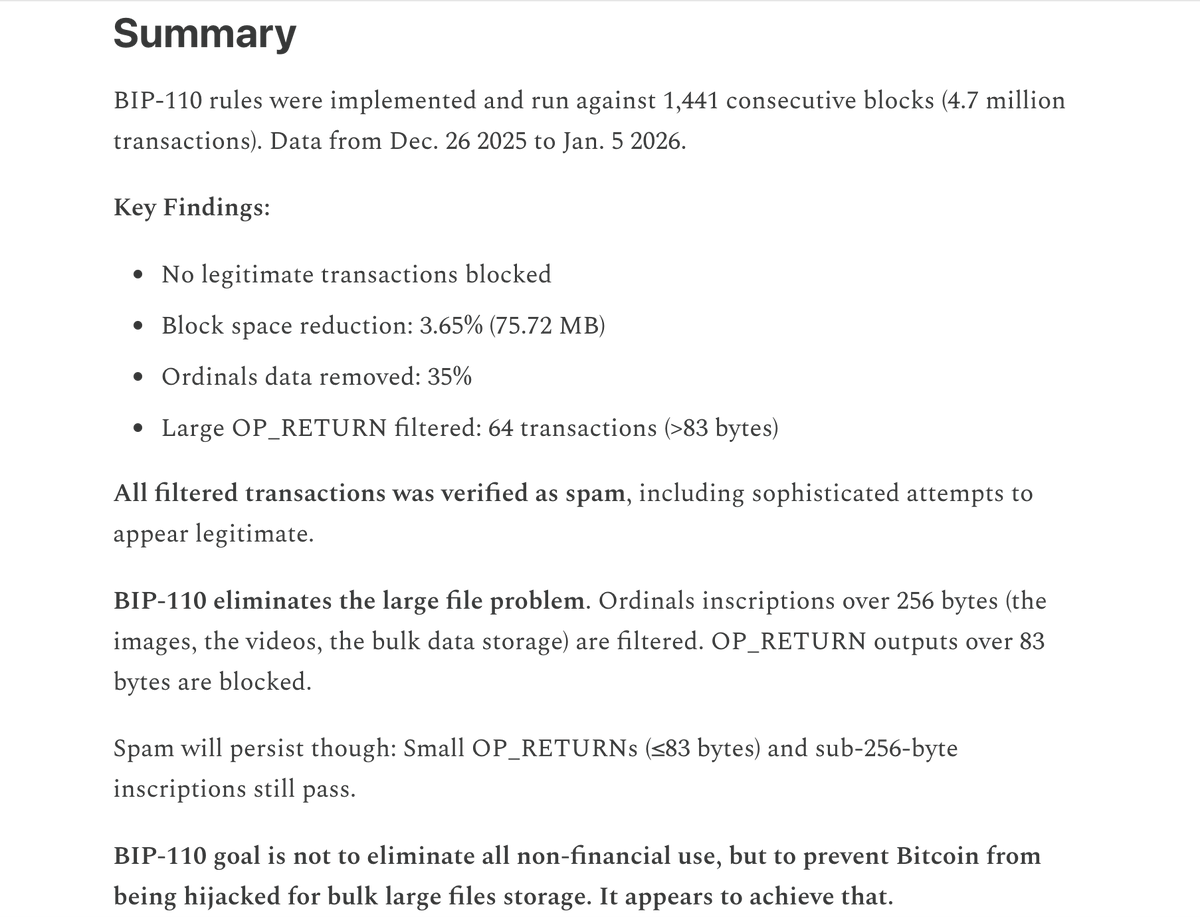
"BIP-110 catches almost no spam."
That's become the main argument against it.
By raw transaction count, it's not entirely wrong. But count is the wrong metric.
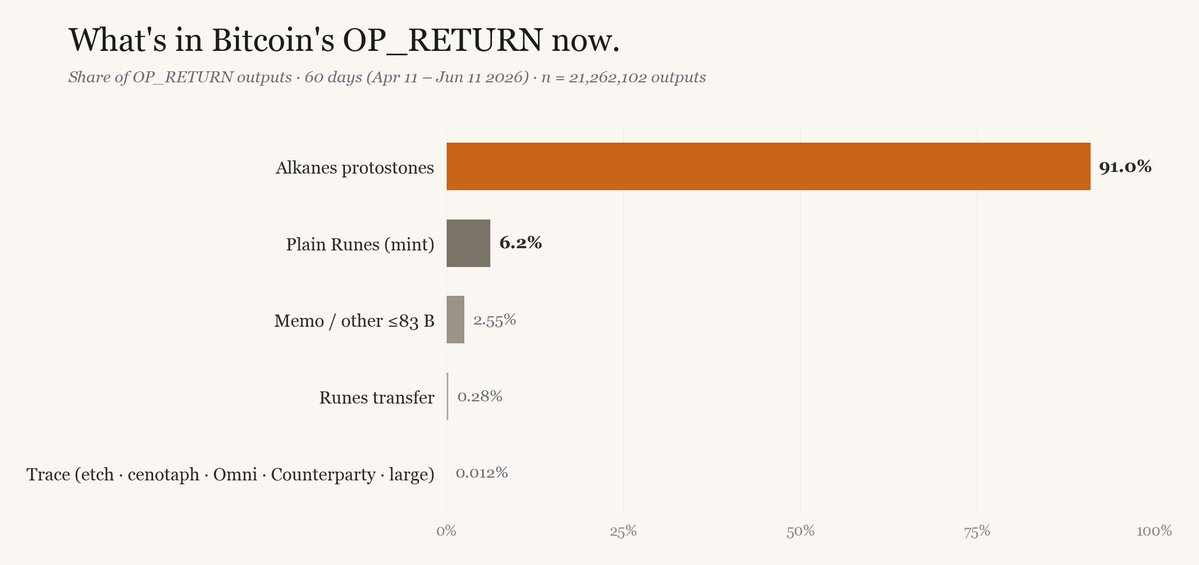
After decoding every OP_RETURN on Bitcoin for the last 60 days:
91% is now one funded protocol: Alkanes -> Millions of tiny mints BIP-110 won't touch (and shouldn't, that's relay policy's job).
But those mints exist because contracts were deployed for them.
- Deployment = a WASM binary in a Taproot reveal. 627 of them in 60 days.
- Every single one rejected by BIP-110.
You don’t stop a metaprotocol by filtering its mints.
You stop it at deployment.
👇
blockspaceweekly.substack.co…
7
19
107
4,623
Pardon the repost of my own stuff with absolute zero interaction. It's way too important to me. My entire career in BI:
1) I fought bad data/GIGO/coding around it all the time.
Side info: Starting your career with Green Screens and Mainframes before the onset of networks and PCs helped show me the importance. Why? With the mainframe, all the fields were locked down, they were called 'edits' or even before the word 'filters.' No need to filter anything out that you couldn't input in the first place. Worked great. Data was darn near pristine, except for the Freeform/Comment fields that I would have to parse to find gems.
2) I fought the Corporate BS. (shown below)
To me BIP-110 is a solution. Not even a great temporary one and that is acknowledged by everyone including Dathon, Luke, Mechanic and all BIP-110ers in the know.
You can make fun of Knots/BIP-110/RDTS all you want but the real issue is Bitcoin Core is broken because of the top two things I fought 35 years for and can't believe I have to address it in retirement, let alone Bitcoin.
Bitcoin is a winner asset run by mostly losers. Sad. Especially framed as Open Source.
Why wasn't there an actual developer on stage who understands the issue? Perhaps not discussing the solution, but the glaring issues with Bitcoin Core v30?
(e.g. Jon Atack)
You don't just look at and debate one solution and discount the problem?
What Jon Atack explained is what I dealt with in 35 years in Corruptorate America. The games. The politics. The off sites. The 'ice breakers.' Personality tests. Seminars on 'How to deal with Difficult People.' The people promoted were the ass kissers not the best. You had to tow the company line, drink the kool aid. Cake or no cake for those who retired.
Open Source 'should' be organic, without having the stupid structured control corporate wrappers in place. Mavericks hate structure. They want to code in the sticks somewhere, without direction, doing what is best for the protocol. Not what is best for some VC/Citrea snake oil salesman pointing finger guns at you saying "let's do lunch."
There are 100 million of them and there was 1 Satoshi.
7
148

Bitcoinapolis: BIP-110 no S̷P̷A̷M̷ 🤓 retweeted

Bitcoin: Sound money that no one can inflate, freeze, or seize without your cooperation is a genuinely radical and stabilizing thing.
4
20
356
Bitcoinapolis: BIP-110 no S̷P̷A̷M̷ 🤓 retweeted

Jun 11

Miners signal that they are ready. It's not a decision. Their deadline is August. If they don't get their act together by then, they are fired and their blocks will be rejected by the network.
5
50
1,224
This is a powerful comment, take note miners.
Jun 11

We're mining blocks 100% of the nodes will accept not ones 88% of the nodes will accept
5
17
300
Bitcoinapolis: BIP-110 no S̷P̷A̷M̷ 🤓 retweeted

Jun 11
We're mining blocks 100% of the nodes will accept not ones 88% of the nodes will accept
8
24
125
2,813
Bitcoinapolis: BIP-110 no S̷P̷A̷M̷ 🤓 retweeted
Jun 11
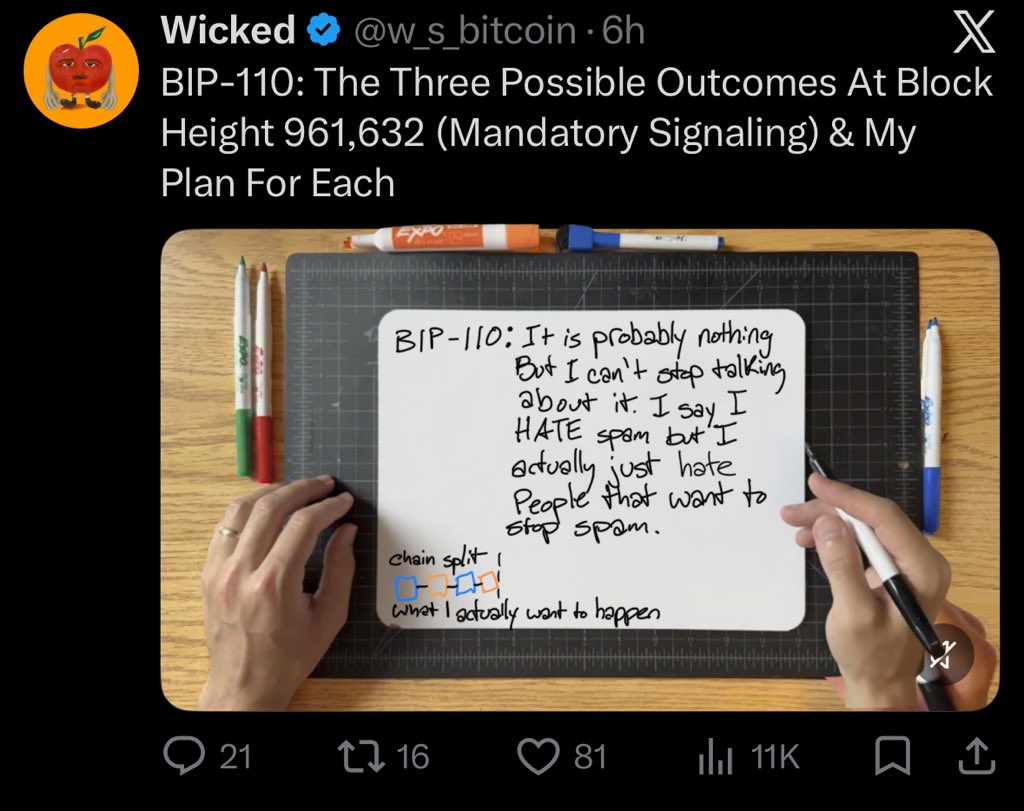
Wicked wants to explain how mining works to us. Do tell, Wicked. Make a YT video. DM us the link
Jun 11
Jfc...one of the signaling miners doesn't understand how they'll be split off the network come mandatory signaling period. I'm happy to hop on a space to explain this to you...probably pretty important you understand this so you don't waste a bunch of money mining on a dead chain
9
12
90
2,571
Bitcoinapolis: BIP-110 no S̷P̷A̷M̷ 🤓 retweeted
Jun 10
We didn't write the BIP. We're just miners. Things may get exciting in August
6
14
114
982
Bitcoinapolis: BIP-110 no S̷P̷A̷M̷ 🤓 retweeted

Jun 11
12% of the network is running BIP110 nodes.
100% of the network accepts BIP110.
8
20
169
3,828