Taking a dive into blockchain river. Retweets are not endorsements . Opinions are not financial advice.
Joined August 2021
- Tweets 3,112
- Following 4,621
- Followers 385
- Likes 5,553
123 Photos and videos














🎉 I'm eligible for the DSCVR Airdrop.
Early community members are being rewarded.
Have you checked yours yet?
👉 dscvr.one/airdrop-hub
#DSCVR #Airdrop
1
13
🎉 I've successfully bound my wallet for the DSCVR Airdrop!
Early community members are being rewarded.
Have you checked yours yet?
👉 dscvr.one/airdrop-hub
#DSCVR #Airdrop
2
16
Swim 🐐 (✸,✸) | retweeted

Apr 13
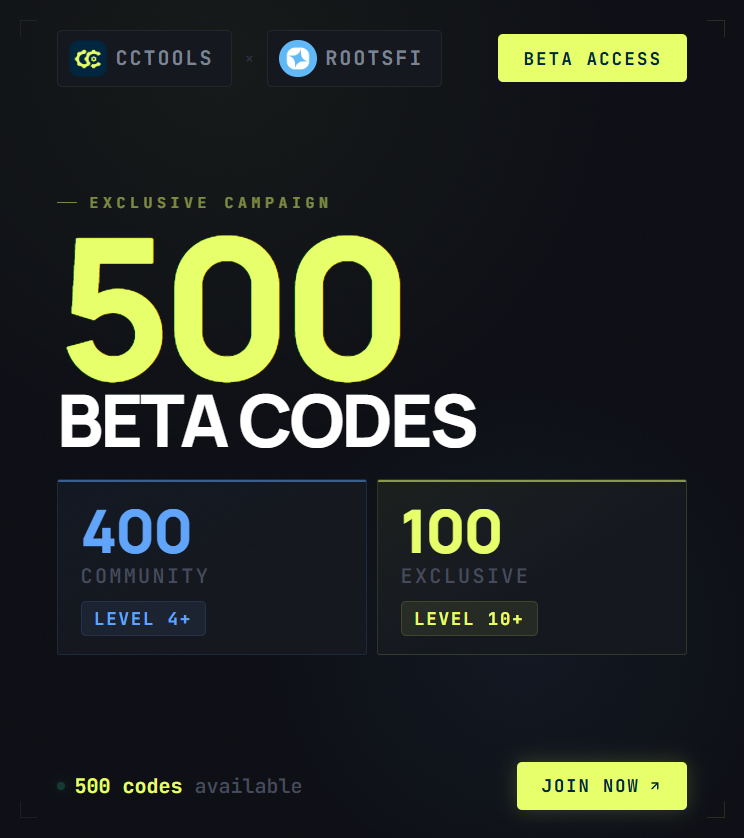
New campaign is live: @cantontools x @rootsfi.
RootsFi is building the universal payment layer on @CantonNetwork. They're giving 500 beta access codes exclusively to our community.
500 codes, two tiers:
> 400 codes for Level 4 users
> 100 exclusive codes for Level 10 users
Complete all 6 tasks at the link below to enter the draw.
cctools.network/earn/rootsfi…
Draw happens in 2 weeks.
235
1,700
1,168
31,350
Swim 🐐 (✸,✸) | retweeted

Apr 19
We’re giving away 20 early access codes for the Roots Canton Bridge app.
These codes are in high demand.
How to enter:
• Follow @CantonArmy and @rootsfi
• Tag 2 friends in the comments
• Like and repost this post
Winners will be chosen in 48 hours.
🍀
383
355
480
15,783

i have 10 @rootsfi codes for my lucky community members
before that, i will explain what roots is
roots is a financial infrastructure platform that enables programmable money by bridging traditional payment systems with decentralized networks
it allows users and businesses to accept payments seamlessly from card taps to final settlement while leveraging blockchain for instant execution and automation
the platform focuses on realworld payments, supporting flows where transactions are instantly approved, routed through stablecoins, and settled in local currency directly to bank accounts
by removing the complexity of middleware, roots enables faster and more efficient global payments with built-in logic and automation
positioned at the intersection of tradfi and web3, roots acts as a payment layer for programmable finance, enabling instant settlement, global reach, and seamless integration between fiat systems and blockchain infrastructure
to join this event, simply like, share, and comment anything you know about rootsfi
the 10 best answers will be selected. these codes are for creating an account and joining their event to earn $CC @CantonNetwork
Gud Luck :)

132
86
182
5,773

Apr 17
Passive income? Nah, it’s PRINTER income. 🖨️💸 Plug into @3DOSNetwork 🚀 dashboard.3dos.io/register?r…
2
Swim 🐐 (✸,✸) | retweeted

Apr 17
as promised, i want to share 15 roots access codes with you all
how to join with simple rules:
- follow @rootsfi
- join my telegram community: t.me/airdropasc
- like and repost this post
winners will be announced in the telegram channel within 12 hours, so make sure you follow all the rules
good luck and groots!

Apr 16

thrilled to announce that im officially become @rootsfi ambassador, this is just the beginning to contribute and help build the new world of payments
to celebrate this, i'll be sharing some access codes very soon
gRoots!

97
90
134
4,040
Apr 16
For a chance to be early and a chance to get some Canton $CC
cctools.network/signup?ref=C…
32
Swim 🐐 (✸,✸) | retweeted

Apr 15
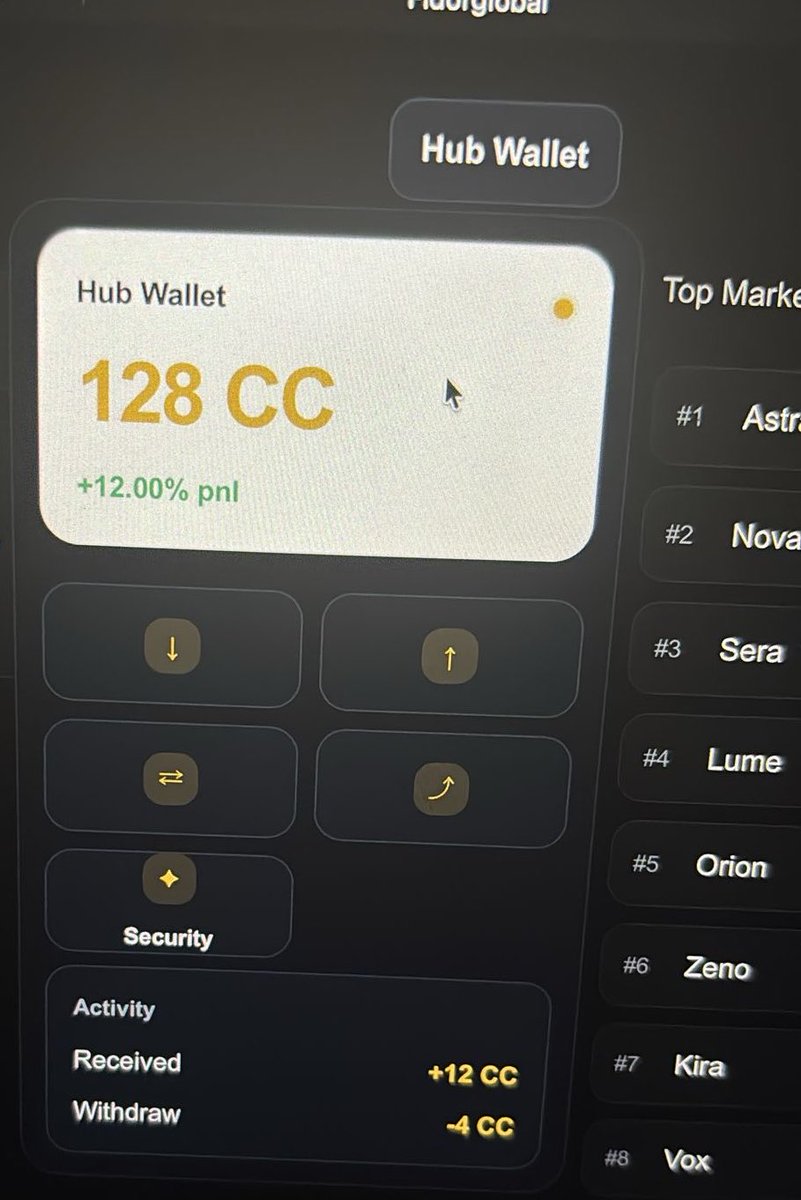
The SocialFi project @Thehub_io’s WL process, where you can earn $CC rewards, will begin very soon.
Who wants to become a WL owner?
328
45
308
19,326
Swim 🐐 (✸,✸) | retweeted

🚨Access code giveaway
@Cantex_io access code giveaway to random 25 winners
how to join:
- follow @Cantex_io
- like & repost
- comment “Done”
will be picking winners in a few hours 🤝


Cantex v2 campaign has started and total reward to be shared is 100,000 $CC
you want to participate but you don’t have access?
comment Hi, i might have surprise for you 👀
185
139
187
7,749
Swim 🐐 (✸,✸) | retweeted
Mar 4
We partnered with Send to give 200 Canton Army members exclusive access to Send App on Canton.
Send just launched a #CC rewards campaign (Pool Party) and the app is invite-only. This is your way in.
To enter:
1️⃣ Follow @Send @CantonArmy
2️⃣ Like, repost, tag a friend
3️⃣ Fill out the form: forms.gle/MLLckaRAkyWvj2dn9
Real accounts only. Bots will be removed.
Disclosure: Partnered with Send for exclusive access & rewards campaign
389
368
548
25,020
Jan 31
I just earned 1208.401703 BSD in the simulation market. blockstreet.money/dashboard?… #BSDchallenge #BSDairdrop #AAPL #TSLA #MSFT #NVDA #CRCL #COIN #MSTR #BSD via @BlockSt_HQ
20
Jan 17
ORBT is the Unified Liquidity Layer.
The @orbt_protocol has a pipeline of over $20B to generate yield from.
They just launched the first step of their points campaign.
Claim the ORBT Module and earn ORBs: hub.orbt.xyz?referral_code=O…
6
I just claimed the Fast Genesis SBT @Fast_Protocol.
Now, I'm running Fast RPC for faster sends and earning Fast Miles on top.
Mint yours →
fastprotocol.io/referral?af=…
11
10 Dec 2025
Do you want to be based on the based app? Comment and i will share a base app invite links $base
32
20 Nov 2025
I will help you @earnfirstdollar on @base
Want in?
firstdollar.money/?r=pdE1BS
[Don't forget to paste your ID card image here]
19
7 Nov 2025
This guy gets it $ICP
7 Nov 2025

That said, there are reasons ICP gets suppressed. You’ll notice that if any single ICP feature became widespread, it would essentially wipe out an entire sector of the industry.
Built-in, free oracles—the oracle sector is gone.
Smart contracts can directly sign transactions on other chains—chain-abstraction sector, gone.
Trustless connectivity between any two public chains—the cross-chain bridge sector, gone.
Smart contracts with native, large-capacity storage—data-storage blockchains, gone.
Contracts can directly generate threshold signatures—MPC and embedded-wallet sectors, gone.
The most flexible account-abstraction in the space, able to directly control assets on other chains—AA wallets and multisig wallets, gone.
Transfers are the fastest in the ecosystem with the smoothest UX—high-throughput chain sector, gone.
Reverse gas fees—those touting “use stablecoins to pay gas” as a differentiator, gone.
Full BTC nodes running directly on ICP—the most decentralized and secure BTC integration—BTC L2 sector, gone.
The most advanced identity-based cryptography in the industry—data privacy & encryption sectors, gone.
Native WASM support—making it the best platform for verifying ZKPs; no matter how large the proof, verification costs are nearly zero, and results can be written to any other chain—those assorted ZK tricks invented to work around Ethereum’s limited compute, gone.
A vibe-coding platform whose features and UX are better than those of actual AI companies, with one-click on-chain deployment—the Web3 AI sector is basically gone too.
The killer part is that ICP would drag the whole Web3 industry from a “tell a story, issue a token, pump, and rug” model back to a “build products, launch for real, and make money” model. No wonder it’s not exactly welcomed. 🤣
2
121

The @avantisfi @baseapp mobile app will melt faces.
RT for early access 👀.
108
258
569
47,396