
It's later than you think.
Joined September 2022
- Tweets 1,980
- Following 352
- Followers 73
- Likes 4,897
304 Photos and videos

Mark retweeted

Apr 18
Google has a recording of every search you've ever made.
Every place you've ever been. Every YouTube video you've ever watched.
Go to myactivity.google.com right now.
You'll find searches from 2015. Voice recordings. GPS coordinates.
All stored. All linked to your name.
Here's how to see it and delete it:
302
2,540
11,034
2,551,741
Mark retweeted

Apr 5
This is Walker Smith.
After dedicating 17 years to Waitrose, he was recently dismissed.
The reason? For attempting to stop a shoplifter nicking Easter eggs.
Yes you read that right. He should be applauded, not sacked.
Shameful @waitrose. Re-employ Walker Smith!

1,383
9,517
36,111
868,260
Mark retweeted

Apr 7
Ban Kosher and Halal slaughter. Only the most humane practices should be used in keeping with the highest animal welfare standards.
277
2,893
21,145
253,533
Mark retweeted

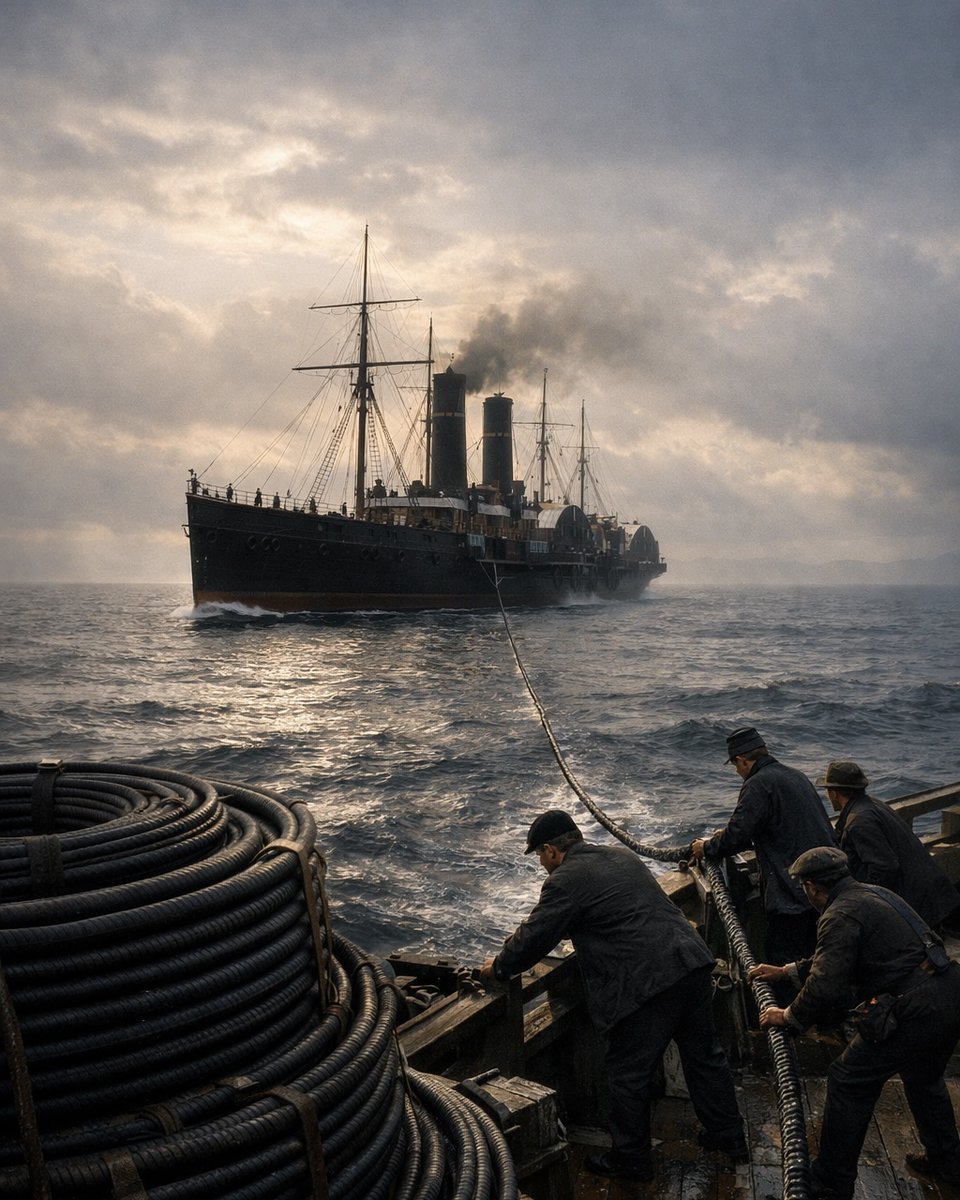
In 1866, Britain connected the world.
Before the transatlantic cable, a message to America took 10–12 days.
After it, minutes.
The first attempt in 1858 failed within weeks.
The Atlantic was too vast. The technology too fragile.
Most believed it could not be done.
In 1866, it was done.
Using the Great Eastern, the largest ship of its time, Britain laid thousands of miles of armoured cable across the ocean floor.
For the first time in history:
Distance no longer meant delay.
The modern connected world had begun.
Britain did not only explore the world.
It connected it. 🇬🇧
Follow @oaksandlions for more interesting posts like this.
#BritishHistory #BritishEngineering
24
489
2,256
45,381
Mark retweeted

Mar 31
"At his funeral, six people came. He had helped start two revolutions." 💀
Thomas Paine was born in 1737 in Thetford, Norfolk. His family made corsets. He failed as a corset maker, a sailor, a tobacconist, a tax collector, and a teacher. England had nothing for him.
At 37 he met Benjamin Franklin in London. Franklin handed him one letter of introduction and told him to go to America. He arrived in Philadelphia in November 1774 with almost nothing. 🌍
Two years later the American colonies were on the edge of revolt but most ordinary people still couldn't imagine breaking from the Crown. Paine sat down and wrote a pamphlet in plain English aimed at ordinary people, not politicians or kings.
Common Sense. Published 10 January 1776. 100,000 copies sold in three months. 500,000 by the end of the year. In a country of two and a half million people. General Washington had it read aloud to his troops. Six months later, the Declaration of Independence. 🇺🇸
Paine gave away every penny of royalties to fund the Continental Army.
Then he went to France. Wrote The Rights of Man in 1791, a direct challenge to hereditary power. The British government charged him with treason. He was already in Paris. The French Revolutionary government elected him to their National Convention. Then Robespierre had him arrested. He spent ten months in a Luxembourg prison cell waiting to be executed. He survived by chance.
He came home to America in 1802. By then he was despised by the very establishment his ideas had helped create. He died in 1809, largely alone, in poverty, in a small house in New York. Six people attended his funeral. Half of them were formerly enslaved men who came to pay their respects. 🇬🇧
Human rights. Universal suffrage. The welfare state. Progressive taxation.
All of it traces back to a corset maker's son from Norfolk who failed at everything England offered him.
This history has no budget.
No broadcaster.
No institution behind it.
Just the people who believe it deserves to exist.
Support the channel: proudofus.co.uk/support 🇬🇧
Be Part Of Us.
Be Proud Of Us. 🇬🇧
35
665
2,606
37,937
Mark retweeted
Mar 31
"The poor had to cheat the postal system just to hear from their families." 💔🇬🇧
A young woman handed a letter back to the postman. She couldn't afford to collect it.
The man walking past paid the charge himself. Then she told him she didn't even need to read it. She and her brother had a secret code in the pencil marks on the outside of the envelope. They had been writing to each other for free for years. ✉️
His name was Rowland Hill. 🏴🇬🇧
He went home. Couldn't stop thinking about it.
One flat rate. Anywhere in Britain. A tiny piece of sticky paper to prove you paid. Lick it. Stick it. Post it.
6 May 1840. The Penny Black. The world's first postage stamp. 🏴
Within a year twice as many letters were sent. Every country on earth copied it. Every stamp ever printed anywhere on earth traces back to one man on a Scottish moorland.
This history has no budget. No broadcaster. No institution behind it. Just the people who believe it deserves to exist. Be Part Of Us 👉proudofus.co.uk/support
Be Proud Of Us. 🇬🇧
56
1,334
5,187
86,452
Mark retweeted
Mar 29
🏴🇬🇧 Before 1830, nobody had a lawn.
The rich had their grass cut by scythemen. Ordinary people had no garden worth speaking of.
Edwin Budding was an engineer in Stroud, Gloucestershire. Working in a textile mill, he noticed a machine using a cutting cylinder to trim the surface of cloth.
He looked at it.
And thought about grass.
He built a machine with a cutting cylinder mounted on a wheeled frame. Then pushed it across his garden at midnight. At midnight. So the neighbours wouldn't see.
It worked.
He patented it in August 1830.
Within twenty years the Victorian suburb was born. The striped lawn. The neat garden. The Sunday morning ritual.
Every suburban garden in America. Every cricket ground. Every football pitch. Every golf course on earth.
Traces back to one man. In Stroud. With a cloth machine. At midnight.
Right now, somewhere in the world, someone is cutting their grass. And they have no idea who Edwin Budding was.
Help us share more of our history:
proudofus.co.uk/support
Be Part Of Us.
Be Proud Of Us. 🇬🇧
62
1,319
5,577
157,111
Mark retweeted
Mar 22
🏴🇬🇧 Yosemite. The Sequoias. The Grand Canyon.🇺🇸
A boy from Dunbar, Scotland made the world protect all of it.
His name was John Muir. 🏔️
Born 1838 in Dunbar, East Lothian. From the age he could walk he roamed the cliffs and fields of the Scottish coast. Something about the wild world would not let him go.
In 1849 his family emigrated to Wisconsin. His father worked the family from dawn to dusk. John wanted to read. To think. To study.
So he invented a machine that tipped him out of bed at one in the morning. To give himself more hours in the day. 🕐
In 1867 a factory accident nearly blinded him. When he recovered his sight he made a decision.
He would turn his eyes to the fields and the woods. And never look back.
He walked a thousand miles from Indiana to the Gulf of Mexico. Sailed to California. And walked into Yosemite. 🏔️
He lived there for three years in a simple cabin.
Emerson visited. Offered him a teaching post at Harvard.
Muir said no.
Sheep were destroying the meadows. Loggers were taking the trees. Muir started writing. Articles read by millions. In 1890 Congress created Yosemite National Park. In 1892 he founded the Sierra Club. 🏴
In 1903 President Roosevelt came to Yosemite. They camped for three nights under the open sky. Muir talked. Roosevelt listened.
Roosevelt went on to protect 148 million acres of forest. Five new national parks. Sixteen national monuments. ✅
All of it traces back to a boy from Dunbar.
He never lost his Scottish accent.
He died on Christmas Eve, 1914. He was 76.
Did they teach you his name? 🏴🇬🇧
Muir gave everything to keep what he loved alive.
Our history needs the same thing.
We need our keepers. proudofus.co.uk/support
Be Part Of Us.
Be Proud Of Us. 🇬🇧
46
868
2,971
26,989
Mark retweeted
Mar 19
England and Portugal. One of the oldest alliances in the world.
Since 1386. 🏴🇵🇹
They had sailed together. Traded together. Gone to war together.
But there was a moment when it nearly ended.
And the reason was slavery.
Portugal started the Atlantic slave trade. In 1444. For the next four centuries they transported more enslaved people across the Atlantic than any other nation on earth.
Britain joined them. For a hundred years British ships sailed the same routes. British merchants made the same profits.
Then in 1807, thanks to the will of the British people, they stopped.
The Royal Navy, the most powerful fleet on earth, was sent to the African coast. Not to conquer. To hunt. Every slave ship it found, it seized. Every person on board, it freed.
But the trade was still going. Under Portuguese flags.
So Britain went to its oldest friend and made a demand.
Treaty. Portugal agreed to restrict its slave trade.
Britain pushed harder.
Another treaty. Portugal banned the trade north of the equator.
Britain pushed harder still.
Another treaty. Portugal conceded the right to let the Royal Navy stop and search Portuguese ships on the open ocean.
The alliance nearly didn't survive it. Six hundred years of friendship stretched to breaking point. Portugal called it betrayal. Britain called it justice.
Portugal formally abolished the slave trade in 1836. Slavery itself in its African colonies, 1869.
It took sixty years of pressure. Sixty years of treaties. Sixty years of Royal Navy ships on the water.
The alliance held. It still holds today. The oldest in the world.
These are the stories that don't make the history books. We find them. We tell them.
If they matter to you, be part of us.
proudofus.co.uk/support
Be Proud Of Us. 🏴🇬🇧
45
1,034
3,823
76,496
Mark retweeted
Mar 18
She was a princess. 👑
Great-great-granddaughter of Tipu Sultan.
She grew up in Paris writing children's stories about animals and kindness. 📖
Then the war came. France fell. She escaped to England and volunteered.
Not as a nurse. Not as a clerk.
As a spy. 🕵️♀️
June 1943. She was flown into occupied France by moonlight.
Codename: Madeleine.
The first female wireless operator sent behind enemy lines. 📻
Within weeks, the entire network was captured. Every other agent gone.
Noor Inayat Khan was the last British agent in Paris.
London ordered her home.
She refused. ⚔️
For three months she operated alone. A different location every time she transmitted. The Gestapo tore the city apart looking for her.
She was betrayed. For money.
They interrogated her for weeks. She gave them nothing.
She escaped. Twice.
They chained her hands and feet. Classified her 'highly dangerous.'
A children's author. Highly dangerous.
13 September 1944. Dachau. 🕯️
Her last word: Liberté.
George Cross. Croix de Guerre. 🎖️
She never broke.
Did they teach you her name? 🇬🇧
Every video we make is funded by people who believe these stories matter. 👇
proudofus.co.uk/support
Be part of us.
Be Proud Of Us. 🇬🇧
34
697
2,663
31,754
Mark retweeted
Mar 18
Britain locked up 10,000 Quakers. 450 died in prison. 🇬🇧
Their crime, under the Quaker Act 1662, was refusing to swear an oath.
Because they told the truth all the time.
Barclays Bank: founded 1690 by Quakers John Freame and Thomas Gould.
Lloyds Bank: founded 1765 by Quaker Sampson Lloyd.
Cadbury: founded 1824 by Quaker John Cadbury in Birmingham.
Clarks shoes: founded 1825 by Quakers in Somerset.
They were the first organised religious body in the world to formally condemn slavery. The Germantown Petition, 1688. London Yearly Meeting followed in 1761. Decades before Wilberforce.
Elizabeth Fry walked into Newgate Prison in 1813. The Gaols Act passed in 1823.
At their peak they were 0.2% of the population. One in five hundred people.
They changed everything.
Be Proud Of Us. 🙏🇬🇧
61
921
4,041
74,535
Mark retweeted
Mar 16
They said a steamship couldn’t cross the Atlantic. 🌊
He built one anyway.
They said the tunnel couldn’t be dug.
He dug it anyway.
They said the ship was too big to ever be built.
692 feet. Launched 1858. Biggest ship on earth for 40 years. 🚢
His name was Isambard Kingdom Brunel.
He built the longest railway tunnel in the world. The widest tracks. Paddington Station. The Clifton Suspension Bridge. Designed at 24.
When the two crews boring Box Tunnel from opposite ends finally met in the middle, they were one and a quarter inches out of alignment. Over two miles of rock. 🎯
He worked 20-hour days. Smoked 40 cigars. Died at 53.
In 2002 the BBC asked the nation to vote for the greatest Briton of all time.
He came second. 🇬🇧
Be part of us - proudofus.co.uk/support
Be Proud Of Us 🙏🇬🇧
69
1,513
5,569
59,007
Mark retweeted
Mar 10
That pound in your pocket? 🪙🇬🇧
That's the oldest currency in the world.
It was there during two world wars. Bombs falling on London. Ration books on the counter. The pound was still there.
The civil war tore this country in half. Royalists on one side. Parliament on the other. The pound survived both. ⚔️
Henry VIII tried to destroy it. Mixed cheap copper into the silver. The silver wore away and the copper showed through on his nose. They called him Old Coppernose. The pound didn't die. The people wouldn't let it. 👑
The Normans conquered this island in 1066. Changed the language. Changed the laws. Changed the king. They kept the pound.
Vikings raided these shores for two hundred years. Burned monasteries. Sacked towns. The pound was already here when they arrived. And it was still here when they left. 🛡️
It was here before England existed. Before there was a country to spend it in.
In 780 AD, a king called Offa ruled a kingdom called Mercia. Nobody trusted anybody else's money. So he standardised the silver penny. Every coin the same weight. Every coin the same silver.
240 of them weighed exactly one pound of silver. A pound. By weight. That's where the name comes from. 🪙
1,200 years. And it's still in your pocket.
The French livre is dead. The Spanish real is dead. The Byzantine solidus is dead. Every great currency in history is gone.
Except yours. 🇬🇧
Did you ever think about where the pound came from? Now you know.
Find out more at proudofus.co.uk 🇬🇧
Be part of us.
Be Proud Of Us. 🇬🇧
62
1,072
3,645
38,360
Mark retweeted

Mar 10
These are people who have dedicated their entire working lives standing up for victims of crime. Today MPs are being asked to ignore them. Don’t let them. 👇🏻

Over 3,200 legal professionals including 22 retired judges and 303 KCs have written to the Prime Minister urging him not to reduce our jury trials.
Barristers enable complainants/victims/survivors and defendants to give their evidence in court.
Barristers want to lift the criminal justice system out of the crisis.
Barristers have pioneered proposals to reduce delays and welcome their implementation. They need to happen urgently.
Juries do not cause the unacceptable delays and are not the remedy to reduce delays.
@thebarcouncil
#JusticeNeedsJuries
44
1,434
5,665
98,744
Mark retweeted
Mar 6
Before 1194, the Crown could claim your death was a crime.
Seize everything you owned.
And your family got nothing.
No investigation. No independent check. Just a royal official deciding you owed the King.
Then one man changed it.
Hubert Walter, Chief Justiciar of England, created a new office in 1194.
The coroner.
The word comes from the Latin. "Keeper of the pleas of the Crown."
But it wasn't designed to serve the Crown.
It was designed to limit it.
They couldn't be appointed by the King. They had to be elected by ordinary people.
In 1194. Over 800 years before universal suffrage.
From that moment, the Crown could no longer just take. Someone independent had to find out what actually happened. The family kept what was theirs.
830 years later, every suspicious death in England is still investigated by a coroner. Every single one. No exceptions.
Australia copied it. Canada. New Zealand. The United States. Most of the world traces its coroner system back to England, 1194.
What sounds like a bureaucratic job title is one of the oldest independent checks on state power ever created.
And it started here.
Help us keep these stories alive → proudofus.co.uk/support 👑
Be proud of us. 🙏🇬🇧
55
1,272
4,459
100,681
Mark retweeted
Mar 6
🇬🇧 Britain invaded Brazilian waters. Opened fire on Brazilian ships. Destroyed them.
And nobody talks about why.
In 1807, Britain abolished the slave trade. In 1833, it abolished slavery itself. But Brazil didn't stop.
By the 1840s, Brazil was the largest slave-trading nation on Earth. Fifty thousand people a year. Taken from Africa in chains. Shipped across the Atlantic. Sold.
Britain had been trying to stop this for decades. The Royal Navy's West Africa Squadron had been patrolling the African coast since 1808, intercepting slave ships of every nationality. In 1826, Britain signed a treaty with Brazil committing them to end the trade within three years. Brazil passed a law in 1831 technically banning it. They called it "lei para ingles ver." A law for the English to see. They never enforced it.
The trade got worse. Not better.
So in 1845, Foreign Secretary Lord Aberdeen, the 4th Earl of Aberdeen, drafted a law. The Aberdeen Act. Formally the Slave Trade Suppression Act. It said one thing:
Brazilian slave ships would be treated as pirates.
The Royal Navy could seize them on the open sea. Inside Brazilian harbours. Inside Brazilian ports. This was a direct violation of Brazilian sovereignty and Brazil knew it. They protested. Britain didn't care.
British warships entered Brazilian waters. Rear Admiral Barrington Reynolds led operations directly into the ports of Paranagua, Santos, and Rio de Janeiro. They captured slave ships. Found hundreds of people chained below deck.
And freed them.
The numbers tell the story. In 1849, approximately 54,000 enslaved Africans arrived in Brazil. In 1850, it dropped to 23,000. In 1851, fewer than 3,300. By 1852, effectively zero.
On 4 September 1850, Brazil passed the Lei Eusebio de Queiros. Named after Justice Minister Eusebio de Queiros. This time it was real. This time it was enforced. The transatlantic slave trade to Brazil was over.
Over the course of its entire operation, the West Africa Squadron freed approximately 150,000 enslaved people and captured around 1,600 slave ships.
Not by diplomacy. Diplomacy had been tried for decades and failed. By a navy that refused to look away.
They tell you Britain was the villain. This time, it was the hero.
Be Proud Of Us. 🇬🇧
59
1,104
3,817
86,502
Mark retweeted
Mar 6
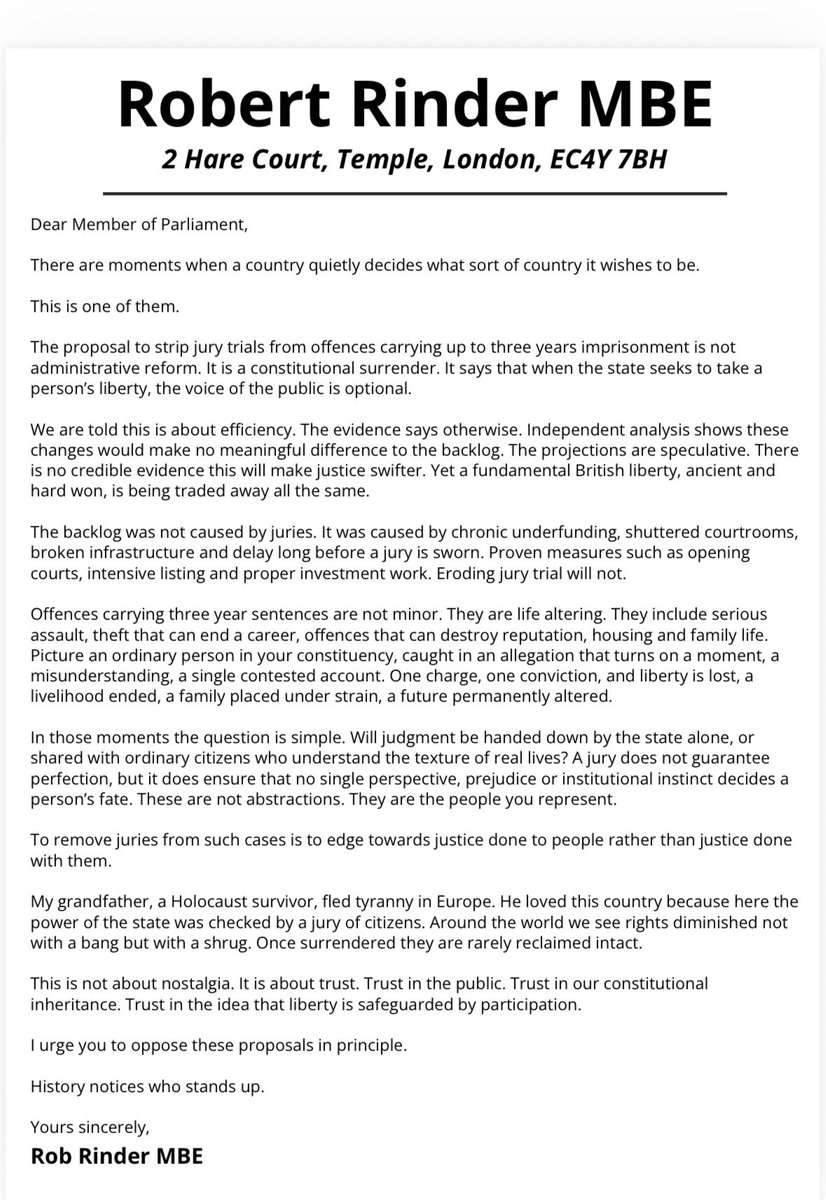
I’ve written to every Member of Parliament today.
Proposals before Parliament would remove jury trials from offences carrying up to three years in prison.
Freedoms rarely vanish overnight. They are chipped away in the name of efficiency.
Juries did not cause the crisis in our courts. Removing them will not fix it.
When the state seeks to take someone’s liberty for serious offences, the judgment of ordinary citizens should never be optional.
This is close to becoming law.
Please read the letter. Contact your MP now.
321
5,864
17,263
523,809
Mark retweeted
Mar 5
Six farmers from Dorset terrified the most powerful government on Earth. 🇬🇧
Their crime? Asking not to starve.
1834. Tolpuddle, a village in Dorset, about seven miles east of Dorchester. Farm labourers' wages had been cut again and again. From ten shillings a week to nine. Then eight. Then seven. Then six. The national average was ten. Six shillings to feed a family for a week.
A man called George Loveless, a Methodist lay preacher and farm labourer, gathered five others under a sycamore tree on the village green. His brother James. Thomas Standfield and his son John. James Hammett. James Brine. They formed the Friendly Society of Agricultural Labourers. A union.
Here's what matters. Trade unions were legal. The Combination Acts had been repealed in 1824. Forming a union was not a crime. The landowners knew that. So the local magistrate, James Frampton, found another law. The Unlawful Oaths Act of 1797. Written to punish naval mutineers at Spithead and the Nore. They used it against farm workers because the society's initiation included swearing an oath of loyalty.
All six arrested on 24 February 1834. Tried at Dorchester Assizes on 17 March. One day. Sentenced to seven years' transportation to the penal colonies. George Loveless was sent to Van Diemen's Land. Tasmania. The other five to New South Wales. For swearing an oath under a tree.
Loveless spoke at the trial. His words are on the record:
"My Lord, if we have violated any law, it was not done intentionally. We have injured no man's reputation, character, person, or property. We were uniting together to preserve ourselves, our wives, and our children from utter degradation and starvation."
The government thought that was the end.
It was the beginning.
800,000 people signed a petition. In a country of 14 million. On 21 April 1834, a procession stretched for miles through central London. Contemporary accounts put the number at up to 100,000 people marching.
Lord Melbourne's government held out. Then broke.
Free pardons were granted in March 1836 by Home Secretary Lord John Russell. George Loveless came home in 1837. The others followed in 1838. James Hammett was the last, returning in 1839. Every single one of them came home.
They are the founding figures of the trade union movement. Every July since 1934, thousands gather at the Tolpuddle Martyrs Festival, organised by the TUC. A section of the original tree trunk is preserved at TUC headquarters in London.
And a sycamore tree still stands on the village green in Tolpuddle. Right where they met.
Be Proud Of Us. 🇬🇧
23
775
2,736
29,520
Mark retweeted
Mar 5
Eight hundred years of open justice. 🇬🇧
Gone.
In a single vote.
Magna Carta, 1215: "To no one will we deny or delay right or justice."
Courts must be open. Anyone can watch. Anyone can challenge.
The Star Chamber tried secret trials. No jury. No appeal. You never saw the evidence against you.
Parliament abolished it in 1641. Never again.
372 years later, they brought it back.
The Justice and Security Act 2013. Closed Material Procedures.
The government presents evidence against you. You cannot see it. Your lawyer cannot see it.
A "special advocate" can see it.
But they cannot talk to you about it. Ever.
Evidence about you. That decides your future. That you will never see.
2000 - surveillance without warrants.
2016 - your internet history stored by law.
2022 - the right to protest restricted.
Every right ordinary people fought for. They keep coming for it.
This is not history. This is now.
This is you.
They're counting on you not knowing.
We exist to make sure you do.
No sponsors. No ads. Just people who believe our heritage is worth fighting for.
Stand with us. proudofus.co.uk/support 🇬🇧
Be part of us.
Be Proud Of Us. 🇬🇧
66
2,219
5,584
64,982
Mark retweeted

Mar 4
This sentence by Dostoyevsky hits so hard.
“You sensed that you should be following a different path, a more ambitious one, you felt that you were destined for other things but you had no idea how to achieve them and in your misery you began to hate everything around you.”
23
406
2,668
73,731