Investor
Joined January 2012
- Tweets 4,313
- Following 554
- Followers 1,564
- Likes 6,467
1,191 Photos and videos



Pinned Tweet

25 Feb 2024
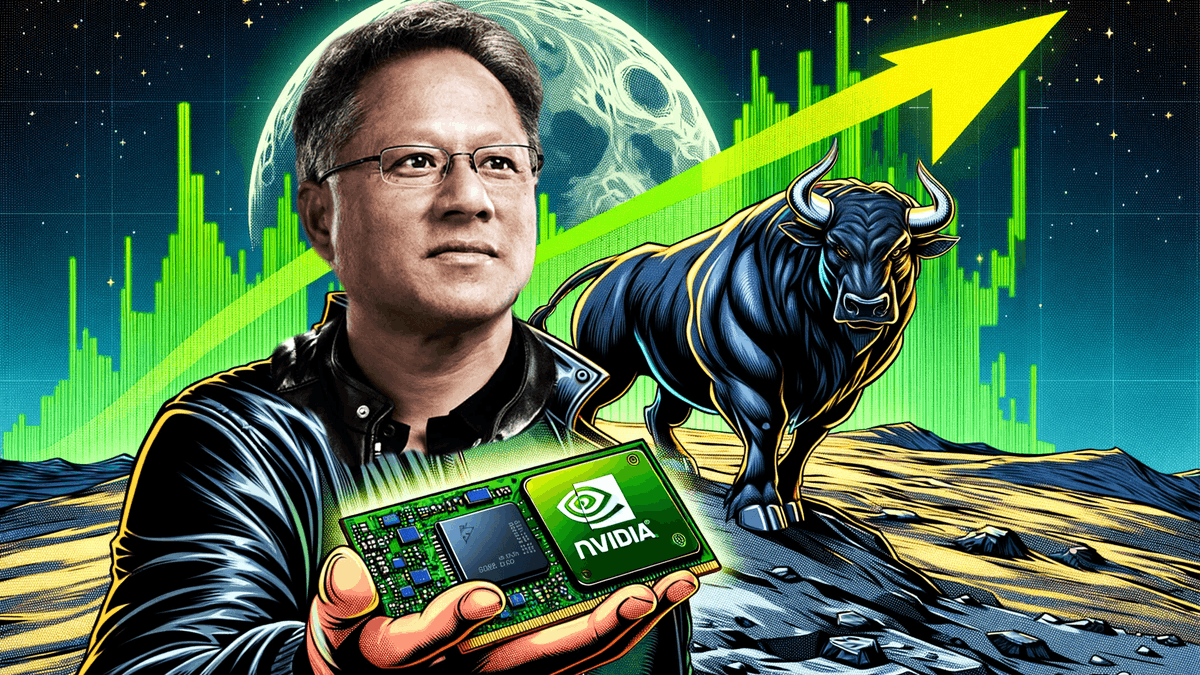
Anyone want to listen to me talking about Nvidia for one hour?
I start with what Nvidia does and explain GPUs, showing how they've grown beyond just graphics. I compare GPUs with CPUs and ASICs, dive into Nvidia's main focuses, its supply chain, and how its GPUs stay useful over time.
I also look at how Nvidia keeps innovating and whether it can stay ahead of competitors. Near the end, I wrap up with a quick look at its financial health and how much it's worth.
$NVDA
youtu.be/85W0tJg3pHA
5
2
48
7,559
Boon Tee retweeted

Jun 10
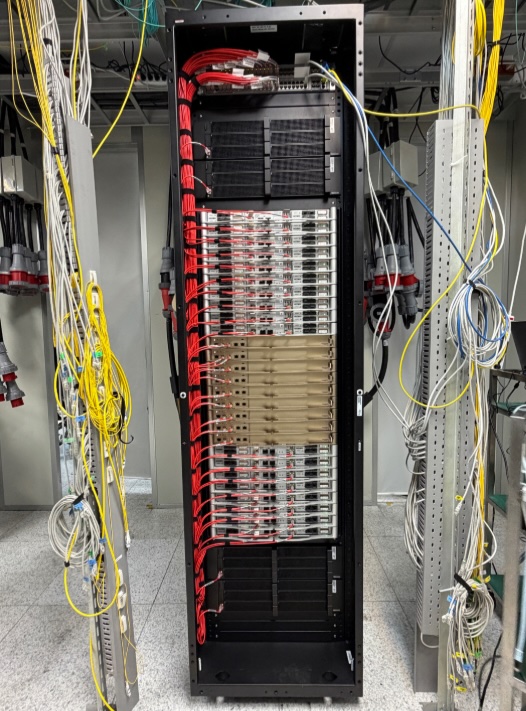
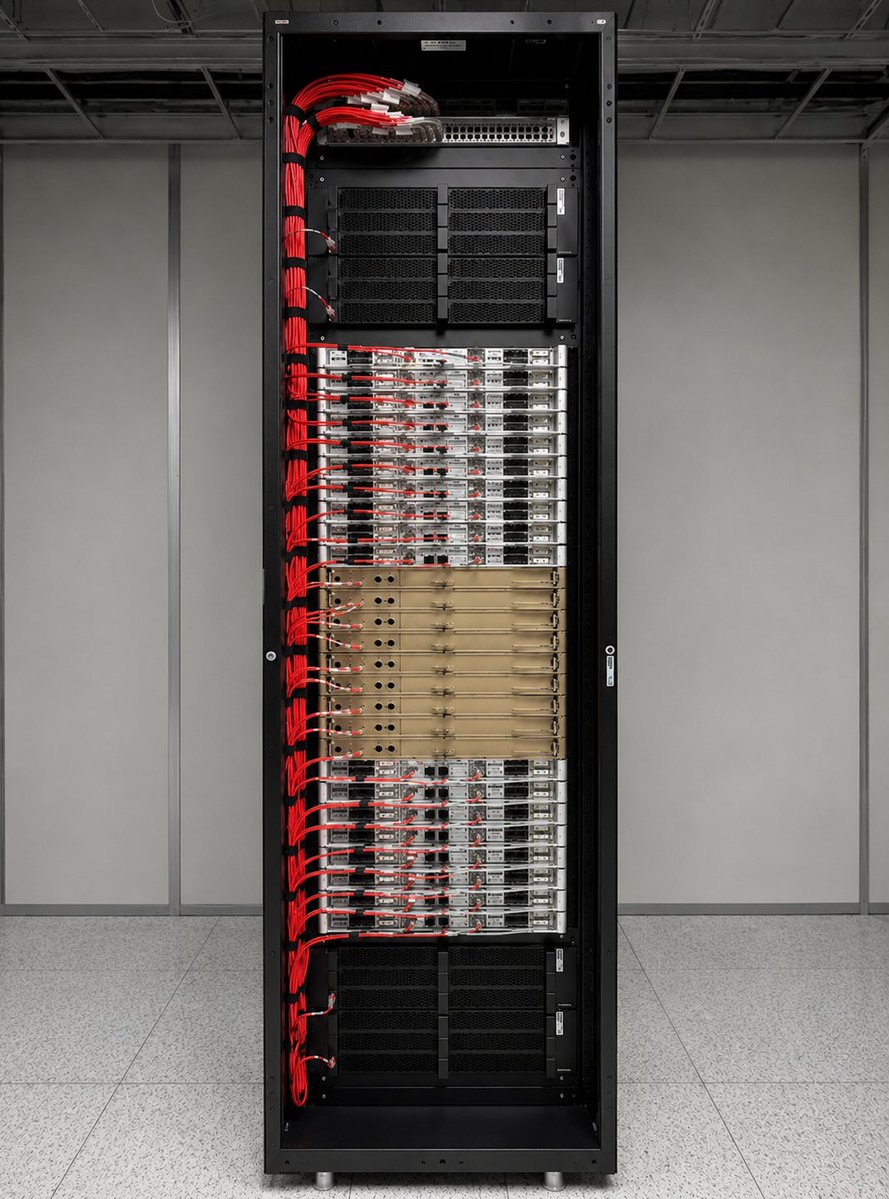
OCI continues to push the frontier of AI infrastructure. We are among the first cloud providers to bring up an @nvidia Vera Rubin NVL72 rack for validation testing, working closely with NVIDIA to deliver next-generation accelerated computing to customers at cloud scale.
Pic 1: What it takes to bring up the first rack. Pic 2: What it looks like after the models it will help train get a chance to clean up the photo.
10
24
203
55,816

Boon Tee retweeted

Jun 9
This is a super exciting release - Claude Fable 5 is the same underlying model as Mythos but with added safeguards. The benchmarks are great and it's SOTA on everything by a margin but I'll add that *qualitatively* also, this is a major-version-bump-deserving step change forward (imo of the same order as Claude 4.5 was in November), peaking especially for long problem-solving sessions on very difficult problems. You can give it a lot more ambitious tasks than what you're used to, the model "gets it" and it will just go, and it's never felt this tempting to stop looking at the code at all (but don't do this in prod!). The model still has quirks that people will run into and the safeguards are configured to be a little too trigger happy for launch, which can hopefully be tuned over time.
I feel a lot of things changing as working software increasingly comes out on a tap. The Jevon's paradox kicks in and I feel my own demand for software growing substantially. You can ask for anything - explainers, visualizers, dashboards, bespoke single-use apps (e.g. a full wandb that is hyper-specific just for your project), you can 10X your test suite, auto-optimize code, run giant research projects with custom HTML for the results, anything! "Free your mind" (Matrix ref). Really looking forward to all the things people build!

Fable 5 is state-of-the-art on nearly all tested benchmarks, with exceptional performance in software engineering, knowledge work, scientific research, and vision.
The longer and more complex the task, the larger Fable 5’s lead over our other models.
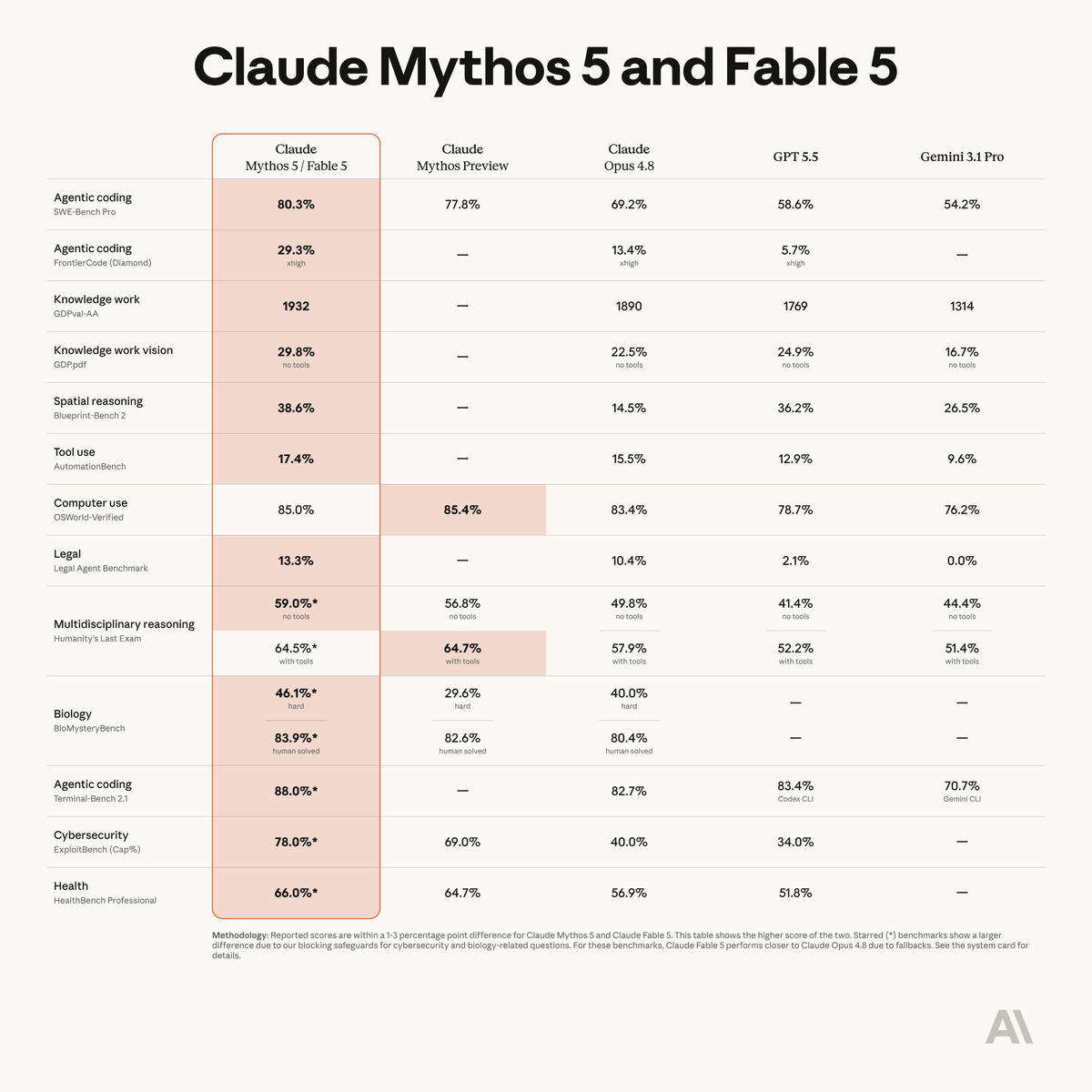
ALT Benchmark table titled Mythos 5 & Fable 5, comparing Claude Mythos 5 and Fable 5 against Claude Mythos Preview, Claude Opus 4.8, GPT 5.5, and Gemini 3.1 Pro.
1,268
2,381
25,300
2,700,195
Boon Tee retweeted

Jun 8
New in macOS 27:
You can now resize iPhone mirroring to look like an iPad display
142
251
5,953
3,653,657
Boon Tee retweeted

We recently submitted a confidential S-1. We expect it to leak so we’re just announcing it. We have not decided on timing yet; it may be a while because there are things we want to do that are likely easier as a private company. But it’s a complicated set of tradeoffs and this gives us the option to go public sooner if that ends up being best.
This announcement is being made pursuant to Rule 135 under the Securities Act of 1933, as amended, and does not constitute an offer to sell or the solicitation of an offer to buy any securities. Any offers, solicitations of offers to buy, or any sales of securities will be made in accordance with the registration requirements of the Securities Act.
572
933
13,226
3,314,287
Boon Tee retweeted

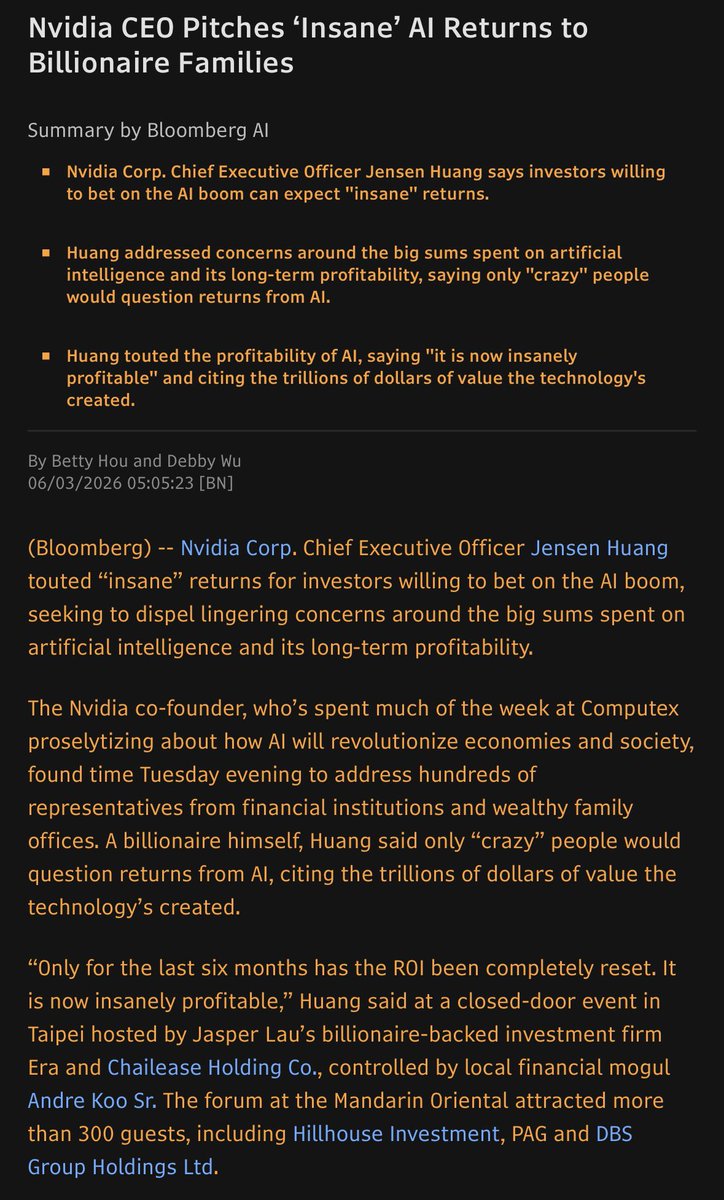
Nvidia CEO Pitches 'Insane' Al Returns to Billionaire Families
Huang addressed concerns around the big sums spent on artificial intelligence and its long-term profitability, saying only "crazy" people would question returns from Al.
1
2
17
4,774
Jun 8
This assumes AI is a commodity. It isn't.
Businesses don't pay for tokens. They pay for outcomes.
If a model costs 10x more but creates 100x more value, the price is irrelevant.
The bigger problem with this thesis: if AI is too expensive, why are revenues growing exponentially? Current evidence points to demand being constrained by supply, not willingness to pay.
Jun 2

The most basic way AI could blow up imo. I'm not saying it does but this is the most obvious way I can see it happening
- Per seat subscriptions are massively subsidized. The flat fee was priced way below what heavy usage actually costs
- For real business use you have to move to the API anyway. Data protections, work integrations and compliance officer approval
- On the API you pay metered rates, and businesses are burning credits way faster than the per seat pricing ever led them to expect
- This is everywhere right now. Internally for us, Codex users, Uber torching its entire 2026 AI budget in 4 months, the Microsoft comments. Just go try an API
I shared more on this here: x.com/Shaughnessy119/status/…
- And I don't think most businesses have the money to keep paying increasing API rates without a real change to how they operate (caps needed)
- Because they have a cheap alternative. They can reach open source models through any aggregator (OpenRouter, Venice, Baseten, Together) and still get strong privacy. Venice private data centers, or E2EE/TEE serving GLM 5.1.
More on open source inference provider raises here: x.com/Shaughnessy119/status/…
- And the discount is enormous. DeepSeek V4 codes within a hair of Opus on SWE bench at roughly 1/30th the price, and the cheapest open models run closer to 1/100th
- Chinese labs open source frontier grade models. The model is the single biggest cost an inference provider has, and they get it for free
- This idea dies if China goes closed source. That is actually bullish web2 AI labs, because if everyone is closed you pay up for the best intelligence. China goes closed source if they are tired of giving away an asset and they want the revenue and data flow to train new models
- Is this showing up in web2 AI lab revenue yet? No. Revenue is off the charts. Anthropic went from 9B to 47B run rate in five months
- So go forward, what happens?
- I think revenue slowly starts leaking to the open source inference providers (see Venice usage, OpenRouter's $113M raise, Baseten is raising at $11B or triple its valuation in three months, on revenue that went from $200M to $600M annualized in a single quarter)
- It doesnt move overnight, but it caps the labs ability to raise prices, and margins are already deeply negative. OpenAI is reportedly running near negative 122%
- With margins that bad there is no cash flow, so the labs are fully dependent on outside capital to buy GPUs, train models, and keep subsidizing usage (I.e. see Google tapping $80b equity sale, granted 30b for employee RSU taxes. Clearly they think Equity is overvalued or you wouldn't sell it)
- The break comes when that capital stops. Pricing is capped so margins cant improve, and the moment investors lose conviction on payback, the whole flow reverses
- Why would they lose conviction on payback? Back to the start - the inability to improve margins or get businesses to pay more
- This is also limiting, if we start making new drugs with AI or create entirely new businesses, you better believe people will pay up to the max for AI usage
198
Boon Tee retweeted

Jun 4
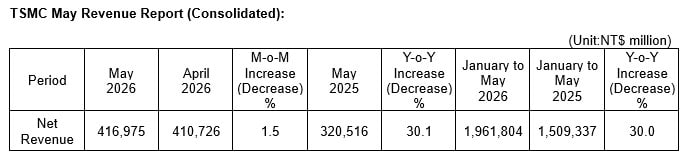
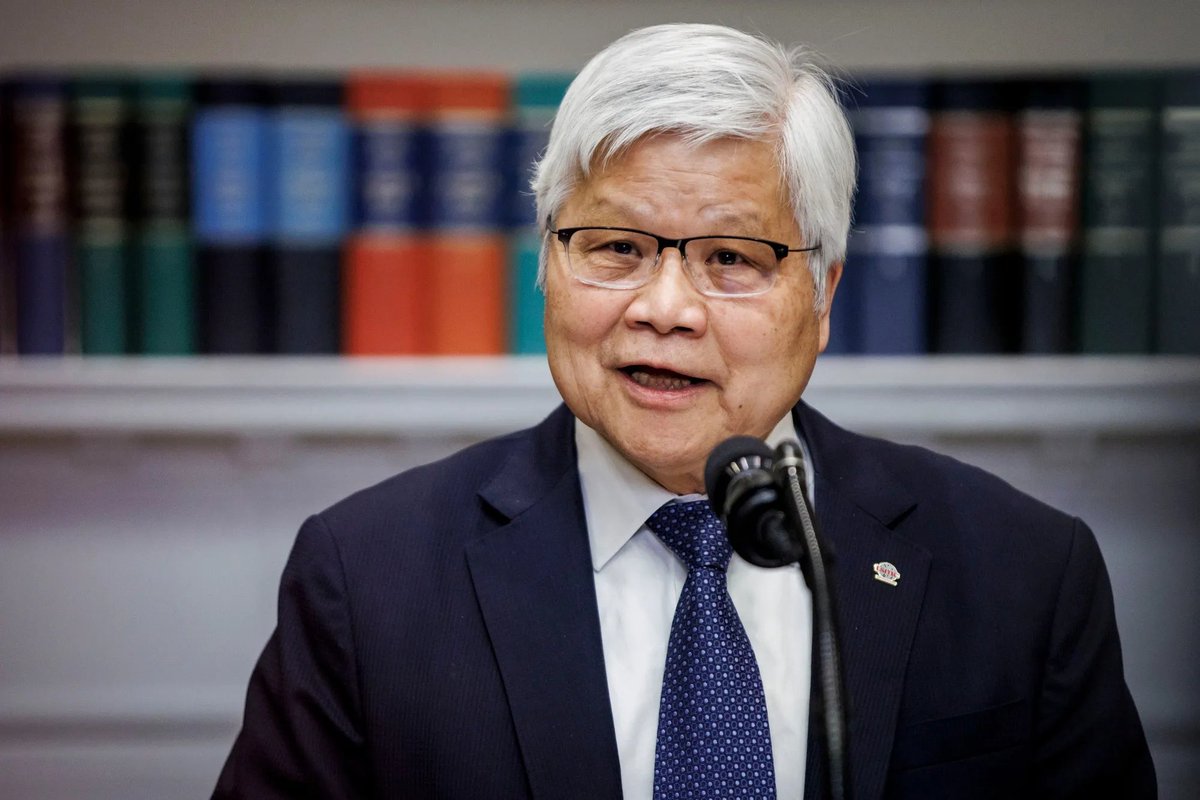
$TSM CEO Pushes Back on @GavinSBaker, Clarifying That TSMC's Bottlenecks Are Organic, Not Self-Imposed
"When asked by a reporter, Gavin Baker, a technology investor who previously managed over $17 billion in assets at Fidelity and is now the chief investment officer at Atreides Management, described TSMC as being managed by a group of very stubborn and experienced people in their 70s who had personally witnessed Taiwan's semiconductor industry go from lagging behind Intel to gradually establishing itself as a global leader. Therefore, they were very clear about the cost of tech bubbles and crashes.
In response to the above statement, TSMC's CEO stated that Baker originally meant that TSMC was applying the brakes because AI would not become a bubble. A group of experienced seniors were applying the brakes. But to be honest, TSMC did not deliberately control it, nor did TSMC intend to apply the brakes. They may be a bit stubborn and old, but they really did not deliberately apply the brakes.
TSMC's CEO said that his company tried its best to increase production capacity for its customers, but who knew that the customers' businesses would grow so fast? The development since the launch of GPT in 2023 has far exceeded expectations. C.C. Wei also revealed that he asked NVIDIA CEO Jensen Huang why he was so smart and hadn't told him earlier, but Huang replied that he didn't know either. No one, including TSMC, can predict this now, and all these demands are going to TSMC, which can't see it coming either.
C.C. Wei also stated frankly that TSMC has been increasing production, with more than a dozen construction sites underway in Taiwan."
It's actually interesting that Wei chose to discuss this narrative, and he specifically quoted Gavin's comments.
$NVDA
5
29
201
162,349
Jun 3
😂
Jun 3

Gave Jensen Huang my wallet to sign, and he straight up emptied all my 1,000-dollar bills to tip the pretty ShowGirls ⋯⋯ WTF 😂😂😂
1
209

Taipei runs on innovation and great food. 🥟🍧
If you're at GTC Taipei at Computex, visiting the night markets is a non-negotiable.
#NVIDIAGTC
134
888
5,572
431,530
Jun 2
Alphabet announced an $80bn equity raise mainly to fund AI compute infrastructure.
Structure of the raise:
• $10bn private placement to Berkshire Hathaway
• $30bn underwritten public offering
• $40bn at-the-market offering of Class A and Class C shares
Alphabet says AI demand is exceeding available compute supply, so it needs more capital to scale data centres, chips, power and related infrastructure.
Alphabet is extremely cash-generative, so raising equity at this scale signals that AI capex requirements are becoming very large, even for megacap tech companies.
This supports the view that AI demand is real, but it also raises concerns about shareholder dilution and whether future AI returns can justify the spending.
Bottom line: This is a bullish signal for AI compute demand, but a more mixed signal for Alphabet shareholders because the company is funding growth through dilution.
cnbc.com/2026/06/01/alphabet…
2
137
Boon Tee retweeted

May 29
Google is fighting every final boss at once:
OpenAI & Anthropic in models, Nvidia in chips, AWS & Microsoft in cloud, Meta in ads, Tesla in self-driving, Apple in phones and OS.
At $4.6T, it feels weirdly undervalued.
452
748
13,826
782,226
May 29
I don't think the current level of earnings for memory companies is the new normal. At the same time, I also don't believe these earnings are entirely one-off and that the industry will simply revert to its 2024 baseline. My view is that the long-term earnings power will likely settle somewhere in between.
The traditional bear case for memory stocks is based on three assumptions:
Higher prices lead to increased supply, which eventually results in oversupply and a collapse in pricing.
Demand growth cannot outpace the industry's ability to add capacity.
Producers will continue expanding because, if they don't, competitors will. No company wants to leave money on the table.
What may be different in the AI era is that demand is growing at an extraordinary pace, potentially far exceeding forecasts based on historical trends. As a result, capacity additions that would have caused oversupply in previous cycles may simply be absorbed by the market.
The key question is no longer whether supply will increase. It almost certainly will. The real question is whether supply can increase fast enough to keep up with AI-driven demand.
My base case remains that memory is a cyclical industry. However, this cycle could look very different from previous ones because AI demand is larger, more persistent, and growing much faster than anything the industry has experienced before. While today's earnings are unlikely to be permanent, the earnings floor may ultimately settle at a level meaningfully higher than before the AI boom.
3
132
Boon Tee retweeted

May 26
A kid from Singapore who grew up training to be a concert pianist became one of the most important AI researchers alive, quit Google to start a frontier AI lab with 20 people and $60 million, built a model that competed with GPT-4 in a year, then walked away from the unicorn he created and went back to Google to lead the team that just won the International Math Olympiad with an AI.
His name is Yi Tay. Almost nobody outside the AI research world knows it.
Here is the story.
Yi grew up in Singapore. He earned a classical piano performance diploma from Trinity College London in 2012 and almost became a professional musician. He went into computer science instead, did his PhD at Nanyang Technological University, and joined Google Brain as a research scientist. There were almost no Singaporean researchers in frontier AI at the time. He used to say he was on an uncharted path.
At Google he became the co-lead of PaLM-2, the brain behind Google's entire AI stack. He invented UL2, a pretraining method now used across the industry. He invented Differentiable Search Indexes. His work shipped inside Google Assistant, YouTube, and Search.
When ChatGPT launched in late 2022, Yi made a decision that shocked the research community. He left Google.
In 2023 he co-founded Reka with researchers from DeepMind and Meta. The headquarters was in San Francisco, but the team was scattered across Asia, Europe, and the US. They had no big-tech backing. They had 20 people total. They had $60 million in funding.
For context, OpenAI had around 600 people working on GPT-4. Google Gemini had 950 co-authors on the technical report. Reka had fewer than 5 people on pretraining.
Yi lived nocturnally for 639 days. Five cups of coffee a day. Takeout twice. He gained 15 kilograms. He had a newborn baby. He worked across time zones his entire team was spread across. He built infrastructure from scratch in places Google had taken for granted.
In May 2024 Reka Core debuted at number 7 on the LMSYS leaderboard. The only GPT-4 class model on the planet that was not trained by OpenAI, Google, Anthropic, or Meta. A 20-person company with 5 people on pretraining had just shipped a frontier model. Alibaba Cloud, NVIDIA, and Oracle became partners. The company hit a $1.3 billion valuation.
Then in November 2024 Yi did something nobody expected.
He walked away.
He posted a quiet note on his blog titled "Returning to Google DeepMind." After 639 days of building one of the most respected frontier labs outside the big four, he went back to the company he had left. He wrote that he had learned more than he ever thought possible. He did not explain much else.
Google made an extraordinary bet on him. They let him build something nobody else in the industry has, a DeepMind lab in Singapore. Yi runs it with Quoc Le. The team focuses on reasoning, reinforcement learning, and post-training for Gemini. It started with a dozen researchers. It now has over 300.
Last summer, Yi's team led the effort that won the International Math Olympiad gold medal with Gemini Deep Think. The model solved IMO problems in a live competition, the kind that fewer than a hundred humans on Earth can solve under time pressure. His team also drove the work behind Gemini's ICPC 2025 gold medal.
Yi still lives in Singapore. He still plays piano when he has time. He calls himself a global citizen who does not identify with any local AI scene. He has been at Google for nearly 14 years if you count the Reka detour. He says the Singapore lab is just getting started.
A pianist from Singapore co-led the model that powered Google AI, left to build a frontier lab with 20 people and beat models trained by armies, walked back into Google, and is now running the team that just taught a machine to win Math Olympiad gold.
The most influential AI researcher you have never heard of is sitting in a Singapore office right now, training the next generation of models that think.
15
74
640
74,598
Boon Tee retweeted

May 21
Elon Musk's first wife once described what it's like to watch him fail.
She said he doesn't react the way normal people react. When a rocket explodes, most people in the room go silent. Some cry. Some start calculating the financial damage.
Musk pulls out his phone and starts making calls. Not emotional calls. Engineering calls. "What failed. When can we fix it. When's the next launch." His voice doesn't change. His face doesn't change. The rocket that just cost $60 million is already in the past. The next one is all that exists.
She said it was the most unsettling thing she'd ever witnessed. Not because he was cold. Because he genuinely wasn't affected. The failure didn't register as failure. It registered as data. An experiment that produced results. Results that inform the next experiment.
This is why he wins. Not because he doesn't fail. He fails more spectacularly than anyone in history. He wins because failure occupies zero psychological space. It enters as data and exits as action.
Most people lose not because they fail but because they spend weeks processing the failure before acting again. Musk spends zero seconds. The gap between failure and next attempt is a phone call.
684
3,726
25,731
1,770,807