
Changing your business trajectory.
Joined November 2015
- Tweets 691
- Following 43
- Followers 113
- Likes 2
26 Photos and videos











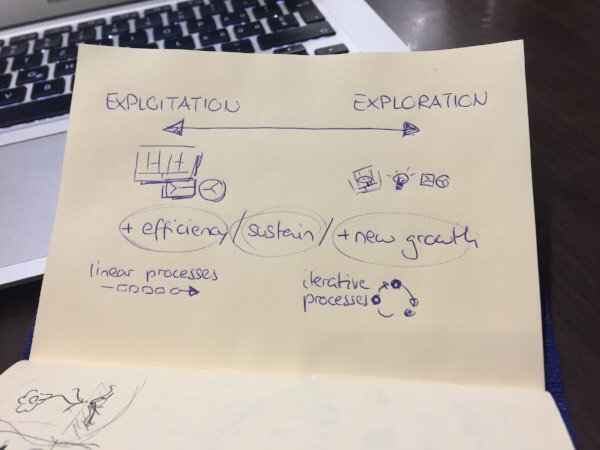
Good advice.
Jun 1

One thing deep tech / hard tech founders don’t appreciate enough: some of the best capital comes from family offices. Many are founder-operator types, think long-term, move quickly, well networked and generally understand industrial businesses better than VCs. Traditional venture obviously still matters, but for founders building manufacturing, energy, robotics, or other physical systems, family office is some of the most naturally aligned capital in the market. If I were a founder building something real and struggling with traditional VC, I’d be going direct to family office. The appetite for direct exposure is really strong right now.
7

Mar 27
Sarbanes-Oxley was so obviously destructive that neither Sarbanes nor Oxley ran for re-election.

Sarbanes-Oxley turned going public into a $3 million annual compliance nightmare. IPOs dropped 76% in the decade after 2002 -- from 457 average annual IPOs in the 1990s to just 108 from 2003-2012.
The compliance costs hit small companies hardest (obviously). Goldman Sachs absorbs SOX requirements as a rounding error. Your innovative startup burns through Series B funding just to satisfy auditors who've never built anything.
Established corporations love this arrangement. Why compete with disruptive newcomers when Congress erected a regulatory moat around your market position? Private equity now buys promising companies before they can threaten incumbents through public markets. The supposed "investor protection" created the most concentrated corporate landscape in American history.
6
“The median growth-stage venture-backed company cannot go public at a valuation that returns capital to the late-stage investors.”
True. And this is a real problem.

1
1
168
Jan 27
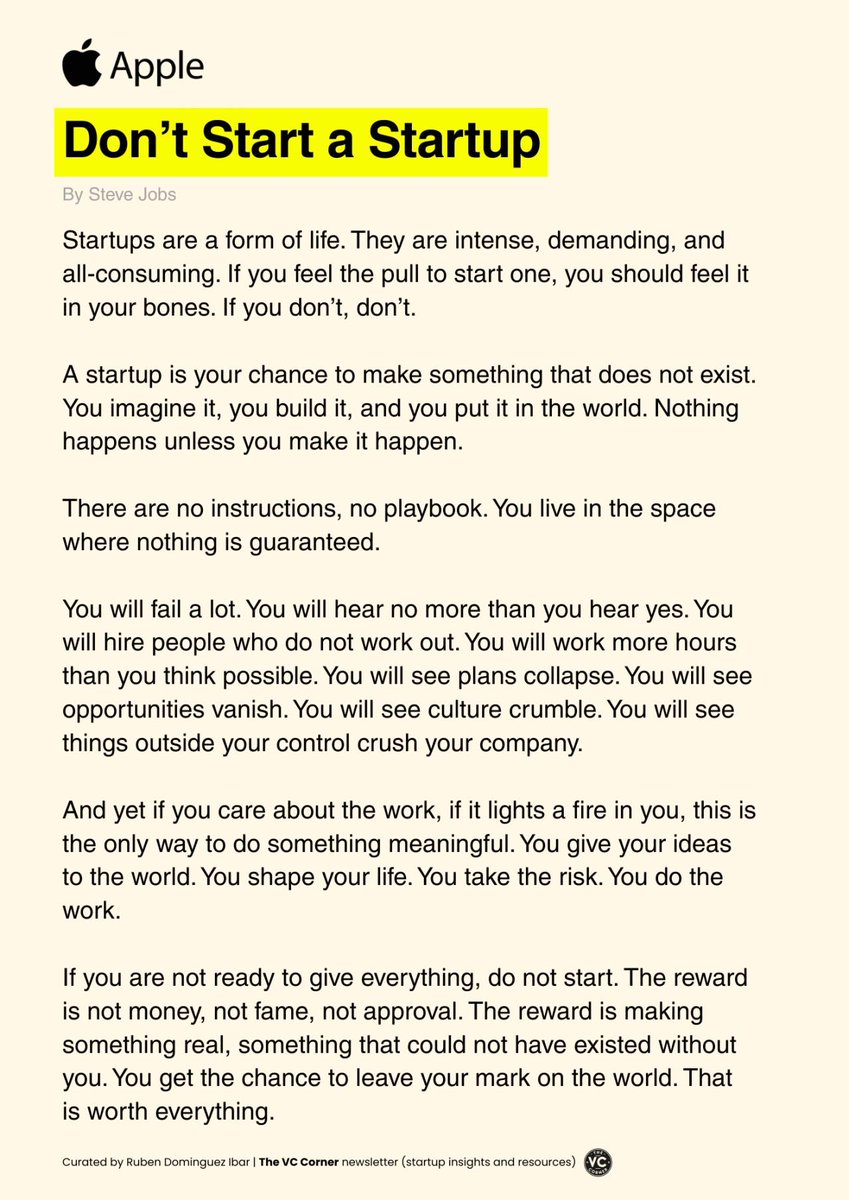
Good advice.

4
Jan 17
All the important discussions between founders and investors should happen BETWEEN board meetings. The actual board meeting should be (1) a fulfillment of legal requirements, and (2) a chance to have 2nd- and 3rd-tier managers present their work, and give them a chance to shine.
Jan 16

Most early stage founders are bad at board meetings. I was one of them!
Not because they lack effort, but because they think the job is to impress instead of to operate.
After 38 board meetings as a CEO, I learned the opposite lesson: the best board meetings feel boring, structured, and almost inevitable. Nothing dramatic happens because all the real work happened before the meeting itself.
These are the 6 things I wish I understood before my first meeting.
Don't make the same mistakes I did!
1/ No surprises. Ever.
Every board member gets a 1:1 call before the meeting, plus an open invitation to talk after reviewing the materials. If something is controversial, the board meeting should never be the first time it is discussed.
The board meeting exists for alignment and decisions, not discovery.
2/ Write monthly updates, especially when things are messy.
Good months write themselves but more importantly, bad months build trust.
Boards do not expect perfection, they expect predictability. Consistent reporting reduces anxiety, removes guesswork, and turns the board into a support system instead of an audit committee.
3/ Run a real agenda and stick to it.
Ours never changed:
> 15 min minutes and formal votes
> 60 min financials and core KPIs, presented by execs, not the CEO
> 15 min break
> 30 min major topic one
> 30 min major topic two
> 30 min for overflow and investor only meeting
Structure creates focus. If you don't have this you are in for a wild ride to nowhere.
4/ Do NOT pitch.
The fastest way to lose trust is to treat your board deck like a fundraising presentation.
When everything is polished and optimistic, board members stop asking how to help and start wondering what is being hidden. Calm, clear, consistent reporting shows control and leads to better decisions faster.
5/ Let your team present.
Boards gain confidence when they see depth beyond the CEO.
It also forces ownership, because people speak differently when they are accountable in front of the board.
6/ Design for clarity, not beauty.
You will not be judged on how pretty your deck is.
You will be judged on how easy it is to understand. Clean structure, consistent formatting, and readable charts reduce cognitive load and make hard conversations productive instead of exhausting.
If there is one unifying idea behind all of this, it is this:
A board meeting is not a performance
It is the mechanism by which uncertainty gets removed from the business.
When you run it that way, trust compounds, decisions speed up, and the board becomes leverage instead of pressure.
3
Stephen Fleming retweeted

21 Nov 2025
I used to phrase it as:
Startup CEOs can’t share their troubles with their employees because they’ll quit.
They can’t share with their investors because they’ll get fired.
And they can’t share with their spouse because she will say “You never should have quit that job at the phone company!”
20 Nov 2025

One reason CEO roles are so draining:
There's no boss to give you positive reinforcement for good work
138
237
4,107
640,943
Stephen Fleming retweeted
21 Nov 2025
On the East Coast, if you make $10 million out of a deal, you disappear to your lake house with a Porsche and a pair of SUVs, and you’re never heard from again.
In Silicon Valley, if you make $10 million out of a deal, you’re still paying off your second mortgage and your first wife. You might take six months off, but then it’s back to the grind.
1
3
94
Stephen Fleming retweeted

11 Nov 2025
talking to portfolio founder today about a $30M acquisition offer for his company, roughly 15x ARR. growth has been steady but not outstanding.
he asked “won’t you be upset that we didn’t go for $1B?”
my reply was that $15M (he owns about 50%) is a considerable sum for anyone, especially at this stage of life. i told him he’s giving himself almost infinite attempts at taking a big swing down the road, either self funded or with my partnership.
in venture you play the long game but you never want to be in a position where you’re operating with your back against the wall
there are entrepreneurs who have executed flawlessly in desperate situations but they are few and far between
sometimes you need to take care of yourself first, build a foundation of wealth that provides agency and optionality - then go for the big swing.
45
15
491
62,040
18 Oct 2025
Preference stacks can be really demoralizing for both founders and employees.
18 Oct 2025

When you see massive fundraising announcements, remember that FanDuel sold for $450M, and the founders/employees made $0.
How?
Investors had a liquidation preference that entitled them to the first $559M of proceeds.
The more you raise, the bigger the preferences.
8
20 Aug 2025
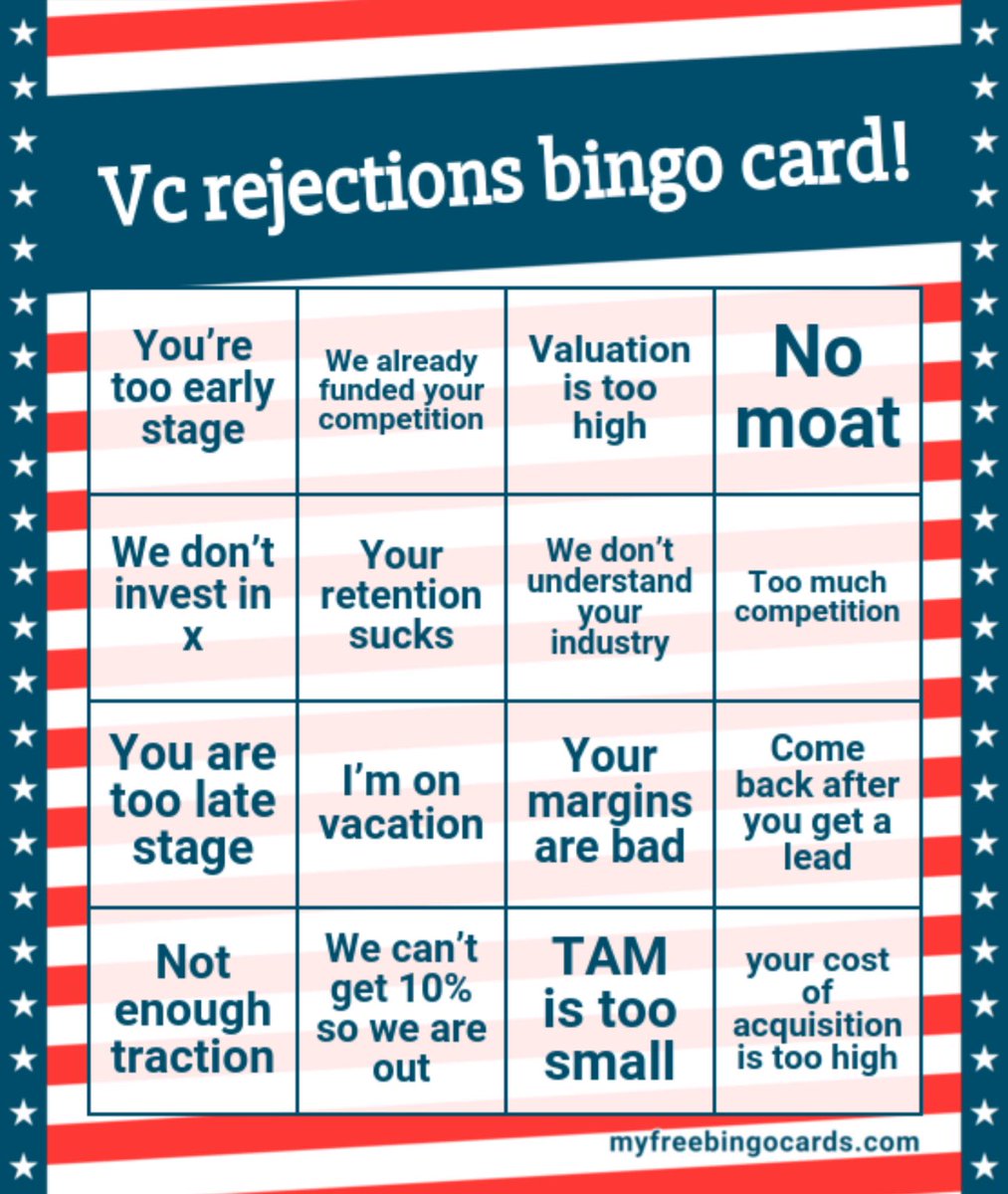
My portfolio companies have received all of these.
14
12 Aug 2025
Getting harder and harder for VCs to make money this way.
11 Aug 2025

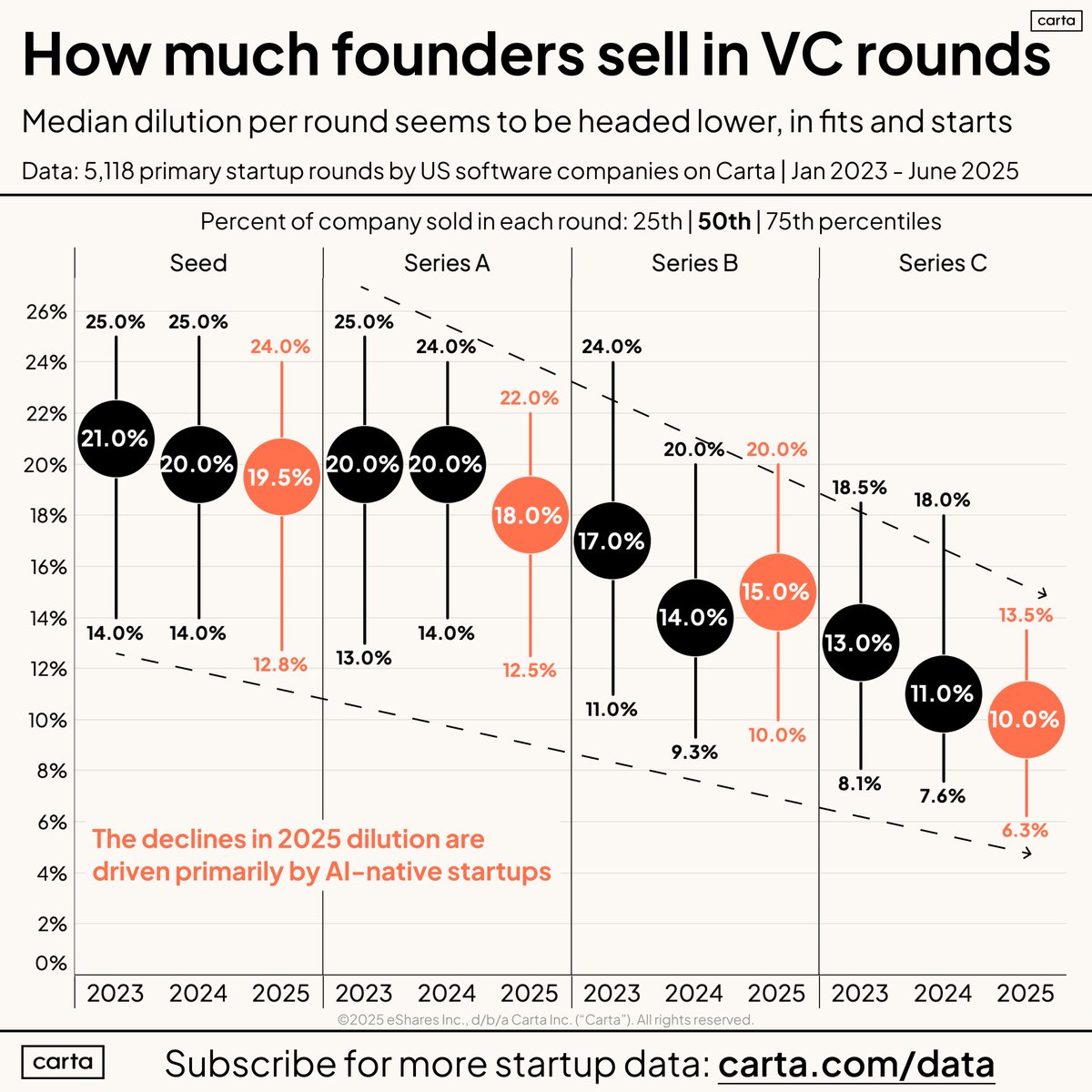
Periodic reminder that selling 30% of your company in a seed round is out of whack with today's market.
Unless you're building nuclear reactors and there is just one VC interested, 30% dilution is too high.
18
5 Aug 2025
Good lessons here.
4 Aug 2025

Before AWS existed, one company ran the servers for Twitter, LinkedIn, and Facebook's entire app ecosystem.
They owned Node.js, invented containers 8 years before Docker, and Peter Thiel even backed them.
Then something happened...
15
24 Jul 2025
Useful list.
24 Jul 2025

Finding funds that 𝑡𝑟𝑢𝑙𝑦 invest in pre-seed is hard.
Here's a list of some I know do A LOT of pre-seed (add to comments):
Hustle Fund
Everywhere Ventures
Pear VC
Wonder Ventures
Precursor Ventures
Wischoff Ventures
Nido Ventures
Plug and Play Tech Center
Gaingels
Amplify.LA
Dorm Room Fund
MBA Ventures
Unshackled Ventures
Torch Capital
Rally Cap
Cortado Ventures
LvlUp Ventures
Ganas Ventures
Symphonic Capital
Alpaca VC
Deciens Capital
Afore Capital
The Council
GoAhead Ventures
Barrel Ventures
Enzo Ventures
Redbud VC
Next Wave NYC
f7 Ventures
Recall Capital
Launch Factory
Kiplin Capital
Better Tomorrow Ventures
Incisive Ventures
Boost VC
What are others?
---
For founders who are fundraising, I did a deep dive on what's actually inside an early stage memo.
This could help you nail fundraising: lnkd.in/gPd8-bYy
♻️ Repost to help a founder in your network!
9
4 Jul 2025
These are massive changes.
4 Jul 2025

Major Breakthroughs in Startup Tax Law.
Trump just signed the biggest tax overhaul for entrepreneurs in decades into law.
The QSBS expansion includes THREE game-changing benefits most investors don't know about yet.
You won't believe what you're about to hear.
A Thread 🧵

1
20
10 Jun 2025
There’s a big hole in the VC market right now.
10 Jun 2025
Just talked to an AI founder who was ghosted by funds for his Series A; he went from 0 to $4 M ARR in 2 years. he is shocked.
They told him he wasn’t growing fast enough (these funds had AI companies that went from 0 to $50 M in 18 months).
This is the benchmark now. This is why Seed to Series A is death for many companies, and it’s getting worse.
They’d rather pile all the money at big valuations into companies/products that have shown they can get scale.
Many funds now have companies that got to $2–5 M ARR and then saw revenue growth die.
Wild times. You either growth VERY quickly or your die rn.
1
47
3 Jun 2025
This anecdote is from a different world, but this is pretty much my attitude towards startup business plans.
3 Jun 2025

On ships, we have to prepare a detailed voyage plan. Once, a young officer wrote a half-decent one, then spent 30 minutes printing it on fancy paper and arranging it in one of those glossy presentation binders. He left it on my desk with a nice note.
I walked past my office that day with grease on my hands from working on a valve. Normally, I head straight to the slop sink for some Gojo, but this time I call the officer into my office and slowly pull out each sheet of paper.
Every greasy fingerprint clearly disturbed him. Then, like a middle school English teacher, I bled all over it in red ink.
He was visibly in psychological pain.
We repeated this ritual three times with more fingerprints and red ink.
A few days later, I’m walking past the galley and hear a rant. The officer is venting to another officer, clearly frustrated:
“I pulled old voyage plans from the file cabinet and mine is twice as detailed as any of them—but that F’n SOB won’t accept it. F*** him.”
So I head up to my office and call him on the radio.
“Tick tock. Your voyage plan is overdue. Let’s see it,” I said.
“It’s on my USB. Let me go print it.”
“Fine. But no plastic covers. Paper and a metal paperclip, that’s all.”
Clearly pained, he disappears for another 30 minutes. When it comes back, it’s like an origami masterpiece. He had cut and folded tab marks, highlighted sections in different colors. Pure art.
I was really impressed but being a “F’n SOB” I couldn’t tell him that.
“Leave it on my desk and go.”
I secretly scanned and printed every page, slapped his original cover sheet on the copies, then called him back in.
“Great job. Now let’s file it.”
The kid’s face lit up like Christmas morning. He ceremoniously walked up to the bridge holding it out in front of him like the gospel on Easter Sunday.
He opened the filing cabinet and handed it to me.
I took it, walked to the side of the ship, and tossed it overboard.
Walking back past him, I said, “Thank you. Great job.”
He was crushed.
Fast forward a few weeks. We’re approaching a tricky navigation point and have to deviate from the plan. Everyone is exhausted and running out of ideas. Nobody can remember a critical detail about the approach.
I call the kid up to the bridge.
He explains exactly what to do, in perfect detail, then snidely remarks, “If you hadn’t thrown my voyage plan overboard, they’d know what to do.”
I told him to listen carefully.
“This deviation wasn’t on your plan, The process of doing detailed revisions and nailing every detail is why you remember. The plan itself is useless. Any idiot can follow instructions from buoy to buoy. But when things go off-script, you need to understand and that only comes from doing the work.”
Then reached into a filing cabinet and handed a seaman one of those fancy binders, filled with beautifully folded tab marks, highlighted sections, and origami precision.
Inside was the junior officer’s original plan, except the coversheet now read:
VOYAGE PLAN BY OFFICER SMITH
THE BEST VOYAGE PLAN THIS SHIP HAS EVER SEEN AND THE TEMPLATE FOR FUTURE PLANS
And beneath that:
“Plans are useless, but planning is indispensable.”
—Dwight D. Eisenhower
P.S. skip the origami and fancy covers. It’s the attention to detail inside that counts.
⸻
Then I signed it with one greasy fingerprint,
I don’t think he forgot the lesson.
Detailed planning is the key to adaptability.
1
29
23 May 2025
Interesting.
23 May 2025

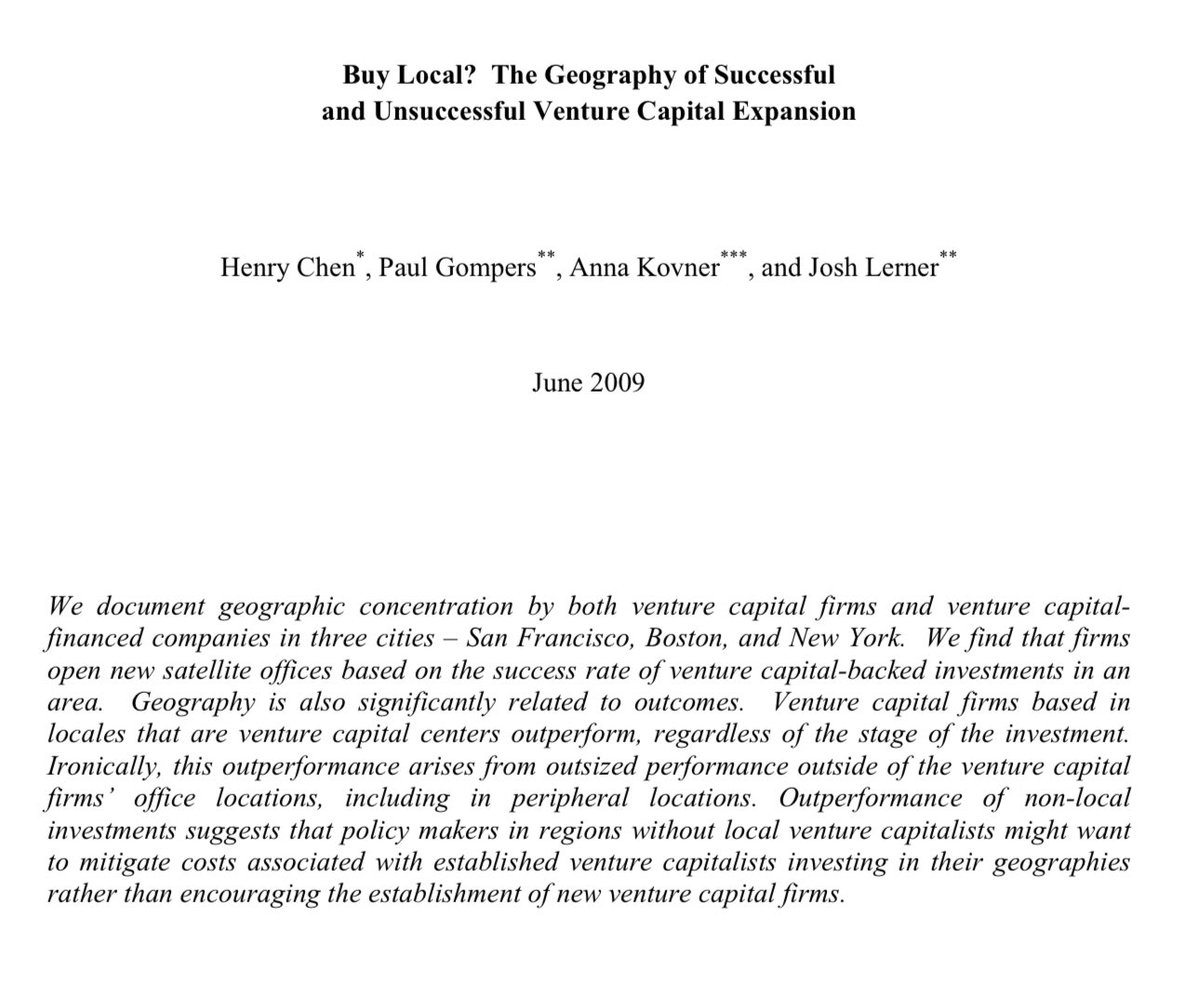
“Venture capital firms based in locales that are venture capital centers outperform, regardless of the stage of the investment. Ironically, this outperformance arises from outsized performance outside of the venture capital office locations, including in peripheral locations.”
(source: “Buy Local? The Geography of
Successful and Unsuccessful
Venture Capital Expansion”)
There appears to be some connection between VC firm location and success*, but not between investment location and success. Indeed, outperformance appears to be related to finding opportunities outside of the traditional tech hubs.
Further research demonstrates that proximity between investor and startup is overestimated in importance:
“The analyses clearly showed that the importance of regional proximity between the VC firm and its portfolio companies is widely overestimated in the literature.”
(source: “Does venture capital investment really require spatial proximity? An empirical investigation”)
A brief example of the significance of non-traditional hubs to venture capital returns: Pitchbook ranked Chicago at #8 for VC investment, and #1 for VC returns (MOIC).
(source: “The Bay Area & beyond: Ranking US metro areas by VC invested and returns”)
tl;dr @endowment_eddie is correct to say that a regional focus is usually a mistake for VC.
Pricing and talent competition provide attractive opportunities everywhere, proximity does not appear to be important, and VCs need to be open to outliers wherever they are based.
(*Other research has shown that this type of central position is only beneficial in ‘hot markets’ — something to keep in mind.)
16
17 Apr 2025
Makes sense.
17 Apr 2025

The Atlanta venture capital firm is betting on smaller firms in often-overlooked metro markets, a strategy that it says is suited for dicier economic conditions. bizjournals.com/atlanta/news…
26
14 Mar 2025
Look up my “Startups for Grownups” post.
13 Mar 2025

The average age of a tech founder in the US is 45, not 25.
Let that sink in.
21
Stephen Fleming retweeted

13 Mar 2025
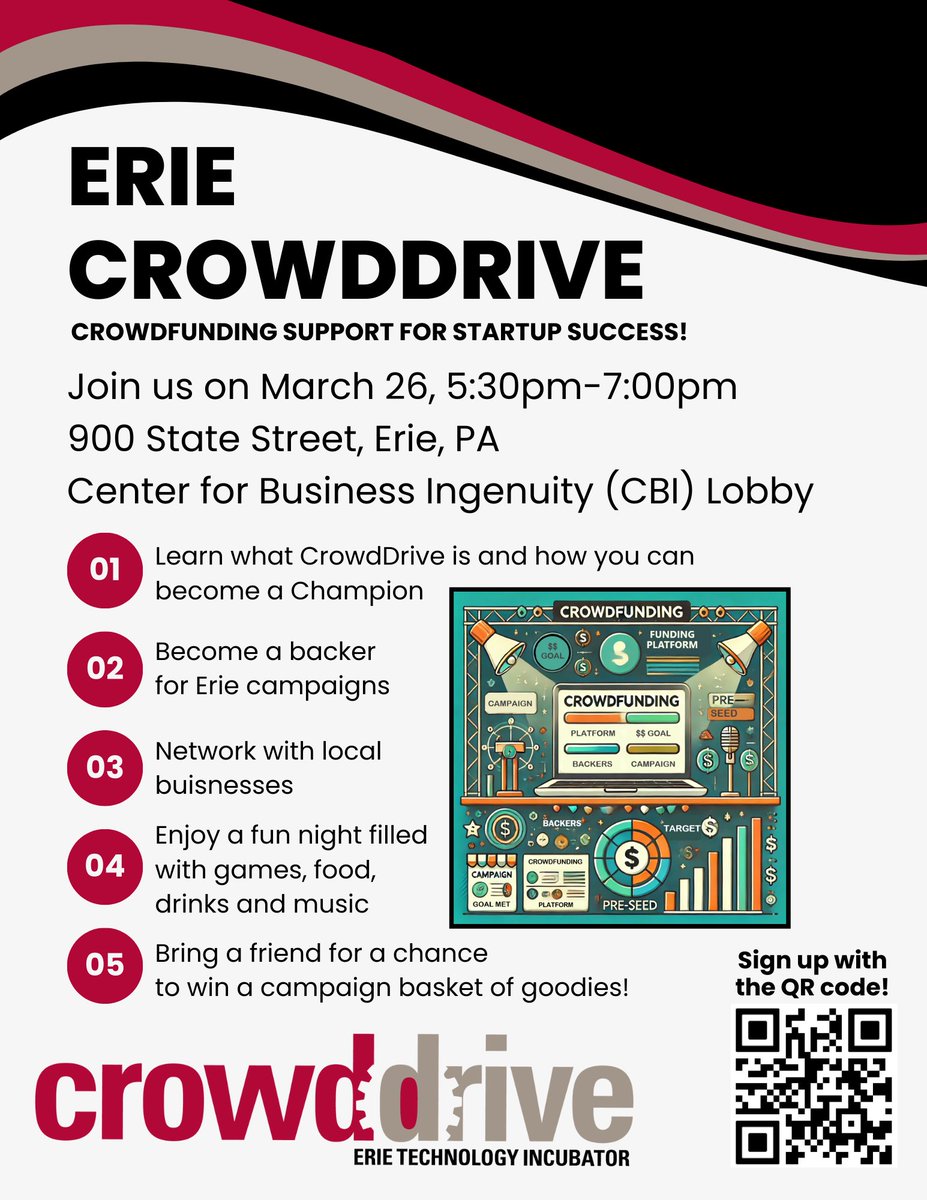
Got a #startup idea that needs a bit of public #funding?
No idea where to start or how to go about it? Check out what @ErieTechnology has been doing to help #crowdfund your idea. Be sure to join in on March 26th!
#Crowdfunding Support for #Startup Success!
1
1
63