
Bioarchaeologist and amateur scarecrow. Ancient Genomics Laboratory @TheCrick
Joined May 2012
- Tweets 13,624
- Following 1,360
- Followers 3,025
- Likes 13,047
1,066 Photos and videos





Pinned Tweet

2 Sep 2022
Prof Caroline Wilkinson at the @LJMU and @dundeeuni Face Lab did some facial reconstructions of two victims for History Cold Case: a child and a man. Caroline kindly updated these reconstructions with pigmentation predictions from the DNA. The girl may be one of the sisters.
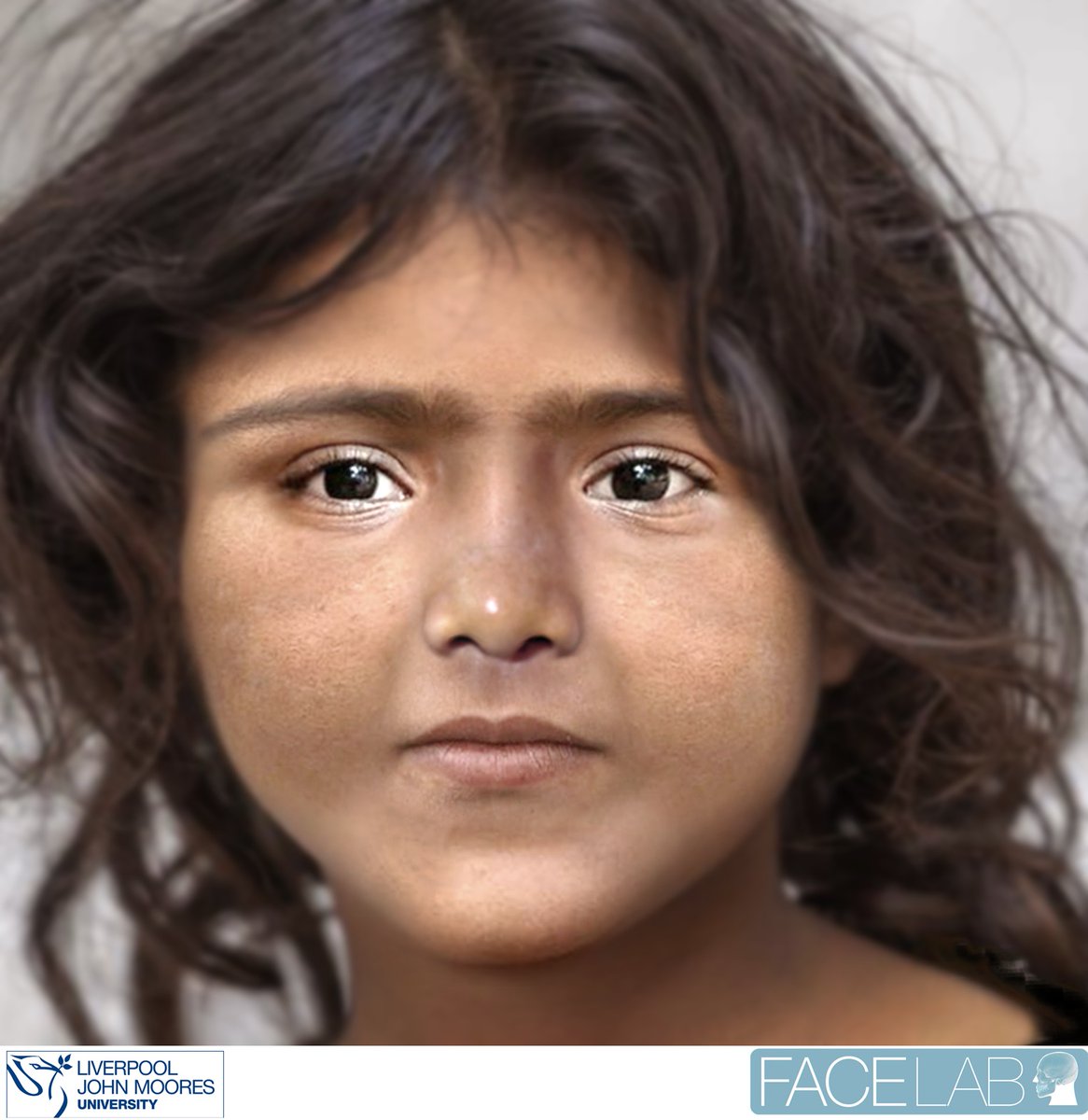
ALT Facial reconstruction of a young girl with dark olive skin, brown eyes and long flowing brown hair. She has a small slightly downturned mouth, a narrow nose and large eyes.
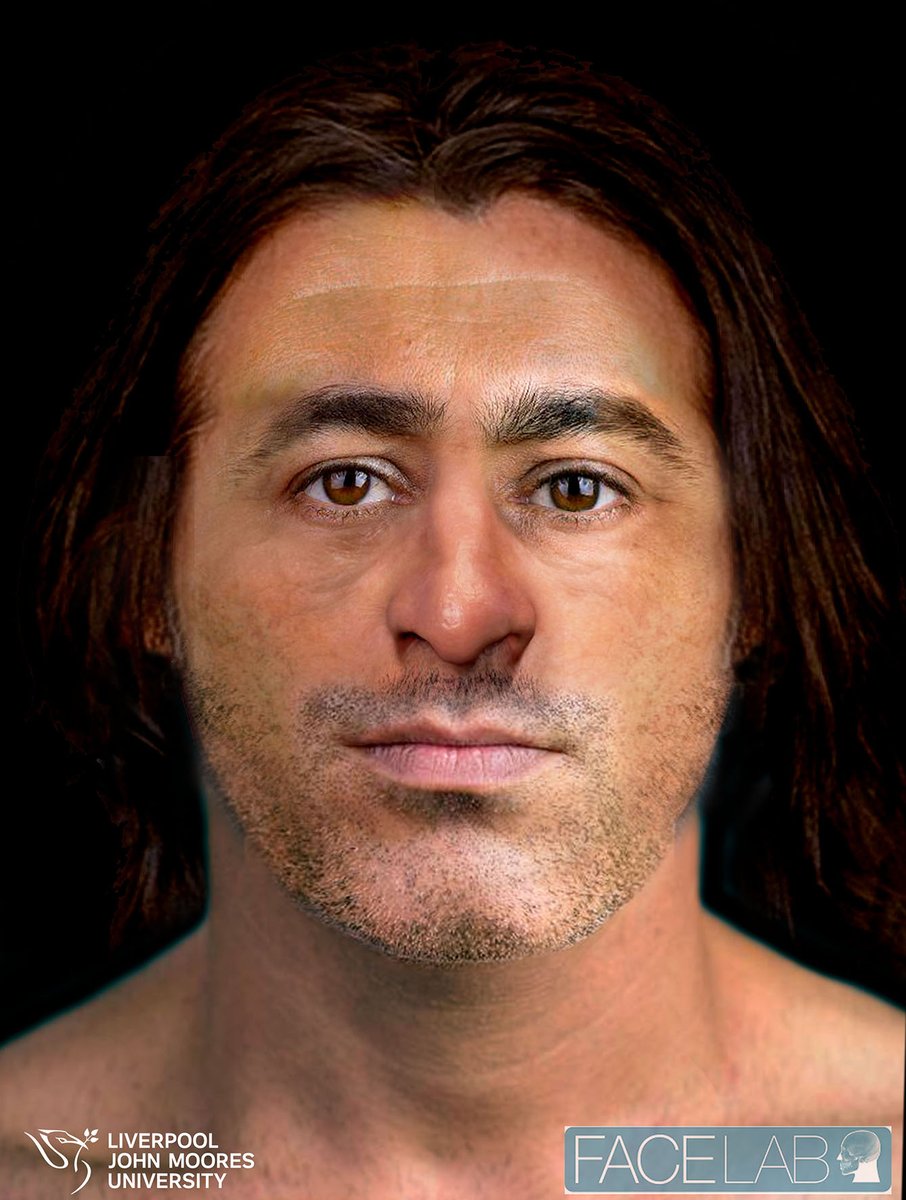
ALT Facial reconstruction of a man whose remains were recovered from the Chapelfield well. He has olive skin tone, brown eyes and straight long brown hair. He has a very masculine face with a strong heavy jawline and some stubble. His eyes are quite narrow-set with a narrow nose.
30 Aug 2022

Our superlatively-titled paper 'Genomes from a medieval mass burial show Ashkenazi-associated hereditary diseases pre-date the 12th century', is out now in @CurrentBiology - Bit of a long thread, but it is 18 years in the making…
sciencedirect.com/science/ar…
30
31
194
Tom Booth retweeted

16 Jan 2025
The Durotriges
An Iron Age people with women at the centre of power, kinship and land ownership
A great report on our joint @tcddublin @bournemouthuni research project by @spoke32 in @ScienceMagazine
science.org/content/article/…
3
31
112
5,507
Tom Booth retweeted

15 Jan 2025
Our new paper is out! Congrats to the whole team, especially the staff and students @bournemouthuni who have been excavating this incredible site for 15 years (with much more left to uncover!)
Widespread matrilocality in Iron Age Britain - Up Na Mná :)
rdcu.be/d6mb0
9
28
87
9,774
15 Jan 2025
Matrilineal organisation of cemeteries in Iron Age Britain.
15 Jan 2025

Delighted to see our new paper out in Nature
nature.com/articles/s41586-0…
5
3
24
5,574
Tom Booth retweeted

15 Jan 2025
Delighted to see our new paper out in Nature
nature.com/articles/s41586-0…
1
6
41
9,571
Tom Booth retweeted

14 Jan 2025
Check out our Ancient Genomics Lab, including @pontus_skoglund, @boothicus and @tait_frankie, on tonight’s new episode of Digging for Britain. 🦴
Watch it now on iPlayer (from 46:00), or tune in to @BBCTwo at 20:00.
bbc.co.uk/iplayer/episode/m0…
7
18
3,223
Tom Booth retweeted

8 Jan 2025
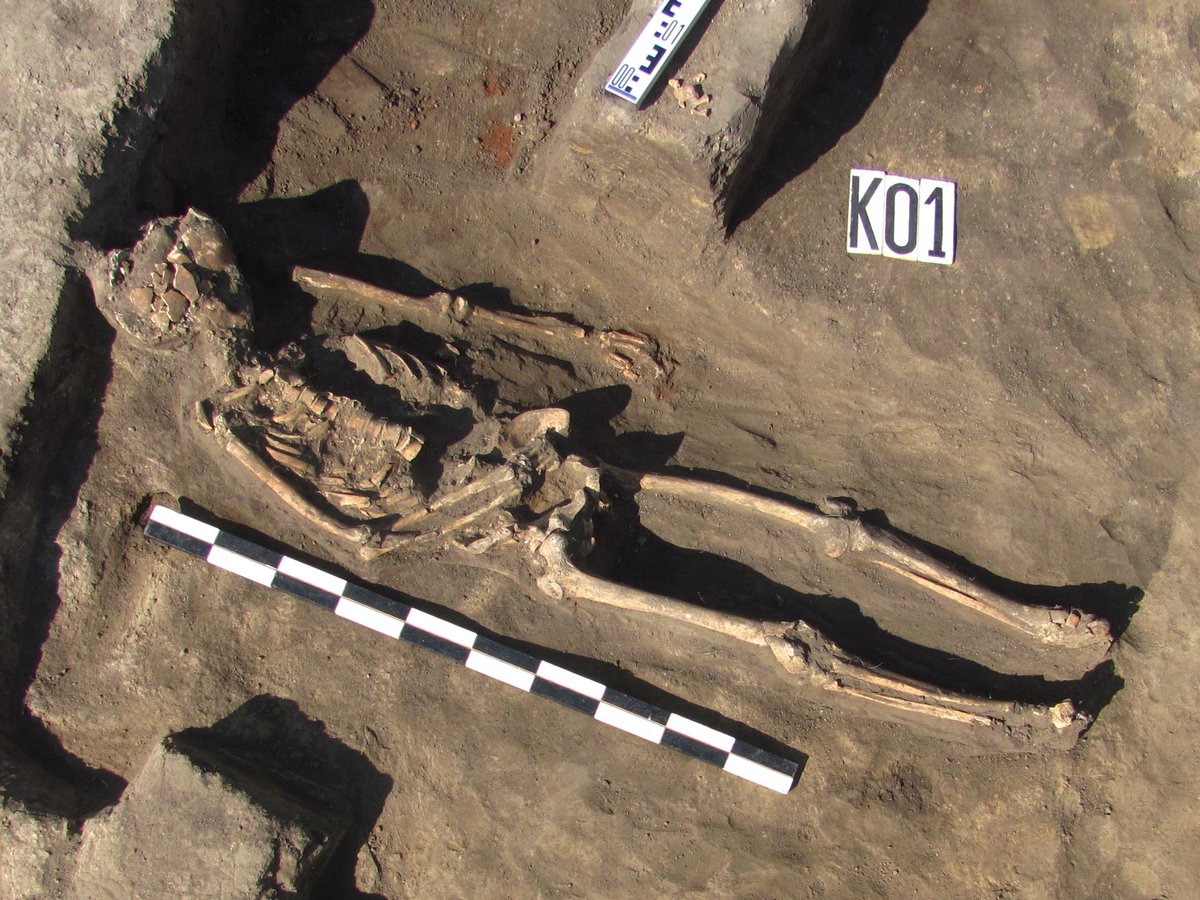
Very happy to share the results of my @MSCActions project done at @UGI_at_UCL with @mt_genes and @pontus_skoglund from @TheCrick. We used ancient DNA to reveal remarkably high genetic diversity in the region of modern-day @Ukraine over the last 3,500 years until ~500 years ago.
4
19
81
18,249
Tom Booth retweeted

1 Jan 2025
Happy New Year!
Our Twigstats paper is now out!
nature.com/articles/s41586-0…
4
64
227
25,635
Tom Booth retweeted

1 Jan 2025
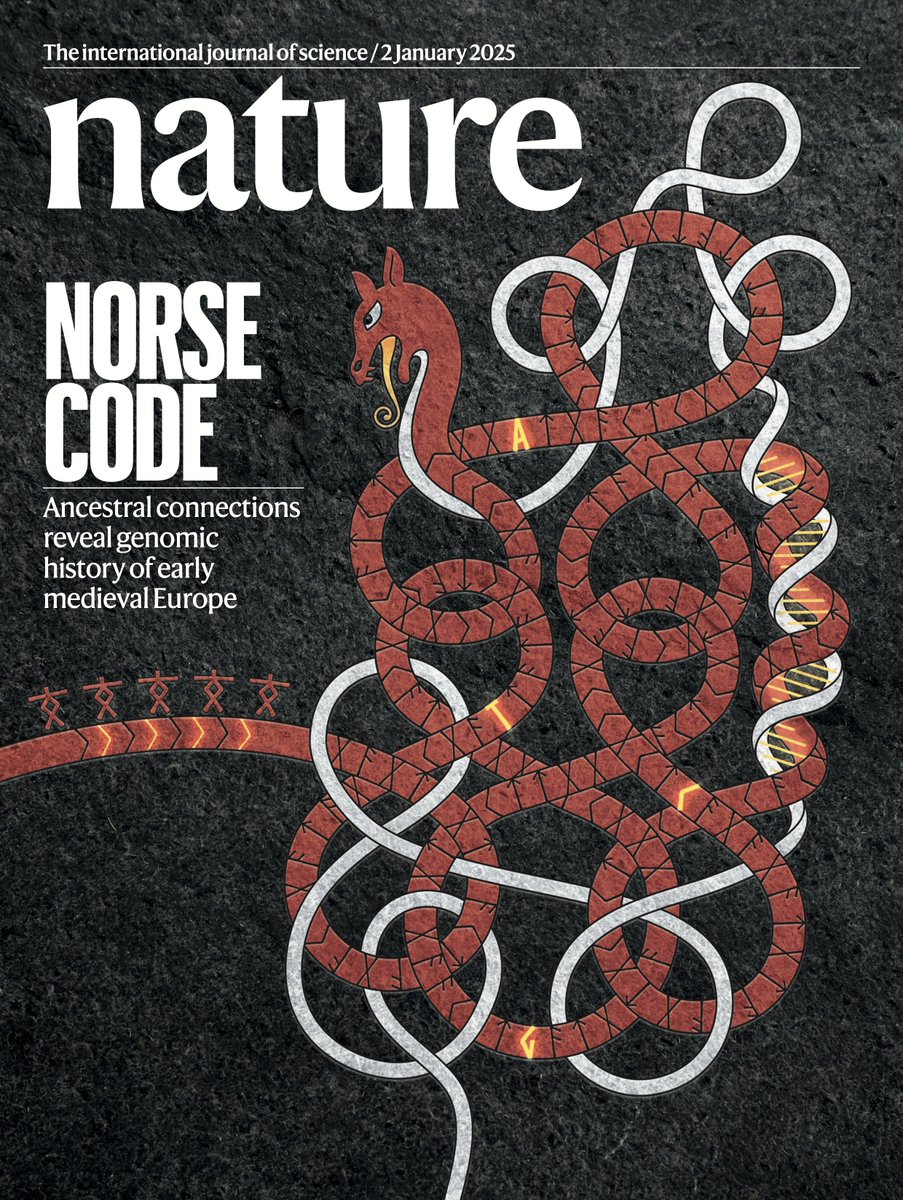
Kicking off the new year, our paper by @leo_speidel et al. is out describing what to me is a breakthrough in ancient genomics. By using genealogies to study ancestry we can get much more resolution to study finer-scale history. We call this method Twigstats.
14
119
571
68,201
Tom Booth retweeted

16 Dec 2024
NEW Analysis of over 3000 human bones from Charterhouse Warren, England, indicates they were massacred, butchered, and likely partly consumed by enemies as a means to dehumanise them, questioning the idea that Early Bronze Age Britain was peaceful.
#AntiquityThread 1/18 🧵
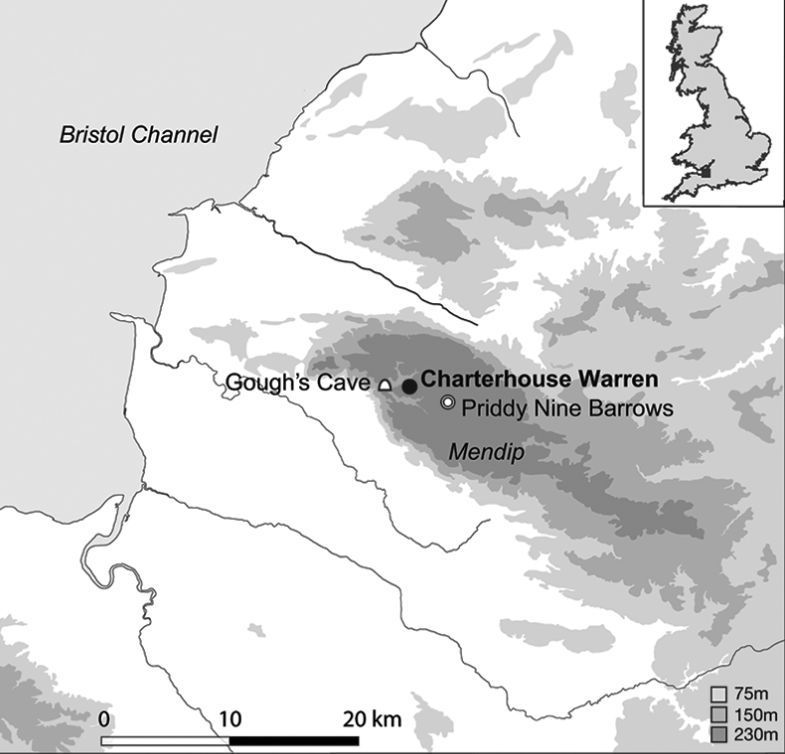
ALT Map showing the location of Charterhouse Warren, Mendip, Somerset.
7
57
222
36,464
Tom Booth retweeted

16 Dec 2024
Lovely, beautiful and peaceful Somerset...
"Bronze Age massacre victims likely cannibalised"
bbc.com/news/articles/crl3jn…
9
6
162
13,494
Tom Booth retweeted

13 Dec 2024
👏👏 @arevsumer! Contains our IBD analysis led by @YileiHuang317: Multiple really long 20cm IBD segments link the two record 45ky-old sequenced modern human sites Zlatý kůň (Czechia) and Ranis (Germany). Showing they are closely related - within few generations. 😮😮 (1/3)
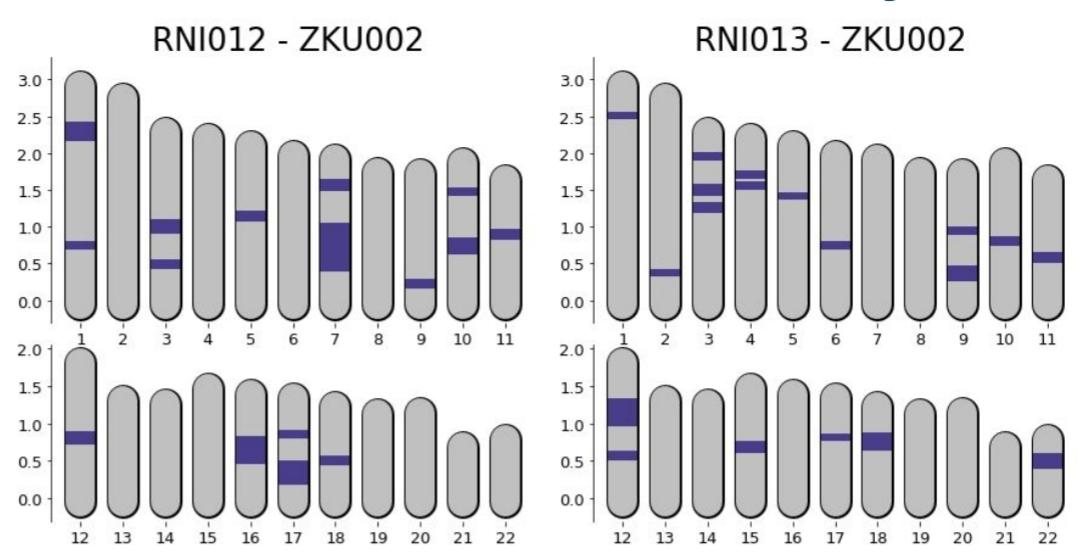
12 Dec 2024

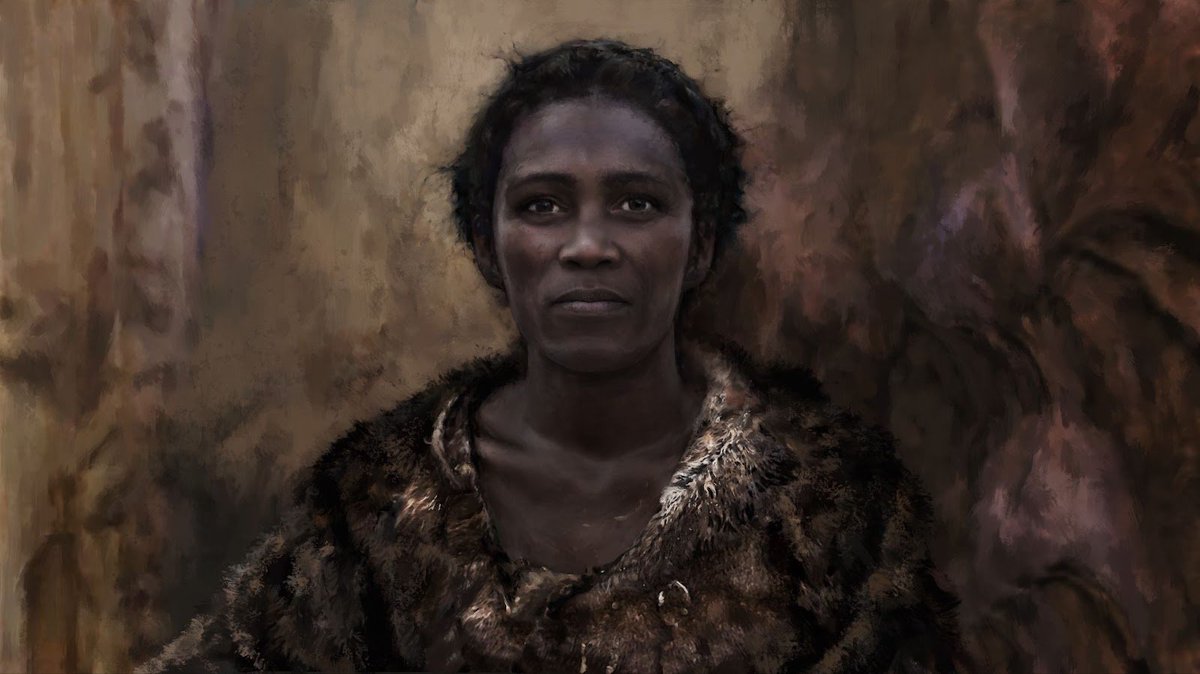
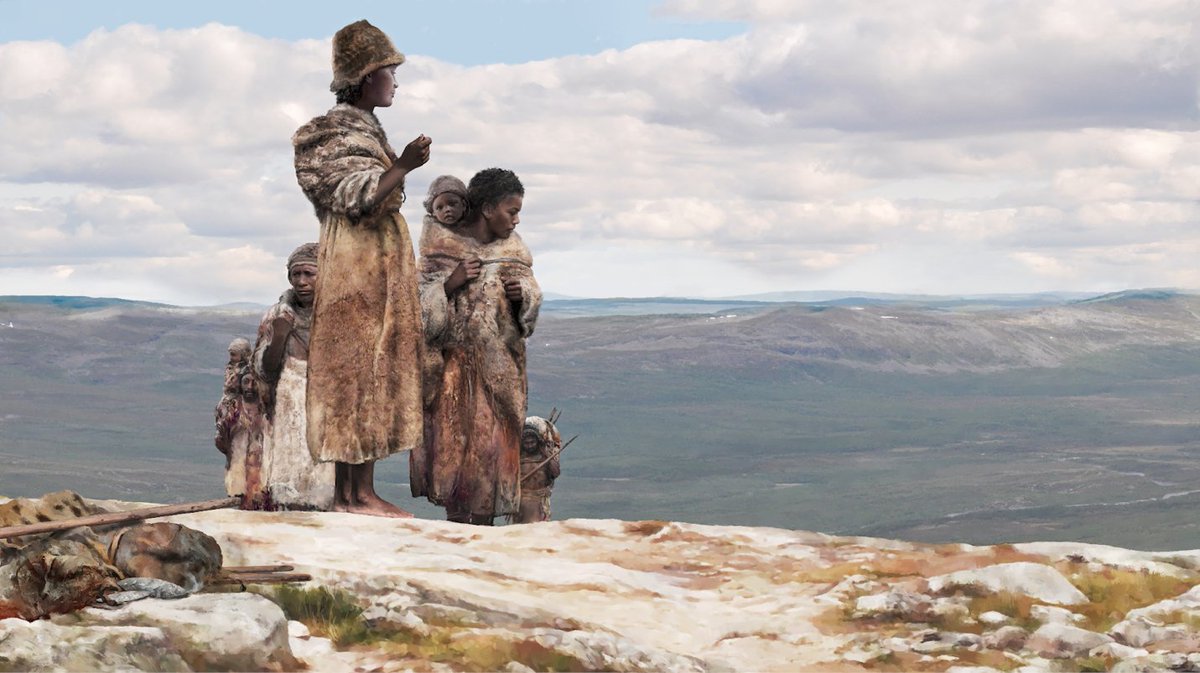
Oldest modern human #genomes sequenced. These seven early #Europeans belonged to a small, isolated group that left no present-day descendants. Study @Nature led by @arevsumer, Kay Prüfer, Johannes Krause @MPI_EVA_Leipzig. tinyurl.com/mryrjyrn & nature.com/articles/s41586-0…
1
11
45
5,299
Tom Booth retweeted

11 Dec 2024
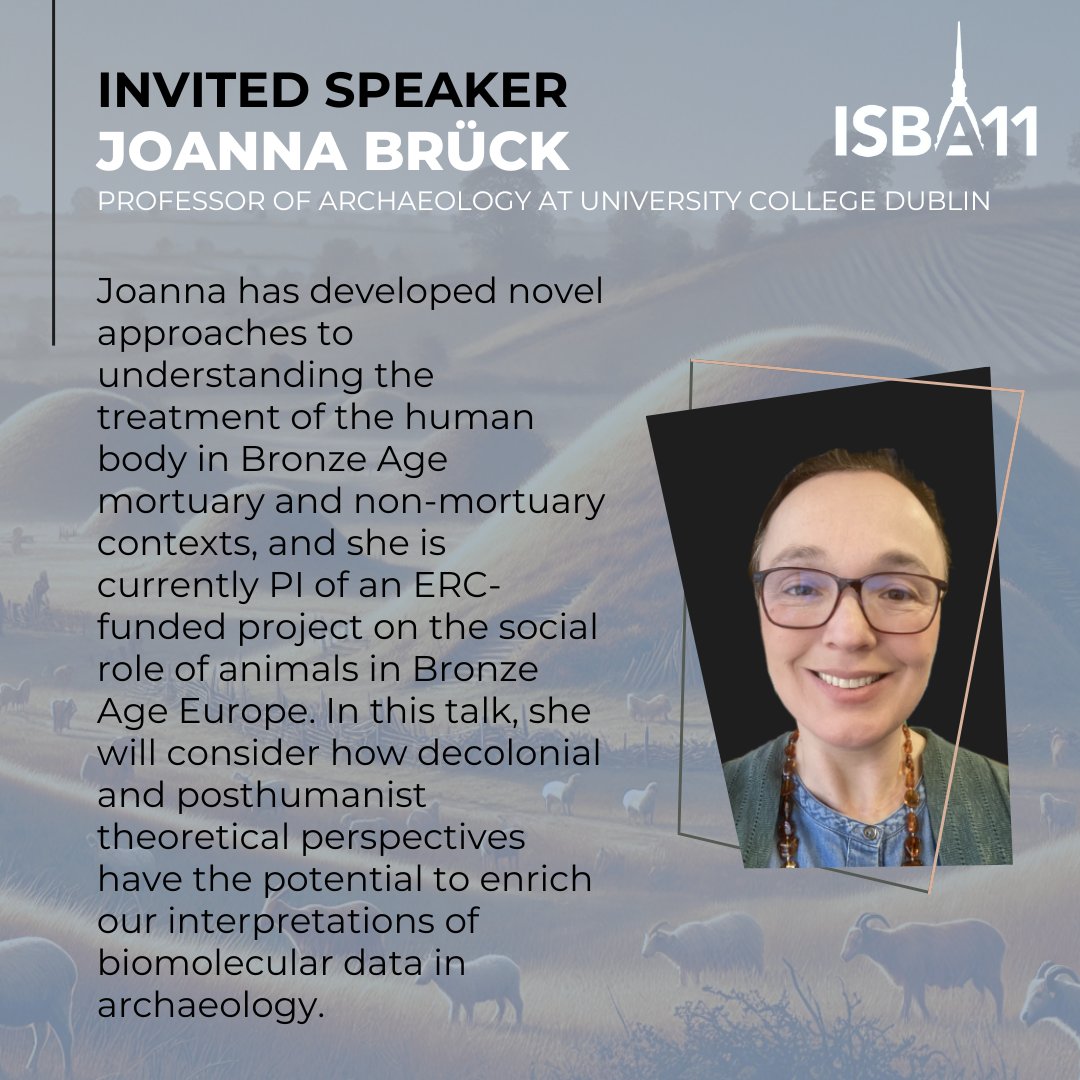
We are thrilled to announce our first invited speaker - Joanna Bruck!
#Archaeology #Biomoleculararchaeology #ISBA #ISBA11 #ISBAconference #archaeologists
6
19
1,145
Tom Booth retweeted

10 Dec 2024
In this comment piece with @jfy133 and @twarinner, we highlight the mounting problems with data archiving and metadata reporting in ancient DNA research. The field cannot afford to keep neglecting this issue.
nature.com/articles/d41586-0…
1
19
52
6,009
Tom Booth retweeted

10 Dec 2024
I will be advertising soon for postdoc positions in geoarchaeology and GIS for my Terraform ERC project, starting at the University of Malta in a few months. More information soon, but message me if interested.
2
19
39
4,548
7 Dec 2024
Vote ‘Sarmatian’ in the Current Archaeology Research Project of the Year!
archaeology.co.uk/awards/arc…
4
3
603
Tom Booth retweeted

5 Dec 2024
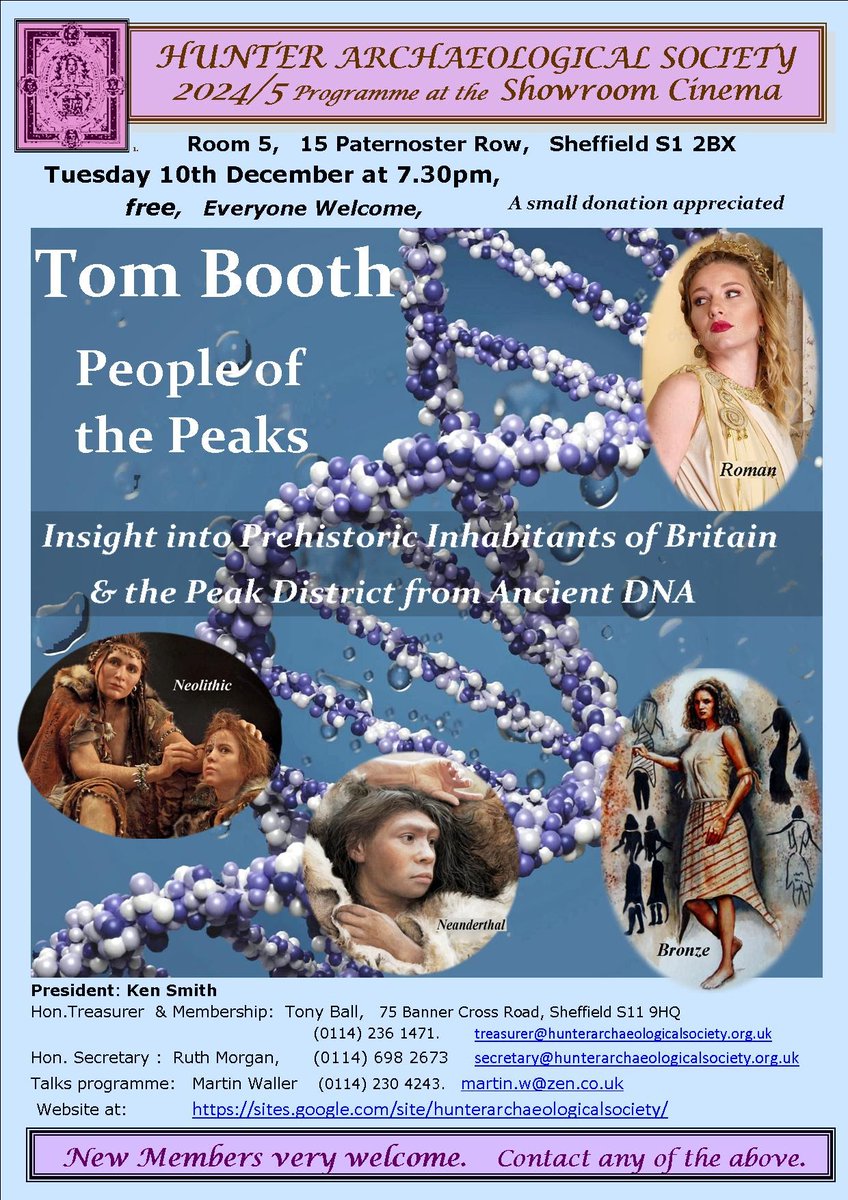
Meet the #Sheffield Ancestors on Tuesday 10 December 7 till 9pm at @showroomcinema room 5:
People of the Peaks by Tom @Boothicus & @HunterArchSoc
@PeakDistrict @PeakDistrictNT @LoveThePeaks @HelpSheffield #sheffevents #Sheffieldissuper #DNA #Archaeology #Heritage #PeakDistrict
3
8
943
Tom Booth retweeted
3 Dec 2024
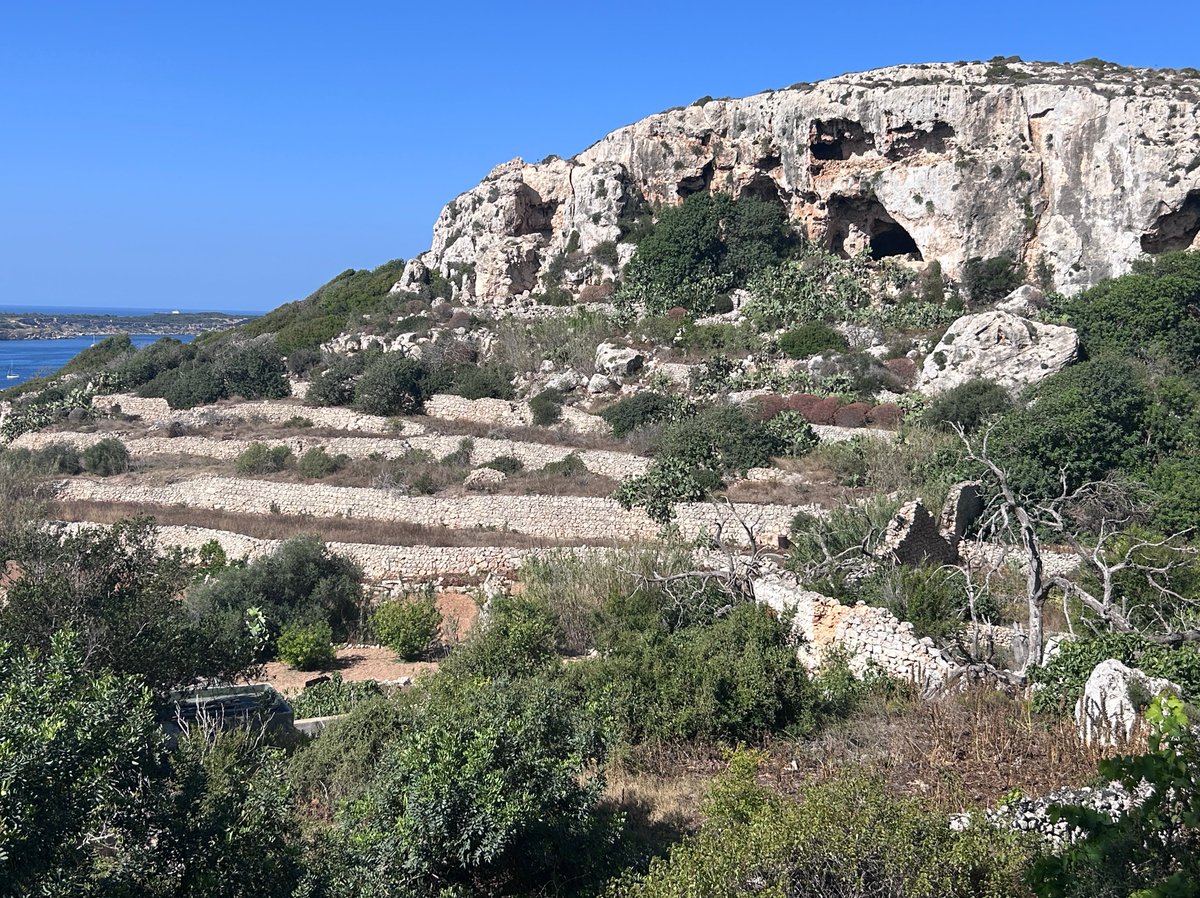
(1/11) I am very happy to announce that I have been awarded a European Research Council ‘Consolidator Grant’. The TerraForm project (‘The Rise and Fall of Maltese Terraced Landscapes’) will begin in the spring of 2025.

3 Dec 2024

📢 Results of the 2024 ERC Consolidator Grant competition are out.
€678 million for 328 researchers.
Who won funding?
What will they investigate?
Where will they conduct their research?
#ERCCoG news 👉 europa.eu/!gWqYfc
🇪🇺 @HorizonEU
14
14
133
9,097
Tom Booth retweeted

29 Nov 2024
What a job! 5 year independent fellowship at Cambridge University in ecology and conservation.
jobs.ac.uk/job/DKK149/clare-…
110
192
20,023
Tom Booth retweeted
3 Dec 2024
PhD opportunity in computational population genetics at @MPI_EVA_Leipzig:
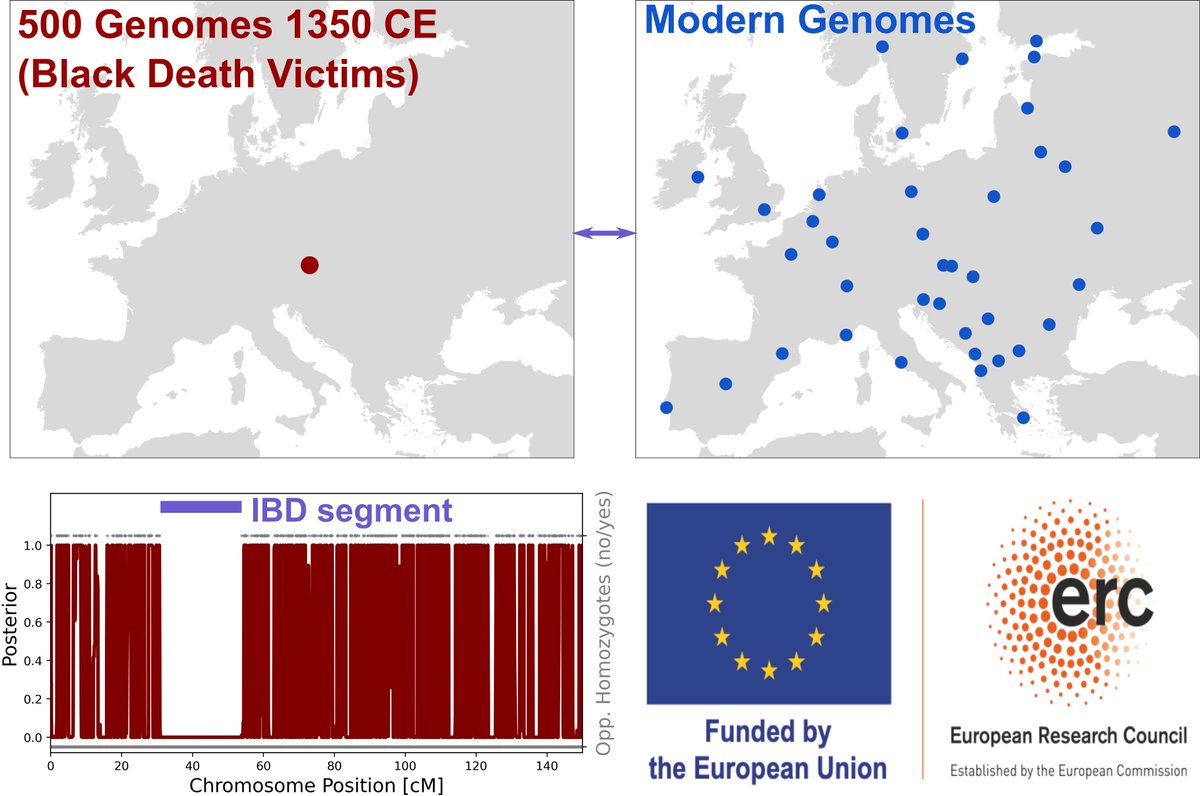
Join our fully funded project to develop IBD-segment tools, connecting high-quality genomes from 500 Black Death victims to modern Europeans. 🌍💻🧬
Please spread the word! 📢🙌
eva.mpg.de/de/karriere/stell…
82
138
20,365
Tom Booth retweeted

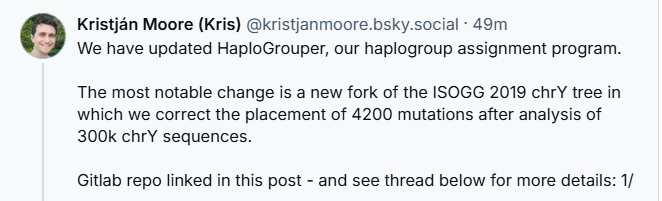
We have made a large update to HaploGrouper, our haplogroup assignment program.
A notable addition is a fork of the ISOGG 2019 tree in which we correct the placement of 4k mutations by analysing 300k Y chromosomes.
Repo in reply - see my thread on "the other place" for details:
1
1
7
869