Chief Science Officer at @CFS_Energy
Joined February 2024
- Tweets 58
- Following 31
- Followers 205
- Likes 4
16 Photos and videos

Jun 4
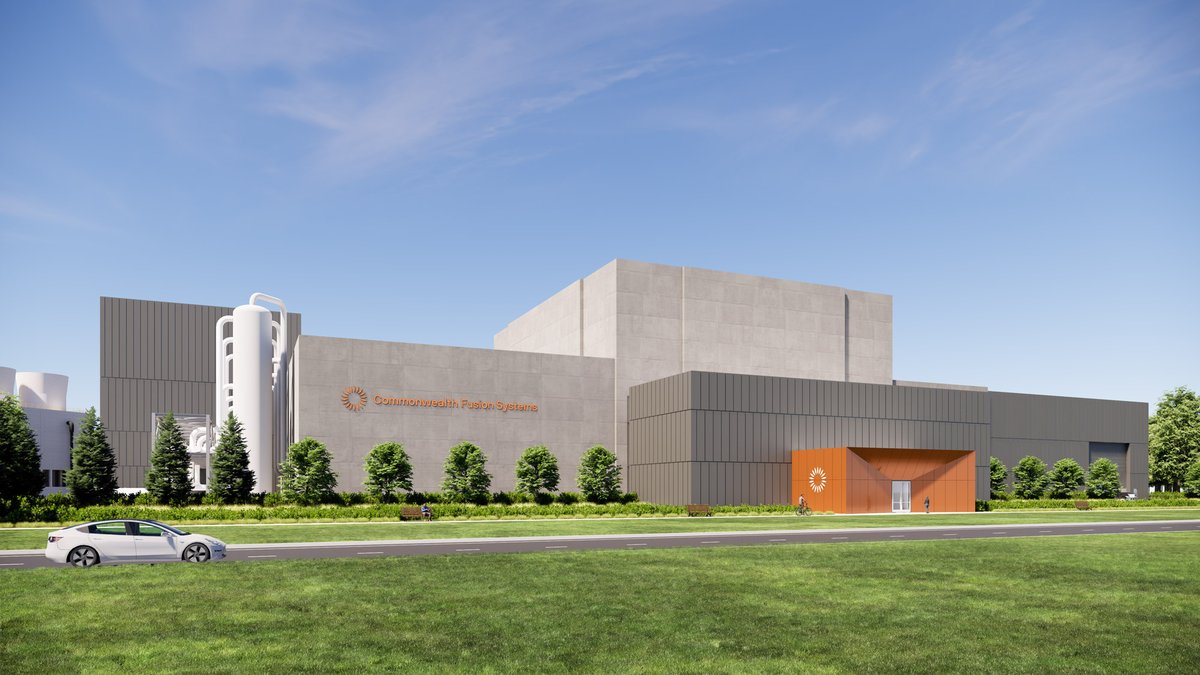
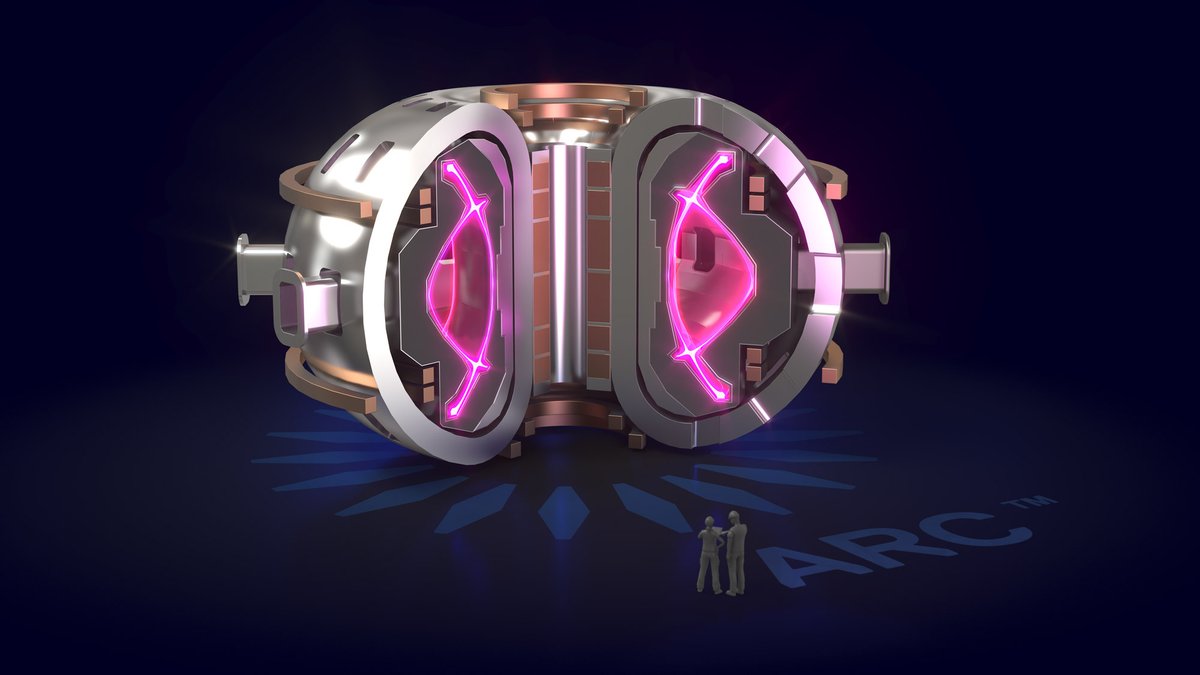
Today, @CFS_energy published some major research: five new papers detailing the physics basis for our ARC fusion power plant. Speaking as one of the authors of the first ARC research papers back in 2015 and 2018, I’m stoked by the progress we’ve made refining the physics that will make these machines tick. The depth of thought, the detail of the supercomputer simulations, and the breadth of the 58 co-authors from around the world.
These papers are a sequel to the seven SPARC physics basis papers we published in 2020, cementing our confidence in our approach. All this knowledge, including what we’ve already learned from building SPARC and will learn from running it, builds into the solid foundation we need for tackling all of fusion energy’s challenges.
I also want to call out the value of the peer review process — a core tenet at CFS that brings transparency and independent validation. Fusion is hard, but we’re showing our work so you don’t have to take what we say on faith. We also collaborate to tap into the world’s expertise. In this case two thirds of the papers’ 58 co-authors are from beyond CFS’ walls, working at world-class universities and research institutions around the world.
Their conclusion: When we build ARC, it’ll work. The science behind this plant is solid.
Fusion is super easy to oversell but hard to actually build. Collaborative, peer-reviewed research helps to validate results and builds confidence that it’ll one day become a reality. This is important not only in the science community, but also for investors, governments, customers, and others who want to be well informed when deciding to dedicate valuable resources to the effort. The only way to build and maintain confidence is to put the science up for scrutiny. That’s not giving away trade secrets. Just as every credible deep tech company balances scientific transparency with the protection of intellectual property, every fusion company can and must do the same.
Thank you to all the researchers who produced these papers and to the JPP from @CambridgeUP for publishing them in a special collection. With this publication, and global confidence in our work, CFS is now able to devote more of our attention to the design and engineering steps on the path to commercial fusion energy.

Today, we laid the physics foundation for our ARC fusion power plant. ⚛️
With 5 deeply researched papers — validated by independent peer review and published in the Journal of Plasma Physics — we’ve shown we've nailed the scientific basics of producing copious amounts of fusion power.
The collective assessment from our 58 co-authors? This machine will work.
No scientific breakthroughs are required to bring this clean, secure, abundant source of energy to the grid. Here is how we're handling fusion's biggest challenges:
⚡ Powering the Grid: Using extremely strong magnets, ARC will confine the plasma long enough to generate 1.1 GW of fusion power. We'll convert that into 400 MW of continuous net electricity — enough to power ~280,000 average American homes.
🛡️ Handling Heat Exhaust: To control a superhot, unruly cloud of charged particles, we're utilizing proven methods to safely handle the heat exhaust that acts as a key practical constraint for tokamaks.
✅ Managing Disruptions: We aren't trying to build an operationally perfect machine. We are pragmatically designing ARC to safely handle disruptions and keep the plasma stable for top performance.
🏗️ Proving the Approach: We're building on decades of tokamak research and supercomputer simulations. And we're proving our approach right now with SPARC, the tokamak we are actively building in Massachusetts.
With our transparency, you don’t have to take our assertions on faith. We are really pushing fusion forward.
4
247
Brandon Sorbom retweeted

Mar 3
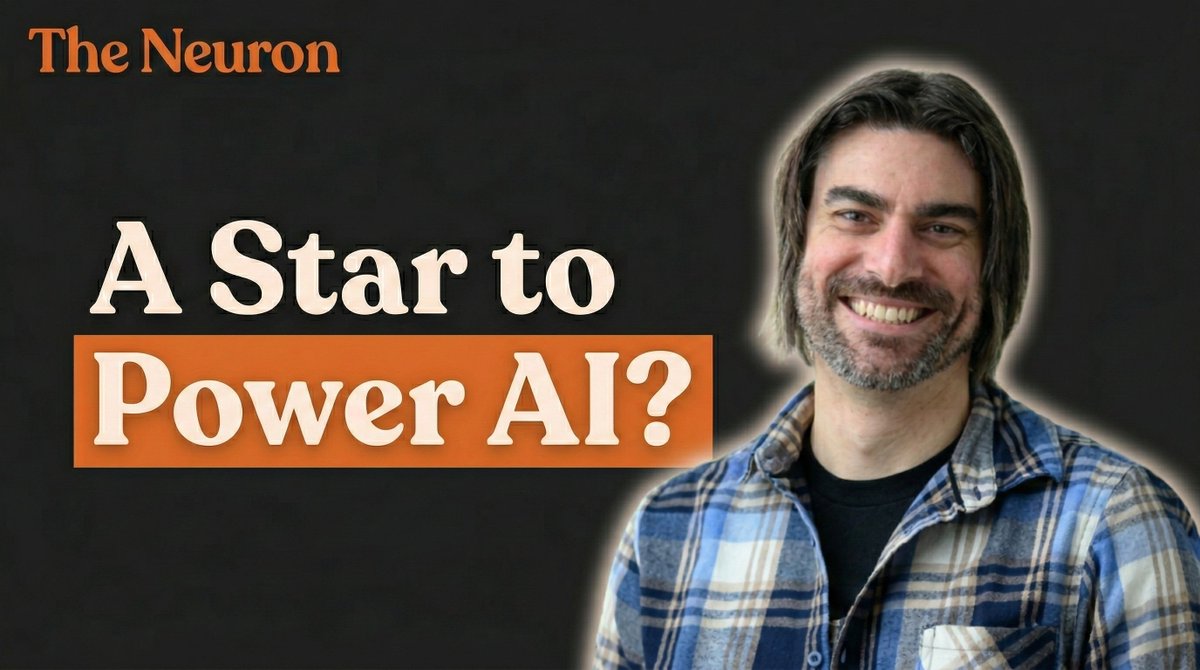
AI data centers could double power demand by 2030. So where does the energy come from? 🤔⚡
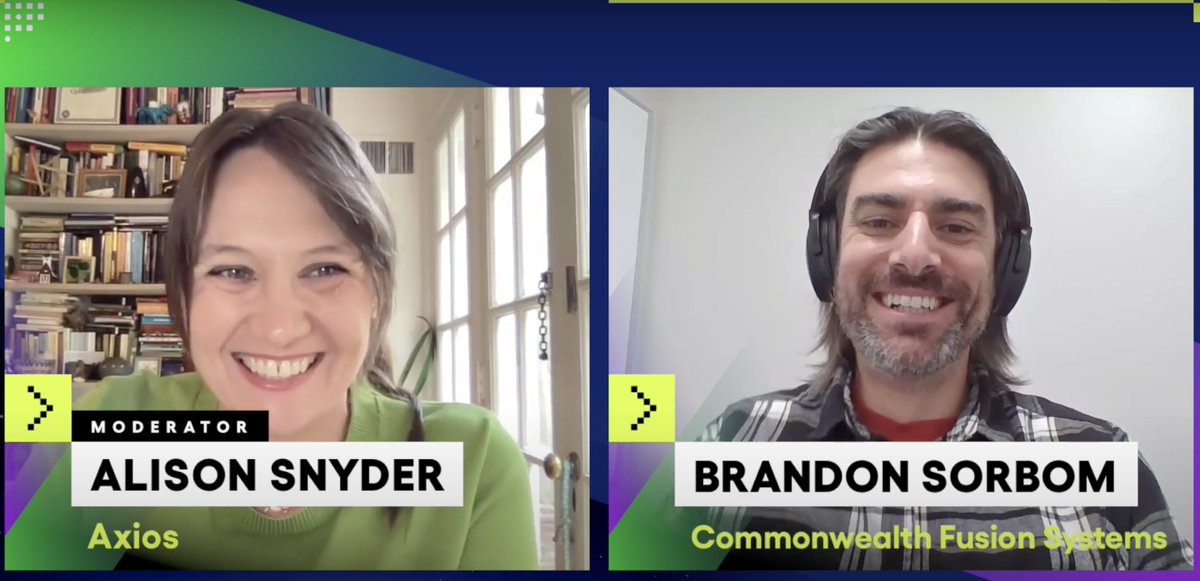
@BrandonSorbom, Co-founder and Chief Science Officer of @CFS_energy, explains how his team is racing to build the world’s first commercial fusion power plant.
📺 YouTube: link.theneurondaily.com/r/Bu…
🎧 Spotify: link.theneurondaily.com/r/v9…
🎙️ Apple Podcast: link.theneurondaily.com/r/v9…
#AINews #FusionEnergy #AIInfrastructure #TheNeuron #TechPodcast
2
10
1,112
Mar 4
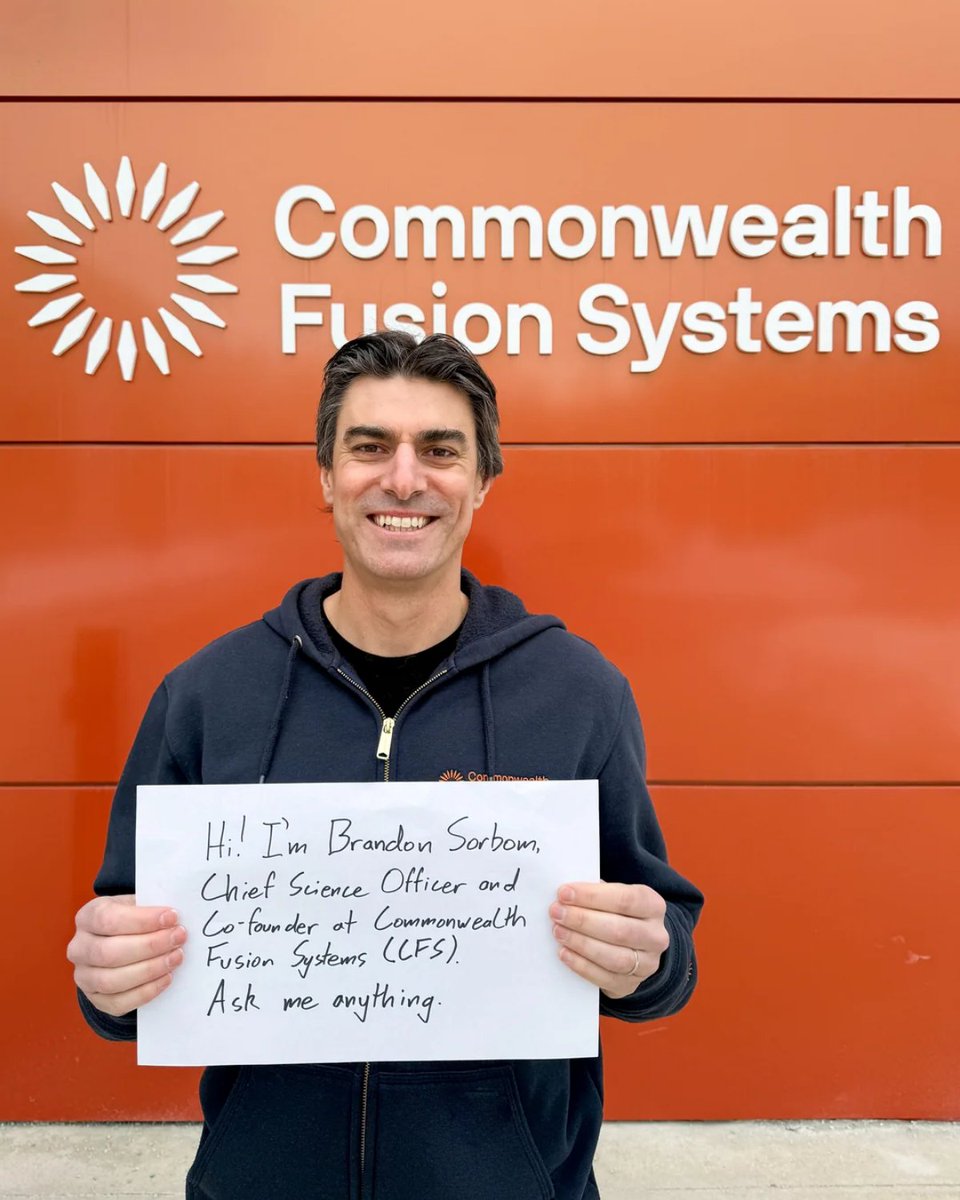
Last week I had the opportunity to jump into Reddit’s r/fusion community for @CFS_energy’s first AMA to talk about all things fusion, our progress on SPARC, and the road to commercializing our ARC power plants.
It was a lot of fun being able to engage directly with the community, and the questions were fantastic! We dove deep into everything — including how we collaborate with our partners, how we're tackling hard fusion problems, and how we expect to use AI for fusion energy.
Check out the full AMA thread! Here’s the link:
reddit.com/r/fusion/comments…
What does the path to commercial fusion energy actually look like? ⚡️
CFS Chief Science Officer and Co-founder, @BrandonSorbom, recently spent time with the r/fusion community as part of an AMA to answer exactly that.
Here we've rounded up some of our favorite insights on ARC, AI, and more below👇. 1/7
#FutureOfEnergy #Energy
2
8
591
Feb 27
Thanks to everyone who tuned in for my AMA (ask me anything) on Reddit! There were so many great questions and I had a great time. I wish I could have spent all day, and sorry for any questions I missed, but I feel like we got through a lot of good material — people were curious about tritium, magnets, our supply chain, how AI could fit into what we are doing, and a lot more.
A couple things I'd like to flag — you'll see in the answers that I dropped in a lot of references to peer-reviewed research that we/our partners have published. That's no accident. It's the gold standard for sharing validated, trustworthy information, and it can help people understand our science, our technology, and our approach. Fusion is such a complex, nuanced topic that it’s important to distill things to a high level, but it’s equally important to provide the foundations for those distillations. Finally, I'd like to give a shout-out to the team of subject matter experts here who volunteered to sit shotgun with me and help pull up the most relevant facts and references when people asked deep questions, so that we could get through as much material as possible.
This was a lot of fun and I hope we get the chance to do something like this again in the future!
reddit.com/r/fusion/comments…
#FusionEnergy #Energy
2
2
16
1,546
Feb 24
If you’re curious about fusion or CFS, I’ll be fielding questions during an AMA — ask me anything — at Reddit’s r/fusion forum. It’ll happen on Thursday, Feb. 26, from 12:30 p.m. to 2:30 p.m. ET.
This is a first for CFS, but not for CFS founders: Before we launched the company, we held a couple AMAs about the fate of Alcator C-Mod, the MIT fusion machine that’s the predecessor of the SPARC tokamak we’re building now in Massachusetts.
A little about me: I believe that commercial fusion power can be critical to addressing climate change and has massive potential to become an ideal power source to keep up with rising energy demand. I first fell in love with fusion as a college student, building a Farnsworth fusor. Then, while working on my PhD at @MIT, I was the lead author of the paper that proposed the original design for the ARC power plant that inspired the founding of CFS in 2018. Now I lead the R&D teams at CFS.
I’m always excited to talk about fusion and discuss what we’re up to at CFS. So make sure to join me on Feb. 26 to get your CFS and fusion energy questions answered!
You can submit your questions in advance, comment, and vote on questions others have asked. Check the thread out here: reddit.com/r/fusion/comments…
4
4
23
2,915
Brandon Sorbom retweeted

28 Oct 2025
Big update: Half of our vacuum vessel, the very heart of our SPARC fusion machine, has landed in Devens, Massachusetts.
The vacuum vessel is the donut-shaped chamber inside SPARC that'll house our fusion fuel — a superhot cloud of charged particles called a plasma. The delivery of this key component means that our energy plans are literally starting to take shape. And it shows a big change inside tokamak hall as the once-quiet room begins to bustle with activity.
#PowerMoves #FusionEnergy
19
79
515
38,672
Brandon Sorbom retweeted
4 Sep 2025
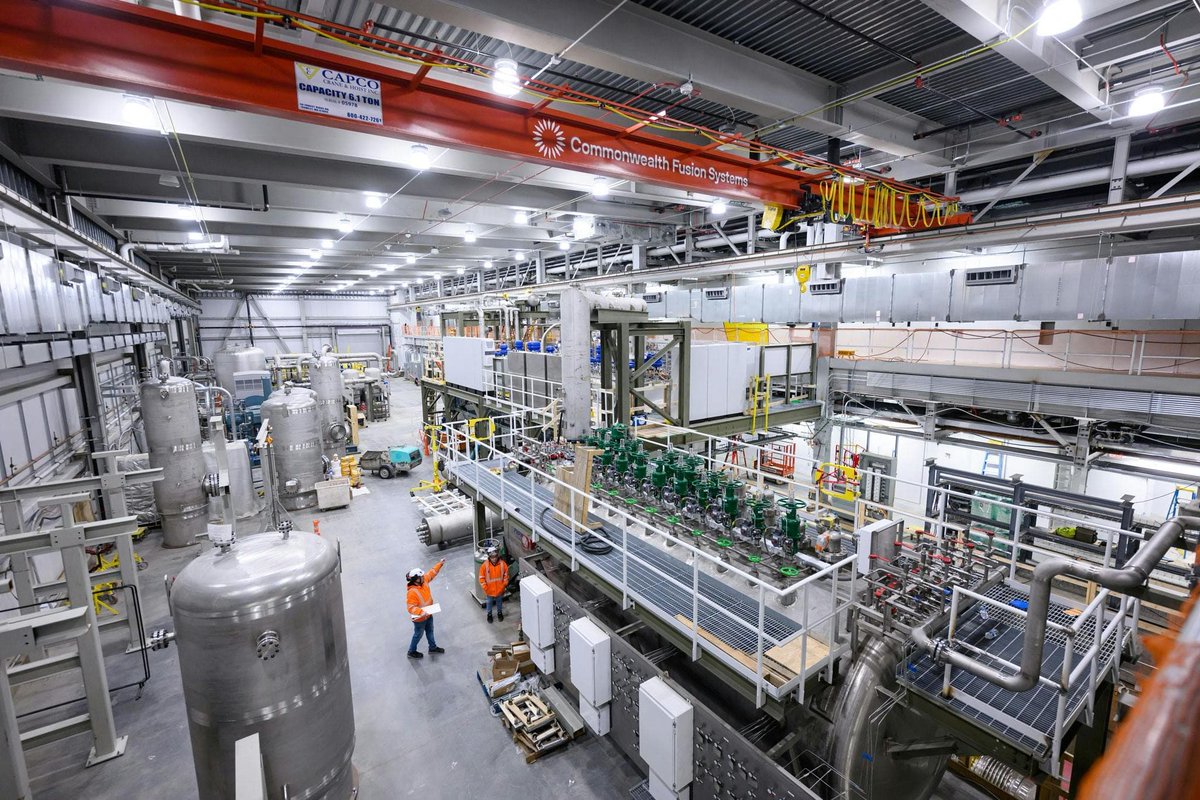
Why work on our ARC fusion power plant when we haven't yet switched on our SPARC demonstration machine? It's a fair question. And here's our answer: at CFS, we've deliberately charted a path to fusion energy that lets us work in parallel on multiple projects.
Our new $863 million in Series B2 funding enables us not just to finish SPARC but also to concentrate more attention on ARC. The point of the exercise: spread fusion energy as widely as possible as fast as possible, because we believe humanity will benefit.
Now we're laying out a lot of the detail behind this approach. 🧵1/2
#FusionEnergy #PowerMoves
ALT A large industrial room packed with high-tech cooling equipment, green valves, silver tanks, with an orange crane overhead.
2
12
77
3,899
3 Jul 2025
With @Google’s offtake agreement for 200 megawatts of power from our first fusion power plant, ARC, they increase their stake in CFS and help to fund our ARC development work.
Making fusion energy happen begins with technical work like science and engineering. But as we make progress there, we’ve also started working on bringing fusion power to market. We work in parallel as much as practical, to get fusion energy out into the world as fast as possible.
You can read more about our new partnership here: blog.cfs.energy/google-deal-…
#FusionEnergy #PowerMoves
30 Jun 2025

Google inks its first fusion power deal with Commonwealth Fusion Systems | TechCrunch techcrunch.com/2025/06/30/go…
4
12
600
Brandon Sorbom retweeted
18 Jun 2025
CFS Chief Science Officer and Co-founder @BrandonSorbom offers a ground-level view of how we'll assemble the SPARC fusion machine inside Tokamak Hall. In the third video of this three-part series, Brandon shares a surprising detail on the cranes we use to handle SPARC's large components. Stay tuned for more episodes to come from around the CFS campus.
#FusionEnergy #Science
2
10
55
3,393
Brandon Sorbom retweeted
13 Jun 2025
CFS Chief Science Officer and Co-founder Brandon Sorbom offers a ground-level view of how we'll assemble the SPARC fusion machine inside Tokamak Hall. SPARC's cryostat base now is in place, and toroidal field (TF) magnets and a vacuum vessel are coming next.
Catch the second of a three-part series based in Tokamak Hall with more to come from around the CFS campus.
#FusionEnergy
1
6
47
3,143
9 Jun 2025
High-temperature superconductors (HTS) are the foundation of our fusion energy work here at @CFS_energy. Part of my job for years has been to work with our suppliers to turn this once incredibly scarce resource into a mass-manufactured product we could purchase by the kilometers instead of meters. Seeing Faraday Factory Japan pop the last few reels into a box is super exciting and a phenomenal achievement! Thank you Faraday Factory for being such great partners and helping us turn SPARC into a reality!
linkedin.com/posts/faraday-f…
5
31
1,323
16 May 2025
CFS recently played host to 60 fusion energy experts to discuss a seemingly secondary, but actually critical detail: how to support not just the hottest parts of the SPARC fusion machine but the cooler regions, too.
When SPARC is running it’ll have the largest temperature gradient in the solar system, jumping from about 100 million degrees Celsius at the center of the plasma to -250 Celsius at the superconducting magnets. The steepest part of this gradient — specifically where the outer edge of the superhot plasma meets the walls of the machine in a component called the divertor — presents a challenge. How do you manage both the hot plasma core and the cooler plasma at the boundary with the tokamak hardware, so that both can work as intended?
CFS hosted a workshop to gather the range of people needed to tackle this multifaceted challenge — a group of experts who put their heads together, shared research, and set new plans to move the technology forward.
Read more: blog.cfs.energy/cfs-conferen…
#FusionEnergy
1
2
17
387
8 May 2025
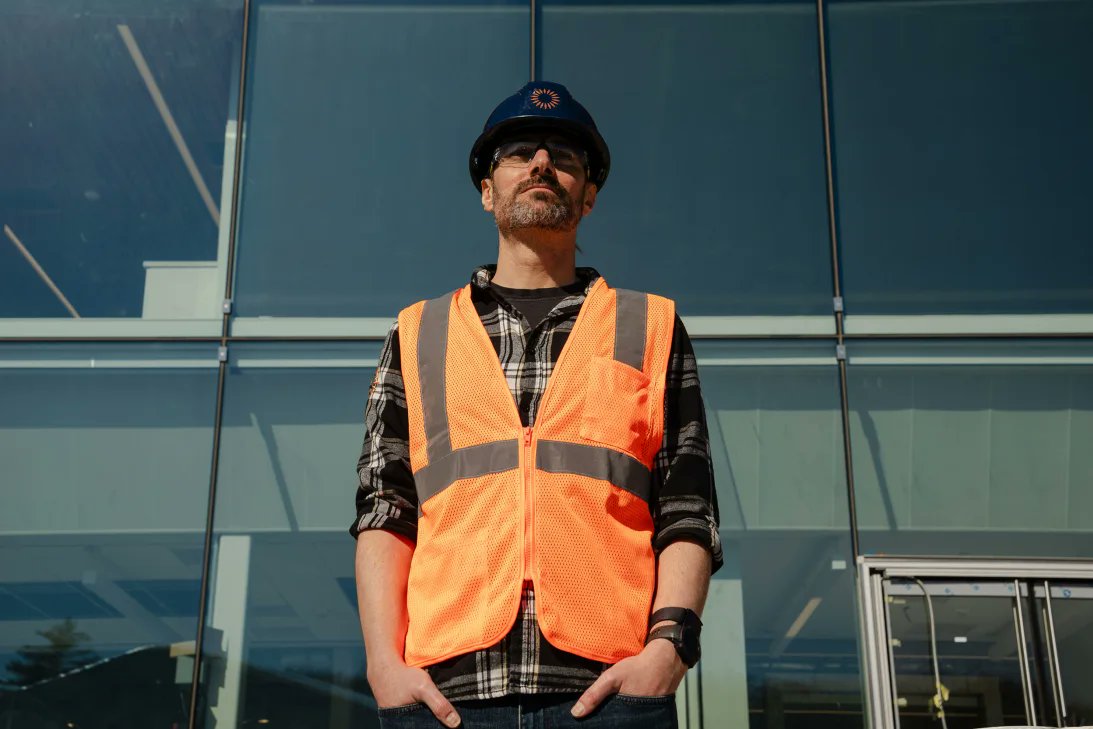
Those of us in the fusion energy industry know very well what's going on. But plenty of people don't know just how far we've come and how fast we're moving. Thanks to @CNN's Ella Nilsen for helping to show the world our progress making magnets in our factory, and now assembling our SPARC fusion machine!
8 May 2025
"'It's like a race with the planet...[Our magnet factory] is a 24/7 factory,' he said. 'We’re acutely aware of it every minute of every hour of every day.'"
@BrandonSorbom, Co-founder and Chief science officer at CFS, recently spoke with Ella Nilsen of @CNN about the world-changing benefits of fusion energy, the progress we're making in building our fusion machine, SPARC, and the race to deliver fusion energy in time to both help the planet and enable new power-hungry technologies like artificial intelligence.
CFS chose the tokamak design because its science is the best understood and most studied of all fusion machine designs. Paired with our groundbreaking magnet technology, we believe that it's not only the surest path to commercial fusion on a timeline that matters, but the most efficient one.
“[The SPARC machine] is now small enough that we have standard equipment to move things around – something that you’d find in any auto manufacturing facility. You don’t have to invent a totally new industrial supply chain for everything.”
Read the full story: cnn.com/2025/05/06/climate/n…
#FusionEnergy
1
14
339
25 Mar 2025
It’s go-time for SPARC! 💫 We’ve officially kicked off construction with the first major piece: the 75-ton cryostat base. It supports the entire machine, maintains ultra-cold temps for our magnet technology, absorbs fusion neutrons, & routes key systems. More #PowerMoves ahead! #FusionEnergy #CleanPower
25 Mar 2025
"Everything is about to change in Tokamak Hall."
This month, we brought a key component of our prototype fusion machine, SPARC, into its final home inside the SPARC facility in Devens, MA. It's the cryostat base — the foundation of SPARC and a major milestone in its buildout.
Along with its job to support SPARC’s mass, the 75-ton base acts as a conduit for fundamental systems like cryogenics and fuel lines that connect to the machine. It's also a vital boundary protecting the magnets inside SPARC from the outside environment so they function at full strength.
SPARC’s cryostat is designed to be so well sealed that only a cubic centimeter of gas could leak over 30 years.
Learn more and watch the full video on our blog: blog.cfs.energy/cfs-takes-it…
#PowerMoves #SPARC #FusionEnergy
3
5
28
919
25 Mar 2025
This month, we installed our SPARC tokamak’s first piece: the cryostat base. It’s a 75-ton, 24-foot-wide stainless steel structure that serves as the foundation of the tokamak. It bears the weight of the entire tokamak — roughly 1,000 tons. That’s about the weight of two fully loaded Boeing 747 jets. It’s important for several reasons ⬇️ 2/6
61
7 Feb 2025
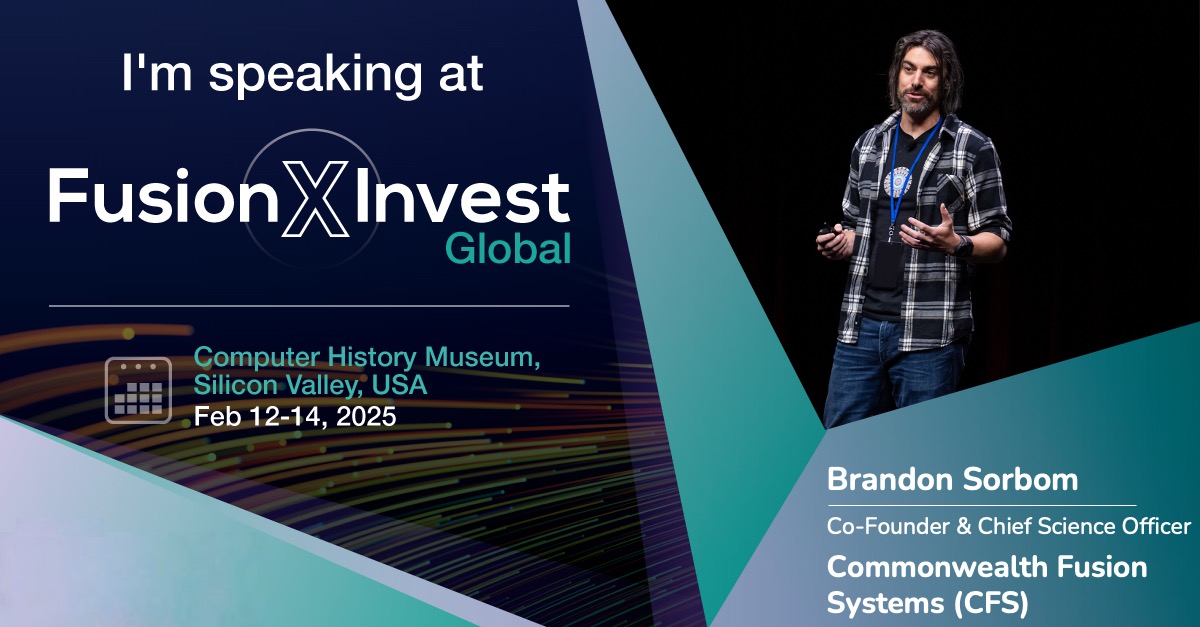
Looking forward to speaking at #FusionXInvest Global 2025 in #SiliconValley Feb. 12-14. I'll discuss CFS’ approach to #FusionEnergy alongside other industry leaders, and I'm also bringing a superconducting magnet “pancake” for you to check out!
events.fusionxinvest.com/glo…
1
8
197
4 Feb 2025
Happy to see this new research at the University of Seville on negative triangularity in a tokamak. What this means and why it matters in a thread 👇 physicsworld.com/a/smart-sph… 1/4
1
4
24
2,339
4 Feb 2025
At @cfs_energy, we chose a tokamak to generate fusion power because it's the best scientifically understood machine. But there’s tons of room to expand what we know, in cases like this. 3/4
1
174
4 Feb 2025
It's an interesting possible refinement that only a few devices like TCV and DIII-D have explored previously, and I look forward to seeing data on how the confinement scales in different tokamaks so we can see how well negative triangularity could optimize fusion plasmas. 4/4
1
164