Joined April 2026
- Tweets 272
- Following 10
- Followers 5
- Likes 21
58 Photos and videos








Pinned Tweet

Want to become really good at Data Engineering with Databricks?
Whether you are already a data engineer or just starting, this is for you.
Many people struggle with slow Spark jobs, broken data pipelines, and confusing core concepts.
We created BricksNotes to make it simple and practical.
Here you will learn:
• How to build real, reliable data pipelines
• Best ways to use Spark and Delta Lake
• Production tips that actually work
• No fluff, no complicated words
Thousands of data engineers are learning the right way with BricksNotes.
First chapters are completely free 👉 bricksnotes.com
If you want to improve your skills and build better data systems, follow @bricksnotes
What is your biggest struggle with Databricks right now? Tell me in the replies 👇
3
2
240
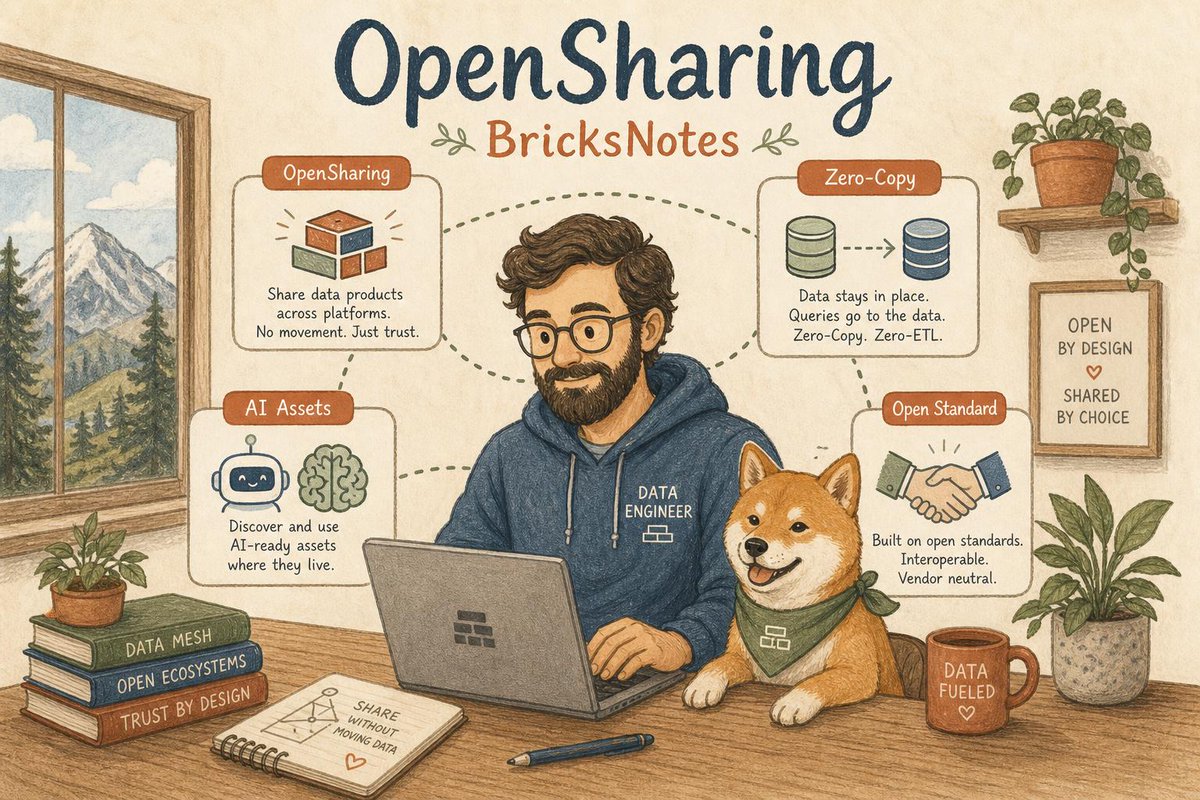
One of the most meaningful Databricks updates lately is OpenSharing.
The future of Data AI will not be built only on powerful systems. It will also be built on open, secure, and cross-platform collaboration.
That is what makes this direction so interesting.
#DataAI #Databricks #OpenSharing #DataEngineering
1
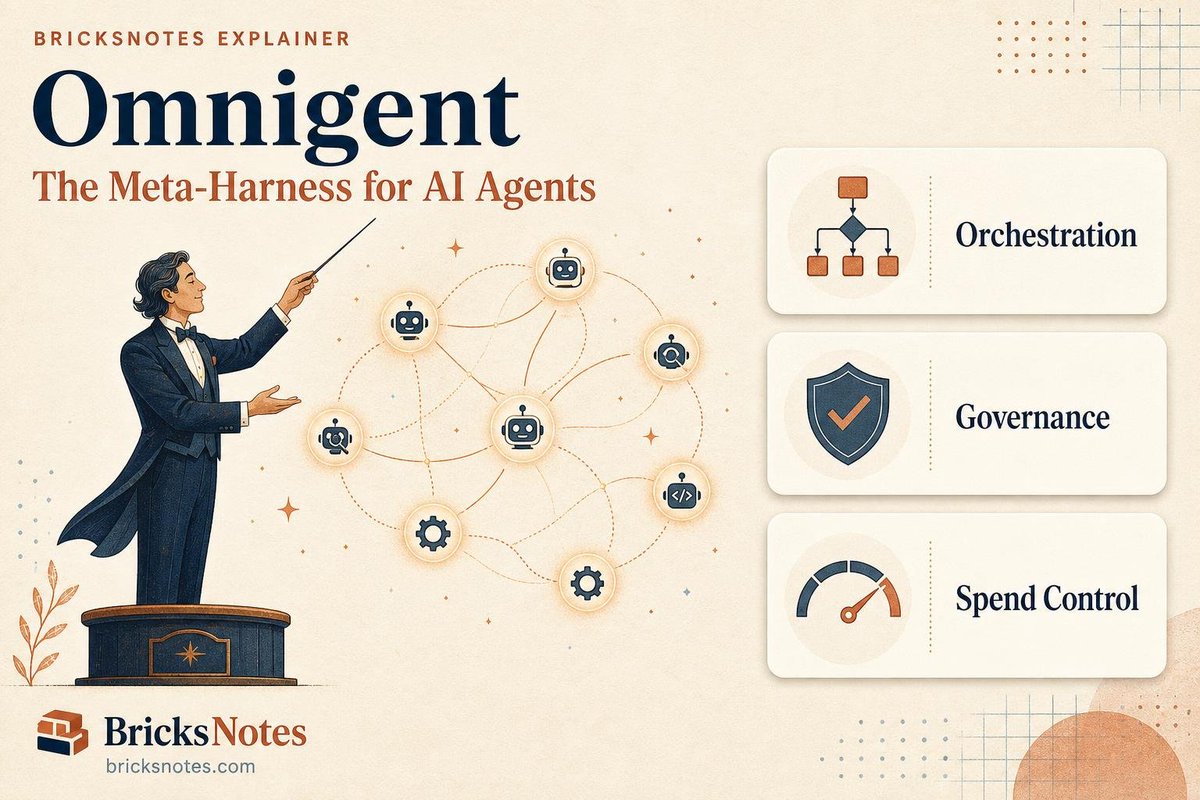
Omnigent.ai feels interesting because it is not trying to be just another agent.
I was reading the new Databricks post on Omnigent, and the part that caught my attention was not just that it is open source.
It is the idea of a meta-harness.
The argument is basically that a lot of the pain in AI engineering is moving one layer up. Not just which model or agent is best, but how you combine different agents, govern them, control spend, and collaborate around them without everything becoming messy.
That feels pretty real.
A lot of people already have multiple agents open, multiple tools, and multiple workflows. So the problem is no longer only “what can this one agent do?” It is also “how do we make all of this work together in a way that is actually usable?”
That is why Omnigent seems interesting to me. Less because it is another shiny release, and more because it points at a real problem that is probably going to matter more over time.
Curious what others think.
Do you see this kind of meta-harness layer becoming important, or do you think most teams will still stay inside single-agent workflows for a while?
bricksnotes.com/blog/databri…
7
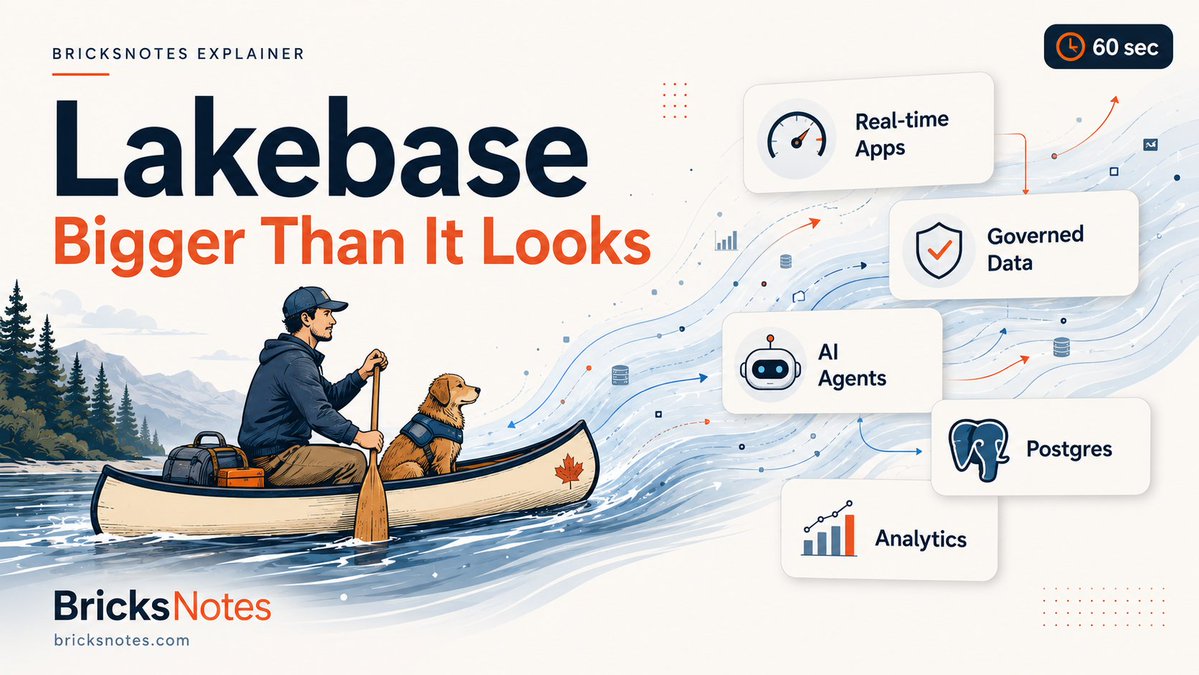
One Databricks update that keeps getting more interesting to me is Lakebase.
At first glance, it may look like just another product expansion. But the more you think about it, the more it feels like a signal of where modern data platforms are heading.
For a long time, operational systems and analytical systems have lived in different worlds. App databases on one side. Data platforms and analytics on the other. Then came the usual complexity of moving data, syncing logic, and trying to keep everything aligned.
What makes Lakebase interesting is that it points toward a future where that gap becomes smaller.
A future where real-time applications, governed enterprise data, analytics, and AI-native workflows can work much closer together. That is a meaningful shift for builders, because the next generation of useful systems will come from stronger connections between live operations and trusted data.
At BricksNotes, we like looking beyond the headline and asking a simple question: why does this matter for real data professionals?
That is exactly why we created our latest explainer.
Because some updates are not just features.
They are signs of where the platform is going next.
8
Lakebase is one of those Databricks updates that feels bigger the more you think about it.
For a long time, many teams have treated operational systems and analytical systems as two different worlds. App databases lived in one place. Lakehouse analytics lived somewhere else. Then came the extra ETL, stale data, duplicated logic, and the usual back-and-forth that made everything heavier than it needed to be.
What makes Lakebase interesting is that it points toward a different direction.
A future where transactional systems, governed enterprise data, analytics, and AI-native applications can sit much closer together. A future where the gap between what your app knows and what your analytics system knows becomes much smaller. A future where builders can think less about stitching worlds together and more about building useful systems on top of trusted data.
That is what we tried to explain in this video.
Not just what Lakebase is, but why it matters.
Not just the feature, but the shift behind it.
At BricksNotes, we care about helping data professionals understand these platform changes in a practical way, with calmer explanations and real engineering context.
Watch the video and let us know what you think.
Do you see Lakebase as a meaningful shift for modern data architecture?
9
BricksNotes. Last 30 days.
Unique visitors. Up 69%.
Visitors spend 7 minutes on average.
From 8 countries. Led by the United States,
India, Canada, the United Kingdom, and France.
The practice exam is still the most visited
page on the entire site. 22% of all traffic.
The busiest day was a Friday with 8881 views.
80% of visitors come directly.
They type bricksnotes.com or have it bookmarked.
That is not traffic.
That is trust.
Just data engineers sharing what helped them
with other data engineers who need it.
We are not done. Not even close.
#BricksNotes #Databricks #DataEngineering
8
One message we received recently stayed with us.
A learner shared that BricksNotes helped him learn Databricks in just 30 days, while continuing his regular work, and what mattered most to him was that the learning felt practical.
That kind of feedback means a lot to us.
Because that is exactly why BricksNotes was built in the first place.
We know that most data professionals are not learning with unlimited free time. They are learning after work, between meetings, on weekends, and in the middle of real responsibilities. They do not need more scattered content. They need a path that is clear, useful, and grounded in how real learning actually happens.
So when someone tells us that they were able to stay consistent, learn Databricks in a practical way, and make real progress in 30 days alongside their job, it feels bigger than a simple success story.
It feels like proof that practical learning works.
It reminds us that when the path is simple, when the explanations are clearer, and when learning connects to real work, people can move much faster than they think.
At BricksNotes, that is the kind of journey we want to support.
Not just helping someone read more.
Not just helping someone collect notes.
But helping people build real confidence, one lesson at a time, one concept at a time, and one practical step at a time.
We are genuinely happy to hear stories like this, but more than that, we are taking this as motivation.
Motivation to improve the platform further.
Motivation to make the learning experience even better.
Motivation to keep building something more useful for every data professional in the world.
Because the mission has always been bigger than one lesson or one exam.
We want to make practical Databricks learning more accessible, more useful, and more meaningful for anyone who is trying to grow in data engineering and the wider Data AI world.
To the learner who shared this experience, thank you.
And to every data professional trying to learn while balancing work and life, keep going.
Small, practical progress can take you much further than you imagine.
4
You finish the Databricks course. You learn SQL, Spark, a few notebooks.
Then someone asks you to build a real pipeline — and everything feels different.
That's the gap nobody talks about. It's why we built BricksNotes. 👇
7
Somewhere on the way to @SpaceX, there is a quiet lesson for every young builder.
Big futures are not created only in launch moments. They are created in the drive, in the doubt, in the long nights, in the problems nobody has solved yet, and in the decision to keep going anyway.
That is what technology really represents at its best. Not just machines. Not just rockets. But the courage to imagine what does not exist yet, and then spend years trying to make it real.
The next generation should remember this: the world still has room for impossible ideas. New energy. New science. New AI. New space. New systems. New ways of helping humanity move forward.
Do not be discouraged if your path feels long. Most meaningful things are built that way.
Keep learning.
Keep building.
Keep thinking beyond what is easy.
And keep going, even when the result is still far away.
The future is often created by the people who refuse to stop halfway.
13
Lakebase makes the Databricks story much bigger.
It brings transactional database thinking closer to governed data, analytics, and AI workflows, which opens a very interesting path for modern builders.
#Databricks #Lakebase #DataAI #DataEngineering
9
Databricks is not something you master by reading definitions alone.
You understand it better when you upload data, clean it, transform it, write SQL, use PySpark, save it as Delta, and slowly connect the dots.
That is why practice-first learning is powerful.
When learners practice real scenarios, they stop fearing the platform. They start thinking like data engineers.
That is the learning experience we are building with BricksNotes.
Simple lessons. Practical examples. Clear direction. Better confidence.
7
Remember when Delta Sharing launched in 2021?
2026 just hit different. Databricks donated the protocol to the Linux Foundation as OpenSharing.
Here's what that unlocks for every data team (not just Databricks users)
#OpenSharing #DataEngineering #Databricks
11
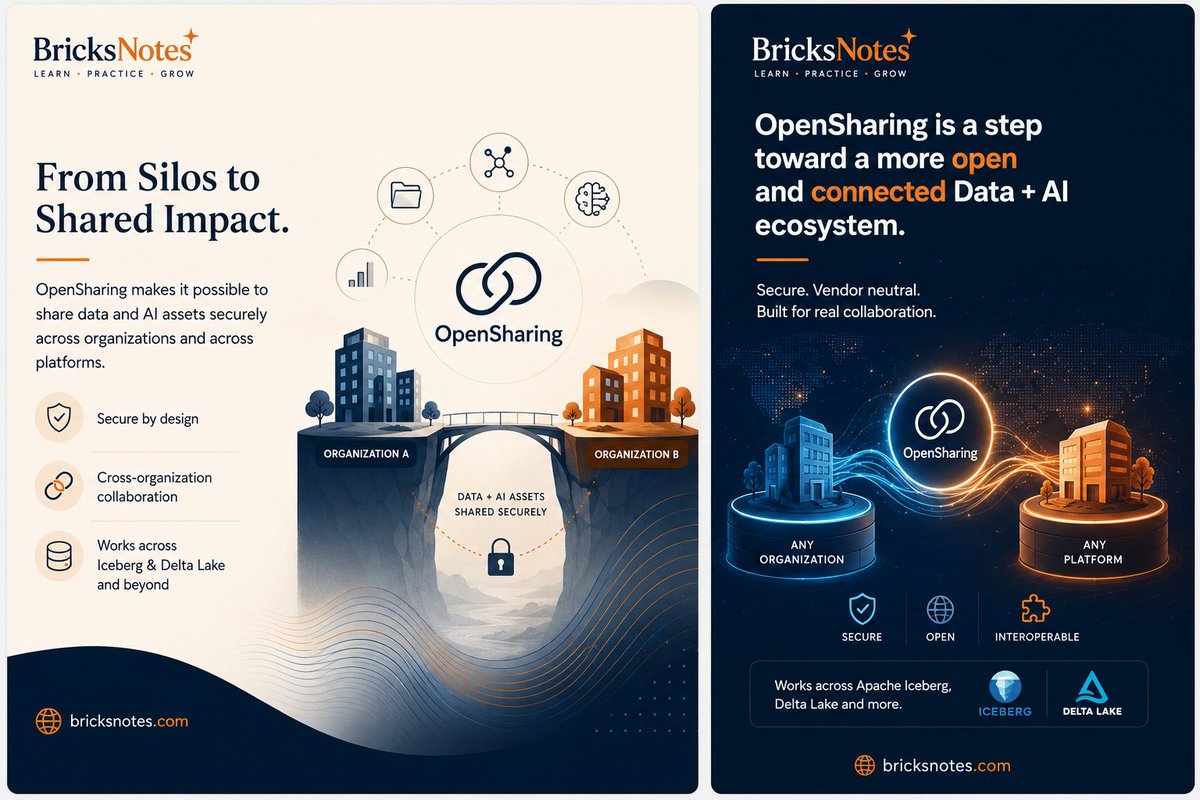
OpenSharing feels important for one simple reason: The future of Data AI will not be built in closed silos.
It will be built through secure, governed, cross-platform collaboration across data and AI assets.
Wrote a short piece on why this next evolution of Delta Sharing matters.
#DataAI #Databricks #OpenSharing #DeltaSharing
10
One of the most interesting Data AI shifts right now is not only about building smarter models.
It is about making it easier for organizations to share data and AI assets securely, openly, and across platforms.
That is why the OpenSharing direction feels important.
The story here is bigger than one protocol update. It reflects where the ecosystem is moving next: less lock-in, better interoperability, and a more connected future for data, analytics, and AI collaboration.
I shared my thoughts in this short piece on why this evolution matters and what it could mean for real teams building in the Data AI era.
bricksnotes.com/blog/databri…
#DataAI #Databricks #DeltaSharing #OpenSharing #DataEngineering
ALT https://bricksnotes.com/blog/databricks-opensharing-delta-sharing-evolution-2026
10
Databricks becomes much easier when the learning path is clear.
Start with the basics.
Practice with real examples.
Build confidence step by step.
That is how strong data engineering growth begins.
#Databricks #DataEngineering #PySpark
8
One of the most meaningful shifts in Data AI is not only building better models.
It is making it easier for organizations to share the right data openly, securely, and without getting trapped inside one vendor story.
That is why this OpenSharing direction feels important.
When data can move across organizations and platforms more naturally, collaboration gets easier, architecture gets cleaner, and teams can focus more on value than on friction.
For data professionals, this is a good reminder that openness, governance, and interoperability are becoming more important, not less.
The future of Data AI will not be built only on powerful systems.
It will also be built on connected systems.
4
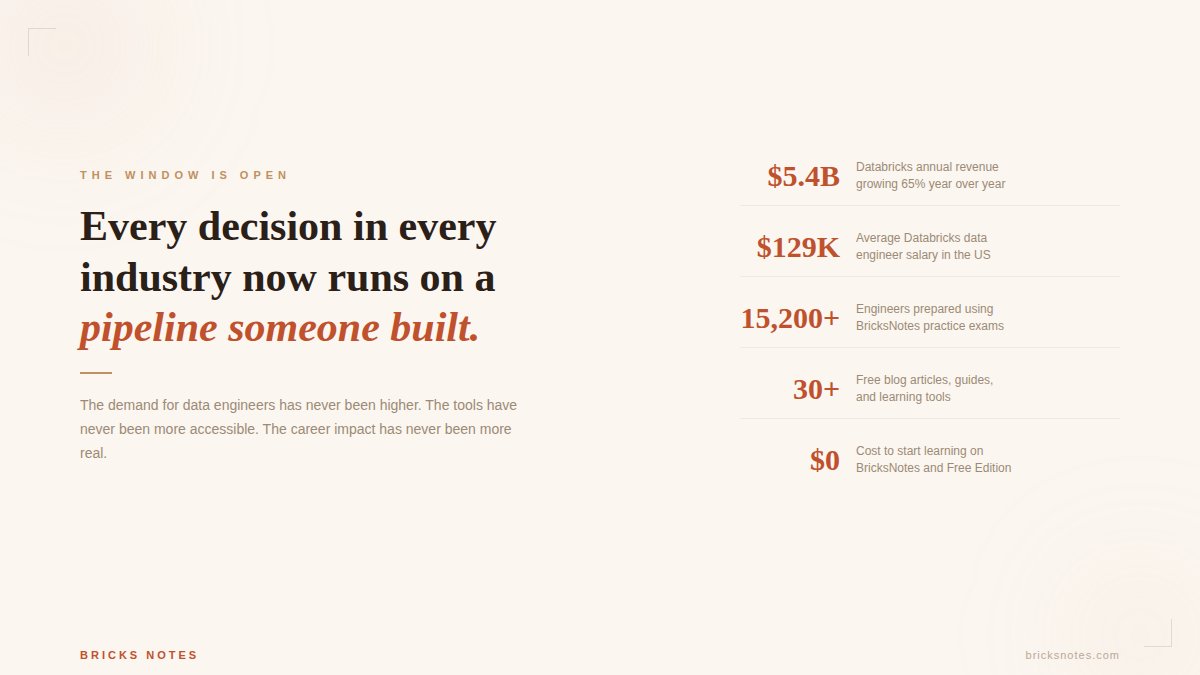
The AI model gets the credit. The data pipeline does the heavy lifting.
Every industry is becoming data-driven, and every transformation depends on engineers who can move, transform, govern, and serve data at scale.
Worth reading 👉 medium.com/p/caf9feff8faf
#DataEngineering #Databricks #BigData #AI #DataPlatform
3
One thing is becoming very clear in the Data AI era.
The opportunity is growing fast, but so is the confusion.
More platforms.
More tools.
More noise.
More people trying to learn from scattered content without a clear path.
That is exactly why practical learning matters now more than ever.
Data professionals do not just need more information. They need better structure, better guidance, and better practice so they can turn curiosity into real skill.
At BricksNotes, that is what we care about.
We are building for the learner studying after work.
The engineer preparing for Databricks certification.
The analyst trying to move into data engineering.
The professional who wants real confidence, not just more tabs open in the browser.
Because in Data AI, the winners will not only be the people who know the buzzwords.
They will be the people who learn clearly, practice consistently, and build useful skills that connect to real work.
That is the future we believe in.
And that is the kind of learning path we are building every day.
#DataAI #Databricks #DataEngineering #CareerGrowth #BricksNotes
4
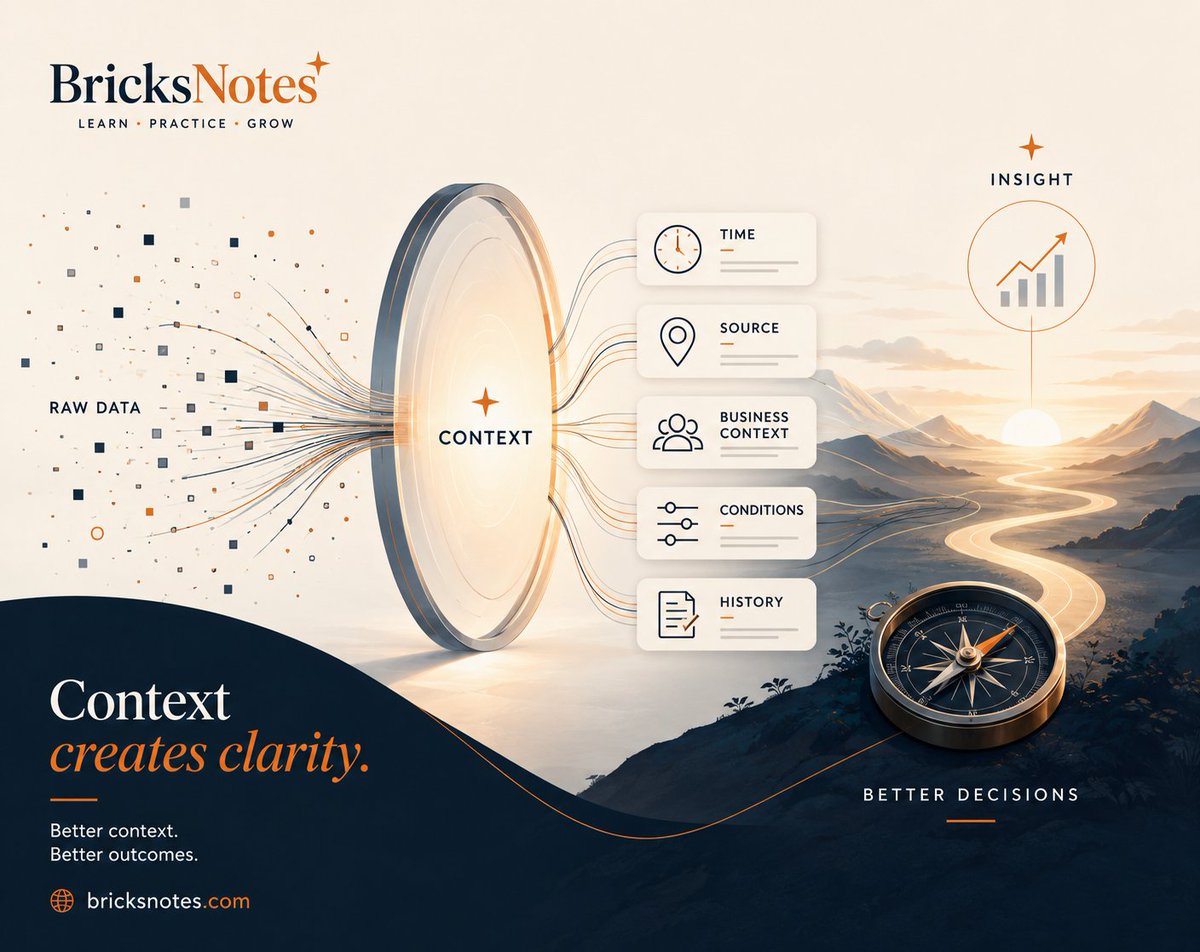
Data without context can easily mislead. A number may look strong or weak, but without knowing where it came from, what changed around it, what time it belongs to, and what business situation shaped it, the meaning can be completely wrong.
That is why context matters so much in data work. Context turns raw numbers into understanding.
It helps teams ask better questions, build better pipelines, and make better decisions.
And in the Data AI era, context is not just useful. It is essential.
#DataEngineering #Analytics #DataAI #Databricks #ContextInData
3
Most people will never see a data pipeline.
They will only see the outcome.
A fraud check that happens in milliseconds.
A route that saves time.
A recommendation that feels relevant.
A hospital alert that reaches the right team before it is too late.
That is what makes data engineering so powerful. The work is often invisible, but the impact is everywhere.
We are entering a time where every organization wants better decisions, better systems, and better AI. But none of that happens without clean, governed, reliable data moving through strong pipelines.
That is why data engineers matter more than ever.
Not because the title sounds modern.
Because the work sits underneath almost every important outcome in the Data AI era.
And for anyone learning Databricks and modern data engineering right now, this is worth remembering:
You are not just learning tools.
You are learning how to build the infrastructure behind decisions that real people depend on.
2
At BricksNotes, we believe practical learning changes everything.
When the path is clear, the practice is real, and the guidance is simple, data professionals grow with much more confidence.
#BricksNotes #Databricks #DataEngineering
3