
Crypto institutional middleware for off-exchange settlement. BridgePort's coordination layer connects exchanges and custodians for trading firm interoperability
Joined November 2024
- Tweets 74
- Following 11
- Followers 233
- Likes 68
24 Photos and videos










Pinned Tweet

9 Oct 2025
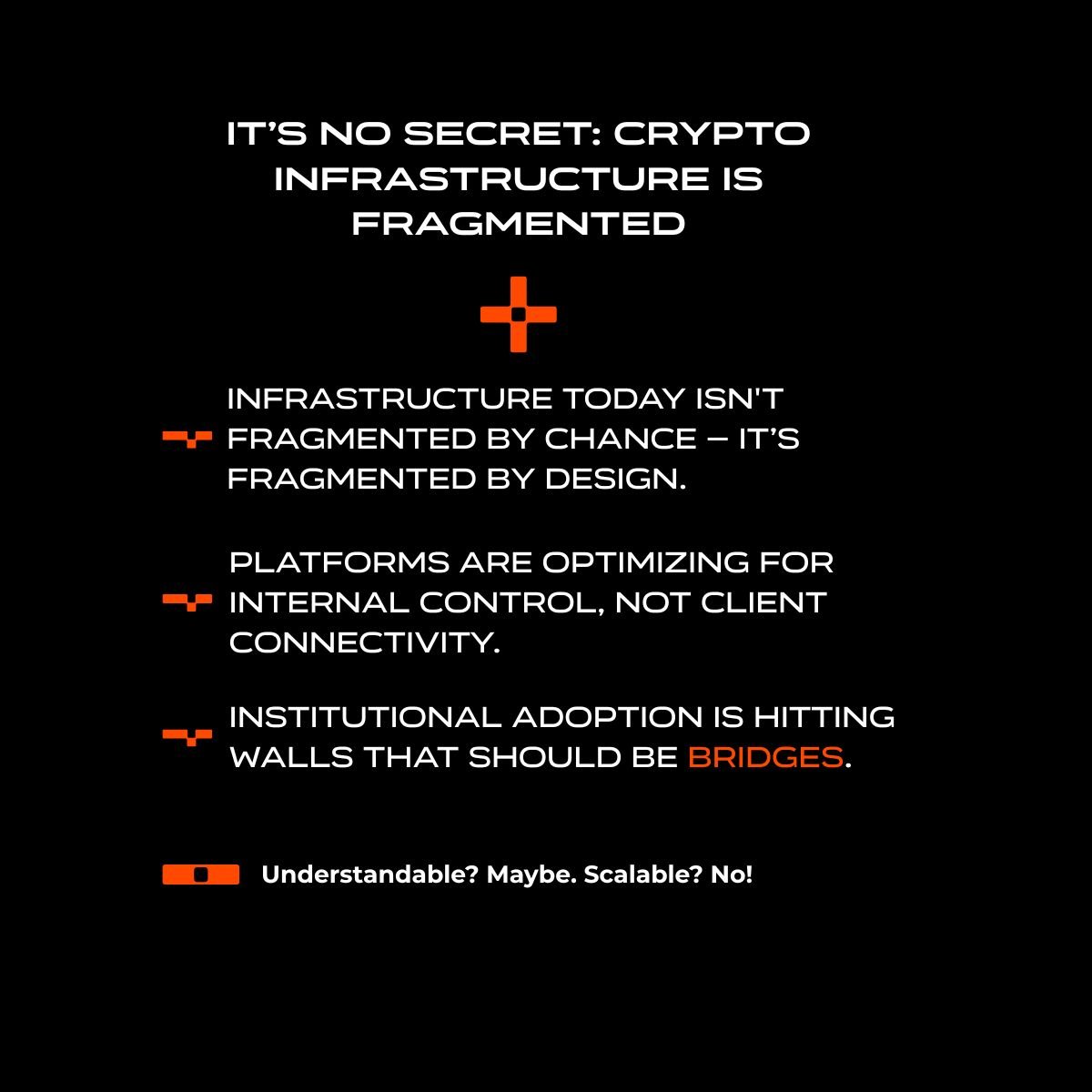
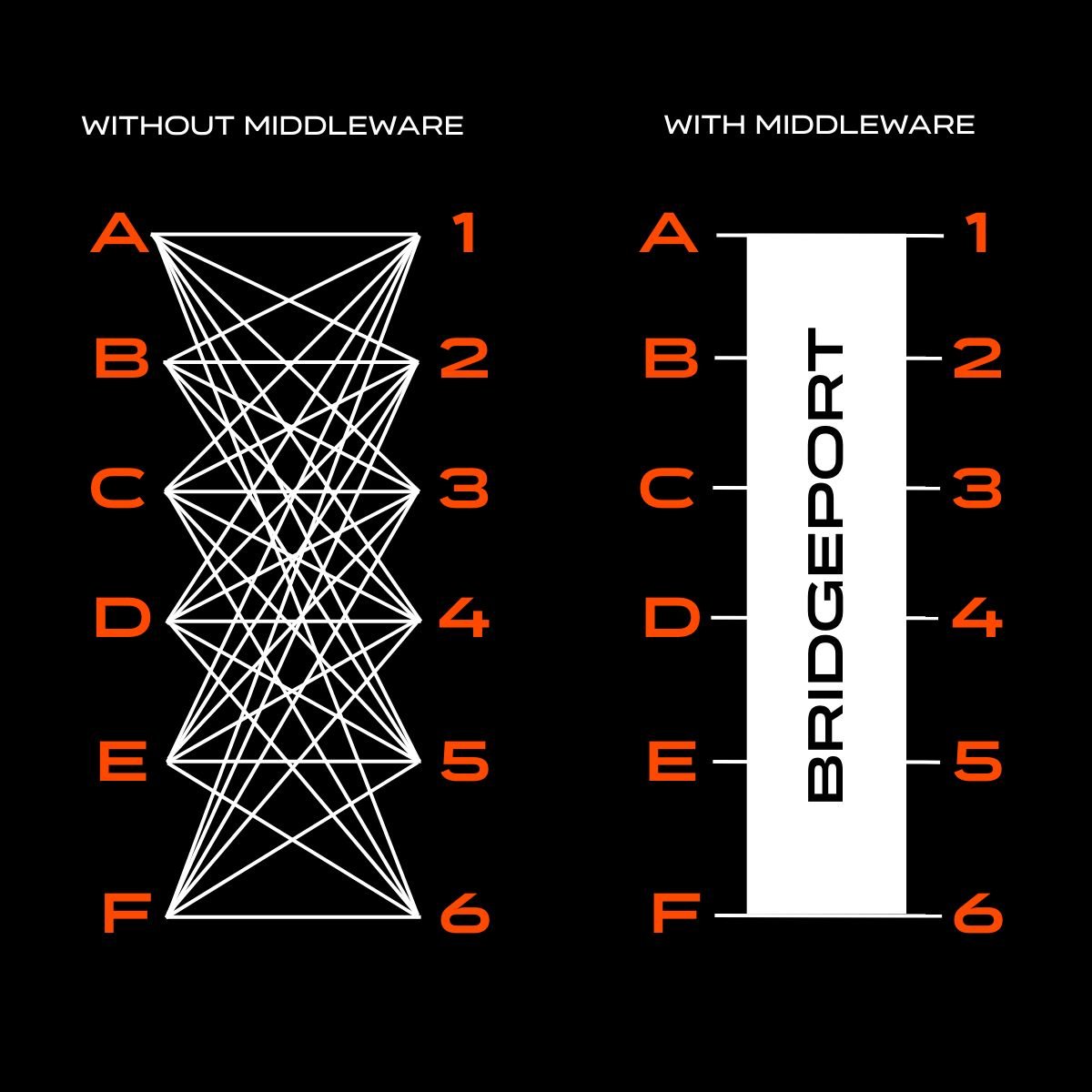
BridgePort is redefining off-exchange settlement with purpose-built middleware
1
2
9
814
BridgePort retweeted

NEW Episode of The Market Runup is live.
Co-founder and CCO at @BridgePortMQ, Chris Soriano digs into the market structure shift that's been quietly reshaping how institutions actually move capital in crypto.
We covered:
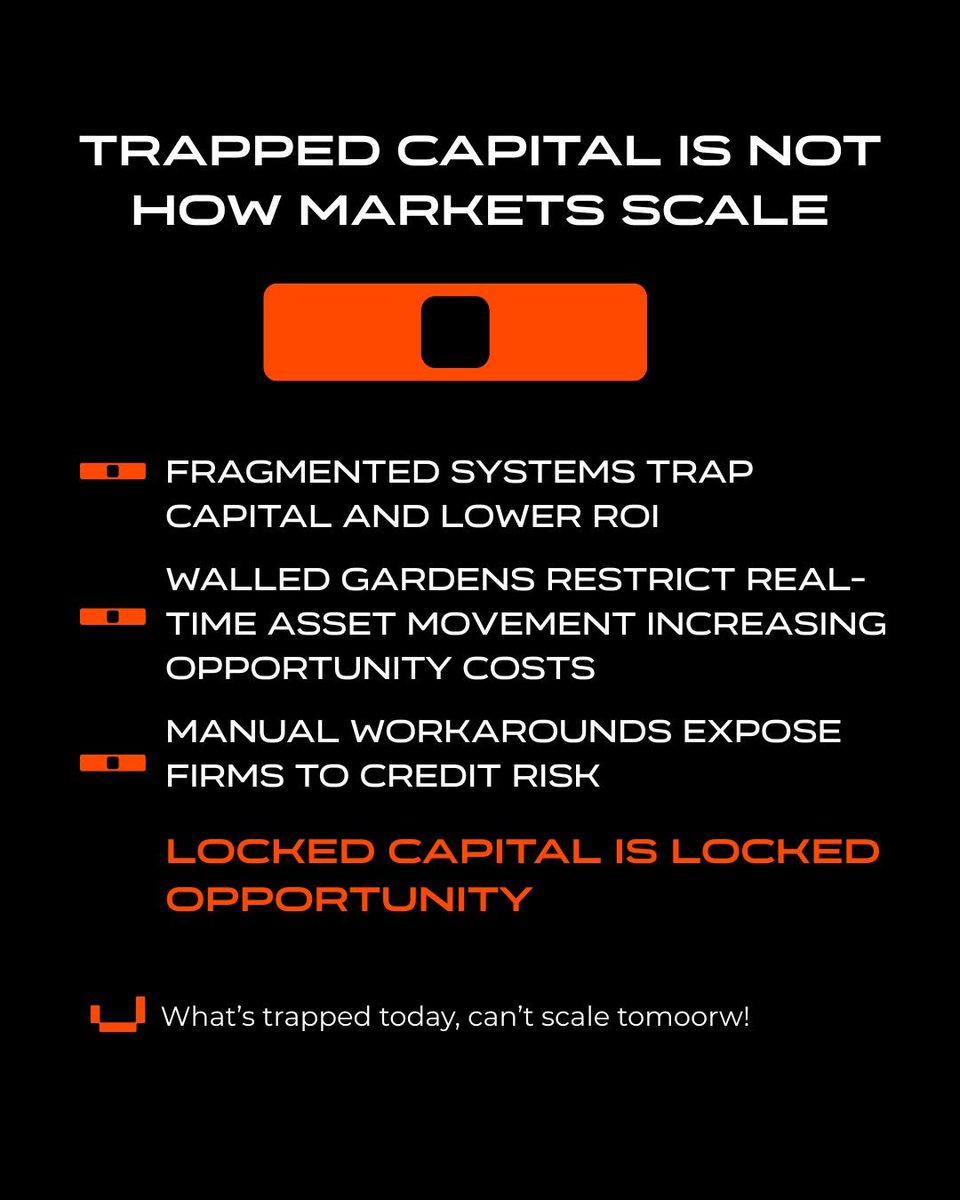
- How pre-funding requirements have locked up billions in dead capital.
- Why the FTX collapse rewired institutional thinking around counterparty risk, custody, and transparency.
- Plus: What role Bridgeport wants to play when people look back at this era of market infrastructure.
TIMESTAMPS
00:00 - The Knicks and the NBA Finals Hysteria
01:41 - Shifting Focus: From Tokens to Market Structure
04:34 - Inefficiencies in Crypto Markets
09:48 - Post-FTX Institutional Psychology
12:45 - The Evolution of Crypto Market Structure
16:24 - Bretton Woods and Financial Architecture
19:15 - Comparing TradFi and Crypto
23:35 - The Future of Crypto Trading
Links below
1
8
15
5,717
Jun 8
Every time a new OES relationship is established, the same legal questions need to be resolved. Currently, there is a lack of standard answers. The questions mostly focus on three areas:
The first is what happens to pledged assets in the event of exchange failure. Inevitably, this is the one teams are rightly focused on for every counterparty relationship they enter, across every agreement type. OES agreements are being written in that environment, and the answers in most current contracts are not as clear as they should be.
The second is disputes. What is the process when counterparties disagree on a settlement? Most current agreements are vague. Vague means slow, and slow is expensive, particularly for operational teams who deal with this more often than legal teams anticipate.
The third – is agreeing standard definitions – before any of the more complex negotiations can even be resolved.
While these are edge cases – operationally speaking – they are foreseeable scenarios that every OES agreement will eventually face. The fact that each gets negotiated differently, every time, from scratch, is where a significant amount of time and money disappears.
At BridgePort, every day we think about how to reduce risk, and costs, for market participants throughout the trade lifecycle. It's one reason we built our company – to remove the risk of losing capital to rather avoidable issues and ensuring it was always secure.
It's also one of the reasons we want to ensure the market has a shared legal language too – because sophisticated markets should, and they operate better when they do.
20
Jun 5
Building BridgePort has reminded us all how young the digital asset market actually is. We know that exchanges want more institutional volume, custodians want the connectivity and trading firms want more control over their capital. The conversations we have every week confirm there is no shortage of appetite, or understanding for off-exchange settlement which delivers on those goals for everyone.
As crypto trading firms are embracing off-exchange settlement adoption, they are after everything that more mature asset classes figured out a long time ago: legal standardization across venues to avoid duplicative upfront and ongoing onboarding cost burdens.
In OES every new relationship requires a bespoke agreement between three parties, negotiated from scratch, with no shared framework to start from. In most mature asset classes, this legal strain was solved a long time ago.
Institutional crypto is working through it now. We believe there is a better way to do achieve this objective. And, crucially with a team that has designed market structure solutions already in FX and FI – we know how to do it.
More to come.
34
Mar 9
Last week we announced our partnership with 3DX, 360T's MiCAR-regulated institutional crypto trading platform, part of Deutsche Börse Group.
BridgePort exists to solve a real problem: institutional firms trading crypto while carrying unnecessary settlement risk and capital inefficiencies.
📢 As Carlo Kölzer, CEO of 360T and Head of FX and Digital Assets of Deutsche Börse Group, commented: "We are excited to integrate BridgePort’s middleware, enhancing the options available to our clients. In line with our commitment to provide convenient crypto solutions, this collaboration extends 3DX’s capabilities, offering even greater flexibility in managing assets and optimizing capital efficiency."
Being selected to solve off-exchange settlement for 3DX and their clients is a partnership we are ready for and look forward to delivering on.
We will be in production shortly and look forward to delivering a seamless execution and settlement functionality together.
Full press release below.👇
1
1
4
318
BridgePort retweeted

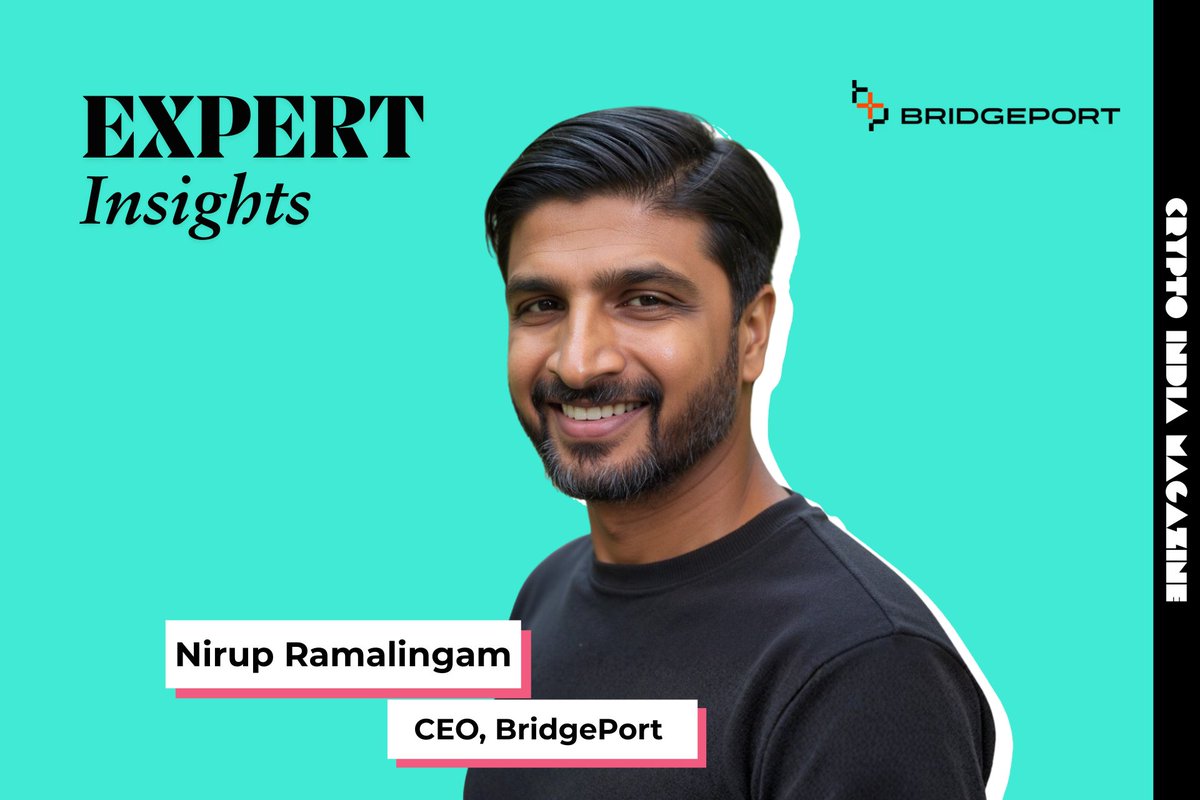
INTERVIEW: At Consensus HK 🇭🇰 2026, we sat down for an exclusive interview with Nirup Ramalingam, CEO of BridgePort.
Nirup talked about solving multi-custodial bottleneck and also explained how off-exchange settlement is mitigating counterparty risks.
cryptoindiamagazine.com/brid…
3
4
349
Feb 14
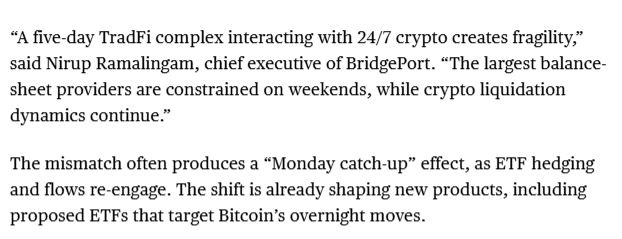
BridgePort CEO @NirupRam connected with @Bloomberg and shared his views on the impact of 24/7 trading during moments of volatility and data from BridgePort Analytics demonstrating the difference between the cost of a trade and the liquidity available over the weekend versus during the week.
Check out BridgePort Analytics and its accompanying AI agent, Bridget in the comment
And see the full story linked in the comment
2
2
4
131
Feb 14
1
1
67
Feb 14
1
48

We at @BridgePortMQ launched BridgePort Analytics last month to focus on quality on execution. We used Bridget to provide @business
with insights noted in the article
While there are many narratives around the catalysts for the downturn, analyzing execution is like studying DNA evidence - it tells its own empirical based story

Bitcoin’s months-long slide has masked a change at the heart of its 24/7 market: trading never stops, but the liquidity that steadies prices still follows US market hours. bloomberg.com/news/articles/…
2
2
112
Jan 27
BridgePort Launches AI-Driven Crypto Exchange Intelligence to Guide Execution and Off-Exchange Settlement Decisions
1
2
160
Jan 27
How This Helps Our Customers & Partners
"As more trading moves to OES, institutions need a clear understanding of how each venue performs under real conditions," said @NirupRam, CEO of BridgePort. "BridgePort Analytics gives firms objective execution-quality data they can use to allocate credit, build routing logic, and manage settlement risk across venues. It extends our role as the coordination layer for institutional trading by showing where real execution quality exists, helping firms rebalance more precisely and reduce the amount they must distribute across exchanges to stay competitive within an OES framework.”
BridgePort Analytics is powered by institutional-grade data feeds from partners that cover over 400 global exchanges and nearly one million trading symbols. The platform ingests real-time and historical order-book depth, trade data, market-microstructure signals, and the latest crypto-market news to deliver objective execution-quality metrics, size-specific venue behavior, and liquidity insights across global markets. These inputs create a unified intelligence layer that supports routing decisions, capital allocation, and settlement workflows for institutional traders.
“We’re working to make many markets behave like one market," said @stevebport, CPO of BridgePort. "Fragmentation has forced traders into separate workflows for every exchange. BridgePort OES addresses that by shifting settlement risk away from venues, BridgePort’s Pledging enables firms to hold and allocate capital from a Custodian without pre-funding, and now BridgePort Analytics gives traders a unified layer of execution intelligence and venue behavior so capital can be deployed with far greater precision across markets."
1
52
Jan 27
The market intelligence assistant is available, with core features available for free and advanced analytics accessible through approved accounts. To learn more and try BridgePort Analytics and the Bridget assistant yourself, please visit: Bridgeportmq.com/Analytics
39
BridgePort retweeted

Jan 21
Nirup Ramalingam (@NirupRam), Co-Founder & CEO at @BridgePortMQ, joins HSC Conference Hong Kong on February 12 at the Asset Management Stage.
Nirup will share insights on building institutional-grade infrastructure and how capital markets are evolving at the intersection of traditional finance and on-chain systems.
Register via Luma:
luma.com/hack_hong_kong
3
7
1,313
9 Dec 2025
📢 MAJOR ANNOUNCEMENT: BridgePort and @Anchorage Partner to Transform Institutional Digital Asset Settlement! 🚀
We are thrilled to announce that BridgePort is partnering with Anchorage Digital, the crypto platform and federally chartered crypto bank, to integrate our middleware and enhance institutional settlement infrastructure!
This partnership is a huge step forward for institutional crypto adoption, solving the critical challenges of capital inefficiency and fragmented infrastructure.
What This Means for Institutional Trading:
💹 Enhanced Capital Efficiency: Our combined solution allows institutional market participants to benefit from seamless pre-order asset allocation without the need for pre-funding on execution venues.
🔏 Secure & Compliant Access: By bridging Anchorage Digital's institutional custody platform with BridgePort's credit allocation and settlement solution, we are providing a coordinated management layer for collateral. This expands how custody clients can access liquidity while staying within the guardrails of a federally regulated platform.
🛣️ Access to New Venues: The integration will facilitate access to traditional and non-custodial execution venues for Anchorage's Atlas Network clients.
As Anchorage Digital CEO @nathanmccauley said, this integration is "another step toward making institutional crypto infrastructure work the way it should".
BridgePort CEO @NirupRam added, "By bridging custody and execution platforms, we're creating the seamless, capital-efficient trading experience institutions expect from traditional markets".
We are committed to building the most robust, secure, and efficient infrastructure to accelerate the institutionalization of the digital asset market.
Read the full press release for all the details!
1
2
8
246
9 Dec 2025
1
98
2 Dec 2025
Valuable insights from our CPO, @stevebport Steve Bartfield!
Steve is featured in the latest article from e-Forex, diving deep into the "Institutional Requirements for Digital Asset Infrastructure." He shares his expertise on what it takes to build robust, secure, and scalable solutions that meet the demanding needs of institutional players in the digital asset space.
The article explores critical topics, including:
🏗️ The essential components of institutional-grade infrastructure
🌉 Bridging the gap between TradFi and digital asset trading
🆕 How new market participants are reshaping the ecosystem
This is a must-read for anyone interested in the future of institutional crypto.
Read the full article - link in comments
2
1
2
144