Founder & CEO, Genesis 1 Technologies, Inventor of The Topper Stopper | CTO - Waste Wise Innovation
Joined August 2019
- Tweets 43
- Following 60
- Followers 9
- Likes 222
12 Photos and videos



Jun 10
A Nigerian university just turned plastic pollution into a circular-economy lab.
The University of Lagos commissioned a plastic recycling micro-plant in partnership with the French Embassy, Plastic Odyssey, and Weircapacity.
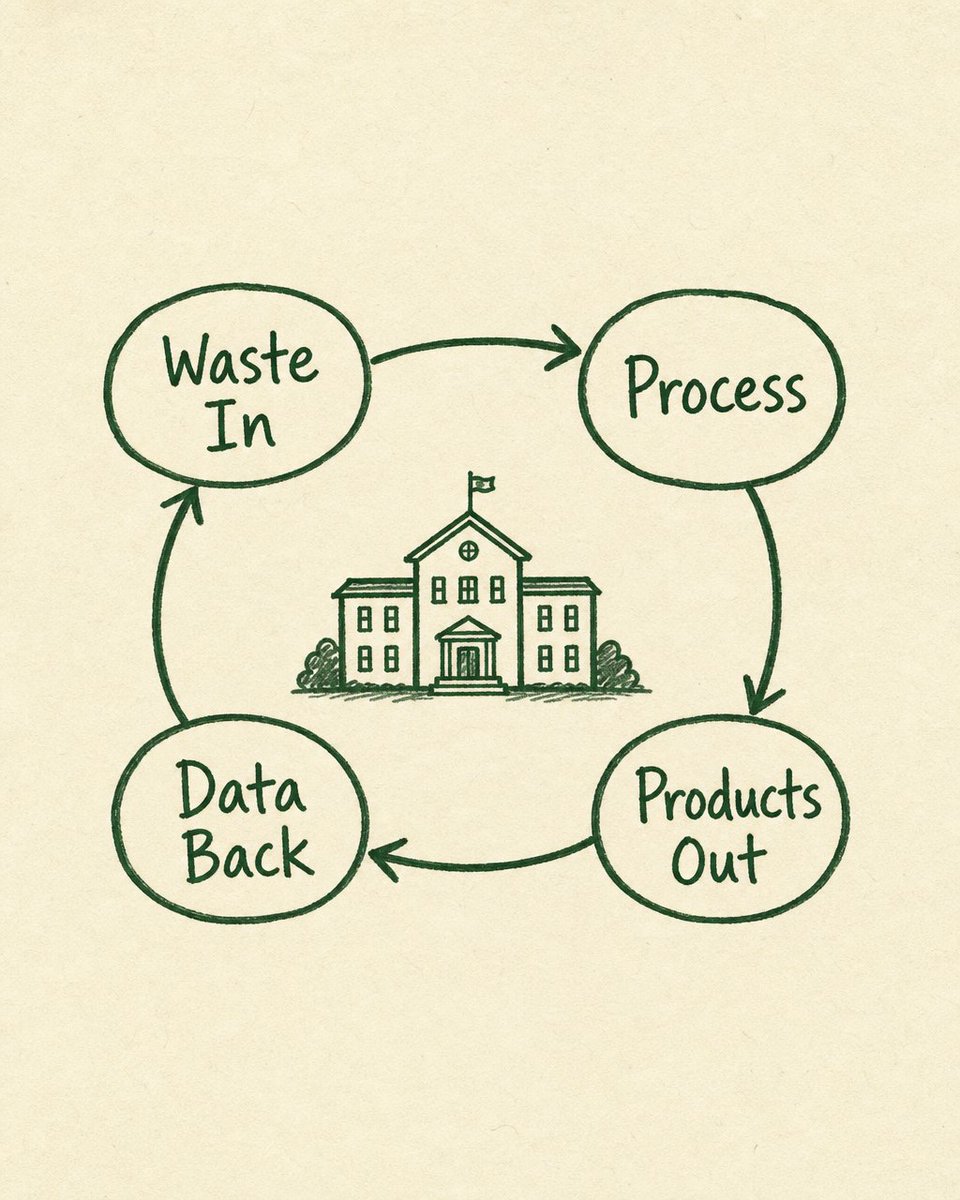
Plastic waste goes in. Reusable products come out.
Students, researchers, and industry partners work side by side.
This is not a pilot program.
It is a working micro-plant on campus that turns waste into economic value.
Meanwhile in Canada, UNBC launched a plastic recycling project with the Northern BC MakerCollective.
Funded by $168,000 from the CleanBC Plastic Action Fund.
Students divert plastic from landfill and reshape it into new products.
Hands-on. Circular. Community-driven.
And at the University of Delaware, a long-running partnership with Goodwill is pushing textile circularity further.
Faculty and students experiment with recycled textiles and felting methods in a living laboratory.
Three continents. Same pattern.
Universities are not just teaching about circular economy.
They are becoming the lab.
But here is the gap.
Most of these programs measure impact at the macro level.
Total pounds diverted. Number of products made.
What they do not have is the micro-level data.
Which student recycled what. Which SKU. When. How often.
That granularity is where behavior change actually happens.
If you can measure that a student recycled 12 Coca-Cola bottles this month, you can reward that behavior.
You can build a loop.
Scan. Verify. Reward. Repeat.
The circular economy needs the data layer.
The campuses that add it will turn good programs into scalable systems.
♻️ Repost for the sustainability team building circular systems that actually track behavior.
Follow me for practical insights on campus recycling, circular economy, and the data layer that makes it work.
#CircularEconomy #CampusSustainability #HigherEd #Recycling
34
Jun 5
I used to think the hard part of building a startup was the idea.
Then I thought it was the product.
Then I thought it was the pitch.
I was wrong every time.
The hard part is staying in the room when the room gets quiet.
No investor calls coming in.
No campus saying yes yet.
No major revenue to show.
Just you, your team, and a prototype that works in a lab but has not proven itself in the real world yet.
That is the gap every founder hits.
The space between "this should work" and "this is working."
Here is what I have learned in that gap:
1. Build something you would use even if nobody paid you
I started building The Topper Stopper because I could not stop thinking about why campus recycling was so broken.
Not because I saw a market. Because it bothered me.
That obsession is the only thing that kept me going when the market was not there yet.
2. Ship before it is perfect
The first version will embarrass you later.
Good. Ship it anyway.
Feedback from one real user is worth ten months of internal deliberation.
3. Protect your Saturdays
Every Saturday since June 2023, I take time to get aligned before I try to lead anything.
Prayer, listening, writing, asking hard questions.
That rhythm has shaped this company more than any strategy session.
4. Say the number out loud
"I need a campus to say yes."
"I need this pilot to prove the model works."
Vague goals get vague effort.
Specific targets create specific action.
5. Build the next thing while the current thing is still moving
We built The Topper Stopper hardware, tsRewards software, and tsMedia ad infrastructure simultaneously.
Not because we have it all figured out.
Because the system only works when all three pieces connect.
If you are in the gap right now, keep building.
The prototype on your desk is closer to real than you think.
---
Follow me for the honest build-in-public journey behind Genesis1 Technologies.
#FounderLife #StartupJourney #BuildInPublic #Resilience #Sustainability
1
71
Jun 3
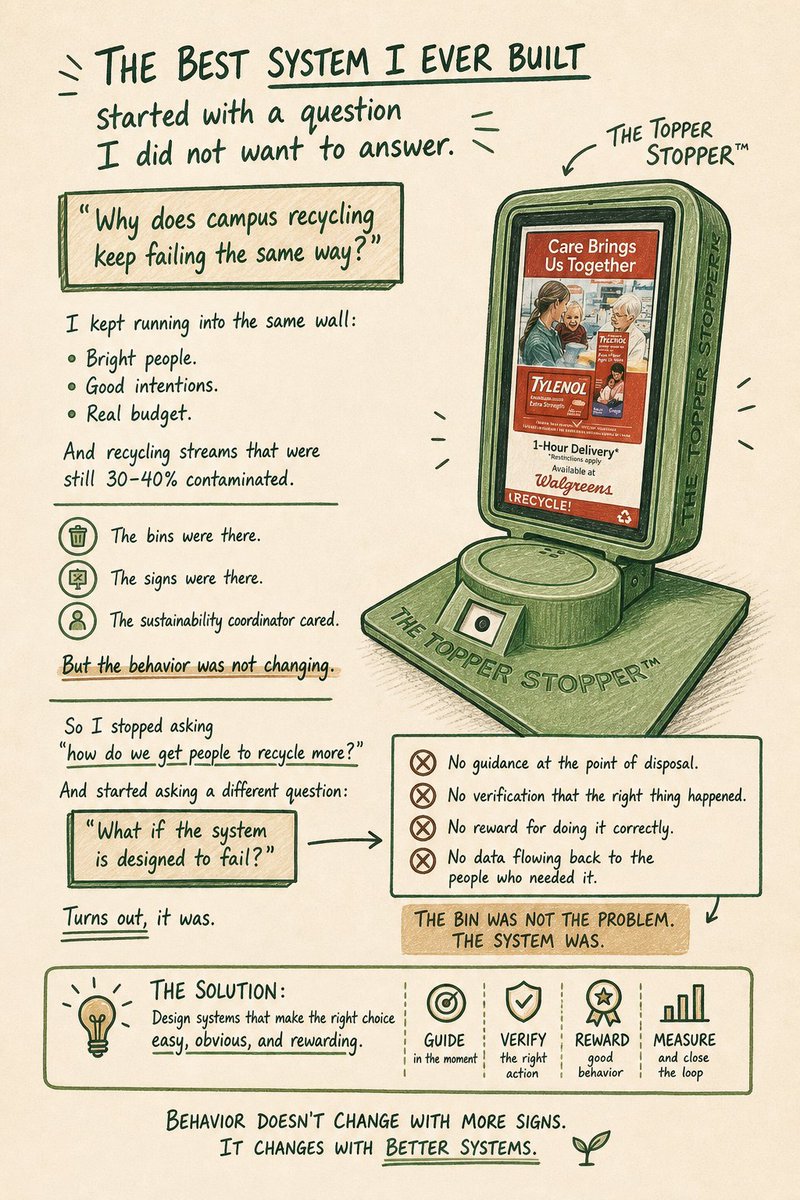
The best system I ever built started with a question I did not want to answer.
"Why does campus recycling keep failing the same way?"
I kept running into the same wall:
Bright people. Good intentions. Real budget.
And recycling streams that were still 30-40% contaminated.
The bins were there. The signs were there. The sustainability coordinator cared.
But the behavior was not changing.
So I stopped asking "how do we get people to recycle more?"
And started asking a different question:
"What if the system is designed to fail?"
Turns out, it was.
No guidance at the point of disposal.
No verification that the right thing happened.
No reward for doing it correctly.
No data flowing back to the people who needed it.
The bin was not the problem. The absence of a system around the bin was the problem.
That insight changed everything.
We stopped trying to fix the person and started building the loop:
Scan. Verify. Reward. Repeat. Measure.
The bin is not the system.
The behavior is.
If you are stuck on a problem that keeps coming back, stop trying harder at the wrong question.
Ask the one underneath it.
The answer might surprise you.
Follow @Marcus Wade for founder lessons on building systems that change behavior.
#FounderLessons #SystemsThinking #Sustainability #StartupLife #BehaviorChange
10
Jun 3
If I had to increase campus recycling participation from scratch, I would not start with a bigger awareness campaign.
I would build a participation system.
Here’s the framework:
1. Convenience
Put recycling where the behavior already happens.
2. Clarity
Make it obvious what belongs in the bin.
3. Verification
Give students real-time confidence that they did it right.
4. Reward
Make the positive action instantly reinforcing.
5. Feedback
Show the campus what changed because people participated.
That’s how recycling becomes a habit instead of a reminder.
We unpacked the full playbook in the latest Genesis 1 article:
zurl.co/tB5Xl
A good sustainability program does not just ask for better behavior.
It designs for it.
#StudentEngagement #CampusRecycling #SustainabilityLeadership #HigherEd
4
Jun 2
Virginia just gave George Mason $1M to track food waste with AI.
Not to buy more bins.
Not to run another awareness campaign.
To build systems that actually track what happens after the plate.
The grant comes from the Virginia Department of Environmental Quality, funded through EPA's Climate Pollution Reduction Grant program.
Here is what caught my attention:
The project includes artificial intelligence technology for waste tracking.
George Mason is not just collecting food scraps. They are building intelligence around it.
This is the direction.
Campuses across the country are waking up to a simple truth:
You cannot manage what you cannot measure.
And right now, most campus waste programs are managed on faith and estimates.
Contamination rates are guessed.
Recycling volumes are reported in bulk.
Student participation is unverified.
That is starting to change.
George Mason got $1M for AI-enabled food waste tracking.
The University of Manchester just went 100% zero landfill by rewriting waste contracts around data.
Cornell students are treating dining halls as living labs where trash becomes measurable.
Macalester College is chasing zero-waste campus status with worm composting and real diversion metrics.
The common thread:
Data replaces hope.
Systems replace slogans.
If your campus waste program still runs on "we think students are recycling more," you are already behind.
The next generation of campus sustainability is not about telling people to care.
It is about building infrastructure that proves they did.
If this resonates, repost it for the campus operations team still running recycling on spreadsheets.
Follow Marcus Wade for practical systems at the intersection of sustainability, rewards, and data.
#CampusSustainability #FoodWaste #HigherEd #SustainabilityTech #CircularEconomy
18
Jun 1
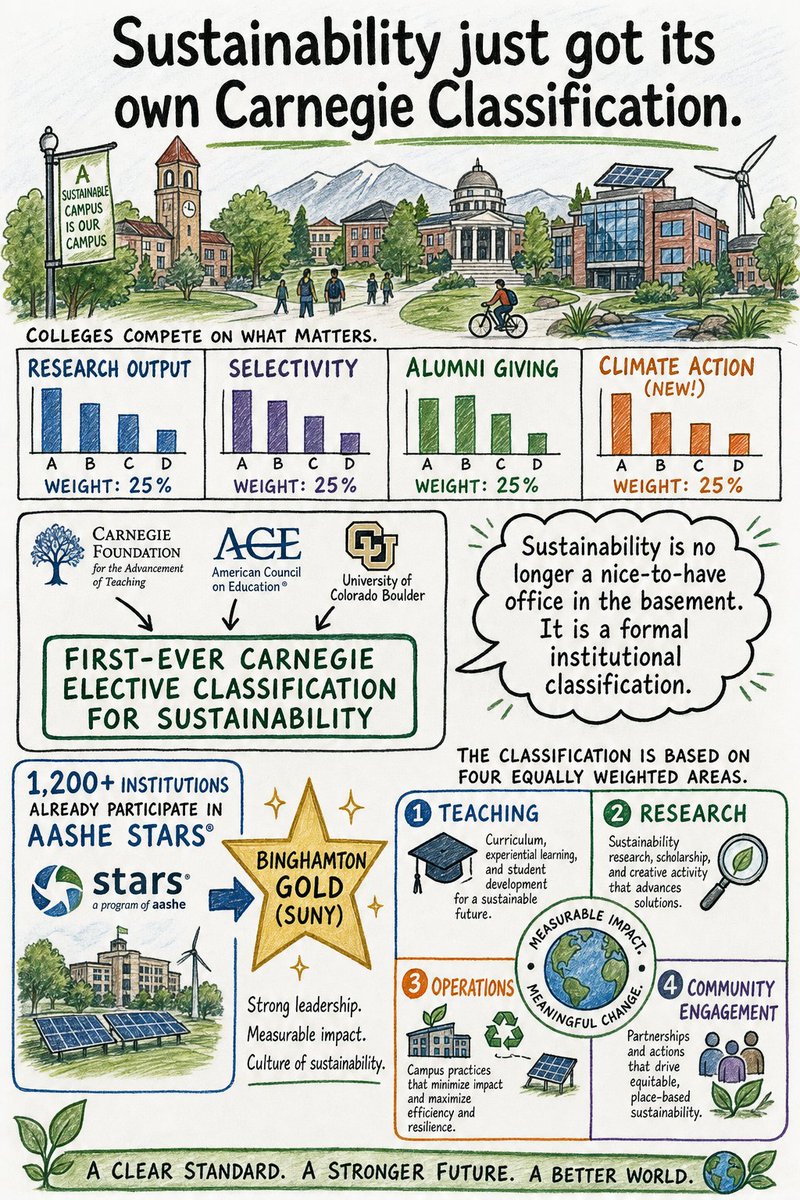
Sustainability just got its own Carnegie Classification.
For decades, colleges have competed on research output, selectivity, and alumni giving.
Now they compete on climate action too.
The Carnegie Foundation, ACE, and CU Boulder just opened applications for the first-ever Carnegie Elective Classification for Sustainability.
Think about what this means.
Sustainability is no longer a nice-to-have office in the basement.
It is a formal institutional classification that presidents, boards, and accreditors will track.
1,200 institutions already participate in AASHE STARS. Binghamton just became the first SUNY school to earn Gold under the newest framework.
The pressure to perform is real.
And here is what most people miss:
This classification covers teaching, research, operations, AND community engagement.
Operations includes waste, recycling, and resource recovery.
The same systems campuses need to score well are the systems they struggle to build.
Students sort wrong. Bins get contaminated. Facilities teams fly blind on what actually goes where.
That gap is not going to close with another poster campaign.
It closes with systems that measure, reward, and verify.
The campuses that lead the next decade of sustainability rankings will be the ones that figured out how to make good behavior easy and measurable.
If your campus is pursuing this classification, the recycling data problem is not a side issue.
It is the proof point.
Enjoy this?
♻️ Repost for the sustainability director trying to turn good intentions into real metrics.
Follow Marcus Wade for practical systems at the intersection of sustainability, rewards, and revenue.
#HigherEd #Sustainability #CarnegieClassification #CampusOperations #STARS
11
May 27
I almost quit my startup this year.
Not because the idea of The Topper Stopper was bad. Because nobody was listening.
I'd walk into meetings with university facilities directors, show them how smart recycling devices could transform their campus waste streams, and get the same response:
"Great idea. We don't have budget for that."
Month after month. Rejection after rejection. Conference after conference.
The turning point wasn't a better pitch deck. It wasn't a fancier prototype.
It was a single conversation with a student who said: "I recycle every day and nobody knows. That's frustrating."
That changed everything.
We stopped selling technology to administrators and started solving a real problem for real students.
We built tsRewards because engagement beats mandates every time. We built Topper Stopper to make the invisible visible.
The lesson I keep coming back to: the best businesses don't start with a product. They start with a person who's frustrated.
If you're building something, find the frustrated person first.
#FounderStory #Entrepreneurship #Genesis1Tech #Sustainability #LessonsLearned
2
19
May 28
The numbers don't lie — but they do surprise.
Campus sustainability in 2026 is hitting some critical inflection points:
📉 Only 25% of campus buildings have undergone green retrofits (The College Investor, Mar 2026)
🎓 Student sustainability literacy remains shockingly low at most institutions
💰 USDA invested $33M across rural America for clean energy — with campus partnerships expanding
🌍 66 colleges joined AASHE's Climate Leadership Network this year alone
⚡ Solar installations on campus jumped significantly — with some schools reporting 40% energy cost reductions
Here's what stands out: the gap isn't in ambition. Every campus has a sustainability plan.
The gap is in execution.
The campuses seeing real results share one thing — they moved from annual reporting to real-time monitoring. They stopped guessing and started measuring.
That's exactly why smart monitoring matters. When you can see the data in real-time, you can act in real-time.
Sources: The College Investor, AASHE, USDA Rural Development
#SustainabilityData #HigherEd #CleanEnergy #CampusOperations #SmartMonitoring
4
Apr 17
I now speak my ideas and this tool ships creative content!
Free 7 day trial: lk.g1tech.cloud/shhhtype1
#linkedin #creativecontent #timesaver #voice
15
Mar 30
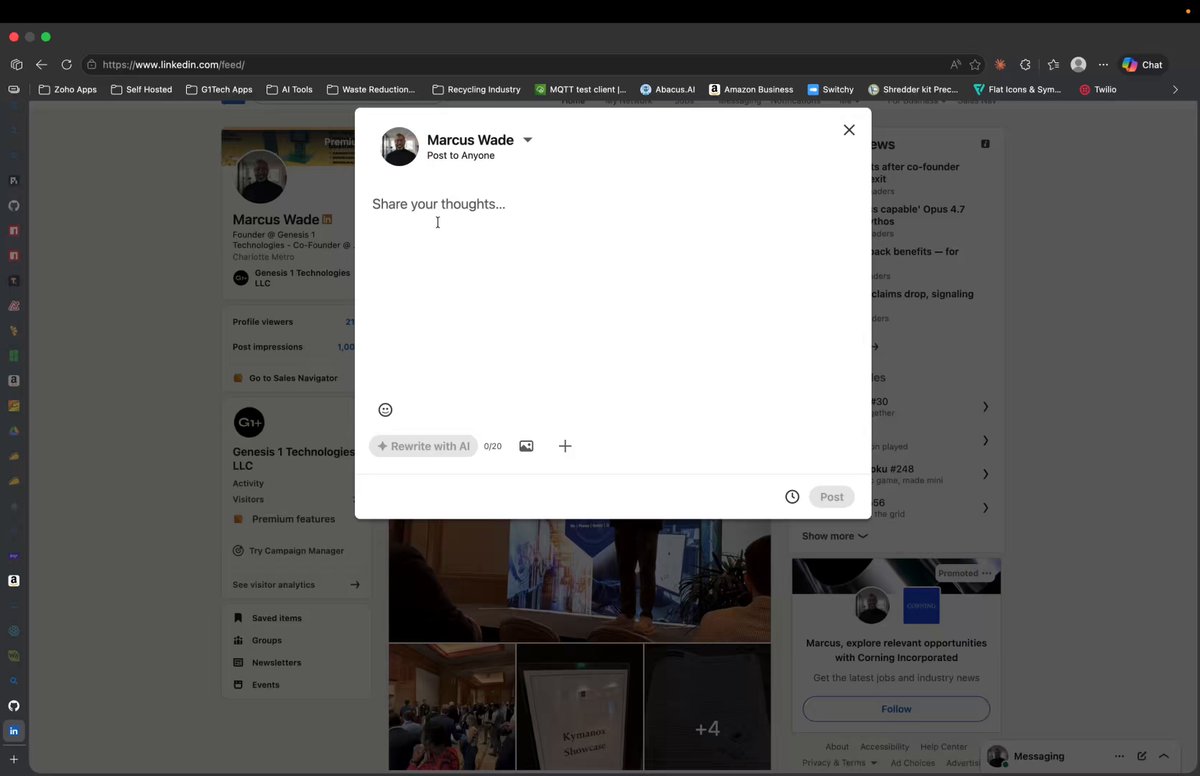
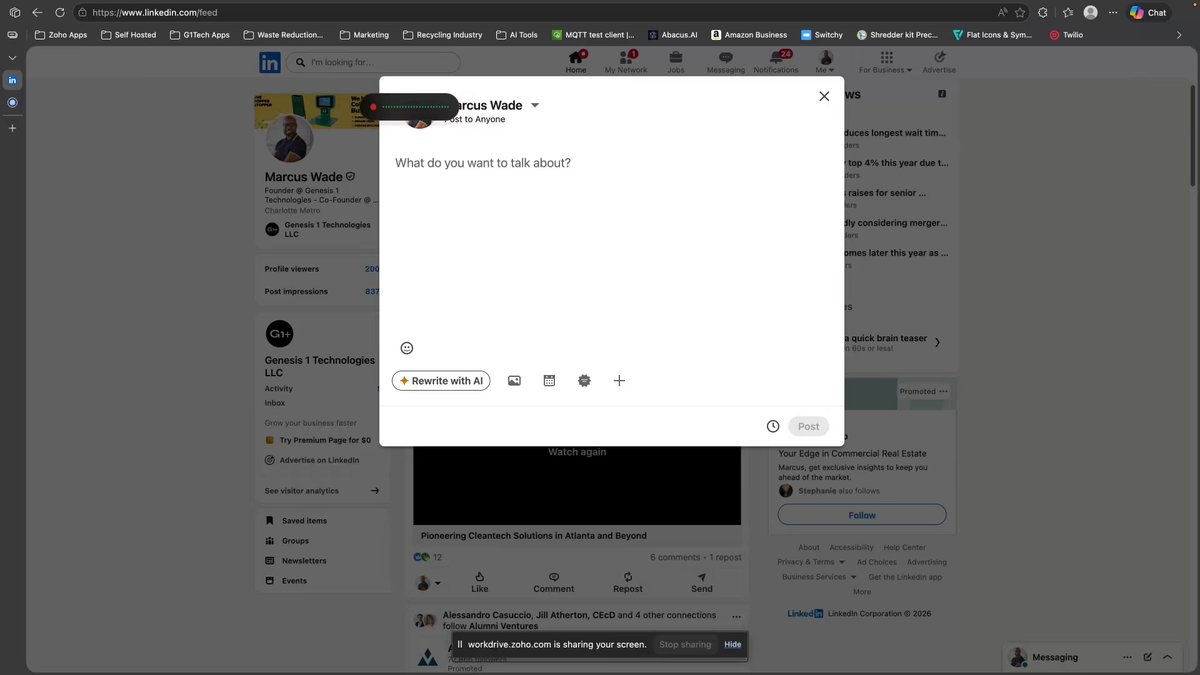
My LinkedIn posts used to take 15 minutes to write each.
Now they take 30 seconds.
I talk. This app turns my voice into a publish-ready post. No typing. No prompts.
Here's the before (what I actually said) and the after 👇🏽
If you want to try it, drop a 🔥 in the comments and I'll DM you access.
#linkedin #content
2
7
Feb 11
Today’s AI 🤖 tip:
I have been testing/using the Z.ai models over the past 6-9 months or so. I have seen them continue to get better with each new release.
Today they have released GLM-5. I’ve been testing this for the last week (as Pony Alpha) and I am truly impressed with its ability. The gap between Claude Code Opus 4.6 and GLM-5 is very narrow now.
Here’s ways that I use it.
1. In Claude Code. I love CC’s features and it is my preferred programming tool.
2. In Kilo Code. Love Kilo. Its agentic capabilities are fantastic. The way it thinks, structures tasks is unreal.
3. Use their chat on z.ai for quick testing and iterations.
🎯Takeaway: Don’t be afraid out trying new LLM’s. Test them in your own use cases and make your own judgement. Use benchmarks with a grain of salt. If they work well in your use cases, it’s a great value and tool for your business.
89
Feb 11
I really think that #GLM5 is going to shock everyone with its power. Tested it as Pony Alpha and the gap to Opus 4.6 is so narrow now. Congrats @Zai_org and @ZixuanLi_


155
Jan 19
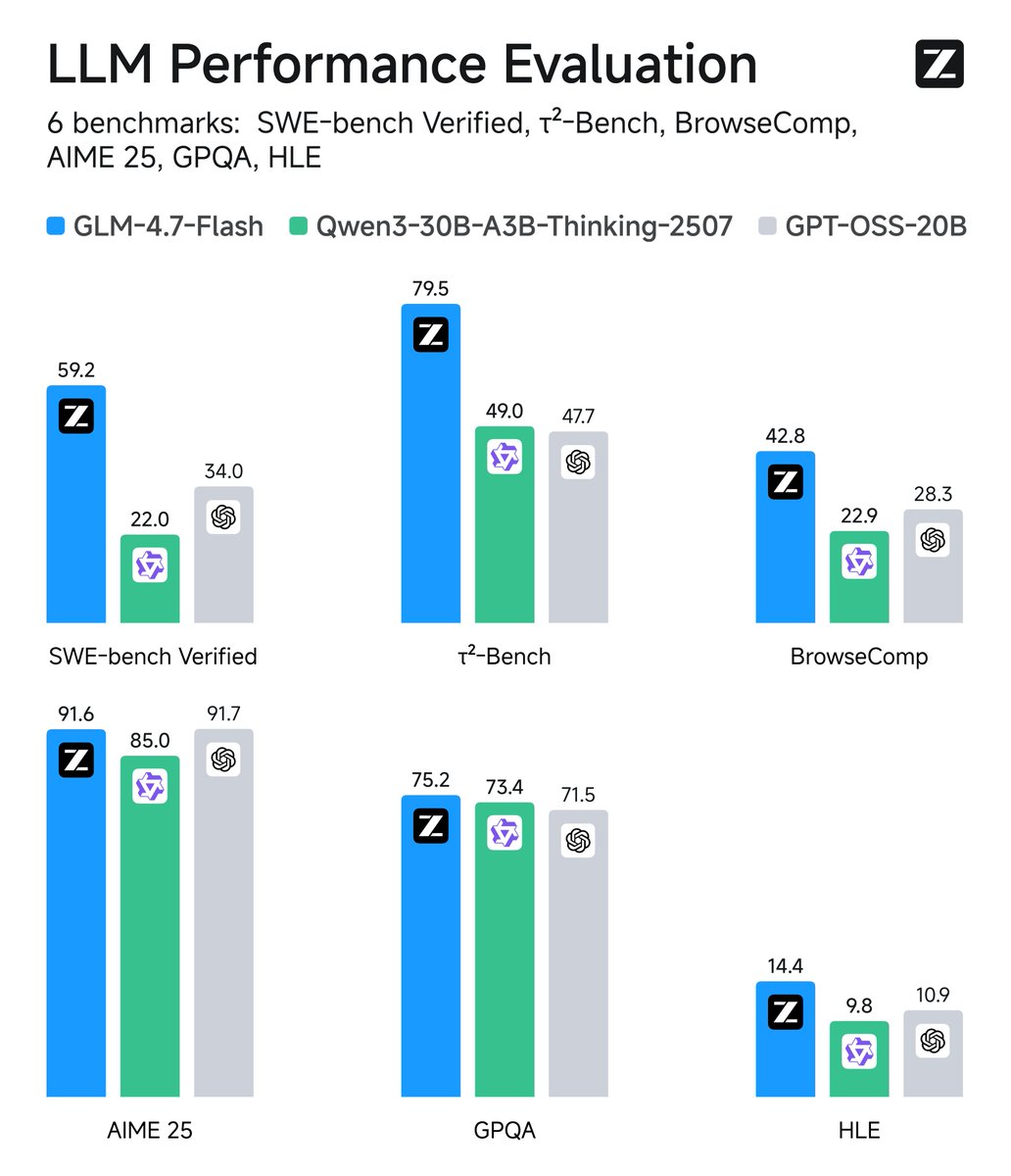
Looking forward to testing the new 4.7 Flash!
Introducing GLM-4.7-Flash: Your local coding and agentic assistant.
Setting a new standard for the 30B class, GLM-4.7-Flash balances high performance with efficiency, making it the perfect lightweight deployment option. Beyond coding, it is also recommended for creative writing, translation, long-context tasks, and roleplay.
Weights: huggingface.co/zai-org/GLM-4…
API: docs.z.ai/guides/overview/pr…
- GLM-4.7-Flash: Free (1 concurrency)
- GLM-4.7-FlashX: High-Speed and Affordable
16
26 Nov 2025
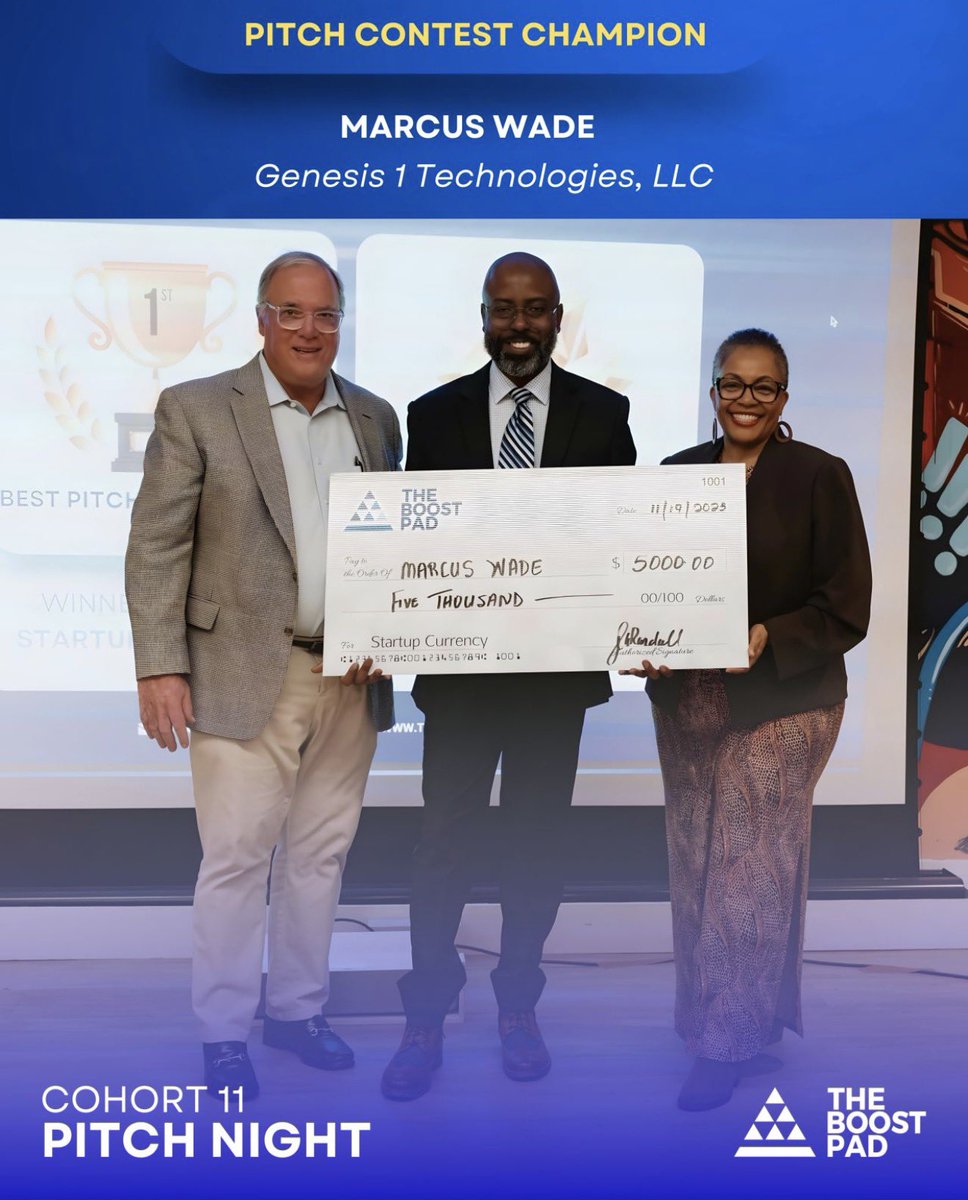
Honored and blessed to win The Boost Pad Cohort 11 Pitch Contest! #TheBoostPad #TheTopperStopper
13
9 Sep 2025
Here is your AI toolkit!

Here are our favorite models per use case:
Everyday → GPT-4o, GPT-5 Thinking
Coding → Sonnet 4, Opus 4.1
Budget coding → Qwen Coder
Video → Seedance Pro, Veo-3
Images → Seedance, GPT Image
OCR/simple → Gemini Flash
Reports → Gemini 2.5 Pro
Reasoning → GPT-5 Thinking
Real-time → Grok-4
Lipsync → Hedra
TTS → ElevenLabs
Luckily, you can access all of these with a ChatLLM Teams subscription.
chatllm.abacus.ai/
15
28 Aug 2025
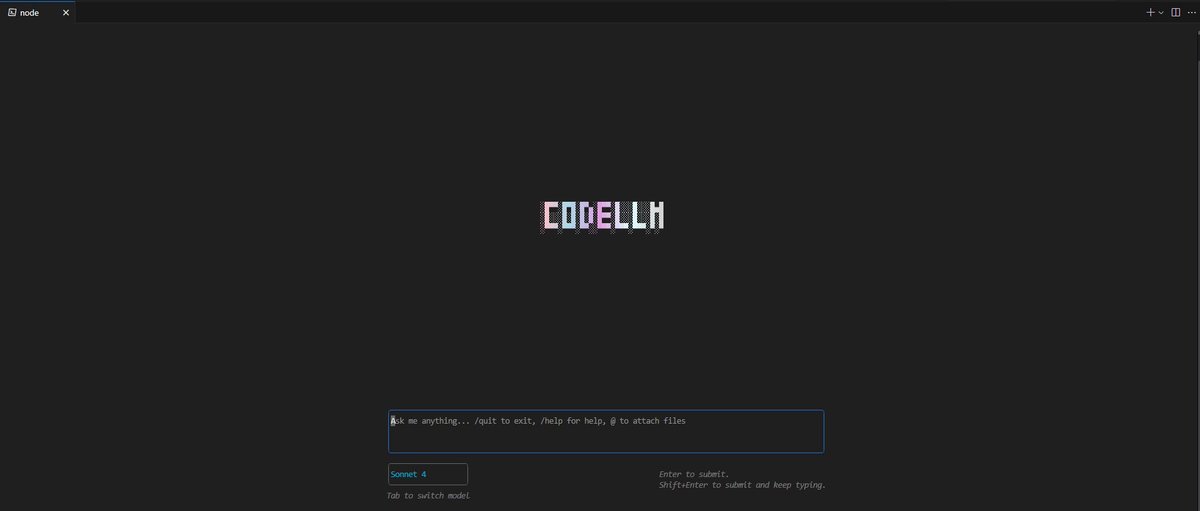
🙋🏾Feature request to the team at @abacusai for Codellm. Would love to have the capability to index our codebase and add documents. I’m currently using the Context7 mcp for documents but these built into Codellm would be much faster and efficient.
21

7 Jun 2025
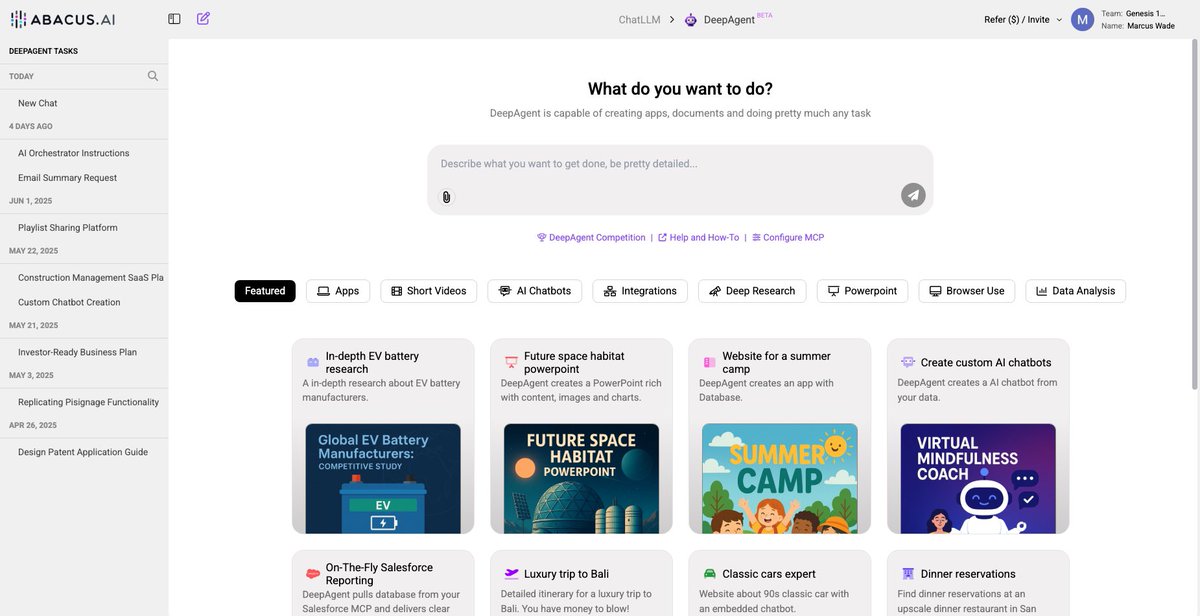
Abacus.ai’s DeepAgent is absolutely leading in the agentic space. Their latest update adding easier chat setup of MCPs is a game changer.
33