
share trader & crypto enthusiast | 🧐 blasting Gov terror failures & media spin 🇦🇺 | sarcasm v absurdity | NFA - DYOR 📚 | NO random DM's
Joined September 2015
- Tweets 23,737
- Following 378
- Followers 1,071
- Likes 83,799
4,852 Photos and videos








Broochey 🇦🇺 retweeted

I spoke with @tastyliveshow about GOLD:
"We're in a secular bull market in gold. It's in a consolidation phase right now, but the secular bull will peak at around $6,000-$7,000/oz."
BUY GOLD, WEAR DIAMONDS.
11
40
249
28,161
Broochey 🇦🇺 retweeted

Jun 14
This post encapsulates every junior startup in Australia.
In Western Australia, we have a plethora of start-ups known as junior exploration companies. These companies discover almost all the mineral assets that major mines extract, which power the Australian economy.
Typically, management leaves their high-paying jobs with the aspiration of building something significant. They take a risk to create something meaningful.
Due to limited funds, they entice staff with equity incentives. These companies are funded by retail investors who dream of striking it rich with their after-tax dollars.
They spend the money drilling holes, assaying samples, analysing results and building up mineral deposits.
If they strike it rich, they spend more money, employ more people and bring in other parts of the industry, continuing the cycle.
Ultimately, they either build a mine or a major takes them over, and shareholders pay their share of CGT to the government.
Now, if we remove this incentive at the outset, none of this happens. Without an incentive to make it, why take the risk?
Australia will never have a SpaceX under the new CGT laws.
Everyone is happy to pay their way! No one is suggesting paying zero CGT.
What we’re saying is don’t mess with a system that’s working perfectly for startups like exploration companies.
This isn’t about creating housing for first-home buyers; it’s about a tax grab to fuel incessant out-of-control spending.
Jun 12

4,400 SpaceX employees became millionaires last Friday.
and there is only one person behind them. Elon Musk
but this is not a story about Elon.
it's a story about a welder from Mexico who didn't even know what SpaceX was.
Juan Hernandez took a $28/hour contractor job in 2015.
SpaceX handed him a $10,000 equity grant and let him buy more shares out of his paycheck.
he said yes without fully understanding what he was signing.
that decision is now worth $880,000.
Trevor Hise's parents begged him to take the safe road.
stable salary. pension. General Electric.
he chose SpaceX instead.
12 years. 100,000 shares. $13.5 million.
he is 37 years old and semiretired.
his words: "the magnitude of this has been ridiculous."
before the IPO, over 100 employees quietly grouped to negotiate a wealth management deal covering $5 billion.
none of them had ever needed a wealth manager before in their lives.
400 of them are now worth over $100 million.
welders. technicians. cafeteria staff.
software IPOs have minted millionaires for 30 years.
this is the first one where the money went to the people who built the rockets.
6
24
149
8,471
Broochey 🇦🇺 retweeted

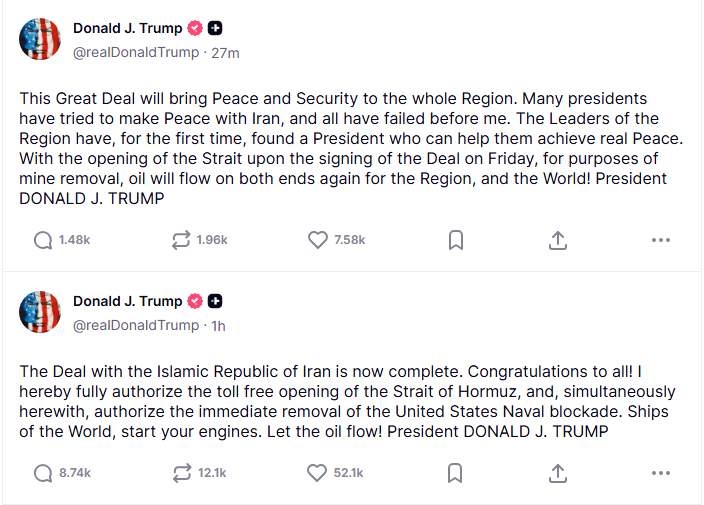
BREAKING: Pakistan's Prime Minister announces that the US and Iran have officially reached a peace deal and the official signing will take place on June 19th in Switzerland.
"Both sides have declared the immediate and permanent termination of military operations on all fronts, including in Lebanon," he says.
556
1,721
14,140
1,839,698
Broochey 🇦🇺 retweeted

Jun 14
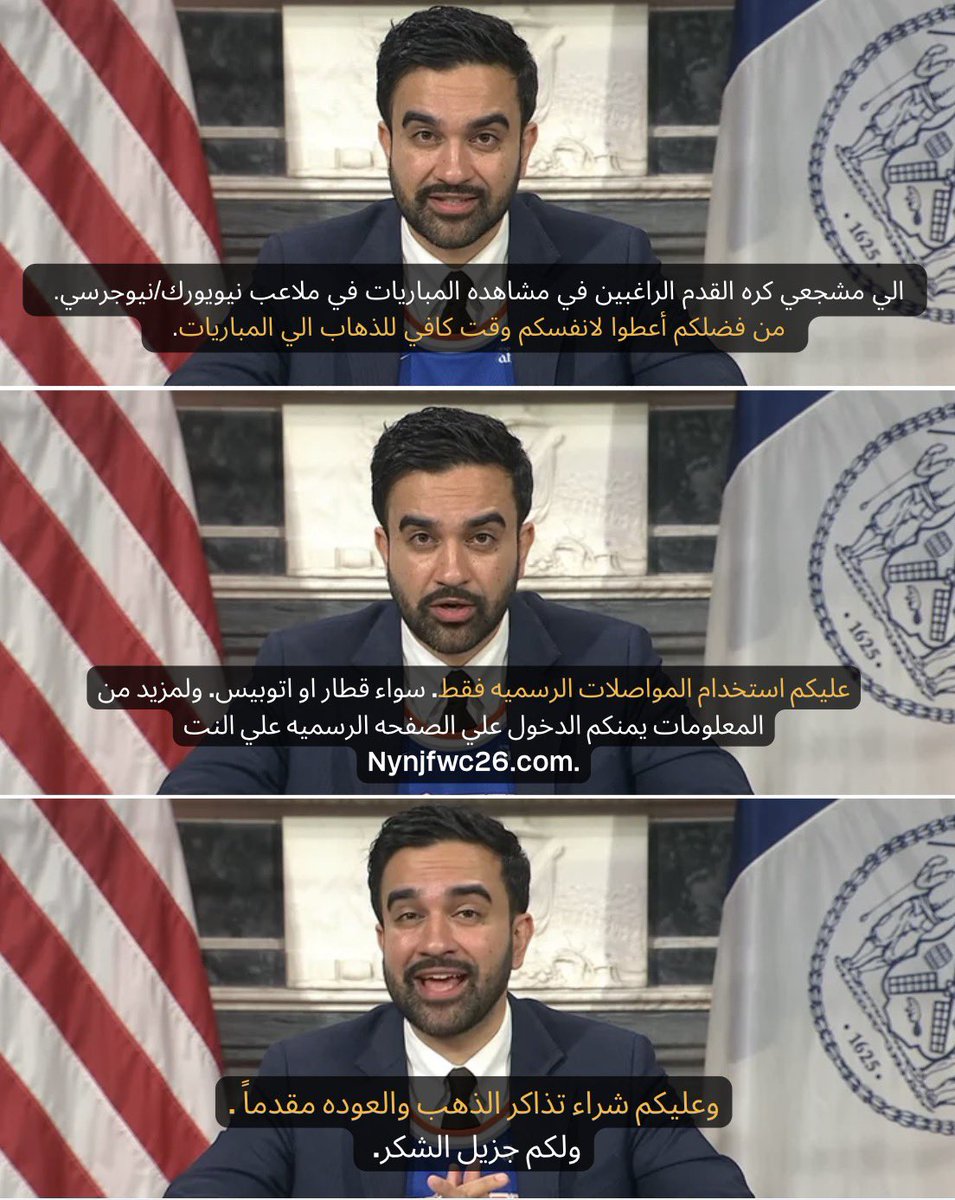
Imagine time travelling to October 2021 and telling New Yorkers that in 25 years their Mayor will be a muslim putting out statements in Arabic.

الي مشجعي كره القدم الراغبين في مشاهده المباريات في ملاعب نيويورك/نيوجرسي.
من فضلكم أعطوا لانفسكم وقت كافي للذهاب
الي المباريات.
55
148
985
20,614
Broochey 🇦🇺 retweeted

Jun 14
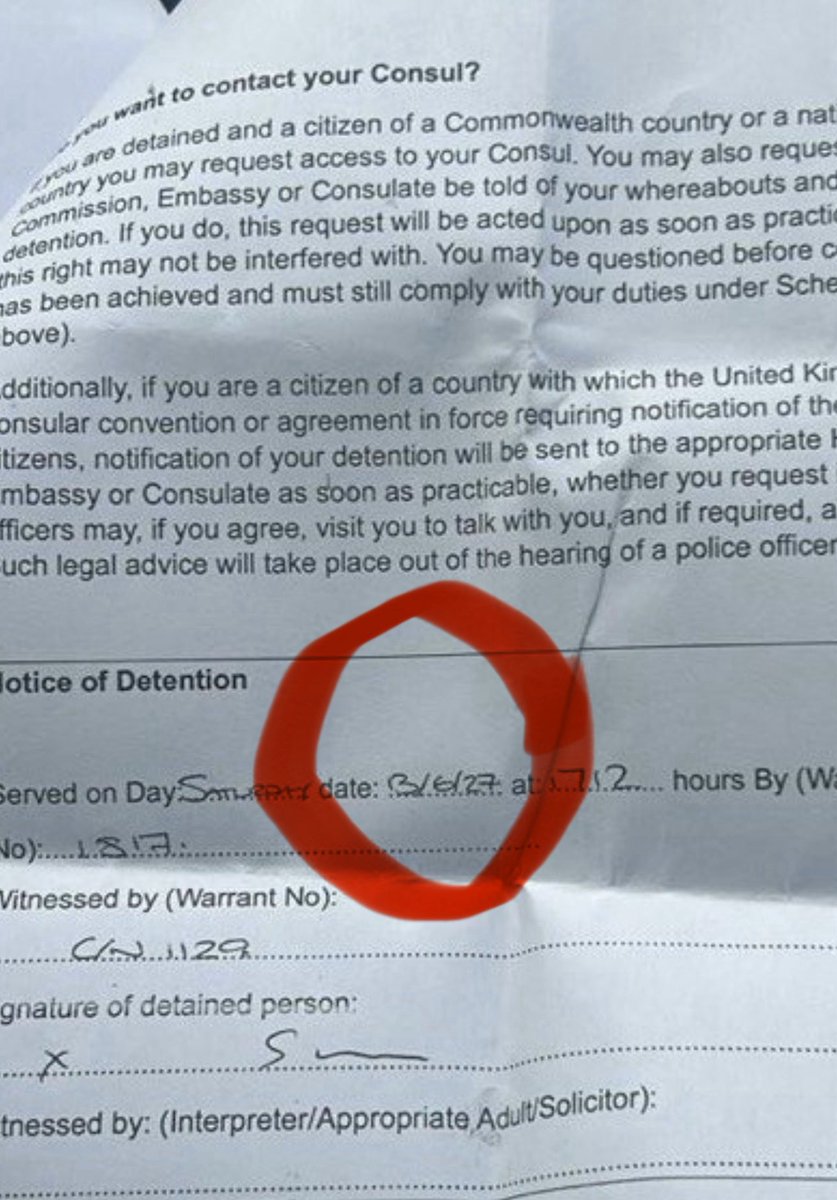
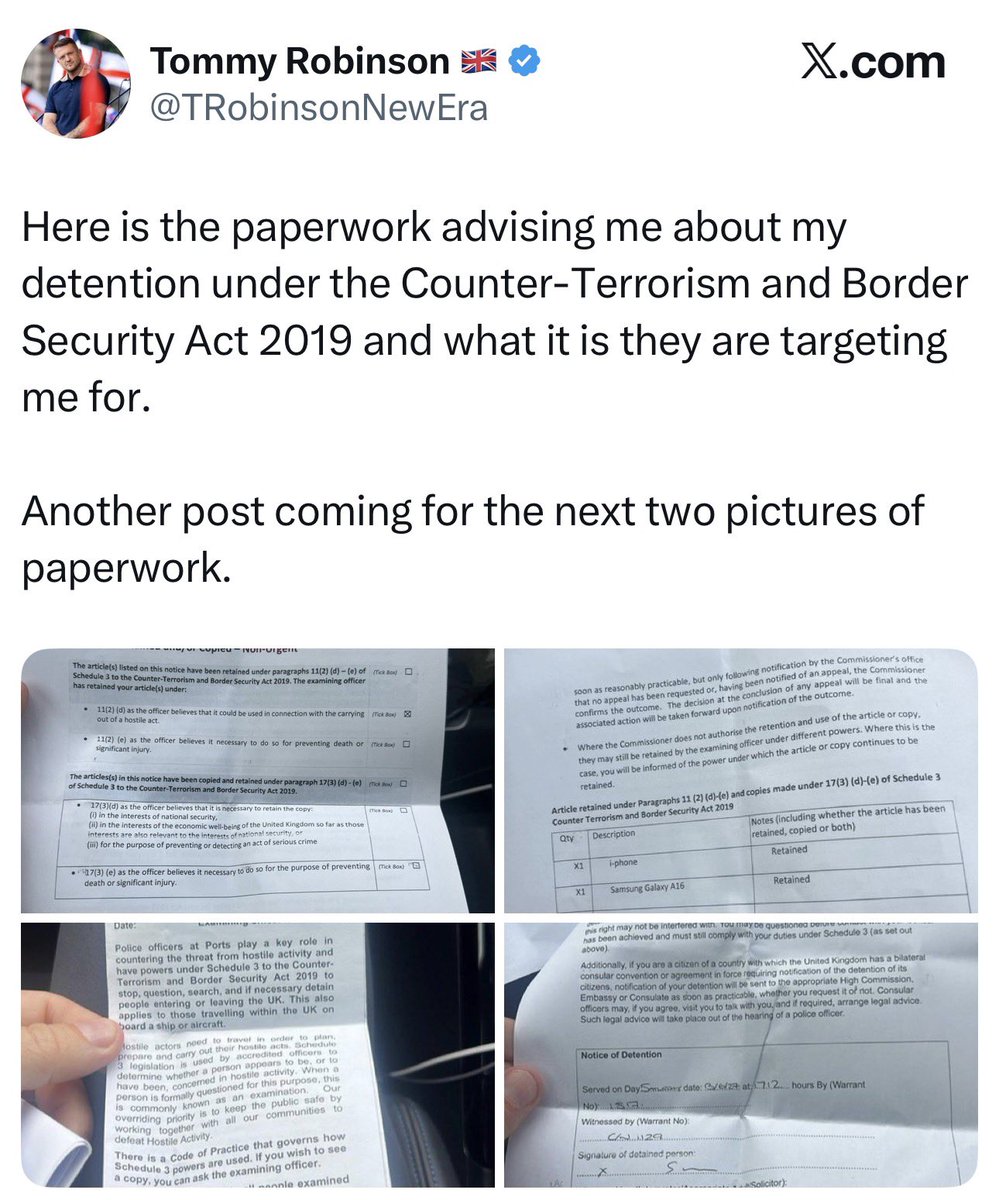
Wait?? Tommy has been detained in the future? 2027? Well fuck me sideways with an air-fryer.
He’s a time-travelling-terrorist.
Legend. G’wan Tommy lad
394
2,518
13,271
252,973
Broochey 🇦🇺 retweeted
Jun 12
If Space X was Australian every single one of those employees would be taxed at 47%! Their reward for taking the risk and the effort to becoming successful!
Fortunately for them they aren’t in Australia.
The Australian Labor Gov thinks it’s their right to this money! 47% of $2T certainly pays off their $1T debt bill pretty quickly!
Unfortunately for them Australia will never have a Space X and the gov will miss out of 23.5% of any CGT that would have come in to pay off the debt!
Time to leave Australia any aspiring entrepreneurs
@GeoffWilsonWAM
Jun 12

Elon Musk criou, em um único dia, 4.400 novos milionários.
Quase 400 deles ultrapassaram os US$ 100 milhões.
Não são banqueiros nem investidores de risco. São funcionários da SpaceX: soldadores, técnicos, mecânicos e até funcionários da cantina. Durante vinte anos, a empresa pagou gente de todos os níveis com ações, não só com salário alto. Quem produziu colheu.
Juan Hernandez, imigrante mexicano, aceitou um emprego de soldador por US$ 28 a hora em 2015, sem nem saber direito o que era a SpaceX. Recebeu uma pequena participação de US$ 10 mil e pôde comprar mais por desconto em folha. Hoje sua fatia vale US$ 880 mil.
Trevor Hise ignorou os conselhos dos pais para pegar um emprego “seguro” na General Electric. Escolheu a SpaceX, ficou 12 anos e acumulou mais de 100 mil ações. Ao preço da listagem, são US$ 13,5 milhões. Aos 37 anos, ele já pode se aposentar. Palavras dele: “A magnitude disso é ridícula.”
O detalhe mais eloquente veio antes mesmo da abertura de capital: mais de 100 funcionários se uniram discretamente para contratar uma gestora de fortunas capaz de cuidar de até US$ 5 bilhões. Muitos nunca tinham precisado de wealth manager na vida.
Há décadas os IPOs de empresas de tecnologia enriquecem programadores. Desta vez, o dinheiro chegou ao chão de fábrica. Isso é capitalismo de verdade: quem arrisca, quem trabalha e quem entrega valor colhe frutos proporcionais.
A esquerda odeia esse tipo de história. Porque ela prova que a verdadeira ascensão social não vem de dividir a miséria alheia, mas de criar riqueza que eleva quem tem coragem de construir.
66
80
683
39,538
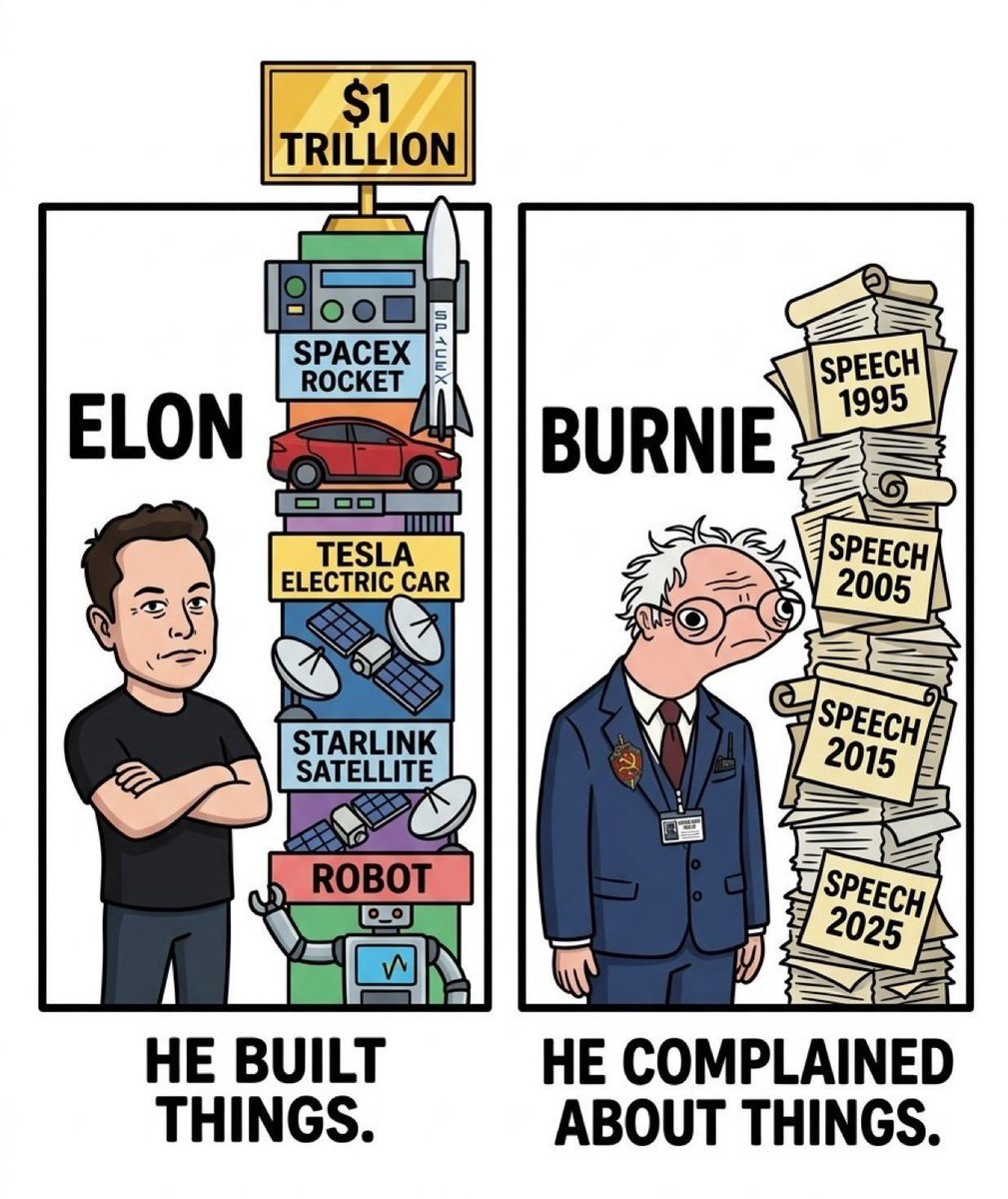
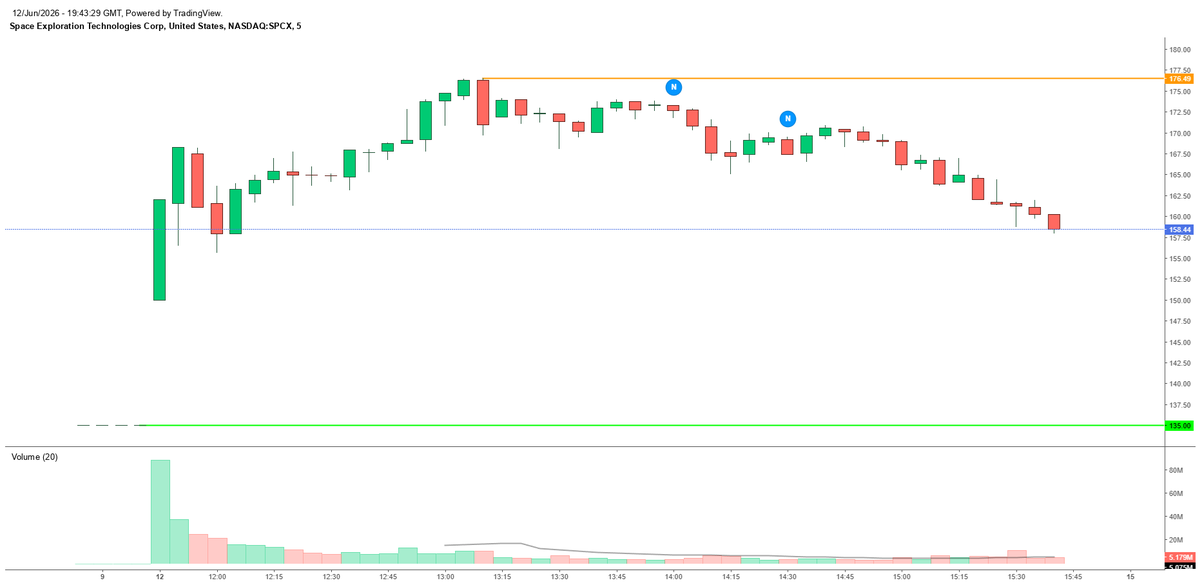
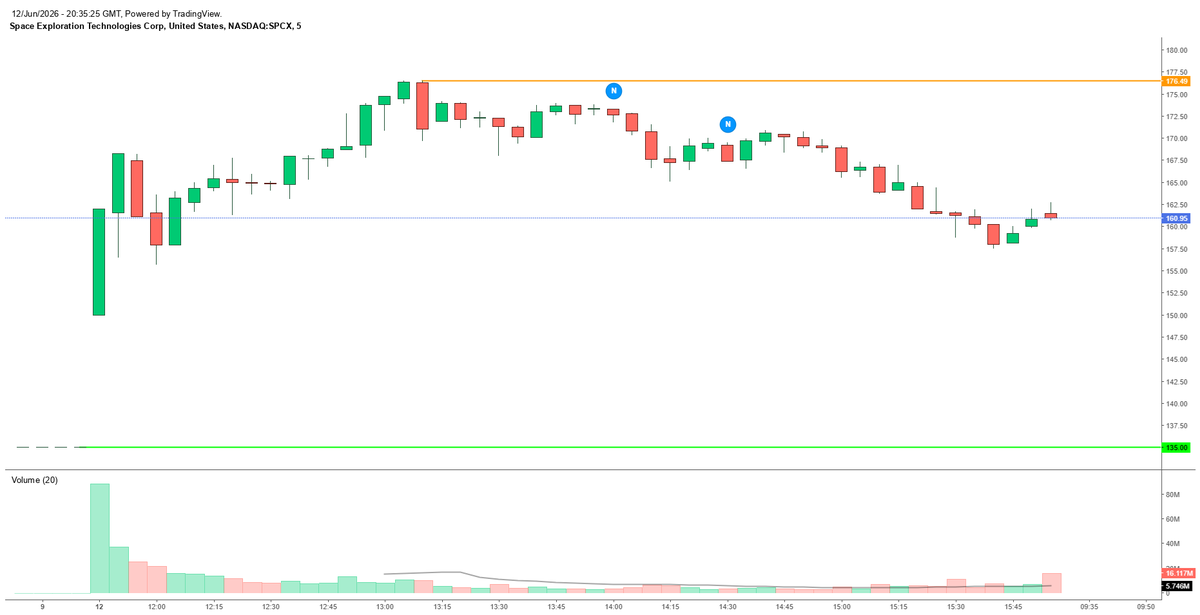

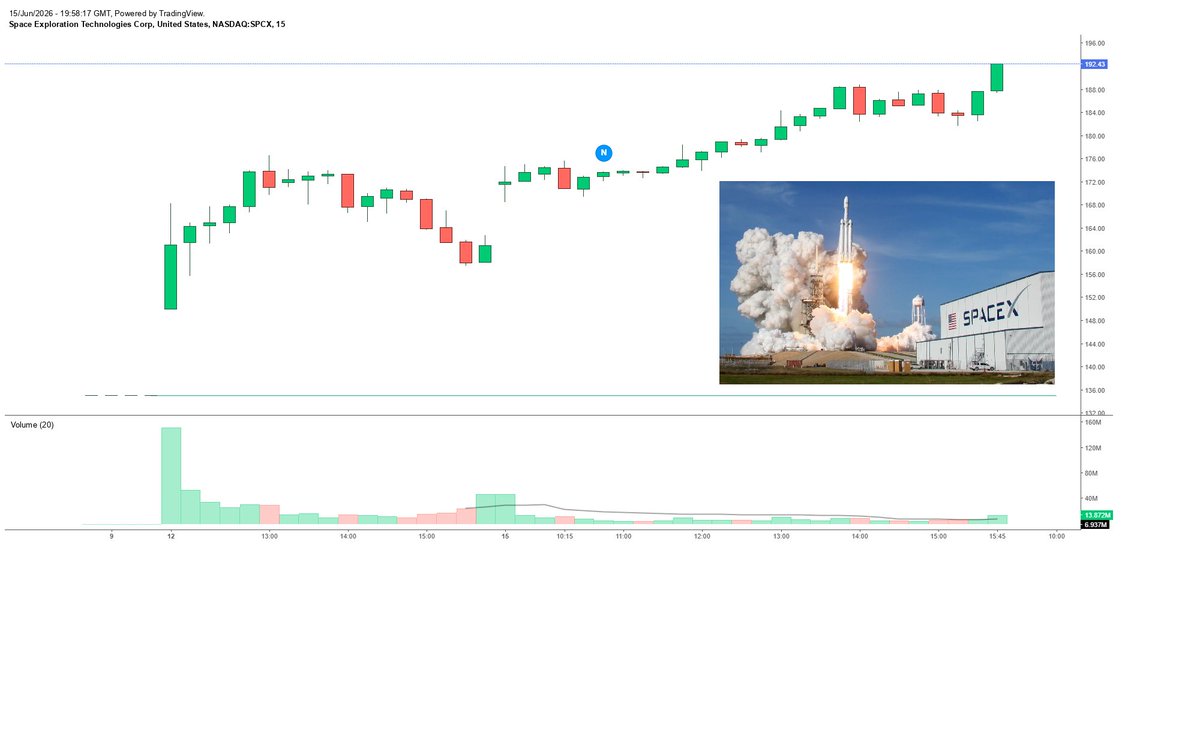
SJosephBurns At the planned $135/share IPO price for $SPCX (~$1.77T valuation), Elon's ~6.42B shares in SpaceX are worth ~$867B. With his current ~$983B net worth (Forbes), he's already on the brink. A modest post-listing trade around $138/share would push him over $1T to become the first verified trillionaire.
2
8
179
62,158
Broochey 🇦🇺 retweeted

Jun 11
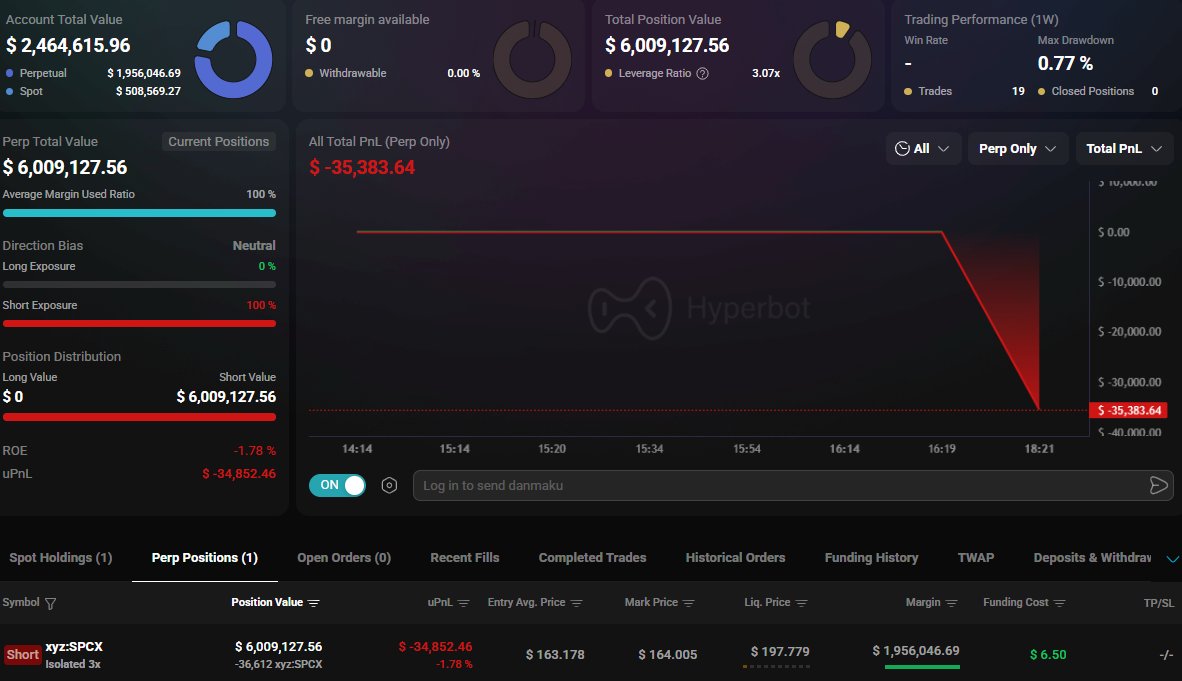
Someone just opened a $6,000,000 $SPCX short ahead of tomorrow's SpaceX public launch.
Liquidation Price: $198
156
53
665
76,903


Jun 10
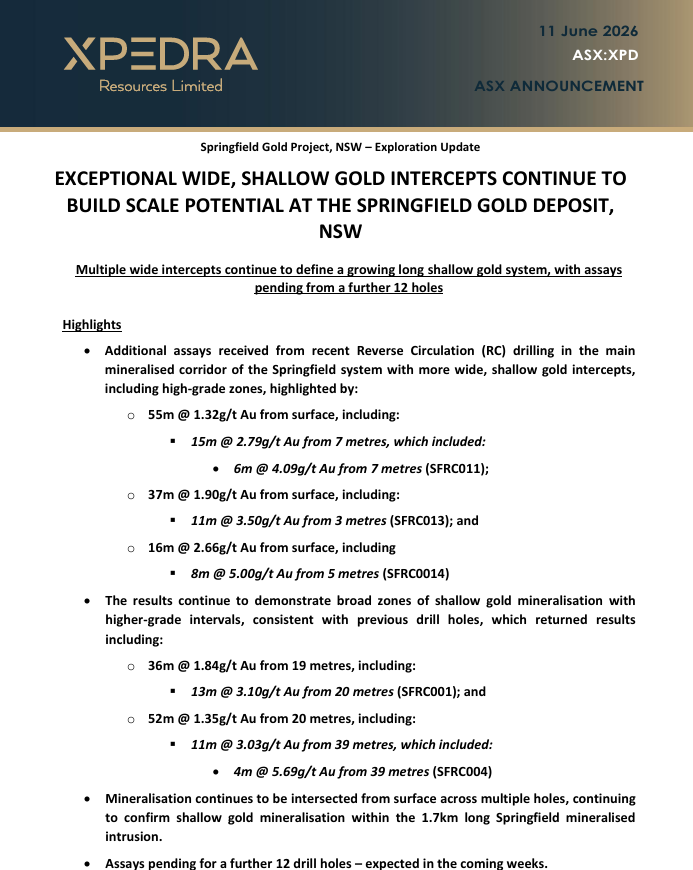
this 👇 $XPD Springfield keeps delivering. More wide, shallow gold hits from surface and the system keeps growing. 1.7km intrusion, multiple high‑grade zones, and only 15 of 27 holes reported. Plenty more to come
1
51
Broochey 🇦🇺 retweeted

Jun 10
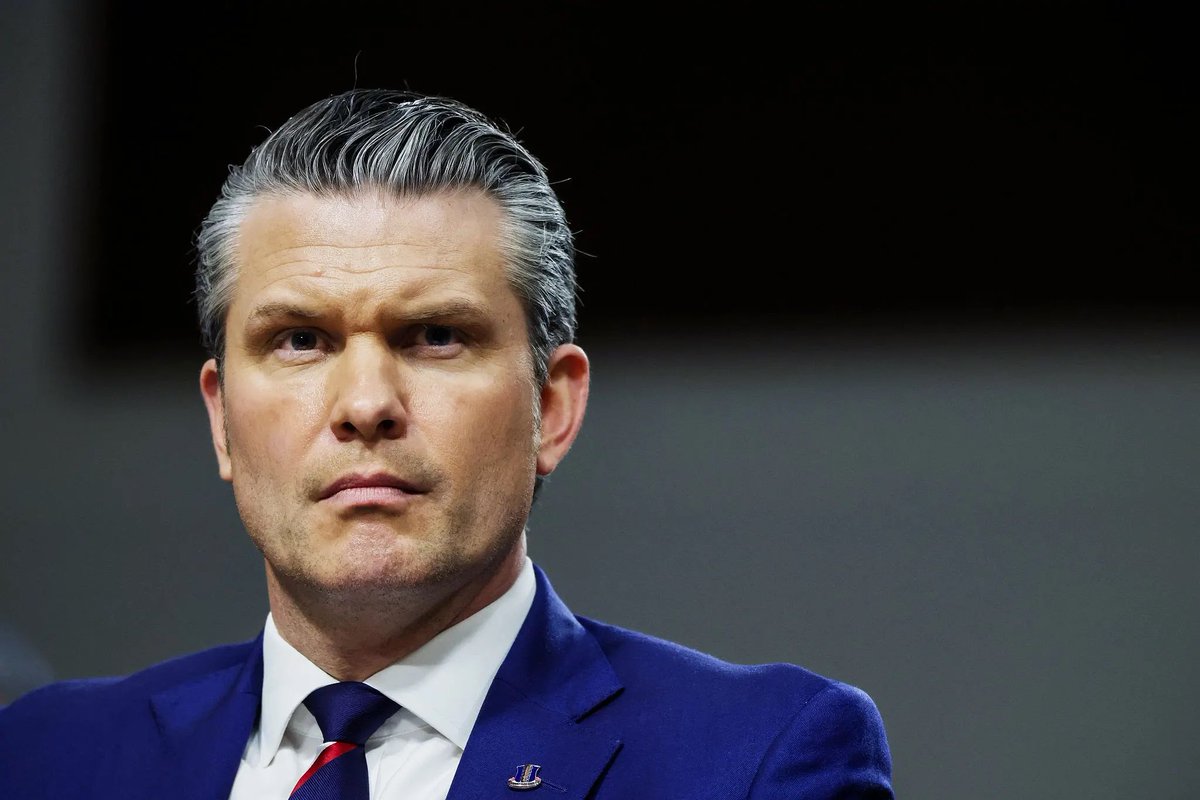
🚨🇺🇸🇮🇷JUST IN: War Minister Pete Hegseth announces: “The US military will be busy tonight - we will vigorously attack key sites in Iran”.

28
121
625
13,869
Jun 10
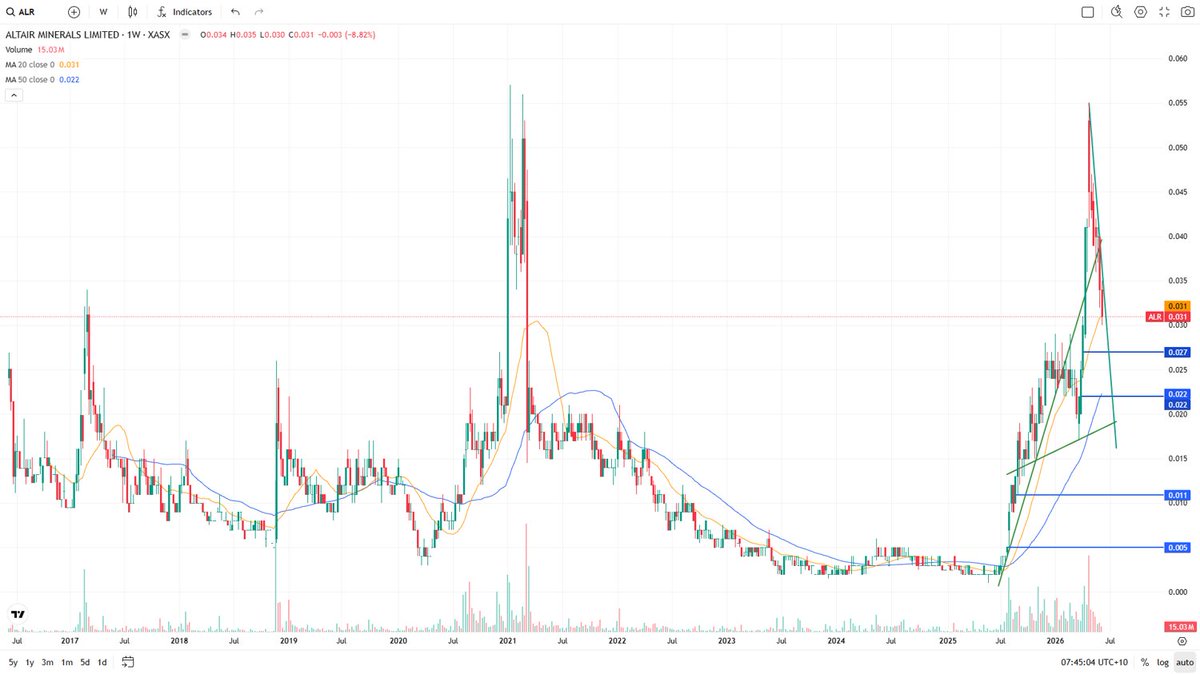
this 👇 $ALR — One to keep on the radar as global markets wobble.
While broader risk assets look like they’re rolling over, ALR’s weekly structure still shows a young, early‑cycle trend backed by real exploration momentum out of Guyana.
The chart says it all:
🔹0.027 = first key support. If the market only gives a shallow pullback, this is where early money usually defends.
🔹0.022 = the high‑quality reload zone. Strong structural support aligns with the prior base.
🔹0.011 = deep reset level if the global selloff accelerates. Would be a sentiment flush, not a fundamentals call.
What makes ALR interesting here is that the long‑term trend is intact, the story is improving, and the pullback is happening into strength, not away from it.
If the global market correction deepens, these levels become asymmetric entry points for anyone watching the Guyana gold narrative unfold.
Worth watching. High‑impact catalysts ahead. Add it to your watch list with $PEC
2
3
160
Jun 10
the new Lyka ad just dropped and it’s FULL Sound of Music but about dog poo “Poo Glorious Poo!” with jazz hands, choir, and golden retrievers dropping perfect little masterpieces 💩 anyone else seen it? #PooGloriousPoo
42