
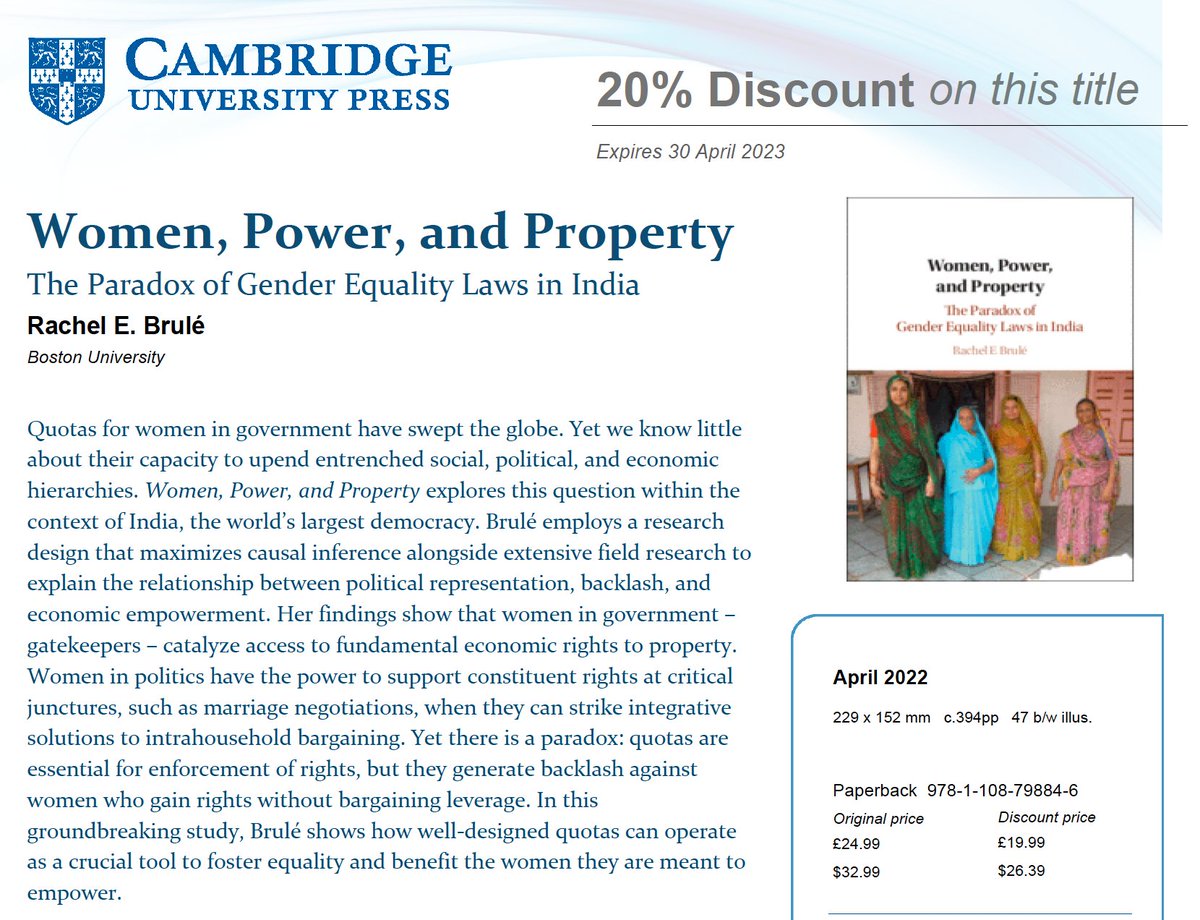
Assistant Professor, Global Dev. Policy @BUPardeeSchool, @BU_PoliSci, @GDP_Cen @CUP_polisci book "Women, Power & Property"; gender; political econ; S Asia; ineq
Joined August 2019
- Tweets 1,168
- Following 1,170
- Followers 1,540
- Likes 2,151
50 Photos and videos

Pinned Tweet

9 Jul 2021
I'm incredibly honored to receive @APSAtweets's 2021 Luebbert Prize for the best book in comparative politics published in 2019 or 2020. My deep gratitude to committee chair @dawn_teele & @prof_jmorgan @JasonBrownlee @lucanway @ScottMainwaring all at @CUP_PoliSci, @BUPardeeSchool
29 Jun 2021

As the chair of @APSAtweets’s Lubbert best book in comparative politics committee I’m thrilled to announce that Rachel Brulé’s Women, Power, and Property stands wins for its combination of impact, evidence, and elegance. @BruleRachel
@CUP_PoliSci
15
9
155
Rachel E. Brule retweeted

9 May 2024
This week, on India Inside Out, links to some of the interviews I've been doing for @CASIPenn, looking at insightful research on India's political economy from @AiyarYamini, @BruleRachel, @Pavithra_Suri and @fr_jensenius:
rohanvenkat.substack.com/p/b…
1
8
589
Rachel E. Brule retweeted

17 May 2024
For Indian politics nerds out there, @RohanV's @CASIPenn conversations with leading scholars in the field @KhariBiskut, @Pavithra_Suri, @fr_jensenius, @BruleRachel, @AiyarYamini, @louisetillin on where the discipline meets real life are a great resource casi.sas.upenn.edu/iit
2
8
30
4,691
Rachel E. Brule retweeted

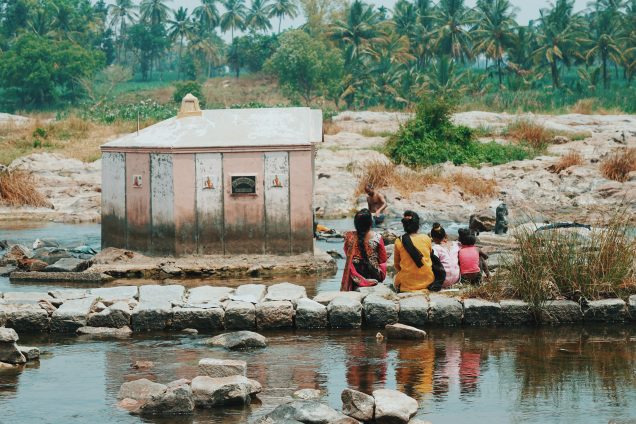
Using South Asia as a case study, @BruleRachel develops a theory for understanding where, when why climate-related disasters can improve female economic political autonomy.
Read more in a recent @PoliticsGenderJ article: gdpcenter.org/3JypVLD
1
359
Rachel E. Brule retweeted

29 Mar 2024
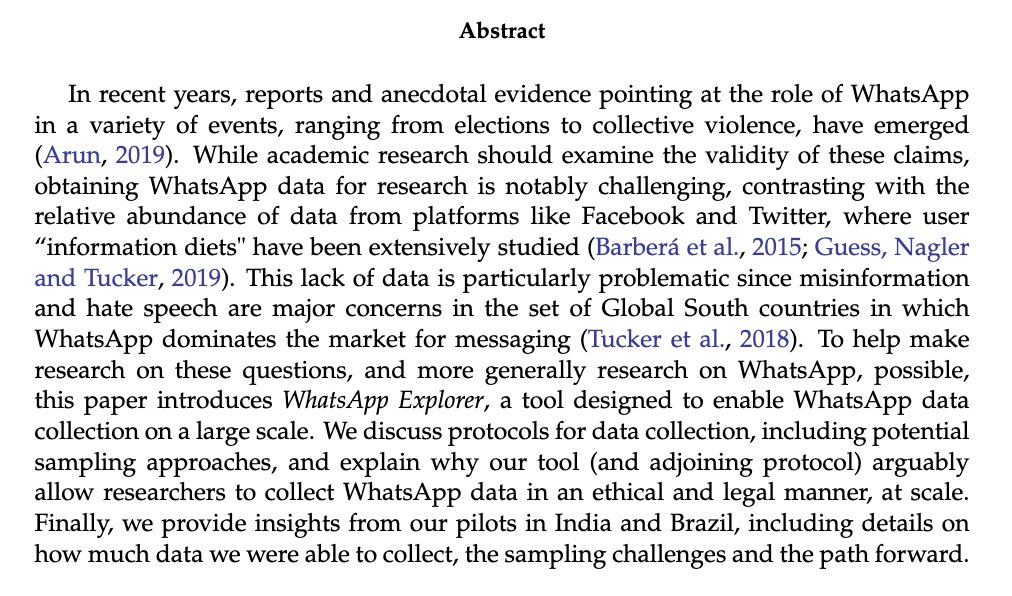
After years of work, we (w/ @simonchauchard) are releasing our new tool to collect WhatsApp data at scale! Introducing WhatsApp Explorer, a tool to collect data in a privacy preserving, opt-in, legal and practical way
paper: osf.io/k6qv5
whatsapp.whats-viral.me/
🧵👇
15
144
543
89,345
Rachel E. Brule retweeted

25 Mar 2024
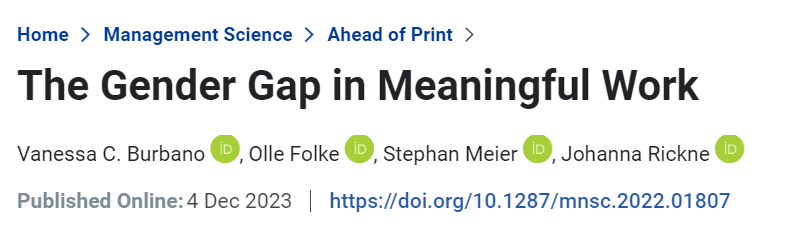
Economists care more and more about meaningful work! But who has more meaningful jobs in the labor market? Some key patterns from our recent paper in Management Science using nationwide Swedish survey data (N=121,000) (doi.org/10.1287/mnsc.2022.01…). 1/8
22 Mar 2024

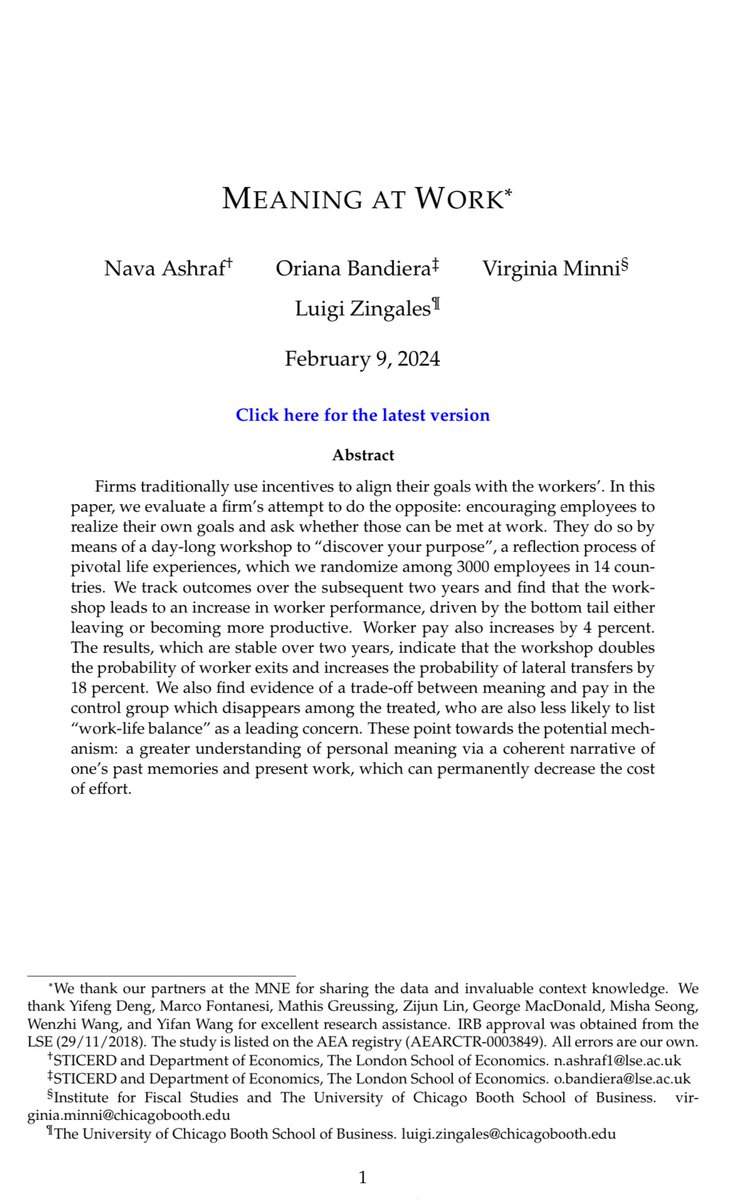
Very excited about this paper and the line of work it will inspire! 🤩 'Meaning at Work' by Nava Ashraf, @orianabandiera, Virginia Minni, and @zingales. #ModernEconomics
5
58
353
81,116
Rachel E. Brule retweeted

25 Mar 2024
📢New #PAG20 Critical Perspectives @sarahsunnbush & @zetterberg_par introduce this issue's Critical Perspective on gender equality and authoritarian regimes. The collection looks to understand progress and backlash related to laws advancing gender equality cambridge.org/core/journals/…
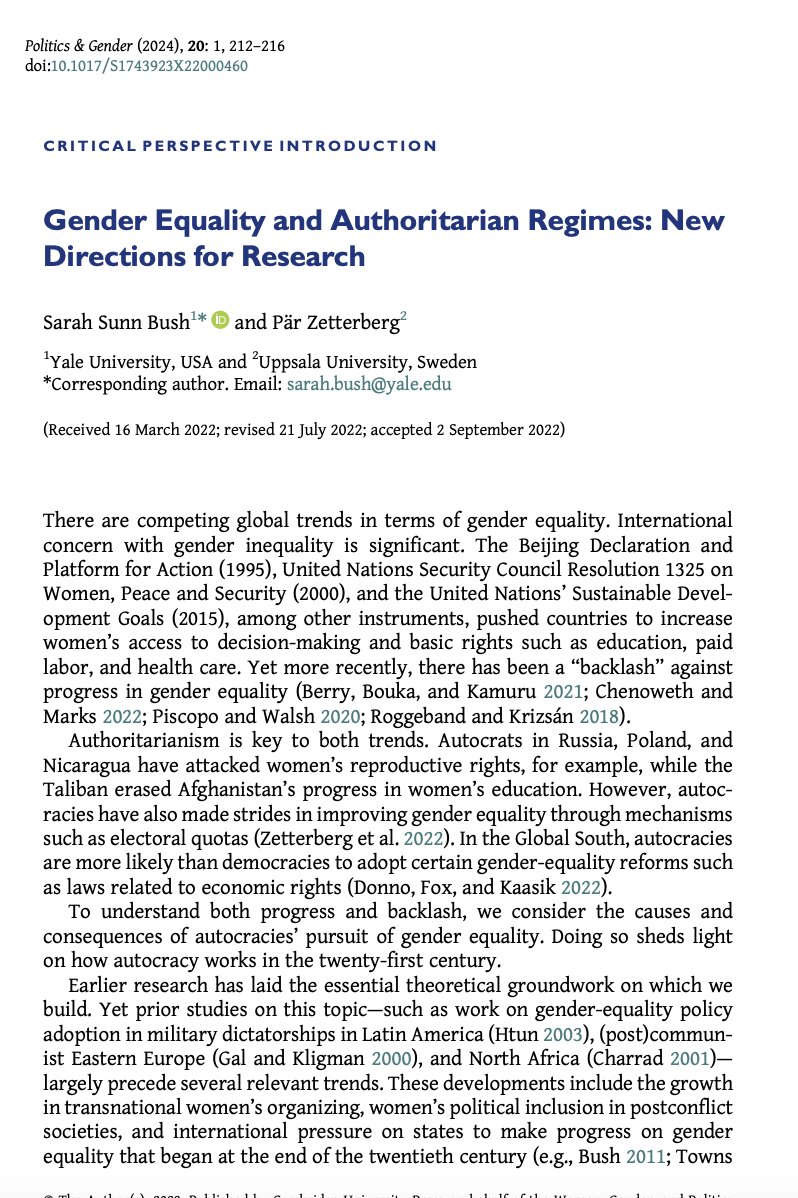
ALT Critical Perspectives article entitled "Gender Equality and Authoritarian Regimes: New Directions for Research" by Sarah Sunn Bush, Pär Zetterberg.
24
85
4,830
Rachel E. Brule retweeted

25 Mar 2024
Instead, taste-based discrimination & the absence of sanctions for interference likely drives these inequalities .
CONCLUSION: quotas alone are not enough. Complementary interventions sanctions required to ensure that gender quotas generate substantive change. 4/5
1
1
6
931
Rachel E. Brule retweeted
25 Mar 2024
Why? We point to several reinforcing mechanisms. But stress that selection mechanisms & statistical discrimination are only a small part of the story.
1
1
5
554
Rachel E. Brule retweeted
25 Mar 2024
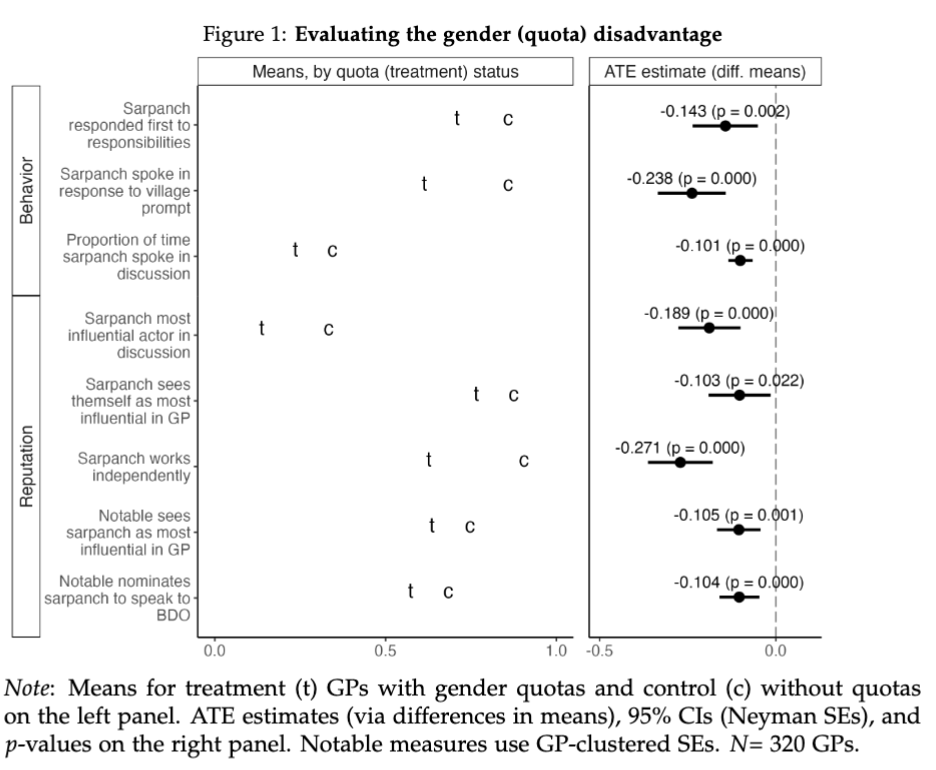
Relying on behavioral & reputational measures of voice/centrality/influence, we compare women elected on gender quotas vs. others (mostly, men).
Findings are GRIM: women appear less central on every metric, & are seen as less central by all pol. actors-inc. themselves.
2/n
1
1
8
1,143
Rachel E. Brule retweeted
25 Mar 2024
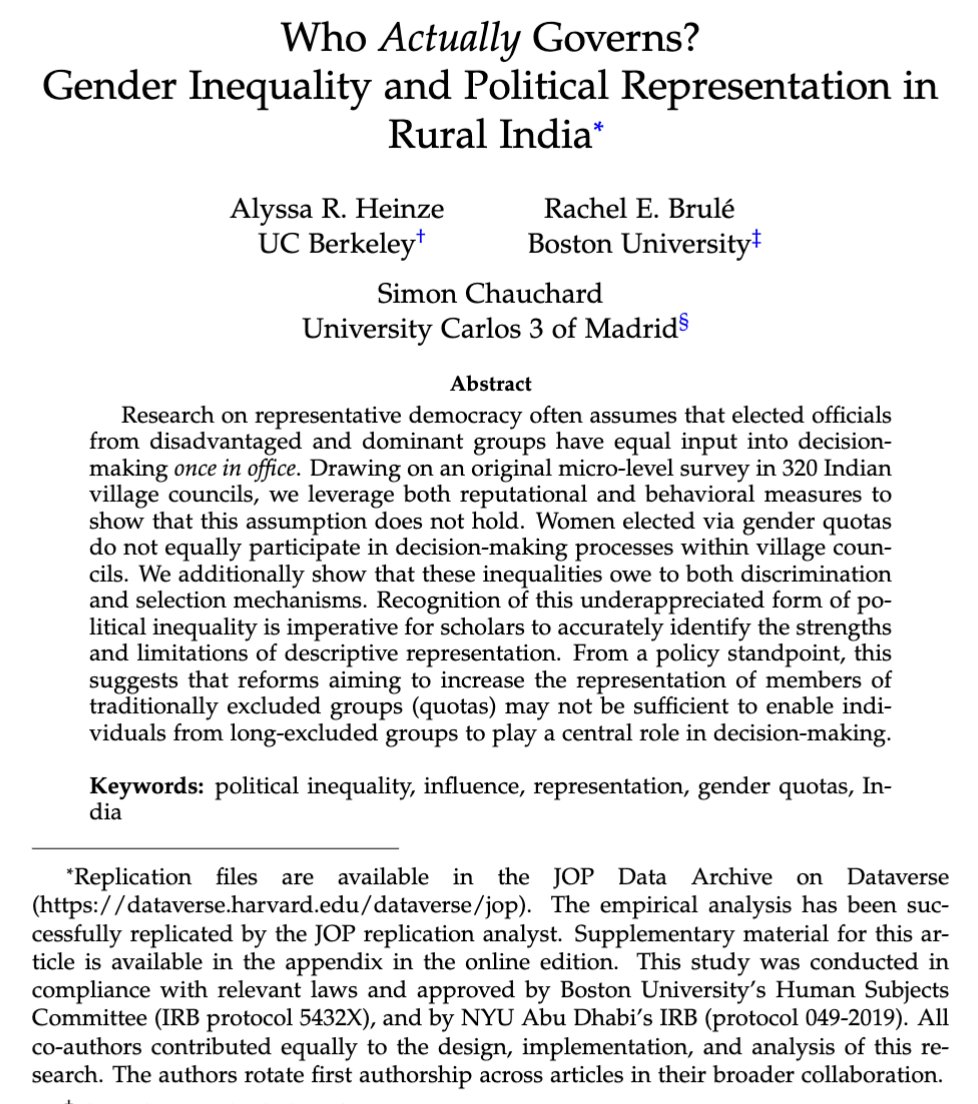
🚨 forthcoming @The_JOP: super excited that the 1st paper on project with @AlyssaRHeinze & @BruleRachel is now accepted.
We show that inequality does not stop at the gate of political office: Indian women face large inequalities in voice & centrality AFTER they reach office 1/n
4
51
191
28,751
Rachel E. Brule retweeted

25 Mar 2024
🗣️🗣️🗣️WHAT DOES @SenWarren want the BU admin to know???
9
53
239
27,828
Rachel E. Brule retweeted

27 Feb 2024
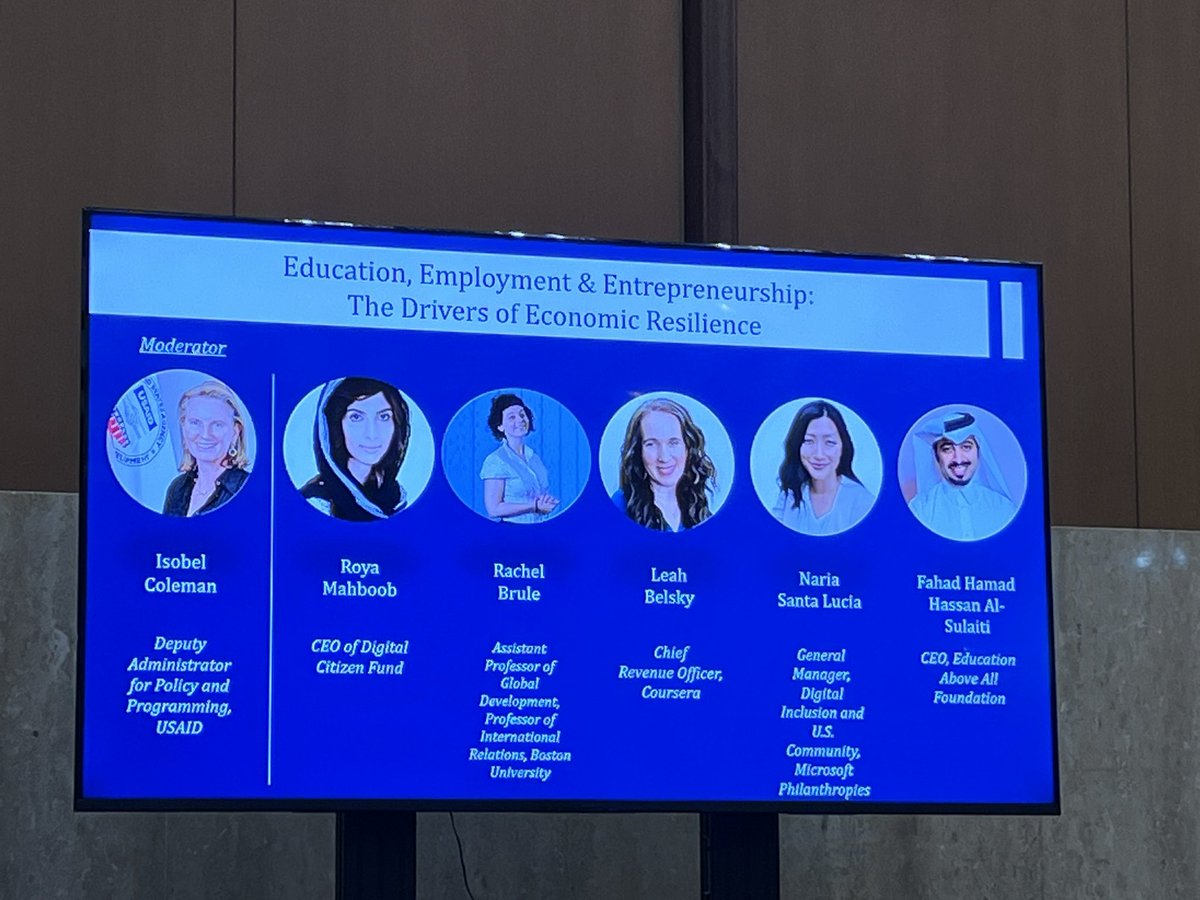
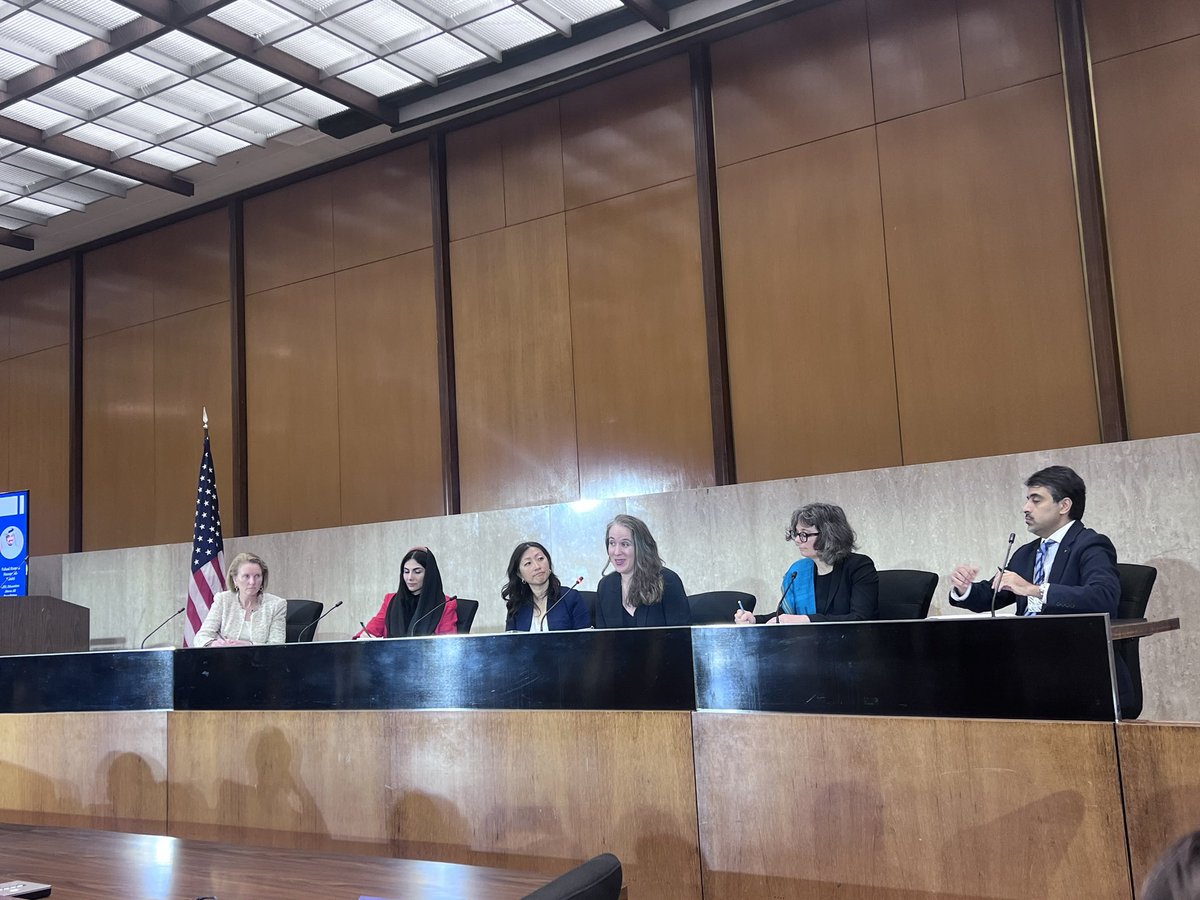
A very inspiring testimony by @RoyaMahboob at #AWER @StateDept under leadership of @SE_AfghanWGH among other distinguished speakers like #Fahad_Hamad_Hassan_Al_Sulaiti from @EAA_Foundation @ColemanUSAID @BruleRachel @leahbel @NariaSantaLucia

1
2
9
1,456
Rachel E. Brule retweeted
8 Dec 2023
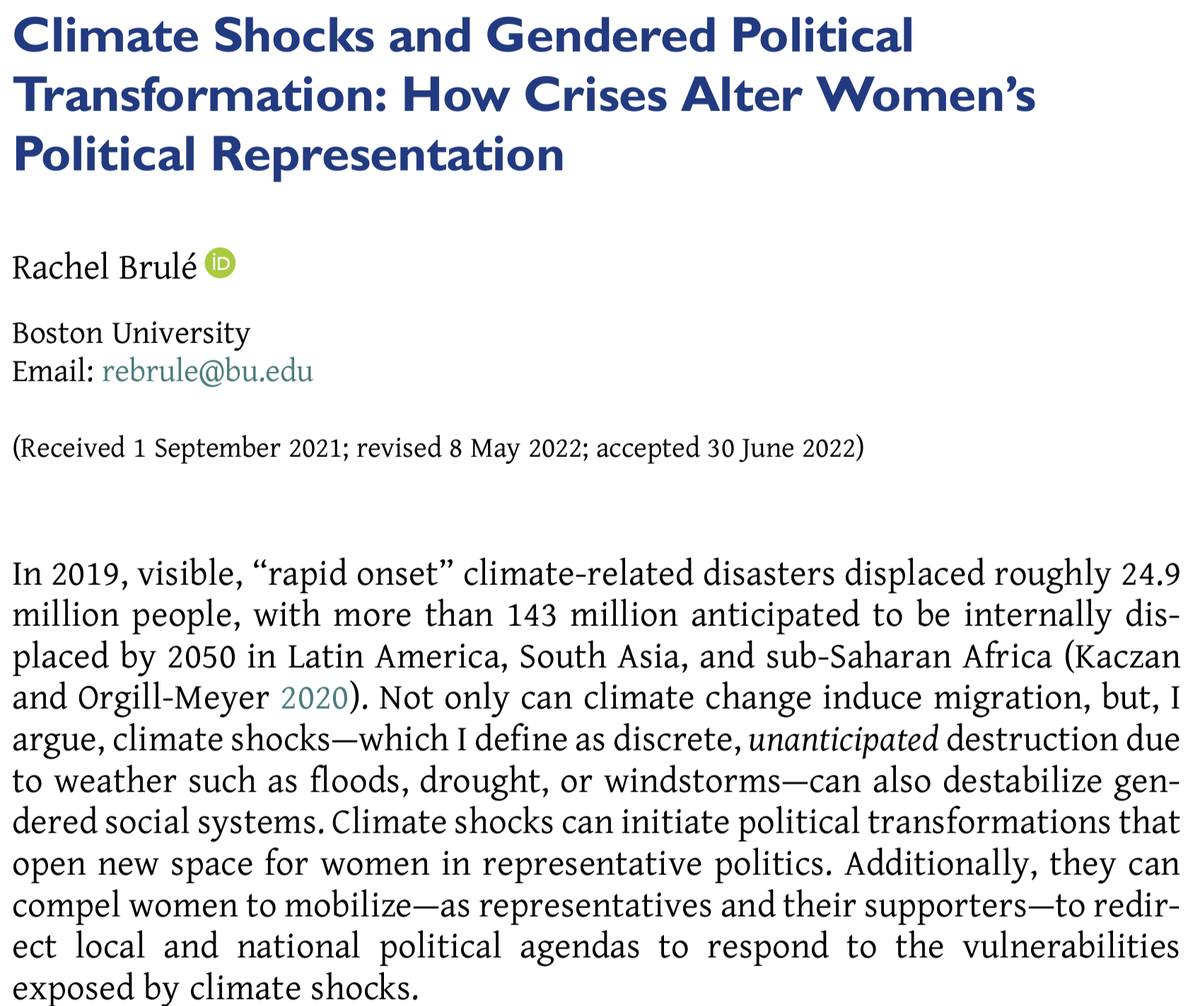
🌍Climate change is a women's issue!🌍
In "Climate Shocks and Gendered Political Transformation," @BruleRachel explores how climate emergencies can destabilize gendered social systems & inspire women to mobilize politically #COP28
Full text ⤵️
cambridge.org/core/journals/…
14
25
3,226
Rachel E. Brule retweeted
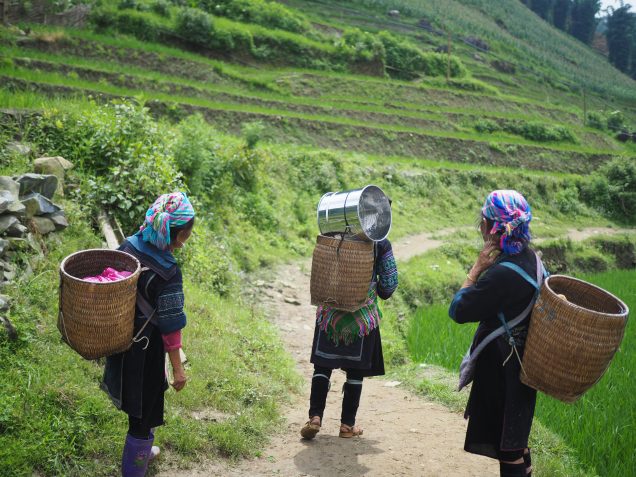
A recent journal article in @AnnualReviews from @BruleRachel finds that women in the Global South have increased opportunities to articulate negotiate power than women in the Global North.
Read more: gdpcenter.org/41nb0vG
2
2
640
Rachel E. Brule retweeted
26 Oct 2023
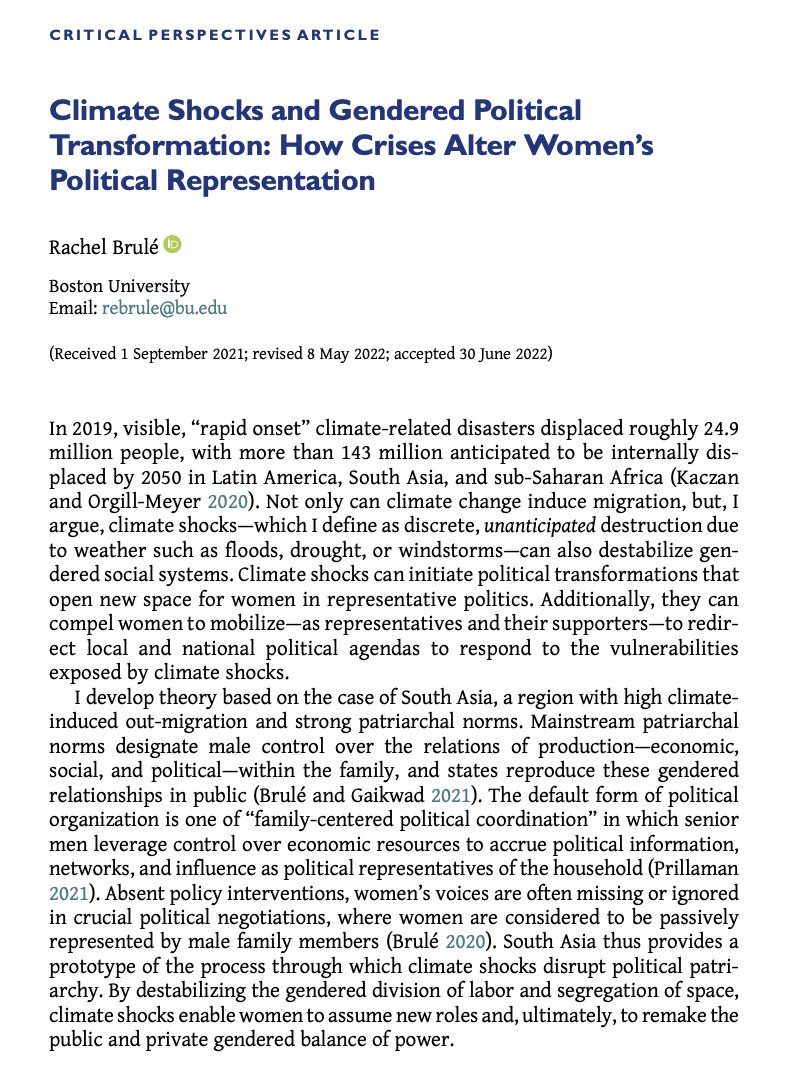
📢New #PAG19 Critical Perspectives📢 @BruleRachel in 'Climate Shocks and Gendered Political Transformation' looks to South Asia to argue that 'climate shocks' are gendered and open new opportunities women's representation in politics cambridge.org/core/journals/…
3
10
873
Rachel E. Brule retweeted
A recent issue of Seminar Magazine co-edited by @BruleRachel addresses issues related to women's political representation in India and challenges the belief that the husbands of female elected leaders run state affairs from behind the scenes:
gdpcenter.org/45fXAlH
1
393
Rachel E. Brule retweeted
Are power-hungry husbands the main hurdle to female-led government in rural India?
A recent issue of Seminar Magazine co-edited by @BruleRachel addresses this question and more.
Explore the issue: gdpcenter.org/3s16qWd
1
1
1
387