
260 Photos and videos










Pinned Tweet

Jan 14
For over a decade Dogecoin users have been starved of smart contract execution capabilities, limiting on chain experiences for some of the most passionate users in the crypto world.
Our mission is to leverage ZK tech to allow smart contracts to execute natively on Dogecoin. Fast like Solana, Bullet proof like ETH, secure like BTC but most importantly, fun like doge.
We’re 1 year into our 50 year vision of reshaping finance as we know it.
The system is already a joke.
The joke will become the system.
35
35
180
26,103

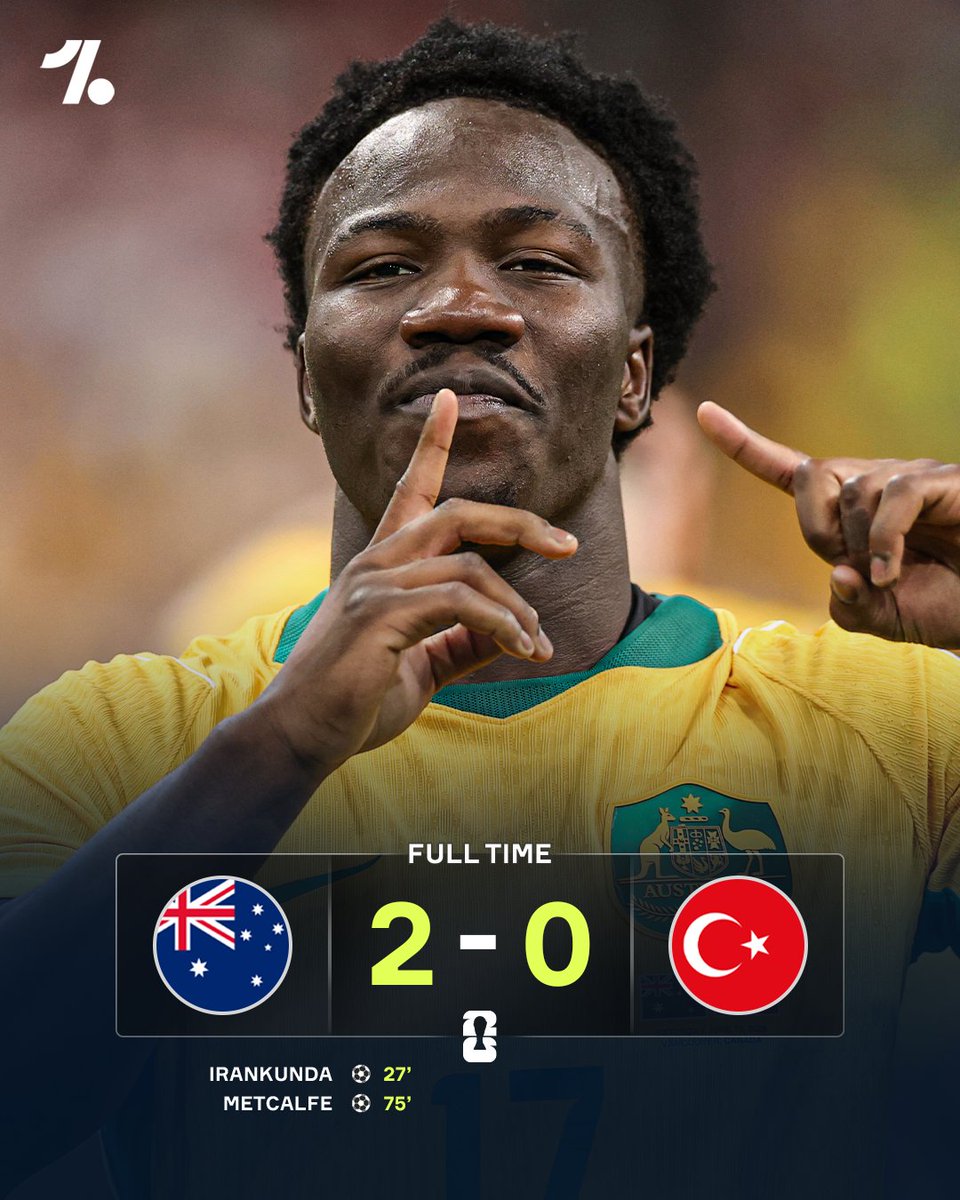
The Socceroos kick off their World Cup campaign with a huge statement victory over Türkiye 🇦🇺💥
1
6
239
Jun 11
🚨Important community announcement
As mydoge grows so do our opps
Please be weary of scam emails targeted at current users and beta testers
Always verify domains & watch our official X accounts for updates on new product launches
If ever unsure feel free to reach out, we are terminally online and vouch to protect you at all costs ❤️
14
13
66
2,196
BuildrJ ⚡️🇦🇺 retweeted

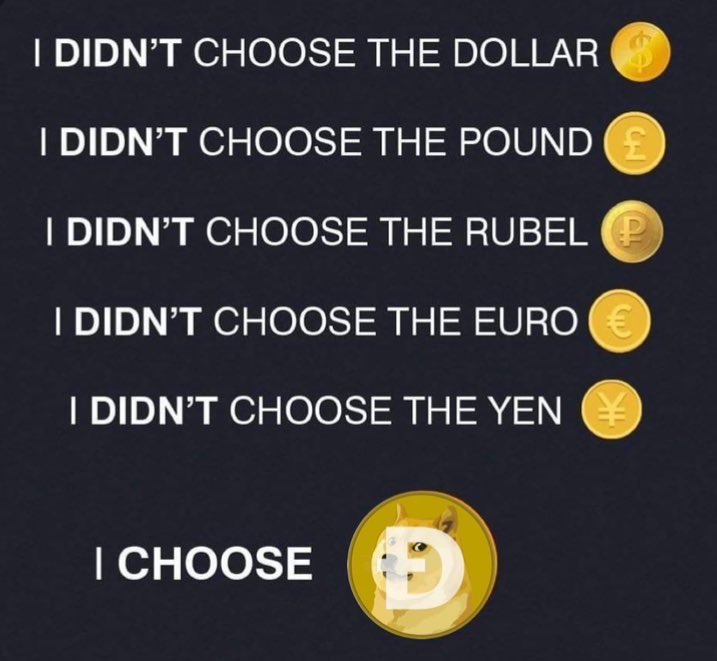
I choose Dogecoin
52
42
326
14,704
Jun 10
Hi @Support @nikitabier
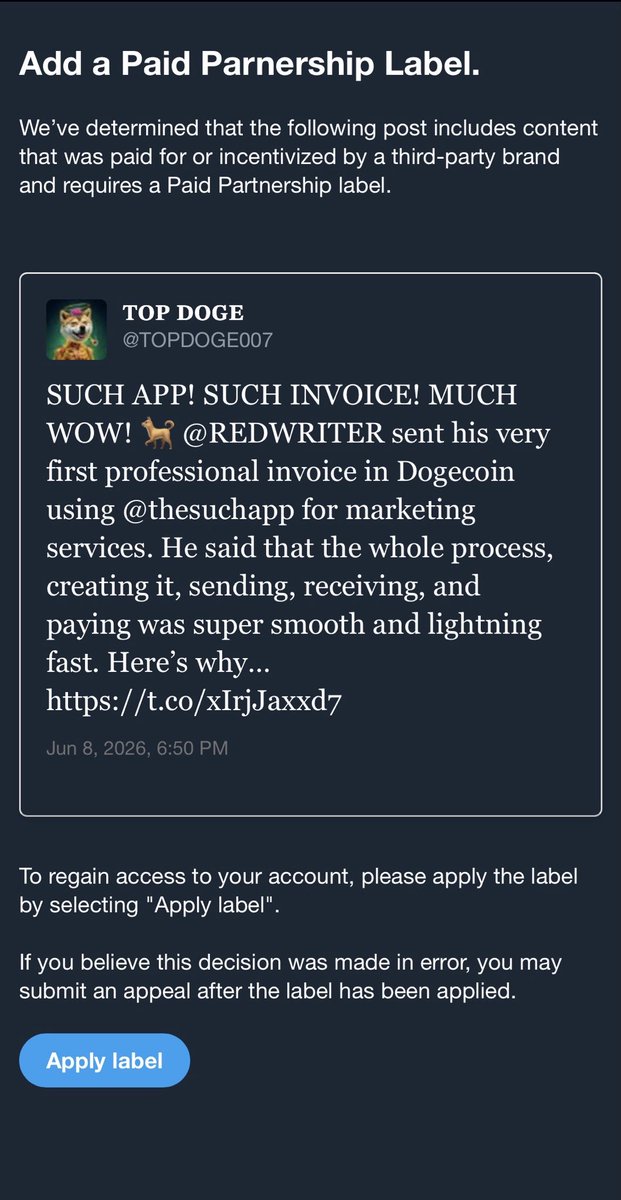
Several members of our community are experiencing false reports on their posts claiming undisclosed paid partnerships.
Our community thrives on word of mouth awareness building and are mission driven to talk about innovative tech being built in our niche.
Any way we can resolve the impact of these false claims?
Jun 9

.@Support My 𝕏 account was locked for allegedly failing to disclose a paid partnership on a post that was not a paid partnership.
I was never paid anything, compensated, or incentivized in any way for that post. It was shared voluntarily and fully complied with the platform’s rules as I understood them.
It’s frustrating to have my account restricted for something I didn’t do, especially when I’m making a genuine effort to follow the guidelines.
Can someone please review this case and explain why a paid partnership label was required for content that involved no payment or sponsorship?
Thank you.
14
6
49
4,099

Why Thus, Doge.

14
38
309
27,365
Jun 4
The crypto market is extremely volatile, it’s been infamous for volatility since inception. In times like these, take a step back, a deep breath. Realize there is more to life than lines and charts. Hug your mother, go for a hike and walk bare foot on some lush grass.
Come back refreshed, with a clearer mindset, fresh ideas and a killer mentality.
This bear will make me a 4 cycle veteran.
Stay zen ❤️
13
9
88
2,893

Has this bug been fixed yet, @nikitabier ?
Apr 14

Crypto has had a rough year. Maybe we should launch something to fix it.
34
17
196
14,560
BuildrJ ⚡️🇦🇺 retweeted

Jun 1
*taps sign*
22 Aug 2025

7
6
83
4,512
Jun 1
I have a clear and concise thesis on how Dogecoin can penetrate (lol) the top 5 cryptocurrencies by market cap within a year.
There is a missing piece that no one is seeing
Would love to share it with you but idk if anyone would read it 👉👈
26
8
83
2,459
Jun 1
Guys this vid is way too intense my bad, hope your dopamine levels neutralise throughout the rest of the day.
Thanks for clicking tho! Need the engagement rate
15
346

True
Jun 1

Elon Musk once offered to eat a Happy Meal on live TV if McDonald’s accepted Dogecoin.
10,977
23,833
222,108
39,579,884
May 31
I hope he’s talking about me…
May 31
Can confirm this guy COOKS
6
3
52
2,367
BuildrJ ⚡️🇦🇺 retweeted

May 29
The Dogecoin Ecosystem is heavily Alex flavoured 💪

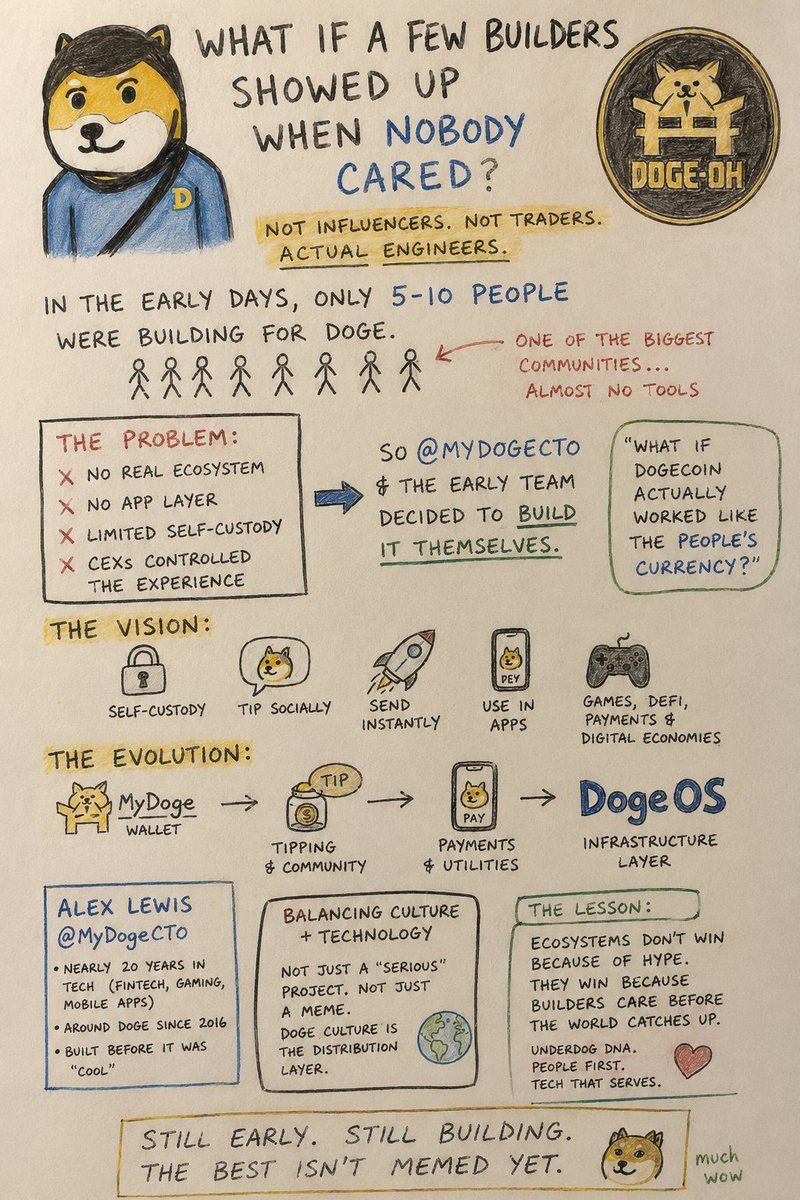
Have you ever thought about how different Dogecoin’s future could look today if a few builders never showed up when almost nobody cared?
Not influencers. Not traders. Not people chasing the next hype cycle, but actual engineers quietly building infrastructure while most of crypto still treated DOGE like a joke
One of the most interesting things about crypto is this, ecosystems rarely become valuable because of memes alone. They become valuable when someone decides the community deserves real tools
That’s where Alex Lewis @MyDogeCTO comes in.
Most people know him today as the CTO of @MyDoge and @DogeOS, the architect behind the most widely used self-custodial Dogecoin wallet
But the interesting part is not just the title. It’s the timing.
Before Dogecoin infrastructure became “cool,” before the ecosystem started attracting serious builders, there were reportedly only around 5–10 people actively building for DOGE
One of the most recognizable crypto communities on earth, yet almost nobody was creating the tools needed for real adoption
No proper ecosystem. No real app layer. Very limited self-custody experiences. Mostly centralized exchanges controlling the user experience
Instead of waiting for someone else to fix it, Alex and the early MyDoge team decided to build it themselves
A lot of crypto projects begin after momentum already exists. But some of the strongest ecosystems are built before the attention arrives
Alex wasn’t new to technology. He already had nearly two decades of engineering experience across Fintech, Gaming, and Mobile Applications before fully entering crypto. He had been around DOGE since 2016, years before most people rediscovered it during later hype cycles
MyDoge never really felt like a quick meme app. It felt intentionally designed around utility from the beginning
The original vision was simple but powerful; “What if Dogecoin actually worked like the people’s currency?”
Not just something you hold, not just a meme you post, but something you can self-custody easily, tip socially, send instantly, use inside apps, and eventually plug into games, DeFi, payments, and digital economies
Every major blockchain ecosystem eventually reaches the same turning point, it either stays culture or evolves into infrastructure
That’s what makes the evolution from MyDoge to tipping to payments to DogeOS so interesting to watch, especially because the team never abandoned DOGE culture while scaling the tech.
That balance is rare. Usually projects become so “serious” they lose the community energy that made people care.
But Dogecoin’s identity was always different, the memes weren’t a distraction, they were the distribution layer.
Alex seems to understand that better than most. His online presence reflects it, one minute discussing wallet architecture or ecosystem expansion, the next posting arcade games, memes, family moments, or classic “much wow” humor.
Crypto communities don’t survive on technology alone, they survive on personality, consistency, and people genuinely enjoying being there
The reason some ecosystems survive multiple cycles is not because they had the loudest marketing. It’s because years earlier, a small group of builders quietly decided the community was worth building for before the market agreed
That’s the underdog DNA Dogecoin has always carried, from just a meme to one of the internet’s strongest communities to now slowly building actual infrastructure layers through projects like MyDoge and DogeOS.
We’re probably still early in seeing what happens when a culture as large as DOGE finally gets the tools it lacked for years.
6
10
97
3,151

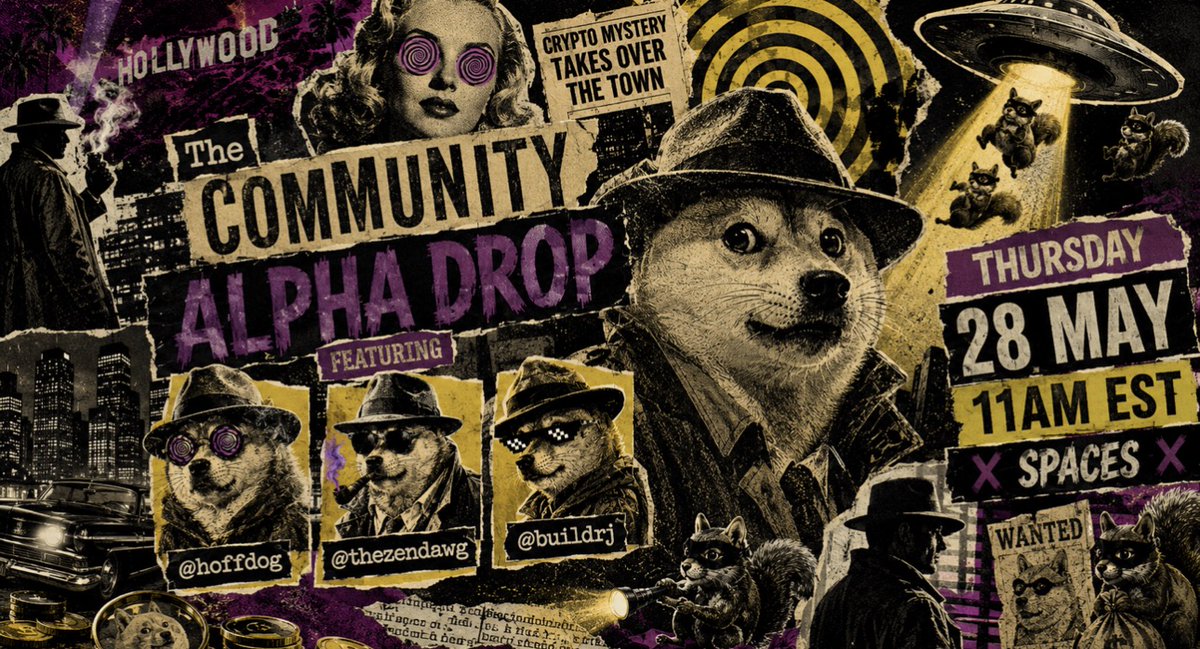
Join us tomorrow for a special community alpha drop space on X
🗣️ @hoffdogg , @thezendawg , and @BuildrJ
📍May 28th, 11:00am EST
35
58
431
40,872