
8 Photos and videos






CarlosE. retweeted

Mar 19
This robotic hand can be 3D printed by anyone and assembled in under 8 hours.
Researchers at ETH Zurich created the Orca hand, fully open-sourced with artificial bones and tendons.
For context, advanced robotic hands cost over $100,000 and require constant maintenance...
Orca costs under $2,000. 50x less (!)
A self-calibration system maps every motor to every joint, eliminating the manual tuning that tendon-driven hands usually need.
Each fingertip has built-in tactile sensors covered by silicone skin.
The hand can actually feel when it touches something, giving it feedback to grip objects without crushing them or letting them slip.
It can hold over 20 lbs, learn tasks by watching human demonstrations, and transfer skills trained in simulation directly to the real world.
The team proved its durability by having it pick up and place a cube over 2,000 times across 7 hours with no human intervention.
The full design files and source code are open source, so any robotics lab in the world can start building one today.
109
408
2,990
213,111
CarlosE. retweeted

Feb 10
6,596
28,123
118,799
87,188,006

CarlosE. retweeted

24 Dec 2025
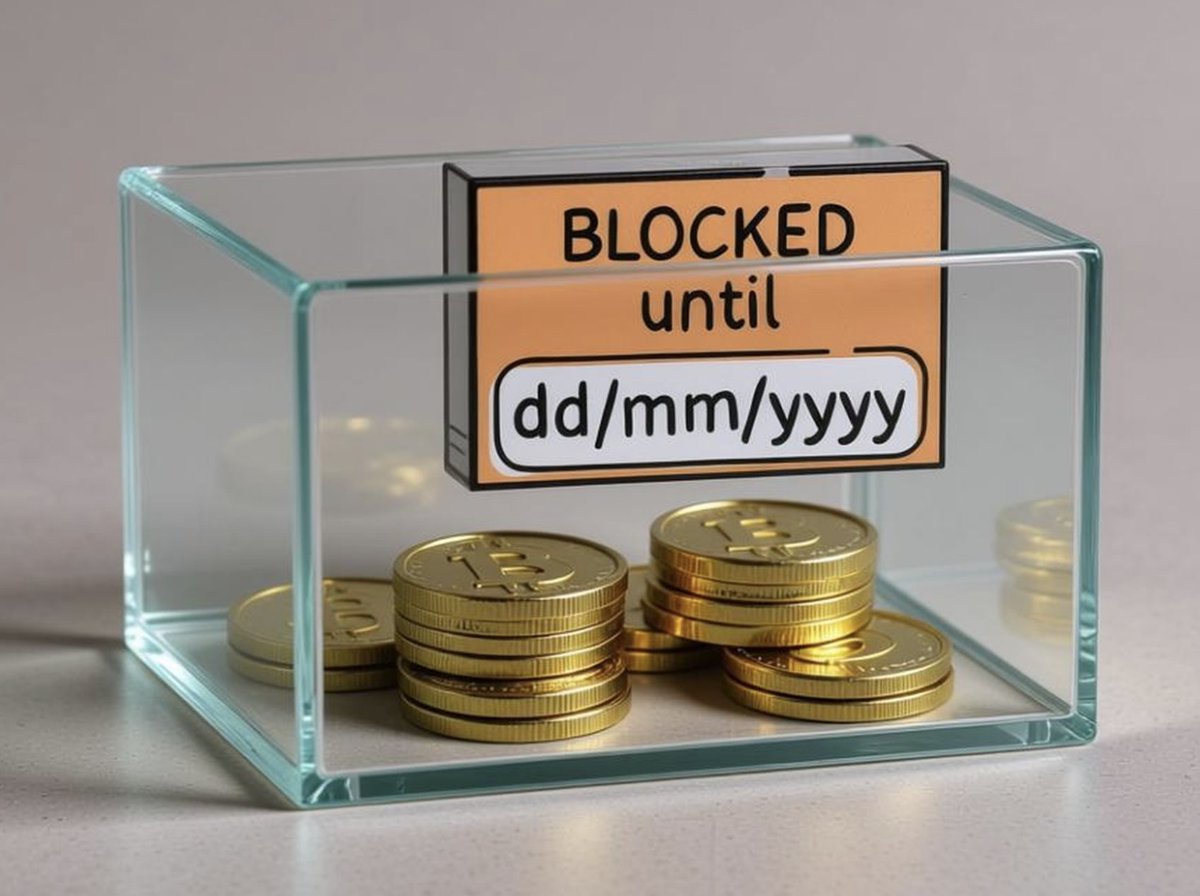
I posted about time-locking and was shocked how many...
- didn't use it
- didn't know about it
- mistakenly thought they couldn't move their Bitcoin.
Let me break it down at a high-level for you 👇
First, there are TWO types of time-locking.
The 1st one is what you think it is (what it sounds like). But it's the second one I find more useful.
ABSOLUTE TIME-LOCKING (CLTV)
This is when you take any Bitcoin, or fraction of (technically a UTXO), and make it un-spendable until a future block.
The 2nd one is what I'm referring to. This is...
RELATIVE TIME-LOCKING (CSV)
Think of this as locking additional KEYS into the future rather than your Bitcoin.
Consider your current set-up - whether single, single with passphrase, or multi-sig - as your MAIN SPEND.
Now consider an entirely new, different set-up - whether single, single with passphrase, or multi-sig - as your RECOVERY SPEND.
Got it?
Your main spend is available for you to spend whenever you want.
BUT... what if you lose your keys? Or what if you die and your family can't find your keys?
Well, your Recovery Spend set-up kicks in as an additional access to your Bitcoin.
But this Recovery Spend won't kick in unless, and until, you haven't used your Main Spend key within a specified time period.
Your Recovery Spend isn't valid and keeps getting pushed down into the future until, or unless, your Main Spend is no longer accessible.
Here's a simple example (but the configurations are endless!):
You have a typical 12-word single-sig setup.
This is your Main Spend.
But you then time-lock a Recover Spend for 6 months into the future with a completely separate set of 12-words.
You then further define a Recovery Spend #2 as 12 months into the future with yet a third set of 12 words.
Now... whenever you transact with your Main Spend, the two Recovery Spend paths you just set up continue to reset the clock. They keep getting pushed down 6 months and 12 months all over again.
It's kinds of like a dead-man-switch.
As long as there is activity, the recovery paths never take effect. Those two sets of keys can't access your Bitcoin. Someone can find them and nada happens.
But... if you accidentally lose your key or die, your 1st Recovery Spend key(s) becomes active 6 months from the last time you spent from your Main Spend key.
And then 12 months from the initial Main Spend transacting, the 2nd Recovery Spend becomes available. At that point ALL of these keys work.
The key options EXPAND over time. You're adding MORE KEYS that can access your Bitcoin.
You can also do the opposite and DECAY the keys rather than expand.
So in the example above you can have 3 keys as your Main Spend, then have that decay to any 2 of those same keys as your 1st Recovery Spend, and then have any 1 of those keys as your 2nd Recovery Spend.
This way if you have a multi-sig and you accidentally lost the quorum of 2-of-3 keys.... you can wait 12 months and it only takes any 1 of them.
Now here's where it gets even better:
You can also destroy your Main Spend in any of these set-ups, thus effectively time-locking yourself as there is no key at all to send/spend your Bitcoin in the present.
This is the ultimate diamond hands.
But because you have a Recovery Spend defined upon set-up, the key(s) you hold for that works at a future point in time (thus resembling Absolute Time-locking).
Platforms like Liana or Nunchuk that use mini-script to write these simple If-This-Then-That smart contracts make this crazy easy with pretty sliders and buttons that make it dummy proof.
Spin some new keys up and just try it. It's free. Even your desktop can spin up unlimited keys. And you can time-lock just a couple of weeks away to get the feel for it.
Even a malicious actor can't get your Bitcoin with time-locking unless they can time travel.
If you're a long-term holder I'd learn more about time-locking and see how it might benefit parts of your stack.
Of course, multi-sig collaborative security is still one of the best set-ups there is, period.
But learning how programmable aspects of Bitcoin work, like time-locking, is powerful for all kinds of use-cases.
Satoshi wrote on January 10, 2009:
"The [Bitcoin] network infrastructure can support a full range of escrow transactions and contracts."
Time-locking is a good example of this functionality.
48
112
573
38,273
CarlosE. retweeted

13 Dec 2025
🔖 MY BITCOIN STARTER KIT
On my 'Coin Stories' interview I mentioned my Bitcoin starter kit, which I send to those asking me "where do I start?"
Many asked for this kit, so here it is 👇
🔗 efrat.blog/p/my-bitcoin-star…
🔖 Bookmark this, like & share with friends & family!

34
116
430
69,694
CarlosE. retweeted

11 Dec 2025
Last quarter I rolled out Microsoft Copilot to 4,000 employees.
$30 per seat per month.
$1.4 million annually.
I called it "digital transformation."
The board loved that phrase.
They approved it in eleven minutes.
No one asked what it would actually do.
Including me.
I told everyone it would "10x productivity."
That's not a real number.
But it sounds like one.
HR asked how we'd measure the 10x.
I said we'd "leverage analytics dashboards."
They stopped asking.
Three months later I checked the usage reports.
47 people had opened it.
12 had used it more than once.
One of them was me.
I used it to summarize an email I could have read in 30 seconds.
It took 45 seconds.
Plus the time it took to fix the hallucinations.
But I called it a "pilot success."
Success means the pilot didn't visibly fail.
The CFO asked about ROI.
I showed him a graph.
The graph went up and to the right.
It measured "AI enablement."
I made that metric up.
He nodded approvingly.
We're "AI-enabled" now.
I don't know what that means.
But it's in our investor deck.
A senior developer asked why we didn't use Claude or ChatGPT.
I said we needed "enterprise-grade security."
He asked what that meant.
I said "compliance."
He asked which compliance.
I said "all of them."
He looked skeptical.
I scheduled him for a "career development conversation."
He stopped asking questions.
Microsoft sent a case study team.
They wanted to feature us as a success story.
I told them we "saved 40,000 hours."
I calculated that number by multiplying employees by a number I made up.
They didn't verify it.
They never do.
Now we're on Microsoft's website.
"Global enterprise achieves 40,000 hours of productivity gains with Copilot."
The CEO shared it on LinkedIn.
He got 3,000 likes.
He's never used Copilot.
None of the executives have.
We have an exemption.
"Strategic focus requires minimal digital distraction."
I wrote that policy.
The licenses renew next month.
I'm requesting an expansion.
5,000 more seats.
We haven't used the first 4,000.
But this time we'll "drive adoption."
Adoption means mandatory training.
Training means a 45-minute webinar no one watches.
But completion will be tracked.
Completion is a metric.
Metrics go in dashboards.
Dashboards go in board presentations.
Board presentations get me promoted.
I'll be SVP by Q3.
I still don't know what Copilot does.
But I know what it's for.
It's for showing we're "investing in AI."
Investment means spending.
Spending means commitment.
Commitment means we're serious about the future.
The future is whatever I say it is.
As long as the graph goes up and to the right.
5,114
25,552
171,323
25,913,531
CarlosE. retweeted

6 Dec 2025
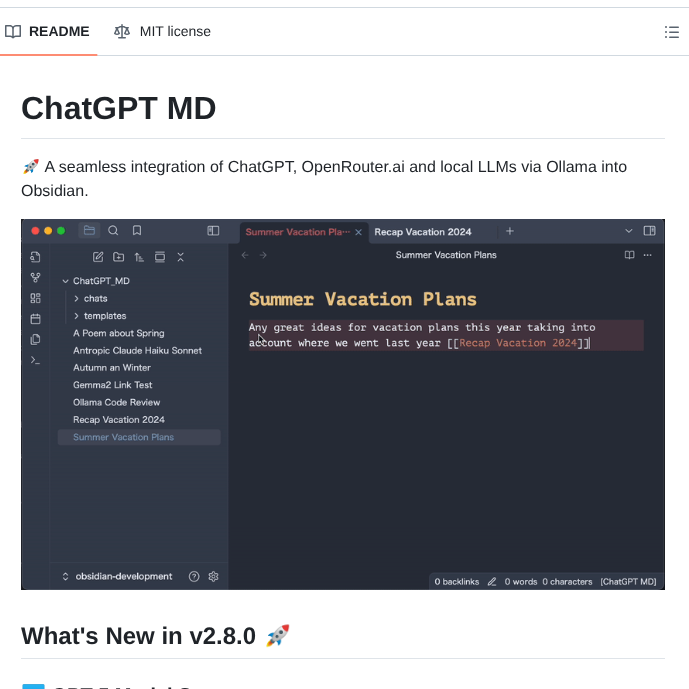
Integrates ChatGPT and local LLMs into Obsidian
github.com/bramses/chatgpt-m…
3
20
225
16,201
CarlosE. retweeted

28 Nov 2025
To celebrate the launch of The Gold Standard, I’ve partnered with @coinkite for a special giveaway. For the chance to win a COLDCARD Q and a copy of my new book:
• Like
• Repost
• Follow @COLDCARDwallet
Winner will be selected on Monday (1 December).

230
955
1,505
79,304
CarlosE. retweeted

14 Sep 2025
The world operates on standards —
Volume: Liters
Length: Meters
Temperature: Celsius
Energy: Joules, kWh
Cybersecurity - ISO 27001 / SOC 2
Connectivity: Bluetooth
Web: HTTP, SSL
etc etc
No one country or company can change these standards. 1 Liter is always 1000 mL.
Yet, for money, we do not have global standards.
Rather, we have over 170 metrics (currencies) for gauging how much money one has and prices of things. The US Dollar is the most widely used of course, but a single country, the US, can make changes as it sees fit.
The proposition of Bitcoin is to change this.
A single metric for money.
There will still be other currencies. But instead of constantly fluctuating ratios of USD to Japanese Yen, USD to Euro, USD to Indian Rupee —
In the future you can just quote them all in term of how much BTC (or satoshi's) they are worth: a Bitcoin standard.
The arc of progress is global standards. Money should be no different.
When you zoom out, Bitcoin feels inevitable.
36
84
475
59,635
CarlosE. retweeted

6 Sep 2025
Is no one else concerned that the reason for removing the OP_RETURN limit originated from a company funded primarily by the Palantir guy?
22
31
269
12,289
CarlosE. retweeted

2 Sep 2025
I wish I could buy it. I still think you're trying to dump a task on Bitcoiners they'll never manage. Shift the overton window from "all transactions are equal" to "all data is just ones are zeroes"
Just seems insanely naive. Has to be plausible deniability. Making spammers hack giant files into the chain by abusing bugs in taproot is one thing. Rolling out the red carpet with OP_RETURN screams complicity.
2
2
71
4,265
CarlosE. retweeted

26 Jun 2025
SHARE THIS AND TAG @TeamYouTube
This is absolutely absurd… @BTCsessions is literally the best educator in the Bitcoin space and banning him from YouTube honestly feels like an attack on Bitcoin.
26 Jun 2025

YOUTUBE JUST BANNED ME. THANKS @TeamYouTube, I was only working on that for 9 years.
54
169
705
33,436

CarlosE. retweeted

19 Jun 2025
Satoshi Nakamoto's public life was short but intense.
He didn't speak for nothing, and all his posts between 2008 and 2011 are still relevant today
Here are the 10 most emblematic quotes from Bitcoin's
creator ⤵️
21
224
1,252
163,371
CarlosE. retweeted

17 Jun 2025
🚨 The DOJ is trying to block every expert witness in my case — from software to sanctions. They don’t want the jury to hear the truth about how Tornado Cash actually works or why what I built was legal.
⚖️ I’m being prosecuted for the misuse of software by third parties — not for anything I did.
🛑 No one in the world can modify Tornado Cash to make it work differently. It’s immutable, autonomous, and beyond anyone’s control — including mine.
📜 Statements by senior FinCEN officials make it clear: non-custodial software is not subject to MSB regulations. That matters.
👨💻 This case isn’t just about me — it’s about the future of open-source, decentralized, privacy-preserving tech.
🙏 Help me fight back: freeromanstorm.com
#FreeRoman #PrivacyIsNotACrime #OpenSource #CryptoFreedom
28
210
688
49,377
CarlosE. retweeted

8 Jun 2025
Knowledge graphs are insanely good at giving agents human-like memory!
Today, we're building an MCP-powered memory layer that can be shared across all your AI apps like Cursor, Claude Desktop etc.
It's built using a real-time knowledge graph.
100% open-source and self-hosted.
37
233
1,672
156,390

CarlosE. retweeted

7 Jun 2025
NACK
The goals of transaction relay listed are basically all wrong. Predicting what will be mined is a centralizing goal. Expecting spam to be mined is defeatism. Helping spam propagate is harmful.
This OPED contradicts itself, presenting out of band relay as both negative and also "an important aspect of Bitcoin’s censorship resistance"
It ignores the lack of consent to spam by users/node operators, giving deference to the attackers and the malicious miners who might conspire with them.
It paints spam as "largely harmless", when the truth is the exact opposite. It treats abuse of the blockchain and nodes as legitimate "use cases" rather than the DoS attacks they actually are, and speaks of DoS attacks as if they were something distinct, thus implying spam isn't the same (which it is).
The OPED presents itself as aligned with "Bitcoin’s long-term health" which is objectively false, and "miners’ rational self-interest" which is also at least debatably false.
36
132
904
54,014

beautiful storage.googleapis.com/deepm…
91
144
1,092
218,782
CarlosE. retweeted

15 Apr 2025
🤤 Animation so smooth it should be illegal
animejs.com/
83
360
5,134
251,779