
Demystifying China's macroeconomic policy. Sign up for free updates read by the World Bank and J.P. Morgan: chinabankingnews.com/
Joined March 2017
- Tweets 10,016
- Following 785
- Followers 13,258
- Likes 3,909
311 Photos and videos





China Banking News retweeted
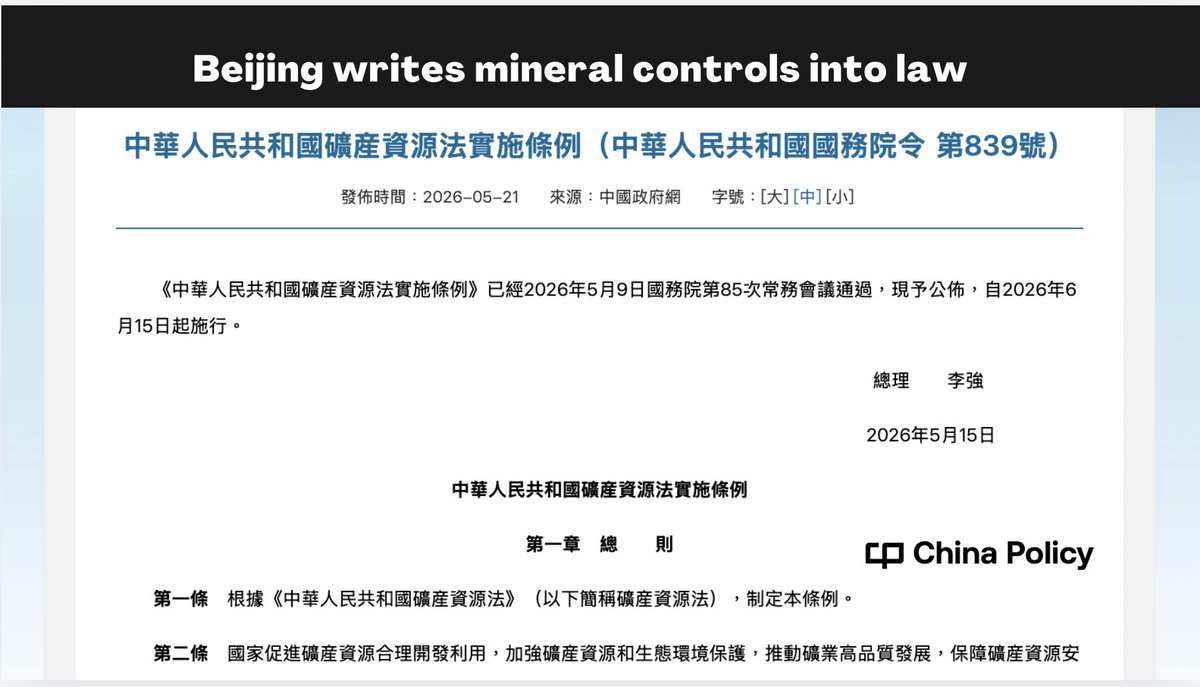
Advanced economies that depend on PRC critical minerals now face in law what Beijing has until now managed through fragmented export controls. Regulations for the revised Mineral Resources Law take effect today, 15 June, turning administrative practice into statute.
A formalised strategic reserve now binds product, capacity and resource-site reserves, with the reserves locked at the source for at least five years. Emergency powers let the state organise mining directly and requisition output and transport. International investment in exploration and mining faces a negative list and security review. The rules also authorise countermeasures against any country or grouping that restricts PRC mineral supply chains.
With Beijing’s leverage now fixed in statute, the pressure on the EU, US and Japan to diversify supply grows sharper.
The template is American, and recent. Washington has long held export controls, sanctions and investment screening, all outside WTO discipline, but only since 2018 has it wielded them to pursue open economic competition and to sideline the WTO itself. Beijing now has a matching kit, from the Export Control Law to the Anti-Foreign Sanctions Law and now the mineral rules. The lever is no longer the West’s alone, and Beijing holds it on ground where it is far stronger.
source: buff.ly/u37Cm7T
read more like this—link in bio
6
15
1,293
China Banking News retweeted

Jun 10
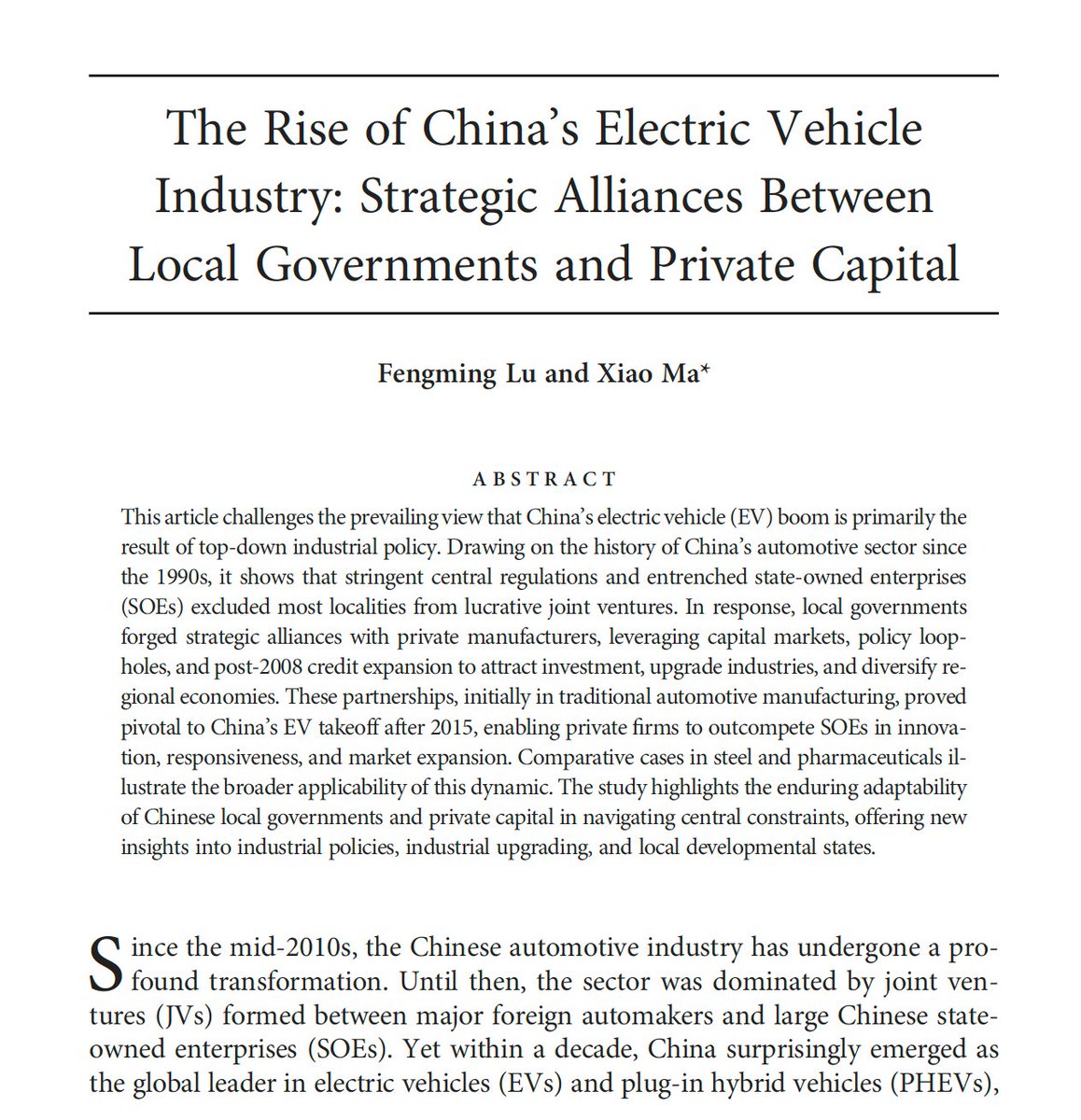
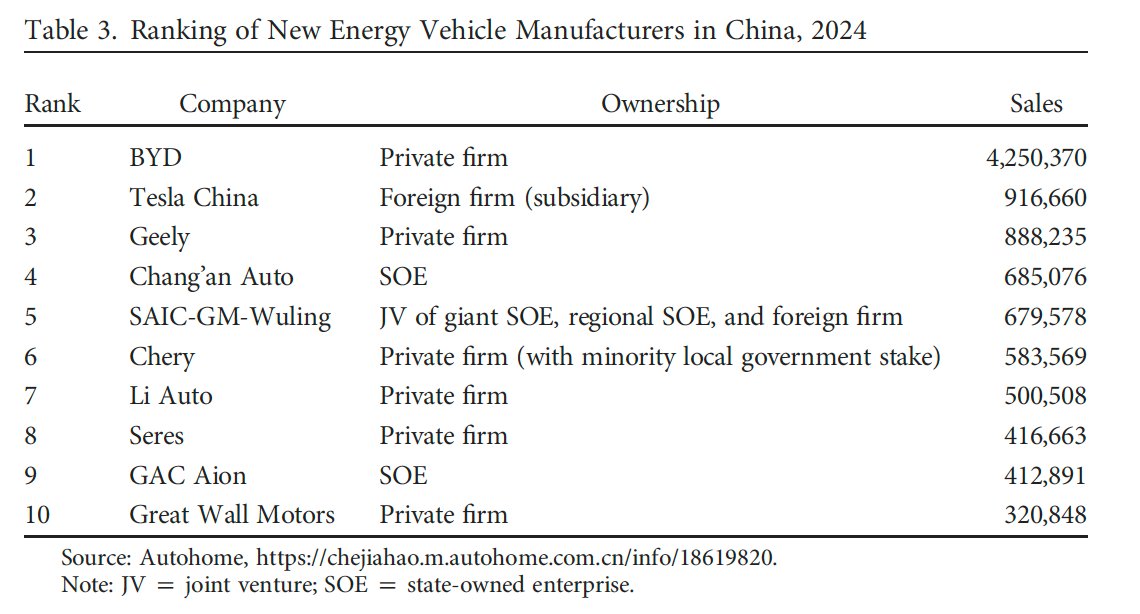
Why did private firms, not state-owned enterprises (SOEs), come to dominate China’s EV sector?
My new @ChinaJournal article (co-authored with Xiao Ma @maxiaoalex) challenge the "top-down industrial policy" narrative.
The real engine? Strategic alliances between local governments and private capital. 🧵
Based on 3 years of fieldwork, 60 interviews (with officials, entrepreneurs, and engineers), and rich first-hand accounts, we show how strict central regulations inadvertently drove local states to bet big on private EV players.
Here is the story: (1/15)
40
359
1,365
693,138

1/2
Is China’s mounting trade surplus forcing its central bank to tighten up the money supply?
The Chinese central bank (PBOC) has sought to tighten liquidity conditions over the past several months, despite the economic headwinds created by the War in Iran as well as Beijing’s explicit commitment to loose monetary policy.
Domestic analysts say the move comes in response to interbank interest rates sliding to worryingly low levels.
Some point more specifically to the impact of China’s mounting trade surplus, which they say has driven heavy inflows of forex that have left the financial system awash with liquidity.
1
4
918
2/2
Other analysts point out, however, that a rising trade surplus is unlikely to be the culprit for excess liquidity or low interest rates, as PBOC is no longer heavily obligated to buy forex under China’s current exchange rate regime.
They instead impute persistently low interest rates to lacklustre demand for credit, as households and businesses continue to grapple with balance sheet recession conditions in the wake of China’s 2021 property slump.
Read our deep-dive briefing on the matter in full right here: chinabankingnews.com/p/is-ch…
2
3
633
China Banking News retweeted

Jun 9
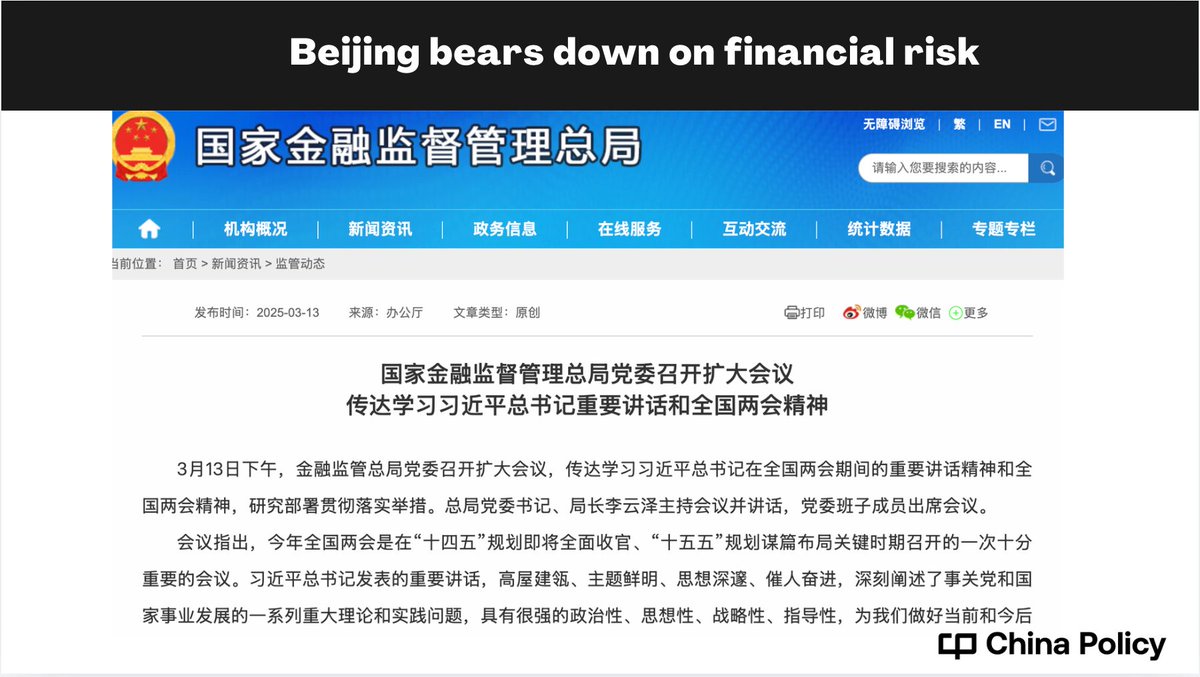
The balance has shifted. A year ago, three roughly equal tracks of risk disposal, growth support and regulatory improvement were run by the National Financial Regulatory Administration. Its Party Committee’s enlarged meeting on 5 June 2026, the first since Ding Xiangqun 丁向群 took over as Party secretary on 29 May, drops that framing in favour of risk containment. The language is harder throughout.
The starkest change is on small and medium financial institutions. In March 2025, the task was restructuring through recapitalisation, mergers and market exits. The June 2026 readout sets an explicit floor: no blow-ups. This is coupled with a reduction in the number of institutions. Consolidation, not rehabilitation, is now the objective.
On real estate, the retreat is visible. Expanding the urban financing coordination mechanism in 2025 implied active credit mobilisation behind a broad set of projects. Working the housing delivery whitelist in 2026 implies managing a defined queue of distressed ones. The ambition has narrowed considerably.
Growth support has been handed off elsewhere, and NFRA has been told to concentrate on not letting things break. Local debt has moved from hidden-liability swaps to financing-platform exit and transformation. Supervision language has shifted from improving regulatory capacity to strict enforcement, ‘teeth-and-barrelled’ action and accountability for the exercise of regulatory power. The space for financial institutions to chase scale is closing.
source: buff.ly/n4716PV
read more like this—link in bio
3
10
941
China Banking News retweeted

Jun 9
The Economist: “At no time in modern history has a large country gone all in on investment in high-end technology while also navigating a slowing economy and a local government debt crisis, notes Yuen Yuen Ang of Johns Hopkins University.”
@yuenyuenang
economist.com/finance-and-ec…
10
29
101
26,376
China Banking News retweeted

I firmly believe that China will eventually have its own “Korea/memory moment,” when global investors suddenly realize that Chinese supply chains sit at the heart of the physical AI revolution.
Jun 8

China's Unitree Will Dominate Global Robotics
The Fastest Iteration Cycle In Next-Gen Robotics Should See Unprecedented Acceleration
newsletter.semianalysis.com/…
18
52
476
53,048
Brad Setser here says exactly what every Chinese economist of standing or renown has been saying for the past several years.
Which is why, contrary to what Setser has maintained in the past, Beijing wants to beef up the social safety net and boost consumption.
Jun 8

How about China's domestic economy is weak, but at what cost?
Underlying issue is that internal demand growth cannot support 4% growth, let alone 5% growth.
3
1,024
China Banking News retweeted

Jun 8
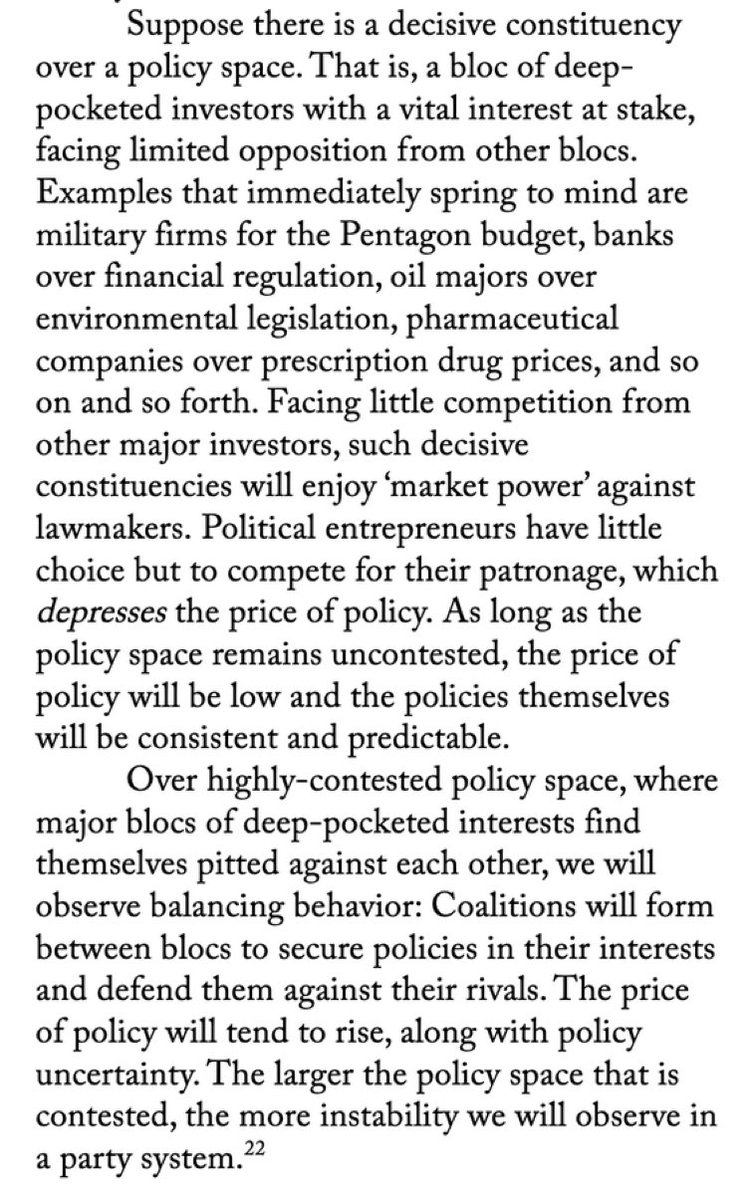
I feel that Chinese success is being totally misread as the triumph of industrial policy. Here’s an alternative theory.
Chinese success is due to the general competence of Chinese institutions, of state capacity, of social trust. There is no possibility of capture by anything like the lobby, no space conducive to the hypertrophy of rent-seeking we find in the US (see attached).
The Chinese have a dramatically more effective political order; esp compared to the US. This stable and effective political order is in part due to and in part generative of social trust. Together they provide China with the greatest state capacity in the world.
The political order, the social trust and the state capacity is upstream of and makes possible the highly effective industrial policy that Western elites fetishize. Plenty of states have tried and are trying industrial policy. Almost all of them in vain.
It’s not industrial policy, but the Chinese political order that you need to pay attention to if you want to pull a China.
Jun 7

I think part of it, at least vis a vis US/China competition, is that US and western chattering classes find it hard to believe that the market-driven outcome of frontier AI could possibly be right. They basically believe, in their hearts, that the Chinese system, with its “industrial strategy,” has eclipsed capitalism. So they harbor the same inferiority complex toward the Chinese system that many Americans once harbored toward the EU’s system. Their heuristic is that the industrial strategists of China have grasped the whole picture of the technological competition in a way that US industrialists, with their “profit maximizing incentives,” could not possibly have matched. And so any outcome in the economy that is not the result of “strategy” is therefore prima facie worse than what the “strategists” have concocted. They also believe the Chinese strategists possess awesome powers of foresight and the ability to evade all tendencies of financial and economic gravity, due of course to “strategy,” really it’s almost a kind of orientalism.
Meanwhile the U.S. industrialists are making new advances in math and science, and the fastest-growing businesses in history, by spending hundreds of billions of dollars on high-margin chips whose legacy is in rendering video games, cramming them underneath tents if need be, and investing generational capital into new energy generation technologies as they do it, and perhaps even colonizing space as an instrumentally convergent result. But none of that is “strategy,” you see.
67
209
952
73,044
China Banking News retweeted
Jun 8
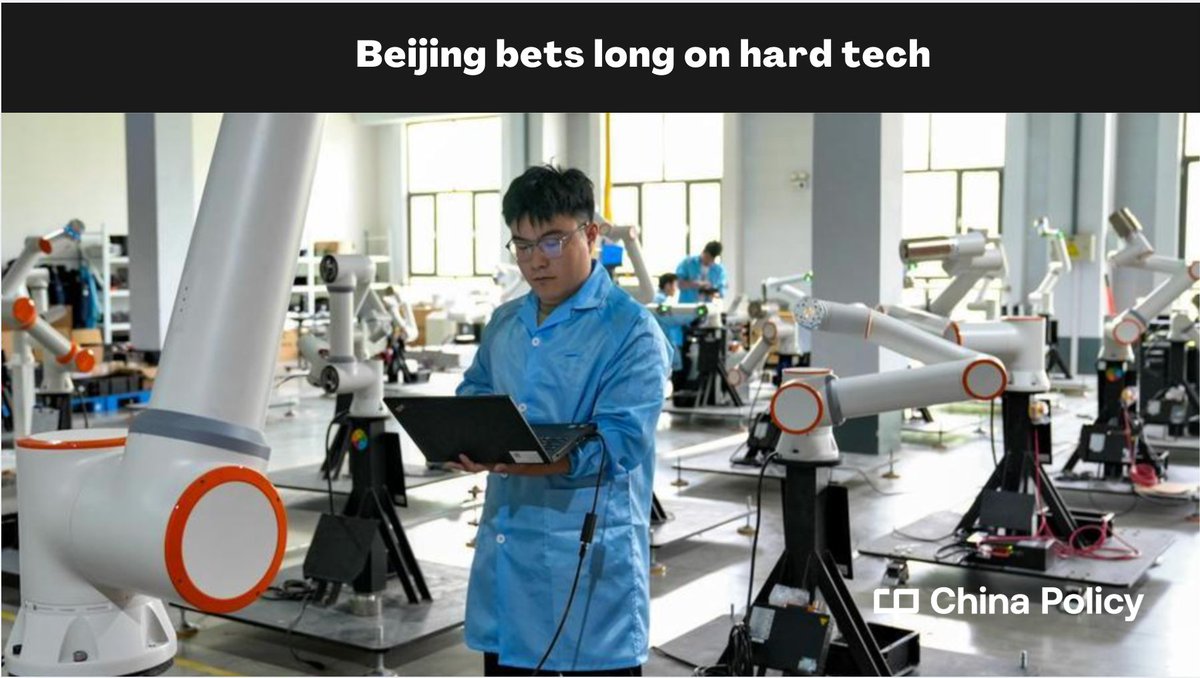
Beijing is fixing a structural problem in its funding model for future industries. A State Council executive meeting last Friday (5 June) proposed setting up shared risk and investment growth arrangements to draw private capital into long-cycle hard technologies: semiconductors, quantum computing, advanced materials, etc. These are the sectors where R&D timelines routinely run beyond a decade.
Most state-industry funds run for five to seven years, but the technologies Beijing wants to develop take ten or more years to mature. That gap has left high-quality projects stranded when funding cycles end before technologies are commercially viable. The new arrangements would extend fund durations, open automatic reinvestment channels, and trigger top-ups at key R&D milestones, shifting the structure of public capital toward the actual pace of deep technology development.
The risk-sharing side is less settled. IP-backed financing and state co-investment are relatively mature; S&T innovation insurance and tech transfer insurance are still being built out. How officials judge and reward fund managers for backing early-stage projects that may not pay off within any normal accountability window has not been spelled out.
source: buff.ly/WBQlrD2
read more like this—link in bio
7
21
1,469
China Banking News retweeted

Jun 7
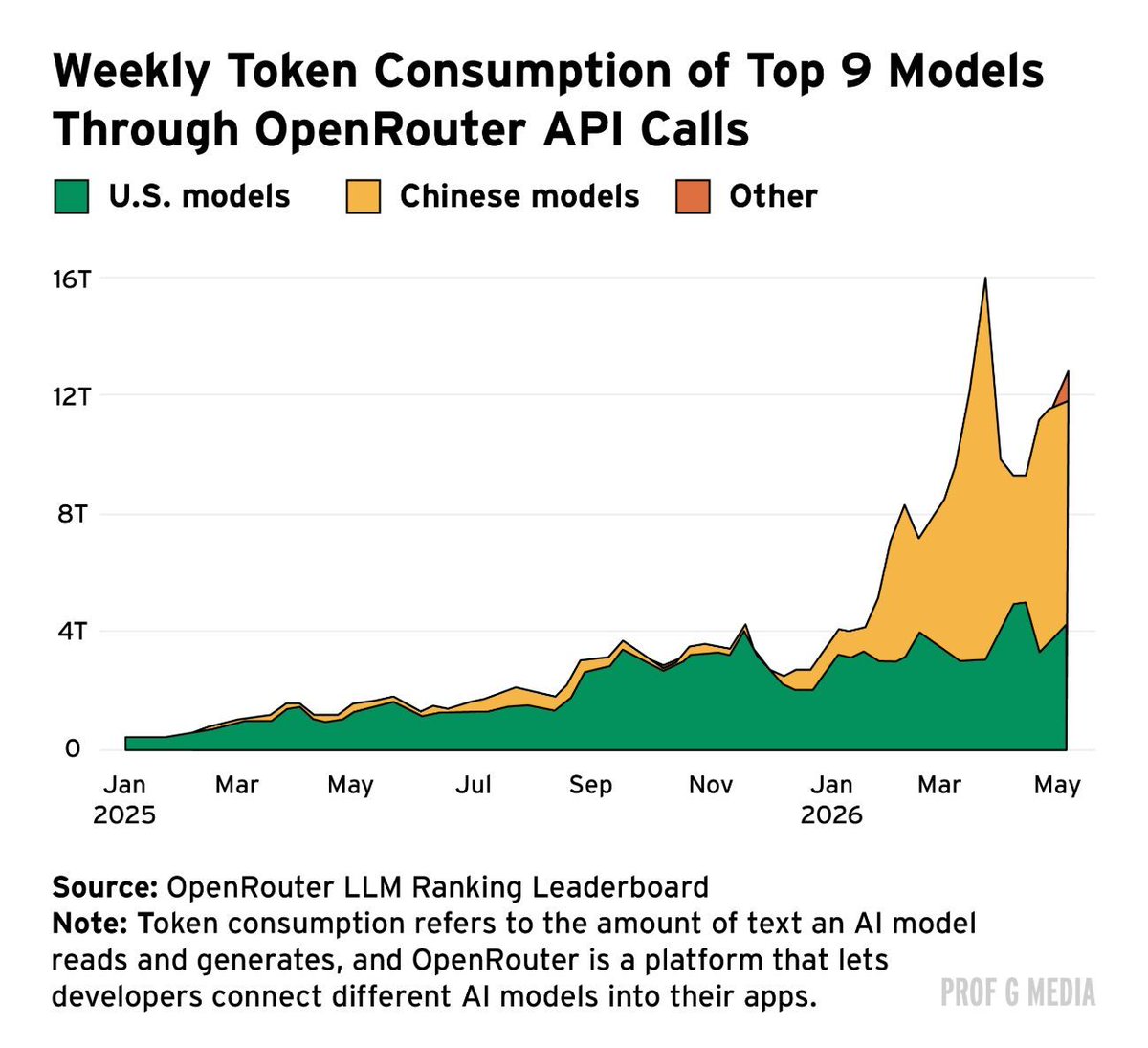
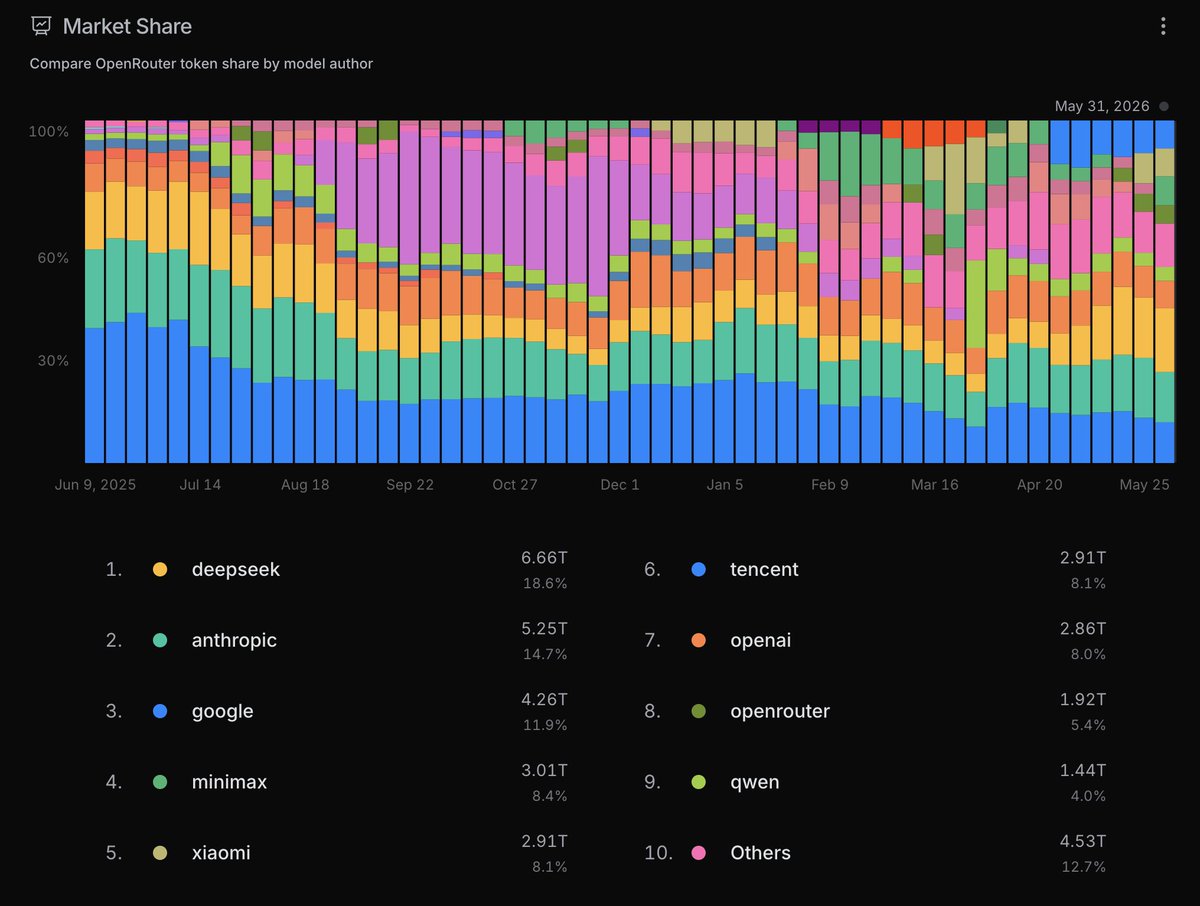
Despite being by far the most funded AI startup in the world, OpenAI’s models are basically not useful in the real world that matters - developers and Startups.
Chinese models are 10x to 30x cheaper than U.S. models and have good enough performance for most tasks.
Chinese models went from about 1% of developer usage in 2024 to more than 60% in May, and 80% of U.S. AI startups are now using Chinese open-source AI models.
OpenAI’s models are mostly just getting people addicted to inferior products. While Chinese models are helping developers build stuff according to OpenRouter’s API data.
What conclusions are we supposed to draw from this data?
31
43
221
16,203
China Banking News retweeted

Jun 7
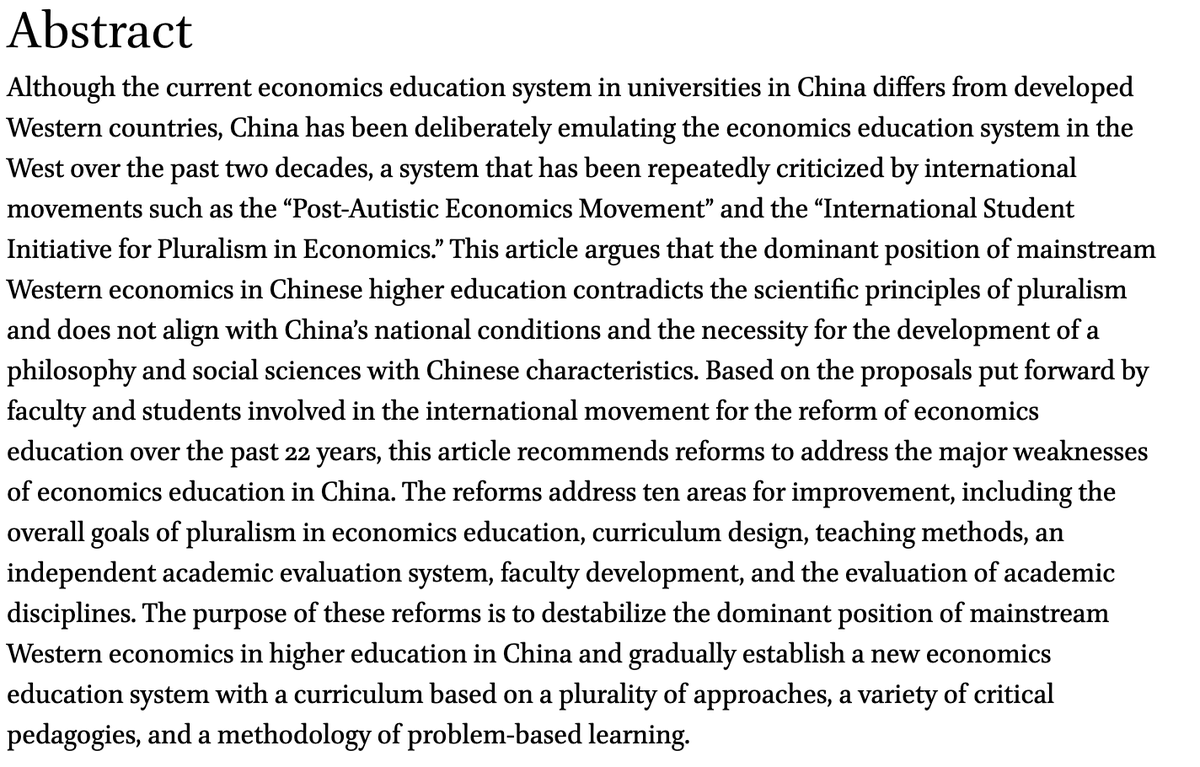
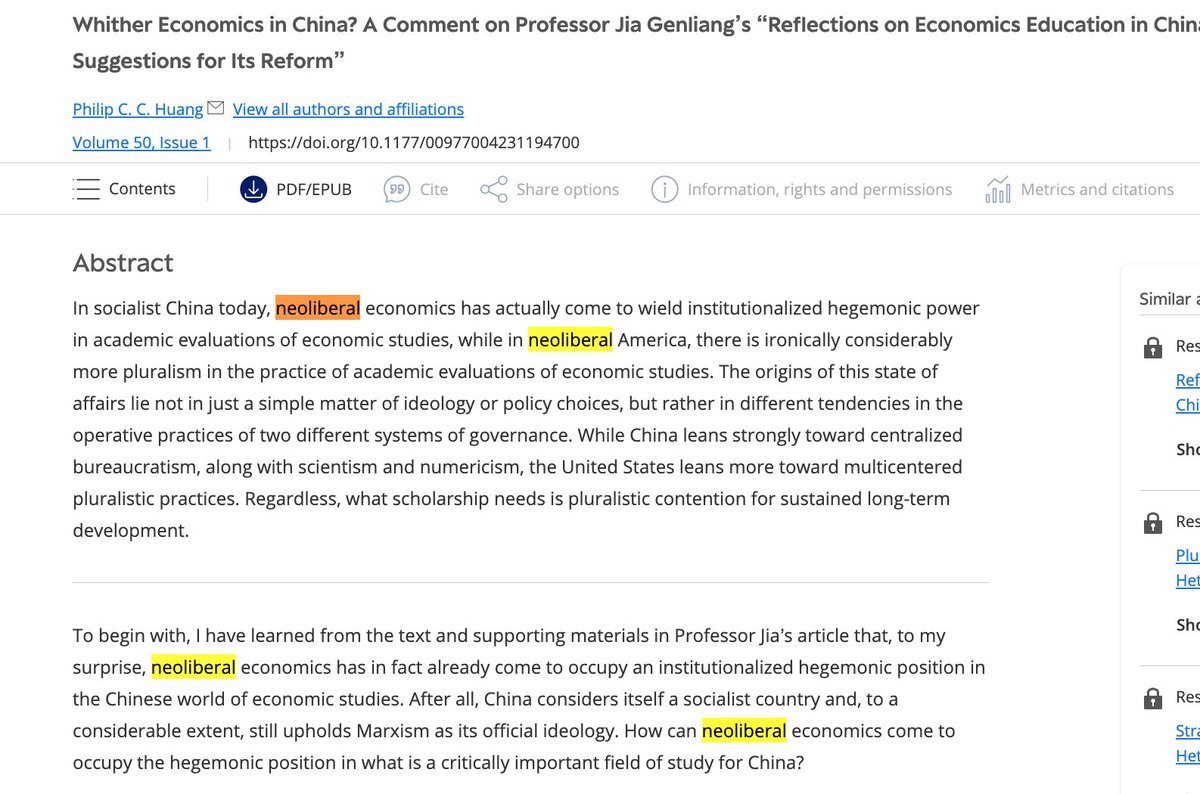
If Chinese academics econ has been dominated by western neoliberal economics they certainly haven’t had much influence with policy 😆
Jun 7

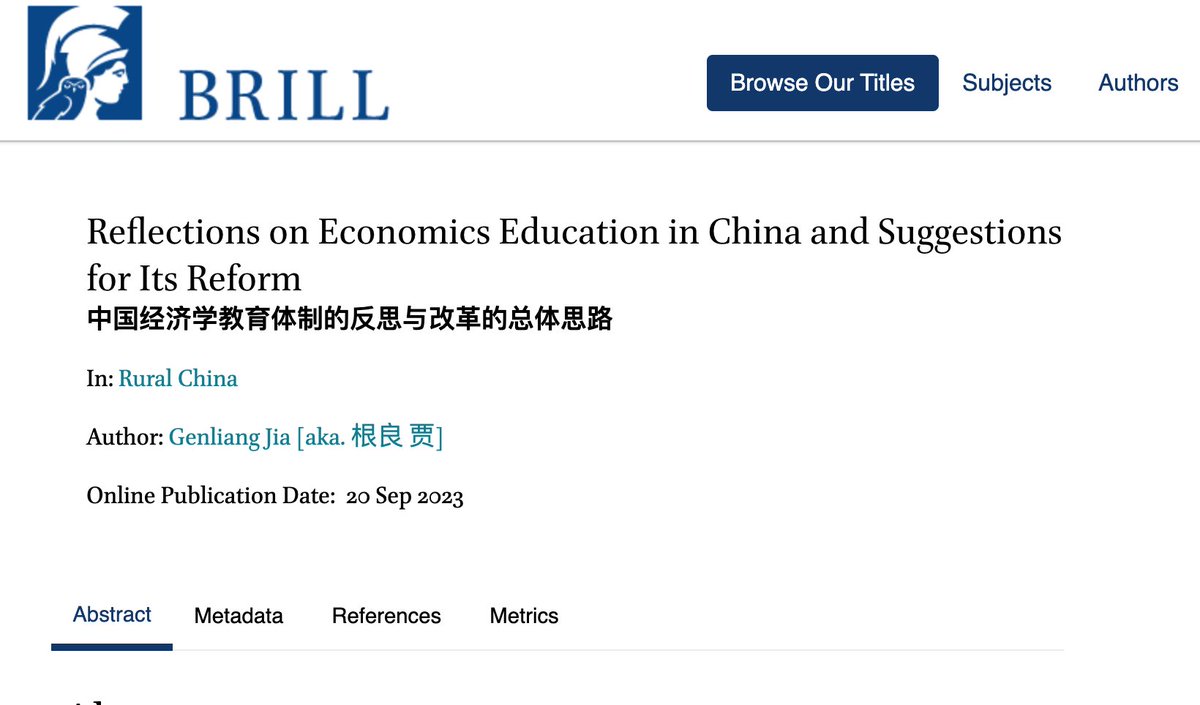
Jia argued that the past two decades of Chinese academic economics have been dominated by western neoliberal economics and that needs to change.
3
2
12
1,751
The Chinese government as investment banker...
If you want to understand the real nature of China's state-owned financial system and its interaction with the real economy, this quote made in 1938 by the renowned Keynesian acolyte Alvin Hansen is of great relevance:
"Governments all over the world are in the process of becoming intermediaries between the ultimate savers
and investment outlets, but the process of production is still carried on by private enterprise.
"This is neither socialism in production nor
even in the ownership of wealth. The government is becoming an investment banker."
1
3
16
1,043
China Banking News retweeted

How Local China Built the EV Boom:
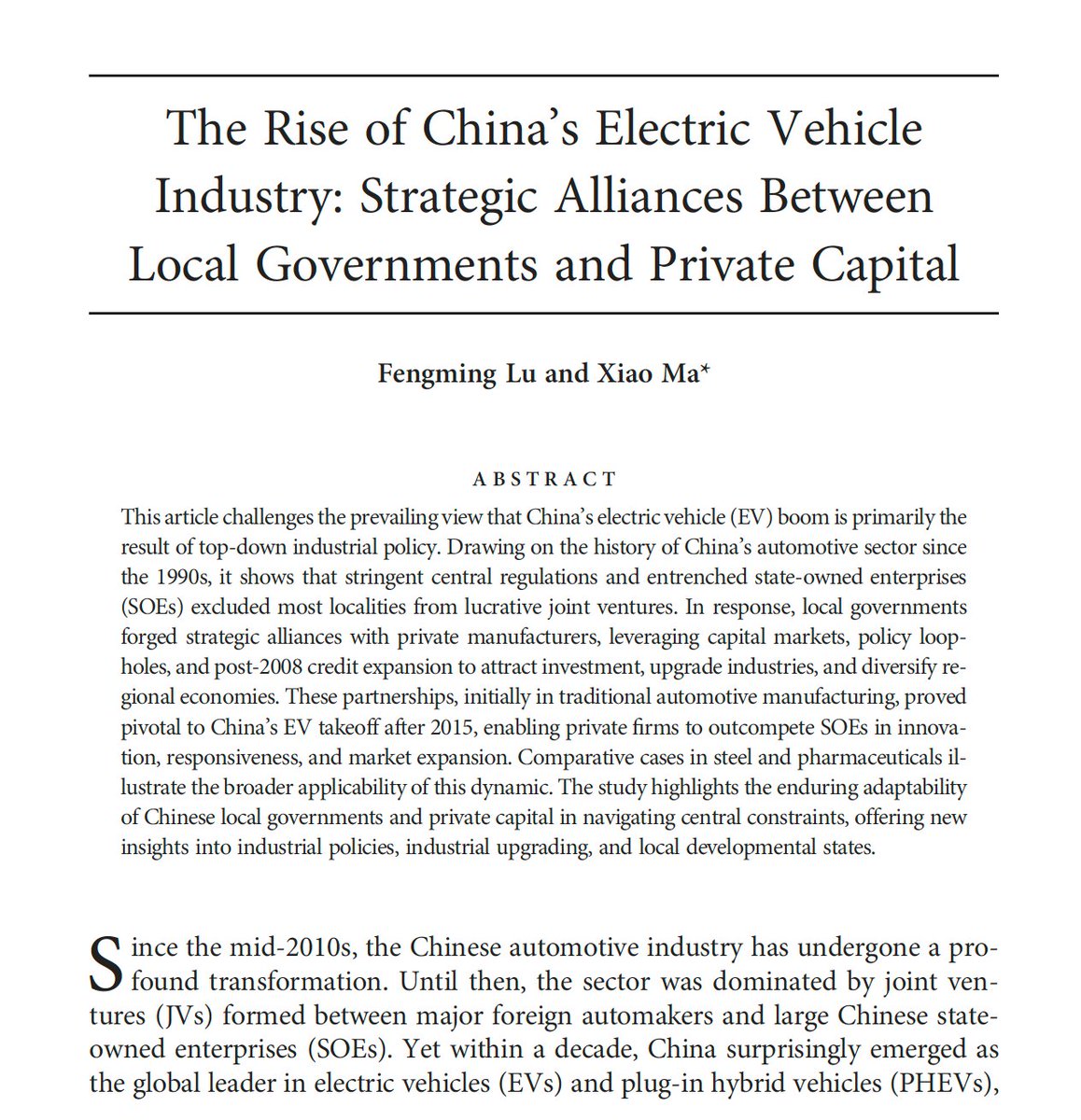
A new study from Fengming Lu and Xiao Ma @maxiaoalex challenges the story of Beijing-led industrial policy, tracing how local governments and private firms reshaped the auto industry from below.
pekingnology.com/p/how-local…
1
21
81
17,752
China Banking News retweeted

Jun 5
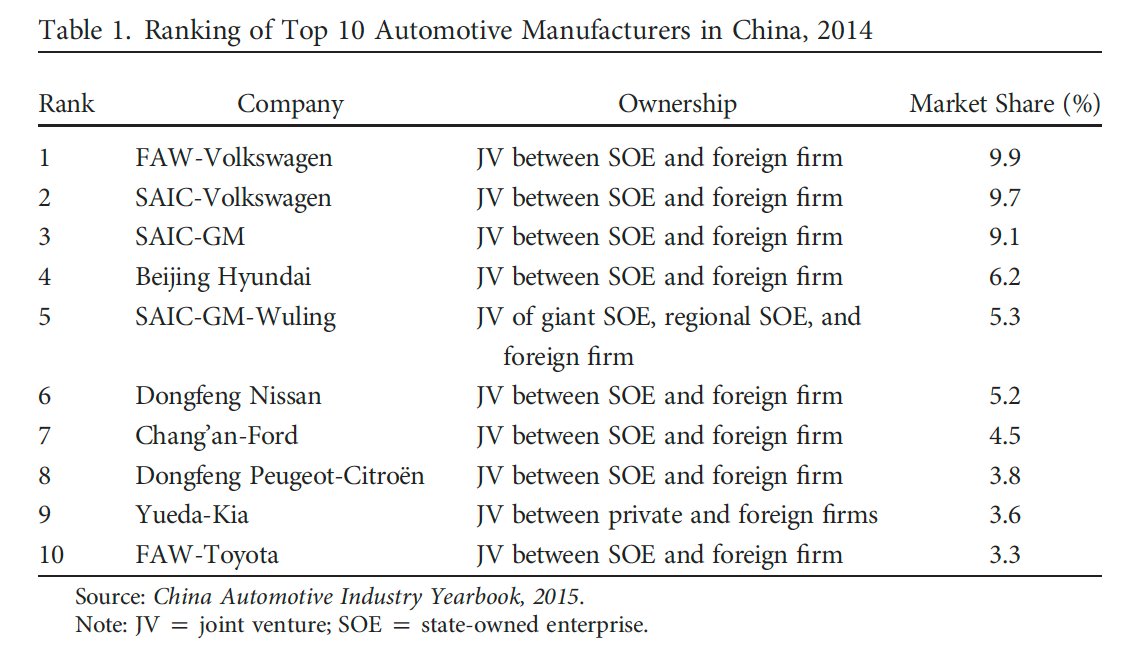
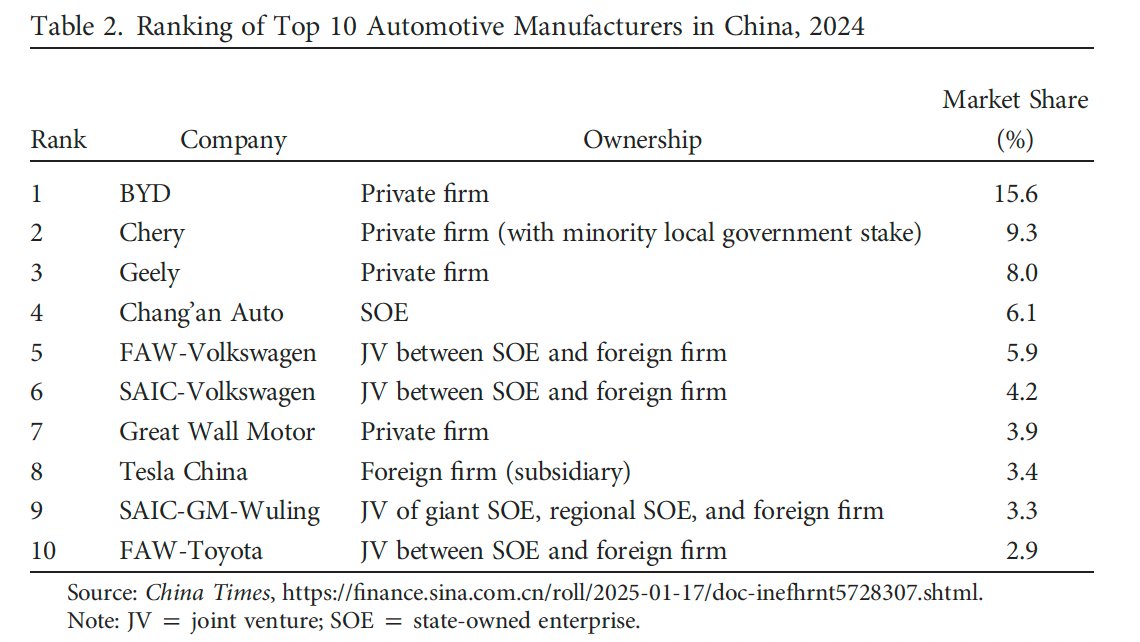
In 2014, the top 10 automakers in China were ALL state-owned or state-foreign joint ventures. By 2024, BYD, Geely, Chery, and other PRIVATE firms dominate. How did an industry rigged for SOEs get flipped by private entrepreneurs? That's the puzzle.
4
28
152
17,727
China Banking News retweeted

Jun 5
So the real lesson may be even more interesting.
Hong Kong achieved Asian-Tiger levels of growth despite one of the most distortive land regimes in the world. Not because of it. Despite it.
The broader implication is that the case for industrial policy is weaker than many think. The East Asian miracles are often presented as proof that governments must guide development. But Hong Kong shows "maybe not".
Friedman did not overstate Cowperthwaite's contribution. He simply misidentified how it came about.
10
8
57
4,435
China Banking News retweeted
Jun 5
🚗🔋 Many think Beijing masterfully planned China's EV takeover. Fengming Lu (@ANUBellSchool ) and I spent 3 years and 60 interviews finding out what actually happened in our latest article @TheChinaJournal. A thread 🧵
29
499
1,462
429,034
One of Xi Jinping's core economic convictions is exactly the same as that of classical liberal economist Jean-Baptiste Say.
According to Chinese political scientist Zhang Weiwei, Xi is firmly convinced that infrastructure spending is justified by the fact that "supply creates its own demand" (1:20 mark).
Jun 4

Meanwhile on Chinese TV: "I visited California in the 80s. They were promising high-speed rail. China didn't even have highways."
40 years later, they have built zero. China: biggest high speed rail network.
"The superiority of socialism is clear."
11
68
666
65,290
China Banking News retweeted
Jun 3
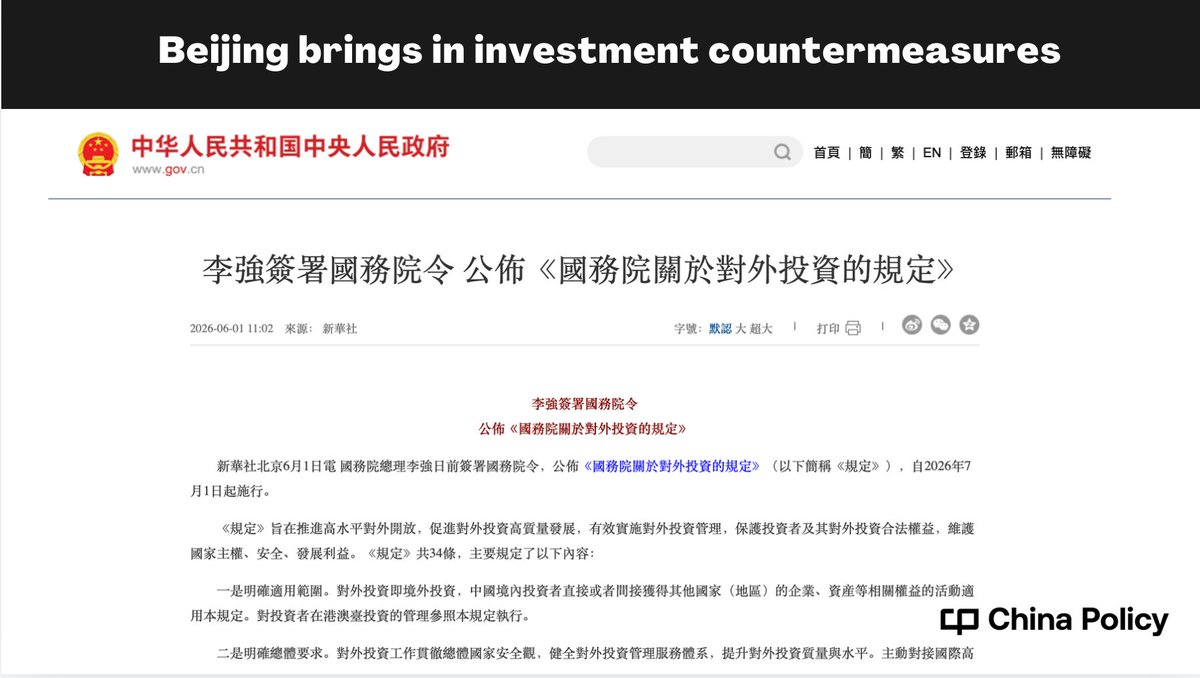
Beijing is moving to give its outbound investment regime a legal backbone.
State Council regulations released on 1 June, the first administrative rules specifically covering outward investment, take effect on 1 July 2026. The 34-article framework covers three areas: services for firms investing abroad, oversight of those investments, and protections for investors whose interests are threatened offshore.
The regulations are worth reading alongside Beijing's broader foreign-relations legal architecture. Explicitly linked to the Foreign Relations Law, the Anti-Foreign Sanctions Law, and the Export Control Law, they include authority to impose countermeasures against governments or organisations that impose 'discriminatory restrictions' on PRC investors abroad. That is less a guarantee of open markets than a formalised tool for retaliation, calibrated, legal, and now on a statutory footing.
source: buff.ly/quxfqiO
read more analysis—link in bio
3
8
22,453
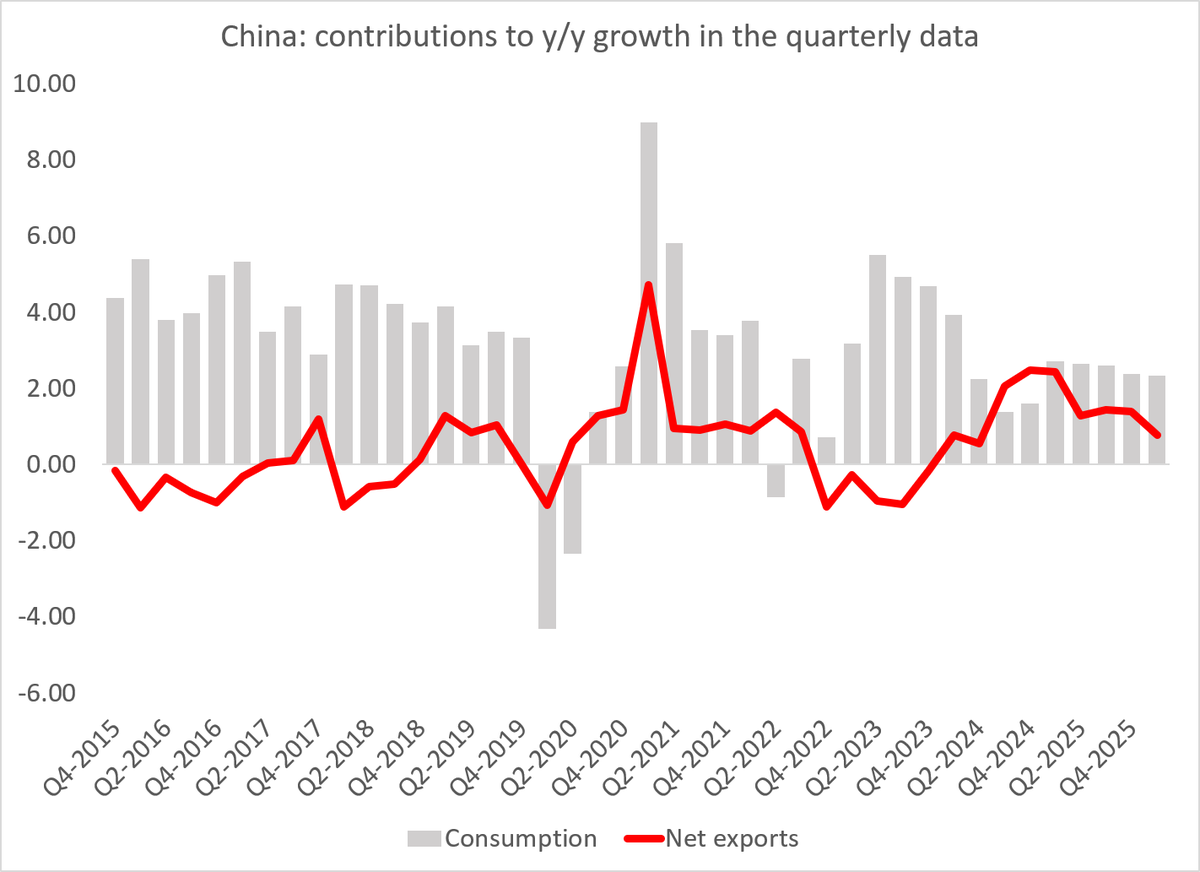
It just does not make sense for Beijing to want China's economy to be dependent upon export/external sources of demand during a period of mounting geopolitical tensions starting almost a decade ago.
The fact that Chinese policymakers and pundits themselves repeatedly state that domestic demand and consumption are too low should be telling enough.
It's not a matter of them being disingenuous or mendacious - it's a matter of effective economic policy-making being a hard task - even in an authoritarian state which can bypass legislative bickering.
If you read domestic commentary and discussion Brad - the you see here about a mounting trade surplus and the problems that it causes for China are concerns they share as well.
Jun 3
Very much hope China delivers on these goals --
But some skepticism is warranted. The trend over the last 10ys has been a smaller contribution from consumption to GDP growth and a bigger contribution from net exports
4
5
28
5,787