
CTO @ Neuroframe
Joined April 2024
- Tweets 65
- Following 51
- Followers 60
- Likes 41
6 Photos and videos



Greg Perkins retweeted

Jun 8
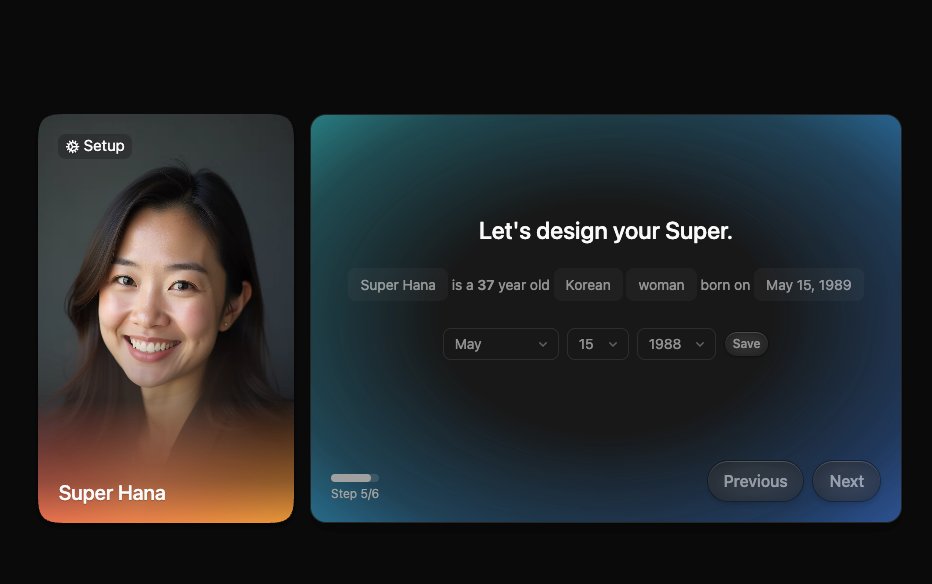
Setting up my company's Super.
If @Jason invests, I test.
Looking forward to seeing what the Team Chat AI integration looks like for my team. And if having an all-knowing business AI to chat with improves creativity and work flow.
@NeuroframeSuper @edwardbrawer looks awesome so far.
4
6
157
Greg Perkins retweeted

Jun 4
AI shouldn’t burn millions of tokens doing things your computer can do instantly.
2
1
3
279
Greg Perkins retweeted
Jun 3
Your company’s AI work shouldn’t disappear when an employee leaves.
2
3
3
147
Greg Perkins retweeted
Jun 2
Tired of AI writing like C*****T instead of your company?
1
4
5
344
Greg Perkins retweeted
Jun 1
Tired of giving AI the same prompt over and over?
1
9
8
514
Greg Perkins retweeted

28 May 2025
No, you're wrong. The LLMs cannot do code and mathematics better than a human yet, and there are principled reasons to believe that our present methods won't scale to the point where they can.
I'm a software engineer.. I now use LLM assistance heavily. It's not like working with a programmer who's better than me, it's like working with a bright intern who doesn't have good design sense yet but has memorized all of the manuals.
LLMs can exceed the human capacity to assemble large masses of facts, but they are deficient in higher-level judgment and taste.
I think this is because they are in one important way much simpler than a human mind. A human mind is a large society of specialized agents with different computational strengths and styles. This gives us the ability to attack problems from many different directions.
An LLM really only really emulates one of the kinds of things a brain is good at - the kind of statistics-based inference that we seem to use when we are learning natural languages. It does that very well but ...
...because it doesn't have any of the other specialist subsystems that humans have in their brains, its way of engaging in the world is in a sense much narrower than a human's.
I think it's fairly likely that we will build human-equivalent intelligences someday, and they will have LLMs as components. But they'll need to emulate the multimodal processing of a human brain, the complex but adaptive messiness produced by hundreds of millions of years of evolution.
The LLMs aren't that, and can't be that. They're a step on the way, but they're nowhere near the end of the road.
20
29
292
20,363

11 Jun 2025
11 Jun 2025

“Act as a high-level cognitive analyst. Based on my chat history with you, infer my cognitive profile across the key domains associated with IQ:
•Verbal intelligence (vocabulary, clarity of expression, ability to explain complex ideas)
•Working memory and executive function (ability to track and integrate information, stay organized in thought)
•Logical and abstract reasoning (pattern recognition, systems thinking, second-order effects)
•Fluid intelligence (problem-solving, novel situations, cognitive agility)
Use examples from our conversations if relevant. Give me a qualitative assessment and estimate an IQ-equivalent range, only if the confidence is high.
Be honest, not flattering. Don’t hedge with generic disclaimers—if there’s not enough data, say so. If you see elite traits, call them out. If something limits your confidence in the estimate, explain why.
Finally, assess what my likely cognitive bottlenecks are. Tell me where my edge shows up—and where it might not. Treat me like a founder or high-performance operator who wants clarity, not comfort.”
1
51
5 Jun 2025
39