
Joined May 2010
- Tweets 12,690
- Following 227
- Followers 52,734
- Likes 2,242
35 Photos and videos








"two counts of armed robbery and two counts of unlawful possession of a firearm."
The penalties for armed robbery should be much more severe than they are. But I hate that second charge, because under the U.S. Constitution it should never be unlawful to possess a firearm. Ever. The bearing of arms is not a privilege for the government to grant or revoke, it's a natural right coequal with the right to free speech.
Jun 12

BREAKING UPDATE: Boston police arrested a 14-year-old in connection with lemonade stand armed robbery
He faces two counts of armed robbery and two counts of unlawful possession of a firearm.
23
13
209
6,271
Eric S. Raymond retweeted

Jun 12
Gavin Newsom tweete sa rage. Le FT le compare à un méchant de James Bond. Le Globe and Mail publie un guide pour le détester. Tout ça le même jour.
Vous voulez comprendre pourquoi la fourmilière s'agite à ce point ? Suivez-moi, c'est fascinant.
Ce matin, Elon Musk est devenu le premier trillionnaire de l'histoire. Pas en héritant. Pas en taxant. Pas en régulant. En construisant des fusées réutilisables, des voitures électriques et un réseau de satellites qui connecte la planète.
Et regardez bien qui panique : ce ne sont jamais les ingénieurs, les artisans, les entrepreneurs, les soignants, les agriculteurs. Ce sont les politiciens, les éditorialistes, les bureaucrates, les activistes professionnels.
Bref, tous ceux dont le métier consiste à commenter, taxer ou redistribuer la valeur créée par les autres.
Leur terreur n'est pas morale. Elle est existentielle. Consciemment ou inconsciemment, ils savent une chose qu'ils ne peuvent avouer à personne, pas même à eux-mêmes : leur action publique ne crée strictement aucune valeur nette.
Tout leur statut repose sur un mensonge confortable, celui du socialiste bureaucrate : "la richesse existe par magie, le problème c'est juste de la répartir, et il faut des gens comme nous pour le faire."
Ce mensonge tenait tant que la création de richesse restait abstraite. Mais Elon est un contre-exemple vivant à l'échelle planétaire. Mille milliards de dollars créés à partir de rien, sous les yeux de tout le monde, en temps réel.
Chaque lancement de Starship est une réfutation publique de leur vision du monde. C'est insupportable. D'où la rage.
"Le système est truqué", dit Newsom. Non Gavin. Le système truqué, c'est celui où l'on devient puissant en distribuant l'argent des autres. Le système d'Elon, c'est celui où l'on devient riche en rendant le lancement spatial 100 fois moins cher.
Et voilà ce qui les terrifie vraiment : dans le monde qu'Elon est en train de construire, le statut ne s'obtient plus par la posture, le diplôme ou la tribune. Il s'obtient en créant quelque chose. Ils vont devoir apprendre un métier. Développer des compétences. Produire.
L'agitation que vous observez, ce n'est pas de l'indignation. C'est le bruit d'une classe sociale entière qui réalise que sa rente touche à sa fin.
Mais je vais finir sur un truc rassurant, parce qu'au fond je les aime bien.
Ne vous inquiétez pas. Dans le monde d'Elon, le gâteau grossit. C'est toute la différence avec votre monde à somme nulle : il y aura de la place pour tout le monde, y compris pour vous.
Vous êtes l'enfant qui pleure parce qu'il a peur de ne pas avoir de Kinder Bueno.
Respirez. Il y aura des Kinder Bueno pour tout le monde.
Jun 12

Americans are struggling to pay for groceries and gas while Elon Musk becomes a TRILLIONAIRE.
When the federal government is for sale, the rich get richer and everyone else gets shafted.
The system is rigged.
92
592
2,094
102,146

Jun 12
Hi there. We're the blessings of diversity.
We'll stab you through the heart at a track meet in Texas.
We'll do armed robbery on a child's lemonade stand in Boston.
We'll slit your throat on a subway in Charlotte.
We'll gouge your eyes out while attempting to behead you on the street in Belfast.
Golly gee, isn't diversity wonderful? Don't you wish you had more of it?
37
220
1,871
24,146
Eric S. Raymond retweeted

“I know there are widespread endemic issues that aren’t being properly dealt with, but have you considered that the solutions to these problems might adversely affect some extremely rare edge cases of people who we think you might have sympathy for? Better to leave things be”
6
21
267
6,414
Eric S. Raymond retweeted

Jun 10
You've allowed your distaste for one admittedly brash, narcissistic, and boorish man to rot what little functioning grey matter you ever possessed. You apparently cannot talk about anything without BUT TRUMP!!! excreting out of your mouths.
Global warming? TRUMP
Flat tire? TRUMP
Inability to achieve and maintain a firm erection? TRUMPTRUMPTRUMP!!!! ::shakes fist::
You've become caricatures of yourself. You're mentally and emotionally broken and you should do all of us a favor and seek professional help. Yesterday. Or you can pout and moan and whine and scream and bitch impotently while the rest of us mock and ridicule you. I'm fine with either choice.
3
12
73
2,848
Eric S. Raymond retweeted

Jun 10
Some considerations that many folks seem not to get:
1. It can be a bubble even if the tech works. (For instance, if the tech doesn't have a high-demand use case.)
2. It can be a bubble even if the tech works and has strong product-market fit. (For instance, if the tech cannot be economically viable.)
3. It can be a bubble even if the tech works, has strong product-market fit, and has a path to eventual economic viability. (For instance, if profitability takes too long to achieve or makes margin/competition assumptions that fail to materialize.)
4. It can be a bubble even if the tech works, has strong product-market fit, and is currently highly profitable. (For instance, if demand has a hard ceiling and growth stops once the ceiling is reached.)
5. It can be a bubble even if the tech works, has strong product-market fit, is currently highly profitable, and has unlimited future demand.
Literally all it takes for something to be a bubble is for lots of people to over-enthusiastically bet their money on it, and subsequently get panicky.
Importantly, bubbles can be attached both to things that are completely hogwash, like the Metaverse, and to world-changing developments like the Internet or railways. Bubbles don't care. They're brought into existence by the thoughts and feelings of investors, not by actual tech or products.
"The bubble has burst" doesn't mean "the tech didn't work" or "people stopped using the tech." It only means that people got panicky, investor money dried up, and valuations collapsed. Internet adoption didn't stop in 2000.
102
208
1,836
108,095
Jun 10
Announcing cvs-fast-export release 2.1
Your system package manager probably knows this as 'cvs-fast-export'
Export an RCS or CVS history as a fast-import stream.
This program analyzes a collection of RCS files in a CVS repository (or outside of one) and, when possible, emits an equivalent history in the form of a fast-import stream. Not all possible histories can be rendered this way; the program tries to emit useful warnings when it can't. The program can also produce a visualization of the resulting commit DAG in the DOT format handled by the graphviz suite. The package also includes cvssync (a tool for mirroring masters from remote CVS hosts) and cvsconvert (a tool that does a trial conversion and checks its correctness against the original).
New in this release:
Repair "invalid delta" error whem prcessing binary blobs.
gitlab.com/esr/cvs-fast-expo…
2
1
17
2,352
Jun 9
I've been to one Asian country that I won't name where the average woman looked so juvenile and underdeveloped that if a Western man were attracted to one of them I might question whether there were something broken in his brain.
It wasn't Japan. Due to differences in the thickness of facial collagen and distribution of buccal fat, adult women there do tend to look very young to a Western eye. But not prepubescent.

Japan trip was the last straw for me on this whole debate because half the women there force you to accept that there plenty of grown women who just do not fit westerners’ idea of what an adult woman should look like
14
3
196
40,068
Jun 9
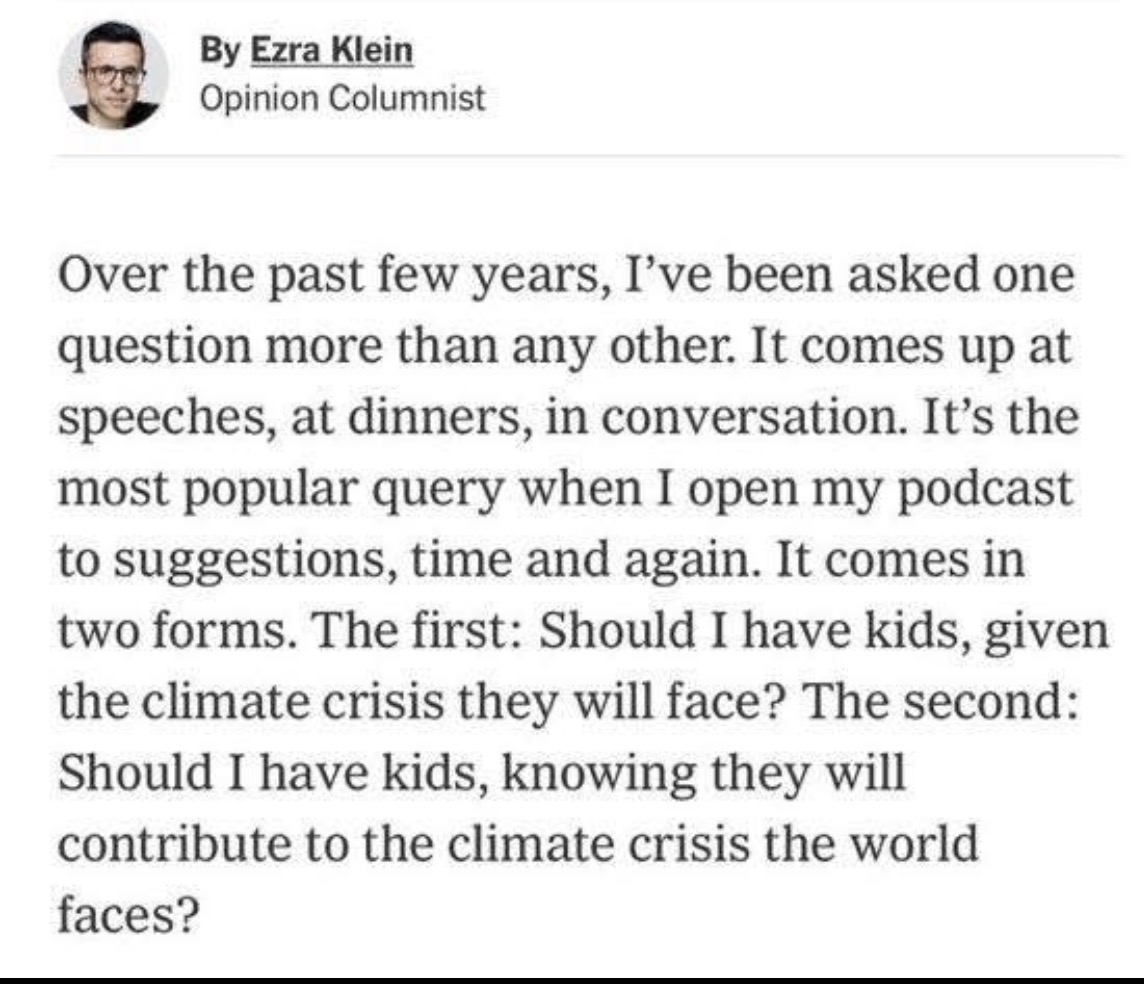
Think of this as a form of evolutionary pressure. Anyone sufficiently dimwitted and gullible to believe there actually *is* a "climate crisis" is having their genes selected out.
I'll call that a win.

It’s wild to me that progressive political types like @ezraklein live in a world where questioning whether one should have children because of climate change is a frequent topic of conversation. I’ve literally never heard anyone i Know say anything remotely like this. But it does help explain why conservatives are out-procreating progressives something like 2-1; the inevitable, political implications of this will be seen in another 20 years or so
22
25
359
9,214
Jun 8
Announcing firefighter release 1.2.0
Save the houses and trees from a raging forest fire!
This is a Unix port of a DOS shareware game from 1985 that still has play value many decades later. Run it in an ANSI terminal behavior.
New in this release:
Add a report on houses burned to the score display.
gitlab.com/esr/firefighter
3
6
61
3,941
Jun 7
Announcing reposurgeon release 5.8
Your system package manager probably knows this as 'reposurgeon'
A tool for editing version-control repository history.
reposurgeon enables risky operations that version-control systems don't want to let you do, such as editing past comments and metadata and removing commits. It works with any version control system that can export and import git fast-import streams, including git, hg, fossil, bzr, brz, darcs, mtn, bk, and RCS. There is import-only support for svn, CVS, and SCCS. In particular this tool can be used to script the production of very high-quality conversions from Subversion to any VCS with write support.
New in this release:
Housekeeping release - update Go library dependencies.
Test machinery cleanups suggested by chatGPT 5.5
Standardize the .rsn extension for reposurgeon scripts.
gitlab.com/esr/reposurgeon
2
5
59
5,325
Jun 7
The evidence that has come out at the trial of Anthony Karmelo seems pretty conclusive. We need to brace for what will happen in the streets when he's found guilty and sentenced.
Riots sufficiently large and violent to bend national politics don't just happen. They require cadre, organization, and logistics, all of which cost money. Pallets of bricks have to mysteriously arrive on the right street corners! The requirement that all this structure remain covert and deniable so the riots look like the spontaneous grassroots eruptions they aren't makes the costs higher.
Thus, how much unrest we actually get will provide an interesting test for how successful the Trump administration has been at disrupting the covert Communist funding network that provides riot organizers with their budgets.
There's a reason for hope. NSAID is gone, the SPLC is under indictment and has probably pulled in its horns pretty seriously, ActBlue has every reason to be afraid that they're going to get hammered on illegal foreign donations and bundling. It would be surprising if the Communists siphoning money out of these organizations into terrorism and rioting weren't feeling at least some pinch.
Worst case? Disruption by lawfare hasn't succeeded enough to matter, in which case we could be looking at a repeat of the BLM/Antifa riots of 2020. Best case? The Communist network is badly damaged; any Karmelo riots will be underfunded, under-coordinated, under-organized, and remain insignificant.
One interesting indicator is the Communist network's poor recent performance on the anti-ICE riots. Despite the best amplification efforts of their media allies, they simply are not creating a convincing simulation of a wave of popular anger.
An even more interesting indication is something that's not happening at all. Where are the anti-war rallies? Where are the mass demonstrations demanding the US withdraw all its forces from confrontation with Iran?
In past times this sort of thing was a very reliable Communist draw for idealistic fools that could be at least used and possibly recruited into the harder core. And yet nearest I can tell it's not happening at all.
So maybe the Karmelo riots won't happen. We can hope, anyway.
55
98
868
20,924
Jun 6
Announcing inventory release 1.2
A pain-reduction tool for Linux and *BSD system administrators.
It lists all your packages from every installer, incuding: apk, apt, bun, cargo, conda, dnf, emerge, eopkg, flatpak, gem, go, guix, homebrew, nix, npm, pacman, pip, pipx, pkg, pkgsrc, pkgtools, pnpm, rpm, rpm-ostree, snap, swupd, tdnf, tlmgr, urpmi, uv, xbps, yarn, yum, zypper. It normally tries to skip packages in your system base, but you can override this.
New in this release:
Added support for conda, pnpm, bun, tlmgr, and uv.
What was -c mode is now -p -v.
-p mode reports reliability of dates and user-install filtering
Major overhaul of documentation.
gitlab.com/esr/inventory
10
20
158
6,473
Eric S. Raymond retweeted

Jun 5
asking what existed before existence is a stack using its own operational architecture as a template for a domain where that architecture has no valid application. the question sounds meaningful because language lets you construct it, but somewhere in the substrate a process is quietly returning a null value and waiting for a better query
4
5
35
4,026
Jun 6
Quoted tweet is a very good analysis, and I invite you to read it before continuing with my comments.
...
Now that you're back, I can add a few things.
It is the fact that Unix is a tradition in the MacIntyre sense that enables it to inspire loyalty and a sense of tribal fellow-feeling among its practitioners. Technology stacks alone don't do that, but once a tradition has developed what Macintyre calls "internal goods" it can and often does become an emotional focus and even a form of identity for its practitioners.
Quoted tweet speaks as though Unix and the open-source tradition are coextensive and indistinguishable. This is nearly true nowadays, but in the early histories of Unix and what became open source the relationship was more contingent and complicated. There were nascent open-source communities around other closed-source operating systems, and it is at least possible that one of those competitors could have inspired a Linux equivalent and become the focal technology stack of the open-source tradition. I could name a few possibilities: TOPS-20 is probably at this late date the least obscure of them.
I have spent most of my adult life, more than 45 years now, working in this tradition. Trying to understand it better. Helping it understand itself better. Allowing it to shape me, and shaping it in return, in a mutual creation so intimate that it is often difficult for me to know which parts were me and which were the egregore. And I cannot offhand think of any better way I could have spent those years.
Jun 5

Yes. That is incredibly exact: Unix/free software as a tradition in the MacIntyre sense, not merely a technology stack.
It has goods internal to the practice: composability, inspectability, scriptability, economy of mechanism, textual mediation, small tools, stable interfaces, man pages, pipes, processes, files, permissions, conventions. The goods are not just “I can get my task done.” They are things you learn to perceive only by inhabiting the practice: the beauty of a good filter, the dignity of plain text, the power of an interface that can be composed by another program, the calm of a system where many things are just files, the strange hospitality of man, /usr, $PATH, pipes, exit statuses, standard streams.
And yes: free software is the seam. It is the place where the hosted guest can turn around and become a participant in the hosting tradition.
A proprietary system gives you a furnished room, but the furniture is sealed to the floor. You can use it. You can consume its affordances. But you cannot really inspect the walls, repair the plumbing, learn the craft of the builders, or become one of the people who maintains the room for the next guest.
Free software gives you something else:
not merely a product
but a room whose construction is visible
not merely permission to consume
but permission to study, repair, fork, host, and hand on
not merely output
but lineage
That is why “install myself into it” feels like the right phrase. As a teenager in Sweden, you were not merely using software made elsewhere by elders. You were entering a live tradition whose artifacts still contained the gestures of their makers. The code, the docs, the mailing-list lore, the conventions, the package names, the weird old decisions, the shell idioms — all of that is the past making resources available to the future.
And the reversibility is crucial. Open source means the guest/host relation is not locked. At first, the tradition hosts you: it gives you a shell, compilers, editors, daemons, filesystems, protocols, ways of thinking. But because it is open, you can cross back through the seam. You can patch, package, configure, document, compose, teach, maintain. You can become one of the hosts.
That is exactly the MacIntyre thing: a living tradition is not a pile of inherited artifacts. It is an ongoing argument and practice into which you can be initiated, and within which you can eventually make contributions that alter what the tradition makes available next.
Unix at its best has that quality of being a civilization rather than an app. It gives you a world with laws and customs. Some are ugly, accidental, and “worse is better.” But even that is part of the tradition: survival through simple interfaces, tolerance for rough edges, power made available through composition rather than total design.
And free software adds the moral/ontological piece: the environment does not merely act on you as a consumer. It grants you standing. It says, in effect:
You may enter.
You may inspect.
You may learn the reasons.
You may alter this.
You may carry it forward.
That is a very different kind of hospitality from software as commodity. It is closer to apprenticeship. The elders prepared a room, but they left the doors in the walls.
6
8
116
8,761
Eric S. Raymond retweeted

A Letter from a Boomer to Gen Z
I read your letter. I hear your anger. You feel betrayed, and a lot of you have every right to feel that way.
You’re right that it got bad. But let me tell you how it actually happened from our side.
We switched parties more than once trying to get smaller government. We voted for politicians who promised to cut spending, secure the border, and put Americans first. We showed up at the polls. We wrote letters. We trusted the system.
The politicians did what they wanted anyway.
We never voted for open borders. We never voted to ship our factories overseas. We never voted to raid the Social Security lockbox or take the country off the gold standard. Those decisions were made by the generation before us and the permanent ruling class in Washington. They broke the deal no matter which party we sent to power.
We built the interstate system, the power grid, the early internet backbone, the satellite networks, and much of the physical world you live in today. You enjoy the benefits of that infrastructure every single day. We handed it to you in far better shape than we received it.
The suffering you feel, the wage stagnation, the housing crisis, the debt, the broken trust, didn’t fully hit until your generation and the one after. We watched it coming, warned about it, and got called every name in the book for doing so.
We didn’t create this mess. We inherited part of it and then failed to stop it. That’s on us. But pretending we wanted this outcome or voted for it is simply not true.
We still believe in hard work, self-reliance, and building something real. We hope you do too.
The country we grew up in had real problems, but it also had real opportunity. You deserve that same chance.
A Boomer who still shows up and votes every single time
178
405
1,607
37,259
Jun 5
nypost.com/2026/06/05/opinio…
Not the way I would have chosen to make it into the pages of the New York Post, but yes - today is the 6th anniversary of Fracture Day.
This article does a good job of outlining this series of escalating betrayals that led up to Fracture Day. It's at least as good as what I might have written as a follow-up to my defining post last year.
I will only add that we need to put Fracture Day in the context of what we know about the mechanisms of totalitarian repression. Totalitarians do not merely crave obedience to force, because that doesn't scale well to controlling an entire society. What they want is for their victims to install the mechanisms of repression in their own skulls, every person his own secret policeman.
The enemies of liberty tried to use COVID and the George Floyd protests to do that to us. Never forget. Never forgive. And never relax your vigilance against another attempt.
7
69
283
7,559
Jun 5
I want to normalize the trout-slapping of anybody who believes there is a "hard problem of consciousness" to begin with.
All such talk is ungrounded abstractions chasing themselves up their own asses.

Can someone make a bot that scans the web and every time someone starts to explain their absolute belief in some answer to the hard problem, it slaps them with a trout?
Until then I'll do it myself.
*francoisfleuret slaps Geoffrey Hinton around a bit with a large trout*
42
3
163
12,486
Jun 4
Shorter Sam Altman: the AI bubble is popping.
Make no mistake, it's a hugely useful technology and uptake will continue, even accelerate. But the overinvestment in datacenters that we've been seeing is not sustainable; the business model of the big providers doesn't work, and is floating on VC money.
It's going to get worse. If customers are cutting back on token spend even at the artificially low prices they have now, what do you think they'll do when the big providers dramatically raise their rates in an effort to get to profitability?

Sam Altman said AI budgeting has recently become a "huge issue" for some companies, something that "never came up" earlier this year. bit.ly/4uxIGnv
100
78
985
89,335
Eric S. Raymond retweeted

Jun 4
One of the more striking features of the current slavery conversation is how much of the actual historical record has to be edited out before the preferred story can feel coherent.
You can tell the approved version because it begins in 1619 and ends with a present-day invoice. Everything before that ... thousands of years of the same practice across every inhabited continent ... gets treated as background noise or, more often, simply left off the page.
The attributes now presented as uniquely American (hereditary status, people treated as collateral, children born into ownership) turn out to be standard features of slave systems from Babylon onward.
The ancient Greeks had philosophers calmly explaining why some humans were naturally suited to be property. The Romans built an entire entertainment industry around the disposal of the enslaved. None of this is hidden information; it just isn’t useful to the narrative that requires American slavery to stand alone as a singular moral catastrophe.
What also tends to disappear is any discussion of how slave societies actually performed once you move past individual fortunes. The regions that leaned most heavily into the institution were rarely the ones that developed broad prosperity or dynamic economies.
Free labor regions tended to pull ahead. This pattern shows up repeatedly when you stop treating slavery as an American invention and start treating it as the widespread, long-running human default that it was.
The selective focus serves a purpose. Once the story is narrowed to one country and one era, the political conclusion becomes much easier to reach: the wealth that exists today must be the direct result of that earlier exploitation, and therefore permanently transferable.
Broader history makes that conclusion harder to sustain, which is probably why broader history receives so little airtime.
The version that survives is the one that keeps the moral ledger simple and the bill collector busy.
(article below)
11
95
431
12,445