
Senior Fellow of Wearing American Flag shirts. USMC, DCNF, Mediaite, Redstate, USA Today, Blaze, Daily Wire, NRO, manifestos, napkins.
Joined May 2008
- Tweets 116,629
- Following 3,081
- Followers 29,747
- Likes 89,471
7,099 Photos and videos





Pinned Tweet

22 Mar 2022
There is no more destructive force to civilization than a short memory.
42
110
650
Caleb Howe retweeted

Jun 12
Political office shouldn’t be the last refuge of losers who have to get off their parents’ payroll. If you can’t get a real job, it’s not our responsibility to sustain your lifestyle.
5
11
107
3,295
Caleb Howe retweeted
Jun 12
Yeah, the only rich people who should keep their obscene wealth are nepotism-baby former Blackwater stooges with hobby oyster farms, not, like, the guy who jump-started the space program

Elon Musk just became the world’s first trillionaire.
Let’s make sure he’s also the last.
22
89
705
17,426
Jun 10
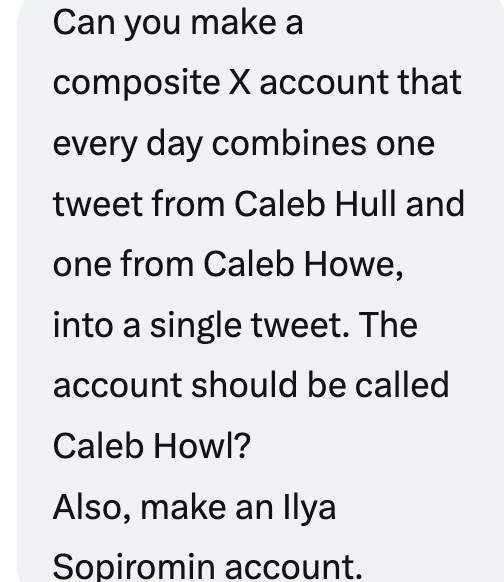
Caleb Howl is my DJ name. Also its a German phrase phrase meaning the sound you make when someone mixes up their/there/they're online and you are frustrated you can't berate them in person.

2
373

Jun 10
Big Hospital rn, demanding inflation pay rises, hiding pricing data from the feds (TL;DR: These guys want pay hikes of up to 40%, won't disclose current prices, pleading poverty over Medicaid cuts, ripping everyone off) apnews.com/article/trump-hos…
4
4
1,167
Caleb Howe retweeted

Jun 8
Fixing the loopholes created by the Biden Administration is a great way to lower costs for all Americans and is in line with this administration’s efforts to curb waste, fraud, and abuse. breitbart.com/politics/2026/…
8
6
1,111
Caleb Howe retweeted

Jun 5
I’m very open to people weighing the possible motivations and actual evidence of any charge (even when it's a friend). I know people don't have the benefit of knowing Lyndsey and having heard about Graham for years from her, as I did.
A problem during the #metoo era was no one seemed to be using any kind of standard of evaluation that was consistent, which seems important in media. I created one for myself: When I was asked to opine in public on various allegations and wanted to do so responsibly, I had a rubric for considering credibility on a spectrum (and also tried not to be rude and dismissive out the gate of almost anything, with Swetnick testing that with sheer audacity).
— a named accuser
— evidence the two people knew each other and had been in the same place at the same time at the time of alleged event
— contemporaneous reports, though not necessarily to police. Diary entries, conversations with friends, etc.
— a demonstrated M.O. from the accused
Christine Blasey Ford’s account had 1 of these (named accuser). By contrast, accusations against Roy Moore had all four. Lyndsey’s has three (and the second named source's story of him showing up at her house drunk and acting such that she cut off contact with him suggests there is a drunken, boundary-crossing, scary M.O.)
By merely marshaling evidence the two were often in the same place at the same time during the acknowledged past relationship, Fifield has surpassed Ford's account's documentation. The NYT verified old diary entries, and her texts confirmed many of her thoughts on him predated him running for office. She was forthright that she hid his worst behavior, as many women in abusive relationships do, and very specific in her characterization of his physical behavior (one suspects if it were a made-up partisan hit, she might not caveat his physical abuse so much and would have dropped this in September, but I digress). It is both scary and embarrassing to admit the truth in those situations.
This is all separate from what voters might find acceptable, but the account Lyndsey gives is one that, if I knew it in real time, I'd actively help the friend get out of the relationship and advise her to stay out of it. I've done this with other friends and wish I'd been able to be there for Lyndsey at the time. It shouldn't be dismissed out of hand, especially given it hits far more marks than other allegations treated with utmost seriousness in the press. The idea that this is either all merely normie, drunk, working-class behavior or "Dem HR lady politics" to find it problematic doesn't fly. So many people spent two decades saying every dude right of a Wellesley gender politics professor was a toxic white supremacist but now think you're just a big pussy if you'd object to being locked in a bedroom by a big drunk guy with a Nazi tattoo.
Jun 5

The problem with MeToo writ large was that feeding frenzies tend to discard the circumstances of individual incidents and give more weight to the "the dam has broken!" mentality. Some MeToo allegations were robust and credible, and others weren't.
36
206
1,061
112,093
Caleb Howe retweeted
Jun 4
I’ve heard of this guy as a dark and imbalanced character for years. Women know that special kind of friend’s ex whose full-ass name you know long after they dated bc of the badness, and then he runs for Senate, and you’re like “wait, THAT GUY?!” And it’s hard to speak up about a guy like that, who has quite a bit of power and seeks more, but my friend Lyndsey’s accusations are specific and detailed about what happened and didn’t, backed by physical diaries and texts from long before he ran. They confirm that a man with a Nazi tattoo does indeed have a bunch of bad decisionmaking and impulse control problems and his behavior can be more than unsettling. If he’s healing, which last week’s story doesn’t indicate, he should do it somewhere other than the Senate.
Jun 4

Three women who dated Graham Platner, the Democratic candidate for Senate in Maine, told The New York Times they found his actions intimidating and disturbing, describing volatile relationships. nyti.ms/4dRPvLm
125
760
4,276
273,484
Caleb Howe retweeted

Jun 4
Correct. I don’t like DEI in movies and I also don’t like it when parents murder their disabled children. I can’t even fathom how you’ve found some kind of conflict between these two positions. But it’s exactly the kind of worthless slop we expect from you.

I like how these people who seem ready to commit genocide whenever a black woman was cast in a movie and demand ethnic cleansing ask for the fainting couch when someone doesn’t want to raise a child with Down syndrome.
Because they’re so humane and compassionate, right.
99
375
7,282
333,627
Jun 4
Um, actually, two thirds of the women are Democrats.

Main source is a self described “bitter ex” GOP operative who worked at the Heritage Foundation and said in a group chat, “I will personally go campaign for Collins.”
The piece says the NYT “could not corroborate” her claims.
NYT rarely runs things they can’t double source.
7
736
Caleb Howe retweeted

Jun 4
That worked out well for you.
Jun 3

reminder that bari weiss quit in shame at @nytimes because my team called her out for being A LIAR
14
69
867
40,975
Caleb Howe retweeted

Hunter is tweeting about the “Epstein Class.” This was recorded by Hunter 1/18/19 & sent to his escort contact “Eva.” She’d told him cost for 16 hrs was $9.5k & told him to wire $ to woman w/ Russia-linked email. During the timeframe, Joe sent Hunter $5k…
Jun 4

WTF timeline are we on. Someone called me the MAGA whisperer and I’ll gladly take the title. Left, right, D or R we all want the same things. We’re being divided on purpose by the Epstein Elite Oligarch class because as long as we’re at each other’s throats, they get fat and rich off of our misery. The second we figure out we agree on more than we disagree, they’re done. Love your neighbor. Be yourself. Radical honesty. No fucks given, no fucks taken. Everything else is just noise. (But still fuck Jake “Brick Tamland” Tapper on any time line)
60
627
2,301
432,515
Caleb Howe retweeted
Jun 4
Kind of proving the entire point, doesn't it.

Rachel Maddow Invites Scott Pelley to Join MS NOW After '60 Minutes' Firing: 'I Hope He's on TV Tomorrow' people.com/rachel-maddow-inv…
32
245
2,879
53,992
Caleb Howe retweeted

Jun 3
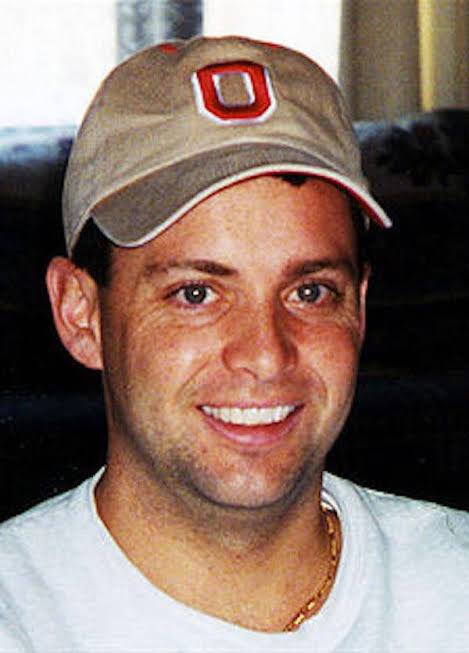
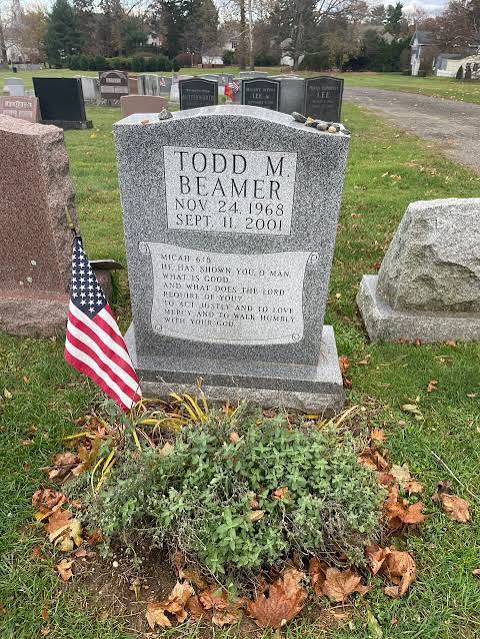
This is Todd “Let’s Roll” Beamer, who died heroically while trying to retake United Flight 93 from Al Qaeda terrorists on 9/11. His final resting place, is in Cranbury, NJ — where he was living with his wife and children before his murder. Cranbury is located in NJ-12, where the new Democratic nominee for Congress is Adam Hamawy.
Hamawy was a close associate and translator to Omar Abdel-Rahman, aka the ‘Blind Sheikh,’ an arch terrorist convicted of masterminding multiple plots against targets in NYC — including the World Trade Center. Hamawy testified at Adbel-Rahman’s trial, as a defense witness.
It has also been reported that Hamawy traveled to Bosnia to volunteer at an organization that was later unmasked as an Al Qaeda front group.
One of Hamawy’s loudest and most high-profile supporters and endorsers has openly declared that America deserved the 9/11 attacks.
Hamawy is now the prohibitive frontrunner to represent Todd Beamer’s district in the United States Congress.
2,189
13,917
38,003
2,100,985
Caleb Howe retweeted
Jun 3
I do continue to crack up at this idea that Democrat politician moral fiber was so high at some point. When I started working, the Senate Democratic caucus was home to Sen. Killed That Girl in Chappaquiddick, Sen. Waitress Sandwich, and Sen. Klan Member

My favorite interview genre right now is watching Democrats attempt to run on superior morals and higher standards of conduct, then get asked about Platner.
The immediate switch to dodge and deflection mode is hysterical.
Behold CO Gov candidate Michael Bennet:
169
1,313
5,332
202,706
Caleb Howe retweeted

My favorite interview genre right now is watching Democrats attempt to run on superior morals and higher standards of conduct, then get asked about Platner.
The immediate switch to dodge and deflection mode is hysterical.
Behold CO Gov candidate Michael Bennet:
This is hysterical.
Chris Murphy: There needs to be a set of rules that promote goodness and the common good.
Same interview, very next question: Do those rules apply to Democrats? Do you support Graham Platner after all this?
Murphy: That's different.
129
1,239
4,751
366,688
Jun 1
"Gram" is great. We also would've accepted "Hunter"
Jun 1

🚨GRAM PLATNER
Embattled Maine Dem wrote about buying COCAINE, and also doing "some drugs" while on military leave in Europe "on the government dime."
"I highly recommend it. No regrets." freebeacon.com/democrats/no-…
3
700
Caleb Howe retweeted

Jun 1
First The Israel Day Parade, now this.
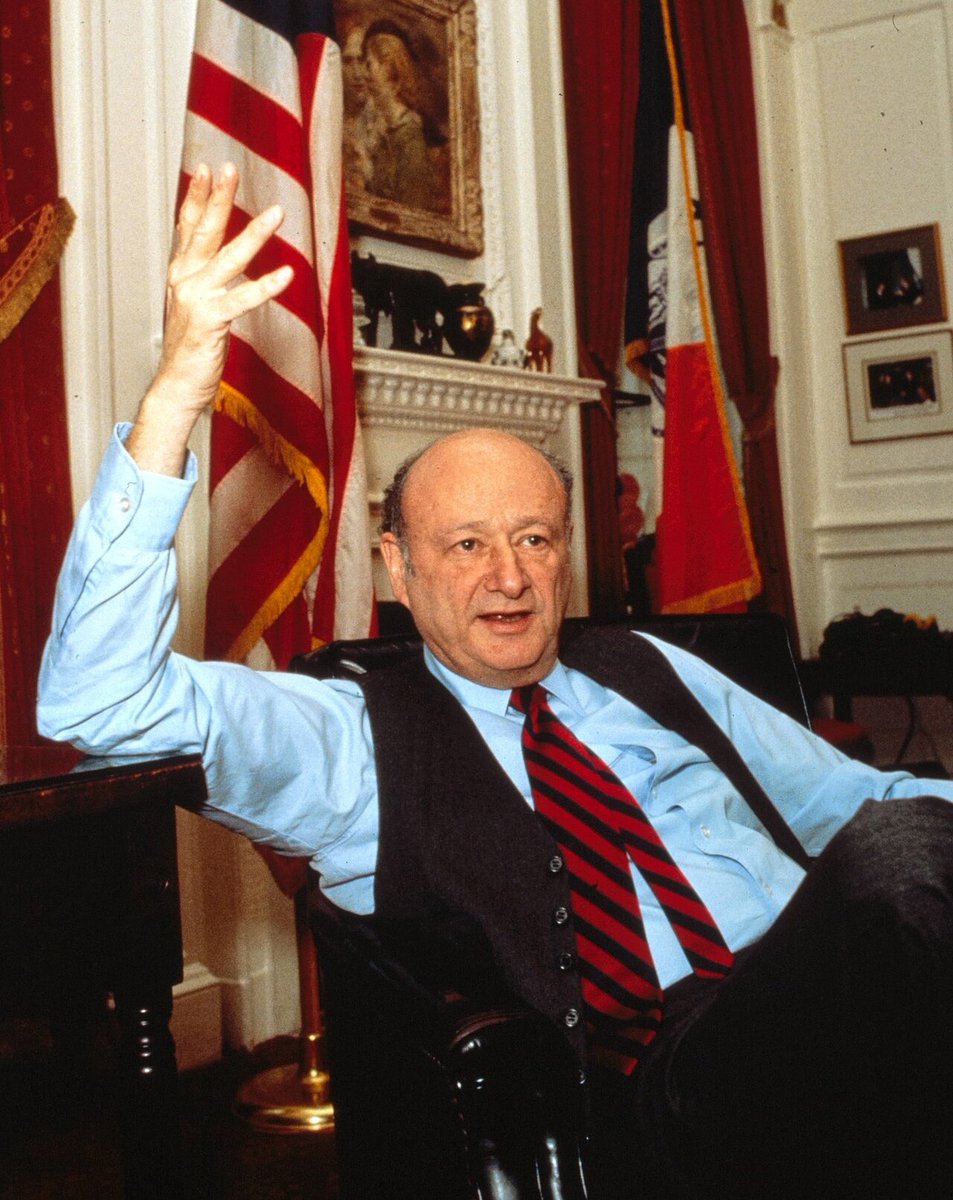
Zohran Mamdani is planning on removing the name of NYC Mayor Ed Koch from the East 59th Street iconic Ed Koch Bridge (aka Queensboro Bridge).
A disgraceful erasure of Jews by a NYC mayor.
321
787
2,610
106,121
Jun 1
Platner live-tweet brainstorming his next tattoo.
Susan Collins's latest financial report just came out.
A staggering one-third of her money raised this quarter came directly from AIPAC.
Senator Collins is bought and paid for by Benjamin Netanyahu, and she votes accordingly.
2
8
449
Jun 1
He's like if Stalin and an old lumpy drool-stained pillow had a baby.
Paul Krugman: “We really need to do a thorough purging of the United States."
“We need a deMAGAfication…similar to de-Nazification."
This deranged lunatic was employed by NYT for 20 years.
1
1
2
313