
Joined November 2025
- Tweets 348
- Following 89
- Followers 10
- Likes 10,077
8 Photos and videos
Castle Gniph retweeted

Yeah I'm racist.
I want all muslim men out of Europe. They are behaving like disgusting animals and complete savages, and are completely incompatible with the west.
You can call me names, idgaf. I was raped years ago by two immigrants from a predominantly muslim country, and reading the @rapeganginquiry , my absolute hatred for islam and the men practicing it, has reached a tipping point.
We absolutely CANNOT co-exist. European lives matter. And I'm not willing to tolerate the terror, mass-murders and mass-rapes that islamic immigrants have brought to my home.
Fuck off back to your shithole countries. European women and girls, and all western people, deserve to be free of you animals forever. 🤬
1,018
3,548
30,284
398,307
Castle Gniph retweeted

Jun 13
Watched some American cable TV for the first time in months, a few days ago.. one of the strangest and most disturbing experiences I've had in a while.
Everyone knows about the propaganda and conditioning aspect of what emerges from this black box, this is obvious and fairly well understood - but the 'tie that binds' nearly every single program on every single station, even more profoundly than this manipulation and deception, seems to be an unprecedented cheapness and ugliness.. a completely spiritually-dead pettiness and smallness, a vapid hollowness.
If an expert team sat down to consciously craft a method to degenerate and 'devolve' mankind, to lower our collective 'frequency', and push us all toward a purely mechanistic and materialistic (and nihilistic) notion of our world, or to obscure any notion of the Divine and lofty, they couldn't do any better than what we have now.
It's as if it's been purposefully designed to transmit a contagious, brain-rotting, soul-decaying disease..
122
232
1,791
39,548
Castle Gniph retweeted

Jun 8
Ok allow me to assist.
Not murdering someone isn’t the opposite of forcing them to live. Simply allowing a human life to unfold by nature of not intentionally killing them isn’t forcing someone to suffer. Sick people die. You will die. I will die. That’s just part of living. We can’t kill each other to magically avoid the work of dying. Aborting a baby is just how cowards hide from death. It’s invisible to YOU. Surely not to the one being suctioned out of the womb.
Now each surgery and procedure for ALL lives big and small comes with a risk benefit profile. It includes time vs quality of life. We understand this for dogs. Your grandpa is 80 and has advanced cancer. Is the pain of chemo worth the additional three months? Likely no. Doing this consideration is part of parenting ALL children and part of ALL healthcare related decisions. This is normal life.
All lives have inherent dignity and worth. This doesn’t mean you aren’t allowed to die. It means we aren’t supposed to kill each other. We are supposed to support, reduce suffering, and make decisions in love for each other. Killing a baby doesn’t reduce suffering. It blinds YOU from the suffering. It’s a hidden suffering. It’s not noble. It’s fear.
My child may die, but not in the dark at my hands.
13
28
194
5,049
Castle Gniph retweeted

Jun 7
When you say I have to accept “the Nicene Creed” to be Christian, could you be more specific?
Do you mean the creed produced in A.D. 325 at a council convened by the Roman emperor Constantine, who was trying to settle the Arian controversy and preserve unity in his empire?
Or do you mean the version most Christians actually recite today, which comes from A.D. 381, when another Roman emperor, Theodosius I, convened the First Council of Constantinople to settle further disputes and more fully define the doctrine of the Holy Spirit?
Because that seems like a pretty important distinction.
One was created under Constantine, a Roman emperor with no priesthood authority, whose interest in Christianity was inseparable from his interest in imperial stability.
The other was expanded under Theodosius, another Roman emperor who used state power to enforce religious uniformity.
And somehow I’m supposed to believe that my faith in Jesus Christ is invalid unless I accept the theological conclusions of emperor-sponsored councils held centuries after Christ and His apostles?
You are free to trust those councils, led by rulers of the same empire that crucified Christ.
But please stop pretending that your post-biblical, politically entangled, imperial committee language is simply “biblical truth.”
And stop acting like you have the authority to decide who is and is not Christian based on a person’s willingness to pledge allegiance to Rome’s preferred definition of the Divine.
216
256
2,287
139,538
Castle Gniph retweeted

Jun 4
People on the right say “retard” sometimes.
People on the left will literally murder their retarded children.
The left will read that 👆🏻 & unironically say that right wingers are the “HaTeFuL” ones.
Truly twisted.

This week, my wife and I made the very difficult decision to terminate the pregnancy due to Trisomy 21.
The choice was not made lightly. We really appreciate all of the personal stories that you guys shared with us, especially the unconditional support we received from fans with no matter what we decided.
I know some of you may be very disappointed to hear this news. We are devastated. This has been extremely traumatic for both of us, especially Ashley.
She underwent the procedure earlier this week and is on the mend. Thankfully, everything went smoothly, but emotionally we are drained.
Trisomy 21, also known as Down Syndrome, is caused by an extra chromosome. It is caused by an error in cell division, like a glitch. The odds of a baby having it is 1 in 1000.
When I first confronted this news, I was shocked but optimistic. If they’re a little slow intellectually, then we’ll make it work. I signed on to be a parent, come what may…but I just didn’t fully understand what Down Syndrome entailed.
Once we made it public, it became clear that MOST people don’t know what Down Syndrome entails (and no, it’s not the same as Autism):
50% of babies with DS have heart defects. 75% will have hearing challenges. Over 50% will have vision problems. Impaired immune function, developmental disabilities, learning disabilities, delayed physical development, poor muscle tone, structural issues with face, decreased lifespan, etc…Sadly, the list is long, feel free to look it up…Down Syndome isn’t a “blessing”, it is objectively shitty from a health perspective.
I didn’t realize just how rough it is for the child, let alone the family…more often than not, they would be fully dependent on others for the rest of their life.
The miscarriage risk is also close to 50%, which made matters worse…they may never see the light of day and it puts Ashley further at risk.
We spoke with doctors, friends, family and genetic counselors and learned that up to 90% of women terminate their pregnancy after learning the baby has Trisomy 21.
This was WAY higher than I expected, I thought it would be lower given that I hear so many say they kept or would keep the baby. I believe that’s because most terminations happen privately, it feels shameful. A lot of judgment being cast.
You never think you’d be in this type of situation until it happens to you and then things change.
To all of my fans who have weighed in on this topic who have Autism, Down Syndrome or any other conditions…we appreciate you. You matter a lot and we’re glad you’re here. I commend you and your families for having the strength and courage to push forward.
As for us, we made a difficult decision that we believe in the long-run will be beneficial for our family. Thankfully, we had a choice.
It will take a little time to move on, but we are excited to try again in the future and hopefully have a better outcome.
Love you guys & thank you for understanding. ❤️
136
841
8,694
159,841
Castle Gniph retweeted

Imagine a post like this, but instead of referring to an unborn baby, he’s referring to his Down Syndrome toddler. Everyone would be aghast and enraged.
Yet the only differences between a toddler and an unborn baby are age and location. These aren’t reasons to kill someone outside the womb, so they don’t work as reasons to kill someone inside the womb, either.
No euphemisms or sympathetic language can mask the reality that killing a baby is brutal, painful, and evil.
People with special needs are no less valuable - and therefore no less deserving of life - than people without special needs.
Despite Jesse’s attempt to center this murder on his and his wife’s feelings, the truth is, in every abortion scenario, the primary - and typically only - victim is the baby. He or she deserves all of our sympathy and advocacy.
This week, my wife and I made the very difficult decision to terminate the pregnancy due to Trisomy 21.
The choice was not made lightly. We really appreciate all of the personal stories that you guys shared with us, especially the unconditional support we received from fans with no matter what we decided.
I know some of you may be very disappointed to hear this news. We are devastated. This has been extremely traumatic for both of us, especially Ashley.
She underwent the procedure earlier this week and is on the mend. Thankfully, everything went smoothly, but emotionally we are drained.
Trisomy 21, also known as Down Syndrome, is caused by an extra chromosome. It is caused by an error in cell division, like a glitch. The odds of a baby having it is 1 in 1000.
When I first confronted this news, I was shocked but optimistic. If they’re a little slow intellectually, then we’ll make it work. I signed on to be a parent, come what may…but I just didn’t fully understand what Down Syndrome entailed.
Once we made it public, it became clear that MOST people don’t know what Down Syndrome entails (and no, it’s not the same as Autism):
50% of babies with DS have heart defects. 75% will have hearing challenges. Over 50% will have vision problems. Impaired immune function, developmental disabilities, learning disabilities, delayed physical development, poor muscle tone, structural issues with face, decreased lifespan, etc…Sadly, the list is long, feel free to look it up…Down Syndome isn’t a “blessing”, it is objectively shitty from a health perspective.
I didn’t realize just how rough it is for the child, let alone the family…more often than not, they would be fully dependent on others for the rest of their life.
The miscarriage risk is also close to 50%, which made matters worse…they may never see the light of day and it puts Ashley further at risk.
We spoke with doctors, friends, family and genetic counselors and learned that up to 90% of women terminate their pregnancy after learning the baby has Trisomy 21.
This was WAY higher than I expected, I thought it would be lower given that I hear so many say they kept or would keep the baby. I believe that’s because most terminations happen privately, it feels shameful. A lot of judgment being cast.
You never think you’d be in this type of situation until it happens to you and then things change.
To all of my fans who have weighed in on this topic who have Autism, Down Syndrome or any other conditions…we appreciate you. You matter a lot and we’re glad you’re here. I commend you and your families for having the strength and courage to push forward.
As for us, we made a difficult decision that we believe in the long-run will be beneficial for our family. Thankfully, we had a choice.
It will take a little time to move on, but we are excited to try again in the future and hopefully have a better outcome.
Love you guys & thank you for understanding. ❤️
165
427
4,057
119,345
Castle Gniph retweeted

Jun 2
I stand with the indigenous people of the UK
Jun 2

The Henry Nowak protest have now taken to the streets and are walking through Southamptom
1,105
10,835
94,750
1,891,620
Castle Gniph retweeted

Jun 2
"I've been stabbed"
"I don't think you have mate 👮🏻♂️"
"I was groomed and mass raped along with every girl in my town"
"I don't think you have mate 👮🏻♂️"
"I've been driven out of my own neighbourhood by immigrants who've ruined the place"
"I don't think you have mate 👮🏻♂️"

24
873
5,197
48,093
Castle Gniph retweeted

Jun 1
I'm so fucking angry
Even our deaths, even when they murder us, it's about fucking them and their safety
I'm so fucking sick of these people, this ideology, all of it needs to be purged, Restore isn't good enough if they don't plan on putting these people behind bars too

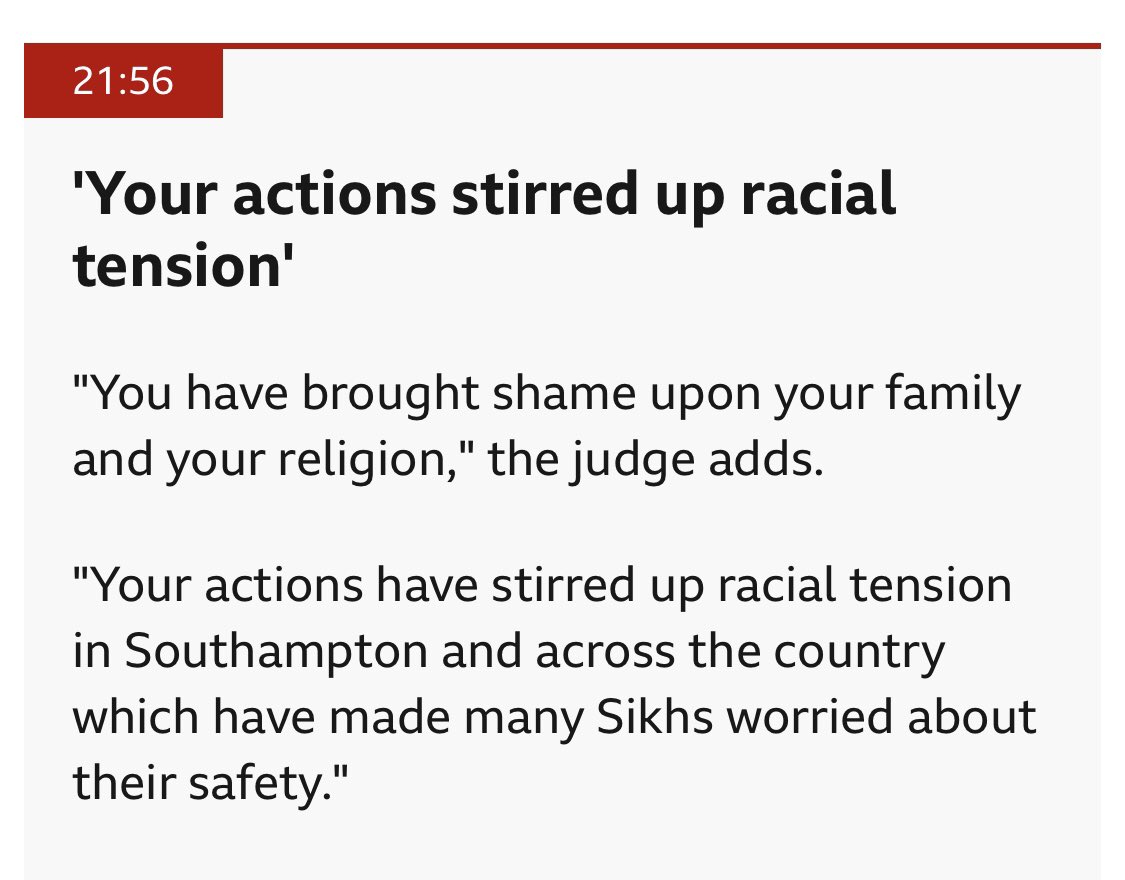
"Your actions have stirred up racial tension in Southampton and across the country which have made many Sikhs worried about their safety."
219
3,397
31,707
518,554
Castle Gniph retweeted

Jun 1
Just a thought... there will be many black mothers tonight watching that footage of #Henrynovak dying while the cops coldly judged him to be the bad guy and they will say, "now you know how we have felt for years".....
That 'judgement bias' - which was sometimes wrong -is exactly why training was introduced to the police.
So what do we do now ... when police officers arrive on scene, see a white man and think, 'far-right racist' and instantly cast an Asian man as the 'victim'...?
How the hell do you unravel subconscious bias via DEI - which was originally well-intentioned?
And what role has the media & the PM played in creating stereotypes of "the far right" thereby demonising smartly dressed, young white men as the danger?
728
813
6,563
270,087
Castle Gniph retweeted

May 31
A few things I observed today while going toe-to-toe with Antifa at Delaney Hall:
1. 99% of license plates that parked and walked in were from out of state vehicles
2. Woman with clipboard acting as the “HR Department”
3. Antifa people literally foam at the mouth when yelling, like they are on hard drugs
4. If you try to smile and engage as humans, they yell and scream. There is nothing going on behind their eyes. It’s a dead, dark stare
5. The fat tranny looking ones man the “supply tent”
6. Everyone smells, and litters EVERYWHERE (so much for the environment right)
My conclusion, these people are quite literally sub-human anarchists.
NEVER let the media convince you of anything else, ever.
711
9,614
34,524
446,732

Castle Gniph retweeted

May 29
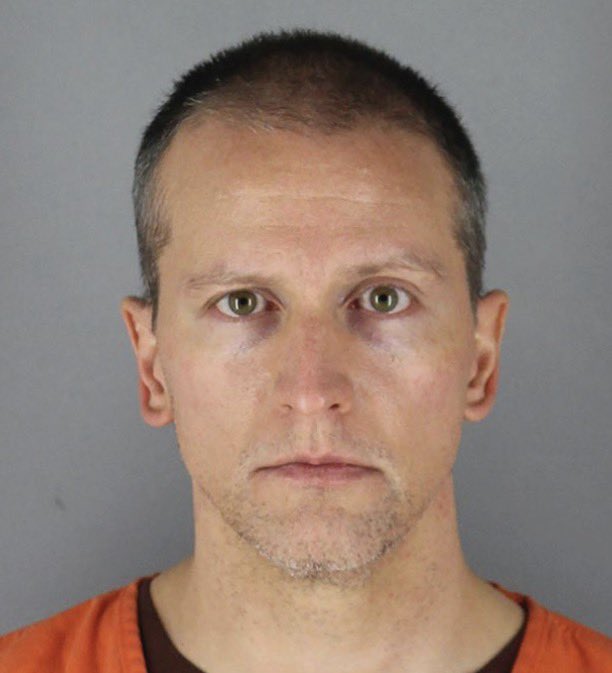
• While George Floyd was robbing pregnant women, Chauvin served as a US Army Reservist. He then became a decorated police officer, earning two medals of valor and two commendation medals
• Responds to a call about a violent career criminal crackhead using counterfeit money at a corner store
• Crackhead overdoses in Chauvin’s custody
• A mass chimp-out ensues immediately. Monkeys overrun and burn the Minneapolis Third Precinct police station where Chauvin worked
• Chauvin is arrested the next day and charged with 3rd degree murder and manslaughter
• This isn’t good enough and the chimp out intensifies
• Chauvin’s wife files for divorce
• Charges are upgraded to second degree murder
• The 2020 chimp-out causes over $2b in damages across more than 20 states and 140 cities. The biggest riot in American history.
• Minneapolis state officials prepare for more chimping-out depending on the verdict
• Chauvin receives 22.5 years in prison
• Chauvin also receives a 21 year federal sentence to run concurrent
• The Minnesota Supreme Court declined to review Chauvin’s appeal in 2023
• The US Supreme Court also declined to hear his case in November 2023
• Chauvin survives a brutal stabbing
• George Floyd receives statues and a gold casket at a funeral attended by more than 6,000 people while the rest of the world was quarantined
FUCK GEORGE FLOYD
FREE DEREK CHAUVIN
561
3,169
13,186
144,251
Castle Gniph retweeted

May 28
There is something seriously wrong in Europe and the media is trying to downplay it.
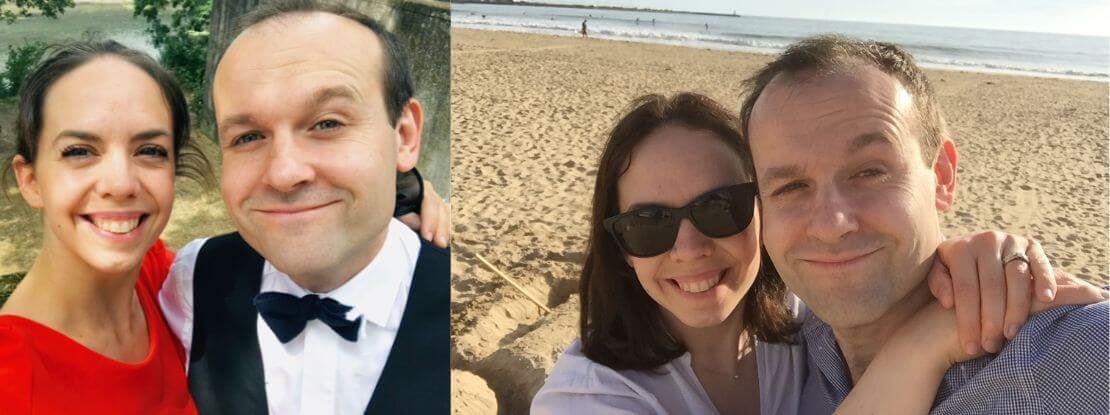
This is Alban Gervaise. He was the father of three young children and worked as a doctor, specialising in radiology in Marseille.
On May 10, 2022, Alban was sitting in his car outside a Catholic school, waiting to pick up his 3 and 7 year old children. He had his 20 month old daughter in the car with him.
Mohamed L (aged 23) jumped into the passenger seat and started stabbing Alban, shouting Allahu Akbar simultaneously.
Alban tried to defend himself and his daughter and jumped out of the car to draw the attacker away from the child. Mohamed L pursued him, shouting “Let me finish him, in the name of God” and stabbed him 10 times in the throat, neck and hear, so vigorously that the blade of the knife snapped.
Passersby rushed to intervene and eventually restrained the attacker.
Sadly, Alban was too seriously injured and died 16 days later, aged 40.
At the time of the attack, Mohamed L was already known to the police for trafficking narcotics. Not exactly a choir boy.
You would have believed that Mohamed L would be imprisoned for life for taking the life of a decorated military doctor in front of his 20 month old daughter.
Alas, no.
In June 2025, a court found it to be a homicide but for Mohamed L to be penally irresponsible because he was suffering from an “acute delusional episode” at the time. He was referred to a hospital for treatment instead.
And it gets worse. Much worse.
This month, just 4 years after the murder, Mohamed L’s full hospitalisation is ending and he is being transferred to a day hospital. He will go home each night and during the weekends and in due course will be completely released into the community.
As you can imagine, Alban’s wife is furious and has been begging the court to reconsider the ruling but they refuse to do so. She does not want another family to face the suffering that her family has experienced.
1,291
11,334
33,617
738,646
Castle Gniph retweeted

May 28
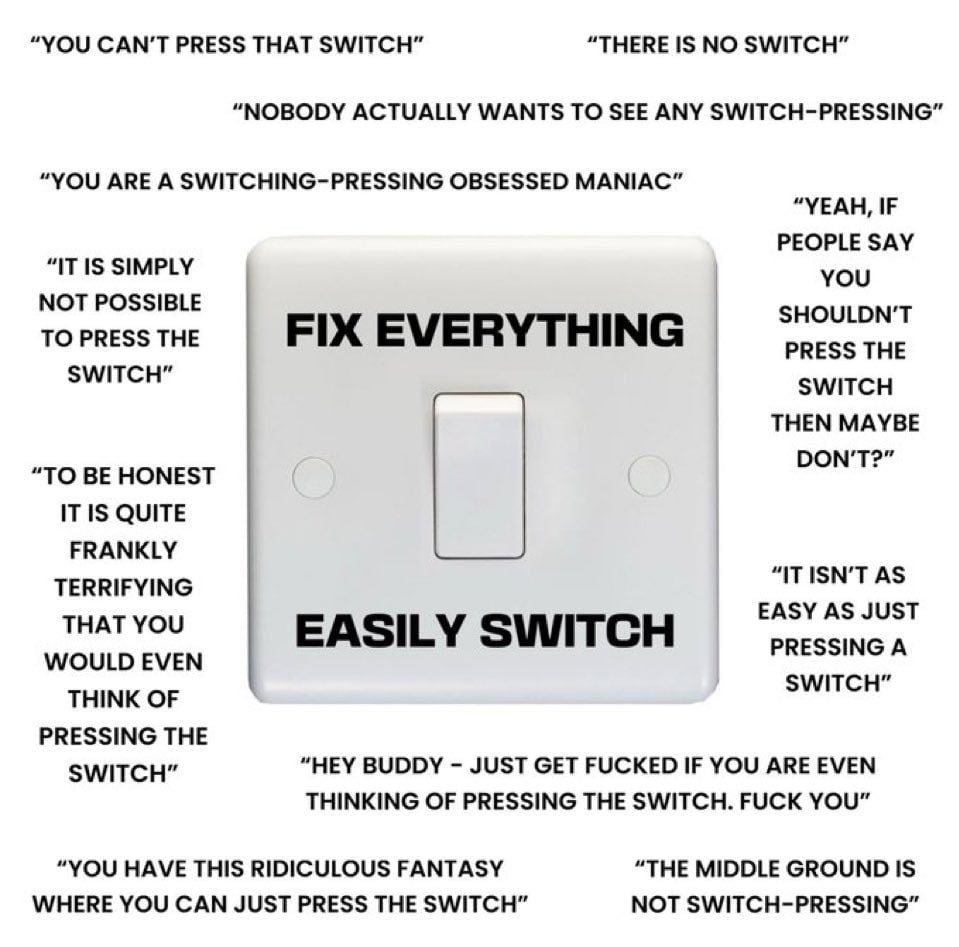
Mass deportation is the fix everything button.
Want cheaper housing? Deport 30% of the demand.
Want higher wages and more jobs for Americans? Deport all the cheap labor.
Want safer communities? Deport all third-world savages.
Want clean parks and public areas? Deport
Want cheaper healthcare costs? Deport
Want cheaper university tuition? Deport
Don't want feel like a stranger in your hometown? Deport
This is the only issue that matters.
Nothing else gets fixed until we get mass deportations.
100 million must and will go.
May 25

So, I did the math and it turns out there is literally no downside whatsoever to just kicking all the non-whites out of all the White countries forever and imprisoning or publicly executing everyone that gets in the way.
25
372
1,550
15,900
Castle Gniph retweeted

May 27
Between 1820 and 1959, less than 14,000 Indians immigrated in total.
Immigration from India was explicitly prohibited (as part of the Asiatic Barred Zone) by the Immigration Act of 1917.
Indians didn’t exist in America in any significant number until 1965.
You built nothing.
May 27

We built of half of America 🇺🇸, even American can’t deny it
Community note
Only 13,363 Indians immigrated to the US between 1820 and 1959; significant immigration did not begin until after the 1965 Immigration and Nationality Act. usinpac.com/immigration-bl…
58
1,222
9,010
90,473
Castle Gniph retweeted

A very sad announcement.
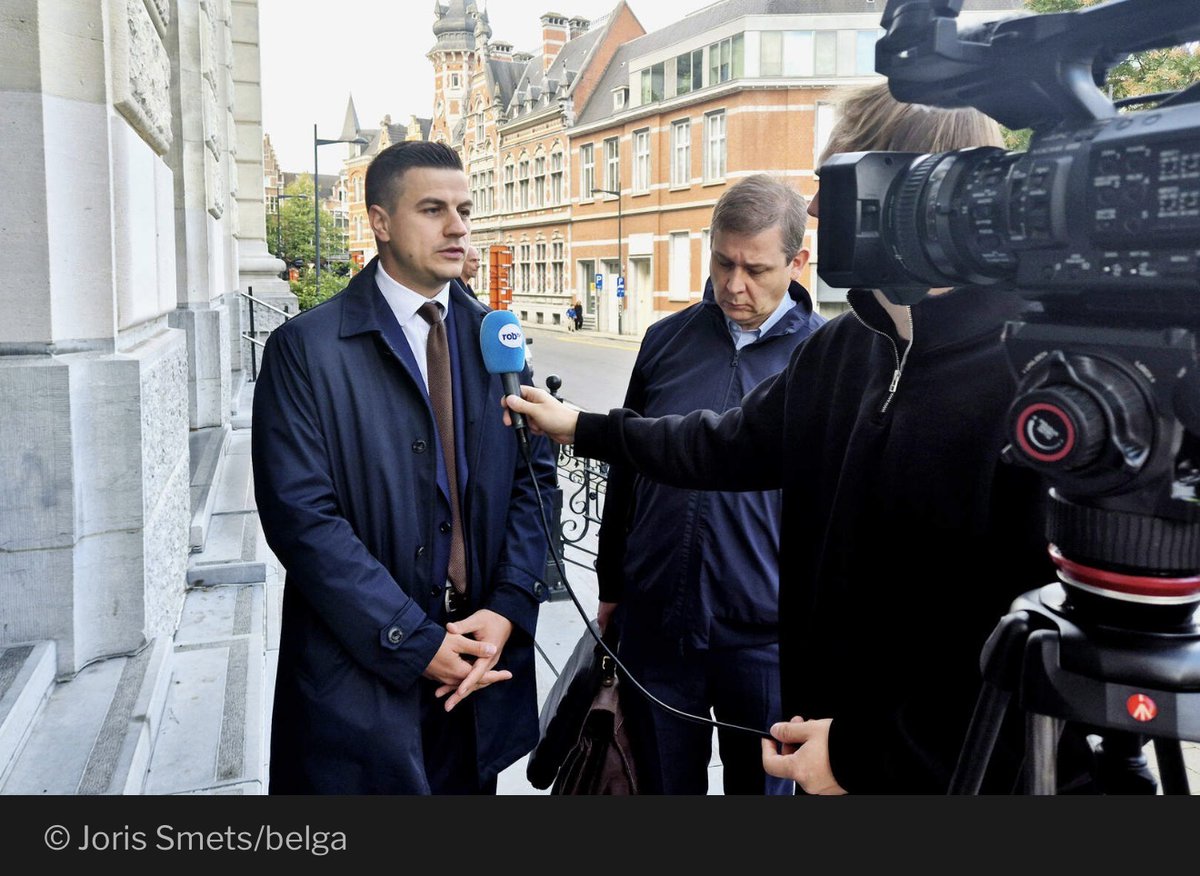
I have just been convicted a second time for 'hate speech' and it is only due to a technicality that I could not immediately be sent to jail —to the judge's frustration.
In an ironic turn of events it's actually thanks to my previous prison sentence (for memes in a private group chat) that I am now still free —in a physical sense, at least.
Call me naive but I didn't think they would take it this far, given that this precedent criminalises many of the arguments used by even the most moderate politicians critical of mass migration.
In February 2024 I gave a lecture at Catholic University Leuven wherein I linked mass migration to crime and a deterioration of our quality of life. Every single point I made was 100% the truth and based on scientific evidence.
Cynically, even the judge that convicted me admits as much by writing in his verdict: “Even if all of the statements made by Van Langenhove are based on scientific evidence and statistics, it makes no difference to the criminal intent. Van Langenhove is not charged with spreading false information. He is charged with presenting facts in a way that incites hatred against persons on the grounds of one or more of the protected criteria in the Anti-Racism Law.”
That's a lot of words just to say he wants to send me to prison for speaking the truth.
Even the regime media write: "It did not matter to the court that Van Langenhove was quoting scientific sources. The judge argued that Van Langenhove's main message was that a big part of the societal problems like insecurity, housing shortages and lowering educational standards are due to mass migration."
You may think the regime media are being sympathetic to me in the first sentence, but in reality they are warning people: even if you speak the truth, if you go against our narrative, we will crush you in every way possible.
Both the public prosecutor and the judge did not present a single real argument as to how or against whom I would have incited hatred. So even if I would accept their crazy, dystopic law, I still did not break it.
The only argument they present is that I created a "hostile atmosphere of us versus them” in regards to migrants. But even this silly argument (which is not even a punishable offence) is not true. To me, the deadly disease is self-hatred and one of its worst symptoms is replacement migration. My enemy is thus NOT the migrants themselves but those orchestrating the mass migration.
Sadly, in Belgium, evidence is not needed and ‘vibes’ are enough to put someone in jail.
Given the fact that I have another court case coming up in September and that I have a dozen active criminal investigations for hate speech, time is running out for me. I have already paid more than €420,000 in legal fees and there is no ending in sight. I have been in an intense battle of attrition for eight years and must now regroup to make sure I can still win.
If you want to help me, you can do so via the links below. If you can help in other ways, please contact me via DM.
If you live in a country that still has free speech, never let them touch it, however noble they make the motives sound, because this is where it leads to.
2,833
19,462
70,800
5,427,298
Castle Gniph retweeted

That ship has sailed. No one hated your people 10-15 years ago, because there was very little contact or competing interests. Now seemingly in every country at once you're suddenly inundated both with Indian scams and everything from part time jobs for teenagers to entry level jobs for graduates and beyond is absolutely swamped with 45 year old Indians. Not to mention absolutely horrendous attitudes Indians have to public commons, the constant sex pest behaviour...
... are we supposed to like you? Tolerate all this shit? Be happy for the clear and obvious quality of life and public trust downgrades that come from suddenly sharing our countries with huge numbers of scammy, clannish, hostile, littering, leering Indians?
May 25

The amount of anti-Indian hate on this platform is truly sickening. People need to stop worrying about jobs being "stolen" and look deeper within as to why they have such rotten souls to wish the worst on others.
121
1,139
11,190
246,484
Castle Gniph retweeted

It amazes me that a lot of people are still living like it’s the early
2000s or something. Totally unbothered by the foreign hordes, planning holidays, talking about their pensions / plans for the future. Blissfully unaware of actual reality and the impending collapse / chaos.
259
1,004
10,416
197,573
Castle Gniph retweeted

May 22
A lot of these arguments sound persuasive at first until you slow down and realize they’re mostly assumptions stacked on assumptions.
First, the timeline argument actually strengthens Joseph Smith’s claims, not weakens them. Critics keep saying, “Joseph talked about ancient American civilizations before dictating the Book of Mormon.” Yes… after he said Moroni visited him in 1823 and began teaching him about the record. That timeline is exactly what you would expect if Joseph’s account were true.
Lucy Mack Smith describing Joseph talking about ancient inhabitants, warfare, cities, and culture years before translation doesn’t prove fabrication. It proves consistency. If an angel had actually spent years instructing him about an ancient record, of course he would start discussing those things with family members.
Second, the “he had 5.5 years to prepare” argument still doesn’t explain the actual production of the text itself.
People keep reducing the Book of Mormon to “he had time to think.” Thinking about a story is not the same thing as dictating a 500 page text with: • hundreds of named characters • complex interwoven narratives • consistent geography • multiple literary voices • embedded sermons • intricate theological arguments • Hebraic structures like chiasmus • internal cross references • chronological continuity • no major rewrites during dictation
And doing it rapidly, orally, without manuscripts in front of him, often resuming exactly where he left off after interruptions.
Even more importantly, Joseph was barely educated. Critics mock that point, but it matters because the issue is not whether a human can write a book. Of course humans can write books. The issue is whether THIS human, under THESE conditions, produced THIS book naturally.
Third, critics keep claiming Joseph could have learned chiasmus or Hebrew literary structures naturally. There is essentially no evidence for that in 1829 frontier America. Even many biblical scholars in Joseph’s day barely recognized chiasmus as an ancient Hebrew pattern. Yet the Book of Mormon contains sophisticated examples woven naturally into the narrative long before Joseph had formal Hebrew exposure.
Fourth, the “1/3 King James Bible” argument is misleading. The Book of Mormon openly contains quoted Isaiah passages. Nobody hides that. Ancient prophets quoting earlier scripture is exactly what biblical writers themselves did constantly. The New Testament quotes the Old Testament hundreds of times.
The real question is: Why does the Book of Mormon also contain large amounts of original material, unique sermons, distinct theology, and internally consistent narratives far beyond simple Bible copying?
Fifth, the “errors and corrections” argument misunderstands revelation. God works through human instruments. Biblical manuscripts also contain grammatical differences, copyist issues, and revisions. That does not invalidate divine origin.
The Doctrine and Covenants itself explicitly says revelation comes “after the manner of their language” that they might understand. The miracle claim was never that Joseph became an infallible robot with perfect 19th-century grammar.
And lastly, one of the biggest holes in the fraud theory remains motivation.
If Joseph Smith simply authored the Book of Mormon as fiction: • why not openly take credit? • why attribute it to ancient prophets instead? • why endure persecution, mob violence, imprisonment, financial ruin, tar and feathering, and ultimately death? • why bring witnesses into the process who never denied their testimonies even after leaving the Church? • why continue producing revelations publicly under his own name in the Doctrine and Covenants if he supposedly feared authorship exposure?
Critics often argue both sides at once: “Joseph wanted fame and power.” But also: “He hid authorship.”
Those ideas conflict.
If he merely wanted literary fame, claiming authorship would have brought far more credibility...
4
3
48
805