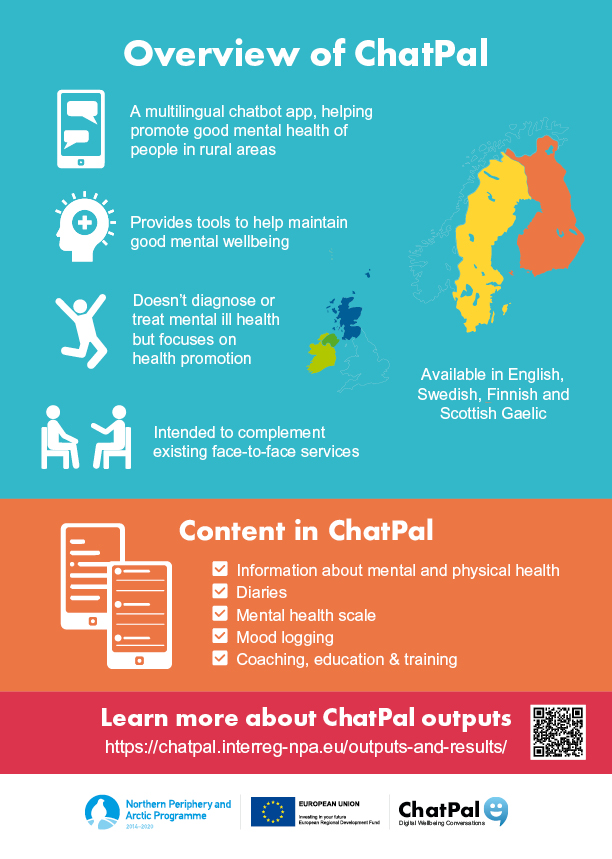
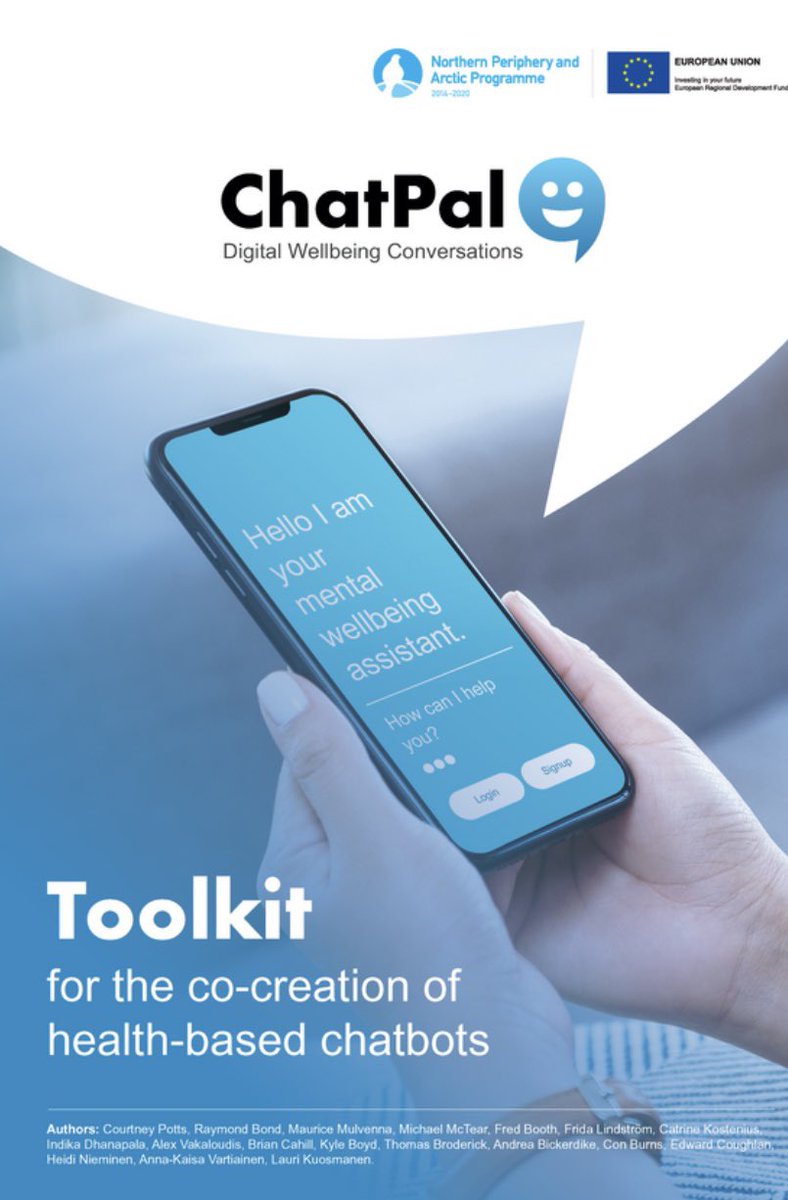
ChatPal is a user friendly, multilingual service designed to provide appropriate mental health and wellbeing support if requested. Views not those of EU or NPA.
- Tweets 393
- Following 140
- Followers 164
- Likes 247



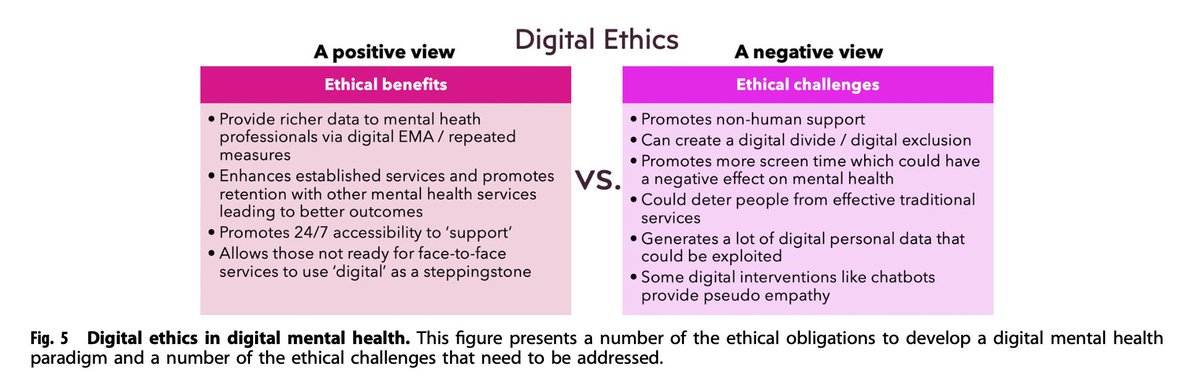
ALT Ethics in digital mental health encompasses a number of the ethical obligations to develop a digital mental health paradigm and a number of the ethical challenges that need to be addressed.
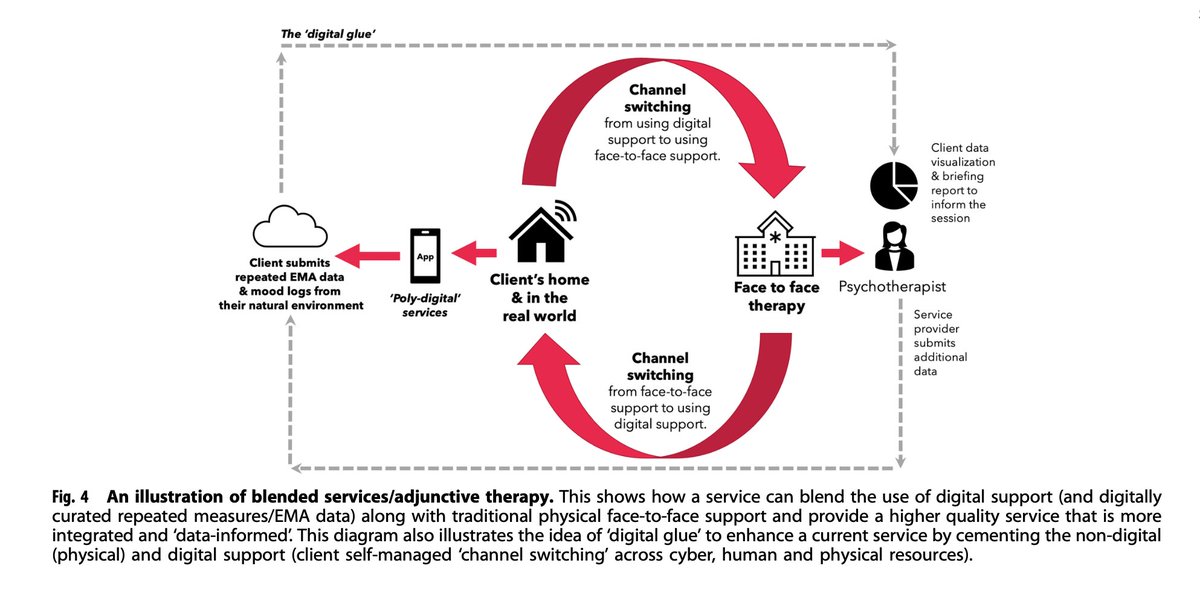
ALT An illustration of blended services/adjunctive therapy, showing how a service can blend the use of digital support (and digitally curated repeated measures/EMA data) along with traditional physical face-to-face support and provide a higher quality service that is more integrated and ‘data-informed’. This diagram also illustrates the idea of ‘digital glue’ to enhance a current service by cementing the non-digital (physical) and digital support (client self-managed ‘channel switching’ across cyber, human and physical resources).

ALT A less-discussed benefit is that a personalised collection of different digital interventions can be used together to help improve various aspects of an individual’s mental wellbeing needs. This is important given that mental wellbeing can be multifactorial and that different symptoms or even the same symptom can be addressed by a collection of diverse digital tools that are all available 24/7. This is what we call, ‘poly-digital’, which is the idea that different digital tools can be prescribed based on an individual’s needs (i.e. personalised healthcare).
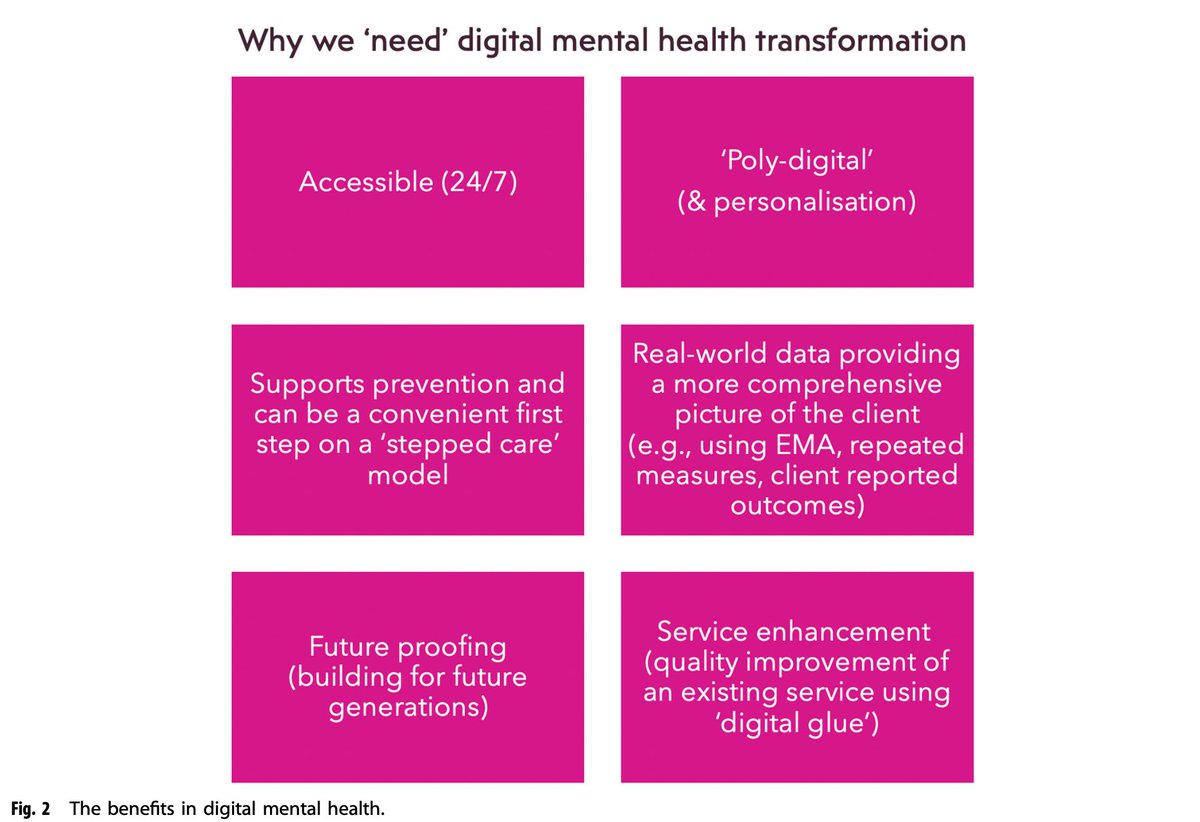
ALT A clear benefit of digital interventions (e.g. apps and chatbots) is that they can have an adjunctive use in therapy provision, and are available 24/7 allowing clients to access support in-between face-to-face therapy sessions and seek support in less sociable hours. However, a less-discussed benefit that is not emphasised enough is that some users may actually prefer to engage with digital support in the first instance and use ‘digital’ as a stepping stone for gaining confidence to step-up onto traditional services (e.g. talking therapies). This preference could be due to the level of anonymity that digital support provides allowing the client to avoid any stigma whilst mitigating the risk of feeling judged in a human facing service, as well as the agency to the individual offered by self-managed care.
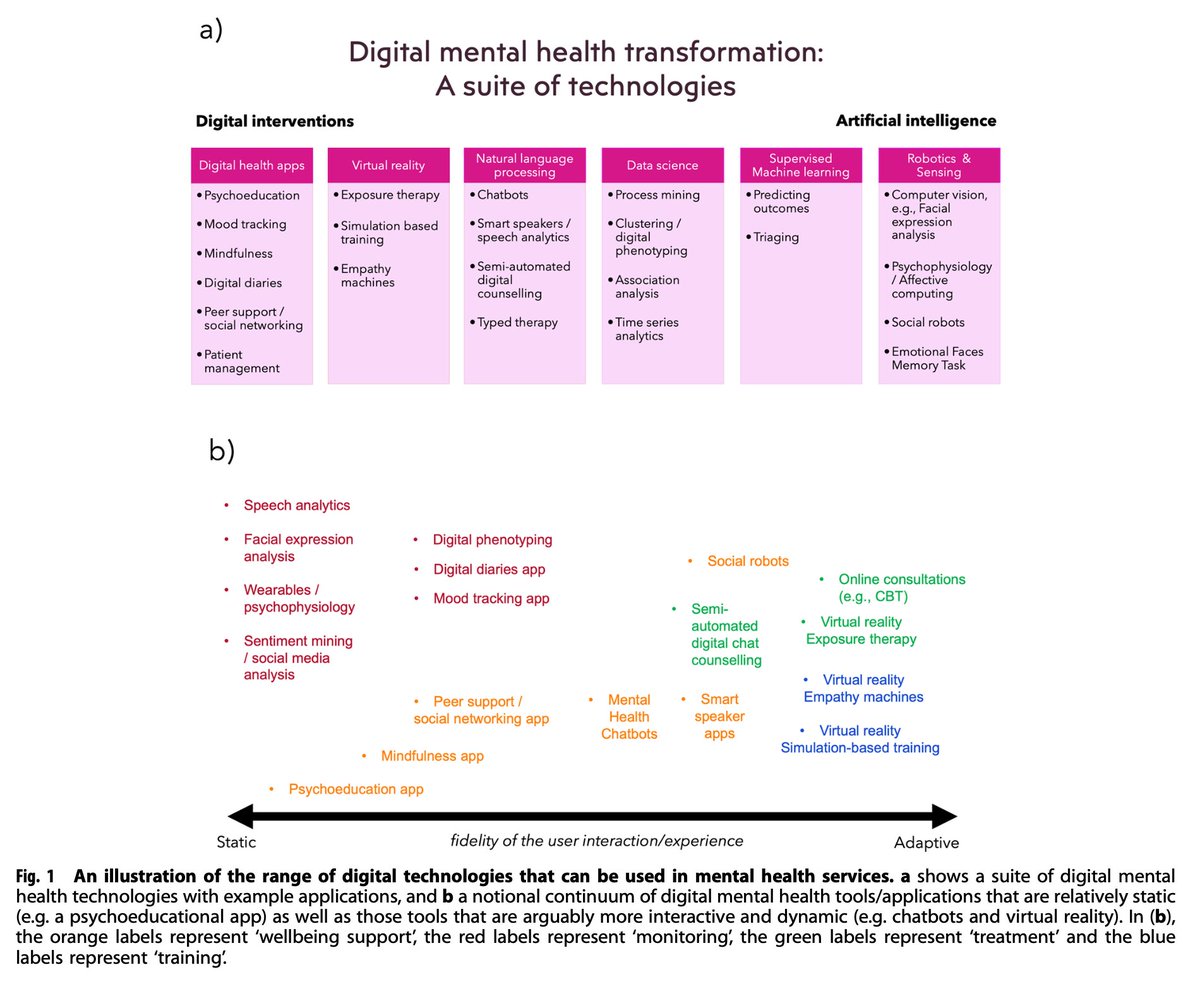
ALT An illustration of the range of digital technologies that can be used in mental health services. a shows a suite of digital mental health technologies with example applications, and b a notional continuum of digital mental health tools/applications that are relatively static (e.g. a psychoeducational app) as well as those tools that are arguably more interactive and dynamic (e.g. chatbots and virtual reality). In (b), the orange labels represent ‘wellbeing support’, the red labels represent ‘monitoring’, the green labels represent ‘treatment’ and the blue labels represent ‘training’.
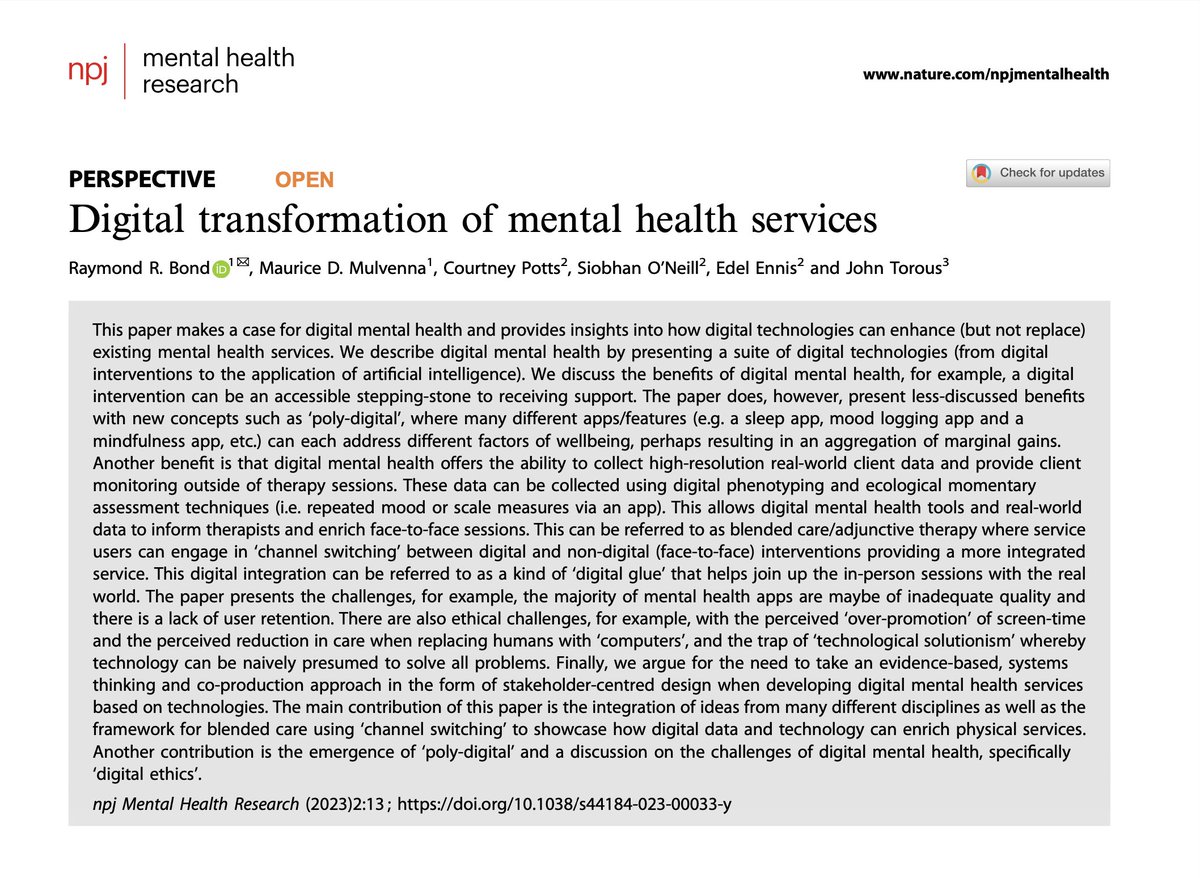


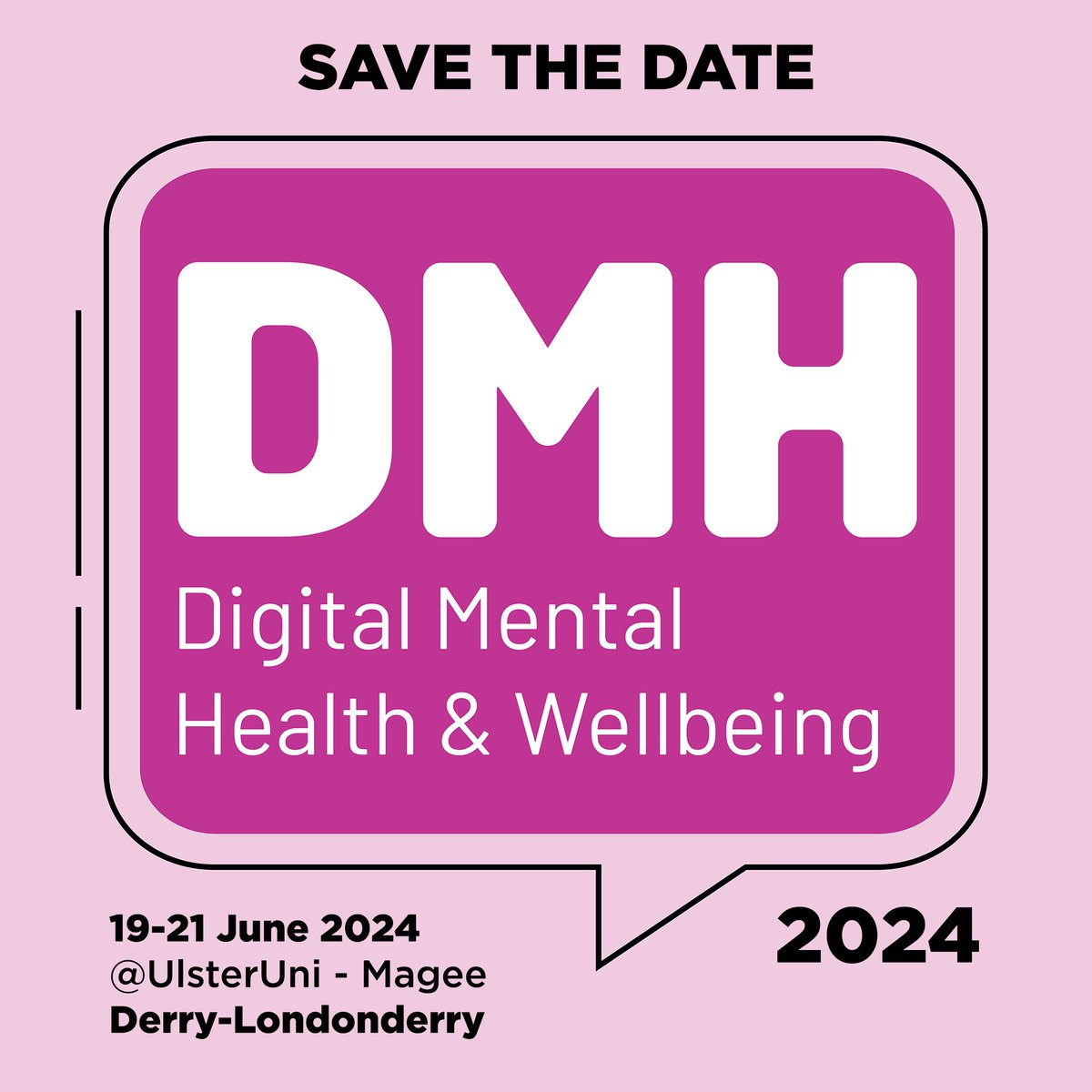


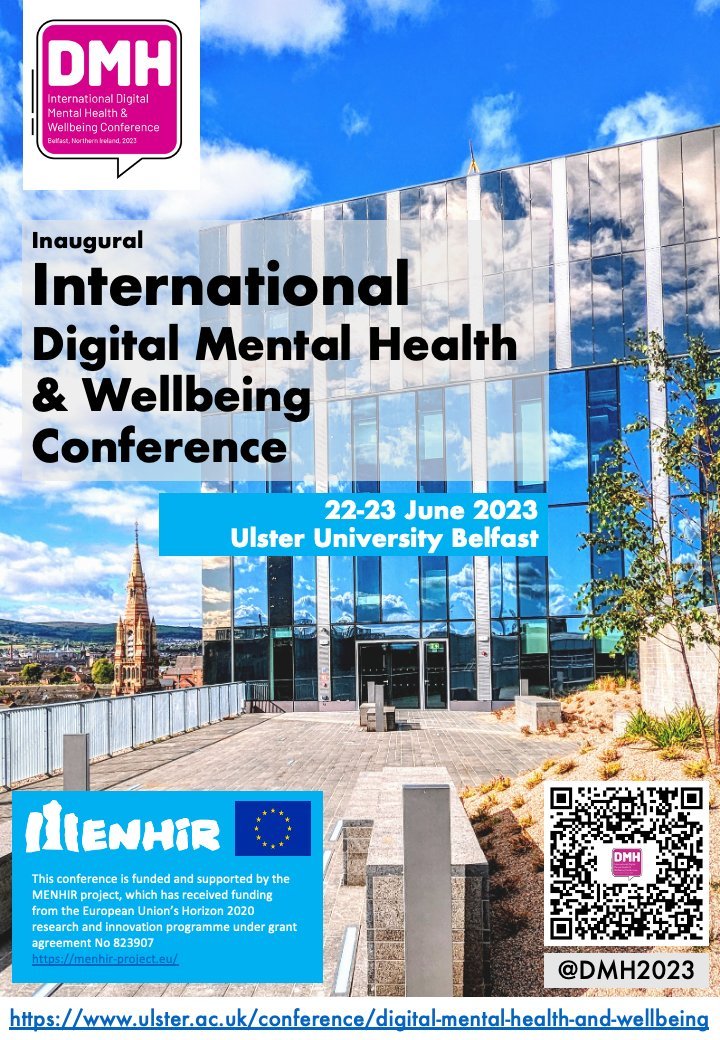
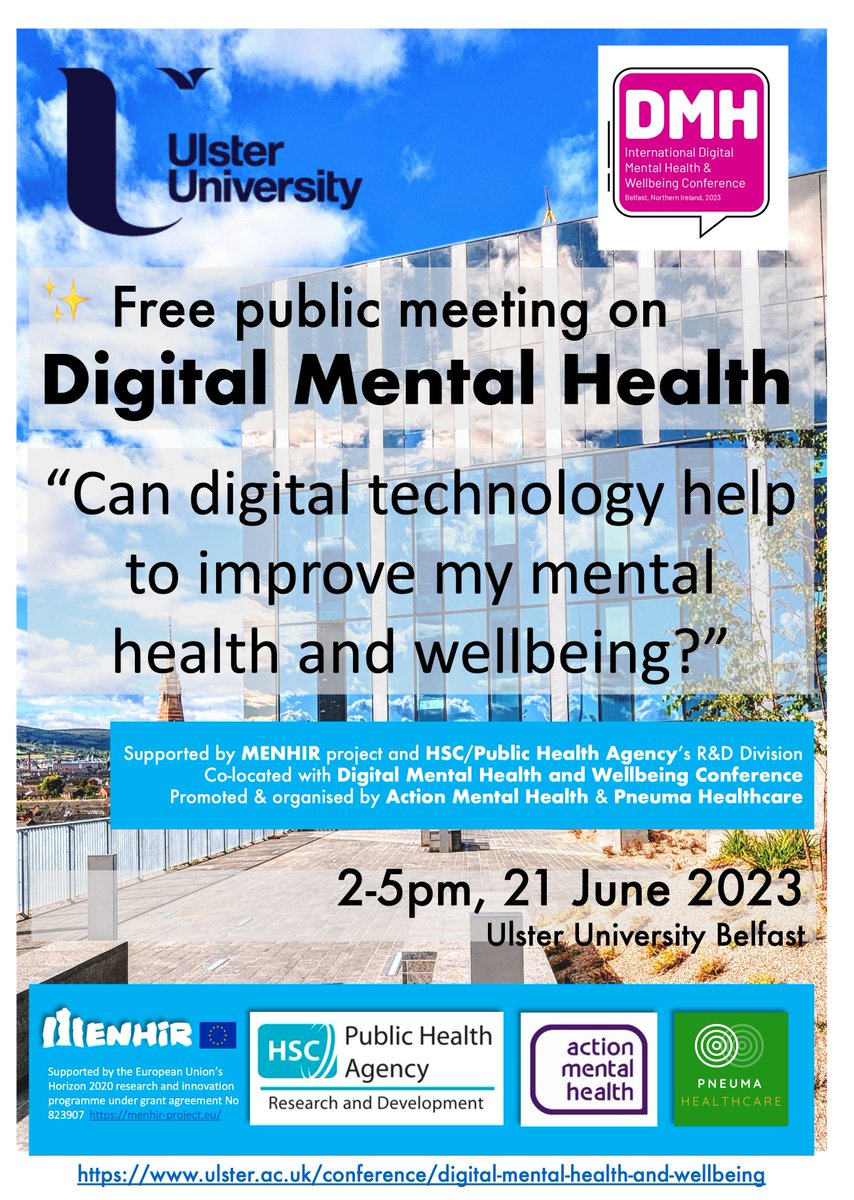
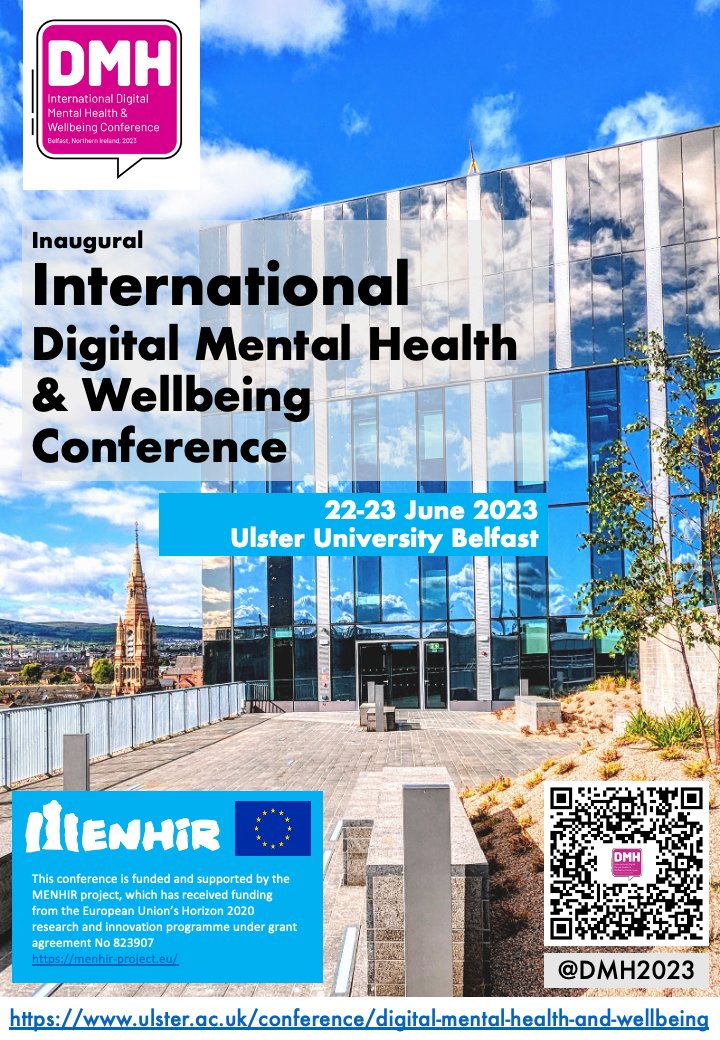
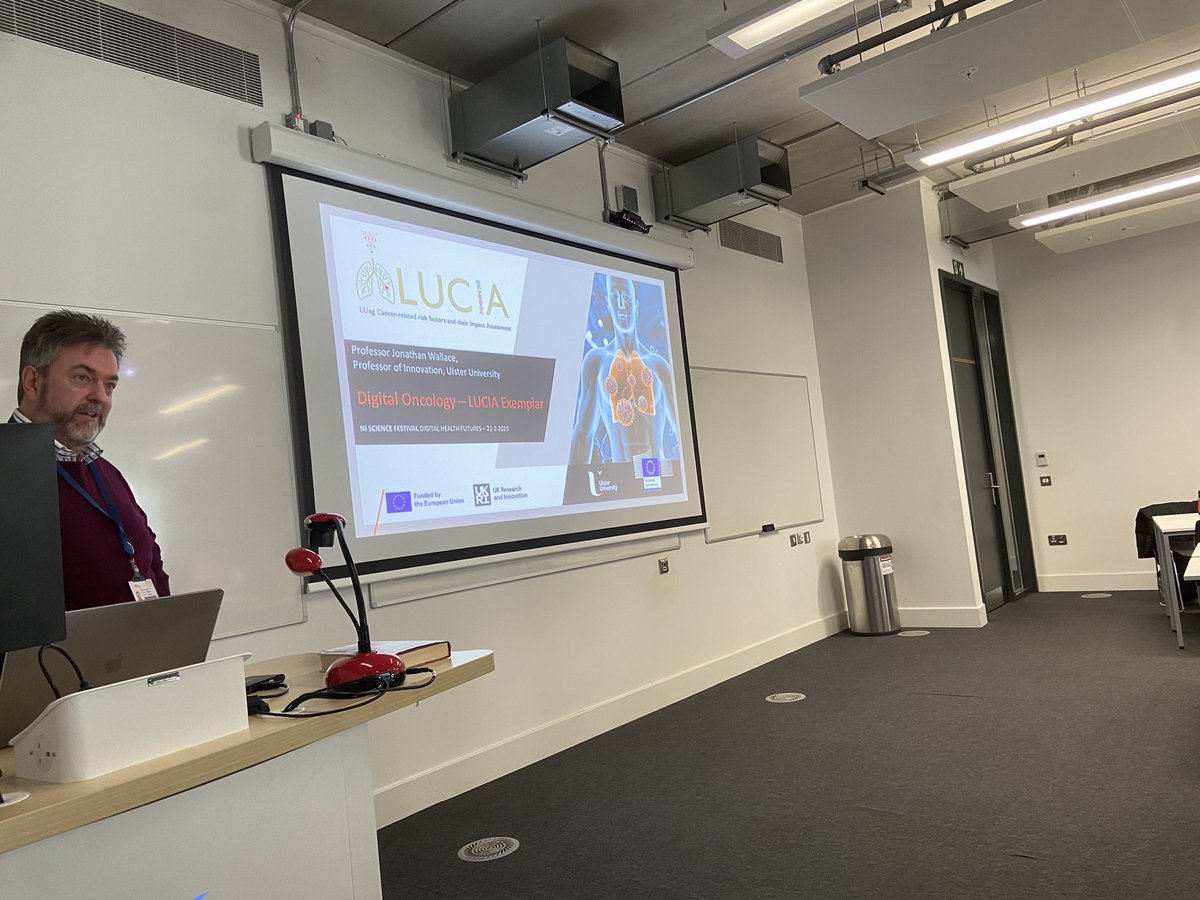
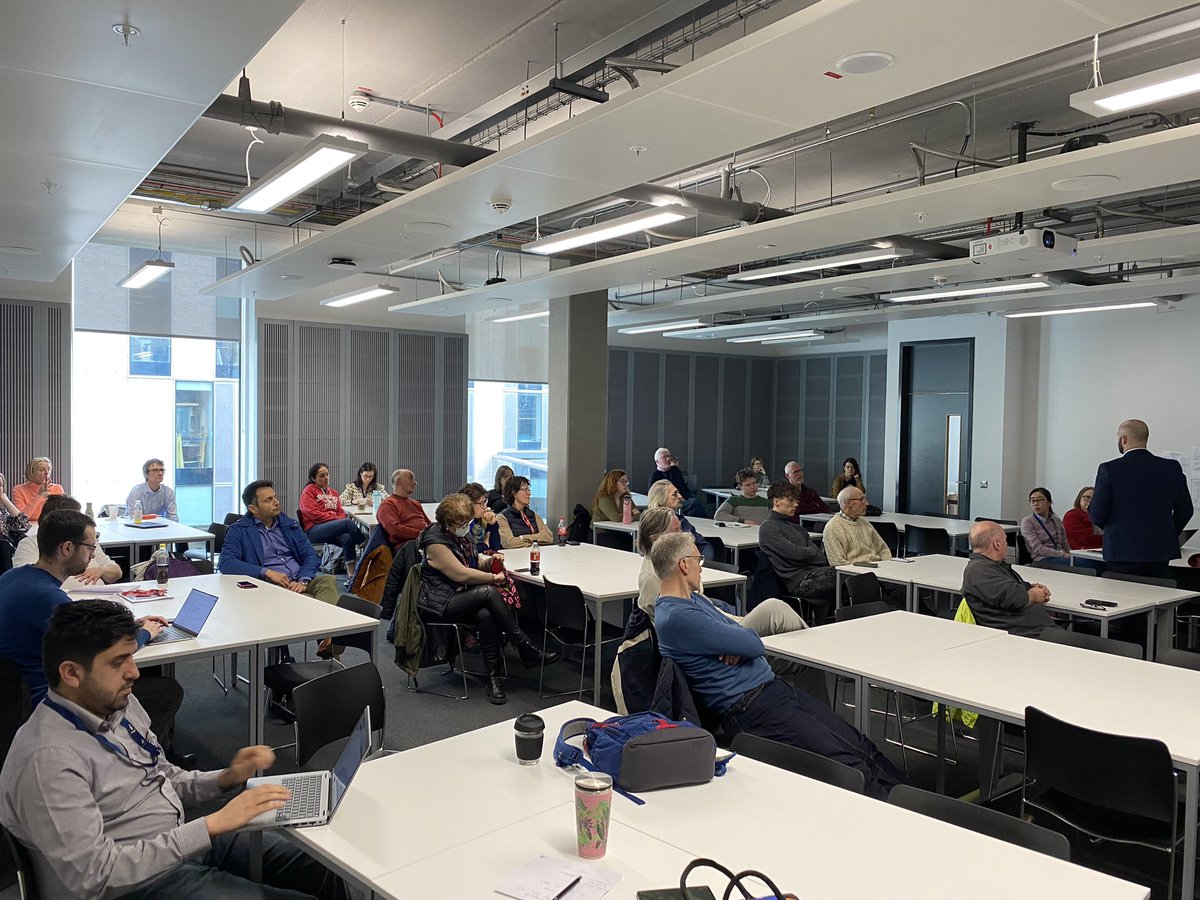
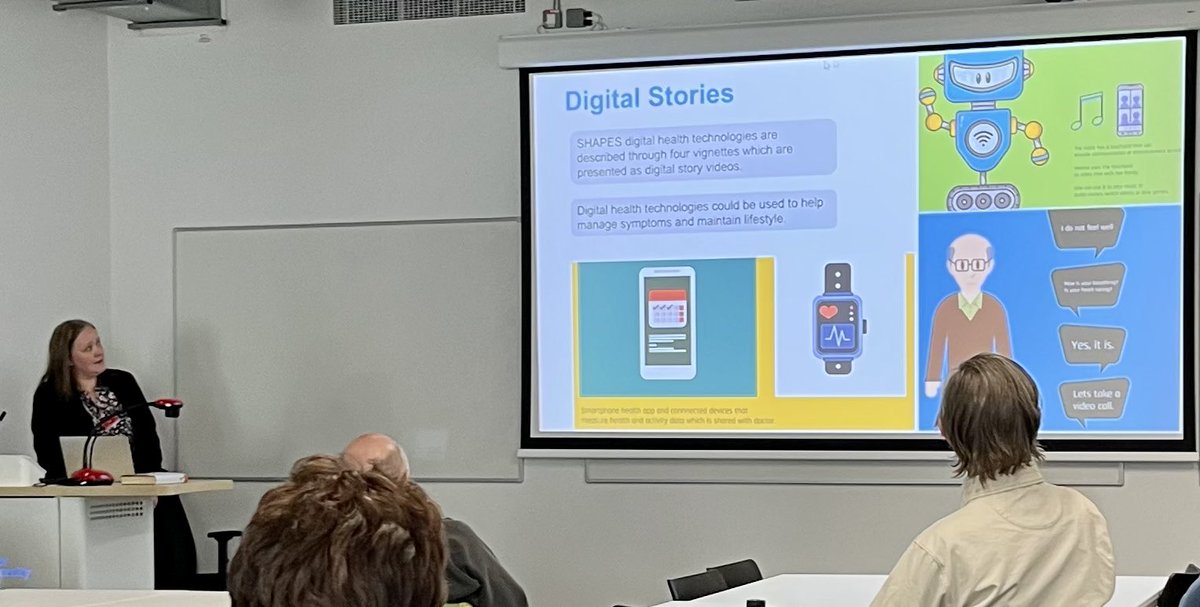
ALT This is a free event for the public to discuss and question the digital mental health community in Northern Ireland including academics researching in digital technologies for mental health. This event is designed to debate and understand the risks, opportunities and benefits that digital mental health may provide. The event is designed to be inclusive and accessible to recognise the need for personal and public involvement and the need to discuss the use of digital mental technologies with intended users and stakeholders. In addition to accessible talks, participants will be invited to discuss their views on technologies such as chatbots and smart speakers. This event is supported by the MENHIR project, the HSC Public Health Agency’s R&D Division, co-located with Digital Mental Health and Wellbeing Conference and promoted & organised by Action Mental Health & Pneuma Healthcare.