
So doing a video game is really intense. Every layer you uncover just exposes so many more. This week I learned parallax occlusion mapping the week prior was lerp nodes. TG for 140 iq and being a nerd. But I had no idea.. #computerscience
5

💻 EVOLUTION OF PROGRAMMING LANGUAGES (1945–2025) 🚀
Programming languages are the foundation of the digital world. Every website, mobile app, operating system, AI model, video game, and spacecraft software is built using programming languages. Over the past 80 years, programming languages have evolved from machine-level instructions to powerful AI-oriented languages that allow developers to build complex systems with just a few lines of code.
🧵 A detailed thread on the history and evolution of programming languages:
🔹 1945 – Plankalkül
• Designed by German computer scientist Konrad Zuse.
• Considered the world's first programming language.
• Created for engineering and mathematical calculations.
• Far ahead of its time and not widely implemented during its early years.
• Laid the theoretical foundation for modern programming.
🔹 1957 – FORTRAN (Formula Translation)
• Developed by IBM.
• First widely used high-level programming language.
• Designed for scientific and engineering calculations.
• Significantly reduced programming complexity.
• Still used in high-performance scientific computing.
🔹 1958 – LISP
• Created by John McCarthy.
• One of the oldest programming languages still in use.
• Became the foundation of Artificial Intelligence research.
• Introduced functional programming concepts.
• Influenced many modern AI systems.
🔹 1959 – COBOL
• Developed under the leadership of Grace Hopper.
• Designed for business and commercial applications.
• Used extensively in banking, insurance, and government systems.
• Many financial institutions still rely on COBOL today.
🔹 1964 – BASIC
• Created by John Kemeny and Thomas Kurtz.
• Made programming accessible to students and beginners.
• Popularized computer education worldwide.
• Inspired many future programming environments.
🔹 1967 – Simula
• Developed in Norway.
• World's first Object-Oriented Programming (OOP) language.
• Introduced classes, objects, and inheritance.
• Influenced C , Java, C#, Python, and many others.
🔹 1970 – Pascal
• Created by Niklaus Wirth.
• Designed to encourage structured programming.
• Widely used in computer science education.
• Helped programmers write cleaner and more reliable code.
🔹 1972 – C Language
• Developed by Dennis Ritchie at Bell Labs.
• One of the most influential languages ever created.
• Used to develop the UNIX operating system.
• Forms the foundation of countless modern technologies.
• Linux, databases, embedded systems, and operating systems heavily rely on C.
🔹 1974 – SQL
• Developed by IBM researchers.
• Standard language for database management.
• Enables storing, querying, and managing data.
• Remains the backbone of modern data systems.
🔹 1980 – Ada
• Developed for the U.S. Department of Defense.
• Designed for safety-critical applications.
• Used in aviation, military, and aerospace systems.
• Known for reliability and security.
🔹 1983 – C
• Created by Bjarne Stroustrup.
• Extended C with Object-Oriented Programming features.
• Powers game engines, browsers, operating systems, and financial systems.
• One of the most powerful programming languages ever developed.
🔹 1984 – MATLAB
• Created by Cleve Moler.
• Specialized for mathematics, simulation, and engineering.
• Widely used by researchers and scientists.
🔹 1987 – Perl
• Created by Larry Wall.
• Famous for text processing and system administration.
• Played a major role in early web development.
🔹 1991 – Python
• Developed by Guido van Rossum.
• Prioritized simplicity and readability.
• Became the leading language for AI, Machine Learning, Data Science, Automation, and Web Development.
• One of the most demanded programming skills globally.
🔹 1993 – R
• Developed for statistical computing.
• Widely used in research, analytics, and data science.
• Preferred by statisticians and data analysts.
🔹 1995 – Java
• Created by James Gosling.
• Famous for "Write Once, Run Anywhere."
• Powers enterprise software, Android applications, and large-scale systems.
• One of the most widely used programming languages.
🔹 1995 – JavaScript
• Developed by Brendan Eich.
• The language of the web.
• Runs inside virtually every web browser.
• Essential for interactive websites and modern web applications.
🔹 1995 – PHP
• Created by Rasmus Lerdorf.
• Powered much of the early internet.
• Used by WordPress and millions of websites worldwide.
🔹 1995 – Ruby
• Developed in Japan by Yukihiro Matsumoto.
• Focused on developer productivity and simplicity.
• Became popular through Ruby on Rails.
🔹 2000 – C#
• Developed by Microsoft.
• Central language of the .NET ecosystem.
• Widely used in enterprise applications and game development.
🔹 2004 – Scala
• Created by Martin Odersky.
• Combines object-oriented and functional programming.
• Popular for big-data applications.
🔹 2009 – Go (Golang)
• Developed by Google.
• Designed for simplicity, speed, and scalability.
• Extensively used in cloud computing and distributed systems.
• Powers many modern internet services.
🔹 2010 – Rust
• Developed by Mozilla Foundation.
• Focuses on memory safety and performance.
• Considered one of the safest systems programming languages.
• Increasingly adopted by major technology companies.
🔹 2011 – Kotlin
• Developed by JetBrains.
• Official language for Android development.
• Modern alternative to Java.
🔹 2011 – Dart
• Developed by Google.
• Powers Flutter applications.
• Enables cross-platform mobile development.
🔹 2012 – TypeScript
• Developed by Microsoft.
• Adds static typing to JavaScript.
• Widely adopted for large-scale web applications.
🔹 2014 – Swift
• Developed by Apple.
• Modern language for iOS, iPadOS, macOS, and watchOS development.
• Replaced Objective-C for most Apple ecosystem development.
🔹 2015 – Julia
• Designed for scientific computing and numerical analysis.
• Combines high performance with ease of use.
• Growing rapidly in research and AI applications.
🔹 2022 – Mojo
• Developed by Modular AI.
• Built specifically for AI and high-performance computing.
• Combines Python-like syntax with systems-level speed.
• Represents a new generation of AI-focused programming languages.
📊 Evolution of Programming Paradigms
✅ Machine Language → 1940s
✅ Assembly Language → 1950s
✅ Procedural Programming → FORTRAN, COBOL, C
✅ Structured Programming → Pascal
✅ Object-Oriented Programming → Simula, C , Java
✅ Functional Programming → LISP, Haskell, Scala
✅ Scripting Languages → Perl, PHP, JavaScript, Python
✅ Cloud-Native Languages → Go
✅ Safe Systems Programming → Rust
✅ AI-Oriented Languages → Python, Julia, Mojo
🏆 Important Exam Facts
✔ World's First Programming Language → Plankalkül
✔ First Widely Used High-Level Language → FORTRAN
✔ First Business Language → COBOL
✔ First Object-Oriented Language → Simula
✔ Most Influential Systems Language → C
✔ Most Popular Web Language → JavaScript
✔ Most Popular AI Language → Python
✔ Official Android Language → Kotlin
✔ Official Apple Development Language → Swift
✔ Developed by Google → Go, Dart
✔ Developed by Microsoft → C#, TypeScript, Visual Basic
✔ Developed by Apple → Swift
✔ Developed by Mozilla → Rust
✔ Developed by IBM → FORTRAN, SQL
✔ Developed by Sun Microsystems → Java
💡 From the first programming concepts of the 1940s to AI-focused languages of the 2020s, programming languages have continuously evolved to make computers more powerful, accessible, and intelligent. The future will likely see deeper integration of AI, automation, quantum computing, and human-language programming interfaces.
#ProgrammingLanguages #Coding #ComputerScience #Python #Java #JavaScript #Cpp #CSharp #GoLang #Rust #Swift #Kotlin #TypeScript #SQL #AI #MachineLearning #DataScience #SoftwareEngineering #Technology #ComputerAwareness #DigitalIndia #UPSC #BPSC #SSC #RRBJE #RRBNTPC #BankingExams #ComputerGK #TechHistory #Programming #Developers #ArtificialIntelligence #CodingLife #SoftwareDevelopment #ITIndustry #ComputerKnowledge #CompetitiveExams #RRBJECBT2
5
5
34

• #Technology #ComputerScience #PC #Mac #Linux #Android #PCGaming #ComputerHardware 🖥️ •
» Tourist Binoculars Add Tap-to-Pay Tech to Survive Cashless World wsj.com/business/entrepreneu…
1
5

Let's continue!! Hit this up for the second part. The CS tour is not over yet ^_^
Part 2:
Let's continue ! the CS USM Tour is not over yet! 🚶♂️💻
#USM #ComputerScience #TourCSUSM #IntelligentComputing #StudentLife
tiktok.com/@cstudusm/video/7…
6
Sherlockean Proviso | BIP-110 | OP_CTV retweeted

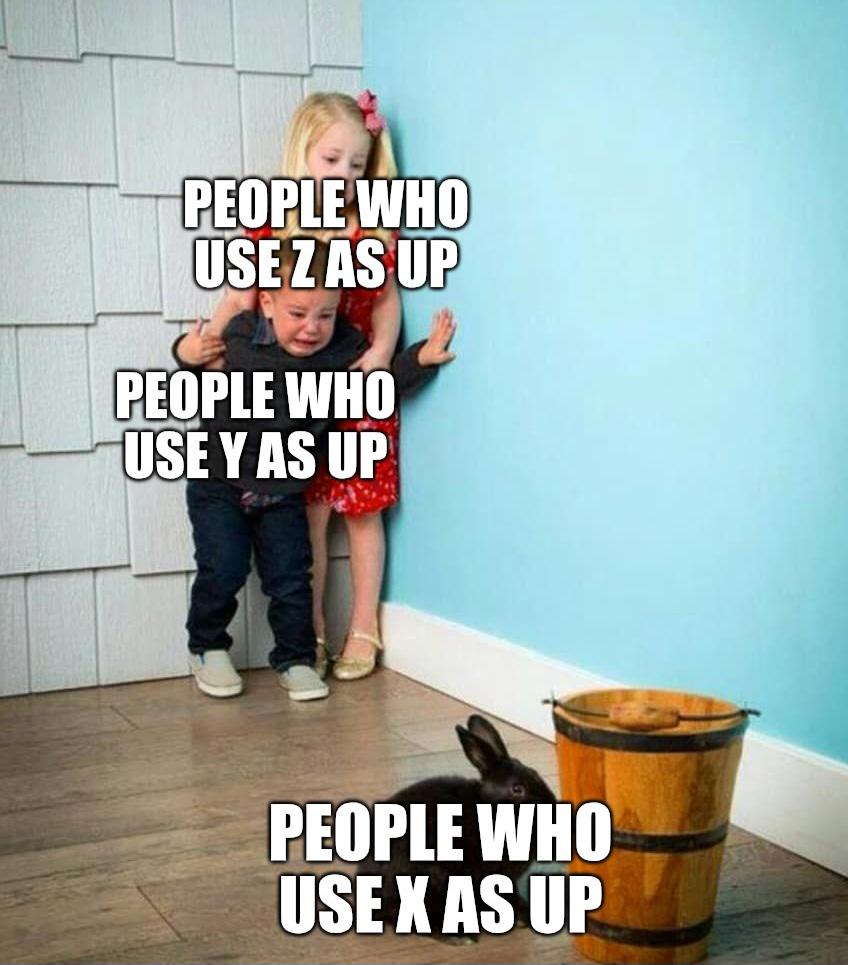
Which letter do you prefer for the up direction? #computerscience
2
10
288

Happy Birthday to Alonzo Church. Born on June 14, 1903, Church helped establish the mathematical foundations of computer science through his work on lambda calculus, computability, and the Church–Turing thesis. His ideas continue to influence programming languages, algorithms, and our understanding of what computers can and cannot do.
#PioneerPOV #ACM #pioneer #computerscience #lambdacalculus
1
15
41
1,749

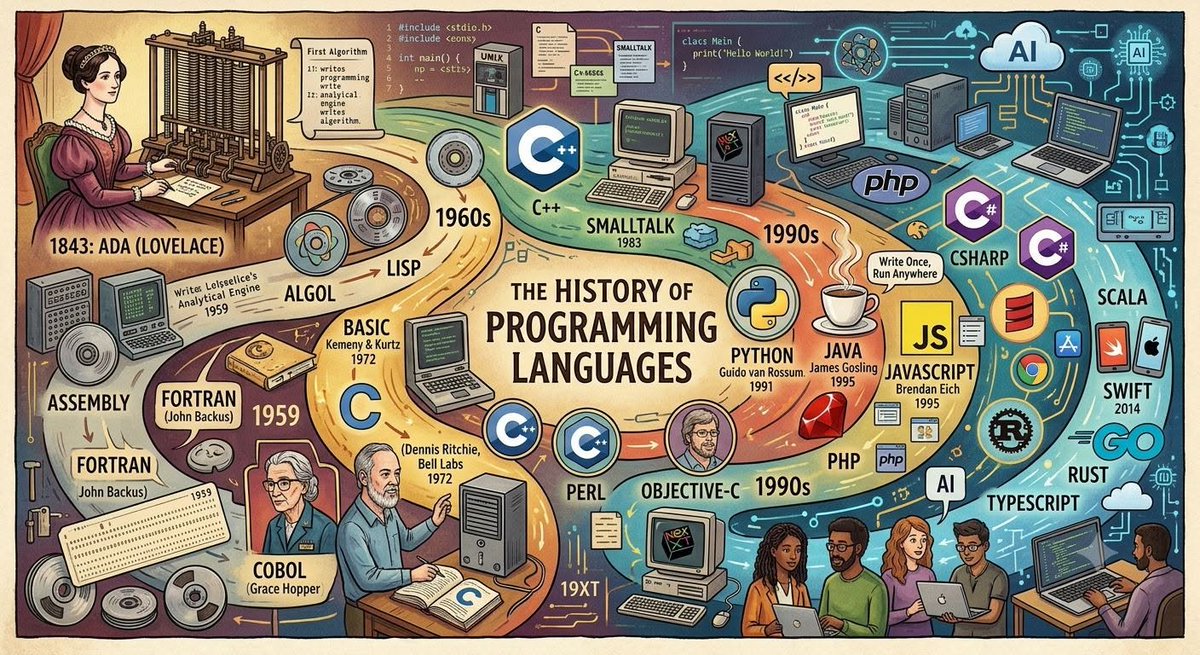
🚀 From Punch Cards to AI: The Evolution of Code 💻
Ever wonder how we got from Ada Lovelace’s first algorithm in 1843 to the modern languages powering today's AI?
Look at how the foundations laid by pioneers like Grace Hopper (COBOL) and Dennis Ritchie (C) paved the way for JavaScript, Python, Rust, and the tech we rely on every single day.
What was the very first programming language you learned? Let me know in the comments! 👇
#Programming #CodingLife #TechHistory #SoftwareEngineering #java #rust #Python #JavaScript #WebDevelopment #ComputerScience #CodeNewbie
5
18
48
2,378

The invisible battle happening inside your computer's RAM right now! ⚔️💻#tech #engineering #computerscience #pcmasterrace #howitworks #stem #physics #hardware #techfacts
2

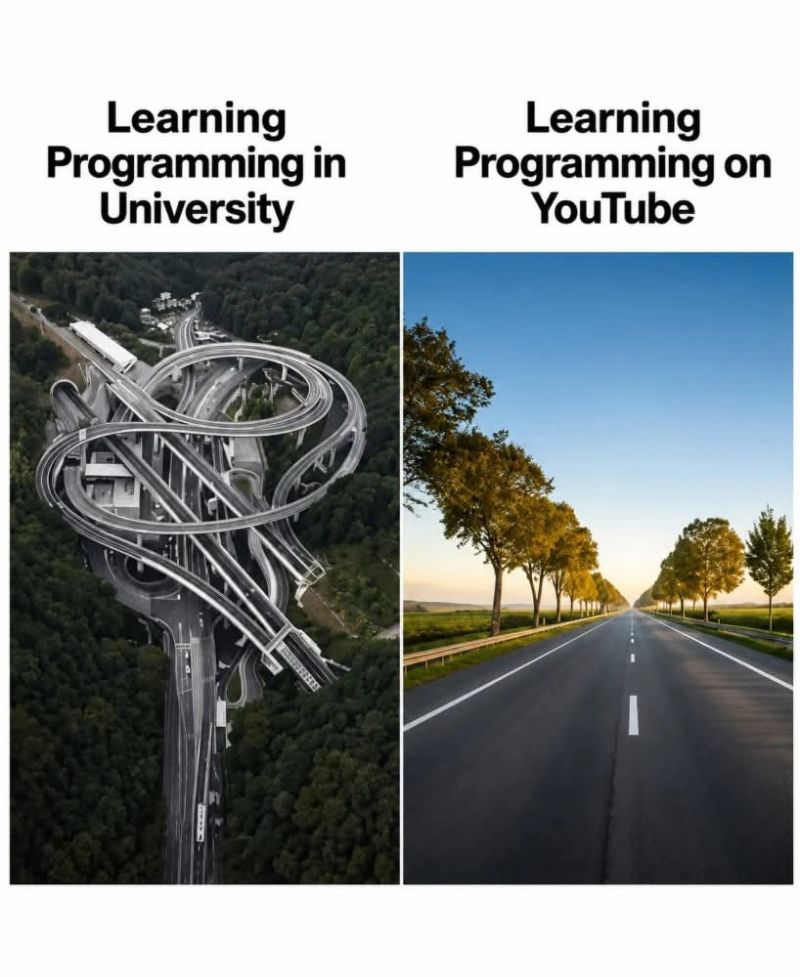
🎓 Learning programming in university:
🛣️ Complex roadmap
📺 Learning programming on YouTube:
🚀 Build a project by Sunday
The best path?
Learn fundamentals from one.
Practical skills from the other.
#Programming #Coding #DeveloperLife #ComputerScience
1
13

Built for the Future of Technology
IBA’s BS CS program combines strong computational foundations with the mindset required to navigate an evolving digital world. From algorithms to artificial intelligence, students learn to think critically, create intelligently, and solve beyond the obvious. At IBA, computer science is not limited to coding, it is about building what comes next.
📌 Apply now: onlineadmission.iba.edu.pk/a…
📧 admission@iba.edu.pk
#IBAKarachi #SMCS #Admissions2026 #ComputerScience #ApplyNow #Leadership #Excellence #Impact
68

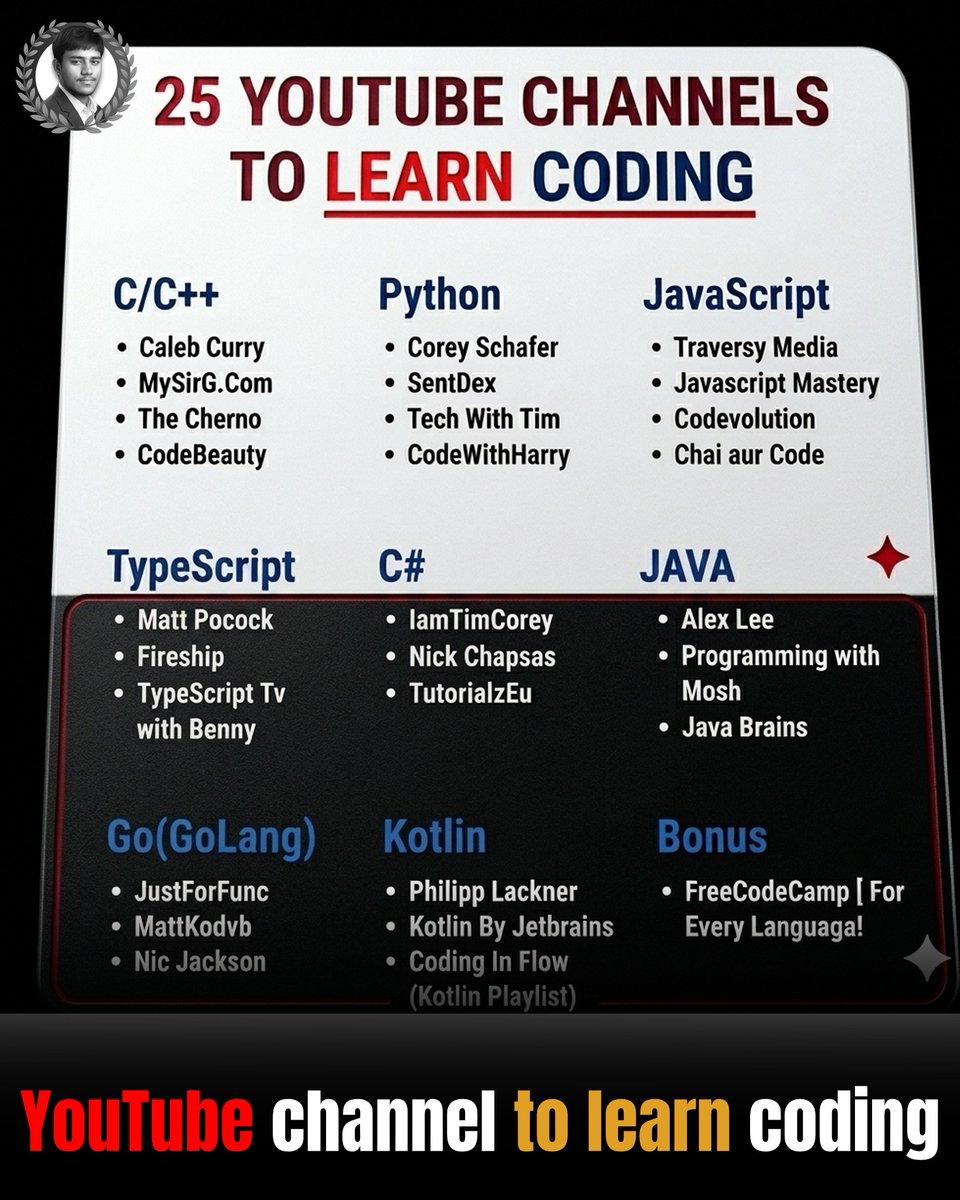

I struggled for konthasss to create a single website #smallbusiness #computerscience #makeyourwebsite #fyp
12

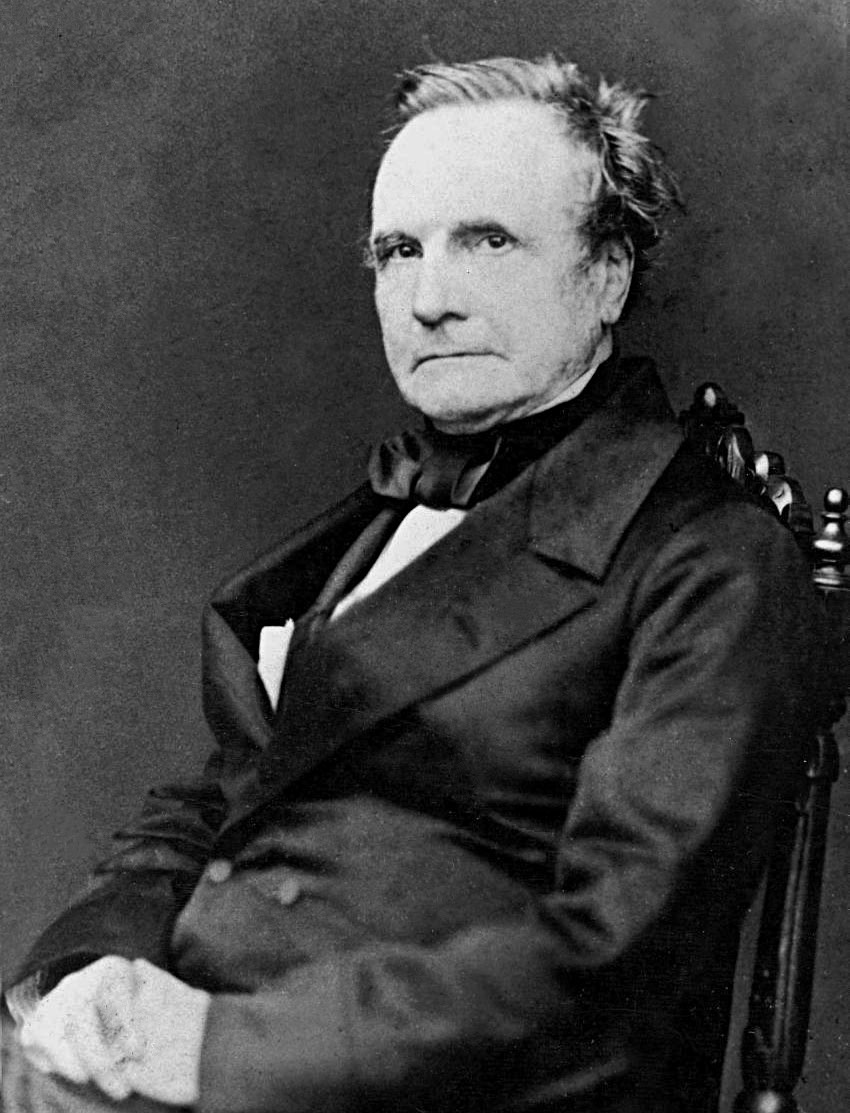
💻 #OTD in #Tech #History 14 June 1822, in a #RoyalAstronomicalSociety paper "Note on the application of machinery to the computation of astronomical and mathematical tables", inventor #CharlesBabbage proposed a "difference engine," a foundational moment in #ComputerScience.
21


#GurukulAtHome and #SoereignAI ,these two aims inspire me to redesign the syllabus of Maths, Computer science .I have been working on the GS studies ,current affairs focusing on PIB notifications so that a student can understand the nation very well. @svembu
#UPSC #ESSAY #GS #Mathematics #Computerscience
51

Jun 13
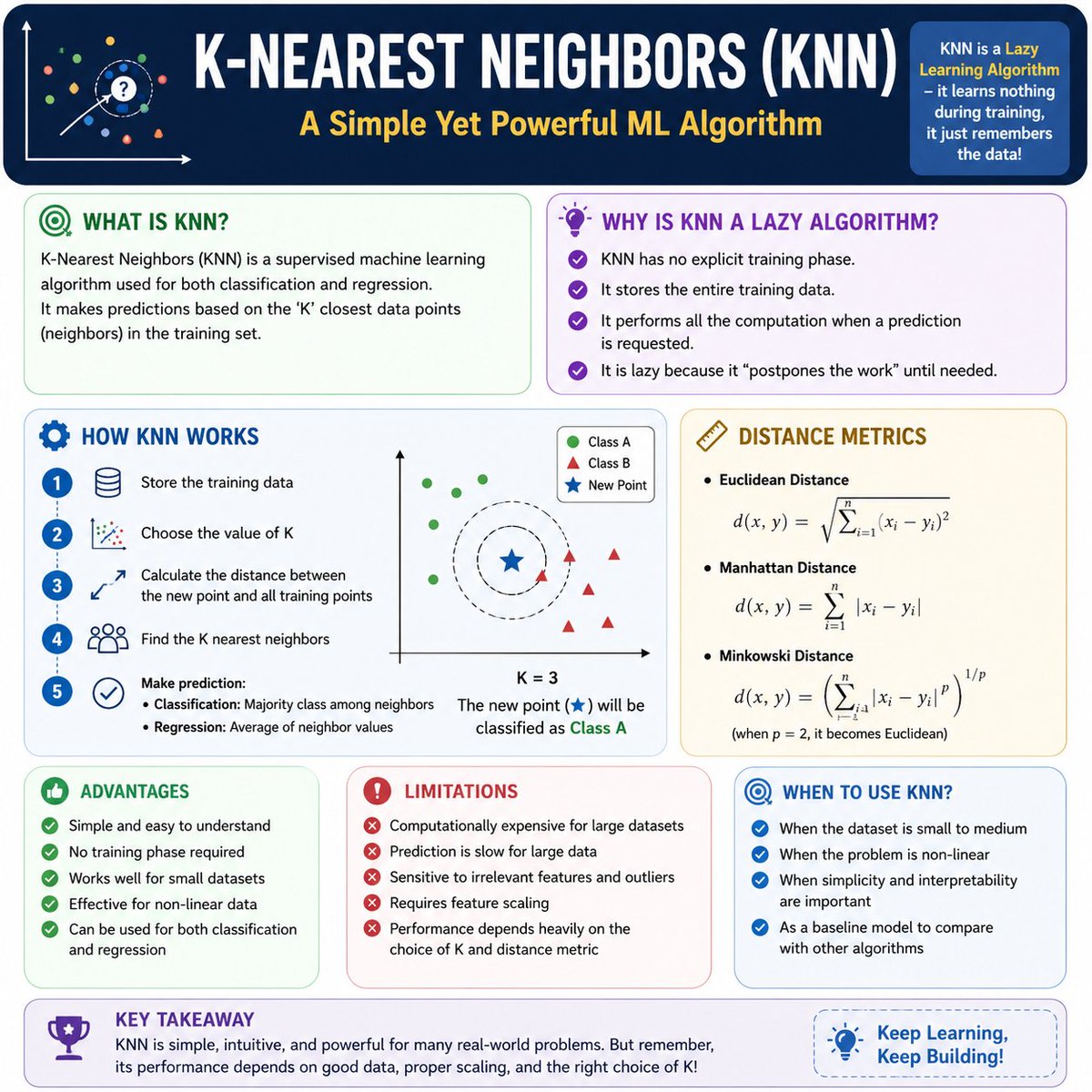
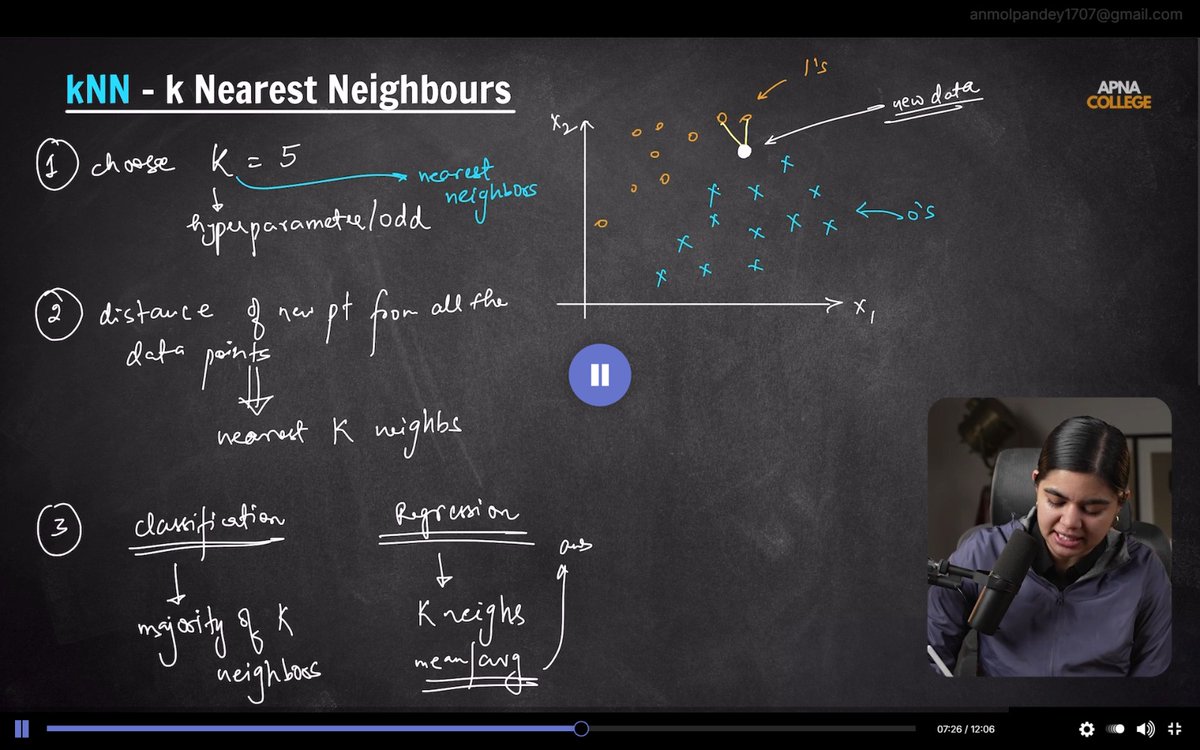
Most people use KNN. Few actually understand how it works.
#MachineLearning #KNN #ArtificialIntelligence #DataScience #ML #AI #DataAnalytics #Python #MachineLearningEngineer #DeepLearning #Analytics #LearningInPublic #AIEngineer #DataScientis #ComputerScience #MLOps #FutureOfAI
1
1
21

🚨 PhD Position in Formal Methods for Concurrent Cryptographic Protocols at Vrije Universiteit Amsterdam, Netherlands 🇳🇱
Research on cryptography, concurrency & formal verification. Apply by 30 Oct 2026. #PhD #Crypto #FormalMethods #ComputerScience
workingat.vu.nl/vacancies/ph…
1
71