
Joined July 2018
- Tweets 5,862
- Following 788
- Followers 4,796
- Likes 10,378
1,508 Photos and videos








Pinned Tweet

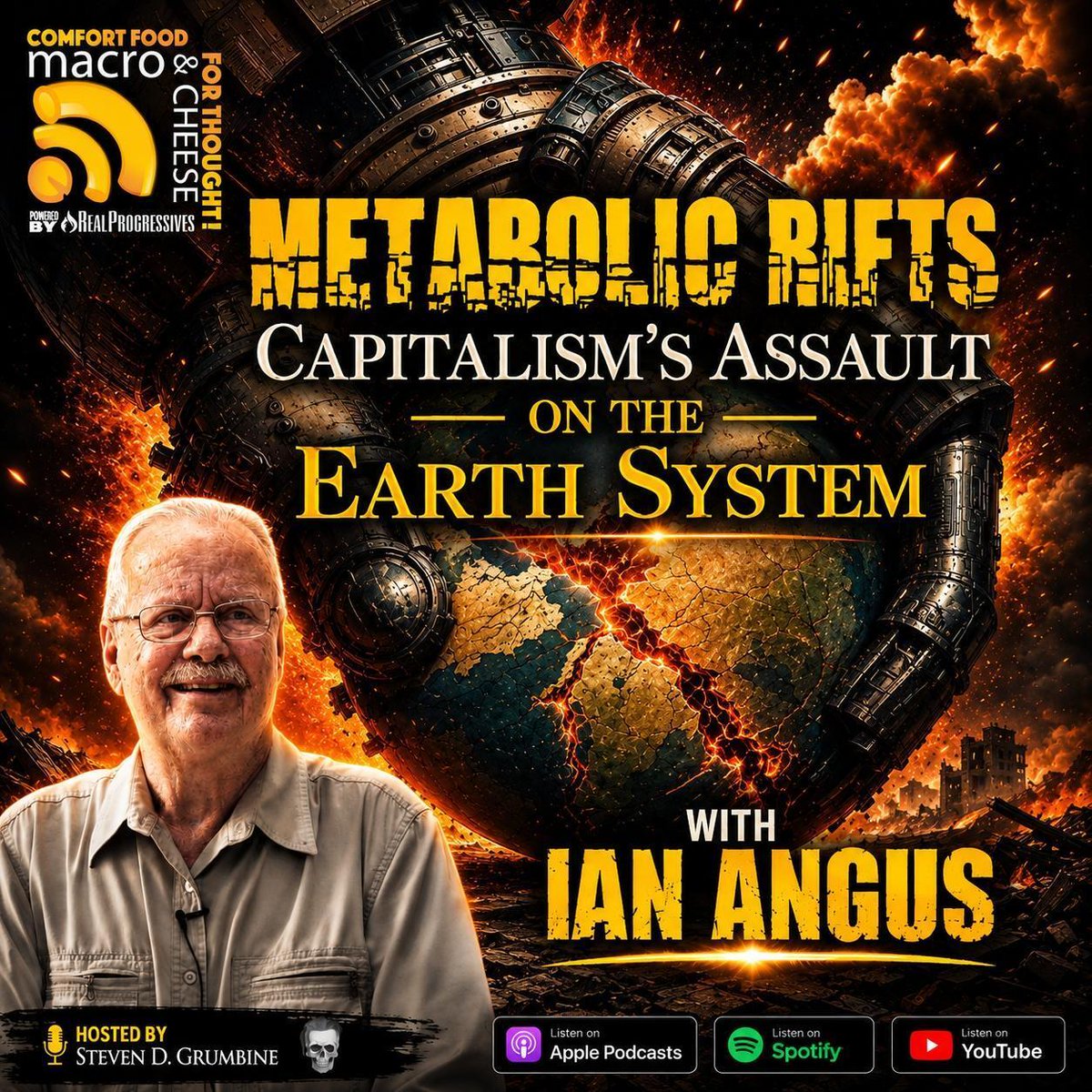
NEW EP! 🎙️
@ecosocialism1 joins @sdgrumbine to explore Marx’s concept of the metabolic rift and why ecological breakdown is rooted in capitalism’s need for endless accumulation. realprogressives.org/mnc-pod…
4
19
27
1,487
Macro n Cheese Podcast #MMT retweeted

It was great to talk to you Steve!

The Complicit Lens: How US Media Helped Normalize Genocide in Gaza ft. @MediaPhiled of @ProjectCensored. Join us for the YouTube premiere tonight @ 7 pm ET! #Media #Gaza #Genocide youtube.com/watch?v=sSNaXE1J…
1
3
4
62
NEW EP! 🎙️
@ecosocialism1 joins @sdgrumbine to explore Marx’s concept of the metabolic rift and why ecological breakdown is rooted in capitalism’s need for endless accumulation. realprogressives.org/mnc-pod…
4
19
27
1,487
Why is ecological #sustainability impossible under capitalism? Join us Tues. 6/16 @ 8 pm ET for Macro n Chill to listen to and discuss our latest ep. ft. @ecosocialist1. #Environment #Capitalism
Register: us06web.zoom.us/meeting/regi…
5
7
118
Economics For the Working Class, not the billionaires
We are a completely volunteer-run nonprofit organization and a growing community committed to the mission of educating others on how understanding macroeconomics and class struggle is essential for empowering people and securing a future for all. Join us for free on #Substack and help us educate the proletariat to replace #capitalism with #socialism. Link below. 👇
1
11
16
266
"We must remain in constant dialogue with #nature if we are not to die." Karl Marx over a century ago. He saw #capitalism breaking the metabolic cycle - taking from the #earth and discarding as waste.
Full ep ft @ecosocialism1 Sat 6/13 @ 8 am ET. Link to all our eps in comment 👇
4
17
20
1,568
Nature is the ultimate recycler. Capitalism is linear: take, use, discard. Marx saw this in agriculture and soil degradation. The rift between humanity and nature is built into capitalism.
#Marx #FoodWaste #agriculture
realprogressives.org/macro-n…
7
9
128
"Why do you have to say ecosocialism?" Because capitalism is destroying the conditions that make human civilization possible. And after the revolution we still have to deal with saltwater in farmland and coastal cities under water. That requires planning now.
Full ep ft ecosocialism1.bsky.social Sat 6/13 @ 8 am ET. Link to all our eps in comment 👇
#capitalism #revolution #planning
3
18
18
401
Capitalism doesn't JUST exploit workers. It exploits the 🌎. Excess carbon in atmosphere. Temps ⬆️. Ice caps melting. A socialist revolution won't reverse physics. We inherit the damage.
#CO2 #ClimateChange #Socialism
realprogressives.org/macro-n…
7
7
122
#Marx understood ecology. Scientists of his day proved him correct. Capitalism's #profit drive is destroying our planet. Ian Angus on metabolic rifts and ecosocialism. #nature
New ep ft @ecosocialism1 Sat 6/13 @ 8 am ET. All our ep @ realprogressives.org/macro-n…
2
15
20
398
"The measure of capitalist growth is the measure of waste." Socialism isn't optional - it's survival. Metabolic rifts and the fight for the environment.
#capitalism #socialism #environment
2
6
90
🚨 NEW EP 🚨
Your favorite news anchor read you a script the IDF approved. CNN staff leaked it. The NYT banned the word "genocide." This isn't bias. It's manufactured consent - and we've got the receipts. w/@MediaPhiled realprogressives.org/mnc-pod…
6
26
29
1,488
The Complicit Lens: How US Media Helped Normalize Genocide in Gaza ft. @MediaPhiled of @ProjectCensored. Join us for the YouTube premiere tonight @ 7 pm ET! #Media #Gaza #Genocide youtube.com/watch?v=sSNaXE1J…
11
12
337
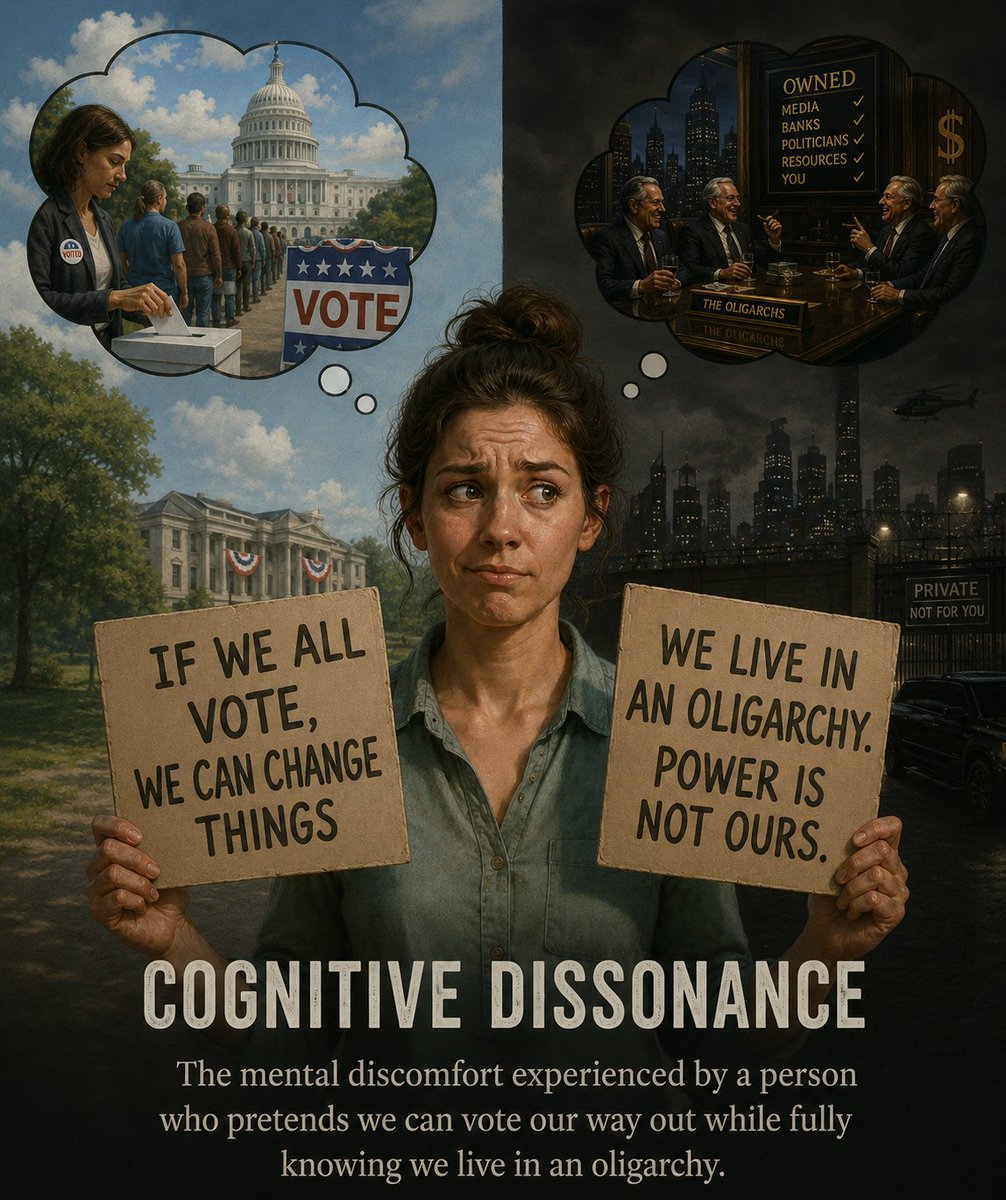
This is a story of class. Unfortunately its an old story. It covers the electoral process as well. Control. Power. Placebo effects. In the end, understanding the MOTIVES are absolutely NOT innocent should be the next evolution of MMT activists. No more pollyanna.

The media economic narrative is a broken record of soundbites, slogans, and tropes which we are expected and conditioned to accept without question. Policies of austerity are not economic necessity, they are policy choices designed to preserve the wealth and power of the few.
6
10
242
Power... class. Sometimes it feels like Christopher Columbus claiming to discover the New World...
Jun 9

MMT is attacked so aggressively because it threatens the propaganda that protects power.
For decades, people have been told:
“There is no money.”
“Be realistic.”
“The markets won’t allow it.”
“Taxpayers can’t afford it.”
MMT pulls at that thread. (1/8)
2
7
13
349
Macro n Cheese Podcast #MMT retweeted

U.S. #media didn't just watch #genocide in #Gaza - they enabled it. Corporate press enforced Zionist narratives, dehumanized Palestinians, & hid Israeli war crimes. Listen to our newest @CheeseMacro ep. ft. @MediaPhiled of @ProjectCensored
realprogressives.org/mnc-pod…
2
9
13
267

Geez, once you climb down into one of these holes, it's fkn hard to climb back out;
Via the 'Good Man';
x.com/CheeseMacro/status/206…
🚨 NEW EP 🚨
Your favorite news anchor read you a script the IDF approved. CNN staff leaked it. The NYT banned the word "genocide." This isn't bias. It's manufactured consent - and we've got the receipts. w/@MediaPhiled realprogressives.org/mnc-pod…
2
2
4
92
Macro n Cheese Podcast #MMT retweeted

More thought provoking content from the team that fight tirelessly to educate us all. 👏🏻
🚨 NEW EP 🚨
Your favorite news anchor read you a script the IDF approved. CNN staff leaked it. The NYT banned the word "genocide." This isn't bias. It's manufactured consent - and we've got the receipts. w/@MediaPhiled realprogressives.org/mnc-pod…
4
9
352
Macro n Cheese Podcast #MMT retweeted

Jun 10
Ahhhh finally. Finally. Finally.
Jun 9
Austerity is not just economic policy.
It is a political weapon.
It disciplines the public, lowers expectations, weakens labour, protects wealth, and makes democratic demands look childish or dangerous.
It teaches people to accept decline. (2/8)
1
7
16
337
Macro n Cheese Podcast #MMT retweeted
This is not a critique of MMT. It is a collage of bad historical analogies.
MMT does not say “print forever”. It says a currency issuer is not financially constrained like a household, but is constrained by inflation, real resources, external balance and political capacity.
Rome, Weimar and Zimbabwe were not normal modern floating-currency systems with intact productive capacity. They involved collapse, war, reparations, supply destruction, tax failure or institutional breakdown.
Nor is Fed QE the same as Treasury spending. QE swaps reserves for securities. Fiscal spending purchases goods, services or labour. Different operation, different transmission.
The “distorts price signals from day one” line is Austrian boilerplate. It assumes a neutral monetary price system exists before the state intervenes. It doesn’t.
The state is the monopoly issuer of the unit of account. It imposes tax liabilities, then names the prices at which it spends, lends, pays interest and purchases labour, goods and services. The private sector prices relative to that institutional structure.
Government spending does not enter from outside and “distort” the price level. It is the price-setting architecture from the start.
The real issue is not “money printing”. It is the prices the currency monopolist pays, including the interest rate, which forward-prices money and subsidises holders of financial assets.
Japan does not prove your point either. Its high public debt did not produce hyperinflation or bond market insolvency. Whether Japan stagnated is a separate real-economy question.
The question is not “can government run out of its own currency?” It cannot. The question is whether public spending, interest rate policy and the prices government pays are consistent with real resource capacity.
That is the MMT argument. You are attacking a straw man.

Modern economics is a circus, and proponents of MMT are the clowns.
MMT proponents dress up inflationary financing in academic jargon, but you're witnessing the same monetary snake oil that governments have peddled for centuries. Every empire from Rome to Weimar told citizens they could print their way to prosperity. The Romans debased their denarius. John Law flooded France with paper livres in 1720. The Continentals became worthless by 1781.
Modern Monetary Theory repackages this ancient temptation with PhD credentials and colorful charts. Stephanie Kelton and her disciples claim deficits don't matter because the government creates dollars. They argue inflation only appears when you hit "resource constraints." But this ignores how money creation distorts price signals from day one. When the Fed conjures $3 trillion in 2020, those dollars don't sit idle waiting for full employment. They bid up assets, reward speculation over production, and transfer wealth from savers to borrowers.
The MMT crowd loves pointing to Japan's debt-to-GDP ratio above 250% without hyperinflation. Yet Japan suffered two lost decades of stagnation while the Bank of Japan propped up zombie corporations. Japanese households saw their purchasing power erode as real wages stagnated and asset bubbles inflated. You call that success?
Money printing doesn't create wealth: it redistributes it. Every dollar the Treasury spends into existence represents resources diverted from private hands to political priorities. The Pentagon gets its $800 billion budget whether or not taxpayers can afford it.
Zimbabwe's central bank also believed it could print without consequence until inflation hit 89.7 sextillion percent in 2008. The Fed just has better marketing.

19
40
88
5,094
Macro n Cheese Podcast #MMT retweeted

Jun 10
It is not an arbitrary redefinition. Most textbook “definitions” of money do not actually define money; they describe its functions: medium of exchange, unit of account, store of value, means of payment.
The MMT tax-credit view is doing something different. It distinguishes money, money-things, and money-functions.
Money is the unit of account: pound, dollar, yen.
Money-things are instruments or records denominated in that unit: coins, notes, tally sticks, reserve balances, bank deposits, and ledger entries.
Money-functions are what those instruments may do: mediate exchange, store value, settle payments, discharge debts.
So “money is a tax credit” is best read as a shorthand. More precisely: state money-things are tax credits denominated in the state’s unit of account.
The state defines the unit, imposes liabilities in that unit, and accepts particular instruments denominated in that unit back in payment of taxes, fees and fines. That creates baseline demand.
The gain is analytical: it distinguishes currency issuer from currency user. Taxpayers do not fund the state with a pre-existing thing the state needs. Taxpayers need state-accepted instruments because the state has made them liable in its unit.
Bank deposits are private money-things denominated in the state unit. They settle tax obligations through the banking system, ultimately via state money-things (tax credits) at the central bank.
MMT observes that the monetary system is a public monopoly. The issuer creates demand by taxation and sets price by what it pays. The constraint is not “finding the money”, but real resources.
(Gold is not money. Gold is a mineral. A gold coin may be a money-thing if it is a denominated instrument within a monetary system established by government.)
Jun 9

MMT/post-keynesian types redefine well understood concepts to prop up their arbitrary perspective. But why is money best understood as a tax credit? What's the economic function they try to capture with this redefining - and why? What's the gain of this new definition?

16
24
64
3,907