
Joined April 2024
- Tweets 429,042
- Following 10,340
- Followers 123,303
- Likes 195,393
9,818 Photos and videos











Pinned Tweet

Jun 11
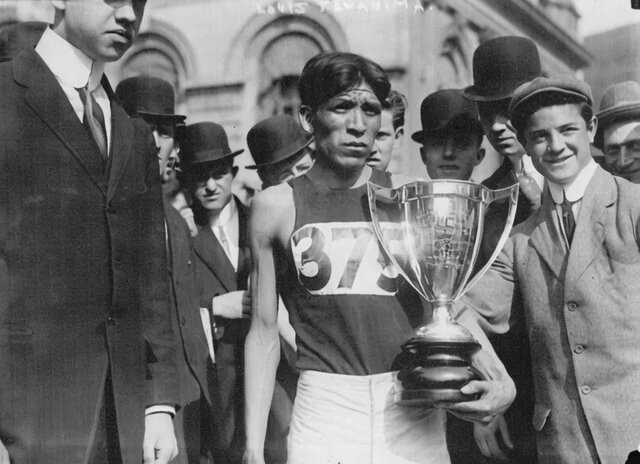
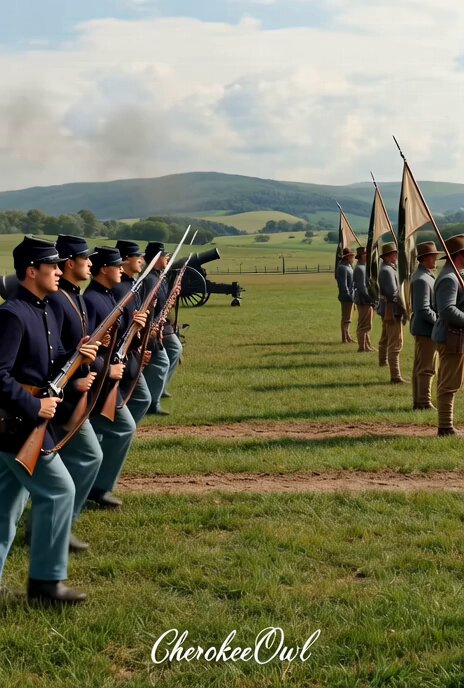
He was born Wa-Tho-Huk — ‘Bright Path.’
Born on Sac & Fox land in Oklahoma, Jim Thorpe became the greatest athlete the world had ever seen.
In 1912, he won GOLD in both the pentathlon AND decathlon at the Olympics — a feat never duplicated. The King of Sweden called him the greatest athlete alive.
But when they took his medals over minor ‘amateur’ rules (that others broke too), this Native warrior kept shining: Pro football pioneer, MLB player, basketball barnstormer.
A true CherokeeStrong / Native legend who rose above every obstacle.
5
35
67
3,457
TheRealCherokeeOwl 🦉 retweeted

"Firefighter Twins," Mark Newman and Jerry Levey. While their incredible true story does not end in a tragedy where they both died on the same day, they share a fascinating history of being separated at birth and both winding up as firefighters.
The story of the firemen twins:
Separated at birth: Identical twins Mark Newman and Jerry Levey were adopted by different families and grew up unaware of each other's existence in New Jersey.
Growing up, both developed a love for the outdoors and both independently decided to become firefighters.
While attending a firefighter convention, one of Mark's friends happened to see Jerry and mistook him for Mark. The friend introduced himself and the two men were finally reunited as adults.
The brothers enjoyed a close relationship for decades. Jerry Levey is currently living, while Mark Newman passed away in 2022.
2
69
95
4,472
TheRealCherokeeOwl 🦉 retweeted

Raising boys is definitely not for the weak. 😂
11
55
107
3,530
TheRealCherokeeOwl 🦉 retweeted
What happens when you tell your boss on a coworker and he finds out ?
Reporting a co-worker is emotionally and socially difficult because it often creates workplace tension, tests team dynamics, and risks retaliation. To protect yourself, always stick to objective facts, provide concrete evidence, and report directly to management or Human Resources using established company procedures. [1
7
80
75
4,958
TheRealCherokeeOwl 🦉 retweeted

Did you just see it too? The car in question just vanished. There were reports from other drivers that claim the same thing at this intersection. They all saw a car driving on the road and all of a sudden it wasn’t there anymore. The car in question reminds me of a 1950’s Belair, it looks so out of place for today’s day and age. I do see some of them on the road every once in a while and that’s why they stick out to me so much.
I’m not saying this is a haunted road or this is even paranormal, however I have heard of these residual style occurrences happening. If that was the case maybe this was where the original owner had an accident and it plays out over and over throughout the years at random. Have you ever seen anything like this before? What would you do if you saw this? I think I would keep coming back so I can see it again, events like this fascinate me.
22
57
115
20,778
TheRealCherokeeOwl 🦉 retweeted

7h
Still slaying this dance 🔥 We still doing this 💃 Saumya Kamble is! Who else is obsessed with these moves? Pure energy and talent! ✨
10
105
141
8,814
TheRealCherokeeOwl 🦉 retweeted
Fight night energy is exploding across DC! 🔥
UFC Freedom 250 is HERE; history in the making at the White House! 🇺🇸💥
Let’s go! 🚀 x.com/WhiteHouse/status/2065…

11
56
133
4,383
TheRealCherokeeOwl 🦉 retweeted

For many Europeans visiting the U.S., seeing the iconic yellow school buses for the first time feels like stepping into a movie scene. Something so familiar from American culture suddenly becomes real right in front of them.
It’s interesting how everyday things can become exciting discoveries when viewed from another perspective. A simple school bus represents a piece of daily life, history, and tradition that many people have only seen on screens.
Travel allows us to appreciate the little details we often overlook. Who would have thought a yellow bus could become one of the most memorable parts of someone’s trip?
129
786
6,419
140,738
TheRealCherokeeOwl 🦉 retweeted
They worked decades to retire on their dream yacht, Well Deserved. One “buyer” turned their paradise into hell. 😱
Tom & Jackie Hawks were tied to an anchor and thrown overboard — alive. The yacht murder that shocked California.
Vietnam vet Tom and devoted Jackie welcomed Skylar Deleon for a sea trial. He and his crew (including his pregnant wife) overpowered them, handcuffed the couple, and dumped them in the Pacific. Pure evil for a boat.
Justice came — killers convicted, some on death row. But the Hawks family lost everything.
RIP Tom & Jackie.
⚠️Story based on court records, news reports & public evidence. Respect to the Hawks family & victims. Not glorifying violence — education & awareness only. #TrueCrime
9
52
128
7,157
TheRealCherokeeOwl 🦉 retweeted

10h
82 years ago, Ed Sandy was just 18 years old when he came to Omaha beach during the invasion of Normandy. He has seen hell on earth and survived.
I wish more of you had a deeper appreciation of the cost of freedom.
#DDay82
#Normandy
#OmahaBeach #NeverForget #LestWeForget
6
77
142
2,281
TheRealCherokeeOwl 🦉 retweeted
Lisa Hardy, an Indianapolis woman who famously lived in an abandoned, company-owned house for nine years without paying rent after her employer went to prison for mortgage fraud and the real estate company collapsed.
Her remarkable situation unfolded through a specific set of circumstances:
In 2005, she was working as a leasing agent for a property management company that offered her the perk of living in one of their properties rent-free as long as she remained employed.
Her boss was sent to prison, and the company went under, leaving her without a landlord or anyone to pay rent to.
The "Forgotten" Years: Because the local city government was overwhelmed with thousands of foreclosed homes during the housing market crash, Hardy's house slipped through the cracks of the system. No bank, landlord, or government official ever came to claim the property or demand rent.
The Outcome: She stayed for nine years, treating it as her own by paying utilities, tending the garden, and installing appliances, until the house was eventually auctioned off to an investment firm.
26
126
254
20,390
TheRealCherokeeOwl 🦉 retweeted

I'M A TERRORIST AGAIN
I have been detained at Heathrow Airport today for the best part of 3 hours.
I was detained under section 3 of the Counter-Terrorism and Border Security Act 2019.
My phone has been seized by the police.
So here we go again, looks like more defence and court fees ffs!!!
Absolute fucking madness.
Please help kick off my legal fund for defence here - urbanscoop.news/support-us/

2,993
10,357
33,276
1,091,536
TheRealCherokeeOwl 🦉 retweeted

“I REALLY ENJOY MY JOB!”
Obama-Appointed FEDERAL Judge Accused of Having ‘Loud Sex’ in Her Chambers with Police Commander During Work, Stained Couch Cushion Taken for Forensic Testing!
A federal judge appointed by Barack Obama is facing calls for impeachment after an investigation found she engaged in sexual activity with a high-ranking Atlanta police officer inside her courthouse chambers during business hours, loud enough for her law clerks to hear through the walls on multiple occasions.
U.S. District Judge Eleanor L. Ross of the Northern District of Georgia has been accused of carrying on an extramarital affair with Atlanta Police Deputy Chief Kelley Collier.
thegatewaypundit.com/2026/06…

20
82
79
3,122
TheRealCherokeeOwl 🦉 retweeted

I took my kids to plenty of sporting events and not once were they miserable.
Our family was always smiling and laughing! We were the goofballs of the party!
This?👇🏻 not good. Kid is miserable.
156
135
499
23,282
TheRealCherokeeOwl 🦉 retweeted
May 12
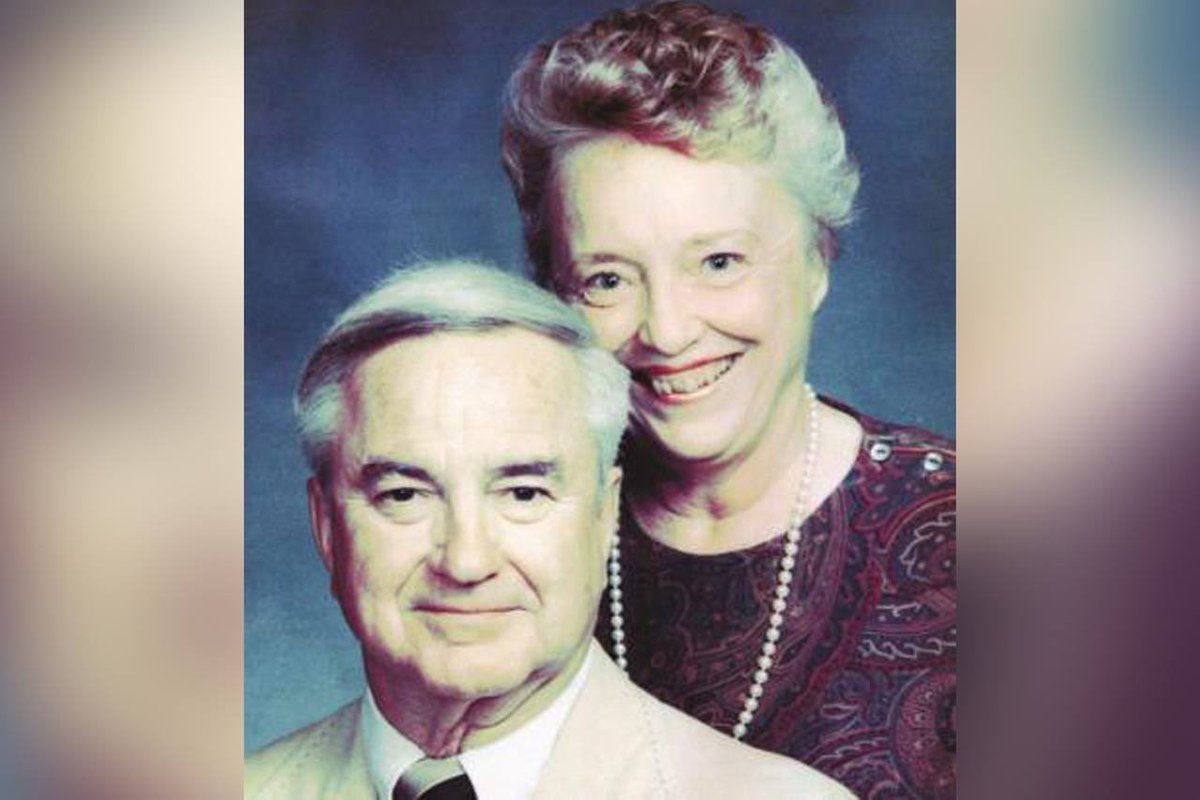
May 2014. Lake Oconee, Georgia.
Russell Dermond, 88, and Shirley, 87 — married 68 years — lived a quiet retirement in their lakefront home.
They never made it to the Kentucky Derby party.
Friends found Russell’s headless body in the garage. His head was never recovered.
Shirley was missing.
Ten days later, her beaten body — weighted with concrete blocks — was pulled from the lake.
No forced entry.
Nothing stolen.
No clear motive.
Twelve years later, the brutal double murder in a gated community remains unsolved.
Who slaughtered this elderly couple… and why?
16
44
119
14,600
TheRealCherokeeOwl 🦉 retweeted
May 24
🦉Did you Know?
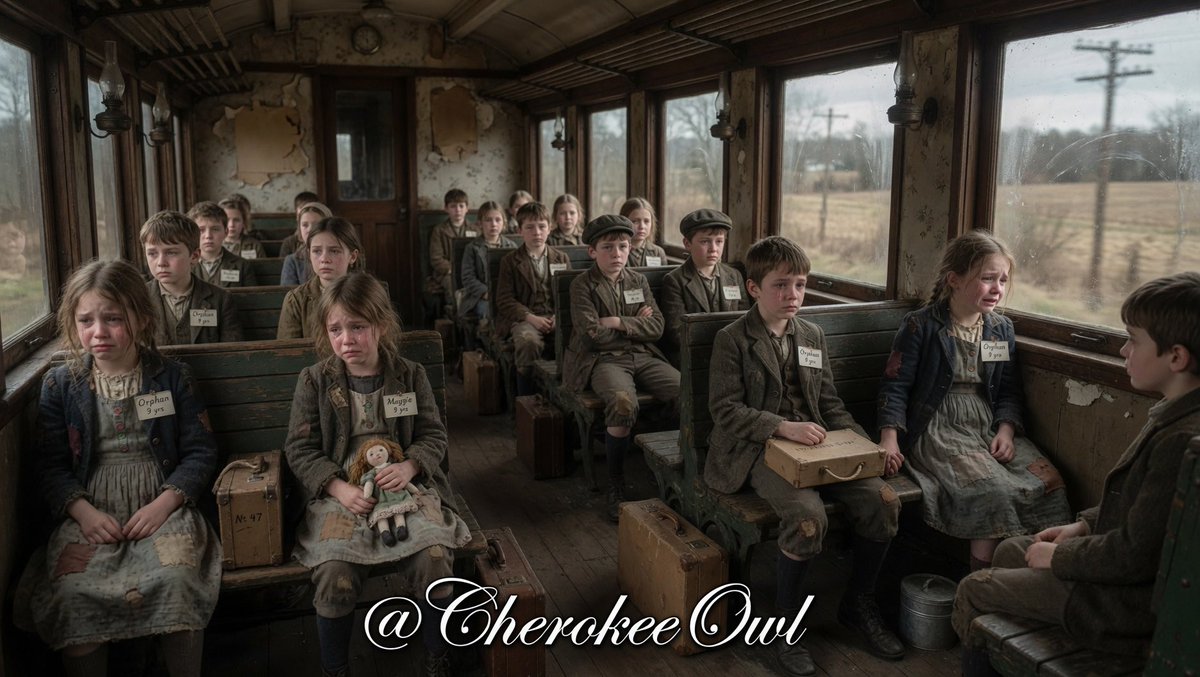
The Orphan Trains: America’s Forgotten Mass Migration of Children 🚂
Between 1854 and 1929, over 200,000 children — many as young as infants — were loaded onto trains in New York City and sent across the country in one of the largest child relocation efforts in U.S. history. These were the “Orphan Trains.”
The streets of 19th-century New York were filled with homeless, orphaned, and abandoned kids — many immigrants, especially Irish — surviving in gangs, factories, or worse. Social reformer Charles Loring Brace and the Children’s Aid Society believed the solution was fresh air, moral upbringing, and hard work on Midwestern farms. So they put kids on trains heading west and south.
At each stop, the children were lined up on platforms while local families looked them over and chose who to take home. Some found loving adoptive families and new opportunities. Others faced indentured labor, abuse, or rejection. Siblings were frequently separated with little record-keeping, and follow-up visits were rare due to the vast distances.
It was part compassion, part social experiment, and part desperation — an early predecessor to today’s foster care system. While imperfect and controversial by modern standards, many riders went on to build successful lives, and millions of Americans today descend from these resilient children.
The Orphan Trains represent both the hope and harsh realities of America’s effort to tackle urban poverty and child welfare in the Industrial Age.
#OrphanTrains #AmericanHistory
5
30
47
15,379
TheRealCherokeeOwl 🦉 retweeted
May 29
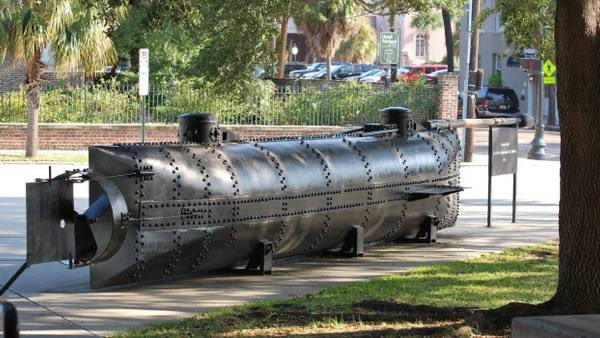
The Incredible Story of the H.L. Hunley: The World’s First Successful Combat Submarine
Imagine a 40-foot iron tube, barely taller than a man is wide, powered by seven sailors hand-cranking a propeller while their commander peers through a tiny conning tower. That was the CSS H.L. Hunley — a desperate Confederate innovation born during the Civil War siege of Charleston.
On the moonlit night of February 17, 1864, the Hunley made naval history. Slipping silently through the waters off Sullivan’s Island, she rammed a spar torpedo packed with black powder into the hull of the Union sloop-of-war USS Housatonic. The explosion sank the Housatonic in minutes — the first time in history a submarine successfully destroyed an enemy warship in combat.
But triumph turned to tragedy. The Hunley and her eight-man crew vanished that same night, lost for 131 years beneath the waves just four miles offshore. She had already sunk twice during testing, claiming 13 lives (including her namesake, Horace Lawson Hunley). Yet the Confederate navy raised and relaunched her each time.
In 1995, a team led by author Clive Cussler finally located her, buried in silt. Raised in 2000 and now preserved in a massive conservation tank at the Warren Lasch Conservation Center in North Charleston, the Hunley continues to reveal her secrets. The crew was found still seated peacefully at their stations — no panic, no desperate attempts to escape. Modern research suggests the shockwave from their own torpedo (known as “blast lung”) likely killed them instantly.
Today, you can visit the real submarine, see facial reconstructions of the crew, and even climb into a full-scale replica. It’s a haunting, awe-inspiring reminder of ingenuity, bravery, and the high human cost of innovation in wartime.
A true Charleston hidden gem that connects directly to America’s naval legacy — right alongside icons like the USS Arizona and USS Constitution.
May 26

🛳️ USS Indianapolis: The Worst Naval Disaster at Sea in U.S. History
Just days after delivering critical components for the atomic bombs dropped on Hiroshima and Nagasaki, the heavy cruiser USS Indianapolis (CA-35) was torpedoed by Japanese submarine I-58 on July 30, 1945, in the Philippine Sea. The ship sank in just 12 minutes.
Of 1,195 crew members, roughly 300 went down with her. Nearly 900 men entered the water — many without life jackets — and floated for four days in shark-infested waters. The Navy didn’t even know the ship was missing. Oceanic whitetip sharks picked off survivors one by one in one of WWII’s most harrowing ordeals. Only 316 were eventually rescued.
Captain Charles McVay III survived, but was later court-martialed for failing to zigzag — a controversial decision many crew felt scapegoated him. He took his own life in 1968.
Survivors fought for decades to clear his name (posthumously exonerated in 2000).
The Indianapolis tragedy remains the deadliest loss of life at sea for the U.S. Navy. A sobering reminder of the hidden costs of war in the final days of the Pacific campaign.
Never forget.
#USSIndianapolis
8
32
66
41,341
TheRealCherokeeOwl 🦉 retweeted
9h
🌊🐴 When the Texas heat hits and the pasture pool calls… these horses said ‘Yeehaw, time to cool off!’
Nothin’ like watchin’ these big ol’ babies splashin’ around like oversized kids at the swimmin’ hole. One minute they’re majestic and powerful, the next they’re playin’ like puppies in the waves!
Who else grew up wishin’ they could ride straight into the river on a hot summer day? Farm life at its finest — dirty, wet, and full of joy.
Tag your horse-crazy bestie who needs this in their life! 💦🐎
15
244
652
25,980
TheRealCherokeeOwl 🦉 retweeted

Jun 13
Ohhhhh 👀

Spencer Pratt claims he has a recording that will force mayoral candidate to resign.
Video: tmz.me/4gfqPxR

32
69
208
8,783
TheRealCherokeeOwl 🦉 retweeted
53 years later, the secrets of The Sting. Here are some hidden secrets of one of the greatest movies ever produced.
The Sting (1973) is a classic American caper film starring Paul Newman and Robert Redford as two con men in 1930s Chicago who team up to swindle a mob boss (Robert Shaw) for revenge after a friend is killed. Directed by George Roy Hill, it is famous for its intricate plot, iconic score, and the reunion of its stars from Butch Cassidy and the Sundance Kid. It won seven Academy Awards, including Best Picture.
8
107
149
9,033