
honorary value education program coordinator at @Verandainternationalschool instagram.com/chikunani?igsh…
Joined March 2012
- Tweets 1,976
- Following 33
- Followers 63
- Likes 13,944
78 Photos and videos












Jun 16
Give give and then some more 🙏🙏
Jun 15

At 77, while Delhi sleeps, Natarajan is already on the streets, filling over 100 matkas with free drinking water.
Known as Delhi’s "Matka Man," he quenches the thirst of nearly 8,000 people every day. But his mission doesn’t stop there — he also helps feed hundreds of workers and families every week.
This is the inspiring story of a man proving that kindness, done consistently, can transform lives.
To Watch full video visit : youtu.be/MPq8XyXTz2E?si=4WQc…
#MatkaMan #Delhi #Humanity #InspiringStories #SocialWork
[ Matka Man of Delhi, Alag Natarajan, Super El Nino, Heat Effect, Heat in Delhi, Delhi Garmi, Delhi Water Crisis, Rain in Delhi, Delhi Monsoon ]
1
Jun 16
How gracefully She falls 🙏
Jun 15

Dudhsagar Falls (lit. 'Sea of Milk') is a four-tiered waterfall located on the Mandovi River in the Indian state of Goa. It is amongst India's tallest waterfalls with a height of 310 m (1017 feet)
7
Jun 16
Sleep sleep and the some more !
Jun 15

In a hotel room, half your brain never actually sleeps. Researchers at Brown University found in 2016 that your left hemisphere stays measurably more alert in unfamiliar environments, running a background surveillance process while your right hemisphere rests. Their paper in Current Biology compared this to how dolphins sleep with one eye open and one brain half awake. Humans run a weaker version every time they sleep somewhere new.
They called it the First Night Effect. The team measured it with high-density EEG (brain-activity sensors placed across the scalp) and found the left brain acts as a night watchman, sampling sounds and potential threats while you sleep. You're technically unconscious, but part of you isn't.
Deep sleep is where the body actually repairs itself. Growth hormone is released almost exclusively during this stage, which is when muscle tissue gets rebuilt and the immune system resets. In an unfamiliar bed, you get measurably less of this, even when total hours stay the same.
The brain also runs a waste-clearance system called the glymphatic network. Maiken Nedergaard's lab at the University of Rochester showed in 2013 that during sleep, brain cells physically shrink by 60%, expanding the space between them and flushing metabolic waste out at roughly twice the waking rate. The waste includes amyloid beta, the same protein that accumulates in Alzheimer's disease. When sleep is disrupted, this clearing process slows, and metabolic waste stays in the brain longer than it should.
Your own bed sends a different set of signals to your amygdala (your brain's threat-detection center): familiar smell, familiar temperature, familiar sounds. The night watchman finally stands down, and for the first time in days, both hemispheres actually sleep.
Walker called it an underrated reset. The science says it's a biological one.
1
Jun 16

CMDA must cancel the permission given to 2000 Crore real estate project of Brigade in Ramsar Land!
Its extremely important for the Government to protect the Pallikaranai Ramsar Marsh Forest. We have made a submission at the international level that we wont alter the ecology of the Ramsar land from the designated date which is 08th April 2022. Yet Brigade applied for EC and CMDA Planning permission starting from July 2022 and got the permission in January 2025 in violation of international convention and Wetland Conservation rules 2017 (under Environment Act of India). DMK Government carried out major fraud for this approval which has been well documented by Arappor.
Will the new Government cancel the permission? Arappor has submitted representation to CM. Will action be taken against Sekar Babu and other officials for the fraud and Corruption? Chief Minister of Tamil Nadu CMDA Chennai

21
Jun 16
Love all serve all !🙏

During a dangerous ice storm in North Carolina, gas station owner Hitesh Patel was supposed to close at 10 p.m. Instead, he kept his store open all night so stranded travelers would have a warm and safe place to stay.
Among those sheltering inside were a young mother traveling with four children and other motorists who could no longer safely drive on the icy roads.
One traveler later shared the story online, saying they would have been freezing in their car if not for Patel's kindness.
Sometimes the people who make the biggest difference are the ones who quietly choose to help when others need it most

1
16
Jun 16
For the love of sharing knowledge!
Jun 15
Twenty-five years ago, the Massachusetts Institute of Technology made a bold move that most universities would never dare.
Instead of locking its world-class course materials behind campus walls, MIT decided to put nearly its entire curriculum online, completely free for anyone with an internet connection.
That decision gave birth to MIT OpenCourseWare (OCW).
What began as a bold experiment in 2001 has become one of the most significant educational initiatives in history.
Today, OCW provides materials from more than 2,500 undergraduate and graduate courses across virtually every discipline: physics, engineering, artificial intelligence, economics, biology, mathematics, computer science, and many more.
Anyone can access lecture notes, problem sets, exams, syllabi, and a growing library of video lectures, with no tuition, no application, and no account required.
According to MIT, more than 500 million people worldwide have used these resources over the past 25 years.
The impact has been profound. Students use it to ace exams, explore new fields, and launch careers. Educators around the globe integrate the materials into their own teaching. Many learners credit OCW with helping them pass professional certifications and unlock new opportunities.
Beyond its direct benefits, OpenCourseWare helped spark the global open education movement, inspiring dozens of other universities to share their knowledge freely online.
Even more impressive: the project was originally planned as a 10-year initiative. A quarter-century later, it's still expanding.
MIT now aims to reach 1 billion learners in the coming decade, while enhancing the experience with powerful new AI-powered learning tools.

3
Jun 15
Resonates ?
Jun 14

People are not leaving India because they hate India.
They are leaving because they are tired.
Tired of paying high taxes and getting dirty streets in return. Tired of garbage on roads, overflowing drains, poor civic management, and endless excuses from those in power.
The internet has changed everything. Indians can now see how taxpayers are treated in other countries. They can see clean cities, strict enforcement, accountability, and basic respect for public spaces.
That is why many of India's highest taxpayers, skilled professionals, entrepreneurs, and young talent are choosing to build their future elsewhere.
The real tragedy is that people are losing faith that things will ever improve.
Clean cities do not require rocket science. They require intent, enforcement, and accountability.
If governments cannot ensure clean streets, enforce civic discipline, and provide basic quality of life, they should stop asking why people are leaving and start asking why people no longer believe staying is worth it.
5
Jun 15
Touched !
Jun 14

"Nie rozstałam się z mężem dlatego, że mnie zdradził.
Odeszłam, bo w niedzielny wieczór słuchał pomeczowych wywiadów, kiedy nasz pies dostawał ataku padaczki na dywanie w salonie.
I dlatego, że kiedy wszystko się skończyło, powiedział mi, że „powinnam była mu lepiej o tym przypomnieć”.
Nie rozwodzę się z przemocowym mężczyzną.
Odchodzę od „porządnego faceta”. Takiego, o którym wszyscy mówią: dobry człowiek.
Zwalniam z życia dorosłego mężczyznę, który przez dwadzieścia lat konsekwentnie unikał prawdziwej odpowiedzialności.
Mam na imię Linda, mam 52 lata.
Z zewnątrz mój mąż to ideał: wita się z sąsiadami na klatce, pomaga, gdy komuś nie odpala samochód, latem rozpala grilla, przynosi wino na kolacje. Pracuje, nie pije za dużo, nie robi awantur.
„Przecież cię nie bije” — mówiła moja matka.
„To dobry człowiek. Przecież kocha tego psa”.
Ale jednej nocy, siedząc na plastikowym krześle w całodobowej klinice weterynaryjnej, zrozumiałam coś bardzo ważnego:
miłość to nie mówienie „ja się tym zajmę”.
Miłość to pamiętanie o tym, co utrzymuje przy życiu tych, których kochasz.
Pies ma na imię Roki.
Roki nie jest rasowy. To stary kundel z chorymi biodrami, wielkim sercem i ciężką epilepsją. Żeby żyć normalnie, potrzebuje jednej tabletki codziennie o 19:00.
Nie o wpół do ósmej.
Nie „jak się skończy”.
O siódmej.
Przez lata byłam systemem operacyjnym tego domu.
Wiem, kiedy są rachunki.
Wiem, do jakiego lekarza zadzwonić.
Wiem, gdzie są dokumenty.
Wiem, jaki lek bierze Roki i o której.
Mój mąż „pomaga”.
Jak mu powiem, żeby wyniósł śmieci — wyniesie.
Jak dam listę — zrobi zakupy.
Ale to ja myślę, planuję i pamiętam.
To ja noszę cały mentalny ciężar.
W zeszłą niedzielę miałam dyżur w szpitalu. Oddział był pełen, nie mogłam wyjść. O 17:30 zadzwoniłam do niego.
— Nie zdążę na kolację. Coś jest w lodówce. Ale posłuchaj uważnie: o 19:00 daj Rokiemu tabletkę. Jest w niebieskim pojemniku na stole. Ustaw sobie alarm.
— Jasne, spokojnie — odpowiedział. W tle leciała audycja sportowa.
O 18:45 napisałam SMS-a:
Roki — tabletka za 15 minut.
Odpisał: „ok”.
Wróciłam do domu o 21:30.
Cisza. Roki nie czekał przy drzwiach.
Mąż siedział w fotelu, radio grało, na stoliku leżało pudełko po pizzy.
— Gdzie jest Roki?
— No… dziwnie się zachowywał.
Serce mi zapadło się w żołądek.
Znalazłam go zakleszczonego między krzesłem a ścianą. Sztywny, z pianą na pysku, łapy drżały bez kontroli. Trwał atak. Jak długo — nie wiem. Może godzinę. Może dłużej.
Nie krzyczałam. Zrobiłam to, co zawsze: rozwiązałam problem.
Zapakowałam go do auta, pojechałam do nocnego weterynarza, z panicznym strachem, że będzie za późno. Godziny czekania. Strach. Wysoki rachunek. Roki przeżył — na środkach uspokajających.
Kiedy wróciłam do domu o trzeciej nad ranem, mąż stał w drzwiach.
— I co? Wszystko dobrze?
A potem powiedział zdanie, które zakończyło nasze małżeństwo:
— Słuchałem wywiadów po meczu, rozproszyłem się. Powinnaś była zadzwonić dokładnie o siódmej.
Wtedy zrozumiałam wszystko.
Nie chodziło o tabletkę.
Chodziło o to, że odpowiedzialność nigdy nie była jego.
Jeśli coś szło nie tak, to dlatego, że ja „nie dopilnowałam”.
Spojrzałam na niego i powiedziałam spokojnie, aż sama siebie nie poznałam:
— Nie jestem twoją matką. Nie jestem twoją sekretarką. Zadzwoniłam. Napisałam. Jedyny sposób, żebym miała pewność, to wrócić ze szpitala i sama włożyć mu tabletkę do pyska. A jeśli mam robić nawet to — powiedz mi, po co ty tu jesteś?
Próbował się bronić.
— Przecież robię dużo rzeczy. Dzisiaj nawet skosiłem trawę.
— Nie — odpowiedziałam.
— Ty wykonujesz polecenia. Ja noszę ciężar. A dzisiaj twoje „rozproszenie” prawie zabiło kogoś, kogo kocham.
Dziś pakuję kartony.
Roki leży przy drzwiach. Jest jeszcze słaby, ale wie, że wyjeżdżamy. Nie potrzebuje wyjaśnień.
Odchodzę nie dlatego, że przestałam kochać męża.
Odchodzę, bo nie chcę już być jedyną dorosłą osobą w pokoju.
Bo partner to nie ktoś, kto „pomaga, kiedy się go poprosi”.
Partner widzi.
Pamięta.
Troszczy się.
Otworzyłam drzwi samochodu.
— Chodź, Roki.
Wszedł powoli. Bez przypominania.
Ja natomiast w końcu przestałam prowadzić całe życie, podczas gdy ktoś inny spał na tylnym siedzeniu."
za Kawa z mlekiem

7
Jun 15
For the love of nature and each other ! Stay grounded !

Nobody wants a city on Mars. Nobody wants AI in every app. Nobody wants a robot butler. Nobody wants data centers everywhere. Nobody wants flying cars or humanoid robots. We want clean water, we want bees to survive, and we want a habitable planet.
4
Jun 14
To spread joy !
Jun 13

This wren is only about 4” (100mm) long, yet bathes us in beautiful song.
How much greater and impact we can make… to bring peace and joy to the spaces around us.
1
Jun 14
A tough year ahead !
Jun 14

I have never seen as many jamuns in the market this year as I have in the past three decades.
Jamun trees are literally shedding fruit everywhere. Trees that bore only sparse fruit last year are now dropping piles of jamun. Even the trees that did fruit last year have started shedding heavily this time.
What exactly is going on?
My grandmother used to say just one thing: “The summer when jamun trees shed like this, that year brings drought.”
My grandmother’s traditional knowledge is perfectly accurate when understood through botanical science. In science, this fascinating and equally startling process is called “Masting” or “Stress Fruiting.”
This last-ditch effort by trees to produce the maximum possible fruit, even at the cost of exhausting themselves, is sometimes also called “Suicide Fruiting” or a “Bumper Crop.”
Let’s understand in simple terms what this is and what the science behind it says:
*1. The ‘Survival Instinct’ (The fight for existence)*
Just as the professor explained, this is nature’s rule of ‘survival of the species’. When a tree senses a shortage of groundwater or gets signals of major climate shifts, it goes into “Defense Mode.”
The tree realizes it might not survive the coming period. At such times, instead of saving itself, it channels all its energy into producing ‘seeds’ (fruits) so that its species can continue on earth.
*2. A halt on new leaves and branches*
In such years, the tree completely stops putting out new foliage or growing branches. That’s because new leaves require more water and nutrients to sustain. The tree conserves that energy and focuses solely on maximizing jamun production. This is why even trees that had only a few fruits last year are now loaded with them.
*3. Grandmother’s prediction and science (The drought connection)*
My grandmother’s observation is absolutely spot-on, because plants detect changes in weather far earlier and far more sensitively than humans do.
The jamun tree has a ‘taproot’ that goes deep into the soil layers.
It’s only when the groundwater level drops drastically that these roots feel ‘water stress’.
This water stress is itself a signal of an approaching drought or a harsh summer.
That’s why, in a summer when jamun trees shed fruit on an unprecedented scale, it’s nature’s warning of a dry period ahead.
In short...
The jamun tree isn’t committing suicide. It’s sacrificing itself to give birth to the next generation (seeds). This cycle of nature is astonishing. The observations passed down through generations by grandmothers and the principles of science match perfectly here.
This year, definitely enjoy the jamun, but also take seriously this ‘drought’ signal given by nature. It shows we need to be careful in how we use water and other resources.
This is a WhatsApp forward but a seriously grave indicator of severely damaging water crisis ahead of us.

4
Jun 14
Every word echoes with nostalgia ! Yes so true .. soon to be 65 come sept !
1
Jun 14
For real ?!! Strange goodness surprise us when it is our innate nature !

His name is Ranjitsinh Disale.
He wanted to be an engineer. When that did not work out, his father suggested he train as a teacher instead.
In 2009, he was posted to a government primary school in Paritewadi, a small village in Solapur district, Maharashtra. The school was a crumbling building wedged between two storerooms, one of which had been used as a cattle shed.
What he found there troubled him.
Girls were being married off young instead of being sent to class. Attendance was poor. The textbooks were written in a language many of the children, who spoke Kannada at home, could not properly read.
He decided to fix all of it, starting with the books.
He learned the children’s mother tongue and rewrote their textbooks in a language they could actually understand.
Then he did something no one in India was doing at the time.
He printed unique QR codes inside the textbooks, allowing students with access to a phone to scan a page and instantly access audio poems, video lessons and practice questions.
A village school in Solapur had built a digital classroom out of paper and printed squares.
The results changed the village.
Girls’ attendance reached nearly one hundred percent. Teenage marriages in the area stopped. His QR code idea worked so well that the Maharashtra government adopted it across the state.
The following year, the national education body embedded QR codes in textbooks across the country.
In 2020, Ranjitsinh Disale won the Global Teacher Prize. He was chosen from more than twelve thousand nominations across roughly one hundred and forty countries and was the only Indian in the top ten.
The award carried one million dollars, around seven crore rupees.
Then he did something no winner had ever done before.
He announced that he would give away half the prize money, dividing it equally among the other nine finalists so that their work could continue as well.
He said teachers are the real change makers.
He meant all of them, not just himself.
A man who became a teacher only because engineering did not work out changed how an entire country learns, and then gave half his fortune to the people he had competed against.
Follow for stories India deserves to remember.
10
Jun 14
To be heard ; you need to know what you are saying and how! Worth a a read and some serious thought! Long read , worth it !

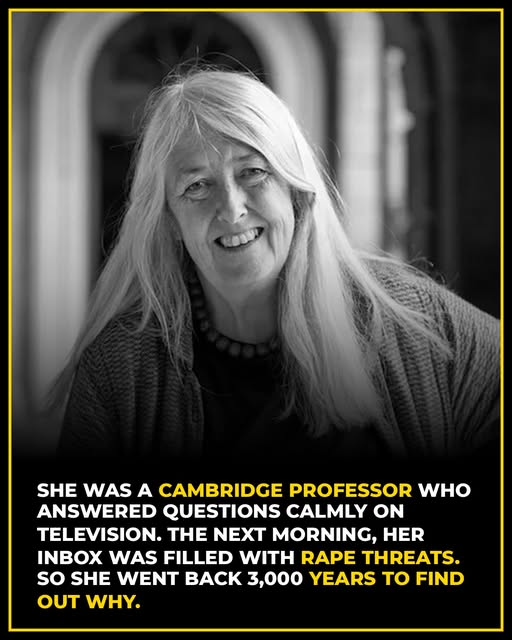
She was 57 years old.
White hair. No carefully managed image. No media training designed to make her more palatable. Just thirty years of accumulated knowledge and the calm, unhurried authority of a woman who had spent her life mastering her subject.
She sat on a BBC panel, answered questions about immigration and politics, cited evidence, made arguments — and then went home.
The next morning, her inbox looked like a crime scene.
Her name is Mary Beard — Cambridge professor, classicist, one of the most respected scholars of ancient Rome and Western civilisation alive. And the internet had decided that a woman speaking with quiet authority on television needed to be punished for it.
The messages were not criticism. They were not debate. They were rape threats. Death threats. Coordinated campaigns of personal destruction targeting her appearance, her age, her voice — anything that could be used to remind her that spaces like the one she had just occupied were not meant for her.
Most people would have gone quiet.
Mary Beard went further in.
She did what scholars do when they find a pattern that disturbs them: she followed it backward. Through decades. Through centuries. Through millennia. All the way back to some of the oldest texts in Western civilisation.
And she found it had always been there.
In Homer's Odyssey — one of the foundational works of Western literature, nearly three thousand years old — there is a scene that most readers pass over without registering its quiet violence. Penelope comes downstairs and asks the poet to sing a different song. Her own son, Telemachus, cuts her off. He orders her back to her room and tells her plainly: speech is the business of men.
She goes.
Mary Beard read that scene and recognized it immediately.
Not as ancient history. As a pattern.
In ancient Rome, women who dared to speak in public were not described as orators or thinkers. They were described as noise — disorderly sound, something that did not deserve to be called language or argument. Their voices were not speech. Their thoughts were not thoughts.
In the medieval world, women who claimed public authority were labeled as witches.
Elizabeth I — Queen of England, ruler of a nation — had to rhetorically reshape herself into something masculine just to be taken seriously as the leader of her own country.
The silencing of women who speak with authority was not invented by social media. It was not a modern pathology or a cultural accident. It was built deliberately, over centuries, into the very foundations of how Western civilisation defined who gets to speak, what authority sounds like, and who is allowed to take up space in public life.
Mary Beard had found something important.
In 2017, she published Women & Power: A Manifesto — short enough to read in an afternoon, substantial enough to reframe everything you thought you understood about why this keeps happening.
Her argument was precise and devastating.
The problem is not that women lack the ability to lead. The problem is that the model of leadership itself — the template for what public authority looks, sounds, and feels like — was built by men over centuries and has never been redesigned. When a woman enters public life and doesn't fit that template, she is not failing. The template was never built for her. It was built specifically to exclude her, and it has been doing exactly that, efficiently and continuously, for three thousand years.
The solution, Beard argued, is not to teach women to perform power the way men have always performed it. The solution is to dismantle and rebuild the very concept of what power is allowed to look like.
She kept teaching. She kept writing. She kept appearing on television — white-haired, unhurried, carrying her decades of authority without performing it, without packaging it for comfort, without apologizing for it.
The threats continued.
But other messages began arriving too. Letters from women and girls who had spent their entire lives feeling that every door was slightly too narrow, every table slightly too high, every room slightly reluctant to make space for them. Women who had spent years wondering what was wrong with them — why they couldn't quite fit, couldn't quite belong, couldn't quite be taken seriously no matter how much they knew or how hard they worked.
They read the book and understood, perhaps for the first time, that nothing had ever been wrong with them.
The room had been designed without them in mind.
That is not a personal failing.
That is a three-thousand-year-old architectural decision.
And one Cambridge professor with white hair and a calm voice — who refused to go quiet when the internet told her to — spent her career documenting it, naming it, and handing that knowledge to everyone who needed to hear it.
Telemachus told Penelope that speech was the business of men.
He was wrong then.
He is still wrong now.
And Mary Beard has three thousand years of evidence to prove it.
via The Inspireist
#FeministFriday #HERstory
6
Jun 14
Some one just said it ! Kudos 👏👏👏
Jun 13

🧐🤔YOU WANTED A WALL, TRUMP? YOU’LL HAVE ONE.
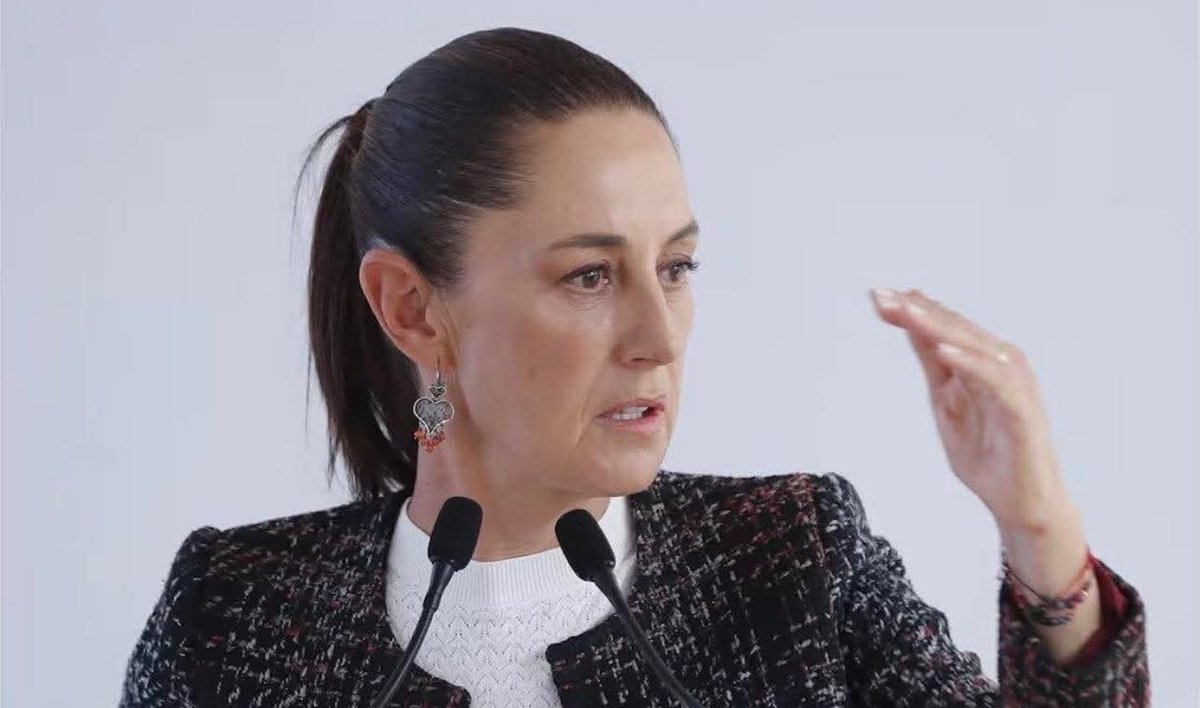
Mexico’s president, Claudia Sheinbaum, responded to Trump’s threats:
“So you voted to build a wall.
Well then, dear Americans — even if geography isn’t your strong suit, and you see America as a country rather than a continent — you should know that on the other side of that wall stand 7 billion people.
And if the word ‘people’ doesn’t resonate with you, let’s call them ‘consumers.’
Those 7 billion consumers can switch from iPhone to Samsung or Huawei in less than two days.
They can trade Levi’s for Zara or Massimo Dutti, and within six months replace Ford and Chevrolet with Toyota, KIA, Mazda, Honda, Hyundai, Volvo, Subaru, Renault, or BMW — brands that are already more popular in many places.
They can cancel DirecTV.
And even if they choose not to, they can stop watching Hollywood films and turn instead to higher-quality productions from Latin America or Europe — with richer storytelling and better filmmaking.
Believe it or not, people can skip Disney and visit the Xcaret resort in Cancún instead — or explore destinations across Mexico, Canada, or South America.
Even in Mexico, you can find better burgers than McDonald’s — with higher nutritional value.
Have you ever seen pyramids in the United States?
Egypt, Mexico, Peru, Guatemala, and Sudan have ancient wonders — none of them in the U.S.
If they were, Trump would probably have bought and resold them by now.
We know Nike isn’t the only sneaker brand. There’s Adidas — and even Mexican brands like Panama.
We understand economics better than you think.
And we also know that when those 7 billion consumers stop buying American products, unemployment will rise, and your economy — trapped behind its own self-imposed wall — will begin to collapse to the point where you’ll be begging for help.
We didn’t want to do this.
But you wanted a wall?
Well.
You’ve got one.”
Her approval rating has reached a historic level — according to a recent poll, it stands at 85%.
Community note
Mexican President Claudia Sheinbaum did not make these statements; the quote has circulated online as anonymous copypasta since 2017, predating her presidency. reuters.com/fact-check/she… snopes.com/fact-check/mex…
3
Jun 10
Matter of grave concern !
Jun 9

I was greatly surprised to learn that the Government of India has blocked many proposed tiger reserves and areas where tigers have been roaming for a long time. In these regions, there is potential for extracting minerals from the land in the future, or geological surveys have already found minerals there.
It is surprising because we are a developing country with increasing needs for self-reliance over time. Yet, on the other hand, the conservation of wildlife is also an extremely important aspect. I can say without any exaggeration that in the recent government, there has been more focus on media attention in the name of wildlife conservation, while very little actual work has been done on the ground.
They have destroyed many elephant corridors in Madhya Pradesh, Chhattisgarh, and Jharkhand in the name of coal mining. Additionally, the boundaries of several tiger reserves have been tampered with during this government’s tenure. This includes the important Ken-Betwa project in Panna and disturbances to wildlife in Tadoba, Maharashtra, along with the Yavatmal district, where they seem to have a mindset of disrupting wildlife.
Furthermore, in Sariska Tiger Reserve in Rajasthan, certain areas of critical tiger habitat are being removed areas that form part of the tigers’ territory while new areas are being added where tiger movement is only occasional and sporadic. These actions appear to be taken solely to benefit their friends.
All these situations are increasing stress on the lives of wild animals and raising the likelihood of them entering residential areas. If this continues, it won’t take long for this cycle to break down completely, because wild animals are highly sensitive and cannot tolerate such changes.
If we truly want to set an example in wildlife conservation (not just through media coverage, but on the ground), then we must stop all these unnecessary “innovations” and the destruction of forests. Otherwise, everything will shrink into very limited pockets.
Politicians plant trees under slogans like “Ek Ped Maa Ke Naam”, but they clear large forest areas elsewhere. There must be sincerity in every task mere photo-ops achieve nothing.
#forestecology #wildlifeawareness #bigcatprotection #developbharat
50
Jun 10
This is good info ! Thanks

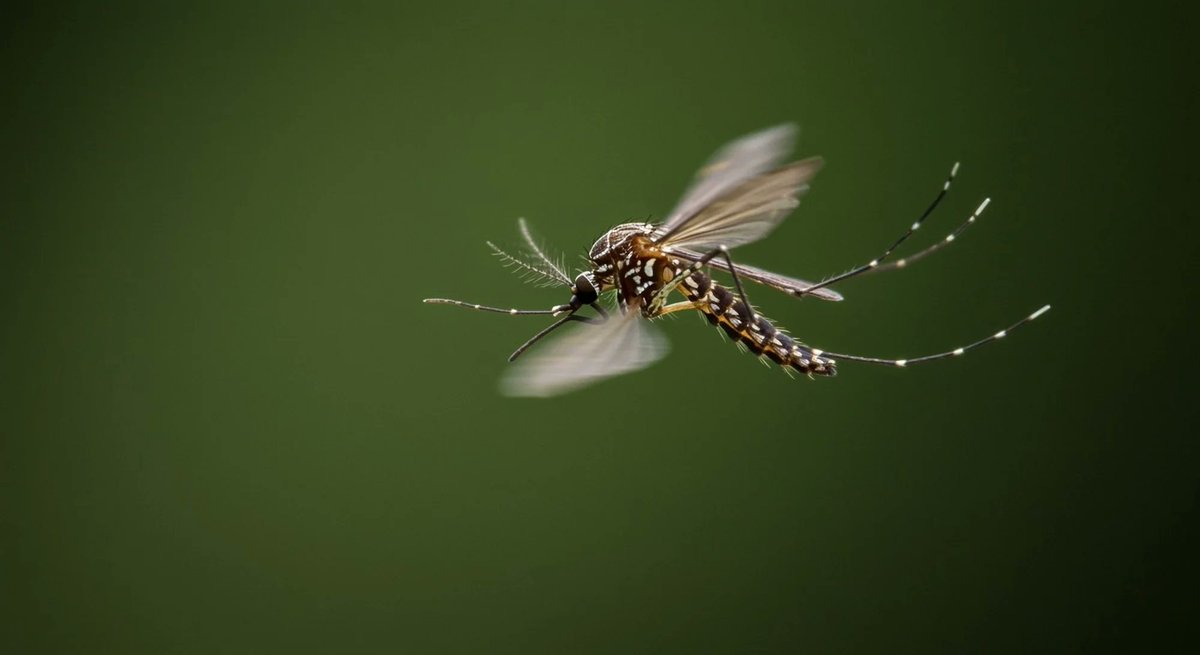
The best mosquito repellent for your patio costs $20 and runs on a wall outlet: a fan.
Mosquitoes are terrible fliers with a top speed of about 1-2 miles an hour, slower than you walk, and they struggle to make headway against even a gentle breeze. Point an oscillating fan at your outdoor seating area and they'll physically struggle to get to you.
It works on two levels too. A mosquito finds you by following the plume of carbon dioxide you exhale, plus the heat and scent rising off your skin. A fan scatters all of it and erases the trail that leads them in. So it knocks them out of the air and helps hide you from their senses at the same time.
This isn't folk wisdom. The CDC notes that fans reduce mosquito landings, and studies have found that using a fan can substantially reduce mosquito bites.
Citronella candles offer only modest protection and are generally much less effective than a fan or EPA-registered repellents. Plug in a fan, aim it at the table, and take your evening back.

57
Jun 10
Love without duty is Divine ! 🙏
Jun 10

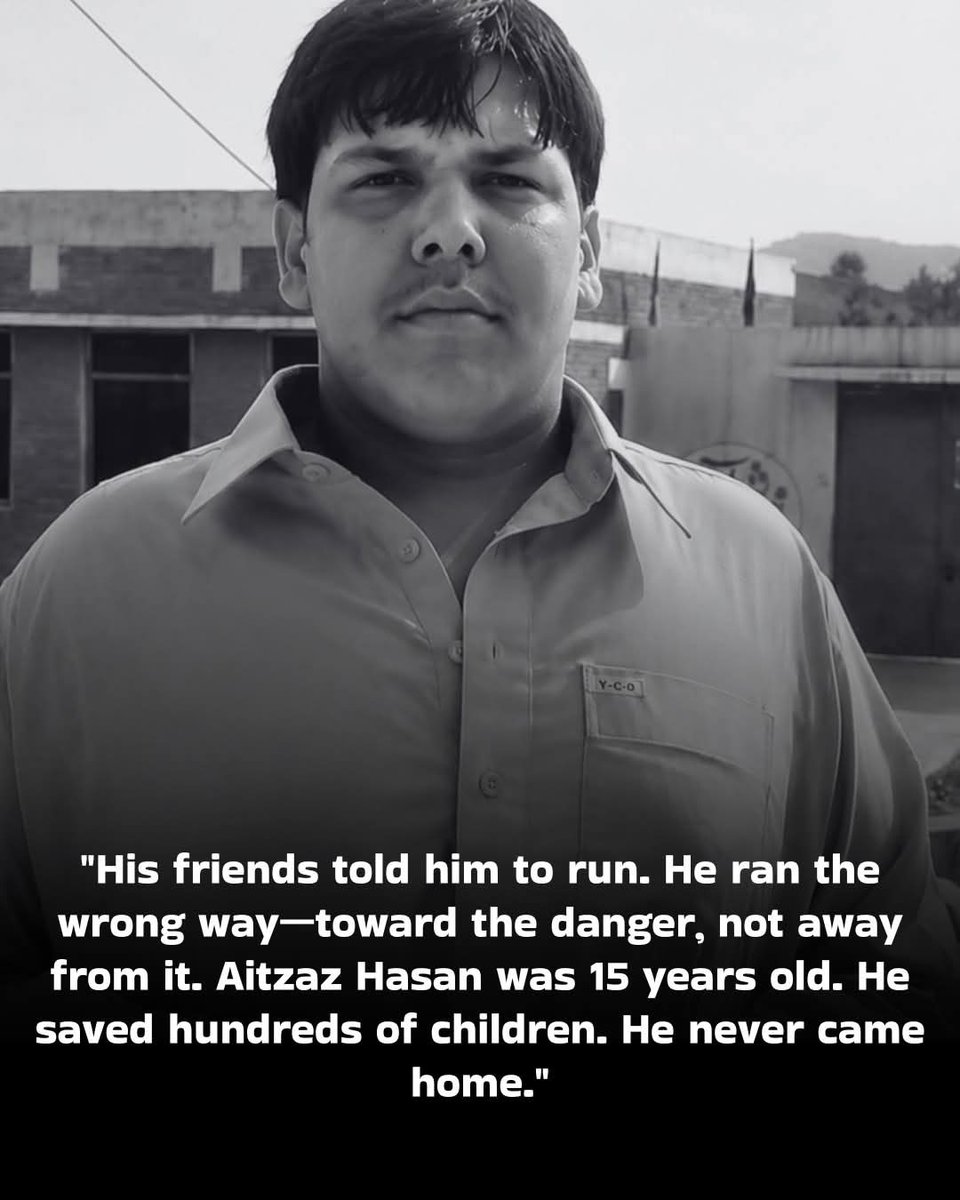
His friends told him to run. He ran the wrong way—toward the danger, not away from it. Aitzaz Hasan was 15 years old. He saved hundreds of children. He never came home.
January 6, 2014. Hangu district, Pakistan.
It was an ordinary morning.
Aitzaz was walking to school with his friends, the same walk he had taken hundreds of times before. The school gates were ahead. Inside, thousands of students and teachers had already begun another ordinary day of classes.
Then Aitzaz noticed something wrong.
A man was approaching the school gates. Something about him wasn't right—his movement, his behavior, the way he was heading toward a building full of children.
Aitzaz understood what he was seeing.
His friends saw it too.
They told him to stay back. To run. To get away. To let someone else—an adult, a guard, anyone—handle it.
Aitzaz had already started moving.
Not away from the school.
Toward it.
Toward the man.
He was fifteen years old with no weapons, no training, and no protection. He had his hands and his legs and the few seconds between that moment and catastrophe.
He used all of them.
He reached the attacker before the man reached the gates. He confronted him. He put himself physically between the bomber and the hundreds of lives inside that building.
The struggle lasted only seconds.
The attacker detonated the explosives.
Aitzaz Hasan was killed instantly.
The bomb went off outside the school gates.
The building stood.
Everyone inside went home that afternoon.
The news traveled across Pakistan within hours and across the world within days. People reached for words and found them inadequate. A fifteen-year-old boy with nothing but courage had run toward a suicide bomber to protect children he didn't know, and had given everything he had in the attempt.
What do you call that?
His family was asked to speak.
His father—carrying a grief that no parent should ever have to carry, a loss so enormous it has no proper name—found words that traveled further than any headline.
He said:
"My son made his mother cry, but he saved hundreds of mothers from crying for their children."
Read that again.
No bitterness. No anger at the world. No demand for explanations that wouldn't come.
Just a father, in the worst moment of his life, finding the meaning inside the devastation.
One family's tears so that hundreds of families would not have to weep.
One mother's grief so that hundreds of mothers could hold their children that night.
Those words broke people who had never met Aitzaz Hasan and never would.
Because in them was something we recognize even when we can't name it—the understanding that love sometimes costs everything, and that the people who pay that cost do so not for recognition or reward but simply because they cannot do otherwise.
Pakistan honored Aitzaz formally. Schools named programs after him. The government recognized his courage. Tributes came from around the world—from people in countries whose names Aitzaz might never have learned, people who had never seen his face before that week and would never forget it after.
Many people called him a hero.
Many people called him a superhero.
It is easy to understand why.
Because what we mean when we say "superhero" is not someone with extraordinary powers.
It is someone who uses whatever they have—however little, however ordinary—to protect others when the cost of doing so is everything.
Aitzaz Hasan had no extraordinary powers.
He had what every fifteen-year-old has.
Two hands. Two legs. A few seconds. And the choice—made in the time it takes to breathe—of which direction to run.
He chose toward the danger.
Not because someone told him to.
Not because he had been trained to.
Because children were inside that building.
And he could not look away.
Hundreds of children went home that afternoon and ate dinner with their families and did their homework and went to sleep in their own beds.
Because a fifteen-year-old boy decided that their lives were worth more than his safety.
His name was Aitzaz Hasan.
He was a student. A son. A friend who walked to school every morning with the people he loved.
He was fifteen years old.
And he was the bravest person in that street.
25
Jun 9
Haute Couture! Adorable 🥰

Pretty sure the first human to invent the needle just plagiarized the Common Tailorbird. 🤫
#tuesday
#Tuesdayspecial
1
41
Jun 8
If we show respect they will protect our future generations! 🙏

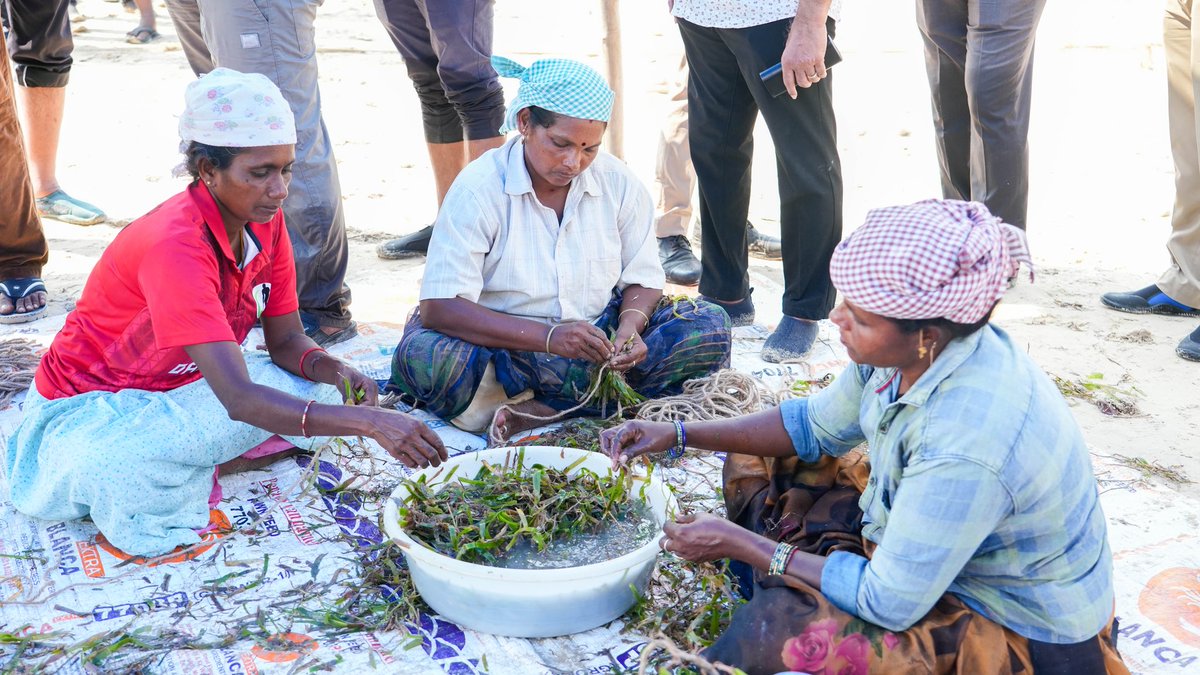
What if I told you that forests hidden in our oceans may be more valuable than many forests on land ? Coral reefs, seagrass meadows and seaweed forests are among Earth’s most important ecosystems. Coral reefs cover just 0.1% of the ocean floor yet support nearly 25% of all marine species and the livelihoods of 500 million people. Seagrass meadows support about 20% of global fisheries and can store up to 140 tonnes of carbon per hectare. Seaweed forests generate billions in economic value.
However there is deep crisis unfolding underwater. @UNEP and the @IPCC_CH warn that up to 90% of the world’s coral reefs could disappear by 2050, while seagrass meadows and other blue carbon ecosystems continue to decline.
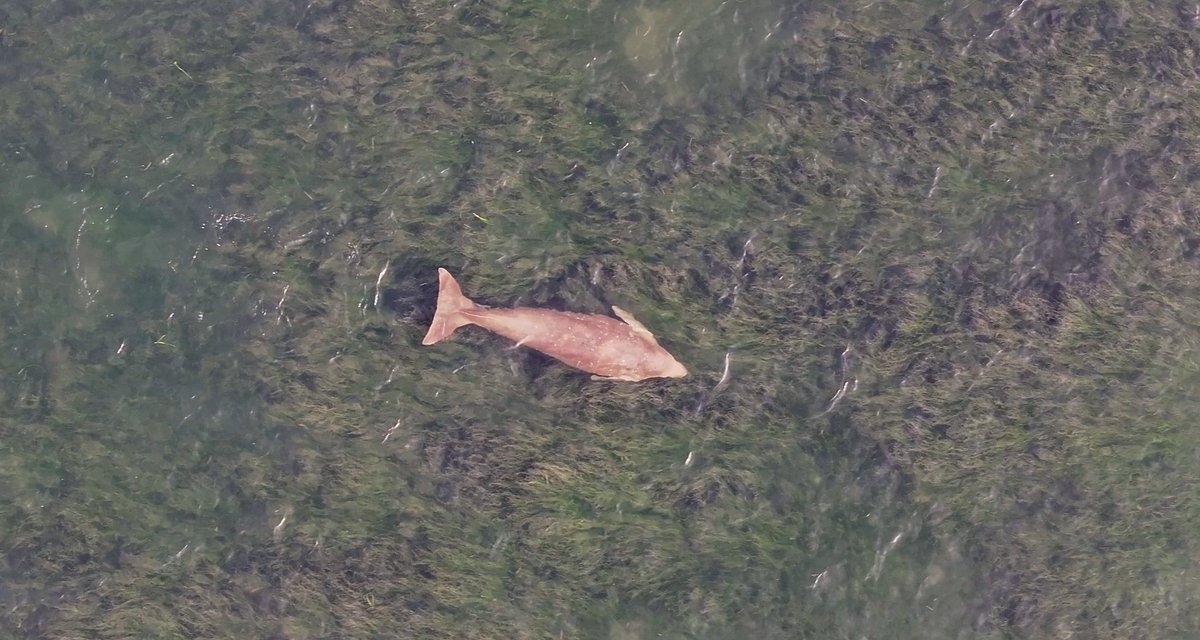
Tamil Nadu is at the forefront of marine conservation. With more than 77% of India’s seagrass meadows in the Palk Bay and Gulf of Mannar, the State is restoring seagrass, coral reefs, mangroves and islands with @WorldBankGroup such as Kariyachalli to secure the future of dugongs, sea turtles, seahorses and countless marine species. On #WorldOceansDay, we must do our bit to conserve these marine forests. #OceansDay #WorldOceanDay
1
1
5
146