
Joined May 2018
- Tweets 26,229
- Following 971
- Followers 131,612
- Likes 72,225
4,875 Photos and videos



Pinned Tweet

Jun 11
To play a ping pong hustler, Timothée Chalamet wore contact lenses that blurred his eyesight on purpose. Then he put glasses over them to cancel the blur out. When the glasses slipped, he could barely see. He told Theo Von on his podcast that his vision stayed messed up until a day before they talked.
The director, Josh Safdie, wanted the character's eyes to look small. So an eye doctor gave Chalamet strong contacts and matching glasses that worked against each other. The real player he based the role on, a 1950s American champion named Marty Reisman, actually needed thick glasses. Chalamet does not. He just wanted the glasses to feel real.
The eyesight part came last. The ping pong came first, and it took years. He started in 2018, when he was 22 and the film was only a rumor that nobody had approved yet. He brought a table into the desert while filming Dune. He practiced on the set of Wonka. He kept playing between guitar lessons for the Bob Dylan movie. By the time filming started in New York in 2024, that was six years of training for a role that mostly did not exist yet.
Two coaches got him ready at the end. Diego Schaaf, a Swiss coach who once worked on Forrest Gump, and his wife Wei Wang, who used to play for the US Olympic team. They watched him hit for a couple of minutes in June 2024 and decided he was athletic enough to pass as a pro. The crew filled the set with real table tennis champions and about 140 people who were not actors, including the tightrope walker Philippe Petit and the magician Penn Jillette.
He played every ping pong shot himself, with no stunt double. Some of the longer rallies were planned out and touched up with computer effects later, but the swing and the footwork and the stance were all him.
He won the Golden Globe for it. The Oscar went to Michael B. Jordan for Sinners. The people calling it a snub mostly saw the two hours on screen, not the six years it took to make them look easy.
Jun 8

Timothée Chalamet losing Best Actor for Marty Supreme will go down as one of the greatest Oscar snubs of all time.
43
107
4,138
2,075,424
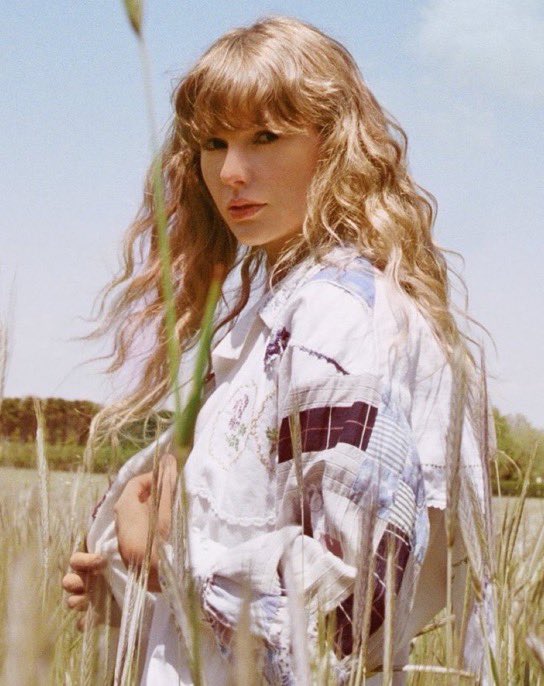
Olivia Rodrigo's 82 million Spotify streams in a single day generated roughly $330,000 in total streaming royalties for the music industry. Her Unraveled Tour, which opens September 25, is projected to gross well over $200 million from 86 sold-out arena dates.
Spotify pays between $0.003 and $0.005 per stream, split between the label, the publisher, and the songwriter. At the midpoint, 82 million release-day streams adds up to about $330,000 total. A typical signed artist takes home around 15 to 20 percent of that after the label's cut. Rodrigo's arena shows averaged $1.9 million per night on her last tour, and the Unraveled Tour has booked multiple nights per city.
Taylor Swift's Eras Tour grossed $2.07 billion from 149 shows, more than double the previous concert tour record. Her streaming royalties on those same albums were a fraction of that. Both artists built their financial model the same way: streaming builds the audience, touring is where the money comes from. Rodrigo's previous tour, the Guts World Tour, grossed $185 million from 95 shows across 2024 and 2025.
Rodrigo walked into her first record deal owning something Swift spent two decades fighting for. Still a teenager, signing with Geffen Records in late 2020, she negotiated the right to own her master recordings, the actual recorded versions of her songs that determine who earns from streaming. She said Swift inspired the move. Swift signed her first deal at 15 with no master ownership. She later lost her catalog when a music manager bought her label for $300 million in 2019, watched it get resold to Shamrock Capital, an investment firm, and spent years re-recording four of her original albums to compete with her own songs on streaming.
She bought them back in May 2025 for around $360 million. As a teenager, Rodrigo secured what Swift paid $360 million to own at 35.

Olivia Rodrigo joins Taylor Swift as the only female artists to have an album debut with over 80 million streams in Spotify history.

2
4
1,068
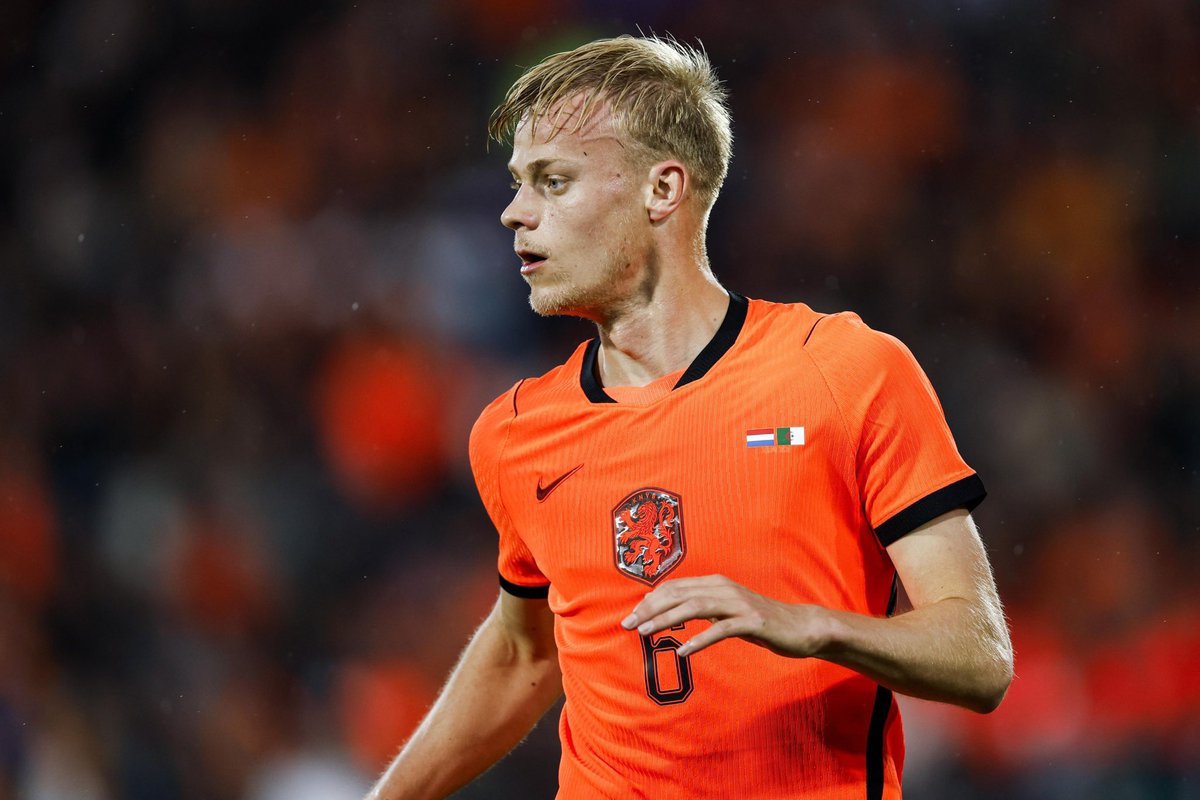
Brighton paid around £2 million for a defender from a Dutch second-division club five years ago. Tottenham are now being asked to pay £70 million for him. That is a 40x return. It did not happen by accident.
Jan Paul Van Hecke was playing for NAC Breda in the Dutch second division when Brighton signed him in 2020. You could fit NAC Breda's ground inside Tottenham's three times over. Nobody at Spurs was watching.
Brighton sent him on loan twice, once to Heerenveen and once to Blackburn Rovers, then brought him back and turned him into one of the Premier League's best passing defenders. In 2024-25, he completed 379 progressive passes, those forward balls that cut through defensive lines, the second-highest total by any Brighton player in a Premier League season. He carries the ball forward better than 97 out of 100 centre-backs in Europe. Brighton's analysts say his profile sits closest to Marquinhos at PSG. Since becoming a starter, he's been part of 25 non-penalty Premier League goals. That ties him with Kyle Walker. Only Man City and Liverpool players rank above him.
Spurs need him because they finished 17th last season. A club that reached the 2019 Champions League final survived relegation on the final day by beating Everton 1-0 while West Ham went down. Their first genuine relegation battle in 49 years. A club in that position cannot spend the summer being patient.
Brighton have already rejected two bids, roughly £40 million and then £50 million. CEO Paul Barber confirmed both on talkSPORT. The price now sits around £70 million, potentially £81 million, which would make Van Hecke the fifth most expensive centre-back ever sold. Pay that and it becomes Tottenham's largest transfer in club history, past the £56 million they spent on Xavi Simons.
One more number: Van Hecke's contract expires in June 2027. Tottenham could wait 12 months and sign him for free. They cannot afford that patience after nearly going down.
Brighton ran this same model before: Caicedo, bought for £4 million from Ecuador and sold to Chelsea for £115 million; Cucurella, bought from Getafe for around £12 million and sold to Chelsea for £56 million; Mac Allister, bought for around £7 million and sold to Liverpool for £35 million. Find the overlooked player, develop them for a few years, sell to the club whose desperation sets the price.
Whatever Spurs pay will fund whoever Brighton have already spotted at a ground a third the size of their own.

🚨🇳🇱 Negotiations for Jan Paul Van Hecke to Tottenham continue after personal terms agreed days ago.
Spurs are pushing to get it done.
1
4
2,945
The PG-13 rating exists because Spielberg hated one of his own films. Indiana Jones and the Temple of Doom was so violent that parents flooded the ratings board with complaints. Spielberg personally called the board president and suggested a new tier between PG and R. Red Dawn, released months later, became the first PG-13 film. Indiana Jones and the Last Crusade was the apology.
Spielberg later said there was "not an ounce of my own personal feeling" in Temple of Doom. He called it too dark, too horrific. He and George Lucas spent five years going through scripts before accepting Jeffrey Boam's. The playwright Tom Stoppard rewrote most of the father-son dialogue, uncredited.
That father-son story was Spielberg's own idea. He cast Sean Connery in the role, a man only 12 years older than Harrison Ford in real life. Connery was 58 when the film came out. Ford was 46. Spielberg later called it his "biggest contribution" to the entire Indiana Jones series.
Harrison Ford was the one who chose who would play his younger self. In 1986, River Phoenix had played Ford's son in The Mosquito Coast. Ford told Spielberg that Phoenix was the young actor who most looked like him as a teenager. Phoenix got the role. He didn't study Indiana Jones. He watched Harrison Ford between takes instead. Ford then spent a week on set coaching Phoenix on the mannerisms that make Indy who he is.
The opening sequence, the one that ends with that smash-cut, was shot at the very end of production. But Spielberg had mapped every detail. Young Indy gets the whip by accident on a circus train. He gets the fedora from a grave robber. He cuts his chin while cracking the whip for the first time. Harrison Ford's real chin scar came from a car accident. In the film, a 13-year-old gives himself a matching one. The fear of snakes comes from falling into a train car full of them.
That 17-second cut, two actors sharing one hat across 26 years of screen time, produced the highest-grossing film of 1989 with $474 million worldwide.
Jun 12

One of Steven Spielberg’s smoothest transitions comes in INDIANA JONES AND THE LAST CRUSADE (1989): young Indy puts on the fedora, and the film smash-cuts to Harrison Ford lifting his head into frame years later. A perfect handoff.
2
5
28
4,726
On its first day in the water, the star of JAWS sank straight to the bottom of the Atlantic. The mechanical shark Spielberg built to carry the film had been tested in freshwater. Nobody checked whether saltwater might be a problem.
The ocean ate through the shark's electric motor within a week, flooding the rubber tubes that moved its body. For most of the 159-day shoot, it didn't work. Richard Dreyfuss later said anyone on Martha's Vineyard could track the film's progress by listening to crew radios: "The shark is not working. The shark is not working."
Spielberg was 27, had one prior film to his name, and was watching his budget go from $3.5 million to $9 million while his 55-day schedule fell apart. The crew renamed the production "Flaws." He thought his career was over.
Which meant he had to shoot around the shark. Camera angles from underwater, looking up at legs dangling above the surface. Yellow barrels drifting across open ocean with nothing to explain why they were moving. A fin. The crow's nest shot @TheCinesthetic just shared, the camera looking down from the mast as the water opens into something enormous below, came from the same place. Spielberg had to film the ocean because his shark was at the bottom of it.
John Williams wrote the score during this same chaos. When he played his main theme to Spielberg on a piano, Spielberg laughed and said it sounded like a joke, just two repeating notes, E and F, played on a tuba. Williams described those notes as "grinding away at you, just as a shark would do, instinctual, relentless, unstoppable." The American Film Institute ranked it the sixth greatest film score ever composed. Spielberg's verdict on the broken shark: "It was a godsend. It made me become more like Alfred Hitchcock."
JAWS opened June 20, 1975 and held number one at the American box office for 14 weeks straight. It became the first film in U.S. history to cross $100 million domestically, clearing The Godfather's record in just 78 days. Worldwide it earned nearly $500 million. Beach attendance dropped that summer. In 1975, summer releases were 32% of the annual U.S. box office. By the mid-1990s, that figure had nearly doubled, because studios saw what one desperate director built when he had no other choice.
Spielberg turned down every JAWS sequel. Said the experience was too traumatic to revisit.
Jun 13
JAWS (1975) is so cinematic it’s ridiculous, and the shot from the top of Quint’s crow’s nest is a perfect example. A simple angle that turns the open ocean into something vast, beautiful, and deeply unsettling.
1
1
14
3,066
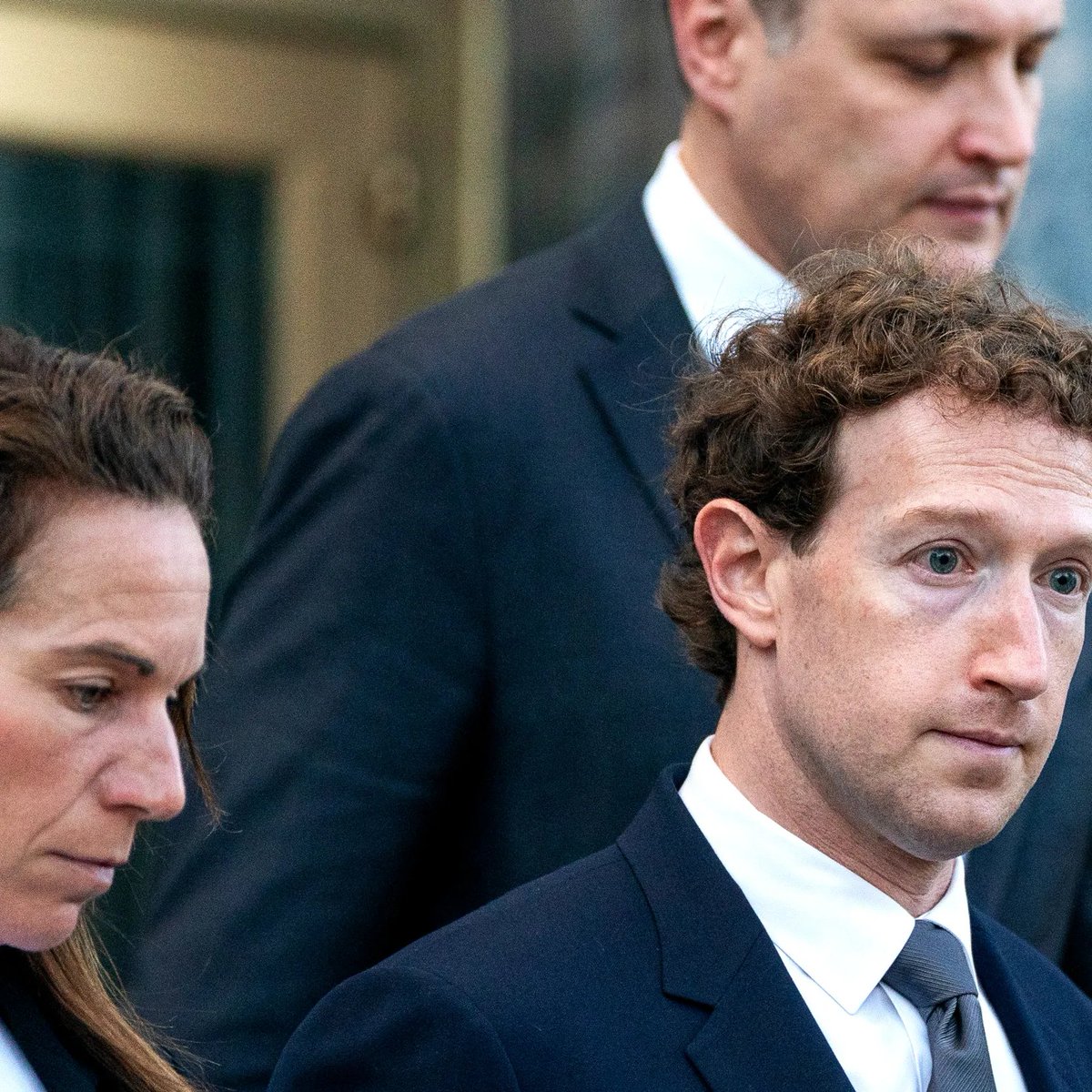
Meta paid $14.3 billion to acquire 49% of Scale AI, the company that built its entire business paying people to label training data for AI models. The 28-year-old CEO of that company, Alexandr Wang, joined Meta as its Chief AI Officer as part of the deal. Then Meta drafted 6,500 of its own engineers to do the same work Scale AI was built to handle.
Scale AI ran data labeling for OpenAI and Google. Its business: recruit workers globally, pay them to tag images and write training examples, and sell that labeled data to AI labs. Meta's $14.3 billion investment was the second-largest deal in company history, behind only the $19 billion WhatsApp acquisition. The engineers Wang now oversees are doing what Scale AI's workers did, writing coding puzzles and logic problems, two tasks per week, with no option to transfer to a different team and no way out besides quitting.
There is a financial argument, and Zuckerberg made it himself. In a recorded internal meeting, he said the average Meta engineer has "significantly higher" intelligence than outside contractors, making them a better source of training data. A Meta software engineer earns roughly $450,000 in total compensation per year, around $215 an hour. US data labeling firms charge $20 to $30 an hour for complex coding work. But those are general workers. Meta's engineers spent years building systems used by billions of people. Their puzzles carry specialist knowledge an outside worker simply does not have.
The bigger picture is harder to defend. Meta is spending $125 to $145 billion on AI infrastructure this year, nearly double its 2025 total of $72 billion. Reality Labs, the division that ran the metaverse, lost $83.5 billion over six years. The man running the Applied AI unit, Maher Saba, was a vice president in that same division. Meta's first model designed to compete with the best AI in the world, Muse Spark, launched in April and still trails OpenAI and Anthropic.
The gap between where Meta's models sit and where they need to be is why engineers are writing puzzles instead of building products. To train a competitive AI model, you need two things: computing power, which Meta is buying by the hundreds of billions, and expert human training data. Meta is getting the second one from engineers already on its payroll. An engineer already drawing a salary costs nothing extra to redirect.
When 1,600 employees signed a petition against a keystroke tracker that only lets them pause it for 30 minutes, the math stopped being the whole story.
Jun 13

META IS AN ABSOLUTE MESS INSIDE RIGHT NOW
Wired just dropped an exclusive, and the details are wild.
This week someone interrupted a livestreamed Meta meeting, open to thousands of employees, with an expletive-filled rant about "being the company's bitch." They told the presenters to find a specific Meta AI executive and "tell him that he's a piece of shit."
A presenter covered their face with their hands. Employees in the chat called the start "spicy."
Here is what's behind it.
Meta's AI restructuring cut 8,000 jobs last month, 10% of the company. The same restructuring feeds a unit called Applied AI, where 6,500 engineers and product managers have been drafted in waves since April. There is no application process. You get selected, and your options are join or leave the company. Members call themselves "draftees."
The new job: writing puzzles and coding problems to train Meta's AI models, two tasks a week. People hired to build apps for billions of users now assemble training data for hundreds of AI scientists.
"It's literally the gulag," one employee told WIRED. "You have zero purpose in life all of a sudden, you barely interact with anyone, you just have these tasks every week."
Another: "Most people find the work soul-crushing."
At the same time, Meta started recording US employees' clicks and keystrokes to generate more AI training data. Over 1,600 employees signed a petition demanding it stop. The concession: employees can pause the tracking for up to 30 minutes.
Zuckerberg's response came in an internal memo Friday: "We've made mistakes and will almost certainly make more." He repeated his promise of no more mass layoffs this year. His fixes: limits on the manager ratios Meta had deliberately pushed to 50-to-1 on some teams, bigger budgets for team events, a hackathon next month, and assigned desks by the end of the year.
That same memo says Meta's north star is "to be the best place for the most talented people in the world to make an impact."
The most talented people in the world are writing puzzles for a model and asking permission to pause the keystroke logger.
META declined to comment.
4
3
30
9,724
Since yesterday, you can download a model that beats GPT-5.5 on real-world coding benchmarks and costs 12x less to run. Its name is MiniMax M3. It has 428 billion parameters. Only 23 billion fire per word it generates.
M3 uses a design called Mixture of Experts, which splits the model into specialist groups. For each word it processes, a small router picks the 23 billion parameters most relevant to that input and skips the rest. The work done per word is closer to what a much smaller model does. The breadth of knowledge comes from the full 428-billion pool.
Running a full day's worth of an AI coding agent, roughly 1.5 million inputs and 400,000 outputs, costs about $375 per month on Claude Opus 4.7. The same workload on M3 runs $27. On output specifically, GPT-5.5 charges $30 per million words it generates. M3 charges $2.40.
On SWE-Bench Pro, a benchmark built from 1,865 real GitHub pull requests across 41 maintained open-source repositories, M3 scored 59.0%. GPT-5.5 scored 58.6%, Gemini 3.1 Pro scored 54.2%, and Claude Opus 4.7 came in at 64.3%. Anthropic's current flagship, Claude Opus 4.8, sits at 69.2%, roughly 10 points ahead. MiniMax ran these benchmarks on its own servers, using Claude Code to run the tests, and no one has independently confirmed the numbers yet. On web search and browsing tasks, M3 scored 83.5% on BrowseComp against Opus 4.7's 79.3%.
Hugging Face is the platform developers use to share AI model files. Yesterday's upload means anyone can download M3 and run it on their own hardware, with data never touching MiniMax's servers. The model is about 855 gigabytes uncompressed. A compressed version brings that to 128 gigabytes, roughly the storage of a mid-range smartphone, and runs on Apple's M3 Ultra chip with 512 gigabytes of memory. For healthcare and finance teams where data cannot leave internal systems, running this level of AI coding ability on their own servers wasn't possible last week. It is now.
MiniMax was founded in January 2022 by Yan Junjie, a former SenseTime executive. It raised $620 million in a Hong Kong IPO in January 2026, backed by Alibaba, Tencent, and Abu Dhabi's sovereign wealth fund. Revenue grew 174% to $79 million in 2025, against a net loss of $512 million. The stock ran from HK$165 to HK$1,330 in two months after IPO, then pulled back to HK$435 today. 415 people built this.
Jun 12

MiniMax M3, Open-Weight, Now On Hugging Face , with only ~428B parameters and ~23B activated parameters
Weights:
huggingface.co/MiniMaxAI/Min…
MiniMax Sparse Attention:
huggingface.co/papers/2606.1…
2
7
2,463
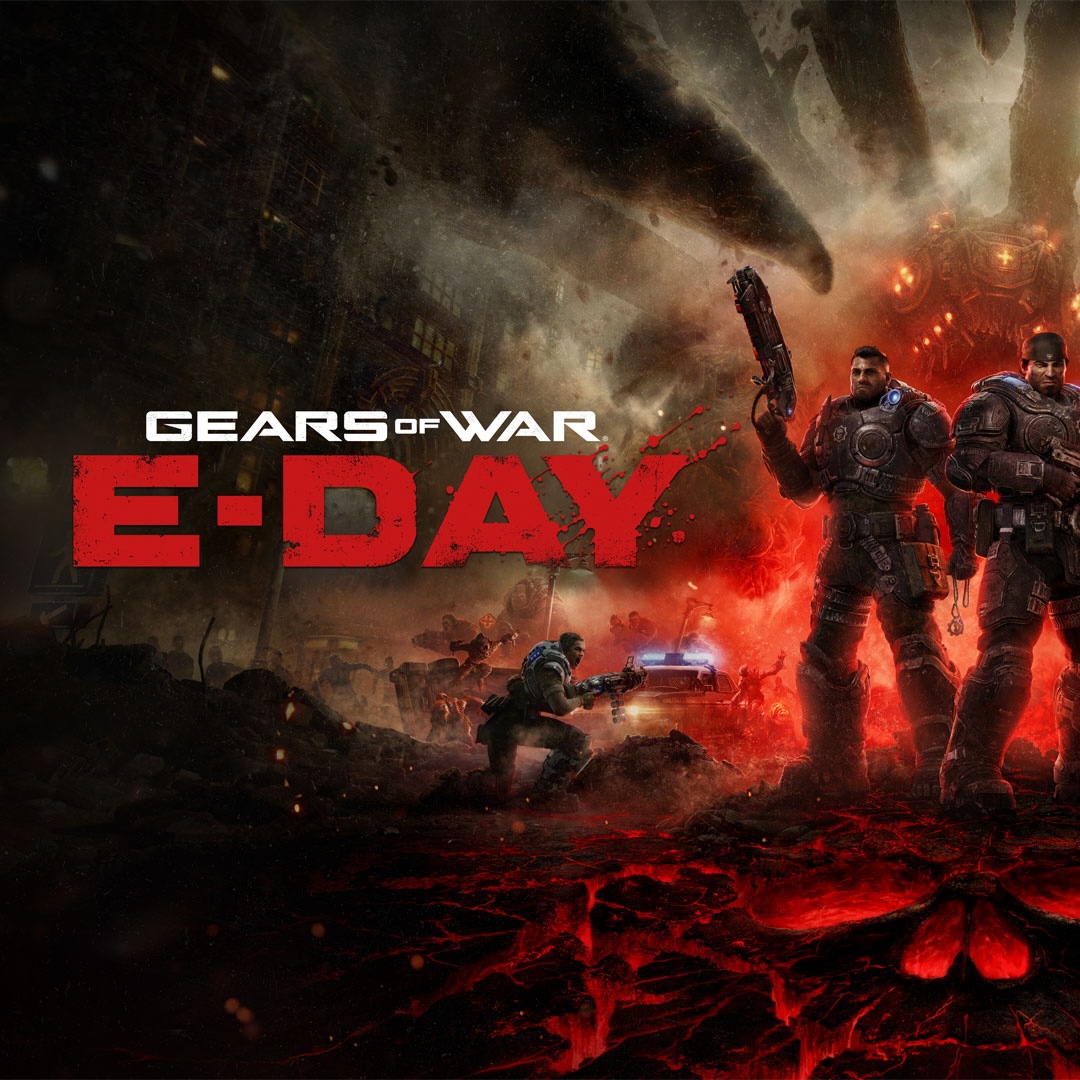
Microsoft reportedly spent $400 million making Gears of War: E-Day. The game launches in October on Game Pass, where 40 million subscribers get it for $20 a month. Breaking even means selling roughly 5.7 million copies at $70 a pop.
Spider-Man 2 cost Sony $315 million to develop. It needed 7.2 million copies at full price just to break even, sold over 10 million, and eventually turned a profit. Spider-Man 2 had 89 million potential buyers on PS5. E-Day's launch platform, Xbox Series X/S, has sold 34 million consoles.
Microsoft confirmed last week that E-Day is not coming to PS5. Tom Henderson, the insider who broke the budget story, said on his podcast that the game "probably wasn't going to make money even if it was on PlayStation."
Hardware is another problem. Xbox Chief Strategy Officer Matthew Ball said in June that console demand is outstripping supply, citing a shortage of memory chips driven by AI data center demand. Fans who want to play E-Day on console cannot necessarily buy one.
If this sounds like a company losing money on purpose, it might be. Microsoft's bet is subscriptions. Game Pass generates close to $5 billion a year from 40 million subscribers paying $20 a month. A single $400 million game is 8% of that annual take in development costs. If E-Day keeps even a fraction of those subscribers from canceling through winter 2026, Microsoft considers it a win regardless of whether anyone pays full price.
The franchise's own history puts a ceiling on this bet. Total Gears sales across all titles since 2006: over 41 million copies as of 2019. Game Pass already has 40 million subscribers. Microsoft is spending $400 million to hold onto subscribers for a service that already has nearly as many members as the franchise has lifetime buyers. The math of selling games one copy at a time has never supported that logic.
Jun 12

Gears of War: E-Day reportedly has an over $400 million development budget
[via @_Tom_Henderson_}

2
2
9
2,969
When David Beckham signed with the LA Galaxy in 2007, Real Madrid's president publicly said Beckham was going to Hollywood to become "half a film star." He meant it as an insult. He wasn't wrong.
Beckham buried a $25 million expansion clause in the contract, one that let him buy any MLS franchise upon retirement. He exercised it in 2014, founding Inter Miami CF. The club is worth over $1.2 billion now. The San Diego FC expansion franchise, sold in 2024, cost new owners $500 million. Beckham paid 20 times less for the same thing, a decade earlier.
That same contract forced the league to create the "designated player" rule, sometimes called the Beckham Rule, which lets a club sign one elite player outside the league's wage limits. The rule, applied 16 years later to bring Lionel Messi to Miami, pushed Inter Miami's revenue from $60 million to $190 million in a single year. They went from 13th in MLS revenue to first.
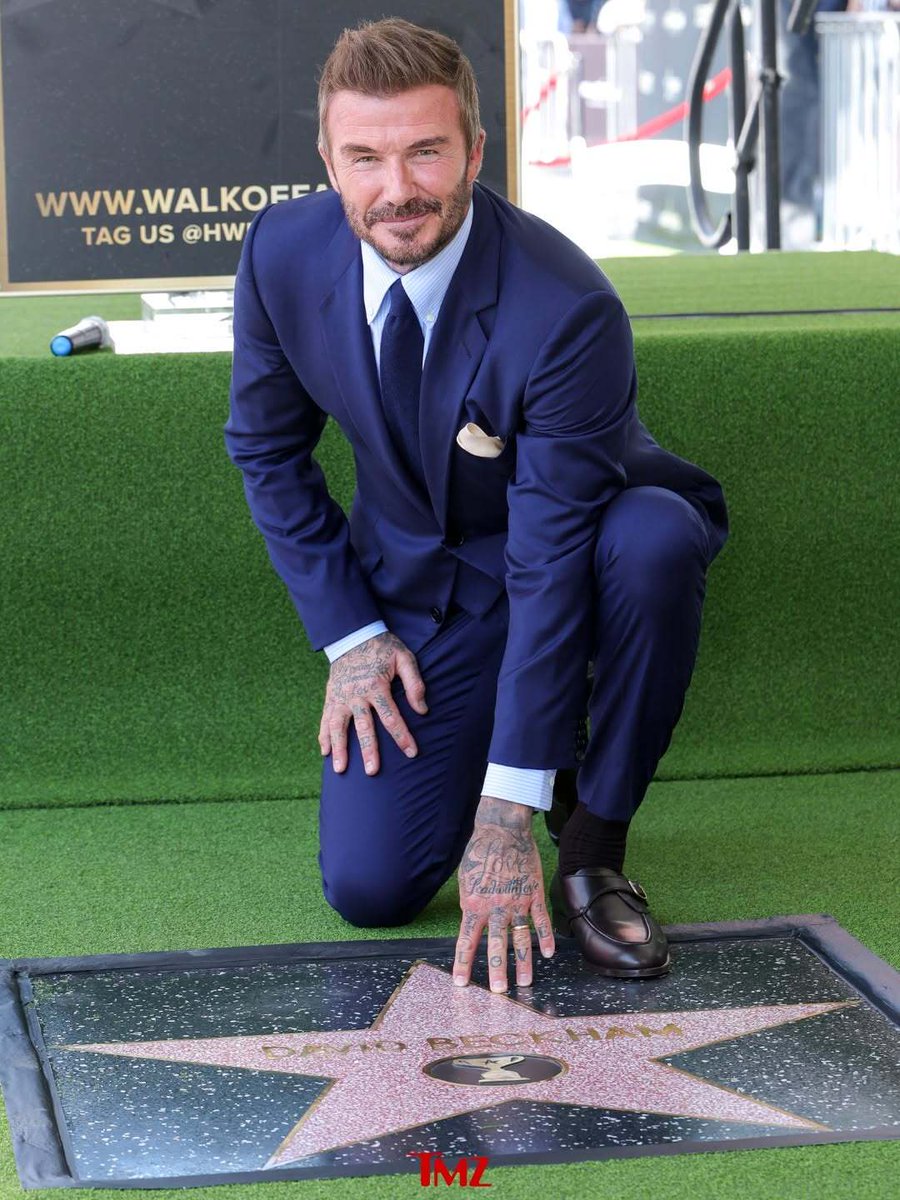
The Hollywood Chamber of Commerce added a Sports Entertainment category in 2021 for athletes who built second careers in entertainment after retiring. Beckham qualified through Studio 99, the production company he co-founded. The Netflix documentary Studio 99 made reached the top 10 in all 90 countries where Netflix tracks viewership. His holding company posted $44.9 million in profit in 2024. In 2022, a brand licensing firm called Authentic Brands Group paid a reported $269 million to buy 55% of his business. A Walk of Fame star costs $85,000 to install. He once paid $25 million for a team now worth $1.2 billion.
MLS TV rights were worth $8 million a year when Beckham arrived in 2007. They're $250 million now. His arrival reshaped what the whole league was worth to broadcasters.
The Sunday Times Rich List puts the combined Beckham fortune at £1.185 billion (around $1.5 billion) in 2026. In 2025, King Charles knighted him. Football made him famous. The $25 million clause built what came after.
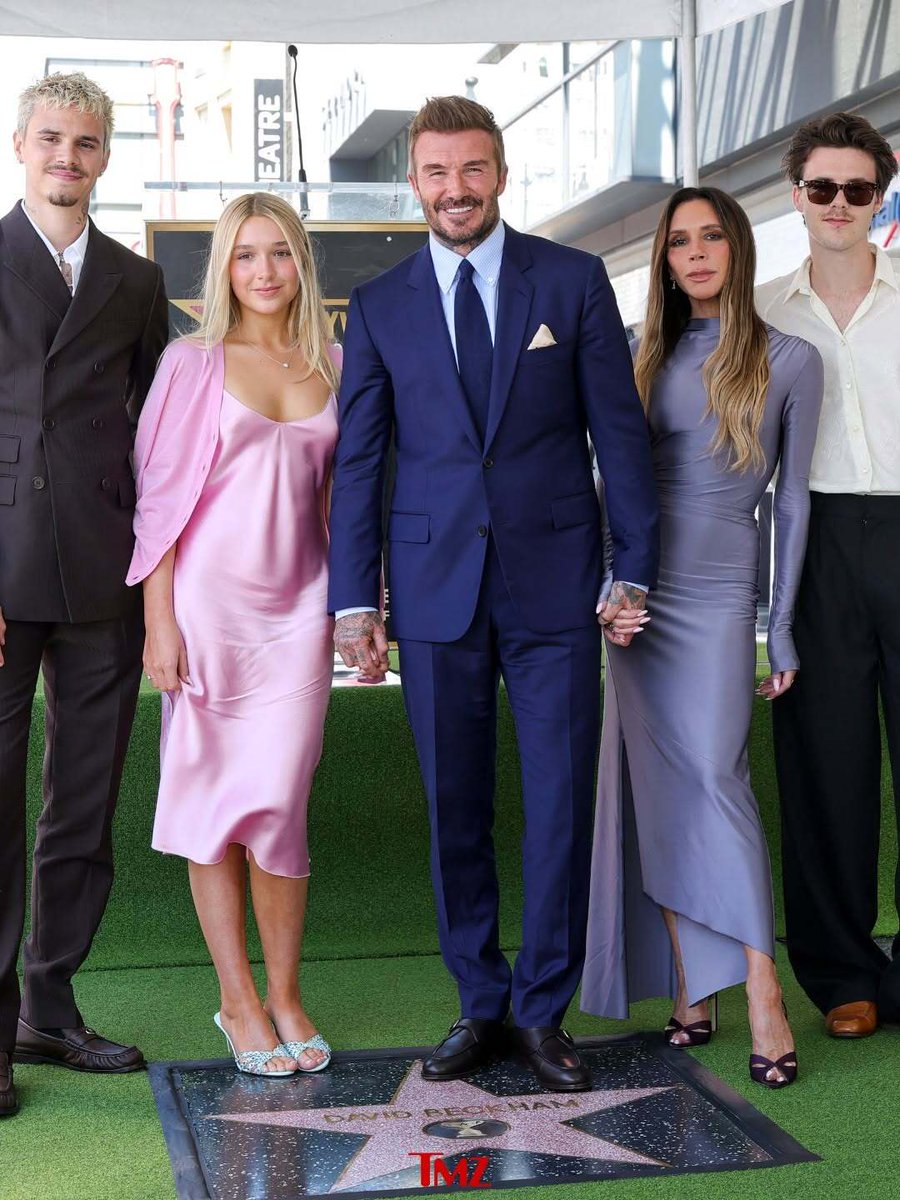
When he knelt and touched his name on the star, three of his four children stood behind him. His eldest lives 20 minutes away.

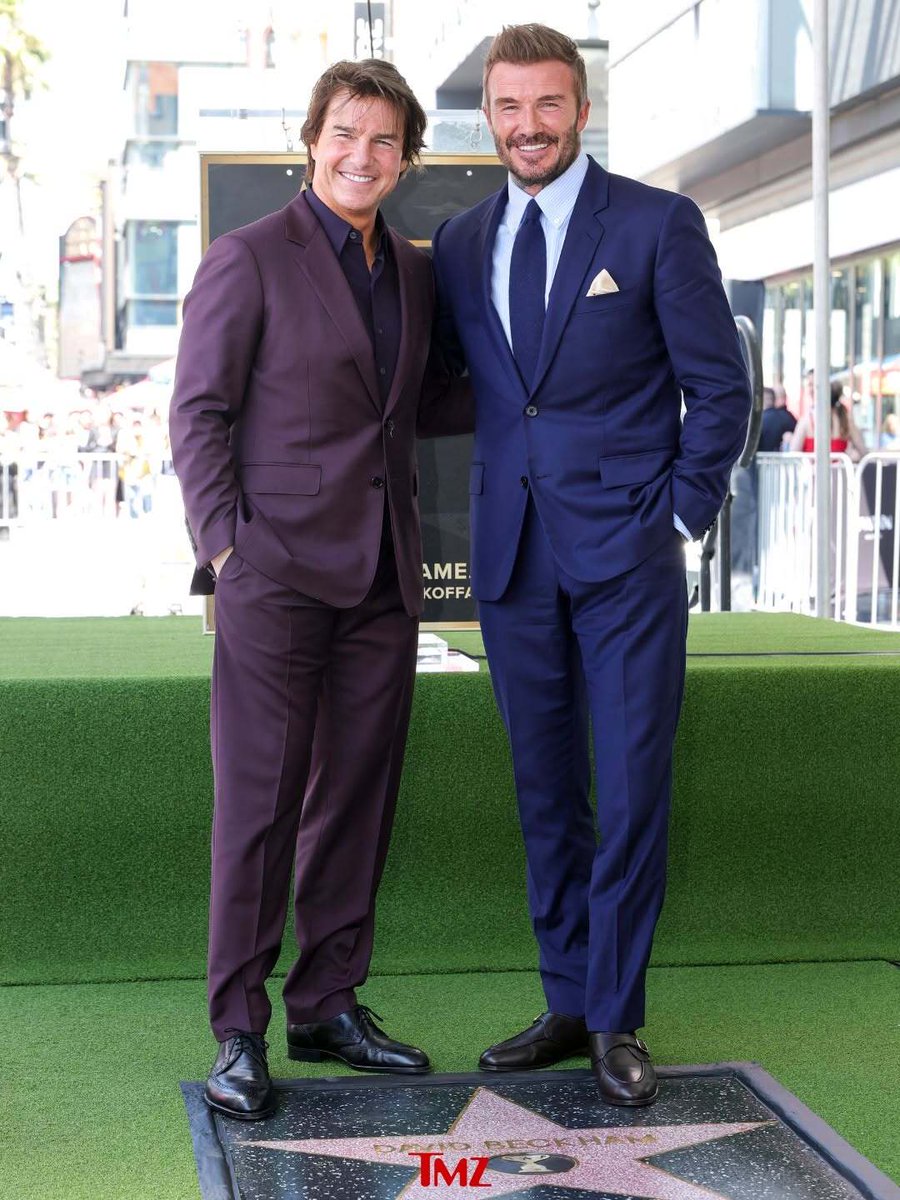
⭐ David Beckham gets a Hollywood star, son Brooklyn is not there, but Tom Cruise is. tmz.me/4aFQEU7
2
12
124
40,210
Every time a shooting game has made you crouch before firing, you're following a rule invented in 1999 by a 21-year-old named Minh Le.
Le was in his final year at Simon Fraser University in British Columbia, spending 20 hours a week on a mod for Half-Life. A mod uses an existing game's code as a base to build something new. He had already made mods for Quake, the dominant shooter of that era, where you could move sideways at full speed and still hit your target. Players could run, jump, and fire all at once, which made matches feel more like pinball than tactics. Le wanted the opposite.
His solution: the further you move, the wider your shots spread. Stand still and your bullets go where you aim. Crouch and they go even straighter. Walk, run, or jump, and your barrel might as well be pointing at the ceiling. Counter-Strike Beta 1.0 went live on June 19, 1999, and within months, players worldwide had one consistent habit: stop moving before you fire.
Valve noticed the mod was outperforming their own games. They acquired Counter-Strike in 2000 and released it officially that November. CS 1.6 arrived in September 2003 and peaked at nearly 320,000 active players at once in December 2007, per Steam. Every tactical shooter since then copied the same core mechanic: Valorant, Rainbow Six Siege, the crouch-and-fire rules in Call of Duty, all trace back to Le.
In real life, whether you crouch or stand barely changes a shotgun's spread. A standard 12-gauge patterns roughly 8 inches wide at 10 yards, growing to about 15 inches at 20 yards. Your stance mainly affects recoil control on the second shot, not where the first pellets go.
"1.74E2 CU" is scientific notation for 174, a joke number designed for comic effect. But the frustration it captures is real. Le built an artificial spread penalty, not a physics-based one. He just wanted people to stop running.


3
2
27
4,871
Larry David owns 15% of a TV franchise that has generated roughly $5 billion. In 1984, he was the SNL writer who couldn't get a single sketch on air and stormed off the job, only to come back Monday as if nothing had happened.
Before that, he'd been working odd jobs across New York City, limousine driver, store clerk, bra wholesaler, trying to make stand-up comedy work since 1974.
In 1989, he and Jerry Seinfeld created a sitcom for NBC. Both started with 7.5% of the backend equity, a permanent share of anything the show made from reruns or licensing. As Seinfeld became the most-watched comedy on American television, the two renegotiated. Both reached 15% each.
When Seinfeld ended in 1998 after nine seasons, the rights to rerun it on local TV stations sold for $1.7 billion. David's 15% came out to about $250 million in a single payout. That stake paid out from every deal that followed: $80 million when Hulu bought streaming rights in 2015, $75 million when Netflix took global rights in 2019. He still collects an estimated $40-50 million per year from reruns and licensing.
In 2007, he divorced his wife Laurie and gave her roughly half his fortune, somewhere between $200 and $300 million, plus a cut of all future Seinfeld royalties. Before the divorce, his total earnings from Seinfeld were estimated above $800 million. He told Rolling Stone: "My wife got half of it, the whole thing is ridiculous." His current net worth sits around $400 million.
Curb Your Enthusiasm added to it. The show ran on HBO from 2000 to 2024, 12 seasons and 120 episodes, and by 2023 he was earning $20 million per season for a show built entirely from his own social anxieties.
His new limited series, "Life, Larry and the Pursuit of Unhappiness," premieres June 26. Co-produced by Barack and Michelle Obama's company, Higher Ground, it runs seven episodes through August 7, with Barack Obama appearing in a sketch. The Seinfeld franchise has generated roughly $5 billion across three decades of reruns, streaming deals, and cable rights. David's 15% stake, negotiated when he and Seinfeld were pitching a show nobody expected to last, is one of the most quietly lucrative content deals in television history.

Larry David stars in a new trailer for the limited series 'Life, Larry and the Pursuit of Unhappiness.'
Premiering June 26 on HBO Max.
21
77
1,383
644,317
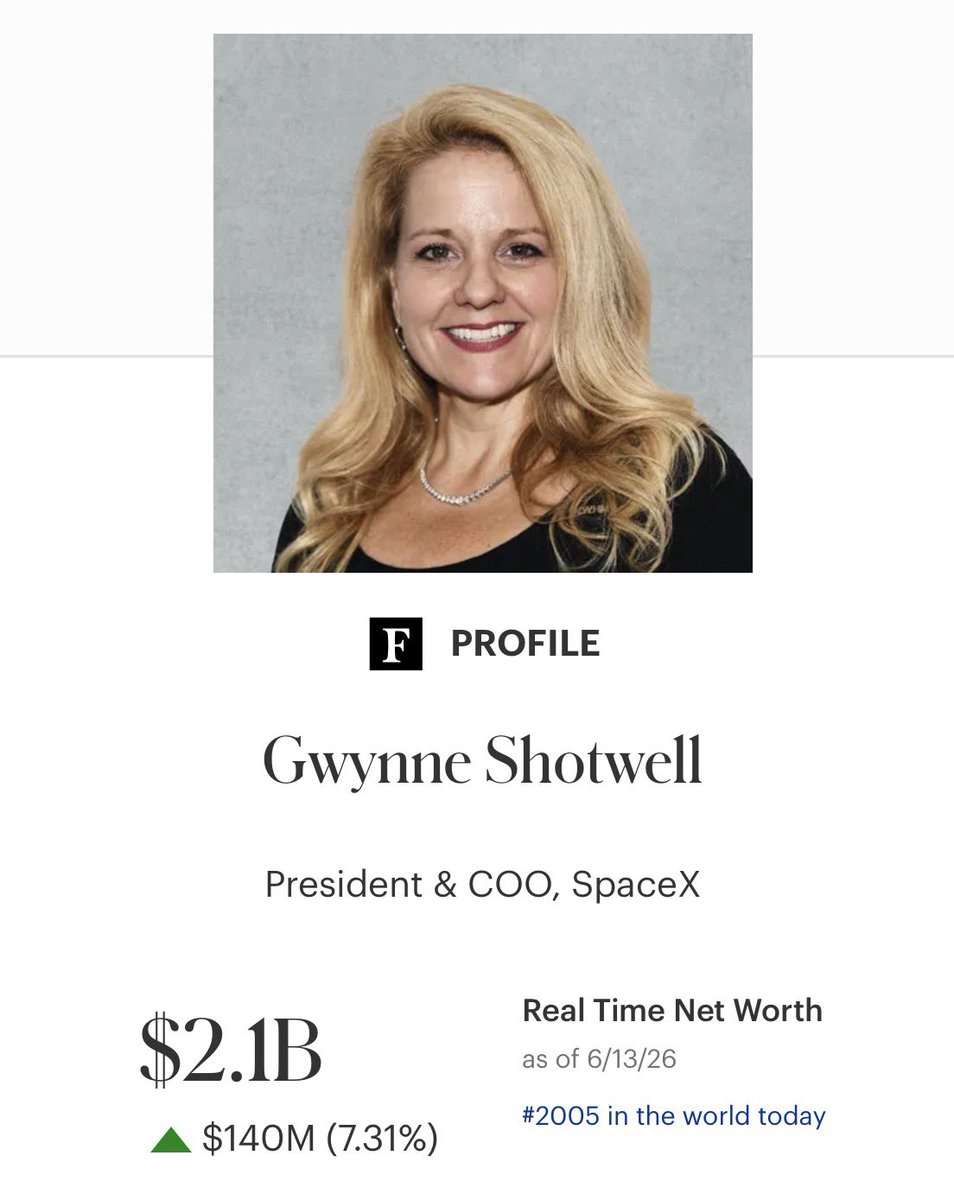
Gwynne Shotwell rang the Nasdaq bell yesterday as SpaceX went public for the first time, raising $75 billion, more than double the previous record set by Saudi Aramco in 2019. She was employee #11 when the company had never launched a rocket. Twenty-four years later, she runs a $2 trillion company that launches one every two to three days.
Before SpaceX, she spent over a decade at a government space research firm in California. She joined SpaceX in August 2002, three months after the company was founded, as VP of Business Development. She had engineering and applied mathematics degrees from Northwestern. The job was to sell launch contracts for a rocket company that had not yet reached orbit. She sold them anyway.
By 2008, three back-to-back Falcon 1 failures had burned through the company's cash, leaving SpaceX weeks from bankruptcy. Shotwell walked into NASA and closed a $1.6 billion contract to resupply the International Space Station, a research lab the size of a football field orbiting 400 kilometers above Earth. That deal saved the company. Musk made her President and COO, the person responsible for making his ambitions actually work.
What she built from there: SpaceX now completes around 165 rocket launches a year, more than every other rocket program on the planet combined, with roughly 82% of the global commercial launch market. Putting one kilogram into orbit on a Falcon 9 costs about $2,720 today. The Space Shuttle charged $54,500 for the same kilogram. That 95% price drop is what opened space to everyone outside of governments. Shotwell spent two decades making it routine.
Starlink, the satellite internet service she helped build, now has more than 9 million active subscribers. It drives most of SpaceX's estimated $15 billion in 2025 revenue. The company holds over $22 billion in government contracts from NASA, the Pentagon, and the Space Force, including an $843 million deal to bring down the space station itself when it retires.
Yesterday at the Nasdaq, she told the crowd: "Today, we make history again, and we have a history of making history." Forbes shows her net worth at $2.1 billion, up $140 million on the day.

If she wasn’t working for Elon Gwynne Shotwell would be hailed as an incredible success story and the most powerful woman in aerospace.
Instead it’s radio silence from the media
3
9
78
7,151
When you eat Mexican food, your brain releases endorphins and dopamine. Capsaicin, the compound in chili peppers, binds to pain receptors in your mouth. Your brain reads this as a threat and counters with feel-good chemicals. The burn in a good salsa triggers the same pathway as a runner's high.
This is all happening on top of a food tradition more than 3,000 years in the making. The tortilla in a chicharron taco exists because of nixtamalization, a process Mesoamerican cooks developed roughly 3,200 years ago. Corn kernels are soaked in lime water, which releases niacin, a B vitamin that corn otherwise locks away in an indigestible form. Without this step, corn-heavy diets cause pellagra, a B-vitamin deficiency that killed around 7,000 Americans per year at its peak in the early 20th century. Southern sharecroppers were eating corn without the process Mexico had preserved for three millennia.
In 2010, the UN added Mexican cuisine to its Intangible Cultural Heritage list, the first year any national food culture had ever qualified. The application covered seed preservation, farming customs, ritual preparation, and thousands of years of cooking knowledge passed through communities.
The diversity inside that designation is hard to picture. Mexico has 59 varieties of heirloom corn, more than 60 distinct chili pepper types, and 32 states with cuisines different enough that Oaxacan mole negro (a dark sauce from dried chili and chocolate) and Yucatecan cochinita pibil (slow-roasted pork in a smoky red spice paste) share almost no ingredients. Oaxaca alone has more than 20 types of mole. Mole poblano uses more than 20 ingredients, including several chili varieties, dark chocolate, and cinnamon, in a single sauce.
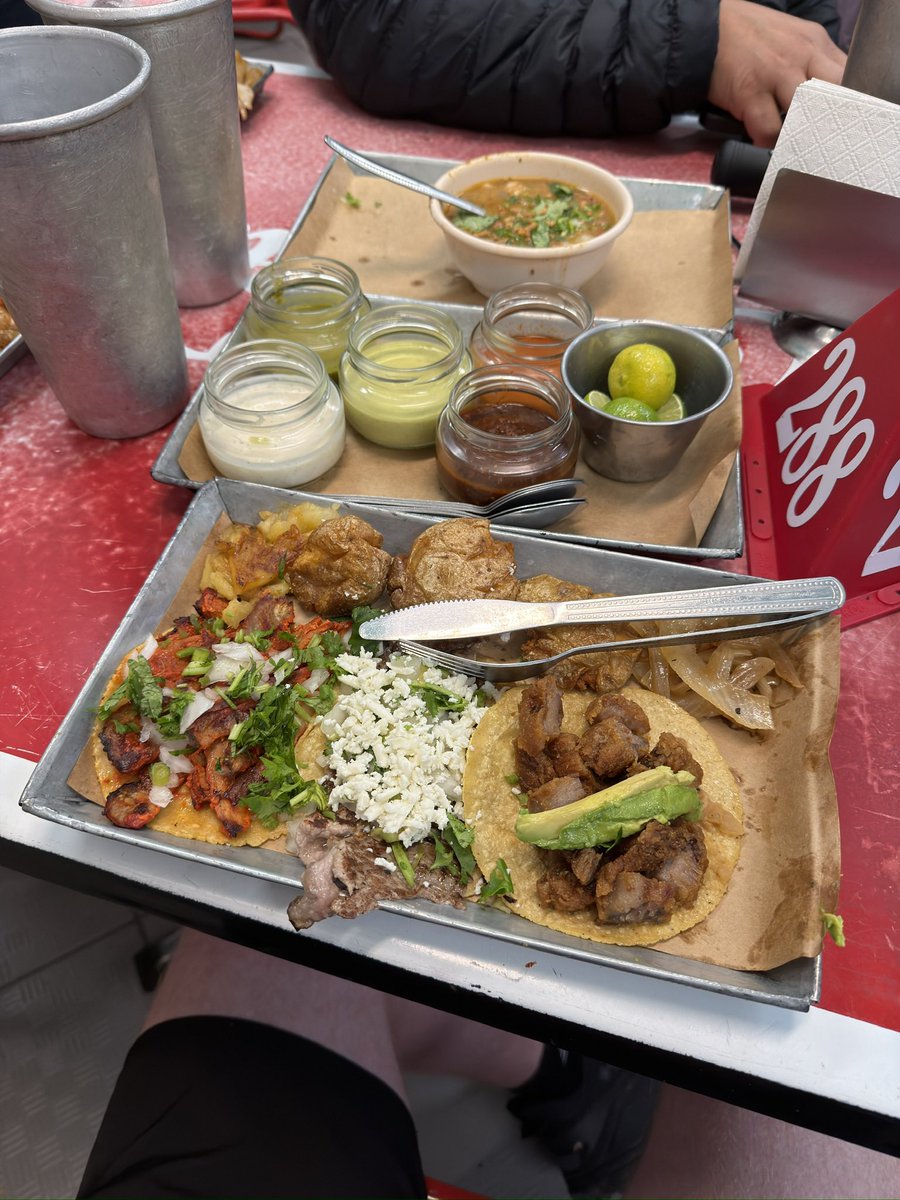
Chicharron fires three systems at once. Fat carries flavor deep into the palate. The crunch comes from pork skin dried, then dropped in 375-degree oil. The trapped moisture turns to steam, puffs the skin, and produces thousands of flavor compounds through the same browning chemistry that makes coffee and seared meat smell incredible. Then the salsa lands capsaicin on top of everything and the dopamine kicks in.
The "best food ever" reaction has a chemical basis. You are tasting dopamine from capsaicin, browning chemistry from pork fat at high heat, and a tortilla built on a process 3,200 years old. These flavors were engineered to do exactly this.

THAT WAS THE BEST FOOD IVE EVER HAD IN MY LIFE OMG 😭😭😭
VAMOSSS CHICHARRONNN! 😍
99
1,233
7,285
314,256
Part 4. The avocado in your refrigerator was designed for an animal that went extinct 13,000 years ago. The fruit evolved its fat-rich flesh and enormous pit to be eaten whole by Pleistocene megafauna: giant ground sloths that weighed up to four tons, gomphotheres that carried four tusks, glyptodonts that were essentially armadillos the size of a car. These creatures would swallow a whole avocado, digest the flesh during a long walk, and deposit the seed far from the parent tree. The fat fed them. The seed survived. The arrangement worked for millions of years, until the megafauna went extinct around 13,000 years ago.
Botanists call the avocado an "evolutionary anachronism." No living wild animal can disperse its seed today. The pit falls to the ground, rots near the parent tree, and the plant loses. By the logic of natural selection, the avocado should have disappeared with the sloths.
What saved it was the people of Mexico. Indigenous communities in what is now Puebla began cultivating avocados around 5,000 BCE, more than 6,000 years after the megafauna vanished. The pit is still there, still enormous, still carrying specs for an animal that no longer exists. In evolutionary time, 13,000 years is too short to matter. The avocado is still waiting.
The word guacamole comes from ahuacamolli, a Nahuatl word meaning avocado sauce. That sauce now drives a $3 billion annual export industry. Mexico, and specifically the state of Michoacán, produces around 80% of all avocados sold in the United States. A truckload leaves the state every eight minutes. Avocados now outpace both tequila and beer as Mexico's most valuable agricultural export, generating roughly $9 billion in annual revenue as of 2021.
The industry attracted cartel attention in the 1980s. Farmers in Michoacán face annual extortion demands of $150 to $250 per hectare. In 2022, two US avocado inspectors were assaulted and detained at a police roadblock in the state; the US paused all imports for a week, and the price of a carton of avocados jumped 40% within days.
The avocado survived the Ice Age because people loved it enough to plant it. Five hundred years later, people love it enough to go to war over it.
1
9
74
4,215
Part 5. In 1519, Hernán Cortés wrote a letter to the King of Spain describing the main market of Tenochtitlan as "twice as large as that of the city of Salamanca," with 60,000 people buying and selling there every day. Salamanca was one of the largest cities in Spain. Cortés had spent years in cities. He had never written a letter like this one.
Tenochtitlan had an estimated 200,000 people when Cortés arrived. London at the time had around 70,000. Rome had roughly 50,000. The city was built on an island in Lake Texcoco, connected to the mainland by three massive causeways, each wide enough for ten horses side by side. A twin-piped aqueduct carried fresh water from Chapultepec Hill into the city, one pipe in use while the other was cleaned. The streets were swept daily. Spanish soldiers wrote home about how clean they were. Tenochtitlan had public toilets at intervals on the causeways and inside the market.
Feeding 200,000 people on a lake required a solution no European city had attempted. The Aztecs engineered chinampas: permanent agricultural plots built directly into the shallow parts of Lake Texcoco, constructed from layers of lake mud and organic matter, separated by narrow canals that kept the soil irrigated year-round. Because crops sat above lake water permanently, the growing season never stopped. Well-managed chinampas could produce up to seven harvests annually. Their yields ran as high as 13 times more food per hectare than European grain farming of the same era. The chinampas of Xochimilco, in the southern part of what is now Mexico City, are still working today and are a UNESCO World Heritage Site.
Cortés destroyed Tenochtitlan in 1521. The Spanish then drained Lake Texcoco over the following centuries and built Mexico City on top of the ruins, using the drained lake clay as foundation. That clay has been compacting ever since. In 2026, NASA satellite data confirmed Mexico City is sinking by roughly 10 inches per year on average, with some areas moving faster. Over the past century, the ground has dropped nearly 40 feet in total. The Metropolitan Cathedral, construction begun in 1573 directly on the site of the Aztec ceremonial center, now visibly tilts to one side from the uneven subsidence. The main city square, the Zócalo, sits below the elevation of where the lake's surface once was.
The Spanish built a city on a lake they drained. The lake is still taking it back.
Cortés wrote to the Spanish king that the market at Tenochtitlan sold goods from across the known world. The city that held that market is still sinking into the lake that fed it.
2
6
71
3,873
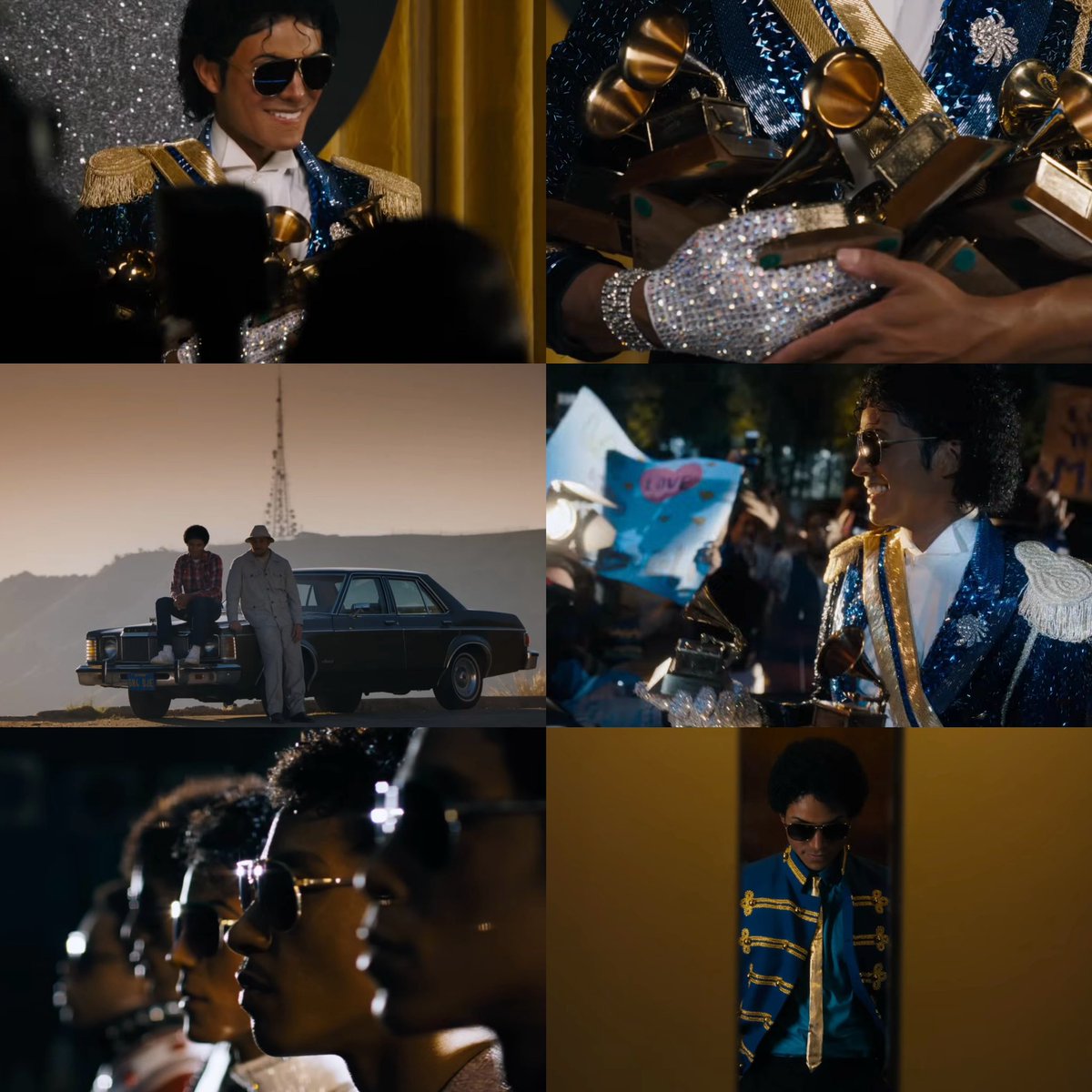
The Jackson estate's lawyers missed a clause buried in a 1993 legal settlement. That oversight cost up to $15 million in reshoots, forced the entire third act to be rebuilt from scratch, and stripped every mention of the abuse allegations from the script. The film that came out of those forced rewrites just crossed $911.9 million worldwide.
That number just passed Bohemian Rhapsody's $910.9 million record, making MICHAEL the highest-grossing music biopic ever made. The film opened April 24 to $217 million globally and $97 million domestically, nearly double Bohemian Rhapsody's $51 million domestic opening and the biggest launch any music biopic has seen.
The film carried a $155 million budget, roughly three times what Bohemian Rhapsody cost to make ($52 million). Then in early 2025, estate lawyers found a clause in a 1993 settlement with accuser Jordan Chandler that barred his depiction or mention in any film. The original third act, built around the abuse allegations and a police search of Neverland Ranch, had to go.
Twenty-two days of reshoots in Los Angeles added up to $15 million on top. The estate covered those costs since the oversight was theirs, and got a share of the film's profits in return. The rebuilt version closes with MJ backstage at the 1987 Bad tour, the allegations gone from the story entirely.
What came out is now Lionsgate's highest-grossing film ever, clearing every Hunger Games and Twilight title the studio has released. The same producer, Graham King, made Bohemian Rhapsody in 2018. He just broke his own record. A sequel is in development.
Jackson's estate has earned $3.5 billion since 2009, per Forbes. In 2024, they sold half of his recorded music and publishing rights (the ownership of his songs and recordings) to Sony for $600 million. Now they also own a piece of a film approaching $1 billion. Oppenheimer, at $920.8 million, is the highest-grossing biopic of any kind ever made. MICHAEL needs $9 million more.

2
10
36
6,597
For decades, the 14th floor of GM's Detroit headquarters was its own separate world. Executives arrived through a private basement elevator. Meals were catered in a private dining room. No one else was invited. A 1993 Seattle Times investigation called it "the ultimate symbol of power at the world's largest company."
Tesla didn't just build a different culture. It built one inside GM's old factory. In 2010, Tesla bought the Fremont plant where GM and Toyota had jointly operated a car factory for 26 years, then ran it completely differently.
While every major automaker gave line workers wages and maybe a pension, Tesla gave them stock, shares that vest over time, across every level of the company, including people on the floor running assembly equipment. Electrek noted in 2020 that stock grants for all workers, factory staff included, were rare enough in auto that it was worth calling out.
The math starts in 2012. Tesla's stock sat at around $2.26 per share then, once you account for two stock splits since. Four years earlier, the company had nearly run out of money, and Musk funded it personally to keep it alive. Workers who took those early grants and held them saw the stock hit $410 at the 2021 peak. A dollar of Tesla stock from 2012 grew 181 times over in nine years. CNN confirmed Musk's account: some Fremont production workers became millionaires from those grants.
Musk wasn't running any of this from a separate floor. During Model 3 production hell in 2018, Tesla was fighting to hit 5,000 cars a week while barely managing 2,000. He moved to the factory and slept there for days. "I was wearing the same clothes for five days," he told Bloomberg Businessweek. "My credibility, the credibility of the whole team, was at stake."
Tesla paid out $2 billion in stock grants to its employees in 2024, from engineering to the factory floor, at every level. The 14th floor at GM was a monument to who owned the company. A Tesla stock grant in Fremont in 2012 was a monument to who built it.

Elon Musk: There are no lords and peasants at Tesla. Everyone eats at the same table.
“I actually know the people on the line, because I worked on the line, I walked the line, I slept in the factory, and I worked beside them. So, I'm no stranger to them.
There are many people at Tesla who have gone from working on the line to being in senior management. There are no lords and peasants. Everyone eats at the same table. Everyone parks in the same parking lot.
At GM, there's a special elevator only for senior executives. We have no such thing at Tesla.
We give everyone stock options. Many people who are just working the line, who didn't even know what stocks were, we've made them millionaires.
And I just want to say that I'm incredibly appreciative of those who build the cars, and they know it.”
New York Times DealBook Summit, 2023
6
31
210
33,191
Real Madrid agreed to sign Vinicius Junior for 45 million euros when he was 16. He had played 17 first-team minutes in professional football. Eight years on, he walks into the World Cup as the best player alive, injury-free for the first time in years, and Brazil hasn't won this since he was 2 years old.
He grew up barefoot on the streets of Sao Goncalo, a working-class city across the bay from Rio. Flamengo took him into their youth system as a child. At 16, still in school, his release clause hit 45 million euros. Real Madrid paid it that same week. He waited two more years in Brazil, then moved to Madrid on his 18th birthday.
His early seasons were raw. Fast enough to scare any defense, inconsistent enough in front of goal to frustrate coaches. Then 2022 arrived and he scored the only goal of the Champions League final against Liverpool, sealing Real Madrid's 14th European title. At 21, he decided the biggest club game on the planet.
Brazil went to that World Cup with him as their best player. They lost to Croatia on penalties in the quarterfinals, and Vini had a quiet tournament by his own standards.
The two years after that were about his body failing him. A muscle injury in April 2023, a knee problem in May, a thigh strain in August that made him miss the first Madrid derby, then a torn hamstring in November that kept him out for six weeks. In 2024-25: a neck injury, another hamstring tear, an ankle problem to close the season. Seven separate layoffs in two years.
He kept winning anyway. In the 2024 Champions League final against Borussia Dortmund, he scored again, becoming the youngest player in history to score in two Champions League finals, breaking a record held by Lionel Messi. FIFA named him Men's Player of the Year for 2024. He finished second in the 2024 Ballon d'Or vote, football's annual award for the world's best player. Real Madrid boycotted the Paris ceremony and called the decision disrespectful. He posted: "I'll do it 10 times if I have to."
This season: 16 goals and 5 assists in La Liga alone. Zero injuries. His first complete season in three years.
Brazil hasn't lifted the World Cup since 2002. They've been knocked out in the quarterfinals in four of the last five tournaments. The last time they broke a 24-year drought, it was on American soil in 1994. This World Cup is in the USA, Canada and Mexico. He was 2 years old when they last won it, and he plays his first game today against Morocco in the best form of his career.
🔥🇧🇷 Vini Jr: “This is the most special and important moment of my career. I have the physical and technical level I’ve always dreamed of”.
“I’ve not had any injuries this season. I prepared very well to reach this moment at the World Cup”.
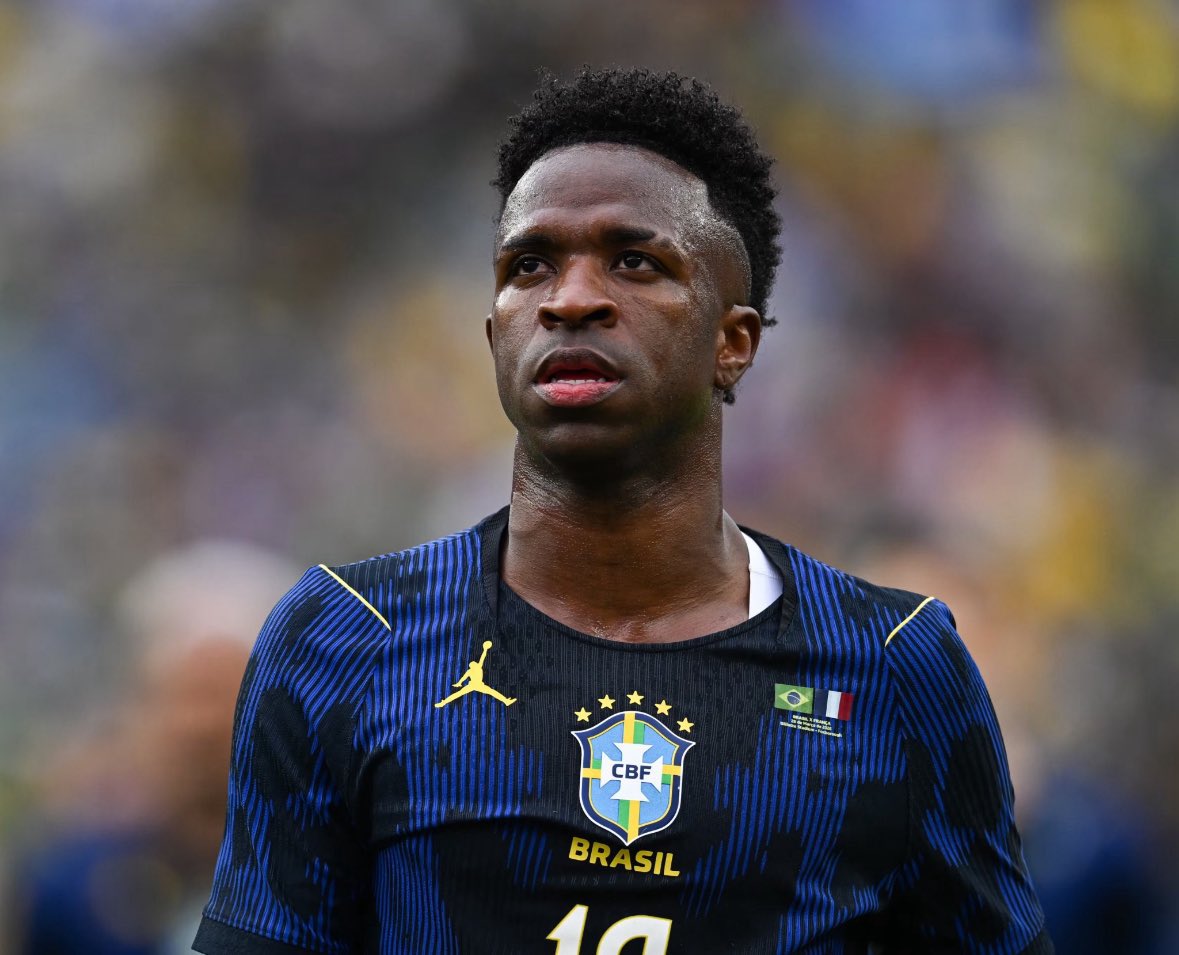
4
6
86
11,814
Every step a pregnant woman takes sends a wave of motion to her baby. Over nine months, that adds up to roughly 5,000 rocking pulses a day, alongside the heartbeat, breathing, and blood flow. The womb is a motion machine.
This matters because the inner ear's vestibular system, the part of the body that tracks balance and spatial orientation, starts forming at week 7 of pregnancy and is functional enough to respond to motion by week 25. The fetus spends the remaining months trained on all that rhythmic input, the heartbeat alongside every other rhythmic signal.
When a baby is born, that signal cuts out. The 5,000 daily steps go quiet. The nervous system, trained for months to expect constant motion, gets stillness instead.
The butt pat restores the signal. Gentle rhythmic pressure activates the vestibular system, which triggers what researchers call the calming reflex. The parasympathetic nervous system, the branch that handles rest and digestion rather than fight-or-flight, switches on. The Moro reflex, the full-body startle that can jolt a sleeping baby awake in a second, gets suppressed. Heart rate drops. Sleep follows.
The heartbeat is part of this picture. Fetuses start hearing it around week 18. But it is one signal among many. What disappears at birth is the whole motion environment, not any single component. Rocking, swinging, and gentle patting all work for this reason, even though none of them match the heartbeat rhythm exactly.
A 2019 study in Current Biology from researchers at the University of Lausanne confirmed how deep this runs. Rocking improved deep sleep in adult humans and reduced nighttime wake episodes. When the team ran the same experiment on mice whose vestibular organs could not function, rocking did nothing. That pathway, from inner ear to brainstem, holds across species.
Premature babies who miss weeks of this womb-based motion training show the difference. Hospital units for premature babies now use oscillating mattresses and rocking beds as standard care. Skin-to-skin kangaroo care, combining the parent's heartbeat, warmth, and the subtle motion of a breathing body, cut neonatal mortality by 51% compared to incubator care for babies born under 4.4 pounds. The WHO now recommends starting it the moment a baby is born.

¿Te has preguntado alguna vez por qué a los bebés les encantan esas suaves palmaditas en el culito?
En el útero, sienten el latido rítmico de tu corazón justo a su lado, lo que les produce una sensación relajante y reconfortante
7
24
193
20,612