
Joined July 2008
- Tweets 5,875
- Following 5,200
- Followers 2,701
- Likes 5,800
724 Photos and videos






ChrisGraff | MASTR retweeted

To the people of the United States of America
8,401
47,038
166,396
18,220,004

Mar 23
I created a skill to define project requirements. Works with software & non-software projects alike. Optional spec-kit artifacts. Clawhub submission pending. @github @openclaw
github.com/Chris-Graffagnino…
1
138
Mar 17
This is all you need to know.
Mar 17

Hassett: "If the war were to be extended, it wouldn't really disrupt the US economy very much at all. It would hurt consumers, and we'd have to think about what we'd have to do about that, but that's really the last of our concerns right now."
83
ChrisGraff | MASTR retweeted

Mar 3

Professor Robert Pape…air power expert
TRUMPS STRATEGY WILL NOT WORK AND WILL BE A FAILIURE..
Trump has fallen into an Iranian trap!!
1
1
497
Feb 20
Signed up @oliverhenry! Let me test that affiliate link for ya…
larrybrain.com?ref=hrxTTNUhw…

3
10
2,554
ChrisGraff | MASTR retweeted

Feb 10
Trump isn't paying anyone, the taxpayers pay it all‼️
It’s important for people to understand the "government" means the taxpayer‼️
FOR PROFIT PRISON CAMPS‼️
510
4,394
7,196
73,489
ChrisGraff | MASTR retweeted

Feb 10
After 6 months of oversight visits to Camp East Montana, the $1.24 billion immigration detention facility in El Paso, it's clear the company running it is defrauding taxpayers, preventing detainees from talking to lawyers, and DHS is assisting them by obstructing Congress.
🧵
119
1,939
4,732
262,820
ChrisGraff | MASTR retweeted

Feb 10
4 months after Trump pardoned Binance founder Changpeng Zhao, Forbes reports that Binance now holds $4.7 billion of the $5.4 billion supply of Trump’s World Liberty Financial stablecoin. That is 87%. It is the largest corruption scandal in the history of the US presidency.
598
11,967
41,027
1,113,487
ChrisGraff | MASTR retweeted

Feb 6
A U.S. Marshal kicked a puppy in Memphis, breaking one of its ribs. Kicked a puppy!
1,933
5,993
15,531
522,977
ChrisGraff | MASTR retweeted

Feb 4
Masked thugs on streets.
Measles outbreaks across the nation.
Blatant government corruption.
Coverup of elite sex offenders.
Ruling party trying to rig elections.
Leader building grandiose monuments to himself.
Destruction of nonpartisan civil service.
Third world America.
1,682
5,554
17,103
260,035
ChrisGraff | MASTR retweeted
Feb 3
Break up DHS.
Feb 3

EXCLUSIVE: Homeland Security is targeting Americans with this secretive legal weapon
In October, a retiree emailed a DHS attorney to urge mercy for an asylum seeker. Then DHS subpoenaed his Google account and sent investigators to his home.
GIFT ARTICLE wapo.st/4rtfCw8
30
258
1,262
93,368
RT @vincempls: In case you missed it, at this moment US Immigration and Customs Enforcement is holding 73,000 men, women and children in de…
3,834
ChrisGraff | MASTR retweeted

Feb 2
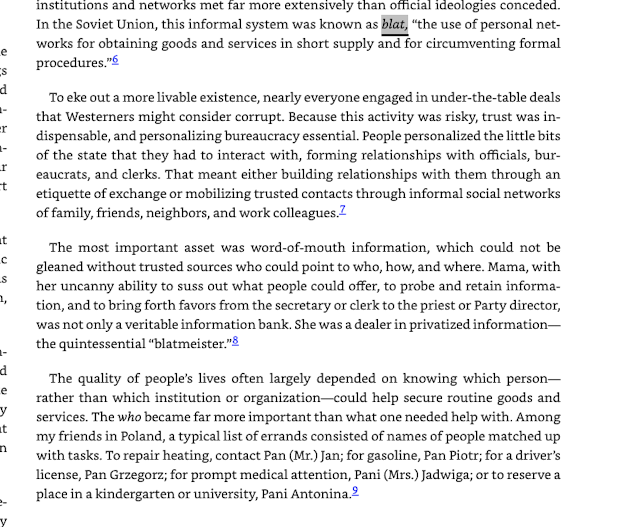
The Jeff Epstein saga isn't a scandal about pedophilia, it's about a Russian word called 'blat,' a Soviet-era word meaning 'the use of personal networks for obtaining goods and services in short supply and for circumventing formal procedures.' It's about a kind of government.
As with the large number of 'blatniks' in the Soviet era who made sure their factories got what they needed outside the formal state procurement process, Epstein greased the wheels for the neoliberal state. His job was governance.
What does that mean? Well it's clear that Epstein was an entrepreneurial broker across multiple public and private bureaucracies, helping organize 'under-the-table' deals among the legal, business, intelligence, and political elites to allow them to escape the rule of law and traditional conflict of interest restrictions. It's statecraft to allow a superclass to systemically escape the formalized rules.
The pedophilia and prostitution were part of it - that is obviously violating the rule of law - but so are the random favors Epstein bestowed. Like Epstein sending Senator Joe Manchin's request for a yacht, a request which came from the First lady of the Virginia Islands, to a random NY financier who might have one. Or working with Joi Ito at MIT and billionaire Reid Hoffman to restructure the Bitcoin Foundation. It's all about matching capital and talent and inputs outside of the restrictions ordinary people are subject to.
This kind of governance is particularly important in Soviet-style states, where everyone knows the rules are fake, where skirting the system IS the system. Epstein and his affiliates thrived because of the weakened institutions of the United States, institutions enfeebled in many cases by the men in his network, like Larry Summers. These men adopted multiple roles - advisor, businessman, academic, board member, regulator - and put on the hat that best maximized their self-interest and the self-interest of their narrow network at that moment.
The old world, where handing someone your business card meant you represented that institution, disappeared in the 1980s. Over the course of the 1990s, neoconservatives, neoliberals, bankers - ultimately Epstein's network - built this new social order. It was one where you couldn't succeed through the formal rules, but if you were let into the networks of trust by blatniks, you could do anything you wanted.
While all the specifics of Epstein's network are not known, and while conspiracy theorists often have crazy views, they have correctly fingered that the world of meritocracy and formalized systems is increasingly a fraud. And that the real government lies elsewhere.
In short, when formal democratic institutions like Congress stop governing, the networks of men like Epstein fill the power vacuum. Epstein built what Roy Cohn always wanted to have, but never achieved, because the then-institutions were too strong for him to break.
Here's a passage from sociologist Janine Wedel's Shadow Elite on how this form of governance works.
693
2,549
10,307
2,117,481
ChrisGraff | MASTR retweeted

NASHVILLE: “I don’t know what we’re gonna do.”
Local plant shop Lawrence & Clark Cacti co. says @StateFarm is refusing to cover their lost inventory after storm power outage killed it all.🤔
Hey @NESpower any thoughts?🤔
To help them out: gofundme.com/f/help-our-plan…
281
761
1,983
144,221
ChrisGraff | MASTR retweeted

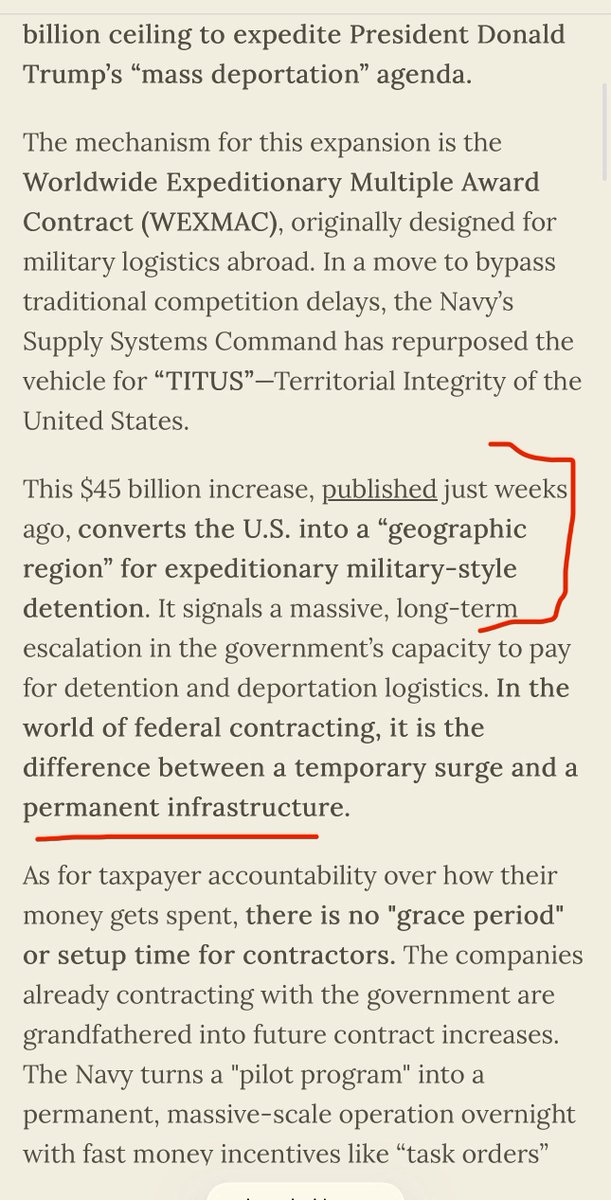
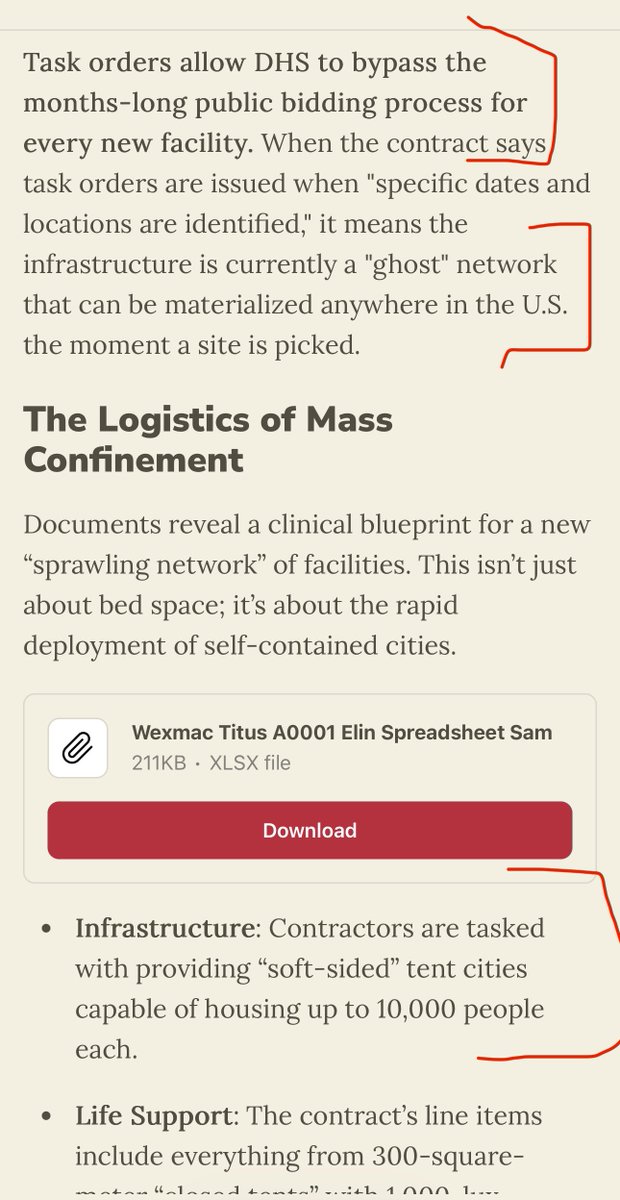
Trump is building a network of large-capacity, rapidly-deployed, no-bid, concentration camps.
“converts the US into a ‘geographic region’ for expeditionary military-style detention. …it is the difference between a temporary surge and a permanent infrastructure.”
Why are some Dems still voting to fund this? Shut it all down.
migrantinsider.com/p/how-the…
115
1,613
2,782
37,375
ChrisGraff | MASTR retweeted

Feb 2
⛓️CONCENTRATION CAMPS—D.H.S. is setting up a huge network of detention camps. They are converting the U.S. as a region for eligible for ‘expeditionary military deployment’ & no-bid no-public-comment contracts to build a “ghost network” of 10,000-person concentration camps. Jesus.
227
4,293
7,232
463,428