
Traditional Academic 🎓 Veritas liberabit vos 🇬🇧🇧🇪
Joined June 2014
- Tweets 82
- Following 1,696
- Followers 1,511
- Likes 16,765
27 Photos and videos



Pinned Tweet

10 Mar 2025
‘In a revolutionary epoch, sometimes men taste every novelty, sicken of them all, and return to ancient principles so long disused that they seem refreshingly hearty when they are rediscovered.’
—Russell Kirk
1
8
2,288

Christopher F. retweeted

Jun 13
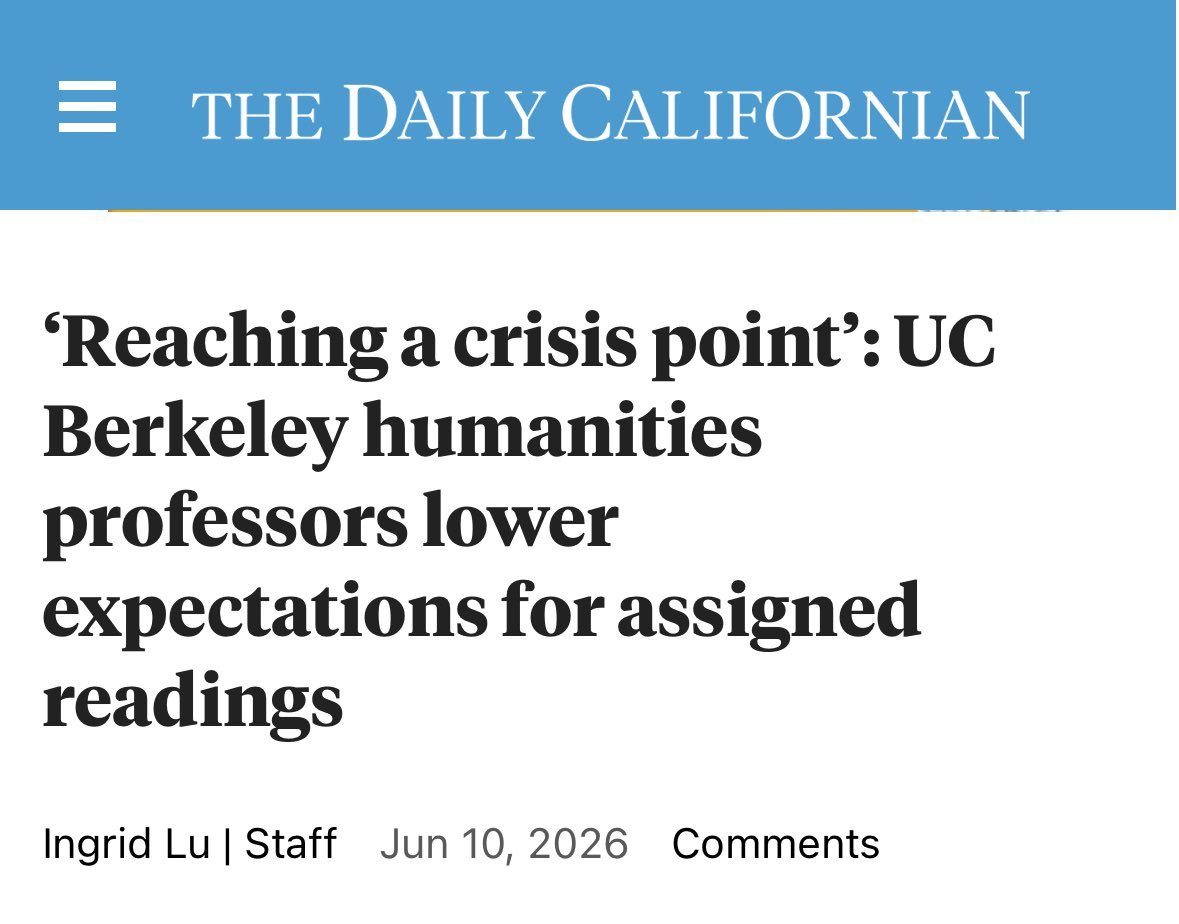
A Berkeley history professor says he’s cut assigned reading from 100 pages a week to just 35.
Another said that a course which once required students to read seven full books now consists entirely of excerpts.
“We are now reaching a crisis point where if the number of pages goes down further, it’s unclear to me whether my discipline of history can really be taught.”
The attention span crisis is a civilization crisis.
85
181
810
109,438
Christopher F. retweeted

Jun 12
"In books we never find anything but ourselves. Strangely enough, that always gives us great pleasure, and we say the author is a genius."
Thomas Mann

19
133
787
17,613
Christopher F. retweeted

John Healey's resignation should be death knell of this Government. If Starmer truly cared about defending Britain he would have had the courage to slash welfare spending and properly fund our armed forces. Political cowardice ahead of national security
50
37
615
9,232
Christopher F. retweeted
21 Nov 2025
“All plans of government, which suppose great reformation in the manners of mankind, are plainly imaginary.”
David Hume, “Of the Original Contract” (1748).
3
7
659
Christopher F. retweeted

Jun 2
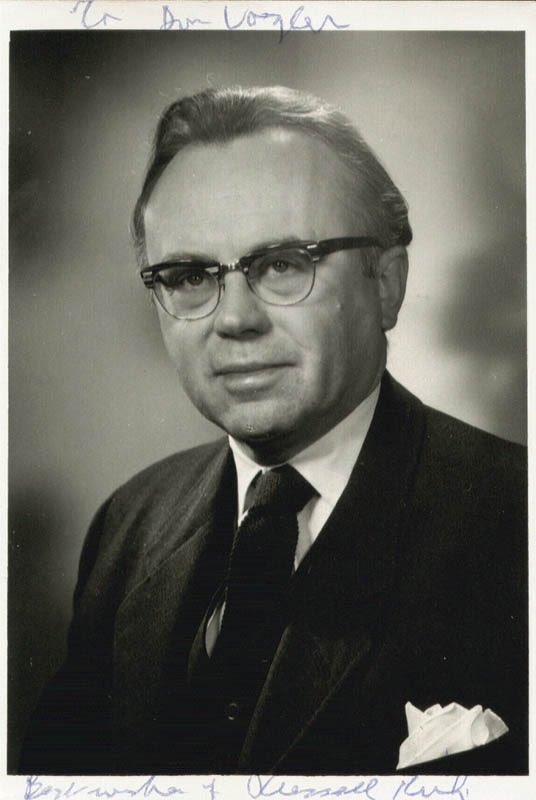
“Not by force of arms are civilizations held together, but by subtle threads of moral and intellectual principle.”
Russell Kirk
3
11
63
1,607
Christopher F. retweeted

May 20
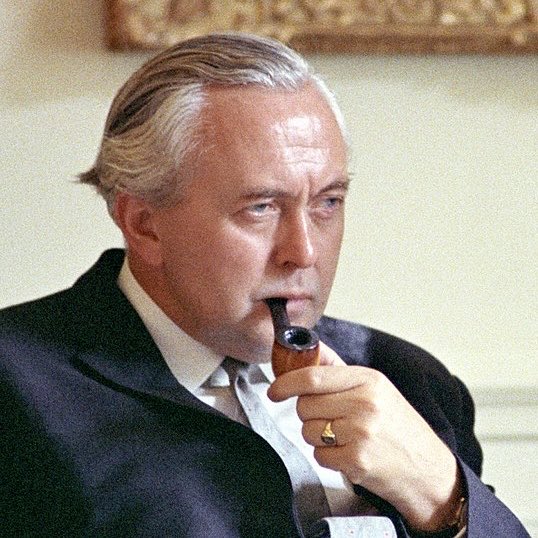
‘The Labour Party is always talking about getting rid of its leader and it never does. The Conservative Party never talks
about getting rid of its leader and then, suddenly, there's a flash of cold steel…’
- Sir Harold Wilson on how the parties remove their leaders (1977)
8
181
1,674
188,753
Christopher F. retweeted

May 15
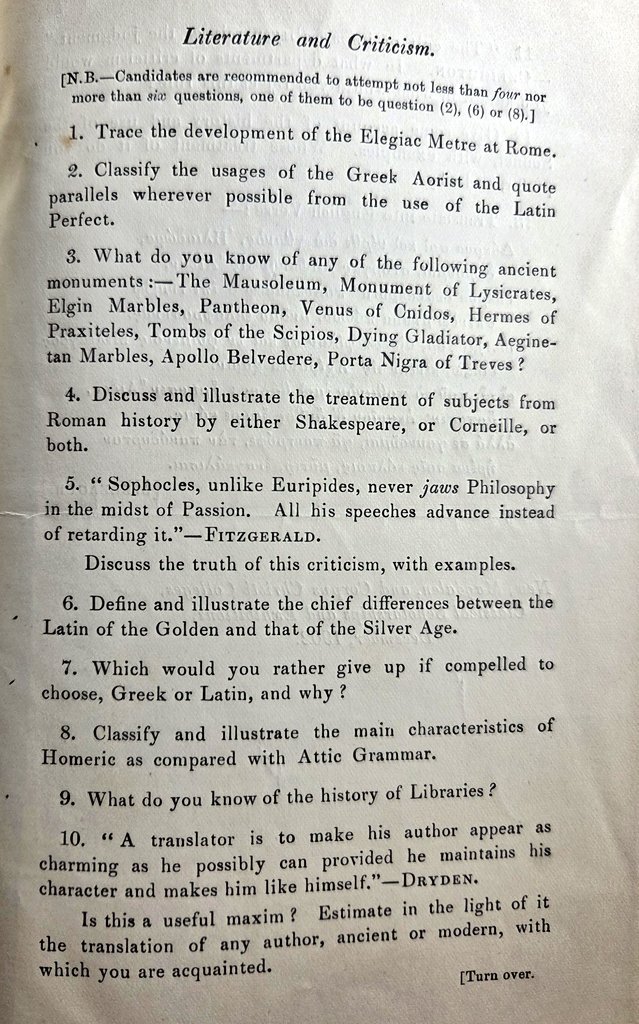
We have a lot of historical records of exam papers like this. Frustratingly, we have far fewer records of what the students actually wrote in response! Maybe their responses were all brilliant. Maybe some of them were terrible.
My colleagues wrote a paper on standards in A-level maths over time, and finding archive responses was really hard!
Eventually they were able to compare responses from 1964, 1968, 1996 and 2012.
Standards had declined dramatically between 1968 & 1996. The quality of work that would have got an E in 1968 got a B in 1996.
substack.nomoremarking.com/p…

37
72
607
92,410
Christopher F. retweeted

May 10
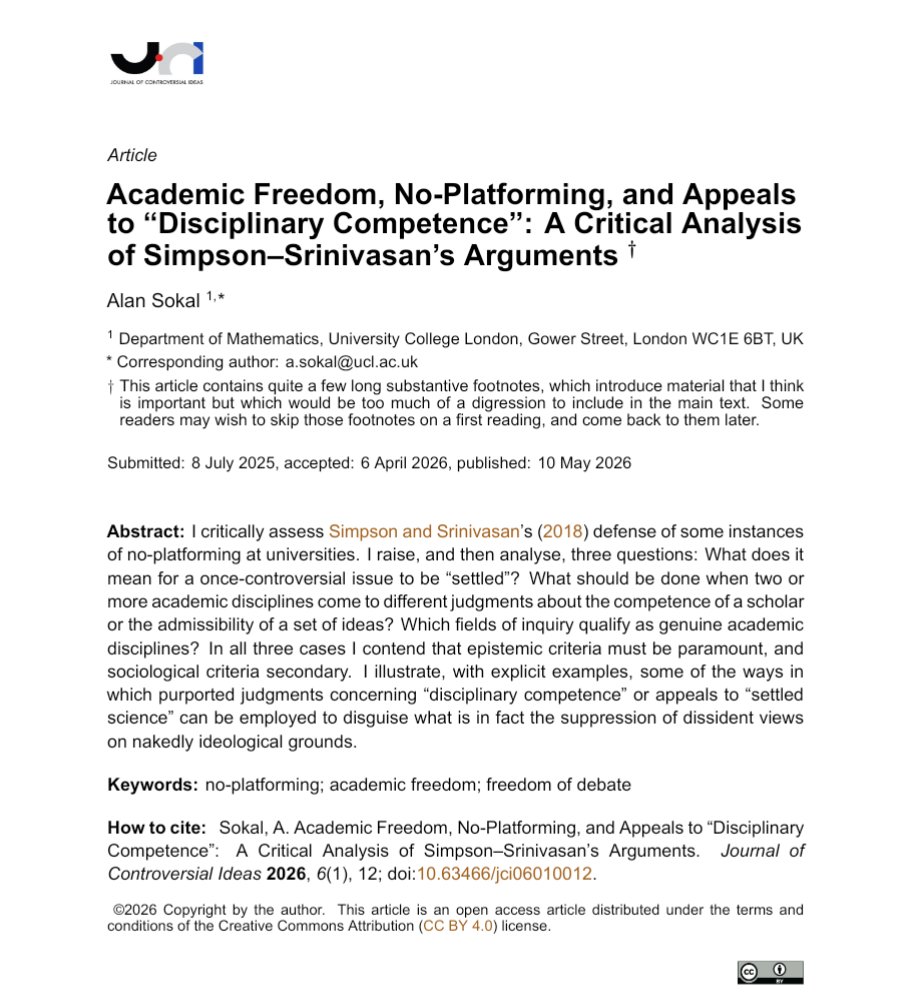
I highly recommend Alan Sokal's excellent paper
Academic freedom, no-platforming, and appeals to "disciplinary competence": A critical analysis of Simpson-Srinivasan's arguments
published today in @JConIdeas.
1
13
40
5,244
Christopher F. retweeted

"The reading of all good books is like a conversation with the finest minds of past centuries."
— René Descartes

16
146
835
18,983
Christopher F. retweeted

May 8
"Intellectuals are naturally seduced by the idea of a planned society, because they think they will be in charge of it."
--Philosopher Roger Scruton

319
5,651
30,448
588,808
Academic X, help me understand this. Every year people, many thousands of people, are graduating from British universities with a Master's degree, despite (1) having read nothing, and (2) not being competent in English, either written or spoken. Why is no-one talking about this?
19%
People don't know
10%
People don't believe it
48%
People don't care
24%
We can't talk about it
21 votes • Final results
3
1
3
602
Christopher F. retweeted

The High Court’s decision in R (University of Sussex) v Office for Students was handed down this week and significantly reshapes the terrain on which #freespeech disputes in universities will be fought.
CAF has published an analysis of what the judgment means for academic freedom and the future of the OfS free speech complaints scheme.
👇
afcomm.org.uk/2026/04/30/sus…
2
9
26
1,534
Christopher F. retweeted
Apr 30
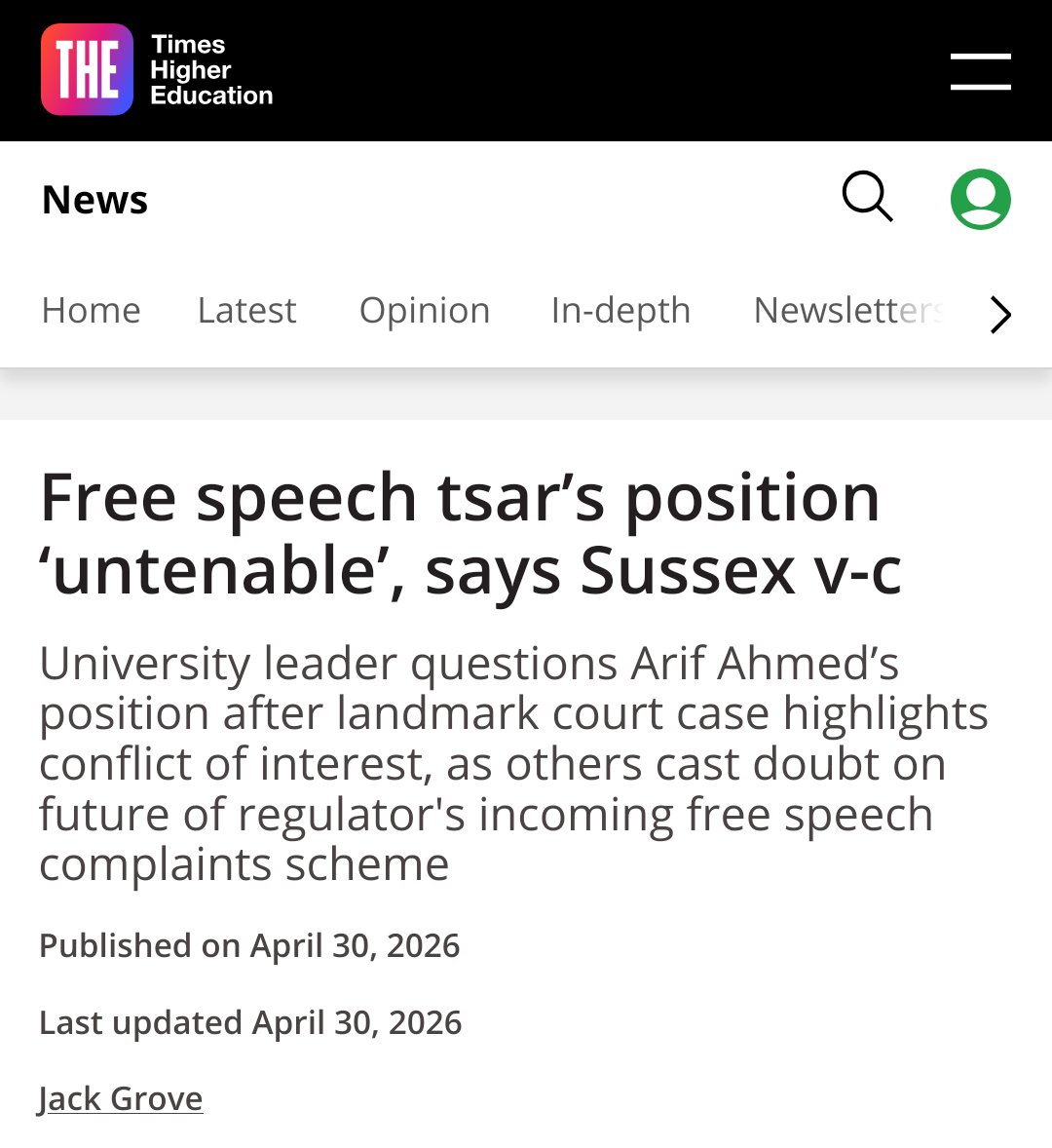
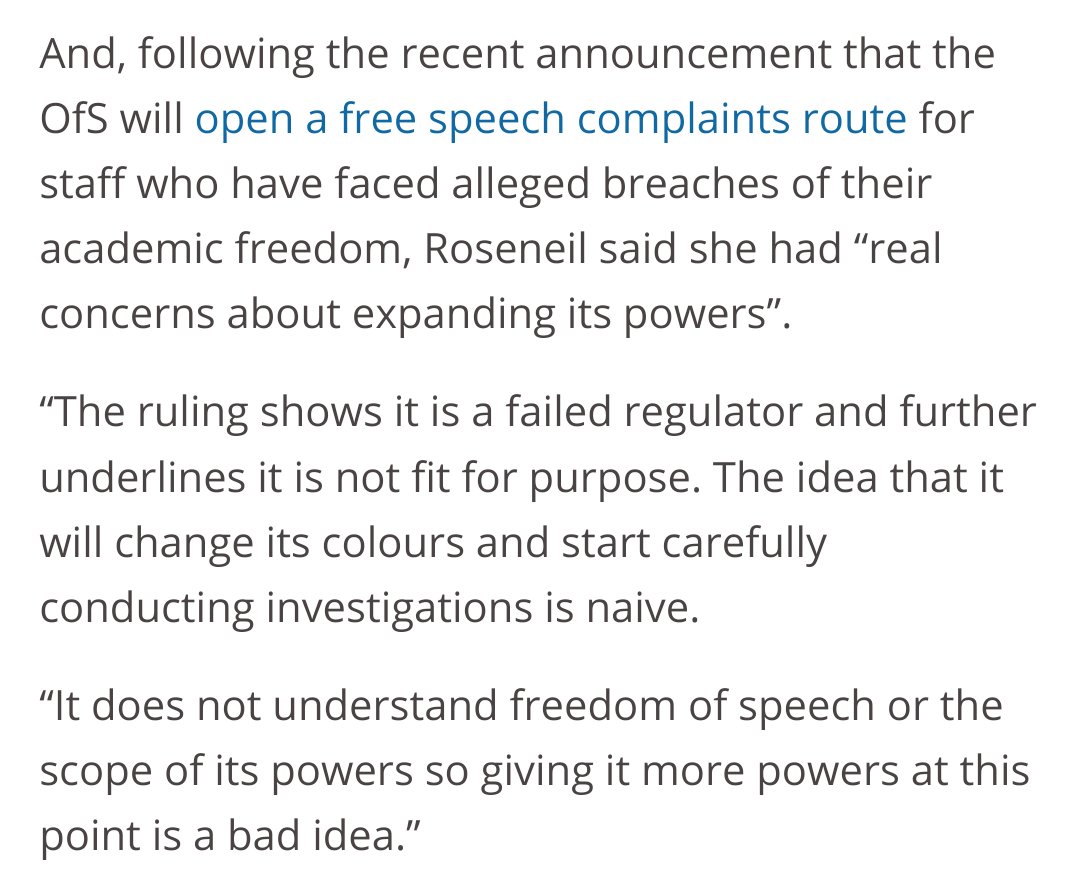
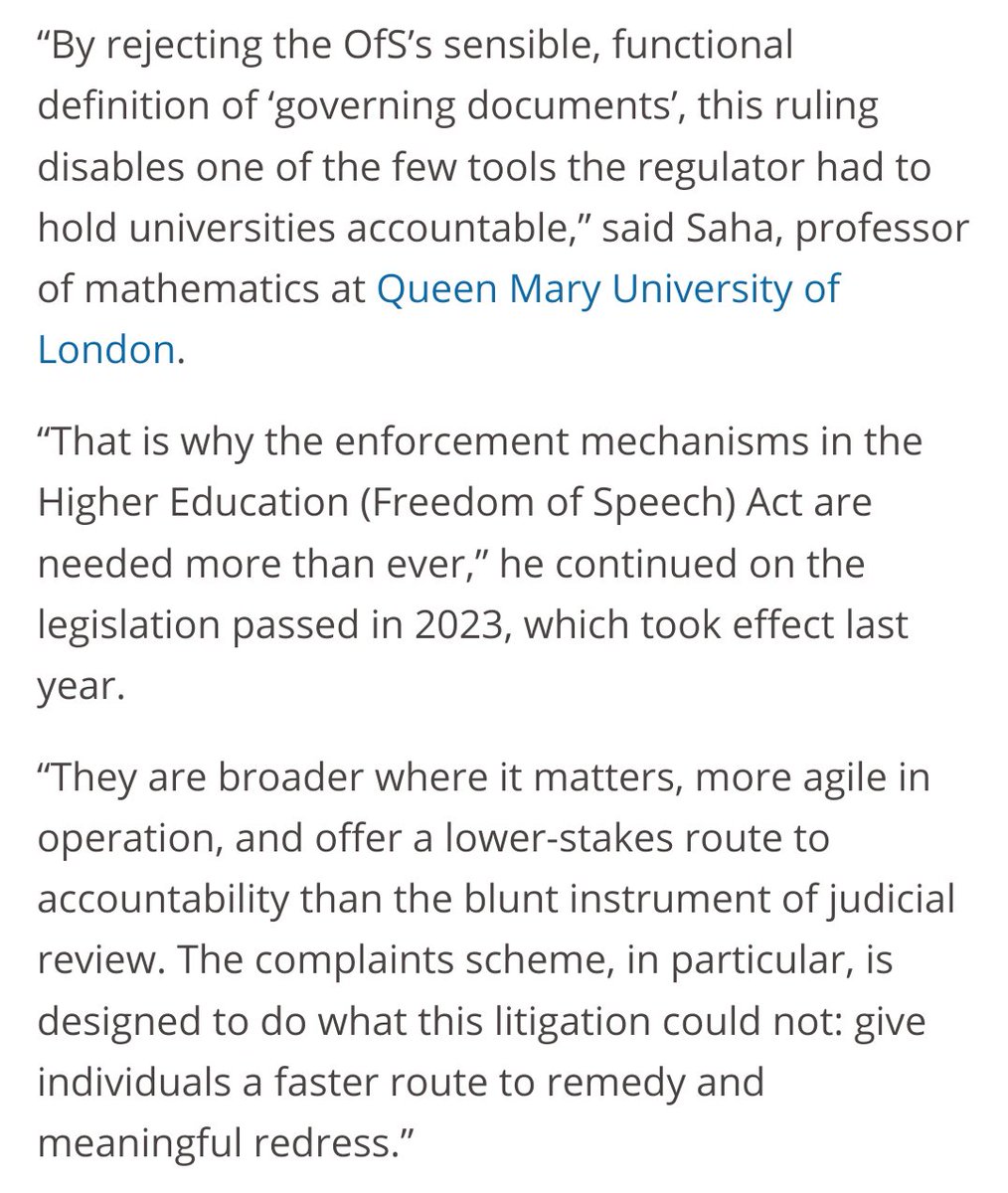
The VC of Sussex has used yesterday's judgement (on which I'll have much more to say later) to launch an attack on Arif Ahmed and the planned HEFSA provisions.
But as I point out to @timeshighered, those provisions are now needed more than ever.
timeshighereducation.com/new…
1
14
45
3,399
Christopher F. retweeted
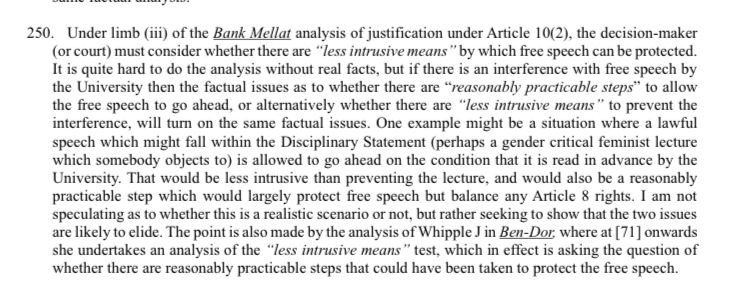
One striking passage in the Sussex v Office for Students judgment handed down today suggests that, in some cases, a “less intrusive” way to manage controversial speech — the judge cites gender-critical talk about women’s sex-based rights as her hypothetical example — might be to require a lecture to be read in advance, for example by university administrators.
The difficulty is what this implies in practice. Under the OfS’s own guidance on complying with the Higher Education (Freedom of Speech) Act, the starting point is simple: if it is “reasonably practicable” to allow the speech to go ahead — including by simply not restricting it — then that step must be taken. So the judge’s example here begins to blur the line between allowing speech and managing it, by suggesting that some form of control may still be appropriate even where the speech could simply proceed.
The risk is that the question “should we allow it?” — even if answered in the affirmative — is then followed by another: “how can we control it to minimise upset or complaints?”.
And just like that, we’re back in 2018.
@ProfAliceS @jk_rowling @Docstockk @Fox_Claire
7
71
197
7,292
Christopher F. retweeted
Apr 28
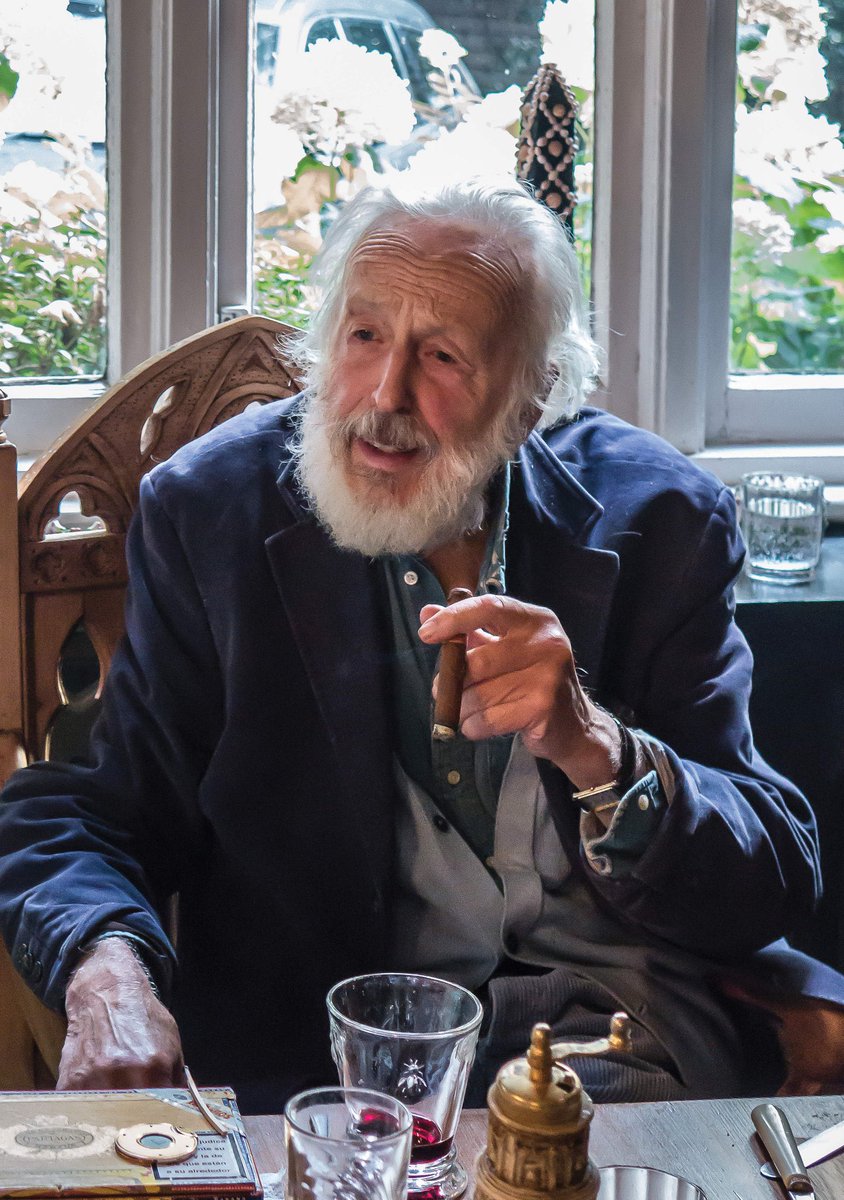
“[Michael] Oakeshott’s style was enchanting. Here was a man who taught my generation how conservatism could be combined with bohemianism, convention with eccentricity, orderliness with wild abandon, pleasure with responsibility.”
Sir Peregrine Worsthorne
17
30
206
18,234
Christopher F. retweeted
Apr 24
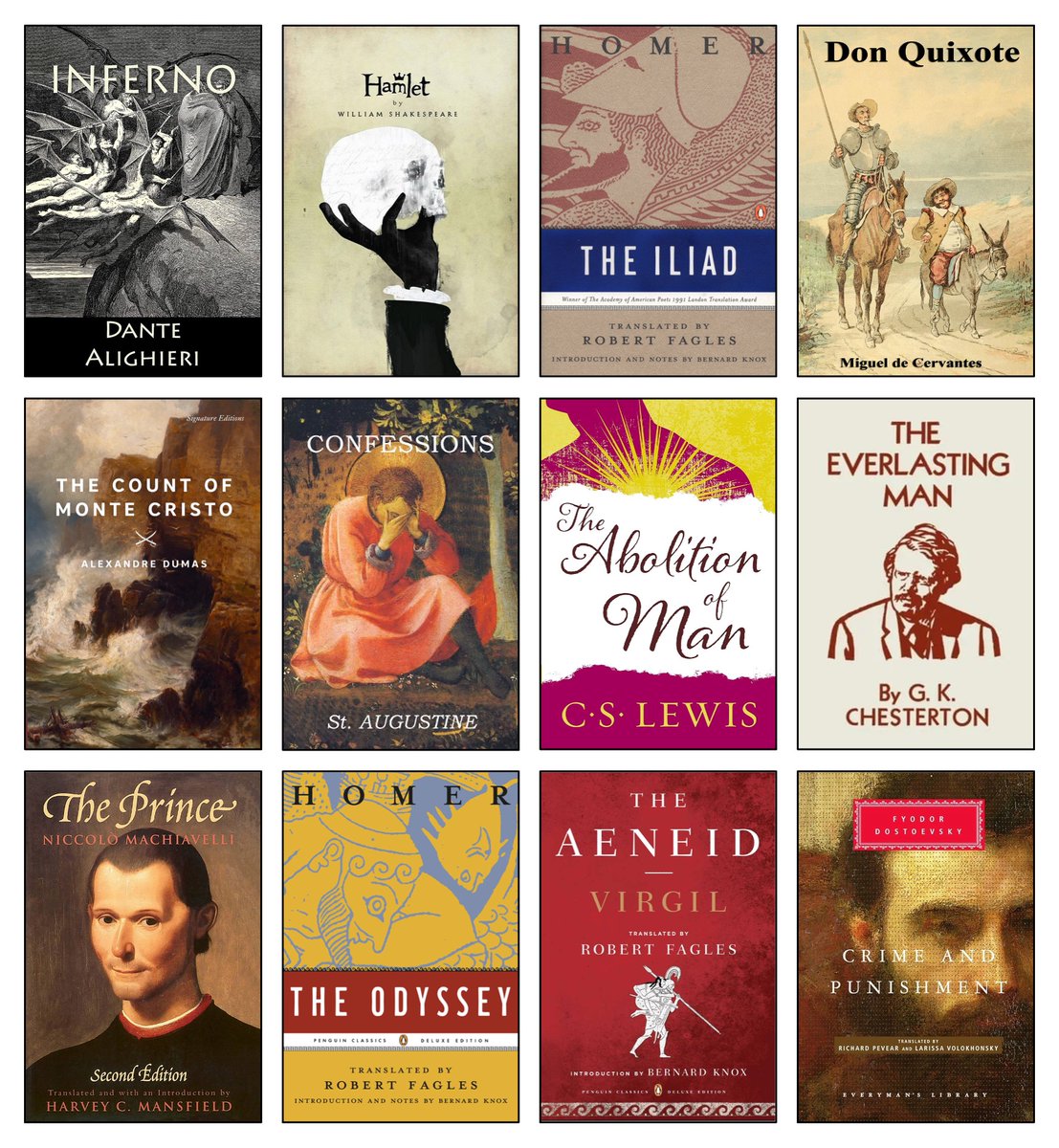
If schools and universities refuse to teach the great books of Western Civilization, we will do it ourselves.
Athenaeum now has 500 members reading the classics alongside us!! Thank you all 🙏
We're about to start our 12th book — see you on 28 April for the next discussion...
41
363
2,333
161,354
Christopher F. retweeted
🚨 The government has finally announced a timetable for introducing the Office for Students’ free speech complaints scheme, bringing to an end nearly two years of wholly unnecessary delay during which too many academics whose rights may well have been breached have been left in legal and institutional limbo.
This is long overdue, but a welcome step forward nonetheless. True, it may sound like a dry, technocratic initiative — but it has the potential to change the culture on campuses up and down the country, pushing back against an environment in which, too often, administrators have treated speech-restrictive EDI, decolonisation and harassment policies, training, and even curriculum interventions as if they were an inevitable extension of equality law.
They are not, and senior leadership teams may now find themselves told so rather more often, not just by campaign groups like CAF, but in formal regulatory correspondence requiring decisions to be revisited and, where appropriate, compensation to be paid by a certain date.
Put simply, universities will no longer be able to assume that free speech breaches are a matter of mild administrative inconvenience, or a price worth paying to shield supposedly vulnerable groups from ideas that, while perfectly lawful, tend to upset them — or worse, require them to test their ideological assumptions in open debate.
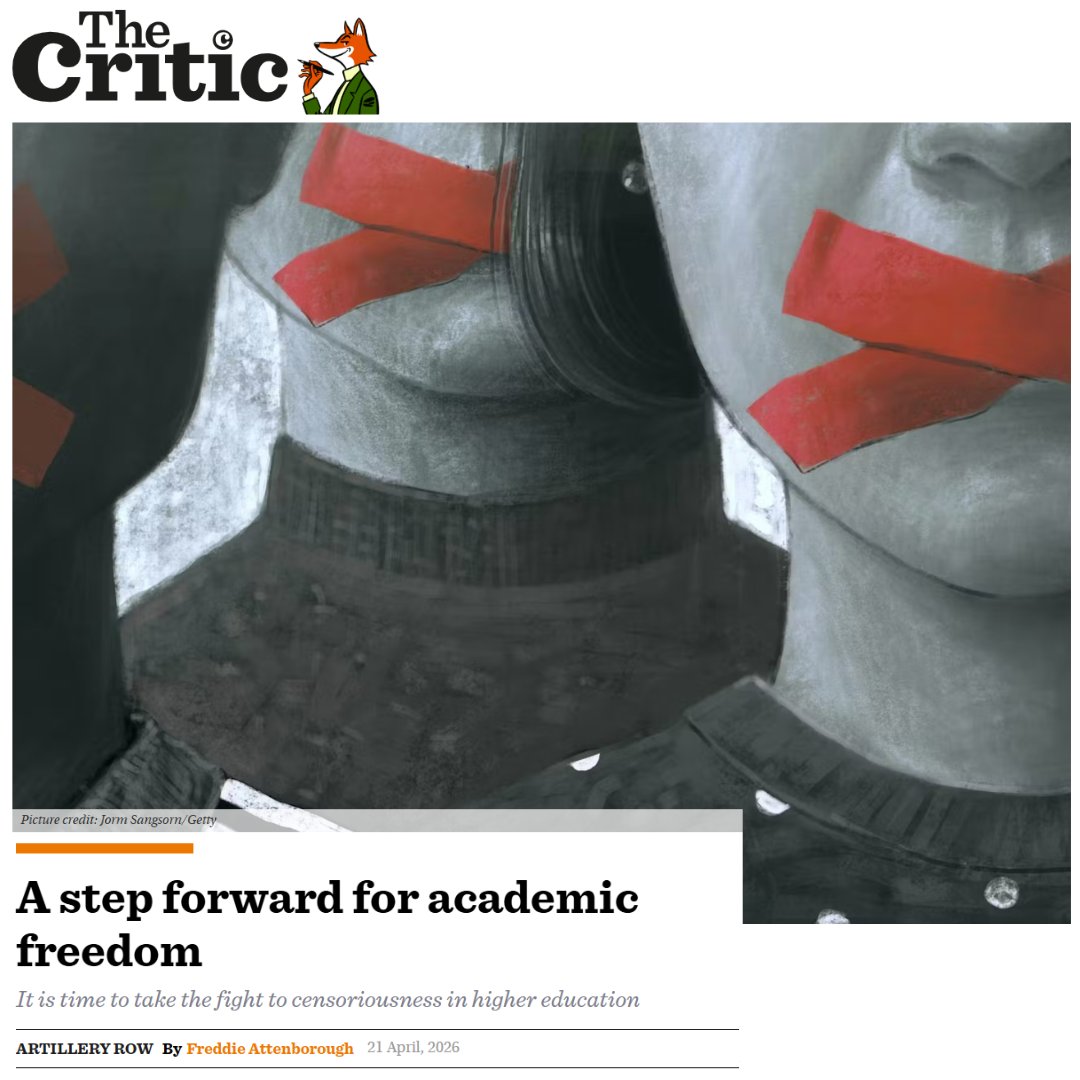
CAF Research Manager Freddie Attenborough has written for @TheCriticMag on how we got here, and why the complaints scheme has the potential to prove a genuine game-changer:
thecritic.co.uk/a-step-forwa…
12
29
1,730
Christopher F. retweeted

Apr 15
Back to books - Sweden's schools give up digital learning bbc.in/41CvrFS
183
3,114
7,507
914,240
Christopher F. retweeted

Apr 11
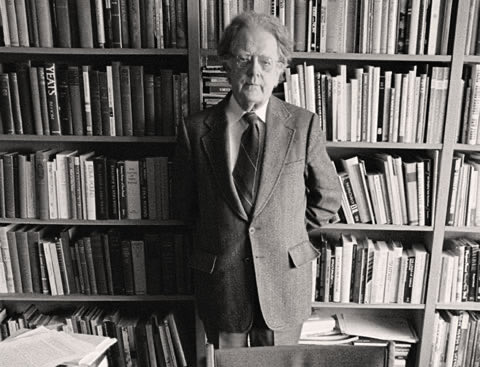
“It is because education is rooted in habit that its technological basis is the book. The book is a model of patience, for it always presents the same words no matter how often one opens it; it is continuous and progressive, for one book leads to another, and it demands the physical habits of concentration. Popular and mass media are discontinuous: their essential function is to bring news, and to reflect a constantly changing and dissolving present. It is often urged that these media have a revolutionary role to play in education, but I have never seen any evidence for this that I felt was worth a second glance. The arts of phantasmagoria can only stimulate a passive mind: they cannot, so far as I can see, build up habits of learning. The university informs the world, and is not informed by it.”
—Northrop Frye, “The Study of English in Canada”
5
47
147
5,847