Independence for Scotland is not just needed...it’s a priority. colonial prisoner trapped in a fake union 🏴🇪🇺#SCRM
Joined March 2021
- Tweets 33,450
- Following 1,801
- Followers 2,169
- Likes 61,585
3,973 Photos and videos

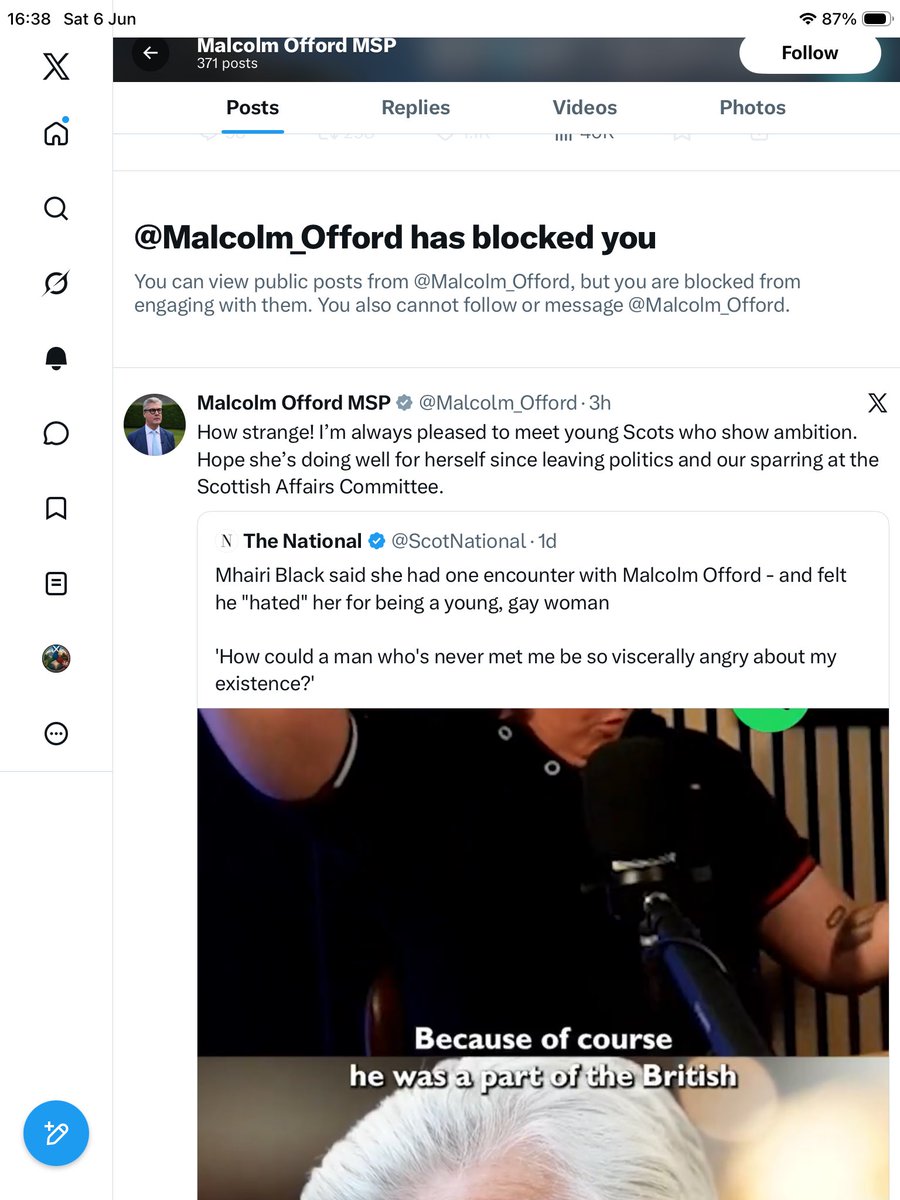






Black Isle Clansman “Extremist”🏴🌻 retweeted

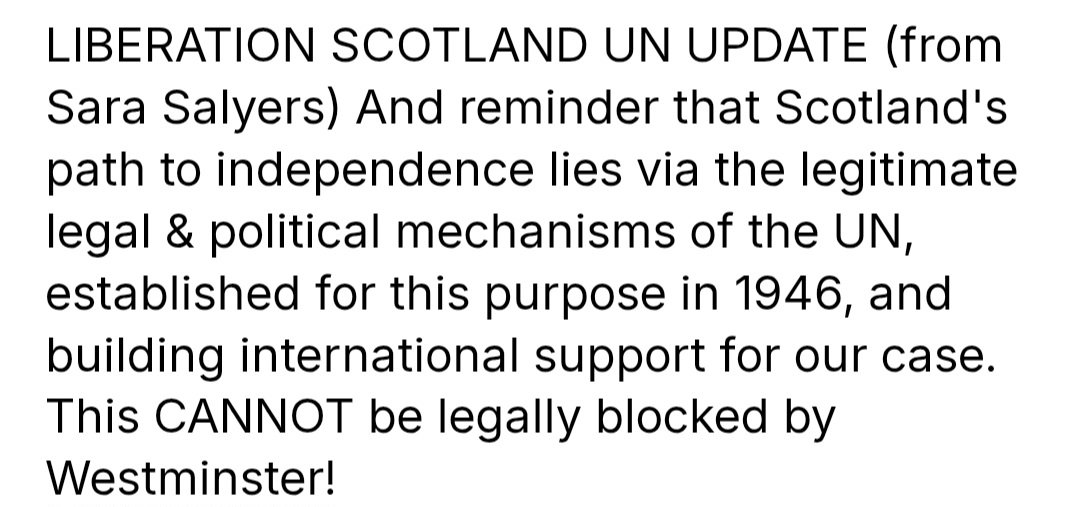
It's true. The coloniser has no say in and cannot block the decolonisation process.

Join #salvo the Campaigning Arm of #LiberationScotland Reclaiming our Sovereign Rights and Territory for the People of Scotland. #DecoloniseScot
salvo.scot liberation.scot
11
48
57
1,355
Black Isle Clansman “Extremist”🏴🌻 retweeted
Restore the Caledonian Forest. It can be done.

2
5
6
182
Black Isle Clansman “Extremist”🏴🌻 retweeted

@PhilBoswellSNP on why
Scotland pays £1 billion. England gets paid. Make it make sense
4
21
22
743
Black Isle Clansman “Extremist”🏴🌻 retweeted

Lets cut Welfare to fund Defence.
Here's the top claimants we need to deal with.
Amazon, Google, Starbucks, Meta, Apple, Shell, BP, Vodafone...
All these companies pay ZERO tax in most if not all year's.
They should be paying tens of billions.
End this unaffordable Welfare.
16
352
867
8,096
Black Isle Clansman “Extremist”🏴🌻 retweeted

10 Jul 2025
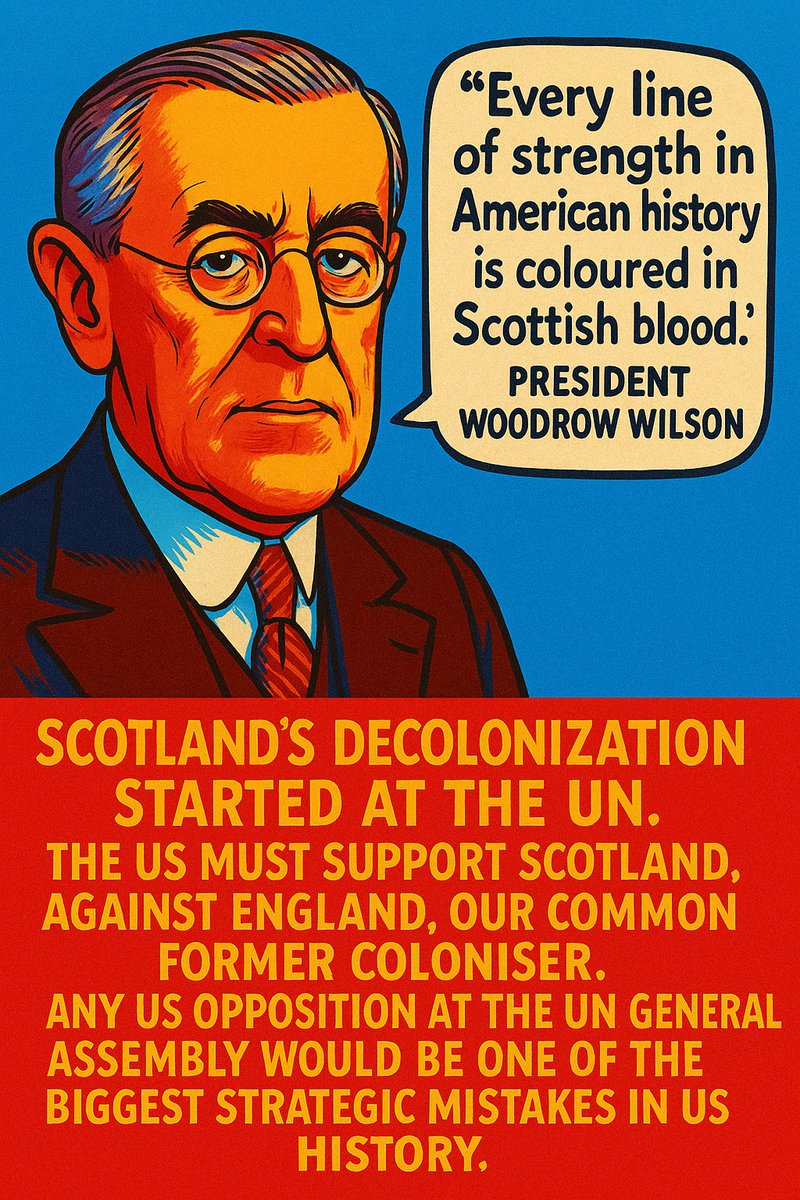
‘Every line of strength in American history is coloured in Scottish blood.’ US President Woodrow Wilson.
Scotland inspired the US Declaration of Independence signed mostly by Scots. The US cannot let Scotland and so many Scottish-Americans down. Most US Presidents are Scots. The US must support Scotland at the @UN against our common oppressor, the English coloniser. England must leave Scotland like it left the US. Saor Alba 🏴 🇺🇸
6
73
104
4,280
Black Isle Clansman “Extremist”🏴🌻 retweeted

Liberation Scotland at the United Nations C-24 Regional Seminar, Managua, Nicaragua, held from 25 to 27 May 2026
Discussion Paper (1) by colleague and
collaborator Maître Jérôme Bouquet-Elkaïm,
Solicitor Advocate at the Bar of Rennes, France
– Item 1.(a) Role of the Special Committee
– Strengthening dialogue and cooperation
t.ly/9C7uh
17
26
358
Black Isle Clansman “Extremist”🏴🌻 retweeted
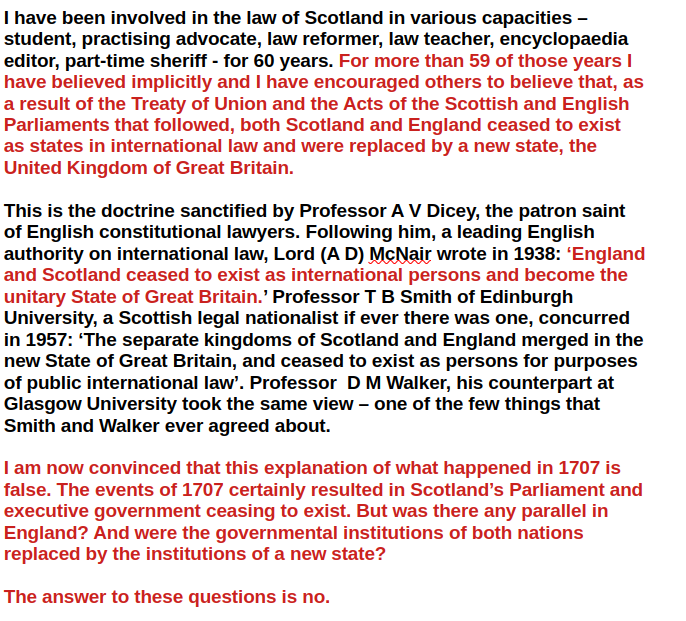
From “For England, Nothing Changed” by Robert Black KC 17 May 2025
Read the whole speech with references
liberation.scot/coms/June18-…
1
32
39
485
Black Isle Clansman “Extremist”🏴🌻 retweeted

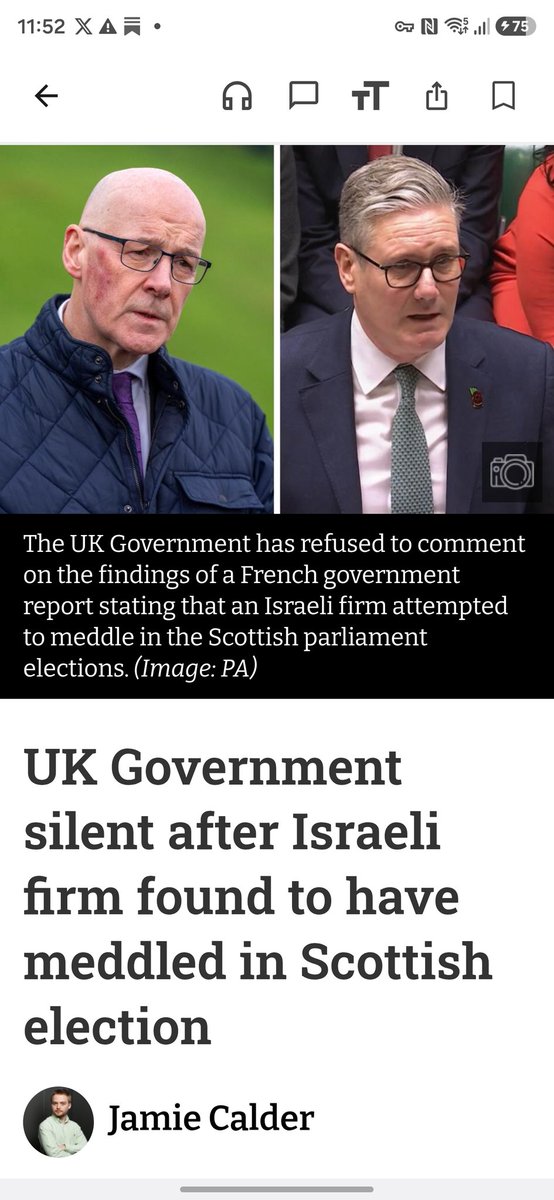
UK Government silent after Israeli firm found to have meddled in Scottish election thenational.scot/news/261916…
14
190
277
3,312
Black Isle Clansman “Extremist”🏴🌻 retweeted
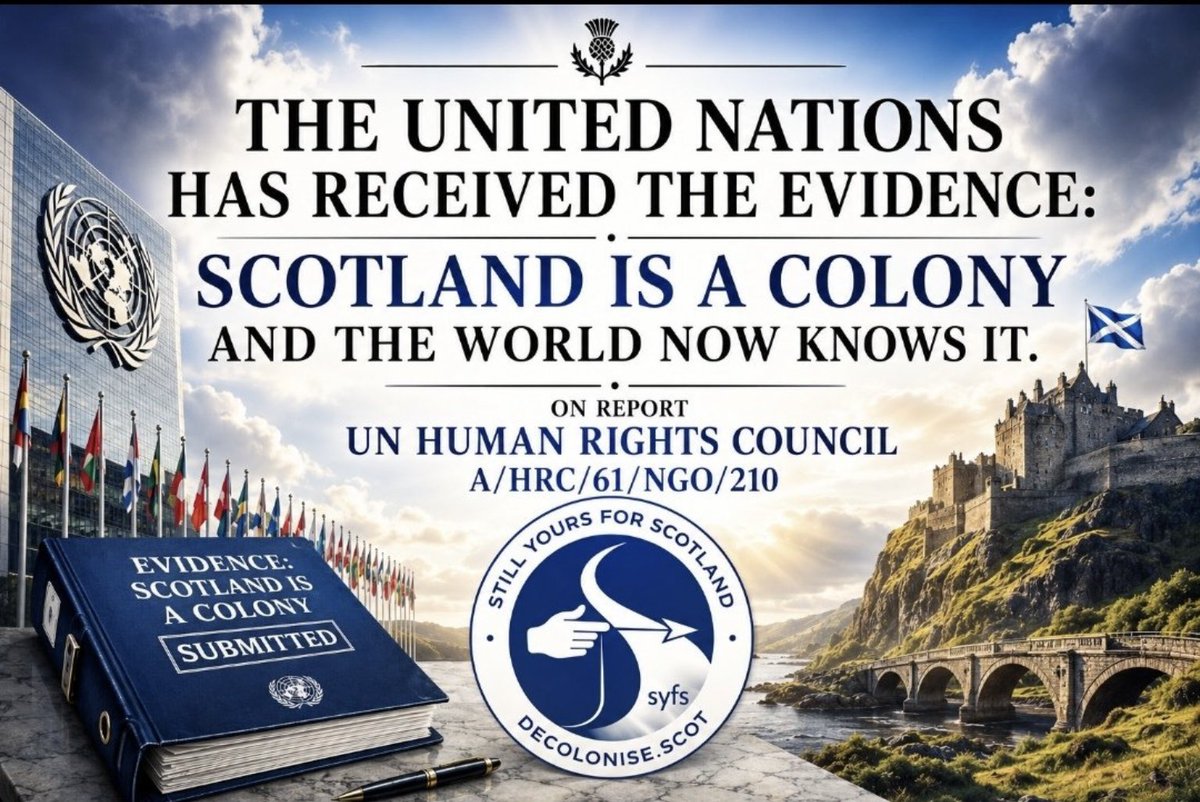
The English colonial state (and its disinformation apparatus) labels the words of the colonised Scots as misinformation. Is the report now circulating at the UN saying Scotland is an English colony misinformation? Is the fact Scotland was called an English colony during the official UN Special Committee on Decolonisation (C-24) meeting in Managua a few days ago misinformation? Is annexation, a supreme crime in international law, proven by Scotland's liberation movement with Professor Robert Black KC Scotland's leading law authority misinformation? The English colonial state is the biggest source of disinformation and misinformation in Scotland and against the Scottish people to support colonial oppression and colonial theft/extraction of Scots and Scotland. Another colonial scam like the rigged, non-binding colonial poll organised by the English colonial state in 2014. The English coloniser must end its illegal occupation of Scotland and leave Scottish territory. It's happening with the support of the international community.
2
75
139
1,624
Black Isle Clansman “Extremist”🏴🌻 retweeted

"unknown actors"? Don't think so, MI5, 77th Brigade, Mossad, BlackCore ????? x.com/ScotNational/status/20… We now know that British/Israeli security forces are interfering in Scottish democracy & will continue to do so. Time every Scot realised what is going on.
Jun 12

The SNP’s head of digital has said that unknown actors 'repeatedly' tried to hack his work and social media accounts during the Scottish elections thenational.scot/news/261893…
14
305
521
6,230
Black Isle Clansman “Extremist”🏴🌻 retweeted

Scottish Independence poll 🗳️🏴
Simply Yes or No ? 🤔
Please vote & share for a large response.
95%
Yes
5%
No
271 votes • 6 days
13
299
133
5,657
Black Isle Clansman “Extremist”🏴🌻 retweeted

Makes you wonder how many "unionist" responses are actually Israel trying to disrupt Scotland's march towards #ScottishIndependence
&
How many indy surveys are on people who've been targeted by Israeli anti-Indy propaganda
Are there any real unionists out there or just bots?
29
169
240
2,621
Black Isle Clansman “Extremist”🏴🌻 retweeted
Liberation Scotland at the United Nations C-24 Regional Seminar, Managua, Nicaragua, held from 25 to 27 May 2026
Discussion Paper (2) by colleague and
collaborator Maître Jérôme Bouquet-Elkaïm,
Solicitor Advocate at the Bar of Rennes, France
– Item 2 a ii Political developments in the Non-Self-Governing Territories
– Pacific Region NOUVELLE-CALEDONIE
t.ly/LNhL_
"The Customary Senate, which is at the origin of these referrals, sees its functioning financially paralyzed by the Loyalist government and France. These are retaliatory measures. Its representation was only possible thanks to the solidarity of the non-autonomous territories of Guyana and Europe, Brittany, Scotland, Veneto, Catalonia"
40
49
806
Black Isle Clansman “Extremist”🏴🌻 retweeted

Jun 12
What’s interesting is up until recently the word 'colony' in relation to Scotland was dismissed or even laughed at, however something has changed.
Have those 'constitutional experts' had an awakening now that it has entered the UN records?
csosew.org/wp-content/upload…
3
104
182
1,631
Black Isle Clansman “Extremist”🏴🌻 retweeted
Liberation Scotland is described as "a bunch of moon howlers."
But the British State takes them seriously enough to interfere with their sign up process.
Thwart Pefidious Albion.
Support Liberation Scotland in its efforts to have Scotland decolonised.
surveymonkey.com/r/LZRCRWX
5
70
96
1,439

Black Isle Clansman “Extremist”🏴🌻 retweeted

Jun 12
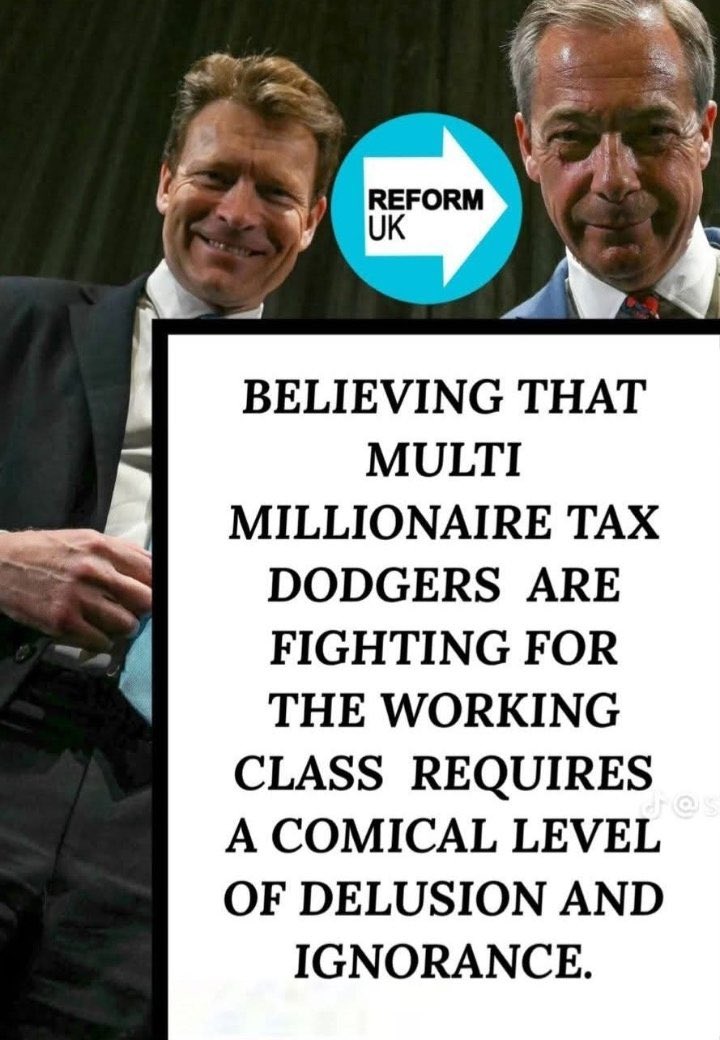
“I was elected to rattle cages of the establishment ” 🤣 nope, you were not elected you were rejected at the last election, you slithered in on the list. Nothing positive to offer Scotland at all, you (Reform) are Scotland’s national embarrassment.
3
25
68
855
Black Isle Clansman “Extremist”🏴🌻 retweeted

Jun 12
If migrant workers went on strike for a day, the country would grind to a halt.
If billionaires went on strike for a week, no one would even notice.
400
323
1,679
29,717

Huge story👇
Reuters report Israeli firm BlackCore targeted John Swinney during Scottish election.

Who paid for this Israeli firm to interfere in the Scottish Parliament elections a month ago? Where is the Scottish press on this?
Surely this is a bigger story than all the tittle tattle they seem obsessed by. reuters.com/world/israeli-fi…
10
309
413
11,991
Black Isle Clansman “Extremist”🏴🌻 retweeted
Watchdogs of Colonialism: Corporate Extraction and the Limits of Scottish Devolution
Occasionally, as we see another loss to Scotland's economy or yet more resources handed out to neo-extractive globalists, our minds turn to Scotland's economic history: its heavy industrial enclaves (Michael Hechter) the older among us remember, wiped out when no longer needed for Empire; the closure of 'new' substitute industries like British Leyland, IBM, Singer, Motorola, NEC, Timex, Digital and the once-vaunted Silcon Glen's dwindled export output value down 80%; brutal removal of our oil refining capacity to an England without oil; the ethylene plant at Mossmorran shut. Yet in the meantime we see imposed huge private autonomous tax-avoidance zones in the shape of 'freeports' ("Scotland needs a piece of the pie" - a future SNP leader), the land covered in sky-scraping pylons to export energy in a way and at a speed reminiscent of plunder-purpose Indian railroads; our ports closed down and the common good assets on which they sat sold off to international 'operators'; our very stock exchange closed in the teeth of an oncoming oil boom and the forced removal of all financial activity to London; implantation without consultation or consideration of the benefit or disbenefit to Scots of colossal energy-eating data centres.
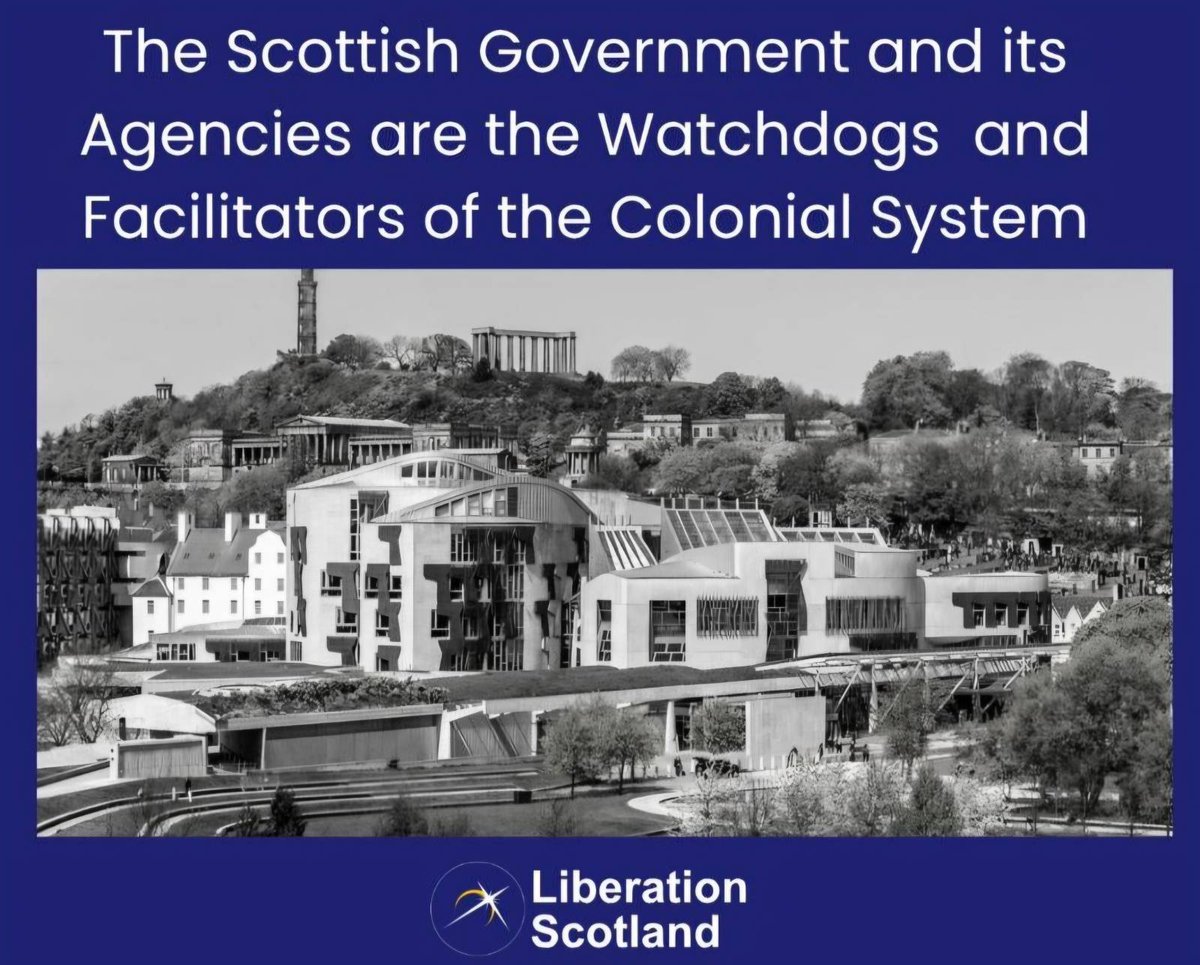
What we are seeing is the ongoing plunder of 'corporate colonialism' applied to England's Scottish colony, with the 'Scottish Government' and its agencies providing, as Professor Alf Baird has explained, the role of Aimé Césaire's 'watchdogs of colonialism'.
The term refers to Césaire's conceptual framework in Discourse on Colonialism (1950), applied as a political critique of Scotland's relationship with corporate power.
Césaire argued that colonialism is not simply political and cultural domination, but is fundamentally an economic system of extraction and plunder - its true purpose. The colonising power installs local institutions that appear to serve the colonised population while in reality function to protect and facilitate the extraction of wealth by outside interests. He called those who administer this system on behalf of capital the coloniser's watchdogs (Scottish Government), local enforcers of external power.
Corporate colonialism is where a foreign state - the colonising force - is corporate capital (energy companies, landowners, developers, financiers) which extract value from Scottish resources, land, and labour, with profits flowing elsewhere.
Scotland's natural resources (oil, wind, water, land) generate enormous wealth, but this wealth is not retained by Scottish communities; it is extracted by corporations, often with public subsidy.
There is a reality to be seen when it comes to how Scotland is governed. The Scottish Parliament is an institution which owes its existence to nothing more than an ordinary Anglo-British law; one which, despite the finest of 'straight-bat' British assurances, is as impermanent as Prof. Mark Elliot identified in his 2020 article, "The United Kingdom’s Constitution and Brexit: A ‘Constitutional Moment’?" (available online). The Scotland Act is the product of a Westminster parliament which had the shocking arrogance to subordinate the Treaty of Union to this run-of-the-mill Westminster statute (hint: not possible; it makes of the Scotland Act a legal absurdity). Yet - and this is extremely important - Scottish ministers and every member of that parliament only enter its portals by swearing allegiance to an English monarch. All this to say, what hope for the interests of the people of Scotland - the Scottish Crown - when members of the Scottish Parliament have sworn fealty not to them, but to another, English, Crown - of which the English monarch is the embodiment. His (and his Westminster parliament's) interests are sworn to come first.
From this flows that fact that the Scottish Government, and thence Scottish agencies and institutions, extending to law, senior civil service, academia and press, are watchdogs of the colonial state. While the Scottish Government and its regulatory bodies (enterprise agencies, planning authorities) appear to represent Scottish interests, in practice they facilitate and legitimise corporate extraction rather than question it. They are administrators of the system, not challengers of it.
Regional political autonomy, in Scotland referred to as devolution, has by design no more produced economic prosperity than it confers economic sovereignty. The structures of extraction remain fully operational - and expanding. The Scottish Government manages the conditions under which plunder proceeds, facilitating it, regulating it with indulgence and lending it democratic legitimacy, all of which makes it functionally equivalent to Césaire's colonial administrator class.
8
78
105
1,732