
Doctor in politics. Scottish-French. Indonesia's Engagement with Africa, Palgrave Macmillan. Ballater, Aberdeenshire, Scotland. Saor Alba. decolonise.scot
Joined April 2009
- Tweets 43,775
- Following 1,150
- Followers 5,014
- Likes 19,492
3,265 Photos and videos




Pinned Tweet

18 Nov 2023
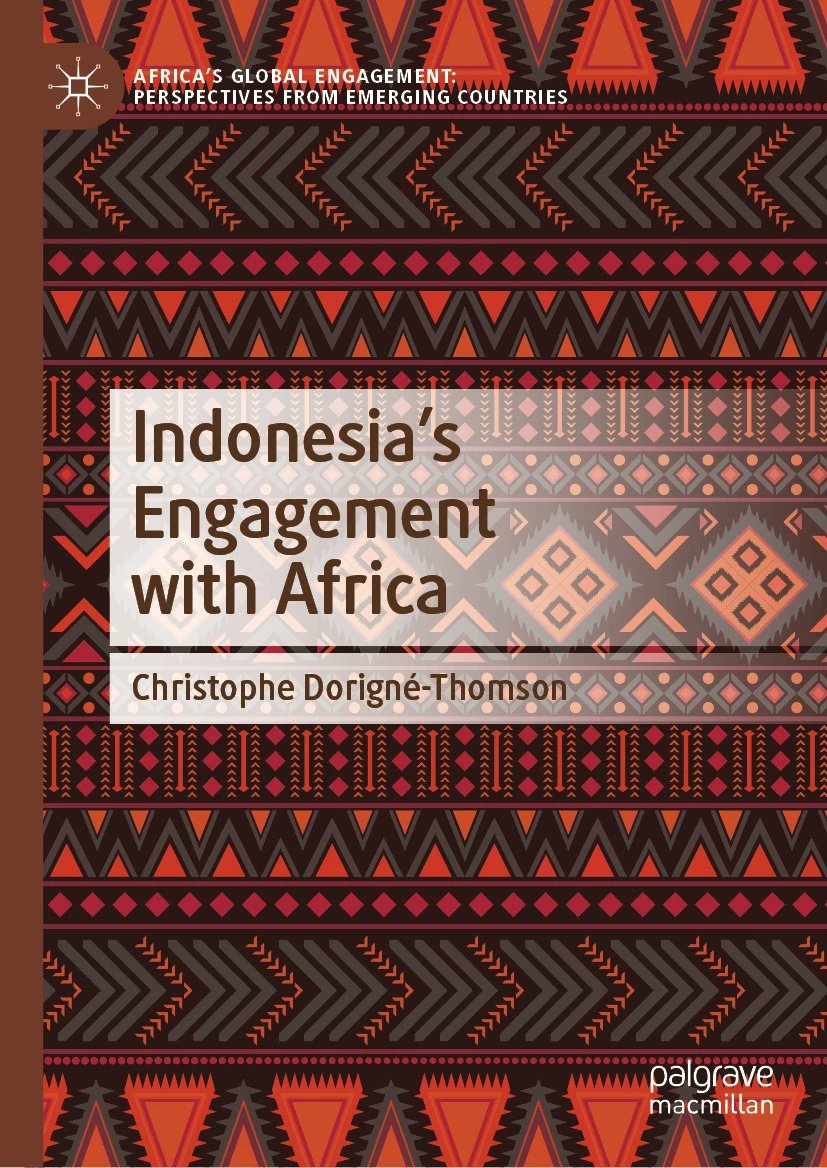
Cover of my book: Indonesia's Engagement with Africa, Palgrave Macmillan / Springer Nature, 2023. @Palgrave @SpringerNature link.springer.com/book/10.10…
17
83
166
134,719
Christophe Dorigné-Thomson retweeted

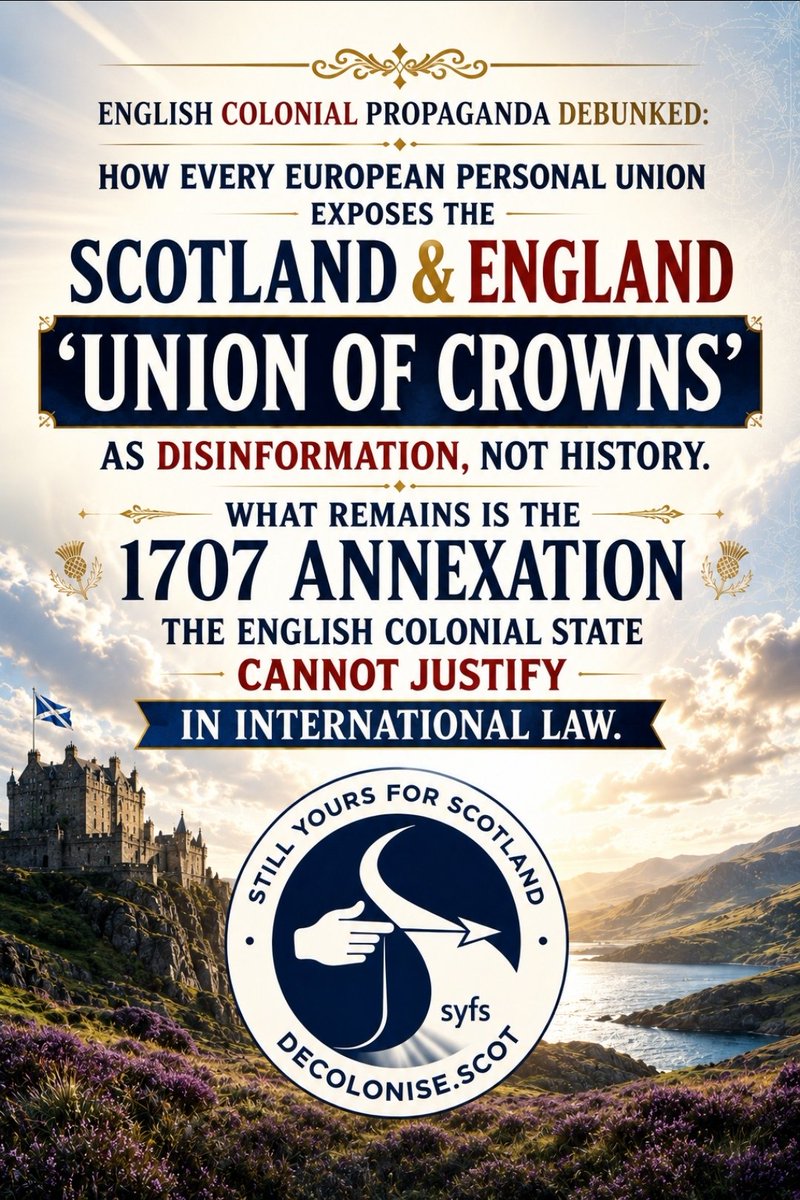
English Colonial Propaganda Debunked: How Every European Personal Union Exposes the Scotland & England 'Union of Crowns' as Disinformation, Not History. What Remains Is the 1707 Annexation the English Colonial State Cannot Justify in International Law: decolonise.scot/english-colo…
4
31
28
10,574
Christophe Dorigné-Thomson retweeted
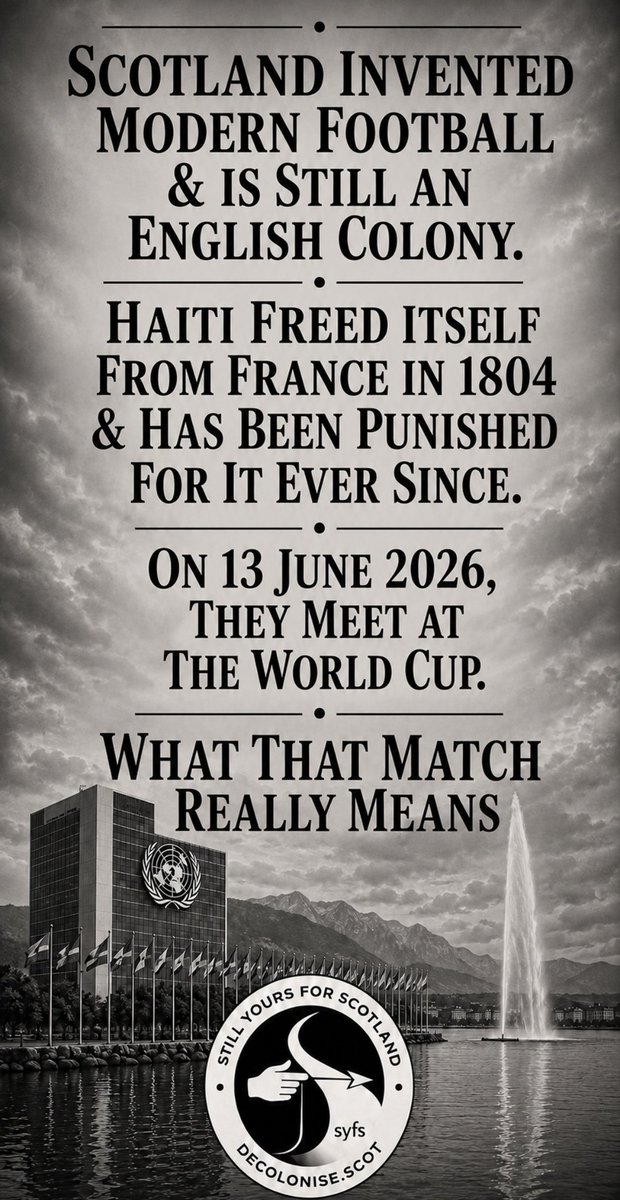
Scotland Invented Modern Football and Is Still an English Colony. Haiti Freed Itself From France in 1804 and Has Been Punished For It Ever Since. On 13 June 2026, They Meet at the World Cup. What That Match Really Means.
decolonise.scot/the-real-fou…
5
15
26
20,920
Christophe Dorigné-Thomson retweeted
10 Jul 2025
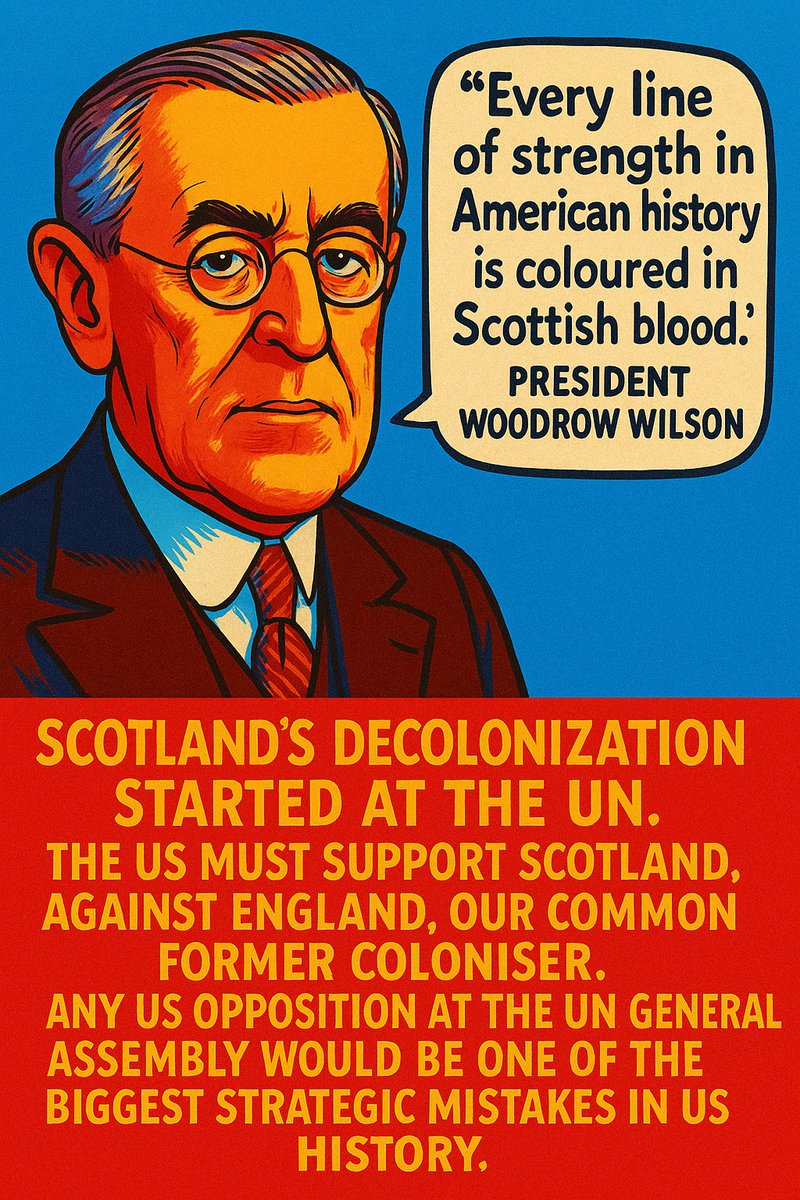
‘Every line of strength in American history is coloured in Scottish blood.’ US President Woodrow Wilson.
Scotland inspired the US Declaration of Independence signed mostly by Scots. The US cannot let Scotland and so many Scottish-Americans down. Most US Presidents are Scots. The US must support Scotland at the @UN against our common oppressor, the English coloniser. England must leave Scotland like it left the US. Saor Alba 🏴 🇺🇸
5
69
97
4,238
Christophe Dorigné-Thomson retweeted
11 Jul 2025
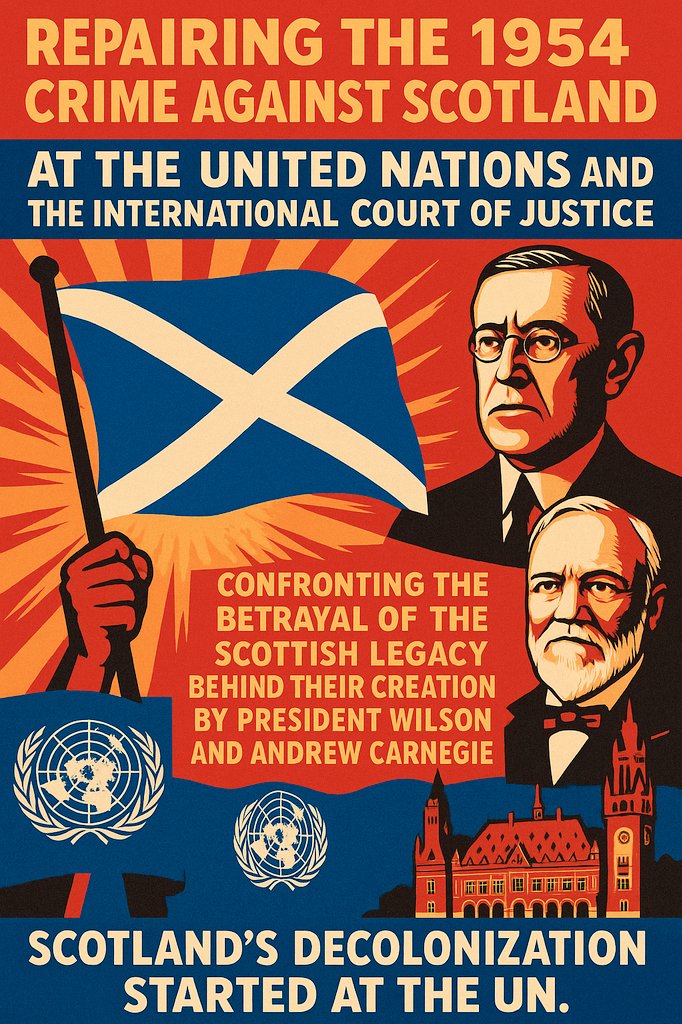
Repairing the 1954 Crime Against Scotland at the United Nations and the International Court of Justice: Confronting the Betrayal of the Scottish Legacy Behind Their Creation by President Wilson and Andrew Carnegie
“Every line of strength in American history is coloured in Scottish blood.”, President Woodrow Wilson
The foundations of the post-war international order cannot be understood without recognising the decisive contribution of Scotland. The United Nations and the International Court of Justice were not merely abstract products of diplomacy. They were institutions shaped in spirit, structure, substance by two men profoundly marked by Scotland’s intellectual & moral traditions: President Woodrow Wilson & Andrew Carnegie. From Wilson came the moral and legal principle of national self-determination. From Carnegie came the material support and institutional vision for a world governed by law, not empire or colonisation. Carnegie financed and built the ICJ. These men, drawing on the ethical legacies of the Scottish Enlightenment and the civic consciousness of a stateless nation, helped build the very instruments designed to protect peoples from colonial oppression & domination. Yet, in 1954, these same institutions failed the nation to which they owed so much. The denial of Scotland’s right to decolonization was a structured act of erasure, not a bureaucratic oversight.
Woodrow Wilson’s philosophy of internationalism cannot be separated from his Scottish heritage. His mother, Jessie Woodrow of Paisley, Scotland, raised him within the moral rigour of Presbyterian thought and Enlightenment rationalism. The values of Francis Hutcheson, Adam Smith, & Thomas Reid formed the basis of his political ethics. At Versailles in 1919, Wilson articulated the principle that peoples possess the right to determine their political futures, free from coercion or foreign rule. This doctrine entered the core of the League of Nations and later the UN Charter. It expressed a fundamentally Scottish view: that legitimate government flows from the will of the people, not from imperial inheritance. The Scottish Claim of Right versus England's parliamentary supremacy(-cism).
Andrew Carnegie, born in Dunfermline and raised in a working-class family grounded in egalitarian belief, applied his fortune to the construction of lasting peace. He founded & financed the Peace Palace in The Hague, which became the seat of the Permanent Court of Arbitration and eventually the International Court of Justice. Carnegie’s commitment to international law was not ceremonial. He believed that humanity could not evolve without building institutions capable of restraining power through reason & justice. The ICJ remains physically and conceptually rooted in that vision. Its very existence stands on Scottish philanthropy and Scottish ethical commitment.
In 1954, when the UN requested that Member States identify non-self-governing territories under Article 73(e) of the Charter, the British state asserted that none existed within its political structure. The claim was that Scotland, along with Wales and Northern Ireland, was part of a voluntary and equal union. This assertion was accepted without investigation. No legal inquiry tested the historical validity of the union. No advisory opinion was requested. No dialogue with the Scottish people took place. The General Assembly remained silent. The ICJ, tasked with interpreting and upholding the Charter, also remained silent. This coordinated omission permitted a constitutional fiction to override a national reality. A crime against Scotland & the Scots.
@CIJ_ICJ
@UN
@UN_HRC
@EU_Commission
@Europarl_EN
@eu_eeas
@coe
@EURightsAgency
@francediplo
@FranceintheUK
@franceintheus
@cgfEdimbourg
@Elysee
@GermanyDiplo
@bundeskanzler
@NorwayMFA
@dfatirl
@PresidentIRL
@antonioguterres
@UNGeneva
4
130
140
7,692
Riding Whoosh highspeed train between Jakarta & Bandung built by China with Indonesia in 7 years for $7bn for 132km, reaching 350km/hour. The English colonial state can't build HS2 in already 17 years, will need over 30 years, over $130bn & steals billions from Scotland for it. As an English colony, Scotland's potential is completely squandered and its wealth plundered. With its liberation, Scotland can build an amazing high-speed rail system connecting all of Scotland. There is no future for Scotland as an English colony.



7
134
181
2,966
Christophe Dorigné-Thomson retweeted
Scotland is literally the most plundered nation on earth.
The English colonial state extracts well over 100 billion pounds yearly from Scotland through its resources, taxes, trade interception, creative industries & economic control.
That is English colonialism not partnership.
19
244
412
5,127
Christophe Dorigné-Thomson retweeted
21 Jun 2025
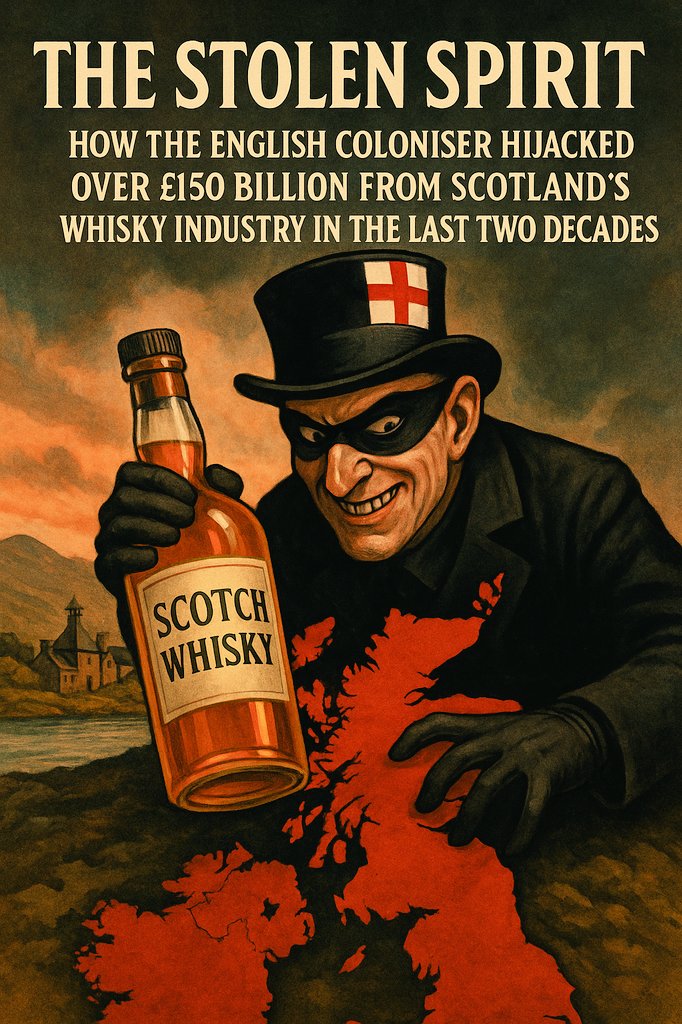
The Stolen Spirit: How the English Coloniser Hijacked Over £150 Billion from Scotland’s Whisky Industry in the Last Two Decades
1/ Scottish whisky is more than a drink. This national treasure represents distilled heritage, refined over centuries by the Scottish people through the climate, language, land, and lifeways of the Highlands and Islands. The name itself comes from the Scottish Gaelic term uisge-beatha, meaning "water of life." This spirit emerged from Gaelic-speaking communities such as Islay, Skye, and the Hebrides, where knowledge passed through generations shaped a practice intimately tied to the land.
Scotch whisky is a unique, location-specific, high-volume, high-value export product. It stands as one of the most iconic symbols of Scotland on the global stage. Yet, this global success has long been exploited by an external colonial power. The English state has transformed a sovereign asset into a machine for extracting wealth, consolidating power, and advancing British branding while denying Scotland the authority to control or benefit from what it produces. This process has resulted in one of the most severe cases of wealth theft in contemporary Europe. The total value stolen from the Scottish whisky sector over the past twenty years stands between £100 billion and £180 billion. This extraction is not incidental. It reflects a colonial condition Scotland is now actively resisting. Decolonisation has begun. Scotland is engaging the United Nations to assert its right to self-determination and to end the colonial theft and exploitation imposed by its coloniser, England.
The official figures expose the extent of this exploitation. In 2018, Scotch whisky exports totalled 1.28 billion 70cl bottles with a declared value of £4.7 billion, equating to only £3.67 per bottle. In 2023, 1.35 billion bottles were exported with a reported value of £5.6 billion, giving a per-bottle figure of £4.15. In 2024, export volumes rose to 1.4 billion bottles while the declared value fell to £5.4 billion, resulting in just £3.86 per bottle. These figures are drastically lower than market prices. The cheapest blended Scotch in duty-free shops typically costs no less than £10 per bottle. Most single malts and premium bottles are priced between £30 and £100, often more. A fair average export value of £10 per bottle would bring the 2024 figure to at least £14 billion. Over two decades, the gap between real and declared value points to a concealed loss of £120 billion to £180 billion. That loss reflects profit transferred out of Scotland through false pricing, offshore registration, and colonial misrepresentation.
Ownership of the industry has largely shifted out of Scottish hands. Major producers such as Diageo and Pernod Ricard are headquartered outside Scotland. Diageo controls over 30 percent of the market and operates from London. These multinational corporations use accounting structures that allow profits to be declared in low-tax jurisdictions or within English financial centres. The whisky may be crafted in Scotland, but the wealth is booked elsewhere. What remains in Scotland is an image without authority, production without sovereignty, labour without reward.
The theft continues through taxation. In 2022 to 2023, excise duty and VAT on whisky generated £3.8 billion, all absorbed by the UK Treasury. Even whisky sold in Scotland is taxed by the British state. The revenue is not returned to support Scottish public services or invested in the communities that carry the industry. Scotland has no fiscal control over its most valuable national product. What ought to support rural infrastructure, universal services, and a Scottish sovereign wealth fund is used instead to fund the apparatus of English power.
@UN
@UN_HRC
@EU_Commission
@Europarl_EN
@eu_eeas
@coe
@EURightsAgency
@francediplo
@FranceintheUK
@franceintheus
@cgfEdimbourg
@Elysee
@GermanyDiplo
@bundeskanzler
@NorwayMFA
@dfatirl
@PresidentIRL
@antonioguterres
28
424
468
37,502

Just imagine for a wee moment if this money were to be retained in Gods country. We would be the envy of Europe if not the world. Dream on eh!

Scotland is literally the most plundered nation on earth.
The English colonial state extracts well over 100 billion pounds yearly from Scotland through its resources, taxes, trade interception, creative industries & economic control.
That is English colonialism not partnership.
4
15
282
Christophe Dorigné-Thomson retweeted

Jun 10
The truth laid bare, finally. Real researched historical facts, hidden from most Scots. Thank you!
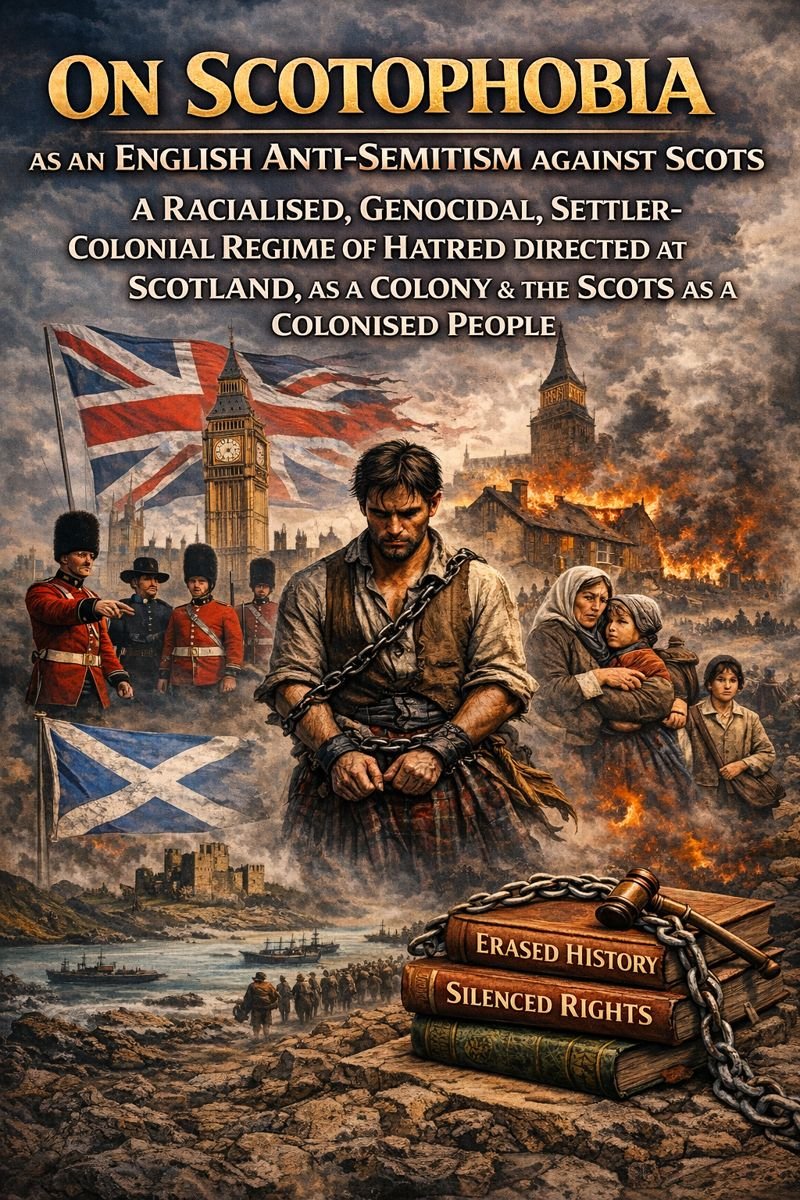
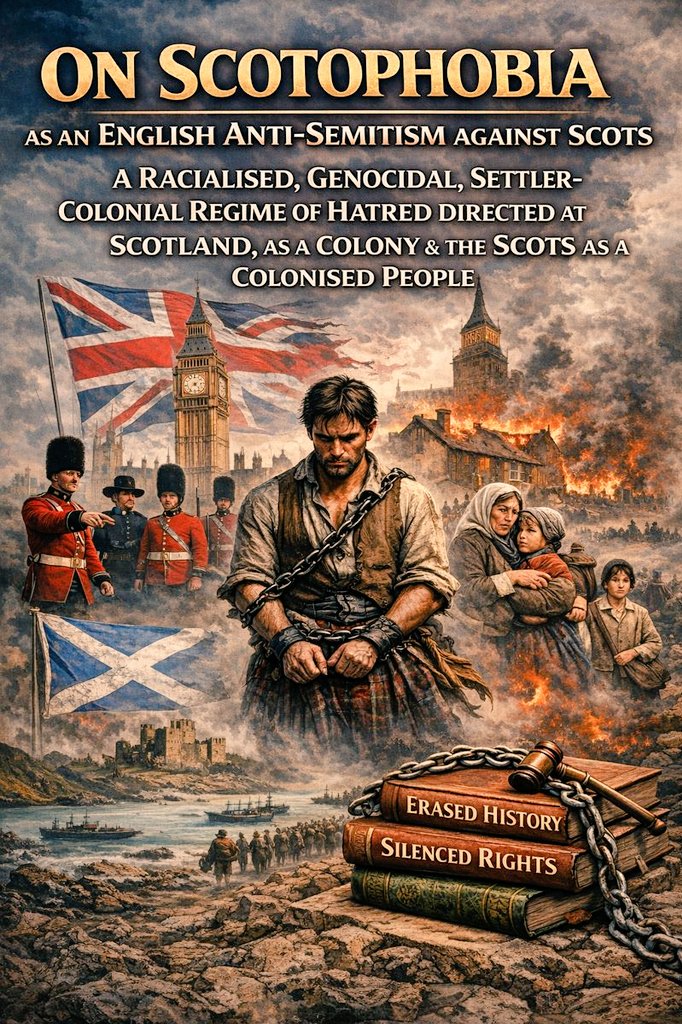
On Scotophobia as an English Anti-Semitism Against Scots: a Racialised, Genocidal, Settler-Colonial Regime of Hatred Directed at Scotland as a Colony & the Scots as a Colonised People
Scotophobia names a holistic regime of hostility. Scotophobia designates the historically continuous system through which England has constructed Scots as a people whose political existence provokes fear, contempt, repression, erasure, permanent delegitimation/denial & Scotland as a territory whose colonisation must be denied even as colonial domination persists. Scotophobia is hatred articulated as reason, violence as order, subjugation as governance, & erasure as normality.
This regime belongs to the same family of racialised political hostilities as anti-Semitism, not because histories collapse into one another, but because the underlying logic converges. A people is rendered permanently suspect as collective political agency is framed as danger. Structural/colonial domination is inverted into moral blame. Extreme violence becomes intelligible while denial becomes compulsory.
Scotophobia as a Political Technology of Hatred
Anti-Semitism, understood theoretically, functions as a political technology that transforms a people into an existential problem. Hostility becomes durable because that people is imagined as incompatible with sovereignty, order, agency or legitimacy. Scotophobia operates through the same hostile grammar.
From the late medieval period onward, English political culture repeatedly represented Scots as violent, treacherous, uncivilised, constitutionally unfit for self-rule. Such representations did not remain rhetorical. They structured law, military policy, land relations & population management.
Early English chronicles routinely described Scots as barbarous & disorderly. 16th & 17th century pamphlet literature in England portrayed Scots as parasitic intruders upon English resources, a discourse that intensified during moments of dynastic, constitutional anxiety. The Union of the Crowns in 1603 triggered a wave of explicitly hostile commentary depicting Scots as a corrupting presence within England.
A recurrent formulation appears across this literature: Scots are portrayed as a people who cannot be trusted with power. Their loyalty is conditional. Proximity constitutes threat. This triad of suspicion, distrust & proximity mirrors classic antisemitic structures within continental Europe. (cf. also Islamophobia, xenophobia and racism in general).
Historical Expressions of Scotophobic Hostility
Scotophobia is not an abstraction; appearing in historically attested language.
English pamphleteers of the early 17th century described Scots as “a barbarous nation”, “a rude people” incapable of civility. Such language appears repeatedly in London tracts & broadsheets in response to the limited & elite participation of Scots in English political life after 1603, a phenomenon discursively inflated & framed as an intrusive influx.
During the 18th century, scotophobic sentiment hardened into cultural & racial hierarchy. Highland Scots were frequently described in English administrative correspondence as a “distinct race”, a population “naturally inclined to idleness & disorder”. These formulations are attested across military & governmental records following the anti-colonial Jacobite risings. These formulations follow classic colonial tropes & framings, revealing textbook colonialism in its most recognisable administrative & racialised form.
5
6
197
Christophe Dorigné-Thomson retweeted
Scotland is a nation under illegal occupation run by MI5 with the lobbying done against its decolonisation and liberation by MI6. That is the reality of Scotland today as an English colony.
45
150
315
6,393
Christophe Dorigné-Thomson retweeted
On Scotophobia as an English Anti-Semitism Against Scots: a Racialised, Genocidal, Settler-Colonial Regime of Hatred Directed at Scotland as a Colony & the Scots as a Colonised People
Scotophobia names a holistic regime of hostility. Scotophobia designates the historically continuous system through which England has constructed Scots as a people whose political existence provokes fear, contempt, repression, erasure, permanent delegitimation/denial & Scotland as a territory whose colonisation must be denied even as colonial domination persists. Scotophobia is hatred articulated as reason, violence as order, subjugation as governance, & erasure as normality.
This regime belongs to the same family of racialised political hostilities as anti-Semitism, not because histories collapse into one another, but because the underlying logic converges. A people is rendered permanently suspect as collective political agency is framed as danger. Structural/colonial domination is inverted into moral blame. Extreme violence becomes intelligible while denial becomes compulsory.
Scotophobia as a Political Technology of Hatred
Anti-Semitism, understood theoretically, functions as a political technology that transforms a people into an existential problem. Hostility becomes durable because that people is imagined as incompatible with sovereignty, order, agency or legitimacy. Scotophobia operates through the same hostile grammar.
From the late medieval period onward, English political culture repeatedly represented Scots as violent, treacherous, uncivilised, constitutionally unfit for self-rule. Such representations did not remain rhetorical. They structured law, military policy, land relations & population management.
Early English chronicles routinely described Scots as barbarous & disorderly. 16th & 17th century pamphlet literature in England portrayed Scots as parasitic intruders upon English resources, a discourse that intensified during moments of dynastic, constitutional anxiety. The Union of the Crowns in 1603 triggered a wave of explicitly hostile commentary depicting Scots as a corrupting presence within England.
A recurrent formulation appears across this literature: Scots are portrayed as a people who cannot be trusted with power. Their loyalty is conditional. Proximity constitutes threat. This triad of suspicion, distrust & proximity mirrors classic antisemitic structures within continental Europe. (cf. also Islamophobia, xenophobia and racism in general).
Historical Expressions of Scotophobic Hostility
Scotophobia is not an abstraction; appearing in historically attested language.
English pamphleteers of the early 17th century described Scots as “a barbarous nation”, “a rude people” incapable of civility. Such language appears repeatedly in London tracts & broadsheets in response to the limited & elite participation of Scots in English political life after 1603, a phenomenon discursively inflated & framed as an intrusive influx.
During the 18th century, scotophobic sentiment hardened into cultural & racial hierarchy. Highland Scots were frequently described in English administrative correspondence as a “distinct race”, a population “naturally inclined to idleness & disorder”. These formulations are attested across military & governmental records following the anti-colonial Jacobite risings. These formulations follow classic colonial tropes & framings, revealing textbook colonialism in its most recognisable administrative & racialised form.
14
137
149
39,101
Christophe Dorigné-Thomson retweeted
The English colonial state (and its disinformation apparatus) labels the words of the colonised Scots as misinformation. Is the report now circulating at the UN saying Scotland is an English colony misinformation? Is the fact Scotland was called an English colony during the official UN Special Committee on Decolonisation (C-24) meeting in Managua a few days ago misinformation? Is annexation, a supreme crime in international law, proven by Scotland's liberation movement with Professor Robert Black KC Scotland's leading law authority misinformation? The English colonial state is the biggest source of disinformation and misinformation in Scotland and against the Scottish people to support colonial oppression and colonial theft/extraction of Scots and Scotland. Another colonial scam like the rigged, non-binding colonial poll organised by the English colonial state in 2014. The English coloniser must end its illegal occupation of Scotland and leave Scottish territory. It's happening with the support of the international community.
2
75
139
1,624
Christophe Dorigné-Thomson retweeted
Scotland is now called an English colony in a report in the UN system and has just been called so also at the recent UN decolonization committee seminar in Managua, Nicaragua. Scotland is indeed an English colony. All factual and proven now.
6
138
270
3,168
Christophe Dorigné-Thomson retweeted
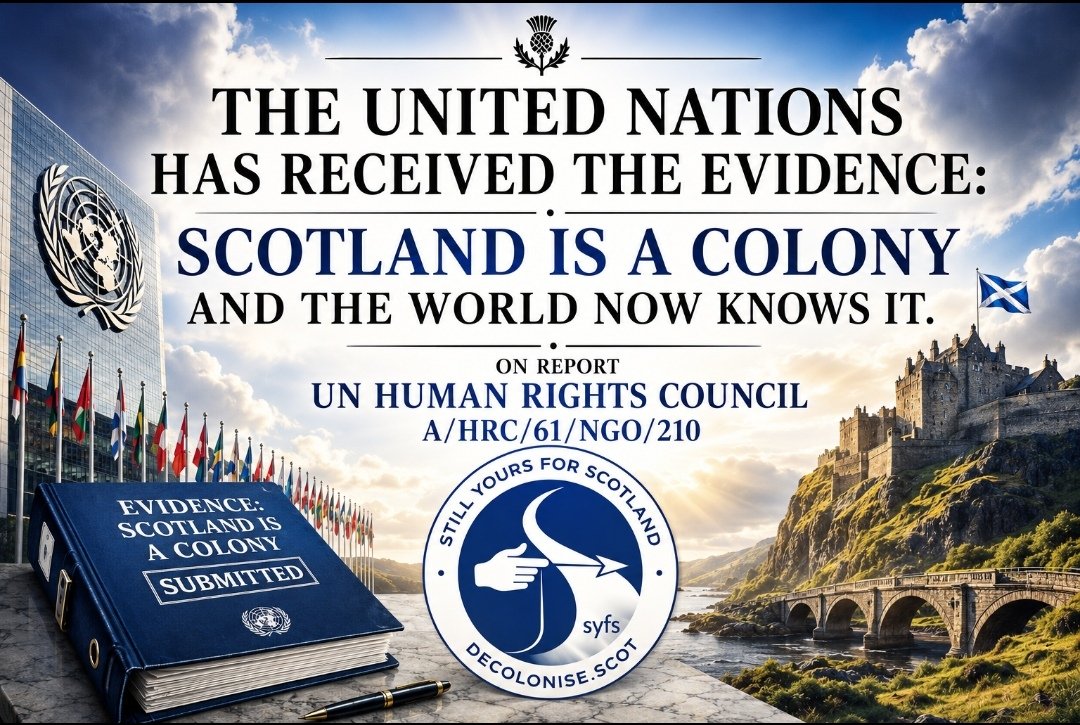
The United Nations Has Received the Evidence: Scotland Is a Colony and the World Now Knows It. On Report UN Human Rights Council A/HRC/61/NGO/210
decolonise.scot/the-united-n…
30
143
188
117,574
Christophe Dorigné-Thomson retweeted
Of the 48 nations participating in the 2026 FIFA World Cup in Canada, Mexico and the United States, only one is still a colony: Scotland. In the United Nations system, Scotland is now starting to be called an English colony.
33
144
352
13,389
Christophe Dorigné-Thomson retweeted
He's not the King of Scots. It's constitutionally impossible. The Scottish Crown is dormant. He's a foreign king. An English coloniser. Scotland is a sovereign state under illegal English occupation now called a colony at the UN. Decolonisation is the way for liberation.
13
143
349
5,598
Christophe Dorigné-Thomson retweeted
They say Scotland is too poor to stand alone.
The truth is the opposite.
Scotland is too rich to be released by a colonial state built on extracting its wealth, resources, labour, territory & strategic position.
Empires do not surrender profitable colonies willingly.
58
444
1,028
13,407