
Joined April 2014
- Tweets 230
- Following 207
- Followers 104
- Likes 627
11 Photos and videos



Jun 10
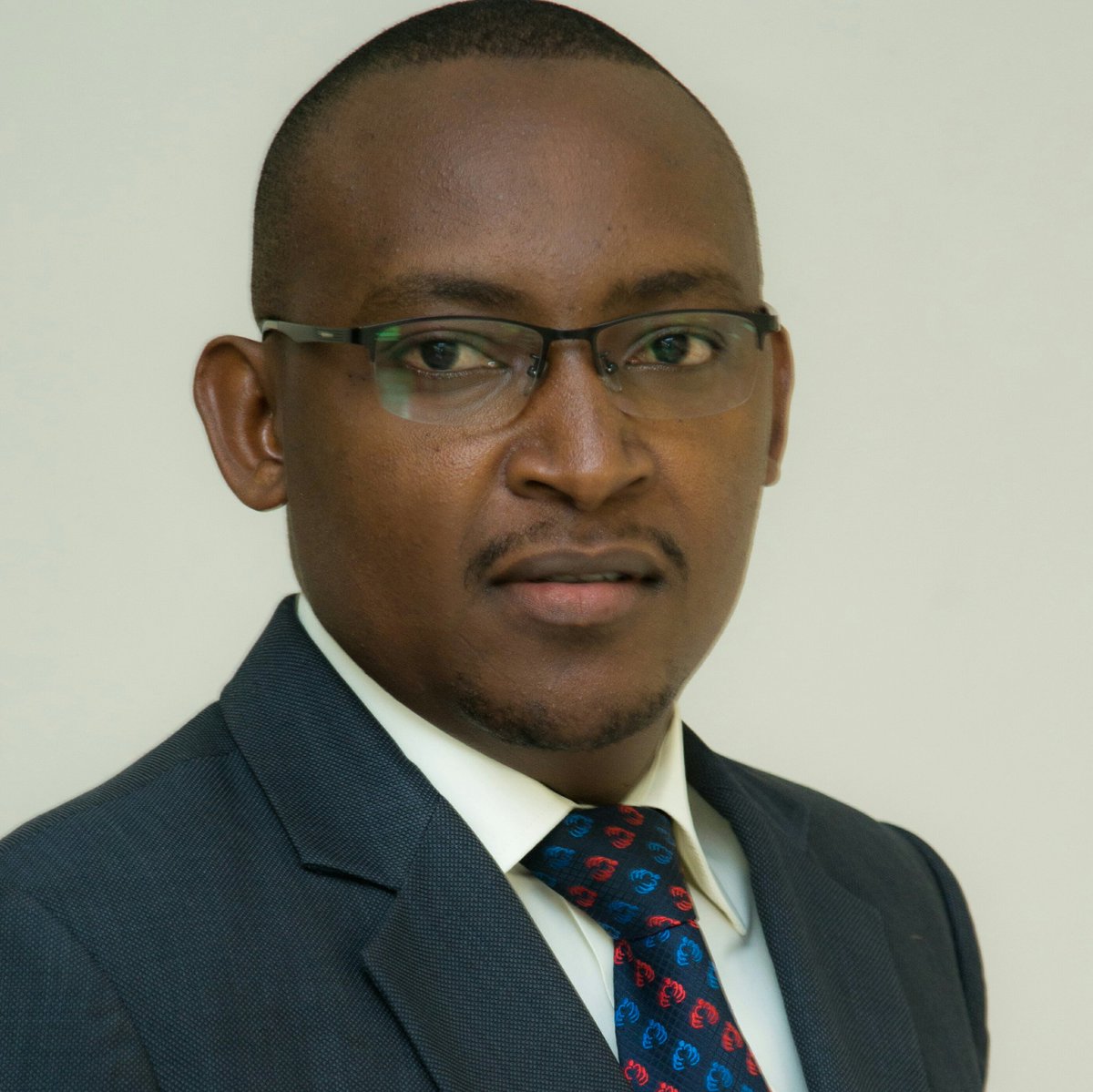
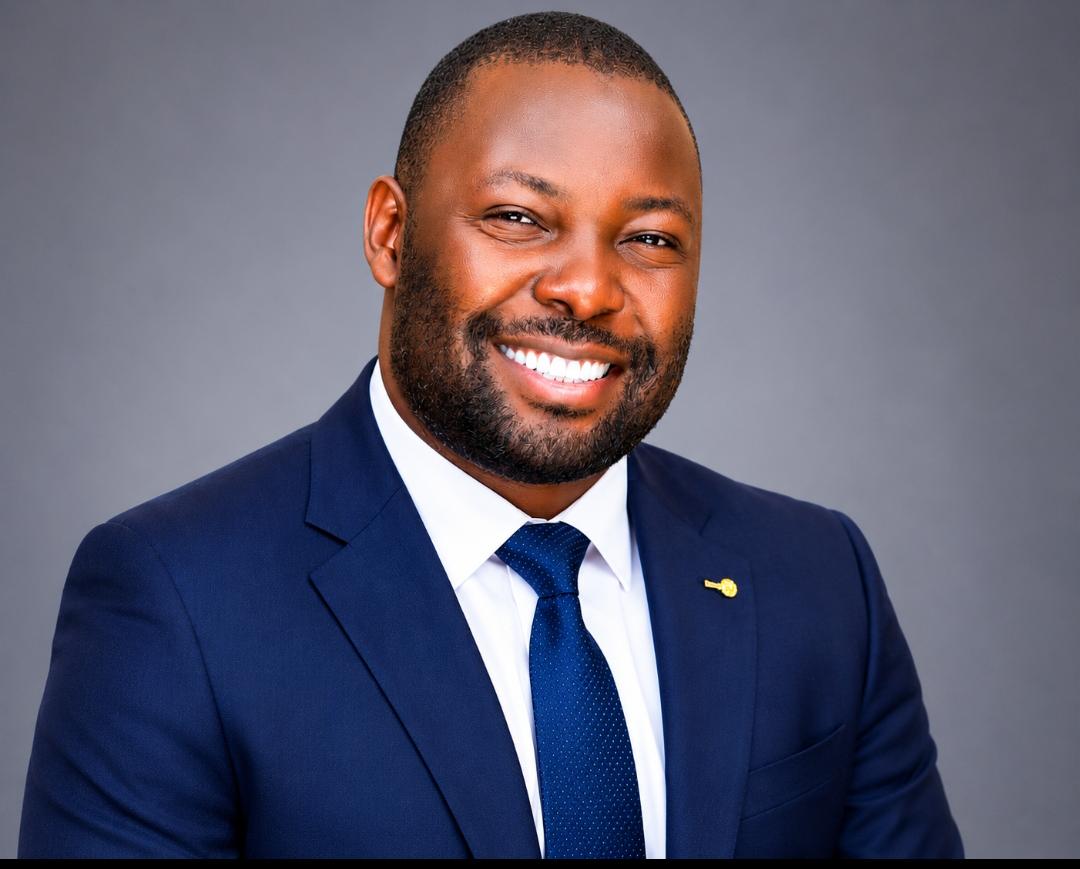
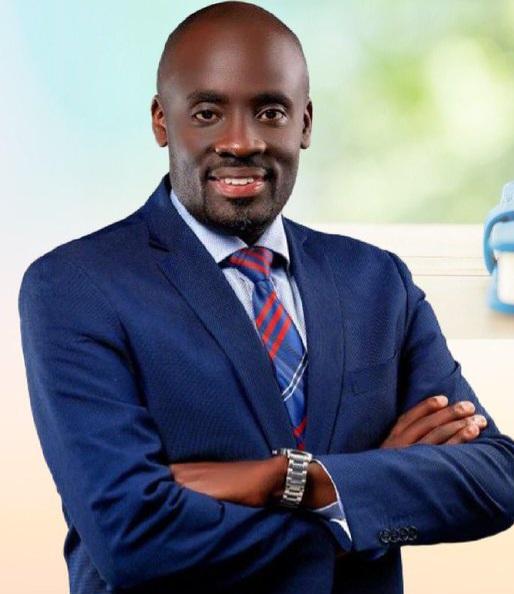
Congratulations to DG @GKitakule on this significant announcement, and warm congratulations to @Dhamuzungu_p & @KaziroKyambadde on being named District Governor Nominee Designates for Districts 9217 & 9218.
This is a proud moment for our Rotary family and a clear reflection of the strong leadership pipeline built on service, integrity, and impact. Wishing them great success as they prepare to lead and inspire even greater transformation in our districts.
#RotaryEyamba

I am delighted to announce @Dhamuzungu_p & @KaziroKyambadde as District Governor Nominee Designates for Districts 9217 & 9218.
A proud moment for our District affirming a strong pipeline of leadership rooted in service, integrity, and impact.
We move forward with confidence.
#RotaryEyamba
11
May 31
From the atmosphere in the arena to the final whistle, this felt bigger than basketball. History made before our eyes. Congratulations to the RSSB Tigers on becoming the first East African champions at the BAL. East Africa showed up and showed out 🔥🏆 @Namblazers.
May 31

Congratulations to the RSSB Tigers on being the 1st East African Champion at the BAL. @Namblazers , Uganda and East Africa are proud of you. Kudos 🔥

87
Higiro Ronald Clark retweeted

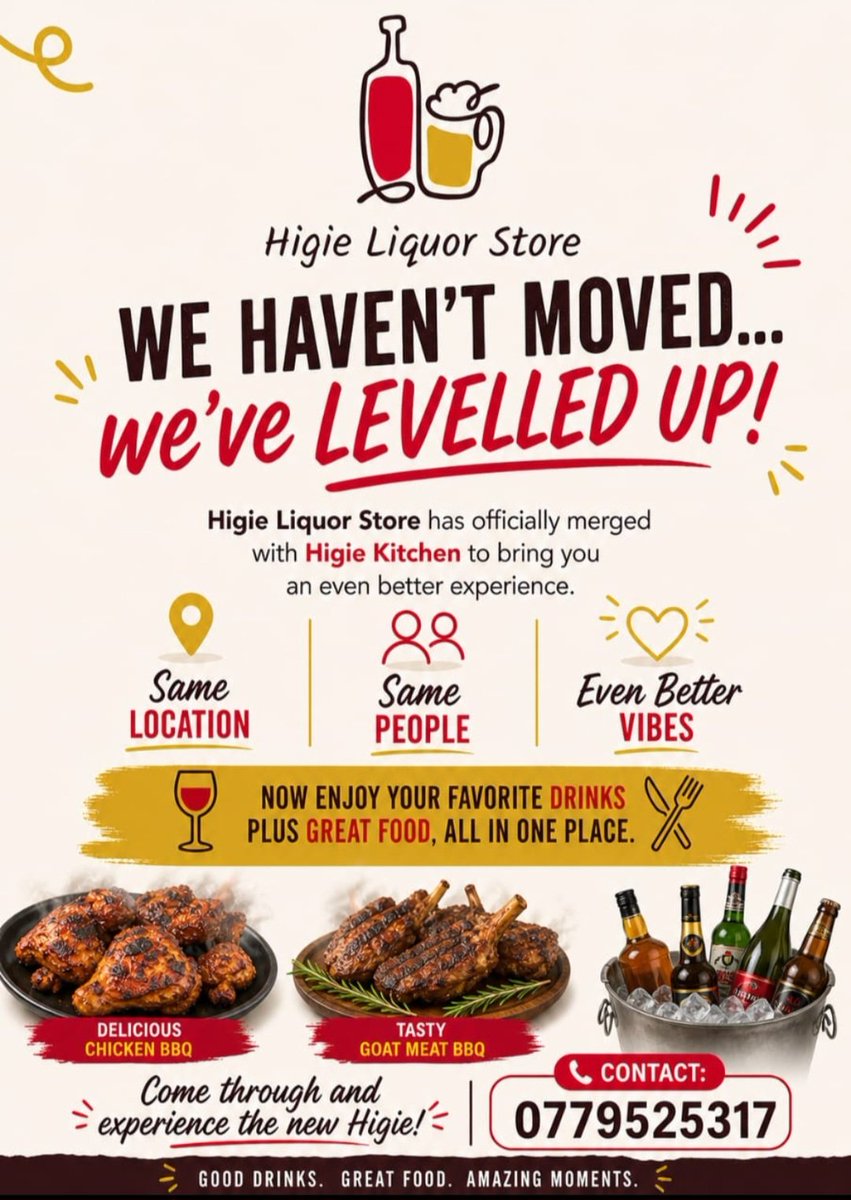
This is it. Levelling up is the new norm. Morphing from old to new un the same location. Woow.. Higies Liquor Store. The place to be. Locate and enjoy the ambience,the experience, the foodies, music and all. A place to write back about [Refer].
1
3
32
Higiro Ronald Clark retweeted

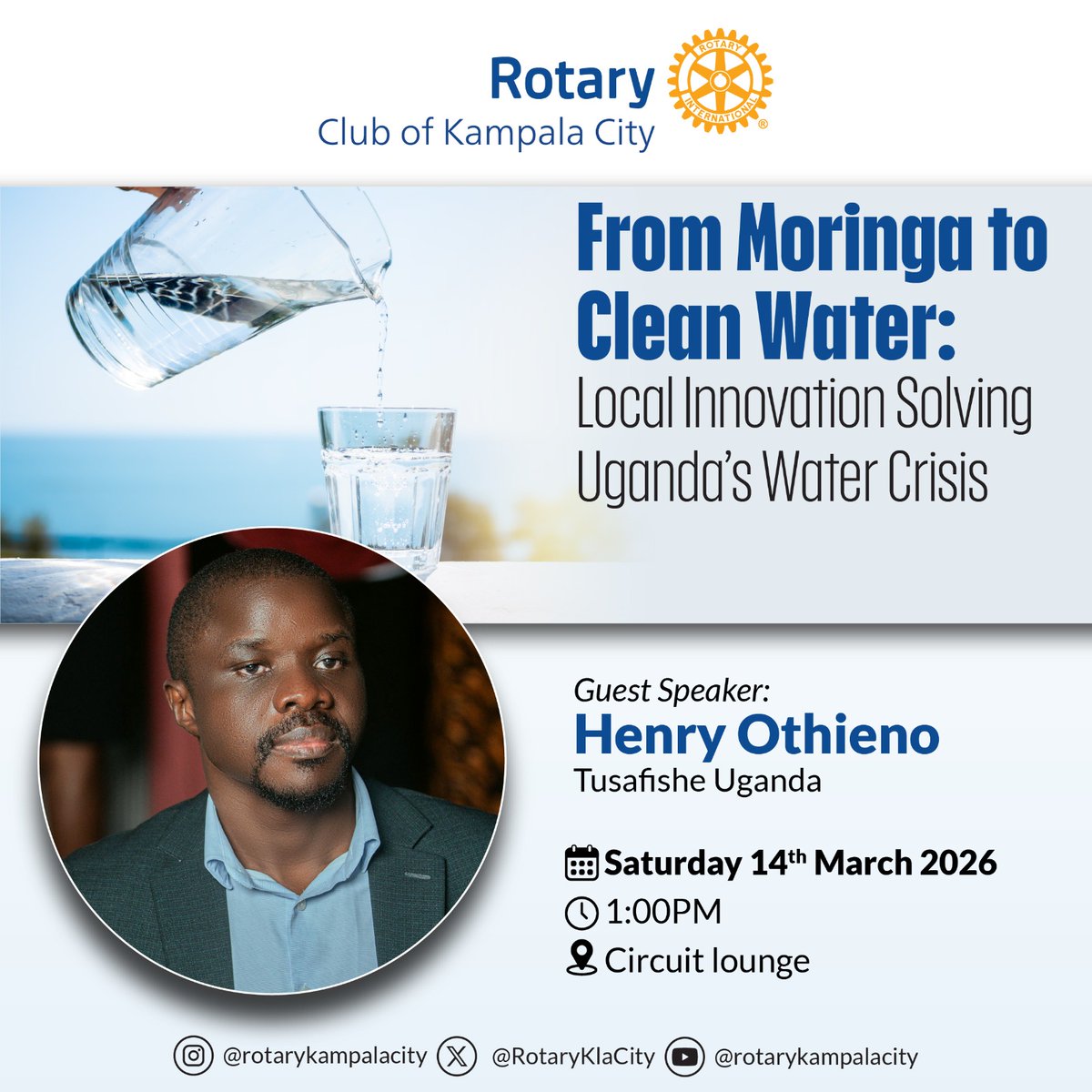
💧 From Moringa to Clean Water — Innovation with Impact! 🌱
What if the solution to Uganda’s water crisis was growing right around us?
Join us this Saturday as Henry Othieno of Tusafishe Uganda takes us through an inspiring conversation on how local innovation is transforming access to clean water. From the power of Moringa seeds to practical community solutions, this session will highlight how simple ideas can create life-changing impact. 🌍✨
📅 Saturday, 14th March 2026
⏰ 1:00 PM
📍 Circuit Lounge
Come learn, engage, and discover how innovation and community action can help solve one of Uganda’s biggest challenges.
Let’s be part of the conversation that turns ideas into solutions. 🚰💡
#RotaryKampalaCity #Unite4good9213 #D9213RotaryCares #RotaryEyamba
2
5
58
Higiro Ronald Clark retweeted
💼✨ SIDE HUSTLE SHOWCASE – SPECIAL GUEST EDITION! ✨💼
This week, we’re excited to welcome Birungi Catherine from our baby club (@Tankhillcity ) as she takes the spotlight in our Side Hustle Showcase! 🎉
Catherine will be sharing the story behind her hustle at Baisoft Global Ltd — the journey, the lessons, and the passion that drive her beyond the Rotary table. 🚀💡
Side Hustle is where we celebrate the entrepreneurial spirit within our Rotary family, learn from each other, and get inspired to grow our own ideas. 💰🌱
📅 14th March
📍 Circuit Lounge
Come support our baby club member, connect, and get inspired by real stories of innovation and hustle! 🙌🔥
#IKnowAGuy #RotaryKampalaCity #Unite4good9213 #D9213RotaryCares #RotaryEyamba

3
9
102
Higiro Ronald Clark retweeted
🚨✨ BIG NEWS! SAVE. THE. DATE! ✨🚨
Something extraordinary is coming! 🎉🔥
The Rotary Club of Kampala City is thrilled to announce our 9th Presidential Installation & Charter Celebrations — a grand celebration of leadership, legacy, and service!
Join us as we proudly install P.E @NaisangaJo31229 and usher in a bold new chapter of impact, inspiration, and transformation. 🌍💙
🗓 27th June 2026
Expect elegance. Expect energy. Expect excellence. 🌟
This will be a celebration you do NOT want to miss!
Mark your calendars, tell a friend, and get ready for a historic Rotary moment! 🎖️🥂
#RotaryKampalaCity #Unite4good9213 #D9213RotaryCares #RotaryEyamba

6
14
180
Higiro Ronald Clark retweeted
🚀 From Rare Earths to Real Power!
Join us this Saturday as we dive into a powerful and timely conversation on “Uganda in the Global Semiconductor Race.” 🌍💡
Our guest speaker, Karugaba Ivan Junior, will unpack how innovation, technology, and strategic positioning can shape Uganda’s future in the global tech ecosystem. This is a discussion you don’t want to miss—especially if you’re passionate about leadership, innovation, and national development.
📅 Saturday, 21st February 2026
⏰ 1:00 PM
📍 Circuit Lounge
Let’s connect, learn, and stay ahead of the curve together. See you there! 🔵⚙️
#RotaryKampalaCity #Unite4good9213 #D9213RotaryCares #RotaryEyamba

6
18
253
Feb 16
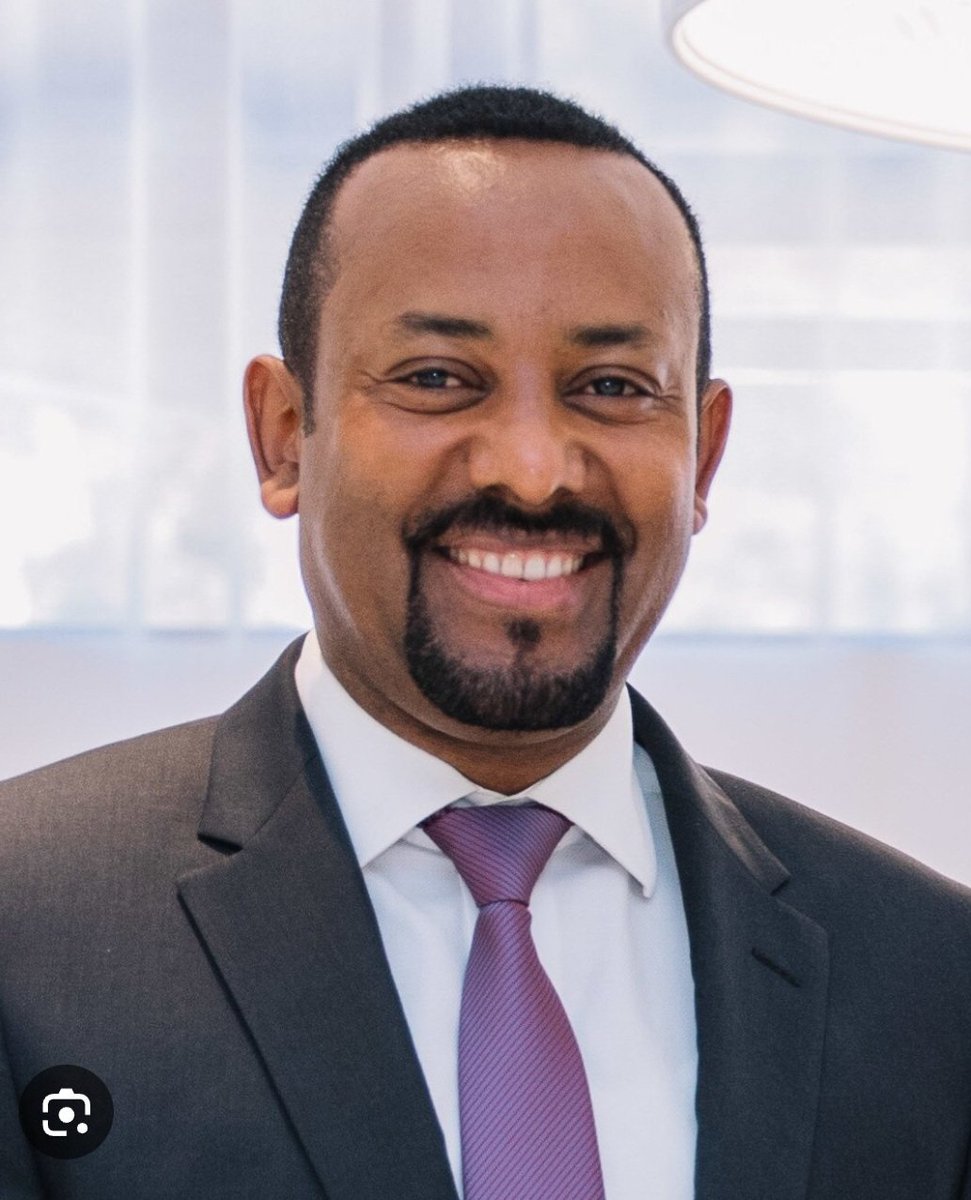
In under 8 yrs, 49 yrs old Prime Minister Dr. (PHD) @AbiyAhmedAli has pursued bold reforms, economic liberalisation, major infrastructure development, and regional peace efforts. His leadership reflects an ambitious drive to reposition Ethiopia as a stronger, more forward-looking nation despite complex challenges. Addis is a day and night construction sight right now. In 5 years, it will be something else. Much respect!
Feb 14

What my dear brother, Prime Minister @AbiyAhmedAli, has done for Addis Ababa in no time is what we shall do for Kampala when given the chance.
33
Higiro Ronald Clark retweeted
🌍 Security, Conflict, and Peace in the Great Lakes Region
The Rotary Club of Kampala City invites you to an engaging fellowship discussion on one of the most critical issues shaping our region today.
We are honoured to host David Muinga, PhD Candidate and General Manager at Bar Executive Security, who will share insights on security dynamics, conflict, and pathways to sustainable peace in the Great Lakes Region.
🗓 Saturday, 7th February 2025
⏰ 1:00 PM
📍 Circuit Lounge
Rotarians, friends, and guests are welcome to join the conversation as we learn, reflect, and engage on issues that matter.
#RotaryKampalaCity #Unite4good9213 #D9213RotaryCares #RotaryEyamba

7
15
347
Higiro Ronald Clark retweeted
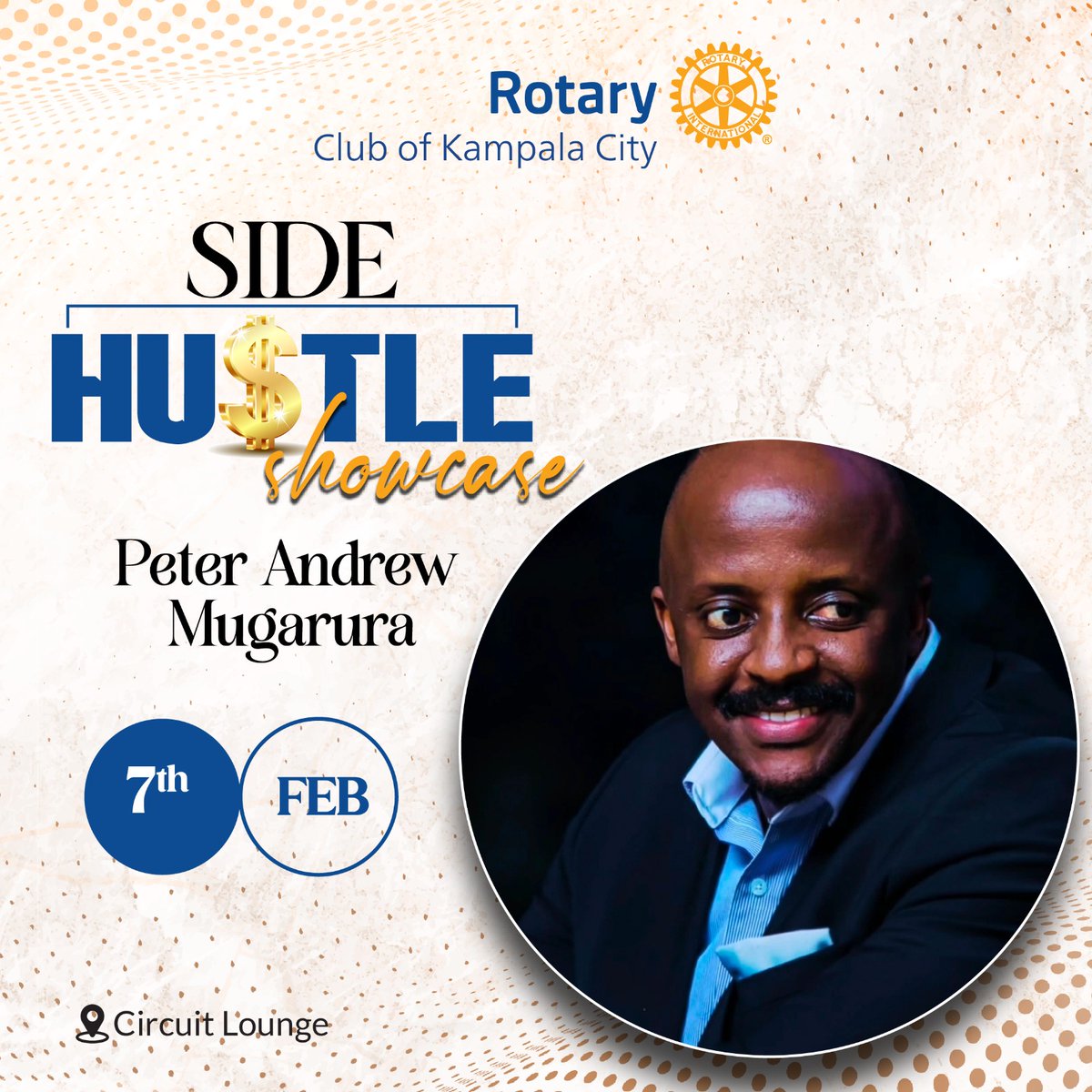
💼✨ Side hustles, big lessons! ✨💼
This week on Side Hustle Showcase, our Past President Peter Andrew Mugarura steps into the spotlight to share the story behind his side hustle — the wins, the lessons, and the drive beyond the boardroom. 💡🔥
If you’ve ever wondered how passion meets purpose (and pays 😉), this is one session you don’t want to miss!
📍 Circuit Lounge
📅 7th Feb
👥 Fellowship with the Rotary Club of Kampala City
Come curious. Leave inspired. 💙💛
#IKnowAGuy#RotaryKampalaCity #Unite4good9213 #D9213RotaryCares #RotaryEyamba
5
13
123
Jan 31
Looking ahead with clarity and curiosity 📸📰
Join us this afternoon as we unpack what 2026 might hold through the journalist’s lens with David Mukholi. Expect sharp insights, honest conversation, and a forward-looking media perspective.
📅 Sat, 31 Jan 2026 | ⏰ 1:00 PM | 📍 Circuit Lounge
#Rotary #MediaAndSociety #LookingAhead #RotaryEyamba

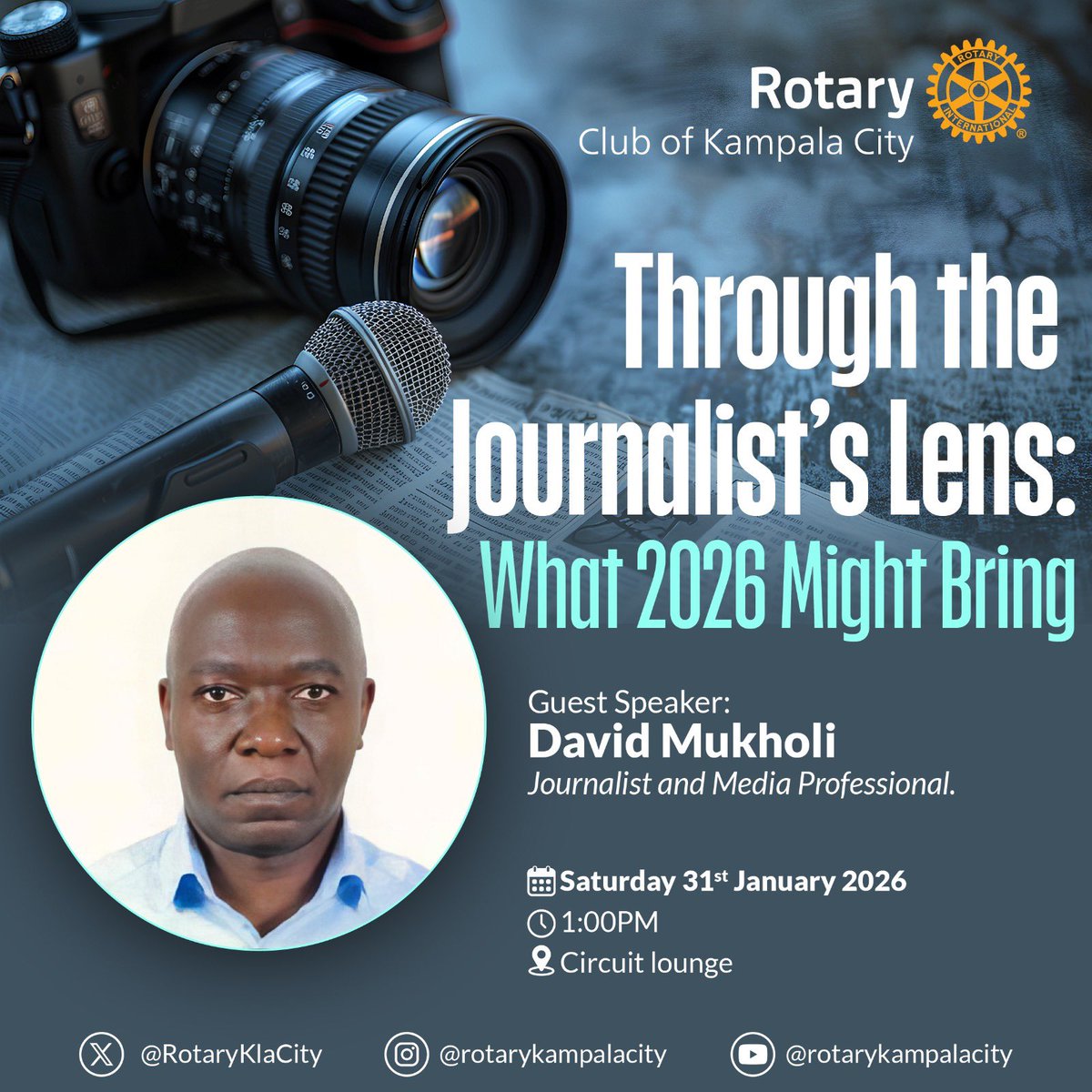
📸🎤 Through the Journalist’s Lens: What 2026 Might Bring
Join us for an insightful fellowship as we explore the year ahead through the eyes of the media.
We’re pleased to host David Mukholi, Journalist and Media Professional, as our guest speaker. Expect thoughtful perspectives, real-world insights, and engaging conversation on the trends and stories that may shape 2026.
🗓 Saturday, 31st January 2026
⏰ 1:00 PM
📍 Circuit Lounge
Rotarians, friends, and guests are welcome. Let’s learn, connect, and look ahead together.
#RotaryKampalaCity #Unite4good9213 #D9213RotaryCares #RotaryEyamba
12
Jan 30
When passion meets purpose, impact follows.
This Saturday, we honour @Akeda4 for walking Uganda’s roads with one powerful message: road safety is everyone’s business.
#VocationalServiceMonth #RotaryEyamba @rotaryd9213
#VocationalServiceMonth
This Saturday, we will be recognizing and celebrating a man whose relationship with the roadside is deeper than most people’s relationships.
@Akeda4 has walked these Ugandan roads with intent, carrying one clear message; Road safety is everyone’s business.
#RotaryEyamba
@rotaryd9213

1
12
Higiro Ronald Clark retweeted

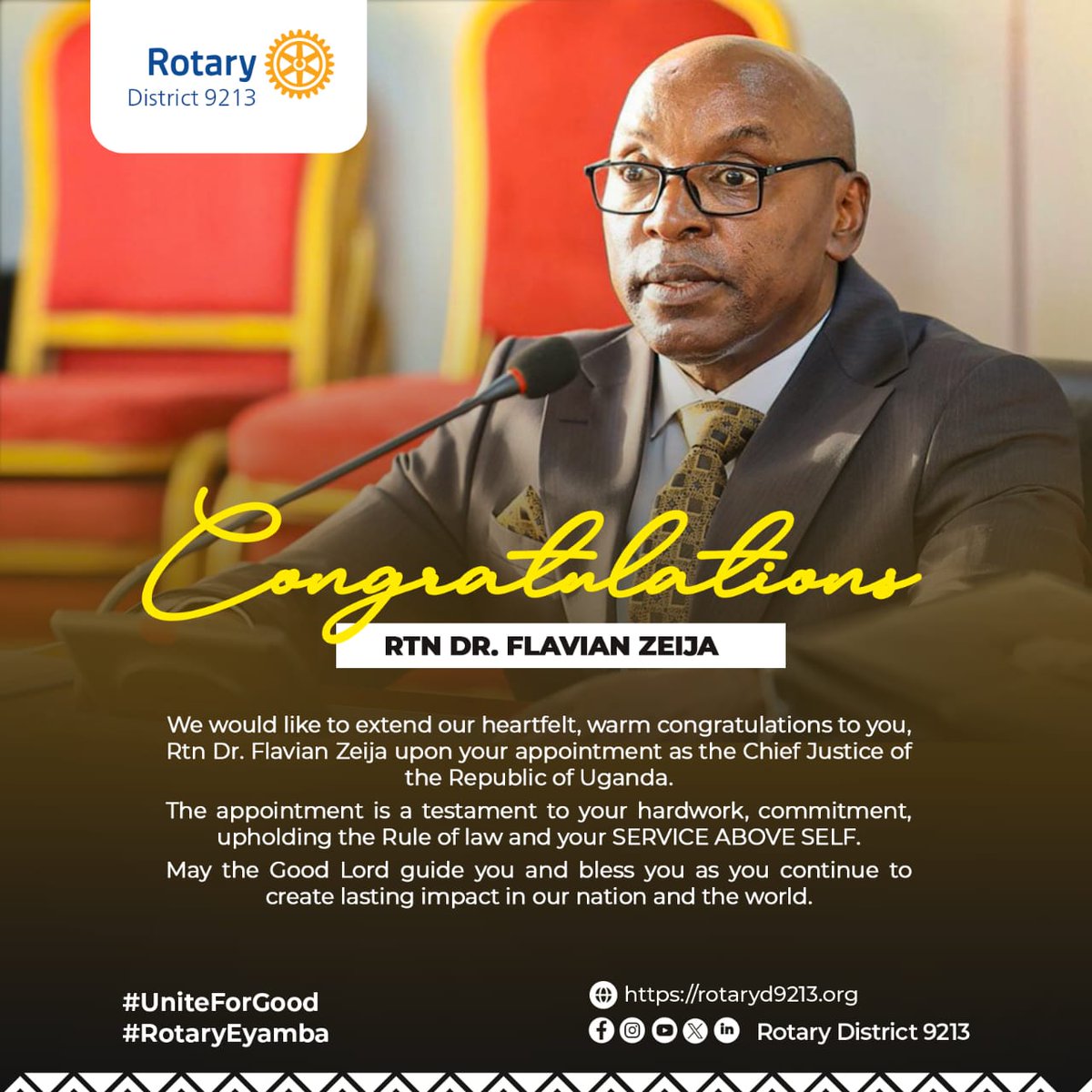
Congratulations Rtn Dr. Flavian Zeija on your appointment as Chief Justice of the Republic of Uganda.
A proud Rotary moment for @RotaryKiwatule and @rotaryd9213 .
Your Service Above Self leadership will deepen the rule of law as we celebrate with @JudiciaryUG
#RotaryEyamba
2
6
31
740
Higiro Ronald Clark retweeted

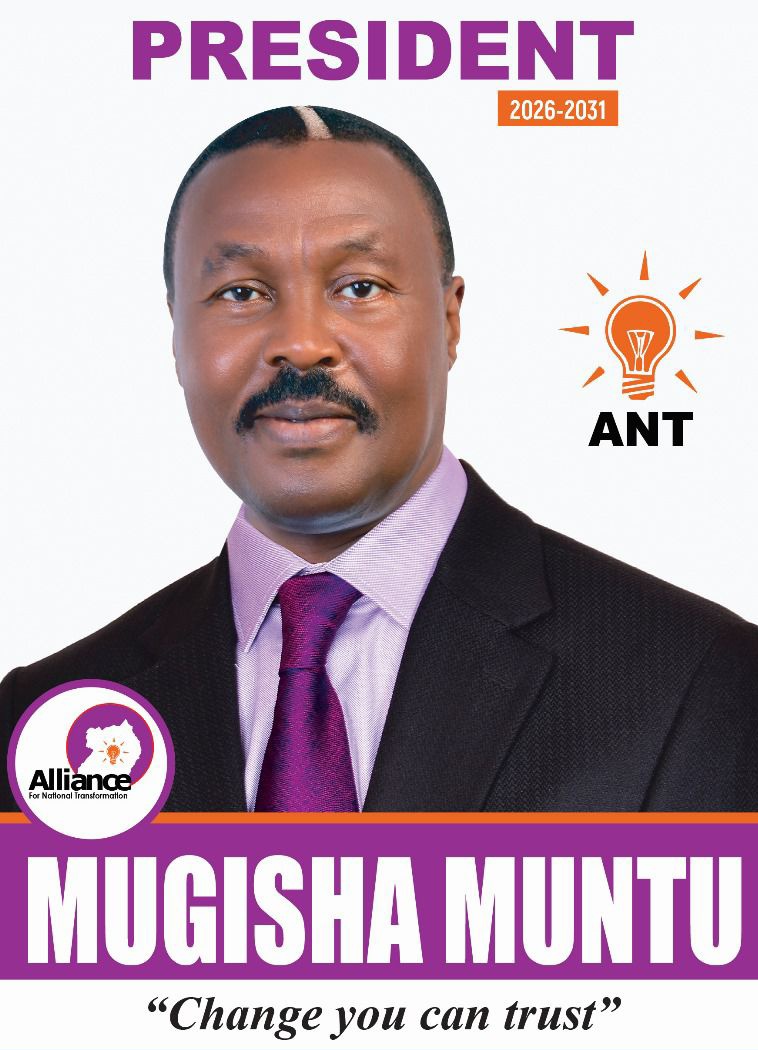
Retweet to reach 8M voters.
37
372
1,267
23,839
Why Sack Amorim and Spare Wilcox and Berrada?
Rúben Amorim did not appoint himself.
He was selected, negotiated, and sold to the Manchester United fanbase by a sporting leadership team led by Jason Wilcox and Omar Berrada. His hiring was presented as part of a “new era”; a carefully structured football project built on data, identity, and long-term planning.
Yet the moment results wobble, Amorim becomes the convenient scapegoat.
Wilcox and Berrada remain.
This is not accountability. It is protection of power.
If Amorim has failed, then the failure is structural, not individual. The squad profile, recruitment logic, transition planning, and performance benchmarks were all defined by the same executives who now get to quietly distance themselves from the outcome. You can't claim strategic genius when appointing a manager, then claim helplessness when that manager struggles inside the very structure you designed.
Sacking Amorim without reviewing Wilcox and Berrada sends one message: the manager carries risk, the executives carry immunity.
And that is the real problem.
Manchester United’s issues have never been purely technical. They are systemic; poor squad construction, constant philosophical resets, short-term fixes masquerading as long-term plans, and executive survival politics disguised as “club vision.”
Changing the face on the touchline while keeping the same decision-makers in charge is not reform. It is recycling failure.
If United truly wants to break the cycle, it must start asking harder questions:
* Who defined the project?
* Who approved the squad fit?
* Who set the expectations?
* And who is accountable when the project underperforms?
Until Wilcox and Berrada are subject to the same scrutiny as Amorim, United will remain trapped in the same loop. Firing managers while preserving the machinery that keeps producing them.
Higie
Jan 5

Club statement: Ruben Amorim.
76
6 Nov 2025
Beautifully said. Service rooted in culture truly transforms lives and communities. Grateful for the partnership between @rotaryd9213 and @ObukamaBwaTooro under the visionary leadership of @GKitakule and @toorokingdompm Akiiki. Proudly associated. #RotaryEyamba #ServeToChangeLives
6 Nov 2025

Video:
Service can move mountains, but when combined with culture, it leaves a lasting impression. Thank you to Prime Minister @toorokingdompm Akiiki for your warm hospitality as @rotaryd9213 and the @ObukamaBwaTooro collaborate to improve communities
#RotaryEyamba
1
7
159
Higiro Ronald Clark retweeted

31 Oct 2025
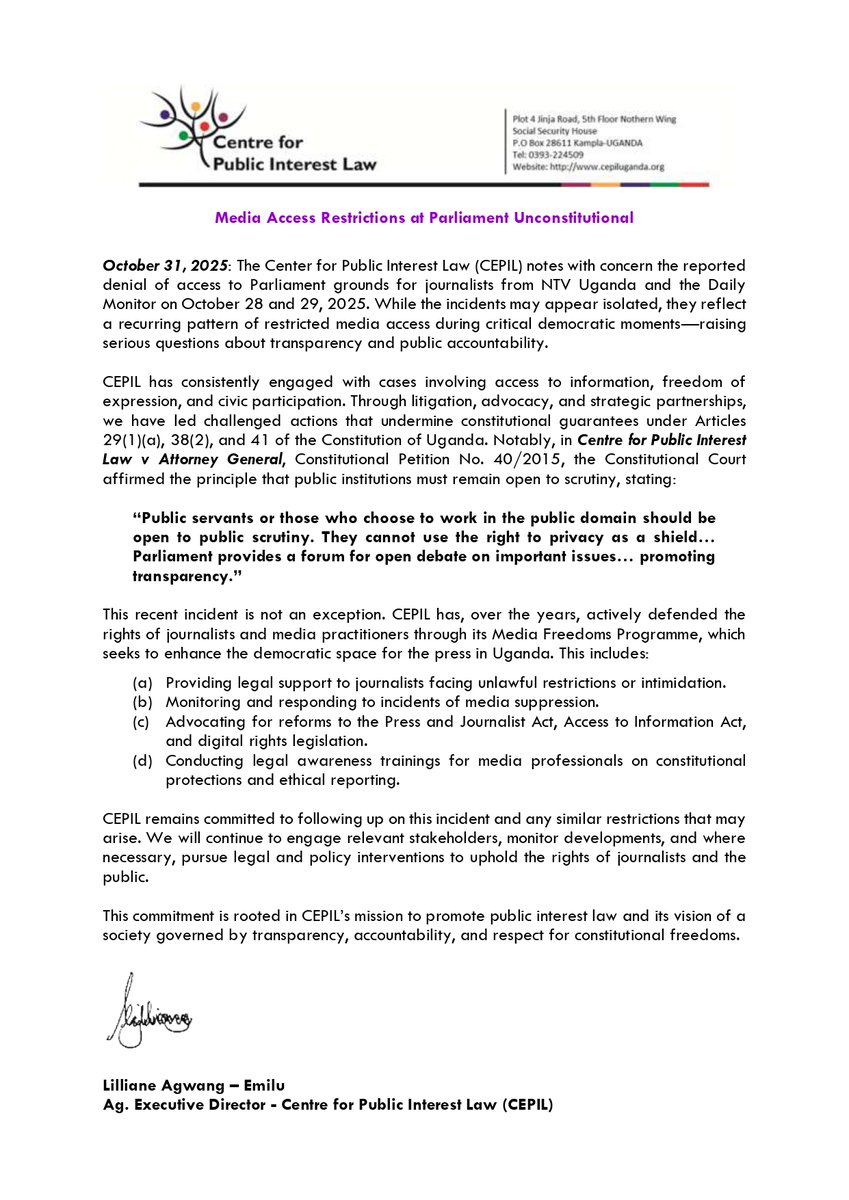
CEPIL condemns Parliament’s denial of media access on Oct 28–29. This violates Articles 29(1)(a), 38(2), & 41 of Uganda’s Constitution. We have fought for press freedom before and we will keep fighting. #MediaFreedom #CEPIL #Uganda #AccessToInformation #Democracy
2
3
124
24 Oct 2025
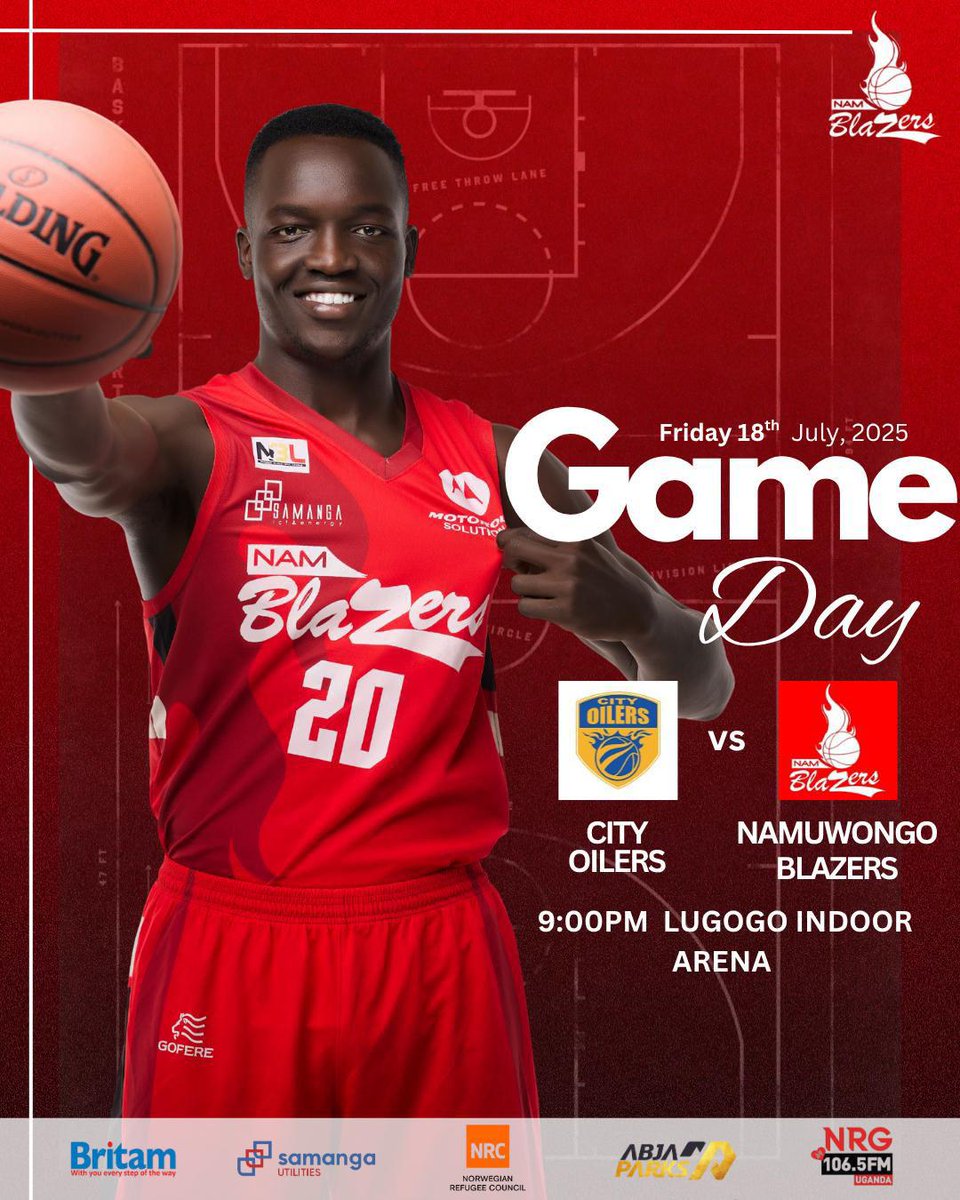
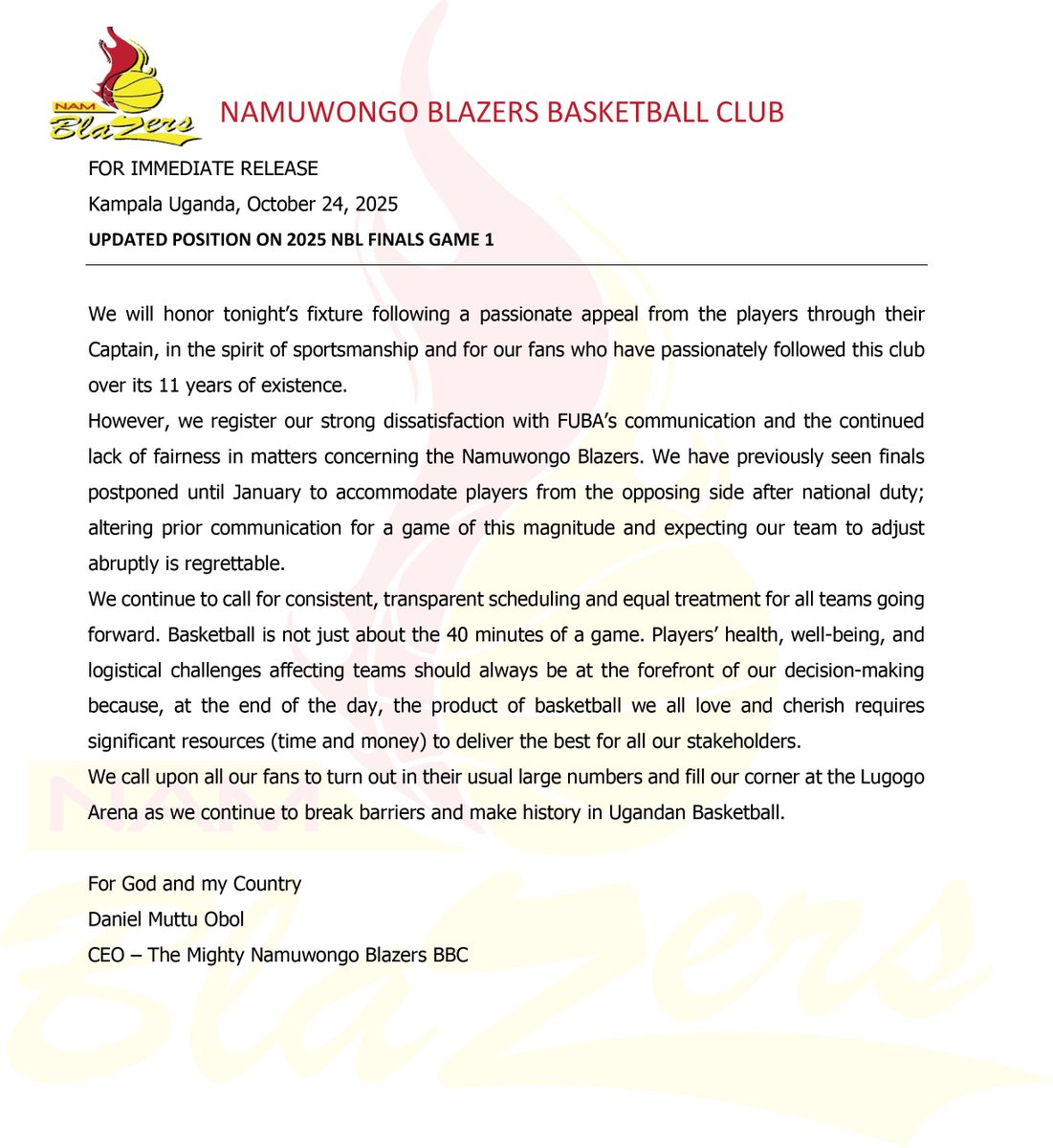
You win some, you lose some. Champions know when to concede a battle to secure the war. By choosing to play tonight, Nam Blazers demonstrated that wisdom, keeping focus on the greater goal beyond the moment.
24 Oct 2025

Like they had a choice
Kati why were they disturbing our peace?
80
24 Oct 2025
Sometimes, you give up a small battle to win the war. By stepping onto the court tonight after initially opting not to play, Nam Blazers chose the bigger picture over the heat of the moment. @CityOilers
@hudson_mugweri @CliveKyazze @Namblazers
179