RATE MY “COAL COMEBACK” 🫵
8 government announcements are being repeated in the media as evidence of a “return to coal”.
🇮🇹🇯🇵🇩🇪🇰🇷🇵🇭🇹🇭🇧🇩🇵🇰
But how consequential are they.. really?!🧵
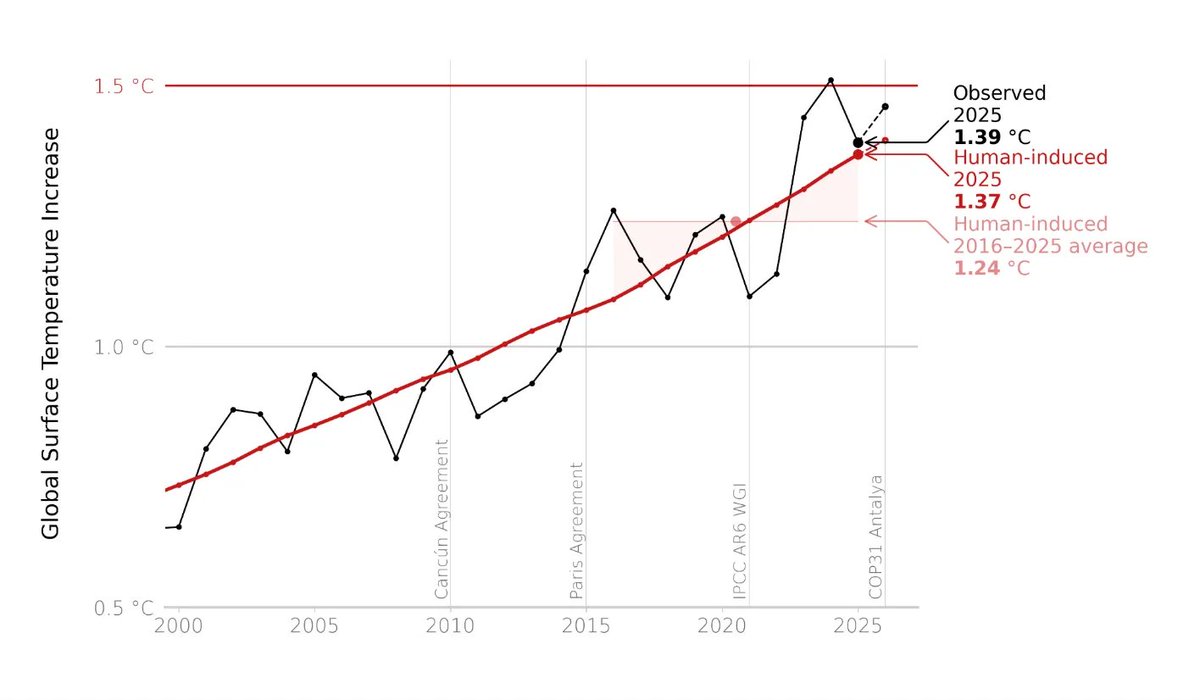
Our 2026 Indicators of Global Climate Change paper is out! We find that the human-induced warming was 1.37C in 2025, and the current rate of warming is 0.27C per decade, on track to firmly pass 1.5C in about four years.
Electric Asia is transforming the energy system
With over half the global population, Asia has just 4% of oil and gas reserves but 75% of electrotech manufacturing. The closing of Hormuz galvanises the Asian leapfrog to electrotech.
ember-energy.org/latest-insi…
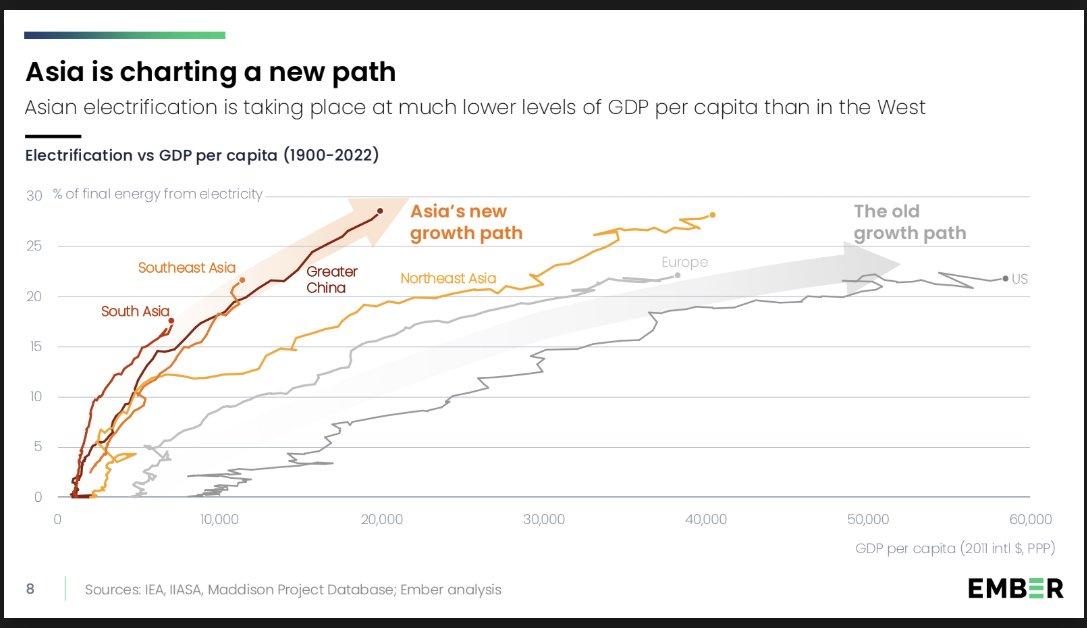
NEW: Asia is going electric⚡️
Asia has 4% of the world's oil gas supplies. It's perhaps no surprise Asia is doubling down on electrification.
Not just China, all of Asia.
If you liked last September Electrotech Revolution slidepack, you'll love this...
84% of Asia already leapfrogged the US in electrification, with electricity making up 26% of Asia's final energy mix compared to just 21% in the US
And that's just the start: Asia is now electrifying 5 times faster
BYD is planning to spend €580,000 per station to build out a superfast charging network of 3,000 stations across Europe by 2027, following the successful playbook of Tesla's Supercharger network.
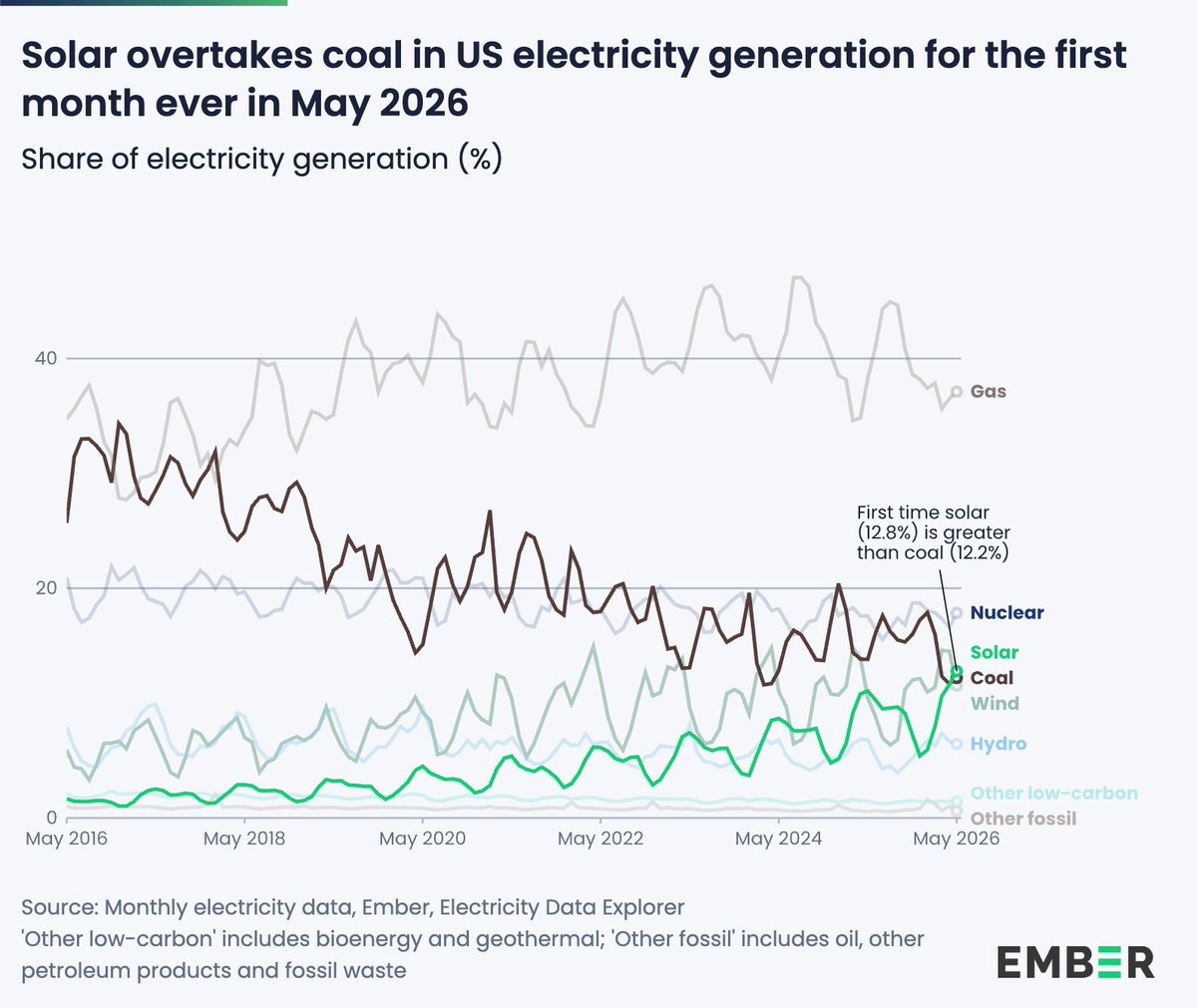
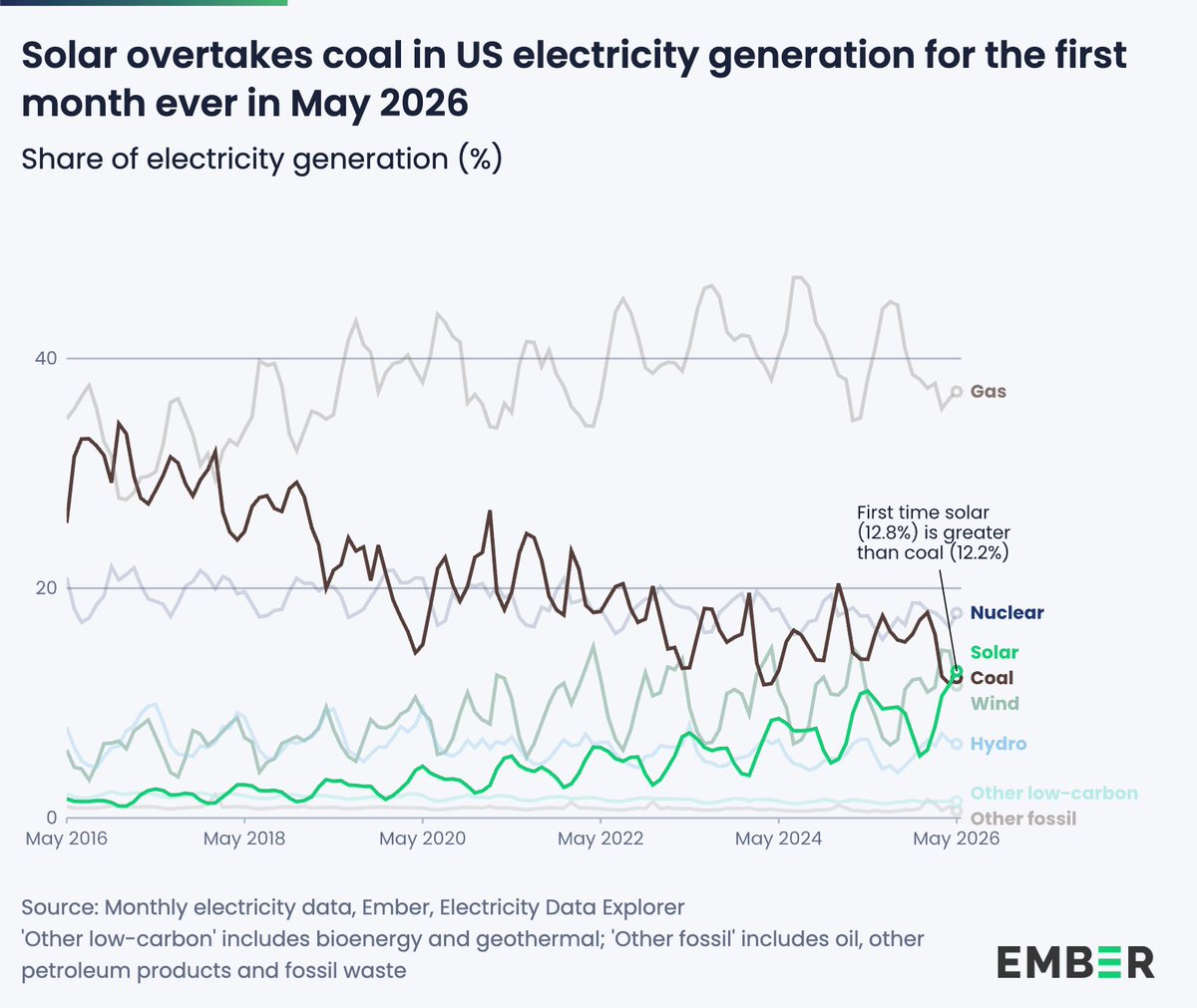
Solar overtook coal in US power generation in May, the first time the renewable source bested the fossil fuel in a calendar month bloomberg.com/news/articles/…
I was working on coal phase-out in 2016.
It's hard to express how impossible it would have sounded for solar in the US to generate more than coal by 2026 over a whole month.
(Even if that month is only May, which typically has more solar gen and less coal gen)
So cool😎
NEW | Solar overtook coal generation in the US for the first month on record
In May, solar generated an estimated 12.8% of US electricity, an all-time high!
Coal produced 12.2%
For now, it's one month, soon it will happen across the year.
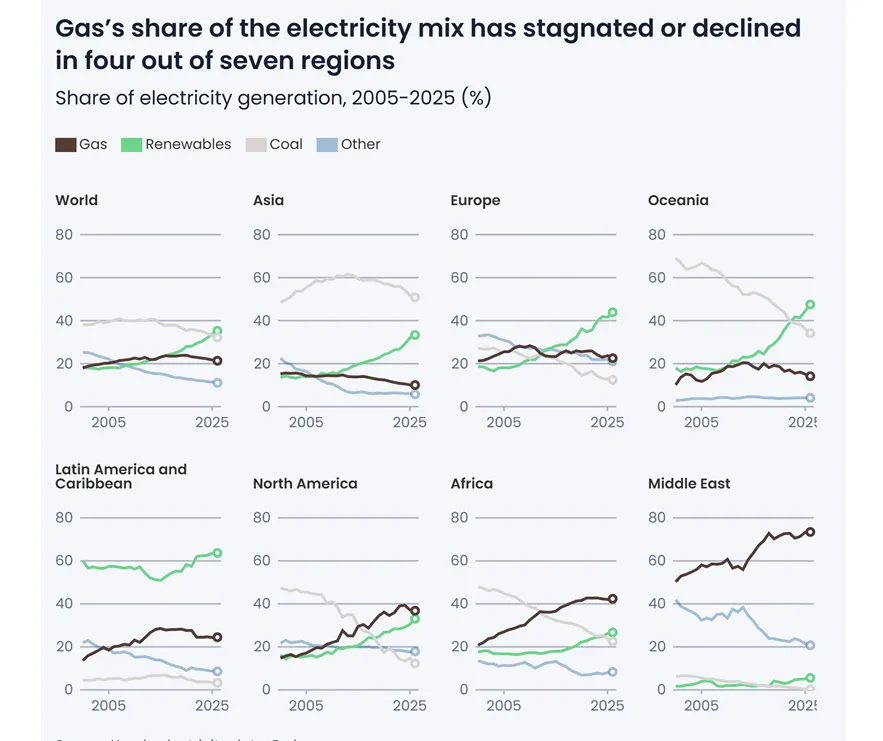
Good morning with good news: World nears peak gas!
Gas' global share peaked in 2020 at 23.89%, fell to 21.75% in 2025 & declined for 5 years.
Coal peaked in 2007 at 40.84%, falling to 33% in 2025.
What Rose?
RE rose from 18% in 2007 to 33.76% in 2025!
ember-energy.org/latest-insi…
⚡🚌 What does a successful electric bus transition look like?
#SystemsChangeLab highlights countries already scaling electric bus sales faster than the pace needed globally to reach 56% of bus sales by 2030.
Learn more: bit.ly/4lgze3i
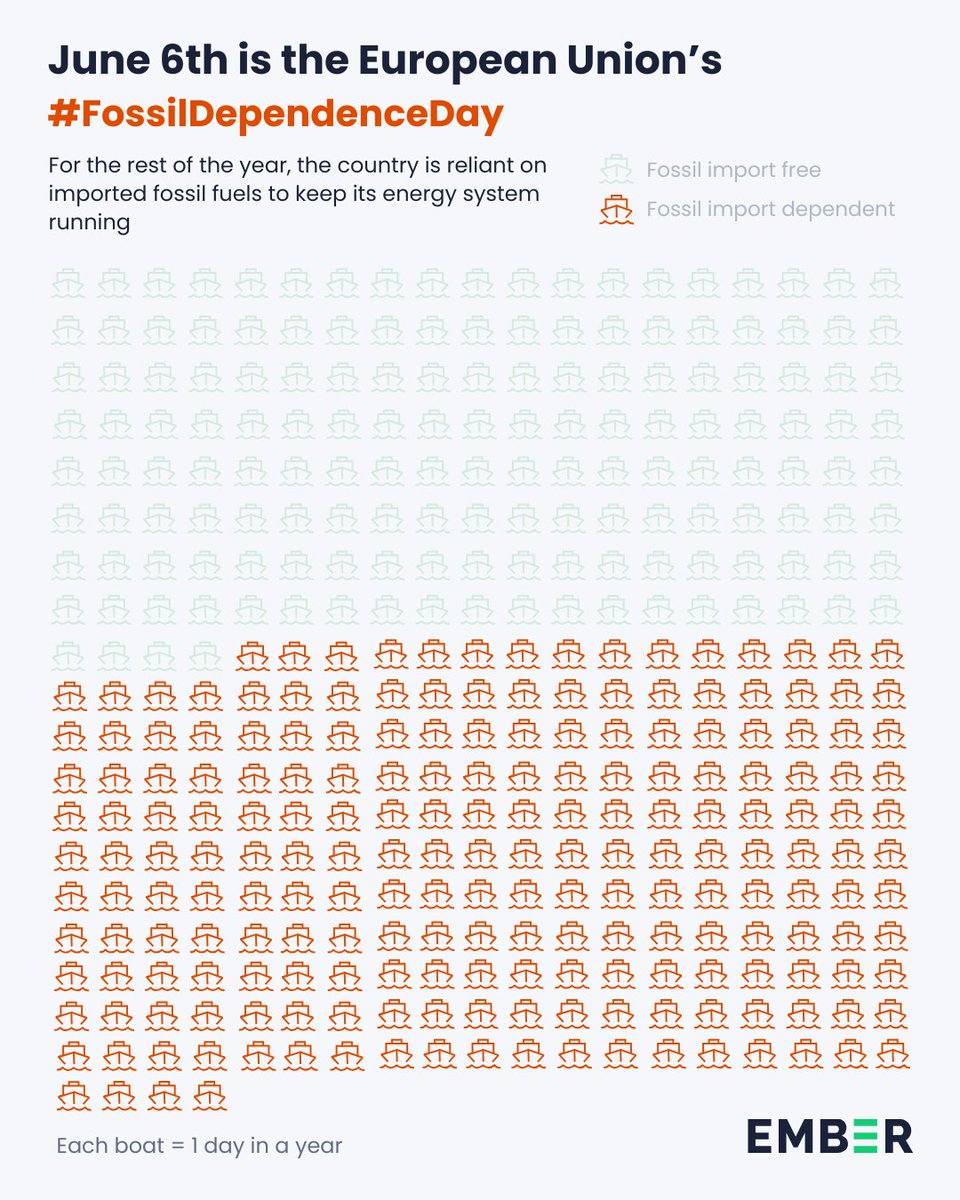
June 6th was the EU’s #FossilDependenceDay – the day when the region’s energy needs effectively require fossil imports for the rest of the year.
Between 2019 and 2024, solar and wind growth already avoided €59bn of fossil imports for power generation.
ember-energy.org/focus-areas…
SOON | Asia overtook the West on electrification in 2016 and is now electrifying 5 TIMES faster ⚡
Explore what the electric-fuelled rise of Asia means for the global energy order at the launch webinar of our upcoming analysis.
🗓 11 June 2026
ember-energy.org/latest-upda…
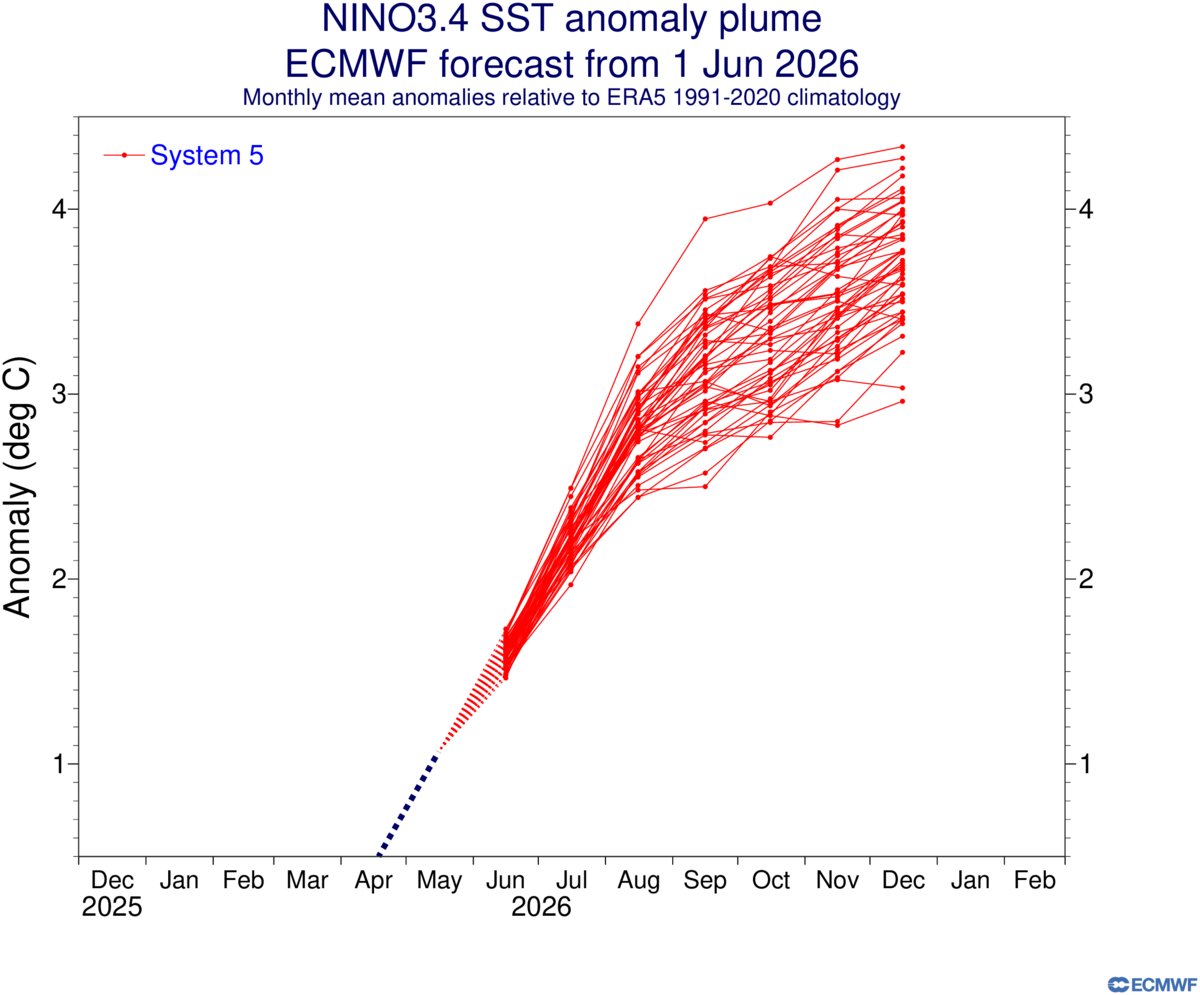
Breaking: The June ECMWF update has trended *even stronger* with this year's El Niño.
Almost every scenario now reaches past 3˚C, with a cluster of high-end scenarios in excess of 4˚C.
This outlook now depicts the strongest El Niño on record.
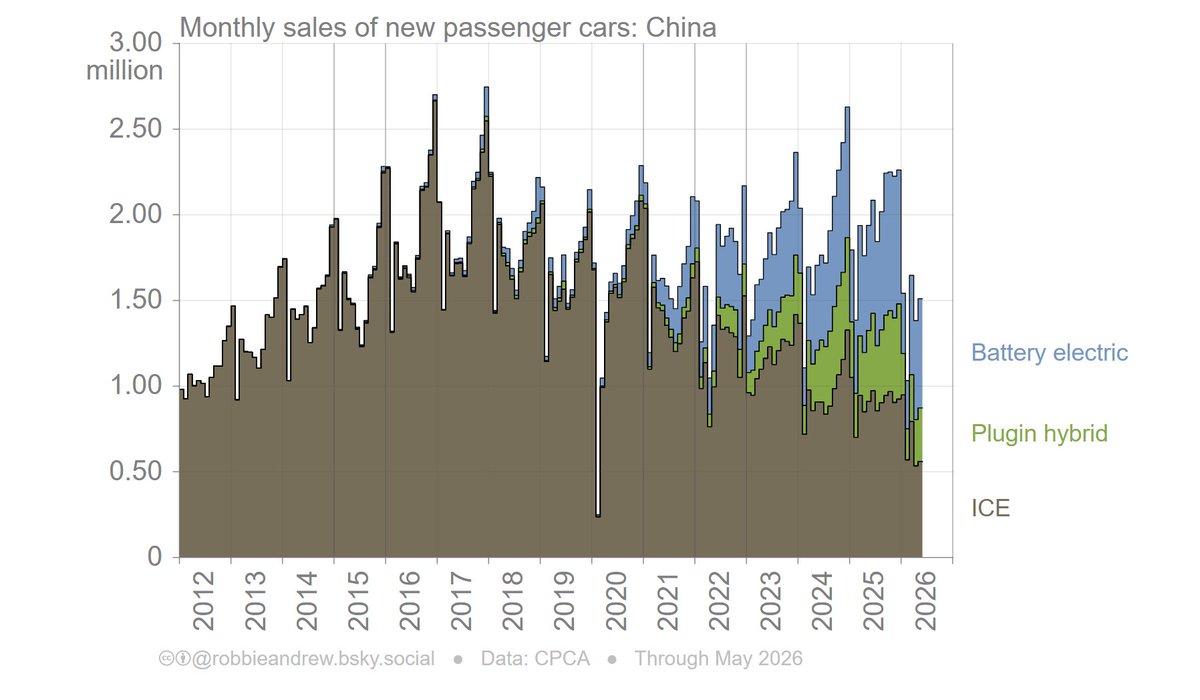
China's EV charging volumes were up a whopping 69% in April, showing a significant acceleration even from the pre-crisis growth trend and showing how a shift to EVs is mitigating the oil crunch. Urban rail and taxi ridership increased 6% and 7%.
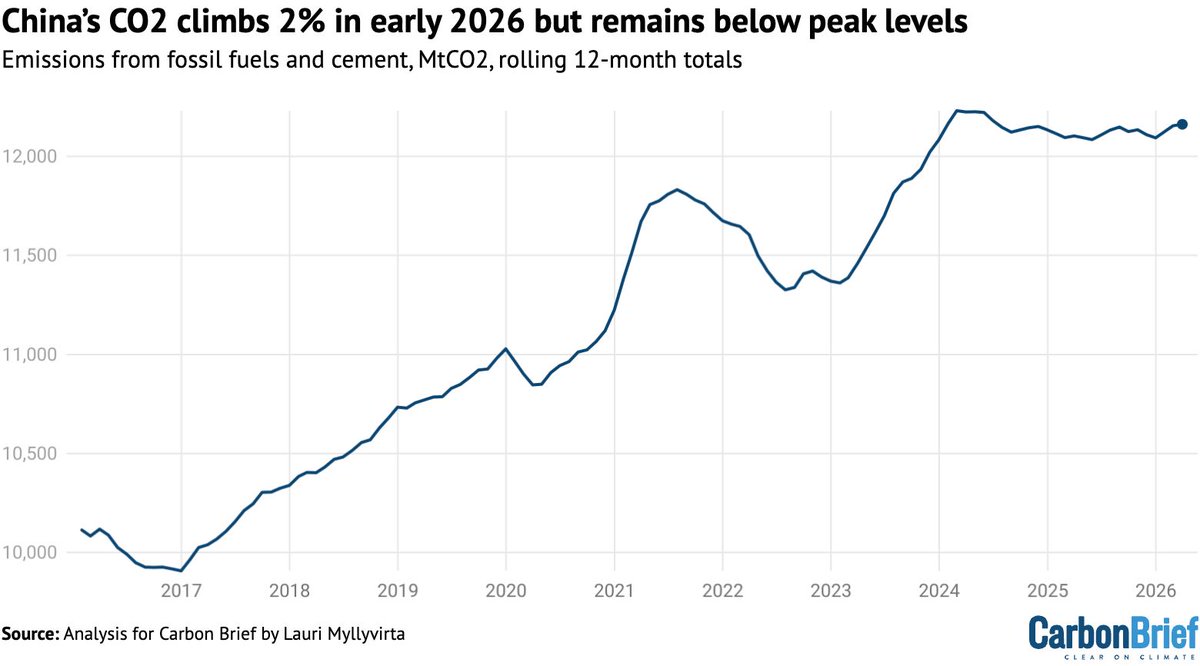
NEW from me: China’s carbon dioxide (CO2) emissions grew by 2% in the first quarter of 2026, with power sector emissions rising 4%, after a rise in the amount of “wasted” wind and solar power. Emissions remain below the peak in early 2024.
ALT China’s CO2 emissions from fossil fuels and industrial processes, million tonnes of CO2, rolling 12-month totals until March 2026. Source: Emissions are estimated from National Bureau of Statistics data on production of different fuels and industrial products, China Customs data on imports and exports and WIND Information data on changes in inventories, applying emissions factors from China’s latest national greenhouse gas emissions inventory, IPCC default emission factors for metals process emissions and annual emissions factors per tonne of cement production until 2025. Chemical industry process emissions are estimated from fossil fuel use, subtracting carbon embedded in products. Sector breakdown of coal consumption is estimated using coal consumption data from WIND Information and electricity data from the National Energy Administration. The consumption of petrol, diesel and jet fuel is adjusted to match quarterly total sales reported by Sinopec.