Husband, Dad, Biker. WSBK, MotoGP, BSB, West Ham.
Joined June 2017
- Tweets 502
- Following 508
- Followers 81
- Likes 7,919
14 Photos and videos
Col McCrea retweeted

Apr 25
A statement so plainly obvious that it shouldn’t even have to be said. The governments handling of legacy has been shameful. I told the Secretary of State that on Tuesday in London. The UUP stand by our veterans and former police officers who served their country.

A welcome but belated statement from Hilary Benn on legacy, that the security forces are not equivalent to terrorists trib.al/lubDMTT
30
26
100
8,770

Col McCrea retweeted

Feb 21
Anyone who has been involved in the murder or supports the murder of police officers, has no place commenting on, or should ever have any input into policing.
8
17
149
1,998
Col McCrea retweeted

22 Jul 2025
#WorldSBKsGotTalent 2️⃣0️⃣2️⃣5️⃣ helped raise in excess of £22,000 👏
youtu.be/kVfRDNvhQxI
🎥 REPOST if you liked the show NOW ⬆️
@BEATRIZNEILA36 @Mallory126 @jaume_masia @Luke68Power @SMRWorldSBK @LecuonaIker #MarioSalles #LeonardoTaccini
Thank you to everyone who took part

9
12
35
6,988
Col McCrea retweeted
Jan 20
Please consider voting for me in the UK Motorsport Awards in the category of ‘Commentator of the year’
motorsportawards.com/2025-mo…
Voting closes in four days!

2
1
5
338

Jan 16
For information of any @jonathanrea @WorldSBK fans out there.
Documentary Jonathan Rea - Born to Win on tonight at 9pm on UTV (Northern Ireland ITV)
Should be available on ITV X streaming service if you are outside N.I.
1
115
Col McCrea retweeted

15 Nov 2025
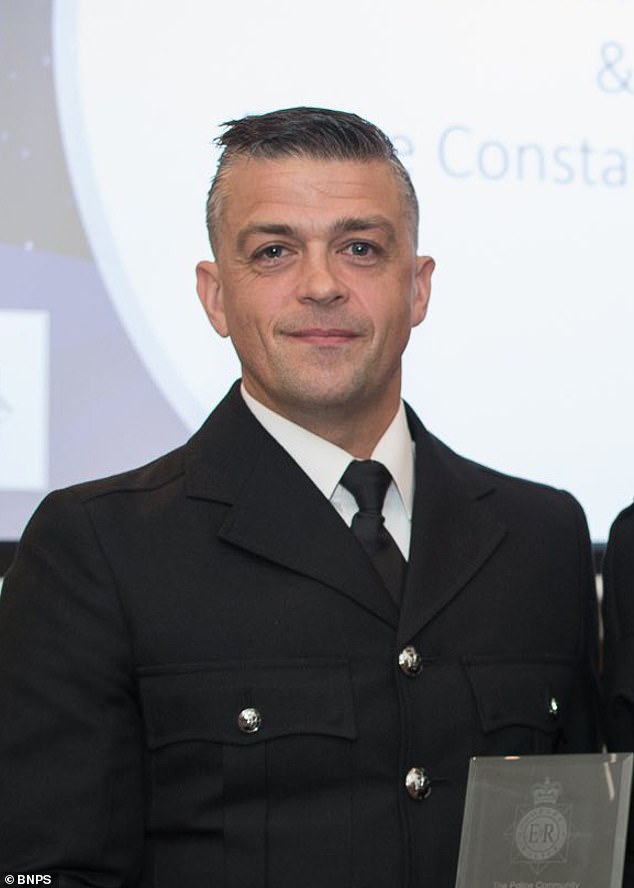
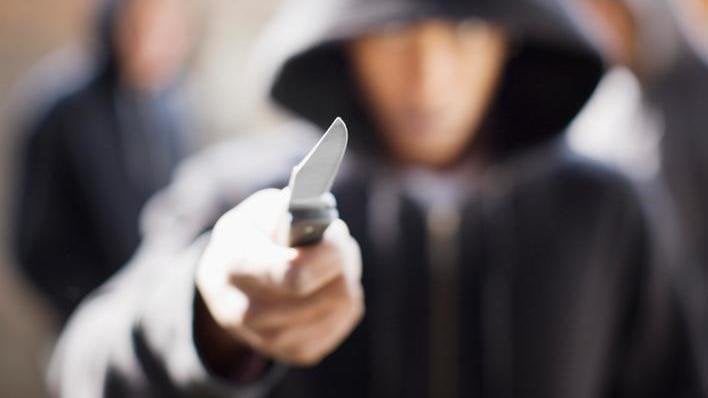
If you want to understand how far Britain has sunk, look at the case of Lorne Castle – the Dorset officer sacked for tackling a masked 15-year-old knifeman and telling him to "stop screaming like a bitch." For those who don't know the story: Castle brought down a youth suspected of assaulting an elderly man, carrying a blade, linked to drug dealing, and causing chaos in Bournemouth. The teenager wasn't harmed. The knife fell from his pocket. The arrest was clean. And for this, a decorated officer with a decade of unblemished service was dismissed for "gross misconduct."
A country that punishes a man for stopping a knifeman is a country that has lost its mind. This wasn't brutality. It was policing – real policing, the kind that keeps streets safe when they're full of gangs, blades, and feral teenagers who know the system protects them from consequences. Castle was at the end of a ten-hour shift, responding to warnings of gang fights and violent offenders still at large. He did what any sane society expects of its police: he acted fast, acted hard, and removed a threat. That should be praised. Instead, it destroyed his career.
The panel didn't care about the knife. They didn't care about the elderly victim. They didn't care that Castle had been awarded for saving a woman from a freezing river only months before. They didn't care that the youth had links to drug crime. No – they obsessed over a single phrase. A fleeting remark. A scrap of rough language in the middle of a dangerous arrest. One sentence outweighed a decade of duty, grit, and courage. That tells you everything about who now runs British policing.
Castle wasn't sacked for wrongdoing. He was sacked because the new managerial clergy inside UK policing despise old-school officers. They fear "perception" more than they fear armed criminals. They want constables who speak like counsellors, not men who can handle a blade-wielding thug in a dark street. They have built a system where morale collapses, crime soars, and frontline officers walk on eggshells while criminals laugh in their faces. After Castle's dismissal, drug dealers mocked the police openly: "Touch us and you'll get fired." They understood what the panel didn't – the leadership had handed the streets to them.
And here is the heart of the rot. A police force that sacks its bravest men is a force that has forgotten its purpose. A leadership so scared of bad optics that it treats a violent youth with more care than its own officer has no claim to public trust. This is what happens when institutions are captured by ideologues and risk-averse bureaucrats who view policing through the lens of PR, not duty. They would rather sacrifice a good man than stand up to activist outrage or a headline about "rude language."
The public saw through it at once. They backed Castle, raised over £130,000, and praised a man their own force tried to break. They understand what the police hierarchy refuses to admit: courage keeps a country safe. Cowardice destroys it. And sacking a man for doing his job is an act of pure cowardice.
Castle will appeal. I hope he wins. But the verdict we should fear isn't the one that ended his career – it's the one that reveals what Britain has become. A place where a teenager with a knife commands more institutional sympathy than the officer who disarms him. A place where leaders punish bravery and reward disorder. A place where the state turns its own protectors into targets.
This is how a nation decays: not in a single collapse, but through a thousand small betrayals of the people who still hold the line. And Lorne Castle was one of them.
"A country that punishes a man for stopping a knifeman is a country that has lost its mind. This wasn't brutality. It was policing – real policing, the kind that keeps streets safe when they're full of gangs, blades, and feral teenagers"
755
6,116
19,487
992,084
Col McCrea retweeted

8 Nov 2025
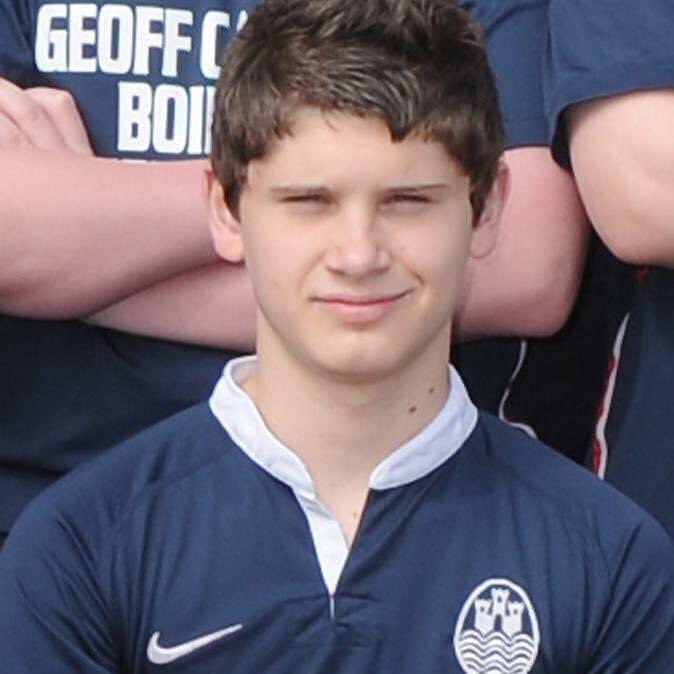
Easy to stand pitch-side talking about spoiling “the flow of the game” when it comes to attending a player with a suspected brain injury, all seems relevant until you stand graveside.
Don’t talk Player Welfare is a priority then worry about the “flow of the game”
RIP Benjamin ♥️
3
11
47
1,536
Col McCrea retweeted

26 Oct 2025
When oh when will the ridiculous far left wake up and see what’s actually happening here? These masked men grow in confidence as they do as they please and nobody stops them. It will get worse. #OpenYourEyes
26 Oct 2025

Despite what the far-left claimed, it wasn’t the UKIP protest that terrified people in the capital, it was the masked men screaming “Allahu Akbar”.
“We’re on the same side bruv.” One far-lefty screams.
“Nah we’re not” man in mask.
306
1,716
8,784
156,890
Col McCrea retweeted

19 Oct 2025
Just after watching the Killing Fields documentary.
Republicans lament about genocide in Gaza but conveniently won't acknowledge that the PIRA attempted to eradicate the Protestant community in rural Fermanagh.
Now they're holding an event to celebrate this thuggery, ureal.
43
52
254
13,042
Col McCrea retweeted

19 Oct 2025
To reiterate: Jews will be banned from an area in the UK because the locals won’t be able to hold themselves and not try to slaughter them.

Sky's @TrevorPTweets asked energy secretary @Ed_Miliband if Aston is a no-go area for Jewish people after the controversy over the Maccabi Tel Aviv-Aston Villa match.
Read more: trib.al/y4yvtWx
197
415
2,013
56,762
Col McCrea retweeted

6 Aug 2025
Start. With. Your. Own. Party.
6 Aug 2025

Sinn Féin President Mary Lou McDonald has said 'real change' is needed to tackle violence against women and girls across the island of Ireland
47
154
1,106
63,304
Col McCrea retweeted

5 Aug 2025
I’m a brown Arab, and I’m telling you, the so-called “Greater Israel project” is a hoax.
Israel has never sought to expand beyond defensible borders. If it hadn’t been attacked in 1948, no Arabs would have been displaced.
If it hadn’t been attacked again in 1967, Israel wouldn’t have taken control of the West Bank or Gaza, even though the West Bank is historically Jewish land, known for centuries as Judea and Samaria.
If Yasser Arafat hadn’t walked away from Camp David II in 2000, there would already be a Palestinian state.
If terrorists hadn’t targeted Israeli civilians, there wouldn’t be a single checkpoint.
And if, after Israel’s full withdrawal from Gaza in 2005, the Palestinian leadership had chosen to build a thriving, peaceful city instead of launching rockets, there would have been no wars from 2006 to 2023.
Every war, every occupation, every checkpoint has been a response, not a pretext.
1,093
3,657
14,530
528,891
Col McCrea retweeted

29 Jul 2025
I believe Ms O'Neill (formerly Doris) grew up in Clonoe. That's located between Coalisland and Lough Neagh, in east Tyrone.
If you have read my blog posts about the attack on Loughgall RUC station, you'll know the terrorists involved were members of the 'East Tyrone Brigade' of the IRA. This was a notorious unit within the IRA, which was involved in numerous murders, many of them blatantly sectarian. Michelle O'Neill's dad was a member of the East Tyrone Brigade, as was one of her uncles and at least one, maybe two cousins.
I wrote about one of her cousins, who was killed by the SAS in 1991, along with two other well-known terrorists. They were in the process of trying to commit a murder. One of the terrorists was carrying a tomahawk (an axe), and we have to assume he was going to use it on what would have been the murder victim. That's an example of the type of person operating within the IRA in that part of the country. They were hate-filled, cold-blooded murderers.
So, if we are going to indulge in the old nature versus nurture debate and ponder on how much our environment shapes us, maybe Michelle should ask herself if she was in anyway shaped by members of her 'local community' in east Tyrone rather than the British state.
28 Jul 2025

Stormont’s First Minister Michelle O’Neill has described how she was shaped by the killing of local people by “the British state” while growing up in Co Tyrone.
➡️belfasttelegraph.co.uk/news/…
belfasttelegraph.co.uk/news/…
15
59
281
21,300
Col McCrea retweeted

12 Jul 2025
The story behind Rea's beautiful Joey Dunlop tribute ❤️
#WorldSBK | #UKWorldSBK | Live on TNT Sports and Discovery
1
4
33
3,442
Col McCrea retweeted

19 May 2025
mailchi.mp/d01ca66ea5fe/conf…
⬆️ #CzechWorldSBK Media Report 🇨🇿
3
7
425
Col McCrea retweeted

10 May 2025
#fbf to last year’s Nicky Hayden Memorial Ride stopping by the cemetery to say a few words in honor of Nicky before heading back to his statue where the ride began. It’s almost time for this year’s ride which will be June 8th! Please spread the word!! #motogp #rideonkentuckykid
6
24
157
5,633
Col McCrea retweeted

18 Apr 2025
His wish to be identified as Northern Irish is largely to do with the fact he’s Northern Irish.
18 Apr 2025

Rory McIlroy’s wish to be identified as Northern Irish is typical of his generation irishtimes.com/opinion/2025/…
40
38
630
42,418
Col McCrea retweeted

16 Apr 2025
From now on I don’t want to see any media outlet refer to a man in a dress who rapes, abuses or murders someone as a woman! These are NOT our crimes.
333
3,774
29,662
352,230