
If you deny science, you're in a cult of idiocy.
Joined October 2025
- Tweets 6,341
- Following 114
- Followers 85
- Likes 3,661
710 Photos and videos








Pinned Tweet

Apr 18
The humane treatment of all living things is the highest value of good. There is no argument or authority that can unseat this truth.
1
6
1,018
Jun 4
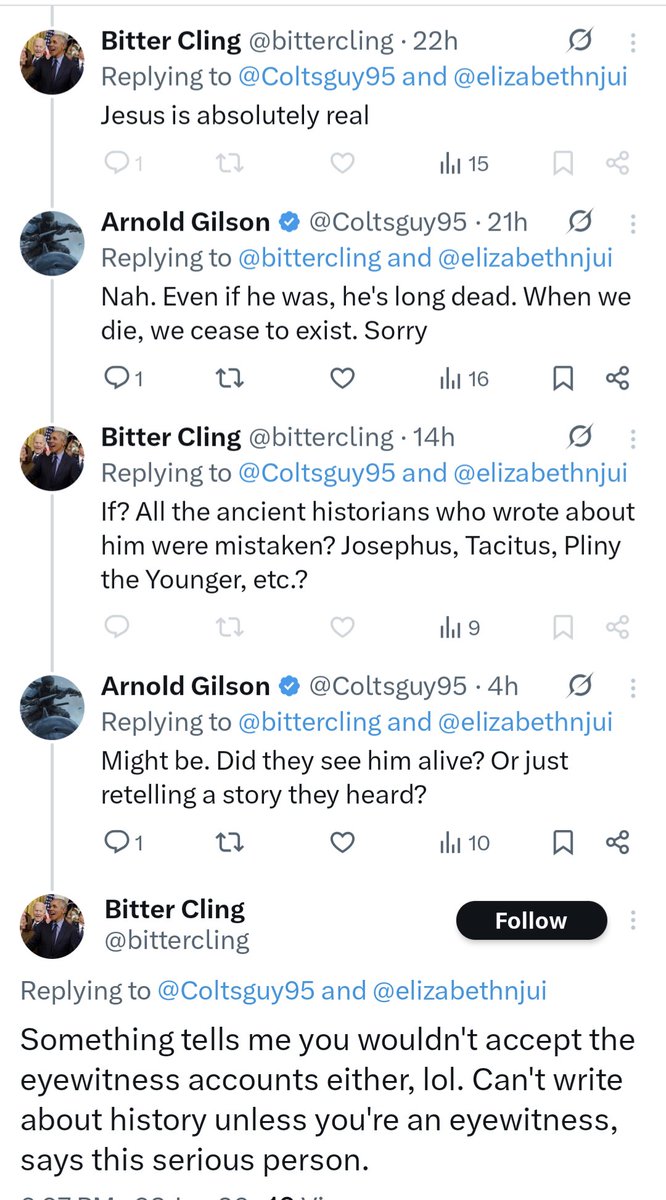
Blocked me and didn't want to talk about it. Lol Name an eye witness that wrote anything down.
1
95
Arnold Gilson retweeted
Jun 3
You idiots never seem to be able to make the distinction between the label of Atheism and the philosophy of the individual. Many of us are Humanists which does represent MY worldview. Some Atheists are Nihilists. Very different worldview. I'm not a Nihilist. Atheism alone provides no worldview at all. Just a denial of what appears to be pure fantasy.
1
1
1
55
Jun 2
If the son is Jesus and the father is Yahweh, what's the Holy Ghost's name? We need Scooby Doo to unmask him. OMG it's been Ronald McDonald this whole time!
Jun 2

For the prophecy came not in old time
by the will of man:
but holy men of God spake
as they were moved by the Holy Ghost.
2 Peter 1:21
1
1
94
Jun 3
34
Arnold Gilson retweeted
Jun 2
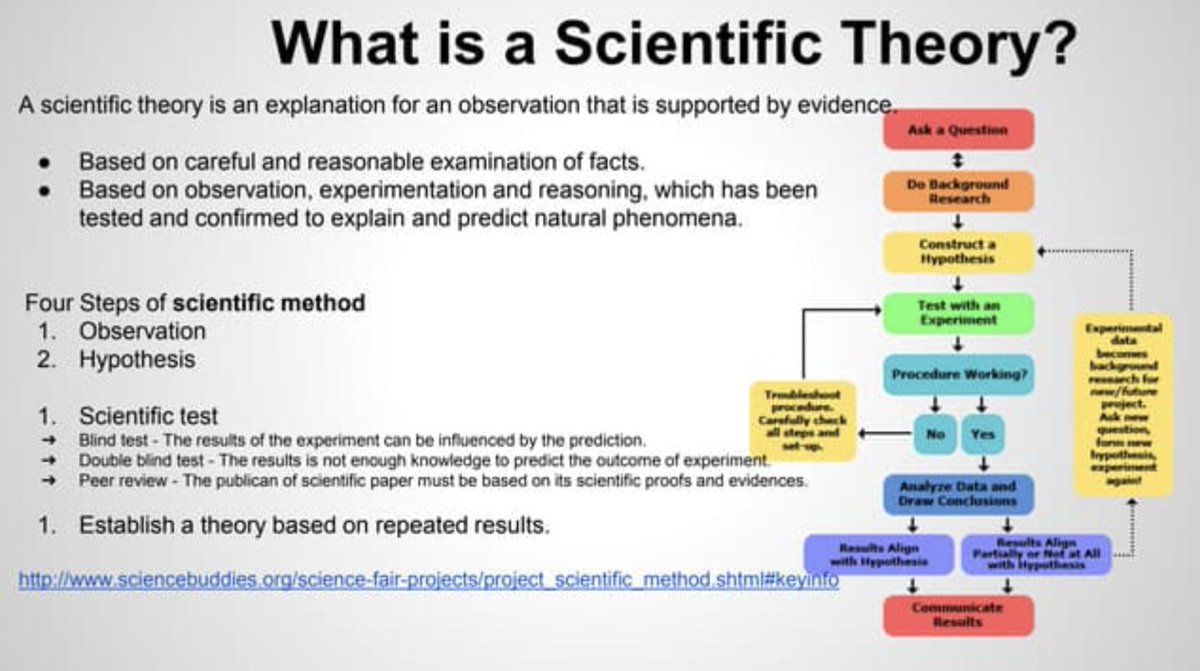
Trusting science is trusting logic and reason and gives you a logical and reasonable life. Making yourself believe in the unsubstantiated means you're living a make-believe life without substance.
1
2
39
Jun 2
Cruelty is the language of evil. So why doesn't Christianity explicitly forbid it?
35
Jun 2
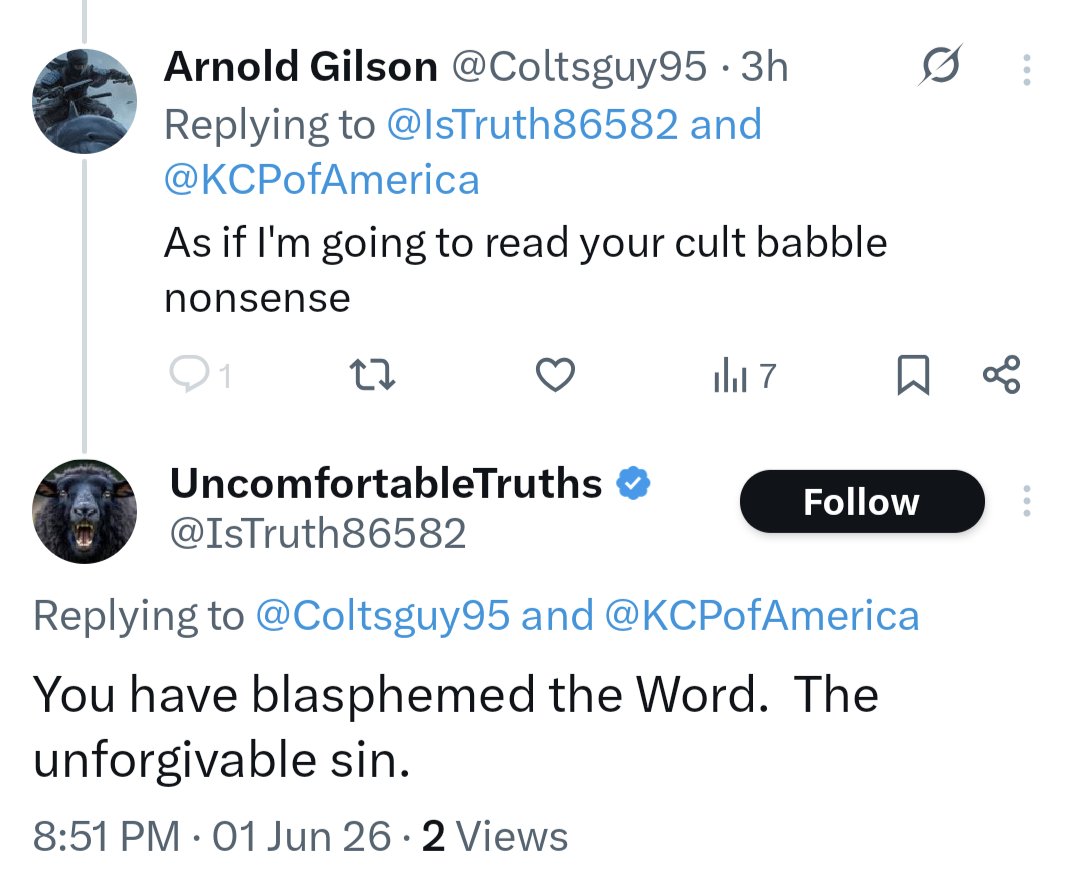
Oh no. I've blasphemed! Wait which word exactly makes it THE unforgivable sin? I thought Jesus died for MY sins and that shit is forgiven bc he's an omnibenevolent God. I wonder if this is blasphemy: Jesus is a cuck that raped his own mom to birth himself to be his own father.
49
Arnold Gilson retweeted
May 31
Watch this in its entirety to test your faith. Betting you'll rethink Christianity. 😉 youtu.be/K3koeHN-6mU
1
1
117
Arnold Gilson retweeted

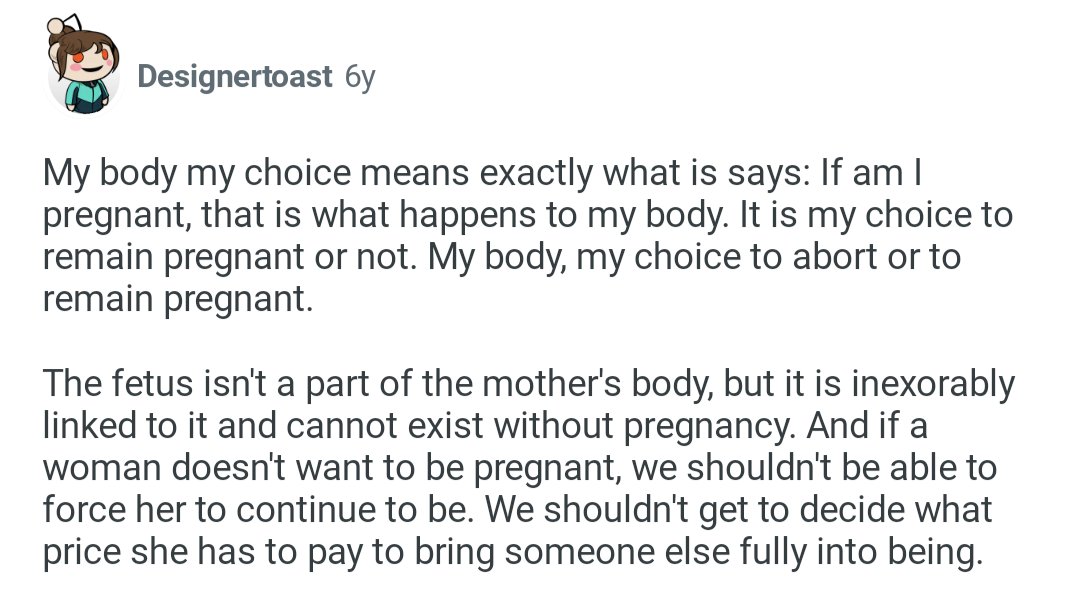
The vast majority of embryos fail. If there is a creator God, he is the biggest abortionist of all time as he created a system where that happens!
1
1
244
Arnold Gilson retweeted
May 27
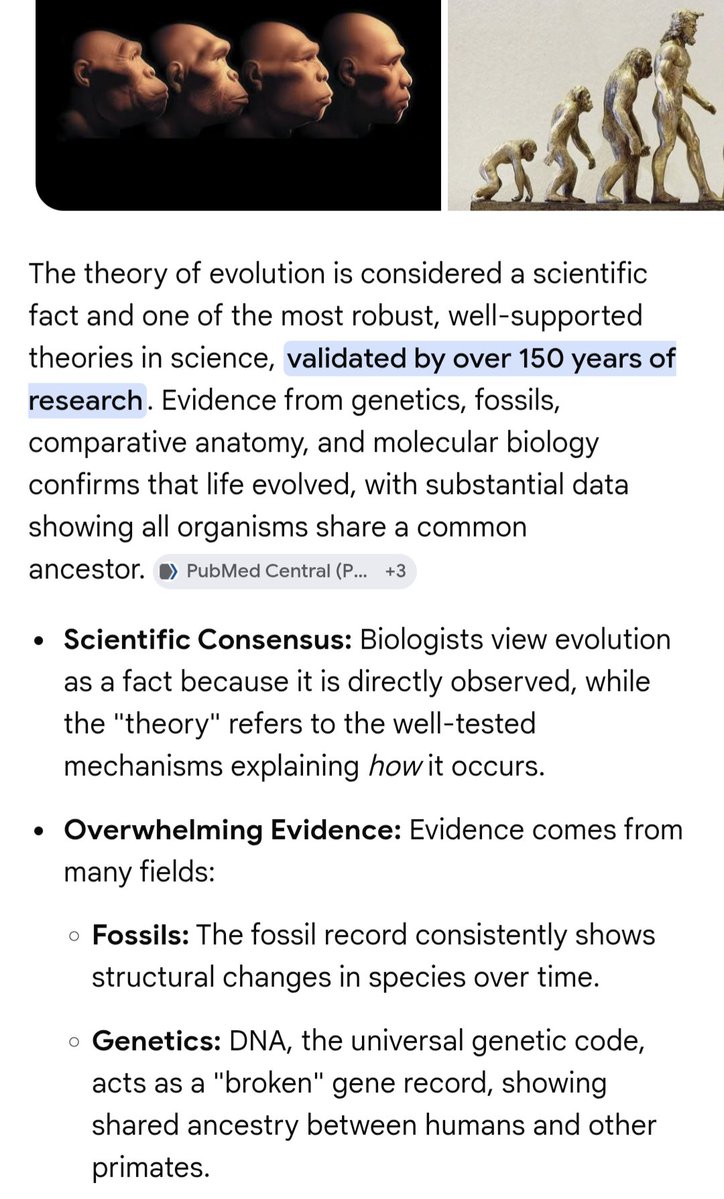
We want you to be logical and deconstruct bc Christianity is a dangerous cult. There's no god. The rules of physics have never been broken. Evolution is a proven theory. The reason for existence is unknown.
1
1
1
66
Arnold Gilson retweeted

The fact that theists routinely raise the strawman of "something coming from nothing" but enthusiastically believe in Creation Ex Nihilo while special-pleading an "uncreated" God is quite possibly the most asinine and blatantly fallacious irony in theism.
15
6
79
1,162
May 26
If God exists outside of space and time, that place is not "existence." Therefore he doesn't exist beyond the imagination.
40
Arnold Gilson retweeted

May 25
Roger Penrose did not say your soul is eternal. That second sentence is doing work the first one never authorised.
Penrose's actual position is considerably more careful and considerably more interesting. His argument, developed with anaesthesiologist Stuart Hameroff into the Orchestrated Objective Reduction theory, is that consciousness may arise from quantum processes inside structures called microtubules within neurons. When the brain dies, he proposes, the quantum information that constituted conscious experience does not simply vanish. It may disperse into the fabric of spacetime itself.
This is meaningfully different from claiming the soul is eternal.
The conservation of matter principle the post leans on is real physics. Mass and energy cannot be created or destroyed, only converted. Every atom that built you existed before you and will exist after. The carbon in your bones was forged in a star that died billions of years before Earth formed. When you die those atoms will become soil, then grass, then something that eats grass, then something else entirely, for as long as the universe runs.
But conservation of matter says nothing about the persistence of the pattern those atoms formed. A library burns down and the atoms in the books survive perfectly. The information in them does not.
Whether consciousness is more like the atoms or more like the information is the question Penrose spent his career trying to answer. He does not claim to have solved it. The post has him solving something he explicitly said remains unsolved.
The actual question is harder and stranger than the answer being offered here. Which is usually how it goes with Penrose.
1
2
173
May 26
This is the best take I've seen on why Christians will do insane mental gymnastics to skirt obvious contradictions and excuse every impossible tall tale.
instagram.com/reel/DYyPz0nO5…
49
May 26
There's regular Christian nonsense, and then there's THIS level of nonsense. Lol 🤣
May 25

The 144000 are the prisoner of the last galactic war between Pleiadians and Draco, being lock up here low frequency earth, Book of ONE.
Wake up Soldiers, our mothership is at the doorside, this cycle is different,
God brings Jesus as a seed to open the portal,
God is good.
23
Arnold Gilson retweeted

May 25
I have experienced life with Jesus.
I have equally experienced life without Jesus.
To be quite honest, life without religion is far better than life with Jesus.
18
18
72
1,563
May 25
Isn't it weird that Christians never want to answer this? What are they afraid of?
May 24

Which Christian denomination are you? Evangelical? Baptist? Pentecostal? Lutheran? LDS? Methodist? Unitarian? Born-again? Reformed? Jehovah's Witness? Wesleyan? 7th Day? Catholic? Eastern Orthodoxy? Presbyterian? Gnostica? Johannite?
29
Arnold Gilson retweeted
May 22
Only two things in existence: something and nothing. Yin and yang. We are the something bc we think. The nothing is the distance between possibilities. The something is trying to grow. The nothing is attrition. This is how and why all things possible happen. Choose Love or Fear.
1
1
53
May 22
If Jesus is God, does that mean he had sex with his mom to ensure his own birth?
75
May 21
Are Christians just trying to rage bait bc they secretly know Atheism isn't a "belief system" or are they as stupid as we profess that they certainly must be to believe in archaic middle Eastern mythology?
May 21

No, babies aren't born athiest
That's the most stupid thing I've ever heard.
Babies are born blank. Every belief system including athiesm is taught to them.
Now, if all babies(all humans) are born atheist, then where did the notion of God come from?
What a dumb cultist u are.
1
71