
Joined December 2025
- Tweets 2,522
- Following 154
- Followers 411
- Likes 373
169 Photos and videos








Ward Reflections retweeted

Jun 15
A patient asked: "If sore throats are strictly caused by viruses or bacteria, why does drinking ice-cold water or sleeping under a direct AC instantly trigger one?"
The answer surprises almost everyone.
163
532
9,187
3,887,969
Ward Reflections retweeted

Jun 15
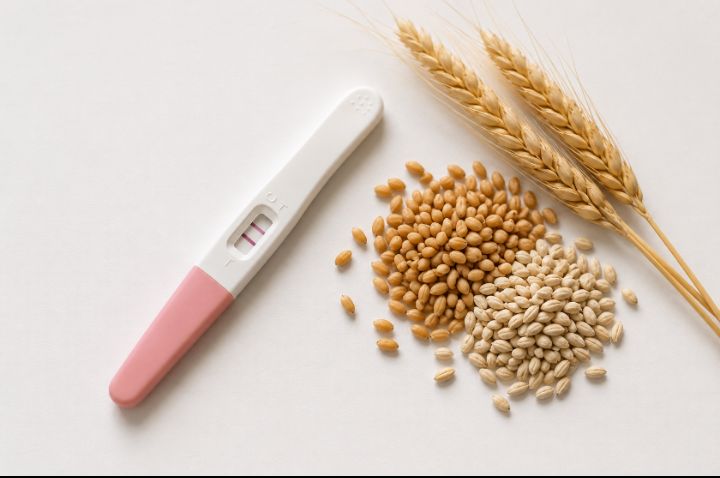
In 1350 BC, Egyptian women urinated on wheat and barley seeds and waited.
Wheat sprouting meant a girl. Barley meant a boy. No growth meant no pregnancy. A 1963 study tested the method and found it detected pregnancy correctly about 70% of the time. The underlying biology was real. Elevated oestrogen in pregnant urine does accelerate seed germination. The Egyptians had no name for oestrogen. They had four thousand years of observation.
The modern pregnancy test was born in 1960, when researchers identified human chorionic gonadotropin, hCG, the hormone the placenta begins producing within days of implantation. By 1968, a test existed that could detect it in urine. It required a laboratory, a trained technician, and two hours. It was still faster than waiting for a missed period.
The first home pregnancy test was approved in the United States in 1978. A woman named Margaret Crane, a graphic designer, had the original idea in 1967 while visiting a pharmaceutical lab. She saw the reagents sitting on a shelf and built a prototype in her apartment using a small mirror angled at the bottom of a plastic vial. Her prototype worked. It took a decade and a pharmaceutical company to make it available without a prescription.
The test in a pharmacy today detects hCG at concentrations as low as 20 milliunits per millilitre of urine. That level is reached within days of a missed period, sometimes before. A result that takes two minutes now once took two hours in a lab, and before that, two weeks of watching seeds in the ground.
The biology was always there. What changed was how quickly we learned to read it.
1
1
25
Jun 14
Boring habits compound. Sleep by 10, lift heavy, eat protein, get sun, call your mom. The body keeps score in decades, not days. Rhythm beats motivation. Start small, stay steady, let time work.
20
Jun 13
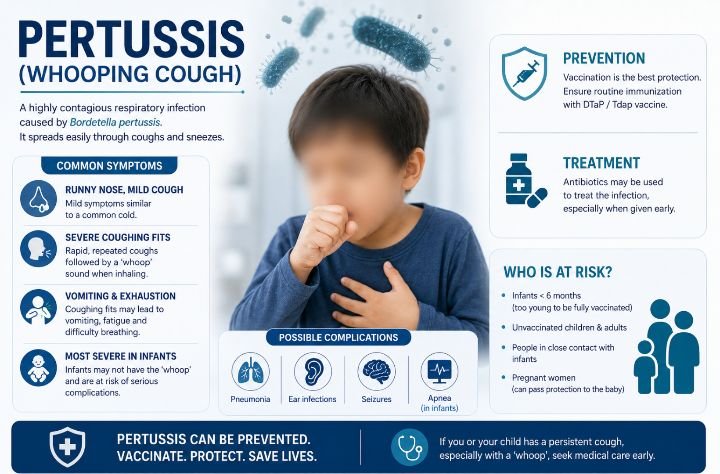
A parent once said their baby "just stopped breathing" in the middle of the night.
No whoop. No dramatic cough. Just silence where there should have been breathing.
That is how pertussis presents in young infants. Not the textbook sound. Just apnoea.
If your baby has any episode of unexplained paused breathing, that is an emergency. Not a wait and see.
19
Jun 13
What that balloon is filling with has a name: particulate matter, specifically the fine fraction called PM2.5.
The particles are measured in micrometres. A human hair is roughly 70 micrometres wide. PM2.5 particles are smaller than 2.5. Small enough to bypass the nose, bypass the throat, bypass every filtration mechanism the upper airway has, and deposit directly into the alveoli, the tiny air sacs where gas exchange happens.
From there, the smallest fraction crosses into the bloodstream.
Burning tires releases more than carbon. The rubber compound contains sulphur, zinc, heavy metals, polycyclic aromatic hydrocarbons, and dioxins. Each one carries its own toxicology. Together they produce a mixture that is carcinogenic, cardiovascular, and neurologically damaging at sustained exposure levels.
The balloon makes the invisible visible. In open air that same cloud disperses, becomes transparent, and people standing nearby assume they are breathing something close to nothing.
They are not breathing nothing. They are breathing everything in that balloon, diluted just enough that they cannot see it.
Tire burning is common across low and middle income countries as a method of metal recovery from wire components. The people most exposed are usually the ones with the fewest options and the least access to the healthcare that the exposure will eventually make necessary.
The balloon fills in seconds. The lung damage accumulates over years. Both are the same event at different timescales.

22
Jun 13
The most dangerous carrier of whooping cough is usually someone who thinks they just have a lingering cough.
Adults and adolescents lose pertussis immunity years before they realise it. They transmit it without severe symptoms. The infant who ends up on a ventilator caught it from someone who felt mostly fine.
Vaccination during pregnancy is not just about the mother. It is the only way to protect a baby too young to be vaccinated themselves.
18
Jun 13
In 2012, California recorded over 9,000 cases of whooping cough. The highest number since 1947.
The vaccine had existed for decades. Most of the children who got sick had been vaccinated. And the disease, which the world had assumed was disappearing, was back.
1
35
Jun 13
The response was a revised vaccination strategy.
Tdap boosters for adolescents and adults. Vaccination during every pregnancy, because maternal antibodies cross the placenta and provide the infant with passive protection in the first weeks of life before their own vaccination can begin. Cocooning, the strategy of vaccinating everyone in close contact with a newborn before the baby arrives home.
These measures work. Countries that have implemented them consistently have seen infant mortality from pertussis fall.
The bacterium has not changed. The strategy around it has.
1
14
Jun 13
Pertussis is sometimes described as a vaccine-preventable disease that has not been prevented.
That description is not entirely fair. Vaccination transformed it from a leading cause of childhood death into a manageable endemic infection. What vaccination did not do, and was never going to do on its own, was eliminate it permanently from a population where adult immunity wanes and booster uptake is inconsistent.
The whoop that Paris physicians recorded in 1578 is still heard today in paediatric wards around the world. Not because the tools to prevent it do not exist. Because the tools require maintenance, and maintenance requires understanding that immunity is not a permanent state.
It is a level that has to be sustained.
12
Jun 12
Every item on this list has a body of evidence behind it that most exciting lifestyle advice cannot match.
Sleep timing alone shapes cortisol rhythm, insulin sensitivity, cardiovascular risk, and cognitive performance. Not sleep duration. Timing. The people who go to bed early and wake early are not just disciplined. They are running their biology on the schedule it was designed for.
Simple foods is the dietary literature in two words. Decades of nutrition research, across populations, methodologies, and funding sources, converge on the same finding. Whole foods, minimal processing, eaten without ceremony. The complexity in nutrition advice exists largely because simplicity does not sell.
Saving money is a stress intervention. Financial precarity activates the same threat response as physical danger, chronically, with no recovery window. The prefrontal cortex, the part responsible for planning and impulse control, is progressively impaired by chronic stress. People with financial stability are not just more comfortable. They are neurologically better equipped to make decisions.
Old books filter for survival. Every book on a shelf written two hundred years ago made an argument worth returning to, or it would not still be there. New books have not been tested yet.
Boring, done correctly, is the long game. The exciting version of every item on this list is a shorter version of the same life.
Jun 12

I want to be boring in the right ways. Go to bed early. Wake up early. Eat simple foods. Save money. Exercise. Love your people. Read old books. Avoid drama. Be grateful. Boring is seriously underrated.
16
Jun 12
You don’t need protein shakes to build muscle.
You need 1.6 to 2.2 grams of protein per kg of bodyweight, spread across meals.
A chicken breast, three eggs, and Greek yogurt already get most people there.
The shake is just convenience, not magic. Food first, powder when life gets messy.
15
Ward Reflections retweeted
Jun 11
Every year, thousands of people die from heart attacks they were warned about.
Not warned by a doctor. Warned by their own chest. A pain that came with exertion and disappeared with rest, that they explained away as stress, indigestion, a pulled muscle. A symptom that was never random. That was, in fact, a precise biological signal with a specific message.
They did not know how to read it.
1
1
2
26
Jun 11
They do. And the finding is stranger than the headline suggests.
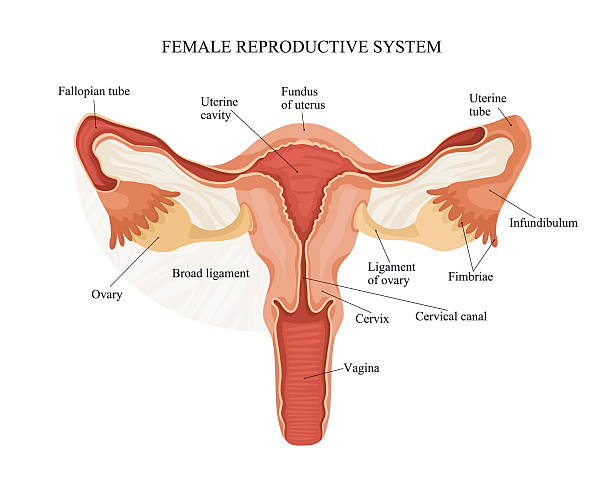
Taste receptors were first mapped in the mouth in the 1990s. By the 2000s, researchers were finding them in places that had no obvious reason to taste anything. The gut, the lungs, the brain, the heart, and yes, the reproductive organs.
In the testes, bitter taste receptors appear to regulate sperm production and motility. A 2013 study found that blocking these receptors in mice caused sperm counts to drop significantly. The receptors are not detecting flavour. They are detecting molecular signals, chemical structures that happen to share the same shape as bitter compounds, and using that detection to regulate local cell behaviour.
In the female reproductive tract, taste receptors have been found in the cervix and uterus. Their function is still being investigated, but the leading hypothesis is that they form part of a local immune surveillance system, identifying microbial compounds and triggering defensive responses.
The tongue evolved a detection system for survival. Bitter usually meant poison. Sweet meant energy. The body then repurposed that same molecular machinery across dozens of organs for entirely different jobs.
Taste receptors in reproductive tissue are not tasting anything. They are listening, using the oldest chemical detection system the body has, in places it was never expected to be found.
Jun 11

Male and female have taste receptors in their reproductive organs.
14
Jun 11
Every year, thousands of people die from heart attacks they were warned about.
Not warned by a doctor. Warned by their own chest. A pain that came with exertion and disappeared with rest, that they explained away as stress, indigestion, a pulled muscle. A symptom that was never random. That was, in fact, a precise biological signal with a specific message.
They did not know how to read it.
1
1
2
26
Jun 11
Treatment works at every stage.
Nitrates, given under the tongue, relax the walls of coronary arteries within minutes, widening the channel and restoring supply. They have been used since 1879 and remain one of the fastest-acting cardiac drugs available.
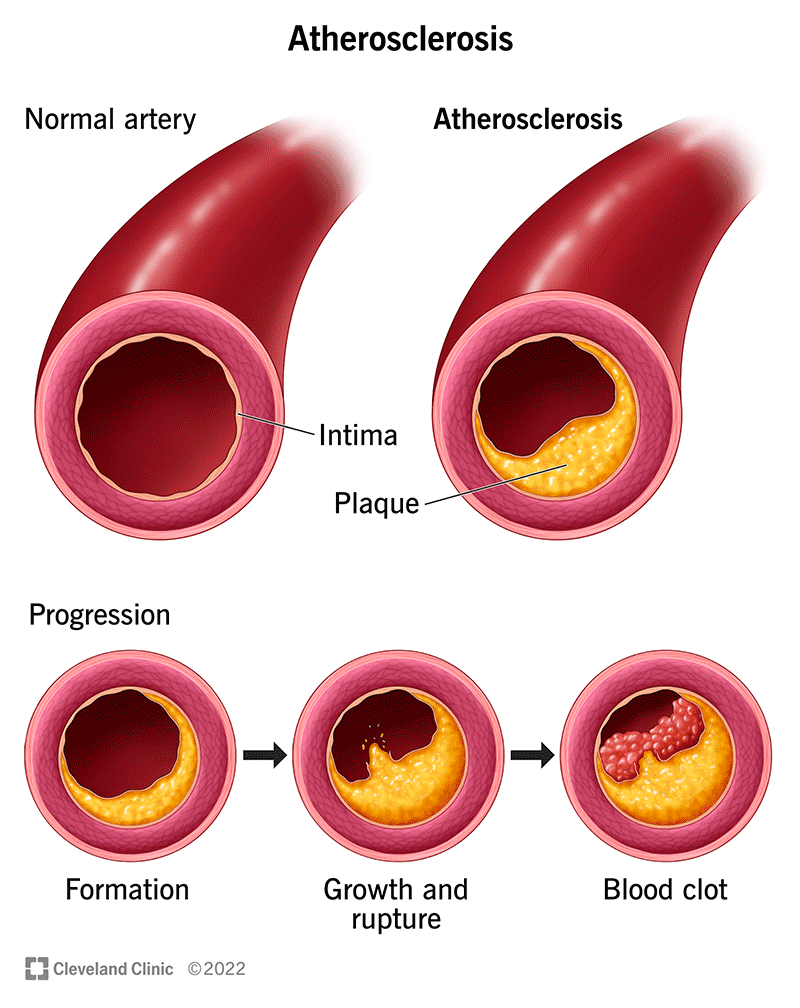
Beta blockers reduce the heart's demand for oxygen by slowing the rate and reducing the force of contraction. Statins stabilise plaques and reduce the risk of rupture. Aspirin reduces the likelihood of clot formation on a disrupted plaque.
For arteries too narrowed for medication alone, procedures exist to physically restore the channel. Angioplasty widens it from the inside. A stent holds it open. Bypass surgery builds a detour around the blockage entirely.
The options are real. They require a diagnosis first.
1
6
Jun 11
A chest pain that comes with exertion and goes with rest is not something to wait out.
It is a referral. From your heart, to a cardiologist, through your doctor. An ECG during an episode, a stress test, a coronary angiogram if indicated. These are the tools that determine whether the warning is stable or about to become something worse.
William Heberden's patients had none of them. They had only the symptom and no language for what it meant.
You have both. The symptom means the same thing it always has. The question is whether you act on it before the artery finishes what the plaque started.
5